
Reviewed · COOKING CLASSES
Spanish Cooking Class & Triana Market Tour in Sevilla
The best part of this Seville experience happens before the cooking begins: you walk through Triana Market, learning how local produce, meats, cheeses, spices, and farming traditions shape Andalusian food. Then you use those ingredients in a hands-on class led by a local chef.
I like the market-to-table setup, and I like that you actually prepare the dishes rather than simply watch a demonstration. The food, written recipes, sangria, and two drinks make the $90.70 price feel fair. The main drawback is finding the meeting point inside the market, especially since the class may take place in one of four nearby kitchens.
Key points
- Market first, cooking second: Start at Mercado de Triana and learn about ingredients before entering the kitchen.
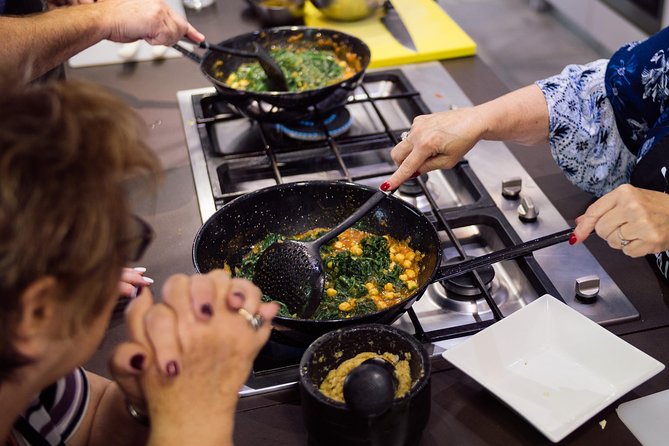
- Real participation: Prepare salmorejo, spinach with chickpeas, paella, and a light dessert with guidance from the chef.
- Andalusian flavor: The menu includes a Córdoba-style chilled tomato soup and a classic Sevillian spinach tapa.
- Friendly instruction: Guides and chefs such as Pedro, Leo, Diana, Carlo, Sabrina, and Anna keep the class relaxed and social.
- Good group size: The class accepts a maximum of 16 people, with some groups split into smaller cooking teams.
- Useful souvenir: Written recipes and cooking tips help you repeat the meal at home.
Starting at Triana Market in Seville
The class begins at 10:30 a.m. inside Mercado de Abastos de Triana, at Taller Andaluz de Cocina, stalls 75 and 77. The official meeting address is Pl. del Altozano, S/N, Locales 75 to 77, in the Triana district.
Give yourself extra time to find the exact stalls. The market has several entrances and rows of vendors, and the cooking school uses four kitchens in the Triana area. Two are inside the market, one is on Calle Castilla, and another is at Plaza de Chapina. Your meeting point is always stalls 75 and 77, even if your cooking session takes place elsewhere.
This detail matters. One participant needed a little time to get oriented inside the market, so do not arrive at 10:29 and expect to stroll in without looking around. The market itself is part of the morning, and arriving early lets you see the stalls before the group gathers.
More cooking classes in Seville:
- Seville: Spanish Cooking Class with Dinner
★ 4.9 · 900 reviews - Seville: 3.5-Hour Spanish Cooking Class & Triana Market Tour
★ 4.9 · 751 reviews - Barcelona: Paella Cooking Experience & Boqueria Market Tour
★ 4.8 · 3,661 reviews
A food walk through Mercado de Triana
The first part is a guided walk through the market. Your guide shows you the ingredients used in the class and explains how they fit into Seville’s cooking traditions.
You might see colorful produce, fresh cheeses, meats, seafood, spices, and other regional foods. The walk is not simply a shopping stop. Guides talk about where foods are grown, how they are used, and the farming practices behind local cooking.
The exact guide changes. Names connected with recent classes include Anna, Sabrina, Kai, Carmen, and Lidia. Anna, for example, has led groups of about ten through selected market stalls, while Sabrina has explained local ingredients, food history, and the surrounding area before the cooking begins.
This introduction gives the recipes a useful setting. Salmorejo is not just a cold tomato soup on a printed menu. It is a traditional dish from Córdoba, closely tied to the hot climate of Andalusia. Spinach with chickpeas is a familiar Sevillian tapa, and paella connects the class to one of Spain’s best-known rice dishes.
The market visit also helps you decide what to buy later. The class usually leaves a little time for a short return to the market, so you may be able to purchase ingredients or local foods after cooking. That extra browsing time is not guaranteed as a shopping tour, but it can be a pleasant bonus if the schedule allows.
Inside the cooking kitchen
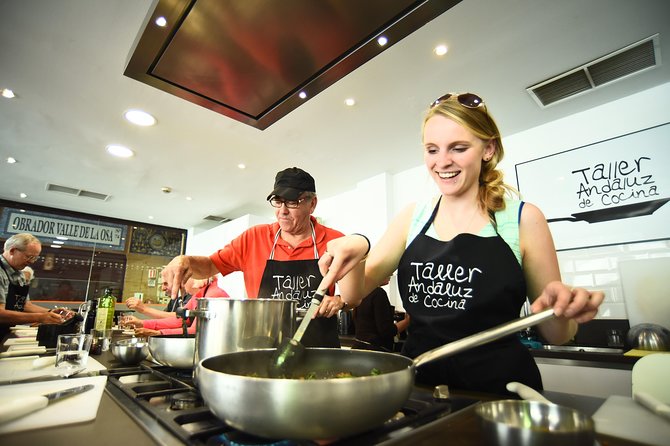
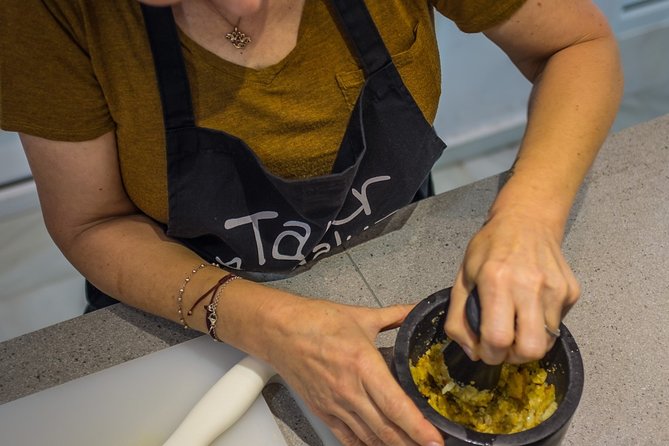
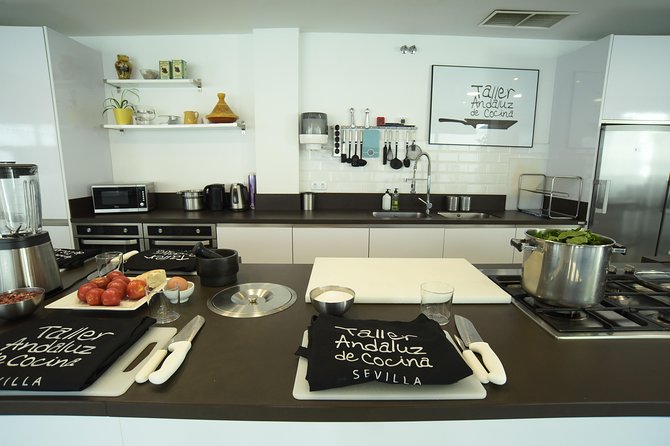
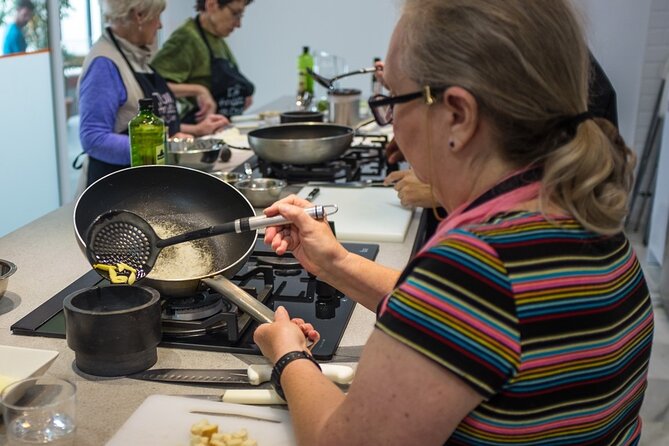
After the market walk, you move into one of the school’s kitchens. Aprons, cutting boards, knives, and all other cooking tools are supplied, so you only need to show up ready to participate.
The format is practical. The chef demonstrates techniques, explains the dishes, and then lets you handle much of the preparation. Depending on the menu and group, that can include chopping, seasoning, cooking the vegetables, preparing the soup, working with rice, breaking down a whole chicken, or trimming an artichoke.
The amount of work is a strength of the class. You are not seated at a counter watching someone else do everything. At the same time, the chef has already prepared some ingredients, which keeps a three-and-a-half-hour class moving at a reasonable pace.
Instructors named in the class feedback include Pedro, Dom, David, Carlo, Carlos, and Diana. Their teaching styles differ, but the recurring pattern is clear: the kitchen is informal, questions are welcome, and the chef explains both the process and the background of the food.
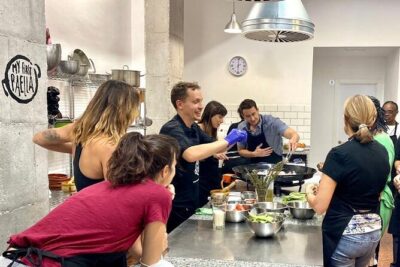
The group size can reach 16 people. That is large enough to create a social meal but small enough for the class to remain manageable. Some sessions split into two groups, with roughly ten people cooking together in one group. If you are visiting Seville alone, this is a comfortable way to share a morning with people from different countries without committing to a full-day outing.
The dishes you prepare and eat
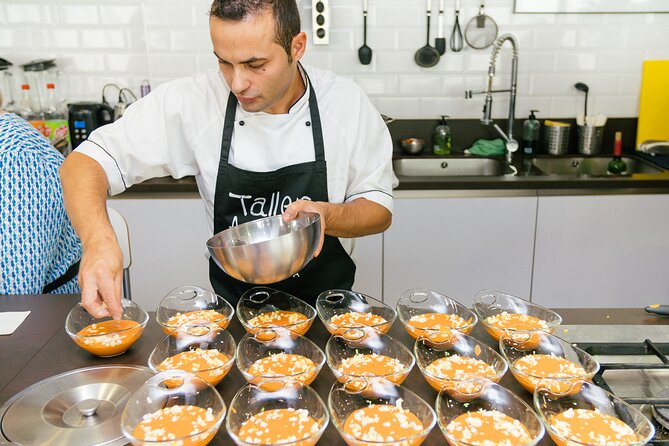
The sample menu gives you a broad taste of Andalusian and Spanish cooking. It begins with salmorejo, a chilled tomato cream traditionally associated with Córdoba.
Salmorejo is thicker and creamier than many versions of gazpacho. You learn how the ingredients are blended and seasoned, then eat the finished soup as part of the meal. The class can be a useful second chance if you have tried salmorejo elsewhere and found it too plain or too sharp. The version prepared here has won over people who were not previously fans of the dish.
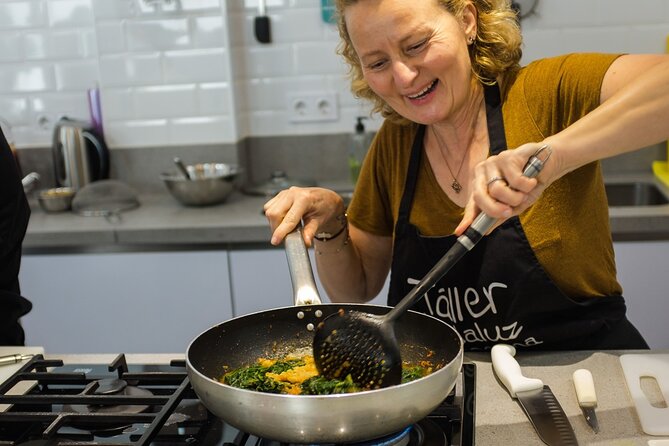
Next comes spinach with chickpeas, a classic Sevillian tapa. It is simple food, but it shows how Spanish cooking can turn a short list of inexpensive ingredients into a satisfying dish. The combination is also useful for home cooks because it does not require complicated equipment or rare ingredients.
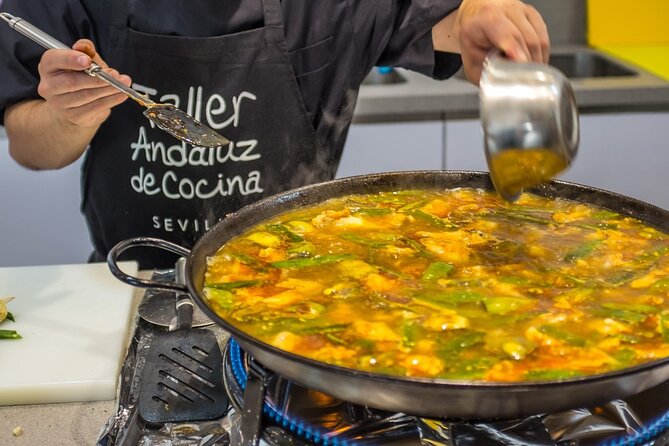
Paella Valenciana is the main event. The sample menu uses chicken and vegetables, rather than making a seafood paella. That makes the dish suitable for more diners and gives you a clear lesson in the traditional method.
Some sessions offer both chicken and vegetarian paella. If you have different dietary needs within your group, ask for the appropriate version in advance. The menu may also include techniques such as breaking down a whole chicken and preparing an artichoke, depending on the day’s ingredients.
The meal finishes with a light dessert of lemon sorbet with cava. The cold, citrusy finish makes sense after a morning of cooking and a filling rice dish. The menu is sometimes described as three courses, though the sample meal includes a starter, two savory preparations, and dessert.
More shopping trips in Seville:
- Barcelona Paella Cooking Class with Market Visit, Tapas & Sangria
★ 5.0 · 2,531 reviews - Paella Cooking Class, Wine Tasting & Central Market in Valencia
★ 5.0 · 1,150 reviews - Valencian paella cooking class, tapas and visit to Ruzafa market.
★ 5.0 · 828 reviews - Valencia: Paella Cooking Class with Central Market Tour
★ 5.0 · 721 reviews
Drinks and the meal at the end
Homemade sangria is served during the class. It gives the cooking period a festive feel without turning the activity into a drinking session, and it pairs naturally with the informal kitchen setting.
When the food is ready, you sit down and eat what you prepared. Up to two drinks per person are included with lunch: Spanish wine, local beer, or soft drinks. The meal is not an afterthought. It is the point of the class, and eating your own paella and tapas makes the cooking techniques easier to remember.
The amount of participation may vary by dish and group size. You may not personally perform every step, particularly when the chef is managing several pans at once. Still, the class is designed so that everyone contributes, and the food is prepared as a shared meal.
This is one reason I see good value in the price. At $90.70 per person, you are paying for about three and a half hours, a market tour, instruction, ingredients, equipment, lunch, sangria, two drinks, and recipes. It is more expensive than ordering a casual lunch, but it combines a meal with a structured cultural activity.
Why the Triana setting matters
Cooking in or near the market gives the morning a stronger connection to Seville than a class in a hotel or a detached culinary studio. You first see the raw ingredients among local vendors, then use similar foods in the kitchen.
Triana is also a fitting part of Seville for this kind of activity. The market setting places you on the west side of the Guadalquivir, in one of the city’s best-known districts, rather than in a generic classroom. The experience remains focused on food, but you get a small sense of how shopping and cooking fit into daily life.
The setting has one trade-off: it may feel less polished than a private cooking school with a single fixed address. With four kitchens in the area, your exact room can vary. That is not a problem once you know the system, but it makes the meeting instructions important.
Dietary needs and menu changes
The cooking school says it can accommodate vegan, gluten-free, seafood-free, and pork-free diets, along with other dietary restrictions. You must provide this information in advance so the menu can be adjusted.
This is especially important because the sample menu includes chicken paella and a dessert with cava. The standard dishes may not suit every diet without changes, and last-minute requests may be difficult once the market tour and preparation are underway.
If one person in your party is vegetarian and another eats meat, ask about the options when booking. The class has prepared both chicken and vegetarian paella in the same session, so mixed preferences can be handled when arranged ahead of time.
The class is also suitable for people who do not consider themselves cooks. You receive tools and instruction, and the chef guides you through each stage. You do not need to arrive with technical skills, though you should be comfortable standing, chopping, and working as part of a group for much of the morning.
Timing, group size, and practical planning
The activity starts at 10:30 a.m. and lasts about three hours and 30 minutes. It normally ends back at the meeting point, with the meal included before you leave.
Allow a little flexibility after 2 p.m. One session ran until about 2:30, while still leaving time for a brief market visit. The advertised duration is approximate, so avoid booking a tightly timed afternoon activity immediately afterward.
No hotel pickup or drop-off is provided. You make your own way to the market, which is near public transportation. The mobile ticket is useful, but the most important practical item is the stall number: 75 and 77.
The maximum group size is 16. That is not an intimate private lesson, but it is a reasonable limit for a shared class. A group this size also makes the experience social, especially for solo participants and couples who want more than a quiet meal.
Written recipes you can use at home
The school provides written recipes and cooking tips after the class. Some classes have sent the recipes by email, giving you a practical record of what you made.
This is more useful than a souvenir recipe card with vague instructions. The class covers dishes that can become part of a regular home menu: salmorejo, spinach with chickpeas, and paella. You also leave with a better feel for seasoning, preparation, and the order in which the dishes come together.
Paella is the recipe most likely to require practice. Rice, timing, and pan space matter, and a chef’s demonstration helps you understand details that a short recipe cannot fully explain. The written version gives you a starting point, while the class gives you the memory of seeing and tasting the finished dish.
Who should book this Seville cooking class?
I would choose this for anyone who wants a food activity with real participation. It suits couples, families, solo visitors, and small groups of friends, especially if you like meeting people while you travel.
Families can do well here. One class kept children aged three and six engaged through the morning, although the exact experience will depend on the children, the chef, and the group. Young children may enjoy stirring and preparing ingredients, but adults should still expect an organized kitchen class rather than a free-play activity.
It is also a good pick if you have already taken a Spanish cooking class elsewhere. The market visit, Andalusian dishes, and Triana location give this version its own character. The paella lesson is especially worthwhile if you want to learn a traditional preparation rather than simply eat the dish in a restaurant.
I would think twice if you dislike group activities, have very limited time before an afternoon train, or want a quiet market visit without instruction. The class is social, hands-on, and paced around a shared meal.
Free cancellation is available if you cancel at least 24 hours before the local start time. Changes made within that period are not accepted, and the experience requires a minimum number of bookings. If the provider cancels because that minimum is not met, you are offered another date or experience, or a full refund.
My verdict on the Triana Market cooking class
Book it if you want to understand Seville through its food, not just eat another plate of tapas. The market tour gives context, the chef-led work keeps you involved, and the final meal rewards the effort.
The strongest reasons to go are the market-to-kitchen format, the chance to make paella yourself, and the relaxed teaching style associated with instructors such as Pedro, Sabrina, Carlo, and Diana. The main thing to manage is the meeting point, so arrive early and look for stalls 75 and 77.
At $90.70, this is a solid value for a half-day activity that includes food, drinks, equipment, instruction, and recipes. If that combination sounds better than a standard restaurant lunch, reserve it ahead of time, since it is commonly booked well in advance.
FAQ
Where does the cooking class meet?
Meet inside Triana Market at Taller Andaluz de Cocina, stalls 75 and 77, at Mercado de Abastos de Triana, Pl. del Altozano, S/N Locales 75 to 77, 41010 Sevilla, Spain.
What time does the experience start?
The class starts at 10:30 a.m.
How long does the activity last?
The experience lasts approximately three hours and 30 minutes. The end time can vary, and one session finished around 2:30 p.m.
What food will I prepare?
The sample menu includes salmorejo, spinach with chickpeas, chicken and vegetable paella Valenciana, and lemon sorbet with cava.
Are drinks included?
Yes. Homemade sangria is served during the class, and lunch includes up to two drinks per person. You can choose Spanish wine, local beer, or a soft drink.
Can dietary restrictions be accommodated?
Yes. Vegan, gluten-free, seafood-free, pork-free, and other dietary requests can be accommodated if you provide the information in advance.
Is transportation included?
No. Private pickup and drop-off are not provided. The meeting point is near public transportation, and the activity ends back at the meeting point.
More Workshops in Seville
- Seville: Flamenco Dance Class with Optional Costume
★ 4.9 · 1,032 reviews - Seville: Paddle Surf Route and Class
★ 5.0 · 346 reviews - Spanish Cooking Class Paella Tapas and Sangria in Madrid
★ 5.0 · 1,340 reviews - Madrid: Paella and Sangria Workshop in the City Center
★ 4.9 · 1,264 reviews
More Markets in Seville
- Barcelona: Paella Cooking Class with Market Visit and More
★ 4.9 · 711 reviews - San Sebastian Pintxo Food, Wine & Market Foodie Tour(Small Group)
★ 5.0 · 621 reviews - Cap de Formentor: Market, Beach, and Alcudia Tour
★ 4.3 · 620 reviews - Ultimate Barcelona Food Tour with visit to a Local Market
★ 5.0 · 507 reviews
Recently added in Seville
- 3-hour Guided Bike Tour along the Highlights of Seville★ 5.0 · 315 reviews
- Cordoba City Tour with Mosque-Cathedral from Seville★ 4.5 · 326 reviews
- Seville: Guided Sunset Bike Tour★ 4.9 · 332 reviews
- Seville: Alcazar & Cathedral Skip-the-Line Guided Tour★ 4.5 · 332 reviews
- Seville: Flavors of Andalucía Guided Food Tour with Tastings★ 4.9 · 332 reviews
- Seville Private Walking Tour with Alcazar & Cathedral Tickets★ 5.0 · 332 reviews
- Seville & Alcazar Skip the Line from Cadiz Port (Cruisers Only)★ 5.0 · 337 reviews
- Seville: Authentic and Romantic Horse-Drawn Carriage Ride★ 4.5 · 341 reviews
Cooking Classes, compared.
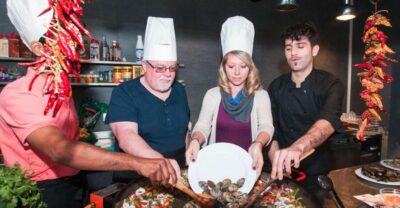
Paella Cooking Experience & Boqueria Market Tour
Read the review →
Barcelona Paella Cooking Class with Market Visit, Tapas & Sangria
Read the review →
Barcelona Interactive Spanish Cooking Experience
Read the review →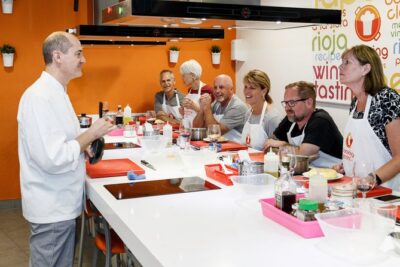
Spanish Cooking Class Paella Tapas and Sangria in Madrid
Read the review →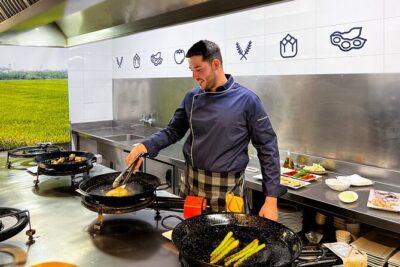
Paella Cooking Class, Wine Tasting & Central Market in Valencia
Read the review →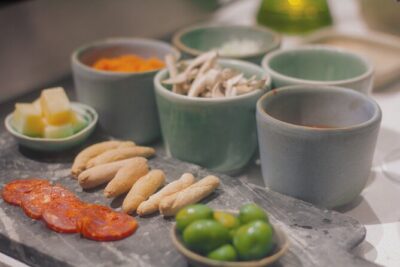
Paella Cooking Class in Madrid with Bottomless Wine Pairing
Read the review →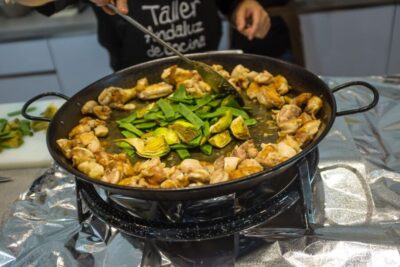
Valencian paella cooking class, tapas and visit to Ruzafa market.
Read the review →Browse the lists this tour appears in