Reviewed · TAPAS & FOOD TOURS
Valencian paella cooking class, tapas and visit to Ruzafa market.
Valencia’s most useful souvenir may be a paella recipe you can cook at home. This hands-on class begins at Ruzafa Market, where you shop for fresh ingredients and learn why paella is tied so closely to Valencian family life, then moves to a nearby kitchen for cooking, eating, and plenty of conversation.
I like the market visit because it gives the dish a real setting, not just a cooking bench. I also like the social format: Jose and Anna keep the mood light while making sure you take part, from grinding saffron to seasoning the pan. The main consideration is the class size, which can reach 20 people, so this is a lively group activity rather than a quiet private lesson.
Key points to know
- Ruzafa Market comes first: Shop for fresh paella ingredients while hearing about Valencian customs and the dish’s origins.
- You cook the meal yourself: The chefs guide you through chicken and rabbit paella instead of preparing everything out of sight.
- Jose and Anna set the tone: Their friendly, energetic teaching style suits people who like food, stories, and a few laughs.
- The food keeps coming: Tapas, sangria, paella, salad, wine, fruit, Valencian cake, sweet wine, and coffee are included.
- The meeting point is not the kitchen: Start outside San Valero Parish, then walk about eight minutes to the cooking venue.
- Plan for a full lunch: The three-and-a-half-hour schedule and generous menu make this a meal as much as a lesson.
Starting at San Valero Parish and Ruzafa Market
Meet at 11:00 a.m. at the door of Parroquia de San Valero, at Carrer del Pare Perera, 6, in Valencia’s L’Eixample district. The church steps are easy to identify, but do not expect to cook there. This is the starting point where the group gathers before heading into Mercado de Ruzafa.
That detail matters. The address is a meeting place, not the kitchen, so arrive ready for a short neighborhood walk and market visit. The activity ends back at this same meeting point, making it simple to plan around other sightseeing in central Valencia.
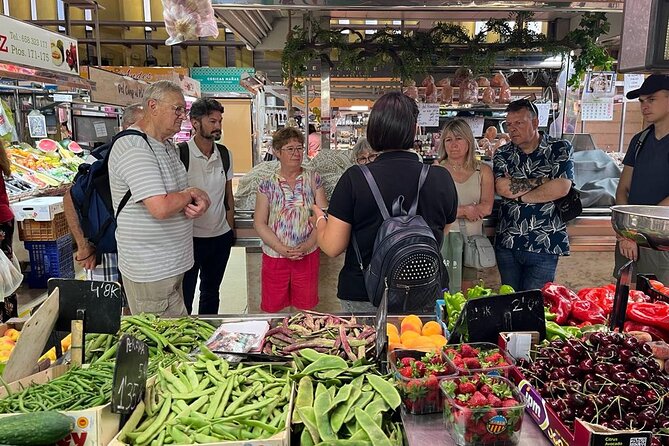
At Ruzafa Market, the class connects food with place. You help select the fresh products needed for paella while the guide explains the dish’s origins and the customs of Valencian people. This is more useful than hearing a generic introduction at a cooking school because you see the ingredients in the setting where local shopping happens.
The market portion also gives you a quick look at the logic of Valencian cooking. Paella depends on the right ingredients and the right order, not just a handful of rice tossed into a pan. The shopping stop helps explain why the dish is treated as a shared ritual rather than an ordinary plate of food.
The market visit is not a long independent shopping break. You stay with the group and follow the guide, so it suits you if you want context and direction. If you prefer to browse every stall at your own pace, this part may feel brief.
More Cooking Classes in Valencia
- Paella Cooking Class, Wine Tasting & Central Market in Valencia
★ 5.0 · 1,150 reviews - Valencia: Paella Cooking Class with Central Market Tour
★ 5.0 · 721 reviews - Seafood paella cooking class, tapas and visit to Ruzafa market.
★ 5.0 · 328 reviews
The eight-minute walk to the cooking kitchen
After the market, you walk roughly eight minutes to the kitchen. The short transfer keeps the itinerary compact and gives the group time to continue chatting before the cooking starts.
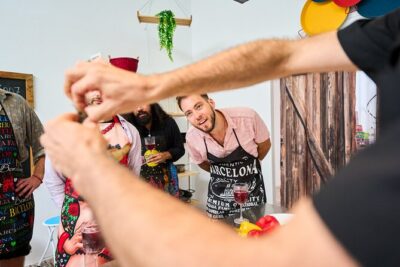
At the kitchen, the chef is waiting with tapas and drinks. This early spread includes patatas bravas with sojanesa, jamón serrano, Manchego cheese, steamed mussels, and olives. You can pair these with sangria, beer, or water while the class gets organized.
I like this opening because it removes the pressure of cooking on an empty stomach. It also turns the first part of the class into a social welcome. Food is already on the table, and the group has an easy reason to talk before taking on the main dish.
The alcohol is part of the experience, not a minor extra. Sangria is served and made during a workshop, while wine accompanies the later meal. Several people have singled out the relaxed drinking and joking as a major part of the fun, so you should expect a cheerful atmosphere rather than a formal culinary school.
That can be a plus or a drawback. If you enjoy meeting people from different countries, the shared table works well, especially if you are traveling alone. If you want a serious, technique-heavy lesson with little chatter, the generous drinks and animated hosting may be more than you want.
Making sangria before the paella
The sangria workshop gives you a second recipe to take home. The guides explain the process while you help prepare the drink, then serve it alongside the tapas.
This is a smart part of the schedule. Sangria is simple enough to learn quickly, and the group can enjoy the result while moving into the more involved paella lesson. The class does not make you wait until the end for all the food and drink.
The hosts, especially Jose and Anna, are central to the experience. They are described as attentive, funny, patient, and well organized, with a style that encourages everyone to participate. They explain the steps clearly but keep the session casual.
You should know that the format is social and hands-on. The instructors do not simply cook a perfect paella while you watch. You may be asked to handle small but important tasks, including seasoning, preparing ingredients, or grinding saffron. One useful warning: grinding saffron takes more effort than it sounds, so do not volunteer unless you are ready for a little work.
Cooking authentic Valencian paella
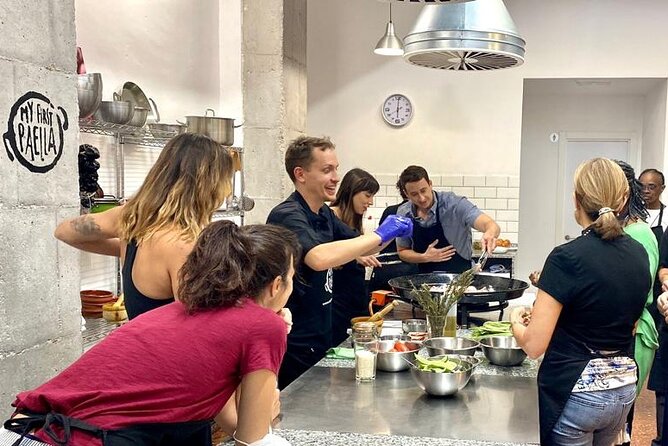
The main lesson focuses on traditional Valencian paella made with chicken and rabbit. The chef explains the process step by step, and you take part in preparing the shared dish.
The value here is practical. You are not only told that paella is important in Valencia. You see how the dish comes together and learn the sequence behind it. Small jobs matter, too. Adding salt at the right time or helping with saffron may seem minor, but each part affects the finished pan.
This is a group paella, so you will not make an individual serving from start to finish. The class works together on the dish and then sits down to eat it. That reflects the social role of paella in Valencian life, where the cooking and the meal are often shared events.
The instruction appears aimed at beginners. The chefs explain the stages carefully, answer questions, and help participants when needed. You do not need to arrive with cooking-school experience, though you should be willing to stand, listen, handle ingredients, and take a turn when asked.
The maximum group size is 20 people. That is small enough for a shared class with active guidance, but it is not an intimate two-person lesson. Your experience will depend partly on the final group size and how willing people are to join in.
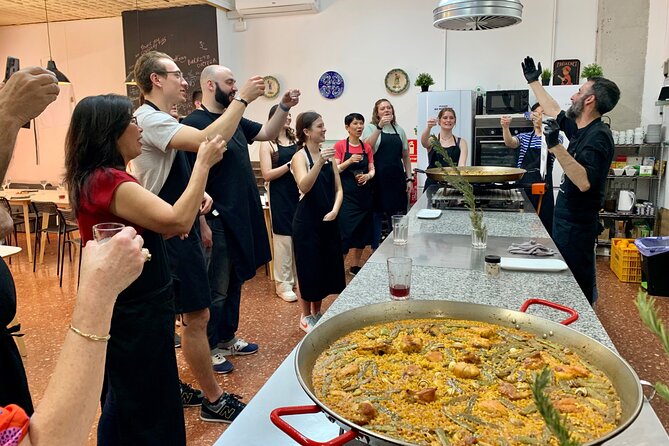
Once the paella is ready, there is a chance to admire the finished pan before eating. The meal is served with Valencian tomato salad and Valencia wines. The paella itself is the star, but the salad adds a fresh contrast to the rice and meat.
More Markets in Valencia
- Valencian paella workshop and visit to the Algiros market
★ 5.0 · 338 reviews - Valencia: Paella Workshop and Algiros Market Visit
★ 4.9 · 291 reviews - Real Paella Cooking Class – Market Visit & Sangría Workshop
★ 5.0 · 291 reviews - Valencia: Morning Food Tour with Central Market Visit
★ 4.9 · 196 reviews
A generous Valencian meal at the end
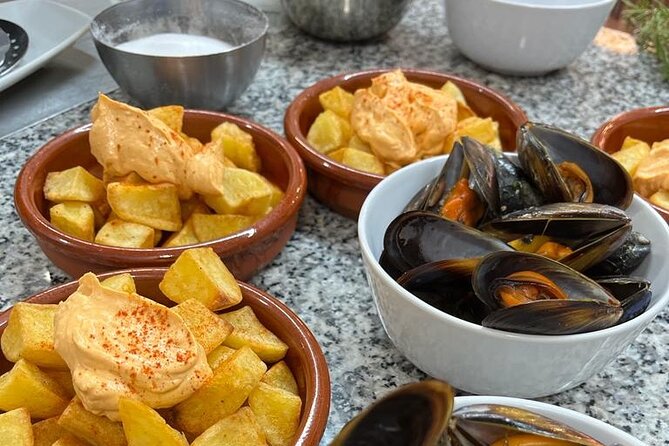
The food does not stop with paella. The full menu includes seasonal fruit, a typical Valencian sponge cake, sweet wine, and coffee.
Come hungry. The tapas arrive before the cooking, followed by the main meal and dessert. The drinks include sangria, wine, mistela or another sweet fortified wine, beer, water, and coffee as listed across the meal. The exact flow may vary with the group, but this is clearly designed as a substantial lunch.
Mistela is especially worth trying if you want a taste of a local Valencian tradition beyond the better-known wine and sangria. It is a fortified sweet wine, usually served in a small portion after the meal. The combination of cake, fruit, sweet wine, and coffee gives the class a leisurely finish.
I see the included food and drinks as a large part of the $78.60 price. You are paying for a market visit, local food instruction, a sangria workshop, a full meal, and about three and a half hours of hosted activity. A simple cooking demonstration might cost less, but it would not offer the same amount of food or participation.
The value is strongest if you would otherwise book a meal and a food tour separately. It is less compelling if you dislike group dining, do not drink alcohol, or mainly want a technical lesson without the extended meal.
Why the market and meal belong together
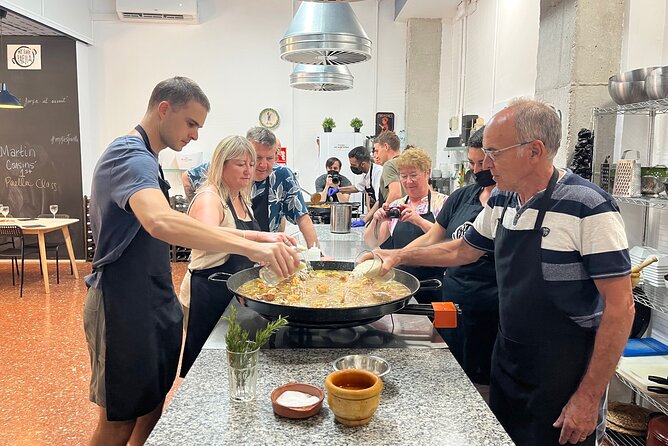
The class works because it links three things: shopping, cooking, and eating. Each part explains the next.
At the market, you hear about ingredients and Valencian customs. In the kitchen, you turn those ingredients into paella. At the table, you share the result with the same people who cooked beside you. That progression gives the activity a clear purpose and makes it feel more connected to local life than a stand-alone demonstration.
The social side is also unusually strong. You meet people from around the world while preparing a dish that is meant to be eaten together. Food gives everyone an easy way into the conversation, and the sangria workshop helps loosen up the group.
This is a particularly good choice for solo visitors, couples who like cooking, and friends who want an activity with a meal built in. Families can also consider it, since children must be accompanied by an adult. The cooking itself may suit older children better than very young ones, but no specific age guidance is provided.
The class can also work for people who have taken cooking classes before. It may not teach advanced restaurant techniques, yet the focus on Valencian tradition, shared preparation, and local ingredients gives it a different purpose from a standard recipe lesson.
Timing, language, and what to bring
The experience lasts about three hours and 30 minutes, beginning at 11:00 a.m. Since the cooking leads into lunch, the timing makes sense as a late-morning activity followed by a filling midday meal.
The activity is offered in English, though it may be operated by a multilingual guide. If you need every explanation in a specific language, confirm the available guide when booking. The supplied details guarantee English availability, not a private language-specific session.
You receive a mobile ticket, and booking confirmation is issued at the time of booking. The activity requires a minimum number of participants, so a cancellation for that reason may lead to another date or experience, or a full refund.
For your own planning, wear something comfortable for a cooking session and arrive at the parish meeting point before 11:00. The information does not specify an apron, kitchen layout, seating setup, or dietary accommodations, so ask the provider directly if those details matter to you.
Free cancellation is available up to 24 hours before the start time for a full refund. Changes or cancellations made less than 24 hours before the start time are not accepted for a refund, with cut-off times based on Valencia’s local time.
Who should book this Valencia paella class?
I would choose this for you if you want more than a plate of paella. The market stop adds local context, the cooking gives you a useful skill, and the meal lets you enjoy the result without rushing off.
It is also a good match if you like a friendly room with plenty of conversation. Jose and Anna are known for bringing energy and humor to the lesson, and the format makes it easy to meet other people. Solo visitors may find the group structure helpful.
You should think twice if you want a private class, a small two-person session, or a strictly sober activity. The group can reach 20 people, and sangria, wine, and other drinks are woven into the day. The class is also not ideal if you want to spend a long time browsing Ruzafa Market independently, since the market visit follows the group schedule.
The fact that the experience is often booked well ahead, around 33 days in advance on average, is useful planning information. If it fits your Valencia dates, booking early is sensible, especially during busy periods.
Should you book My First Paella?
Yes, if you want an engaging food experience that combines a market, local culture, hands-on cooking, and a full lunch. The strongest reasons to book are the clear focus on traditional chicken and rabbit paella, the friendly instruction from Jose and Anna, and the generous food and drink included in the price.
Book it with realistic expectations. This is a lively shared class, not a private chef lesson. You will be part of a group, you may have to share cooking tasks, and the atmosphere includes plenty of sangria and conversation.
For $78.60, I consider it good value for a three-and-a-half-hour experience with tapas, a main meal, dessert, wine, coffee, and practical instruction. If you leave with the confidence to make paella at home, the souvenir may last longer than anything you buy in a shop.
FAQ
Where does the paella class meet?
The meeting point is at the door of Parroquia de San Valero, Carrer del Pare Perera, 6, in L’Eixample, Valencia.
What time does the activity start?
The class starts at 11:00 a.m.
Does the tour visit Ruzafa Market?
Yes. The group visits Mercado de Ruzafa at the start and buys the fresh products needed for the paella.
How long does the experience last?
It lasts approximately three hours and 30 minutes.
What type of paella do you make?
The class teaches you to prepare traditional Valencian paella with chicken and rabbit.
What food and drinks are included?
The menu includes tapas, Valencian tomato salad, paella, seasonal fruit, Valencian sponge cake, sweet wine, coffee, sangria, Valencia wines, beer, and water.
Is the activity offered in English?
Yes. It is offered in English, and the guide may be multilingual.
How many people can join the class?
The activity has a maximum of 20 participants.
Can children take part?
Yes, but children must be accompanied by an adult.
Can I cancel for a full refund?
Yes. You can cancel at least 24 hours before the start time for a full refund. Cancellations or changes made less than 24 hours before the start time are not accepted for a refund.
More Tapas and Food Tours in Valencia
- Valencian Paella Cooking Class, Tapas & Sangria – Evening
★ 5.0 · 303 reviews - Montserrat Half-Day Tour with Tapas and Gourmet Wines
★ 5.0 · 7,359 reviews - Montserrat & Cogwheel Train, Gourmet Wine Tasting & Tapas/Lunch
★ 5.0 · 6,290 reviews - Barcelona Tapas and Wine Experience Small-Group Walking Tour
★ 5.0 · 5,804 reviews
More Tapas & Food Tours in Valencia
- Valencia Old Town Tour with Wine & Tapas in 11th Century Historic Monument
★ 5.0 · 3,234 reviews - Valencia: Old Town Tour, Wine & Tapas in an 11th c. Monument
★ 4.9 · 1,797 reviews - Valencia: Tapas and Drinks Evening Tour
★ 4.7 · 334 reviews - Valencia: Evening Guided Paella Workshop, Tapas, and Drinks
★ 4.9 · 326 reviews
Recently added in Valencia
- Valencia Private Walking Tour with Official Valencian Guide★ 5.0 · 176 reviews
- From Valencia: Caves of San José Guided Tour & Boat Ride★ 4.5 · 179 reviews
- Valencia: Pobla de Farnals JetSki Rental, photos &BeachClub★ 4.8 · 179 reviews
- From Valencia: Montanejos Thermal Spring & Girlfriend Waterfall★ 4.5 · 182 reviews
- Valencia: Port Saplaya Boat Tour with Free Drink & Swimming★ 4.4 · 183 reviews
- Pub Crawl Tour in Valencia★ 5.0 · 183 reviews
- Valencia: Morning Food Tour with Central Market Visit★ 4.9 · 196 reviews
- City of Arts and Sciences Private Segway Tour★ 5.0 · 196 reviews
Tapas & Food Tours, compared.
Montserrat & Cogwheel Train, Gourmet Wine Tasting & Tapas/Lunch
Read the review →
Barcelona Tapas and Wine Experience Small-Group Walking Tour
Read the review →
Montserrat with Black Madonna & Medieval Winery with Tapas/Lunch
Read the review →
Montserrat and Winery Tour with Tapas or Lunch
Read the review →
Tapas Walking Tour with Food, Wine, and History
Read the review →
Sevilla Food Tour: Tapas, Wine, History & Traditions
Read the review →
Valencia Old Town Tour with Wine & Tapas in 11th Century Historic Monument
Read the review →