
Reviewed · COOKING CLASSES
Paella Cooking Class in Malaga
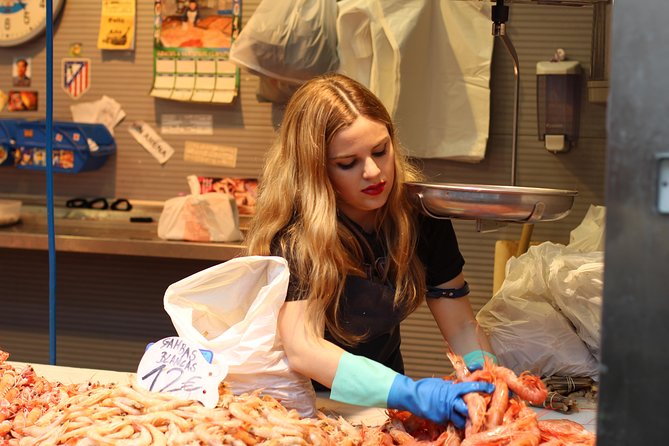
The best part of this Malaga experience happens before the cooking begins. You meet your guide at Atarazanas Market, taste local olives, almonds, and olive oils, then choose ingredients for the paella you will later cook. It gives you a useful look at how locals shop, not just a cooking lesson in a room.
I like the hands-on format and the friendly, social setup. You do real preparation and cooking, with a chef nearby to correct your technique, and you leave with recipes for paella, gazpacho, sangria, and sometimes churros. I also like the food focus: Aloreña olives, local oil, salt cod with orange, seasonal fruit, and market produce all connect the class to Malaga.
The main thing to watch is communication before the start. The current meeting point is Kulinarea at Avenida de Manuel Agustín Heredia, 24, but one class attendee was sent to an old location and missed the market visit. Check the address in your latest confirmation before setting out.
What makes this Malaga class worth your time
- Atarazanas Market comes first: Your guide explains the produce and local specialties before you help select ingredients for paella.
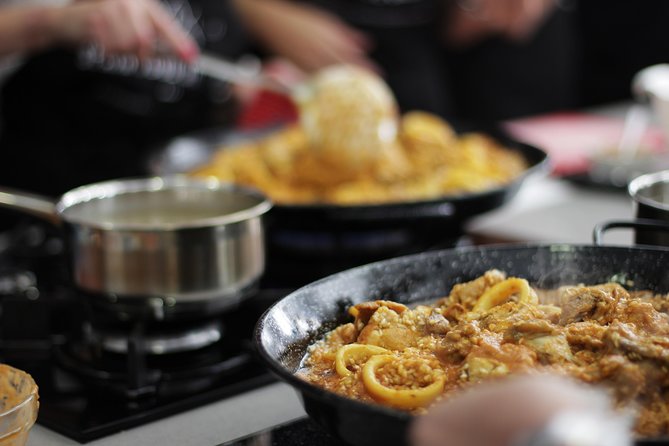
- The cooking is practical: You make a sofrito, prepare gazpacho, and cook paella with step-by-step help from the chef.
- Local tastes are built in: Aloreña olives, roasted almonds, regional olive oils, salt cod, oranges, and seasonal fruit are part of the meal.
- The Soho kitchen is modern and social: The class moves to an arty district venue about five to ten minutes from the market.
- You receive recipes: The handouts let you try the dishes again at home, though it is sensible to request them before leaving.
- Dietary needs can be discussed: Vegetarian and specific dietary options are available if you advise the company when booking.
Atarazanas Market gives the class a local start
Your meeting point is Kulinarea, at Avenida de Manuel Agustín Heredia, 24, in Malaga’s Centro district. From there, the experience begins at the indoor Atarazanas Market, where the guide leads you around the food stalls.
This is more useful than a quick photo stop. The guide talks about fresh fruit, vegetables, and other foods on display, while helping you make sense of Spanish food terms. If you are unsure what a sign or menu item means, this is a good place to ask.
The market visit also gives the paella a reason to exist. You are not simply handed a tray of premeasured ingredients. You help choose the produce and other items that will go into the pan. That small step makes the final meal feel connected to Malaga rather than imported into a generic cooking studio.
Guides vary by date. The class has been led by Jose, Anaïs, Carmen, Elise, Javier, Felipe, Fernando, Javi, and others. The strongest accounts of the experience describe guides who explain Malaga’s food and past clearly, answer questions, and offer restaurant suggestions for later in your visit.
A practical point: market conditions can change. One session took place when the market was closed for a holiday, and the company substituted other local foods. You should still expect the market visit as the normal plan, but a holiday closure can alter the opening sequence.
More cooking classes in Malaga:
- Barcelona: Paella Cooking Experience & Boqueria Market Tour
★ 4.8 · 3,661 reviews - Barcelona Paella Cooking Class with Market Visit, Tapas & Sangria
★ 5.0 · 2,531 reviews - Barcelona Interactive Spanish Cooking Experience
★ 4.5 · 2,155 reviews
Local snacks turn the market visit into a tasting
After shopping, you walk to the cooking venue in the Soho district. The official walk is about five minutes, while some descriptions put it closer to ten. Either way, this is a short city walk rather than a separate transfer.
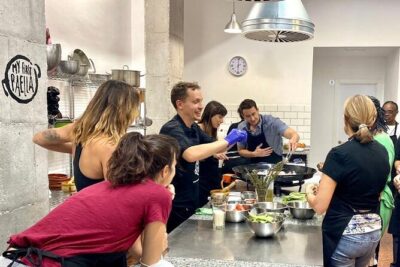
The kitchen is described as modern, clean, and spacious enough for pairs to work comfortably. Once inside, the food lesson broadens beyond paella. You taste roasted almonds or Aloreña olives, a variety grown in Malaga, along with extra virgin olive oils.
The oil tasting is one of the more useful touches. Instead of treating olive oil as one background ingredient, the class lets you compare several oils and notice differences in flavor. That can help you choose better oil for your own cooking, and it gives you a clearer sense of why Spanish olive oil matters at the table.
You may also try tostón de bacalao, made with thick, rustic cateto bread topped with salt cod and orange. It is a distinctly local combination, and a good reminder that Andalusian cooking is not only about the familiar tourist dishes.
These samples are included, as are the main dishes, drinks, and fruit. The exact order can vary. The listed menu includes handmade gazpacho, mixed paella, sangria, and churros, while the detailed program also includes wine or beer and seasonal fruit.
Gazpacho is your first real cooking task
Before the paella, the group makes gazpacho. This cold Andalusian soup usually uses raw tomatoes, cucumbers, and peppers, and it is a sensible first dish because it teaches basic preparation without demanding much time at the stove.
The class is not only a demonstration. You take part in the preparation, with the chef showing you how the ingredients come together. It gives the group an easy start while everyone learns the kitchen setup and meets the other people at the counter.
Gazpacho also suits Malaga’s warm climate. It is fresh, simple, and practical for a home kitchen. If you want to recreate the meal later, this may be the easiest recipe to repeat because it needs no complicated equipment or long cooking period.
Some sessions also include sangria preparation. The supplied menu lists sangria, while the included drinks are described as wine or beer paired with the meal. Since the order and exact menu can vary, ask your guide what your group will prepare and which drinks are being served.
The paella lesson focuses on technique, not theater
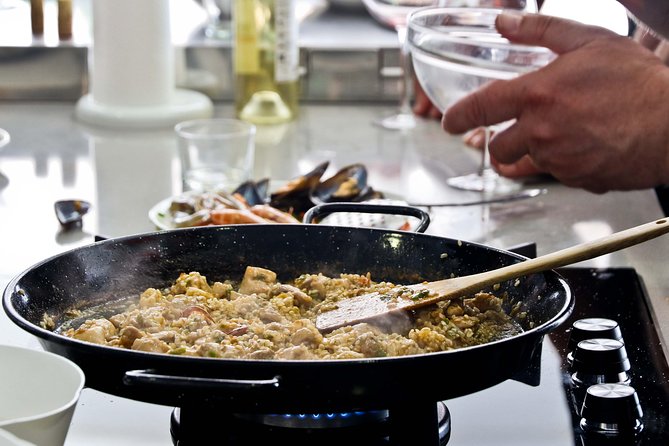
The central lesson is the paella. The chef explains which rice and ingredients to use, then takes you through the stages in order. You begin with the sofrito, the base sauce that builds the first layer of flavor.
This is where the chef’s help matters. Paella can look easy, but the timing of the base, liquid, rice, and added ingredients affects the result. The instructors described in the class material include Alba, Ampara, and other chefs, with guides sometimes translating when needed.
You work in pairs in some sessions, cooking one paella between two people. Other accounts describe each pair eating an individual finished paella. The chef moves around the room, gives clear directions, and offers practical corrections rather than leaving you to guess.
That format works well for beginners. You do not need to arrive with cooking experience, and you are not expected to know Spanish kitchen terms. You can also ask about the correct way to cook or serve paella, a small detail that helps separate a proper lesson from a meal with a quick recipe attached.
The class may use seafood or a mixed paella. One session included seafood paella, while the standard description says mixed paella. If you have strong preferences or allergies, give the company your requirements at booking and confirm the ingredients with the chef at the start.
The best instructors add useful advice for home cooking. Alba was praised for patient, hands-on teaching, while Ampara communicated with an English-speaking group through Felipe when needed. Even without fluent English from every chef, the cooking remains workable when translation and demonstrations are provided.
A few other Malaga outings to compare
- Málaga: Spanish Cooking Workshop with Paella and Sangria
★ 4.9 · 613 reviews - Spanish Cooking Class Paella Tapas and Sangria in Madrid
★ 5.0 · 1,340 reviews - Madrid: Paella and Sangria Workshop in the City Center
★ 4.9 · 1,264 reviews - Paella Cooking Class, Wine Tasting & Central Market in Valencia
★ 5.0 · 1,150 reviews
The shared meal is part of the lesson
Once the pans are ready, you sit down with the group and eat what you made. The meal includes paella, a drink such as regional wine or beer, and seasonal fruit. Some sessions ended with churros or another small dessert, and churros appear on the sample menu.
There is a pleasant social side to this setup. The class brings together couples, families, solo participants, and groups celebrating together. One session included a three-generation family, and another involved a group of ten friends. The kitchen layout encourages conversation once the knives and prep work are finished.
If you prefer a quiet, private lesson, this may not be your ideal choice. You are part of a shared class, and the experience works best when you are happy to cook beside unfamiliar people and eat at a common table.
The group size is listed as a maximum of 12, though some class accounts describe around 16 people. That difference may reflect a change in operation or a different session. If personal attention is especially important to you, confirm the expected group size before booking.
What the $84.69 price includes
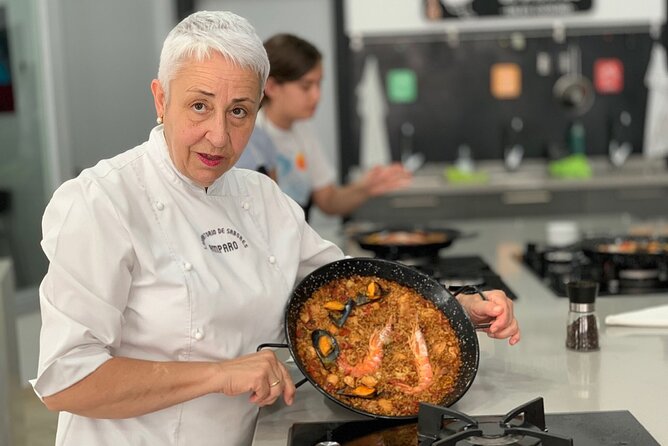
At $84.69 per person, this is not the cheapest meal in Malaga. It is also more than a short demonstration followed by a restaurant plate. You are paying for roughly three and a half hours of food, instruction, market guiding, tastings, drinks, the cooking venue, and the recipes.
The value is strongest if you would otherwise pay for both a market tour and a cooking class. Here, the two activities are linked: you see the ingredients, help select them, then use them in the kitchen. Olive oil tasting and local snacks add more than a standard paella lesson, too.
The price includes:
- Market-based ingredient selection
- Olive oil tasting
- Aloreña olives or roasted almonds
- Gazpacho
- Mixed or seafood paella, depending on the session
- Wine or beer
- Seasonal fruit
- Recipes for the dishes prepared
Hotel pickup and drop-off are not included. You make your own way to the meeting point and leave from the same venue at the end.
For a food-focused visitor with only a few days in Malaga, the cost is reasonable because the experience also supplies practical orientation. Ask your guide for restaurant tips, local dishes to try, and help reading Spanish menus. That advice can improve the rest of your stay, not just this one meal.
Who will enjoy this class most
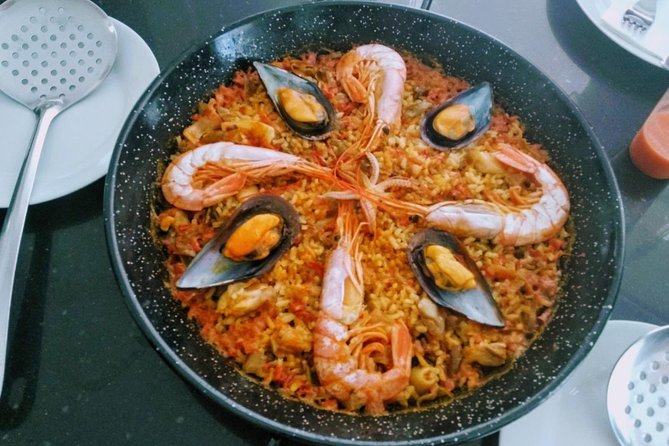
I would choose this for anyone who wants to understand Malaga through food rather than simply photograph it. The market visit gives context, and the kitchen work gives you something useful to take home.
It suits:
- First-time cooks who want clear guidance
- Families with older children
- Couples and friends looking for a shared activity
- Solo visitors who enjoy meeting people at a communal meal
- Food lovers interested in Andalusian ingredients
- Anyone who wants recipes to repeat at home
Children can take part, although the class includes knives and hot cookware, so adults should decide if the format suits their family. One ten-year-old was kept involved with help from the chef, which suggests that attentive instruction can work well for children.
Vegetarians can request an option, and specific dietary requirements should be supplied at booking. A vegan paella was prepared for two participants in one class, and gluten-free bread was arranged for another. These examples are encouraging, but you should not rely on an unannounced substitution. Tell the provider before the day and speak with the chef when you arrive.
The class is offered in English, though the guide may be multilingual and the chef may rely on an interpreter in some sessions. That is worth considering if you need detailed verbal instruction. Demonstration and hands-on help remain central, but language arrangements can differ by date.
A few practical points before you book
The experience lasts about three hours and 30 minutes. Give yourself enough time to reach the meeting point without rushing, especially because a missed start means missing the market portion.
Check your confirmation for the exact address on the day. The stated meeting point is Kulinarea, Avenida de Manuel Agustín Heredia, 24, Distrito Centro, 29001 Málaga, Spain. An earlier communication problem sent one attendee to an old location, so do not assume a saved address from a previous booking is still correct.
The class is near public transportation, and it ends back at the meeting point. You do not need to arrange a return transfer.
The minimum drinking age is 18. Wine and beer are included, and a nonalcoholic option has been available in at least one session. If you do not drink, tell the guide so you can receive the suitable alternative.
Free cancellation is available up to 24 hours before the local start time for a full refund. Changes or cancellations inside that window are not refunded, and the company may offer another date or a full refund if the minimum number is not reached.
Should you book the Malaga paella class?
Yes, if you want more than a restaurant meal and like the idea of learning by doing. The combination of Atarazanas Market, local tastings, a modern Soho kitchen, and a shared paella meal gives you a useful half-day with real food context.
Book it early if your Malaga dates are fixed, since the class is often reserved about 40 days ahead. Before paying, confirm the meeting address, group size, drink arrangements, and any dietary needs.
I would skip it only if you want a private lesson, dislike group cooking, or have no interest in paella and related Spanish dishes. For most food-minded visitors, the chance to choose ingredients at the market and then cook them with a chef makes the $84.69 fare a fair buy.
FAQ
Where does the paella cooking class meet?
The meeting point is Kulinarea at Avenida de Manuel Agustín Heredia, 24, Distrito Centro, 29001 Málaga, Spain. Check your current booking confirmation for the address before leaving, since an old meeting point has caused confusion in the past.
How long does the experience last?
The class lasts approximately three hours and 30 minutes.
What food and drinks are included?
The experience includes olive oil tasting, Aloreña olives or roasted almonds, gazpacho, paella, wine or beer paired with the meal, seasonal fruit, and recipes. The sample menu also lists sangria and churros.
Is the class available in English?
Yes. The experience is offered in English, and it may be operated by a multilingual guide. Some sessions use translation if the chef does not speak English.
Can vegetarian or other dietary options be arranged?
Yes. A vegetarian option is available, and you should advise the provider of specific dietary requirements when booking. Dietary needs should also be confirmed with the chef at the start.
What is the cancellation policy?
You can cancel at least 24 hours before the local start time for a full refund. Cancellations or changes made less than 24 hours before the start are not accepted for a refund.
Recently added in Malaga
- Tour to Gibralfaro★ 4.7 · 182 reviews
- Al Andalus Hammam in Malaga: Relaxing Bath★ 4.5 · 186 reviews
- Benalmádena: Deluxe Parasailing Flight from Benalmadena Port★ 4.8 · 188 reviews
- Caminito del Rey Small Group Tour from Malaga with Picnic★ 5.0 · 190 reviews
- Ultimate Malaga History & Tapas – All Included Full Experience★ 5.0 · 191 reviews
- From Málaga: Caminito del Rey Small-Group Tour with Picnic★ 4.9 · 192 reviews
- Malaga: Granada Day Trip with Alhambra, Palaces and Gardens★ 4.5 · 197 reviews
- Paddle Surf Route Cliffs Nerja and Cascada de Maro + Snorkel★ 4.5 · 198 reviews
Cooking Classes, compared.
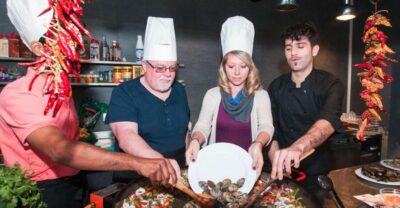
Paella Cooking Experience & Boqueria Market Tour
Read the review →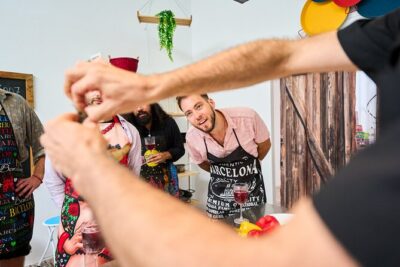
Barcelona Paella Cooking Class with Market Visit, Tapas & Sangria
Read the review →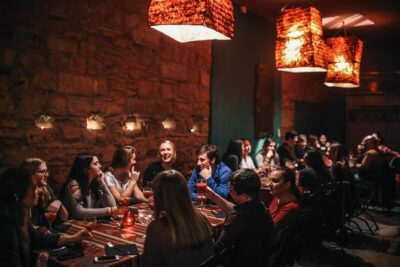
Barcelona Interactive Spanish Cooking Experience
Read the review →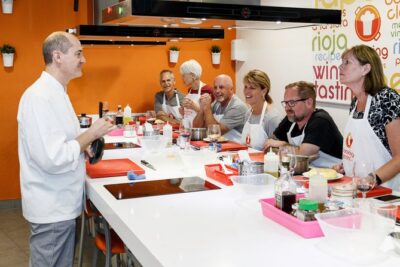
Spanish Cooking Class Paella Tapas and Sangria in Madrid
Read the review →
Paella Cooking Class, Wine Tasting & Central Market in Valencia
Read the review →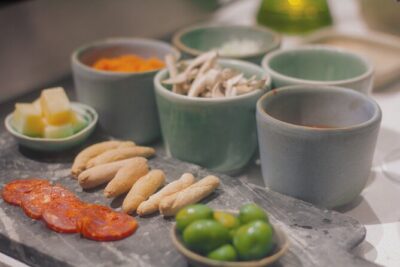
Paella Cooking Class in Madrid with Bottomless Wine Pairing
Read the review →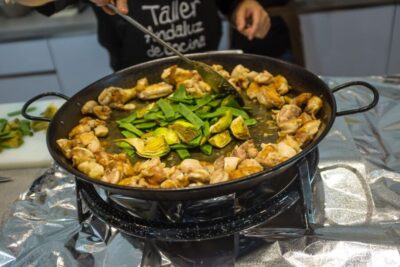
Valencian paella cooking class, tapas and visit to Ruzafa market.
Read the review →Browse the lists this tour appears in