
Reviewed · WALKING TOURS
Jewish Walking Tour Barcelona by Expert Jewish Guide 2h
Barcelona’s old Jewish Quarter is easy to walk past without understanding what you’re seeing. Behind the Gothic Quarter’s narrow lanes are traces of Jewish life, worship, trade, political power, and forced conversion. This private tour brings those fragments together, with a guide such as Ella, Dina, Lilach, or Alan explaining the story as you move from the city’s political center into the medieval Call.
I like the private format, since your group can ask questions and set the pace instead of following a large crowd. I also like the focus on small architectural details, maps, visual aids, and personal context that guides such as Dina and Lilach have used to make the past easier to picture. The main drawback is time: two hours goes quickly, and admission costs are separate, including a requested €5 donation at the synagogue.
Key points to know before you book
- The Ancient Synagogue is the emotional center: Allow time to take in one of Europe’s oldest surviving synagogue sites.
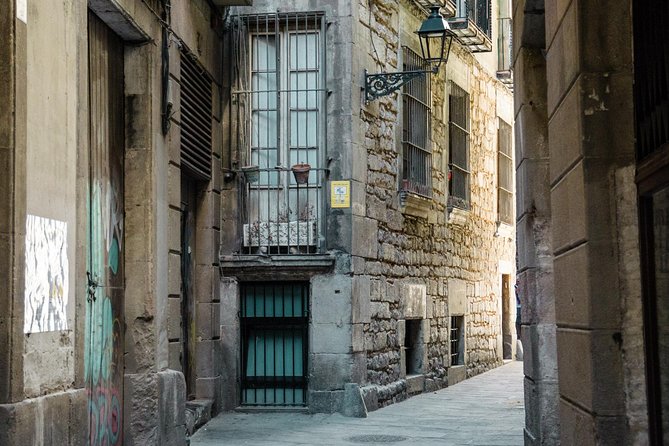
- You walk through the medieval Call: Expect narrow lanes, old stonework, and details that are easy to miss without a guide.
- The tour is private: Only your group takes part, making questions and personal interests easier to accommodate.
- The story reaches beyond Barcelona: Guides connect local Jewish life with Catalonia, Spain, the Inquisition, and the wider Jewish diaspora.
- The meeting point is central: Start at Conesa Entrepans, Carrer de la Llibreteria 1, near public transportation.
- Budget for the synagogue donation: The €5 per person donation is not part of the listed tour price.
Why Barcelona’s Jewish Quarter deserves two focused hours
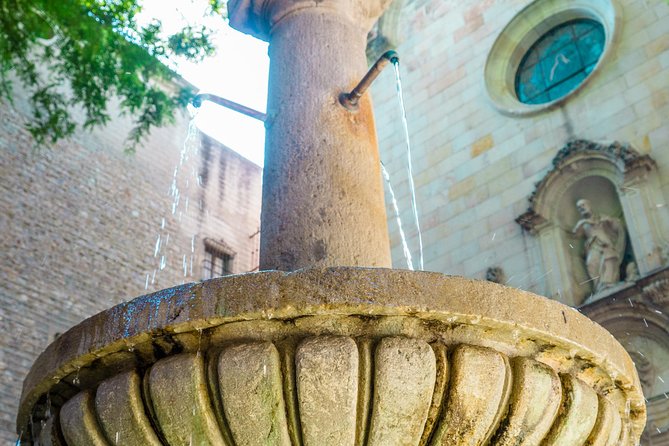
The Jewish Quarter, known as El Call, is not a museum district laid out for easy viewing. It is a small, twisting part of the Gothic Quarter where centuries of history are packed into lanes, courtyards, walls, and changing street lines.
That is exactly why a guide helps. You can walk through the area on your own, but the meaning of a doorway or fragment of masonry may not be obvious. A good guide gives you the setting first, then points out the physical evidence.
This tour also avoids treating Jewish Barcelona as an isolated footnote. The guides place the community within the larger story of medieval Catalonia, Christian and Moorish kingdoms, political life, religious conflict, the Inquisition, and the later Jewish diaspora.
You should expect a serious historical walk, but not a dry lecture. The strongest guides use storytelling, visual aids, maps, architectural clues, and personal perspective. Dina has been associated with Barcelona for more than 40 years, while another guide described in the tour material is an Israeli emigrant living in the city. Those personal connections can add a modern voice to a subject that otherwise risks feeling distant.
More Walking Tours in Barcelona
- Barcelona Tapas and Wine Experience Small-Group Walking Tour
★ 5.0 · 5,804 reviews - Barcelona: Tapas Walking Tour with Food, Wine, and History
★ 4.8 · 4,261 reviews - Barcelona Tapas Walking Tour: Food, Wine & History
★ 4.5 · 1,928 reviews
Starting at Plaça de Sant Jaume
The walk begins at Plaça de Sant Jaume, Barcelona’s political heart. This broad square is the symbolic gateway to the old Jewish area and gives your guide a useful place to explain how the medieval city was organized.
You spend about 15 minutes here. That may sound brief, but it is enough for an introduction to Barcelona’s political and civic life before you enter the tighter lanes of El Call.
I like this opening because it gives the tour a clear frame. Jewish life in medieval Barcelona did not exist separately from the city’s rulers, laws, markets, and religious institutions. Starting at the political center helps you understand that the community was part of the city’s daily workings, not simply a group living behind an abstract historical label.
The square itself can feel open and exposed compared with the lanes ahead. Listen closely here, because this is where the guide establishes names, dates, and relationships that make later stops easier to follow.
The meeting point is at Conesa Entrepans, Carrer de la Llibreteria 1, in Ciutat Vella. Check the exact location before setting out, since the Gothic Quarter’s streets can be confusing and the tour begins on foot.
Entering the Ancient Synagogue
The Ancient Synagogue of Barcelona is the tour’s most important single stop. It is described as one of the oldest synagogues in Europe, and its age gives the site a quiet power even before the historical explanation begins.
You spend about 30 minutes here. Entrance fees are not included, and a €5 per person donation is kindly requested onsite at the synagogue. Bring that amount into your planning so the cost does not come as a surprise.
The synagogue is valuable because it turns a broad historical subject into a physical place. You are not only hearing about Jewish worship in medieval Barcelona. You are standing in a site connected with the community’s religious life and its long, difficult story.
The guide’s role matters especially here. A short visit can otherwise become a quick look at old stonework. Guides such as Ella, Dina, and Lilach are praised for explaining the site in context and drawing attention to details you might walk past alone.
The synagogue is also a good point to ask questions. Since the tour is private, you can request more explanation about architecture, Jewish customs, local history, or the fate of the community without worrying about holding up a large group.
Keep your expectations sensible. This is a two-hour neighborhood walk, not an extended museum visit. The synagogue is one part of a larger route, and the donation is separate from the $96.79 per person tour price.
Reading the lanes of El Call
After the synagogue, the walk continues through MUHBA El Call and the surrounding lanes. You spend around 30 minutes here, where the experience becomes less about one surviving building and more about learning how to read an old neighborhood.
The narrow streets are the setting for centuries of Jewish life and tragedy. Their scale helps you picture how closely connected daily life could be, but the lanes alone cannot tell you who lived there, how the community functioned, or what changed over time.
This is where the guide’s eye earns the fee. Several guides are praised for pointing out small features that are easy to overlook. You might find that a wall, street angle, old entrance, or piece of architecture takes on meaning only after the guide explains its place in the story.
The best part of this section is the combination of movement and explanation. You are walking through a real part of Barcelona rather than standing in one room while dates are delivered at you. The route makes the past feel local and specific.
Expect the walking to be slow and concentrated, with frequent pauses. The lanes are not the place for a fast march. Wear comfortable shoes, and avoid planning a tight appointment immediately afterward.
The material covered here reaches from early Jewish presence in Barcelona through the medieval period, the Inquisition, and the continuing story of Jewish communities in Spain and beyond. If you enjoy history, this is likely to be the most rewarding stretch of the tour.
A few other Barcelona outings to compare
- Barcelona: Two-Hour Midday or Sunset Sailing Cruise
★ 4.8 · 1,732 reviews - Barcelona: 2-Hour City Sights Guided Segway Tour
★ 4.9 · 453 reviews - Barcelona: 2-Hour Sailboat Tour with Snacks and Drinks
★ 4.8 · 357 reviews - Barcelona: Jewish Quarter 2-Hour Walking Tour
★ 4.8 · 333 reviews
Plaça del Rei and the power of royal Barcelona
The final major stop is Plaça del Rei, where you spend about 30 minutes. The square connects Jewish Barcelona with royal authority, public life, and the political forces that shaped the city.
This is a strong ending because it widens the focus again. You have moved from the city’s political center, into a place of worship, through the lanes of community life, and now to a setting where Jewish leaders served kings and major decisions affected the city.
The square’s connection to royal Barcelona helps show how close Jewish life was to the center of power. It also gives the guide room to explain how political protection, social position, religious conflict, and changing royal priorities could affect a community.
Guides on this tour often connect architecture, religion, politics, and local history rather than treating each subject as a separate box. That approach is useful here, since the physical square makes more sense when you understand the people and institutions connected with it.
The tour then returns to the meeting point. Since there is no hotel pickup or drop-off, you will need to make your own way to the starting location and continue independently afterward.
The guides make the real difference
The tour is sold with a professional local guide, but the individual guide can shape the experience. Names associated with particularly strong tours include Ella, Dina, Lilach, Leilah, Lichal, Rina, Eyal, and Alan.
Ella is described as warm, clear, and strong on history and architecture. Dina is noted for using maps, visual aids, and storytelling, as well as bringing long familiarity with Barcelona to the walk.
Lilach is associated with an energetic style and broad knowledge stretching from Catalonia to Spain, Europe, and the diaspora. One account also describes her keeping the historical explanation going during heavy rain, which suggests a guide who can adapt when conditions are less than ideal.
Alan is praised for answering questions and making an effort to tailor the experience to the group. That matters on a private tour, especially if your interest is focused on architecture, genealogy, medieval politics, religious history, or modern Jewish life.
You cannot select a particular guide from the information provided, so treat the names as examples of the level and range of expertise you may encounter, not a guarantee of assignment. Still, the repeated emphasis on warmth, personal attention, clear storytelling, and strong subject knowledge is encouraging.
What you get for $96.79 per person
At $96.79 per person, this is not the cheapest way to spend two hours in Barcelona. You are paying for a private experience, a specialist subject, and a guide who can respond to your questions rather than simply delivering a fixed speech.
The value depends heavily on your group size and interest. For a couple or a small family with a real interest in Jewish history, the personal format can make the price reasonable. You can ask for context, slow down at important points, and avoid spending time on material that does not matter to you.
Group discounts are available, which may improve the price for a larger private party. The tour is offered in English and includes the two-hour walking experience plus the professional local guide.
You still need to pay for the synagogue donation separately. Food, drinks, hotel transportation, and other entrance fees are also excluded. The tour is best viewed as a focused history experience, not a package that covers a full day of sightseeing.
A free cancellation policy allows you to cancel up to 24 hours before the start time for a full refund. Changes or cancellations inside that 24-hour window are not accepted for a refund, with cut-off times based on Barcelona’s local time.
Who will get the most from this walk
This tour suits you if you want to understand Barcelona beyond Gaudí, tapas, and the main Gothic Quarter sights. It is particularly useful for anyone tracing Jewish heritage, studying medieval Spain, or trying to connect local architecture with the wider story of Jewish communities in Europe.
History fans should find plenty to enjoy, since the route covers more than individual buildings. The guides explain the Jewish presence in Barcelona alongside Catalan history, royal power, religious change, and the Inquisition.
It also works well for first-time visitors who want a strong introduction to the Gothic Quarter. You will not see every major Barcelona attraction, but you will learn how to look at one of the city’s oldest neighborhoods with more care.
This may not be the right choice if you want a relaxed café walk, a broad overview of all Barcelona history, or a tour with lots of free time for photos. Two hours is compact, and the subject is serious. You should come ready to listen and walk.
Most people can participate, and the route is near public transportation. The provided information does not give a detailed accessibility assessment, so contact the provider if stairs, narrow lanes, or walking conditions are important for your group.
Practical ways to enjoy the two hours
Arrive early at Conesa Entrepans on Carrer de la Llibreteria 1. The Gothic Quarter is easy to reach but not always easy to navigate, and a few spare minutes will help you start calmly.
Wear shoes suited to old city streets. The tour is entirely on foot and includes narrow lanes, several walking sections, and frequent stops.
Bring questions. A private guide can make the walk more useful when you explain your interests at the start. If you are researching family history, ask about the places and periods most relevant to your search, though no genealogy service is included.
Plan the rest of your day around the tour rather than squeezing it between distant appointments. The route ends back at the starting point, so you can continue exploring Ciutat Vella afterward.
Keep €5 per person ready for the synagogue donation. Since the tour price does not include entrance costs, this small preparation keeps the visit simple.
Should you book this Jewish walking tour?
Book it if you want a focused, personal introduction to Jewish Barcelona and prefer understanding a place rather than simply photographing it. The strongest reasons are the private format, the Ancient Synagogue, and guides who connect tiny physical details with the wider story of Catalonia, Spain, and the Jewish diaspora.
At $96.79 per person, the price makes the most sense for a couple, family, or small group that will take advantage of the guide’s attention. If your main goal is a cheap orientation walk, you can find less costly options. If you want expert interpretation of El Call and a chance to ask real questions, this two-hour route offers solid value.
FAQ
How long is the Jewish Walking Tour Barcelona?
The walking tour lasts approximately two hours.
Is this a private tour?
Yes. Only your group participates in the activity.
What language is the tour offered in?
The tour is offered in English.
Where does the tour start?
It starts at Conesa Entrepans, Gòtic, Carrer de la Llibreteria 1, Ciutat Vella, 08002 Barcelona, Spain.
Where does the tour end?
The activity ends back at the meeting point.
Is the Ancient Synagogue included?
The Ancient Synagogue is included as a stop, but entrance fees are not included. A €5 per person donation is kindly requested onsite.
Is hotel pickup included?
No. Hotel pickup and drop-off are not included.
Can I cancel for a full refund?
Yes. You can cancel at least 24 hours before the experience start time for a full refund. Cancellations or changes made less than 24 hours before the start time are not accepted for a refund.
Recently added in Barcelona
- Make Authentic Espadrilles in Barcelona★ 5.0 · 172 reviews
- Bean to Bar Chocolate Workshop in Barcelona★ 5.0 · 172 reviews
- Sagrada Familia Skip the Line Tour Optional Small Group★ 4.5 · 173 reviews
- Barcelona Pass: Save up to 50% – Includes Sagrada Familia★ 4.0 · 175 reviews
- Barcelona: “The Shadow of the Wind” Literary Walking Tour★ 4.5 · 176 reviews
- Barcelona’s Original Bike Tour in English★ 5.0 · 176 reviews
- Barcelona: Catamaran Cruise w/ Sailing, Wine, & Tapa★ 4.7 · 176 reviews
- Guided Gaudí Trencadís Mosaic Workshop in Barcelona 2 Hours★ 5.0 · 176 reviews
Walking Tours, compared.

Barcelona Tapas and Wine Experience Small-Group Walking Tour
Read the review →
Tapas Walking Tour with Food, Wine, and History
Read the review →
Albaicín and Sacromonte Guided Sunset Walking Tour
Read the review →
Toledo Tour & Vineyard Walk with Wine Tasting from Madrid
Read the review →

Barcelona Tapas Walking Tour: Food, Wine & History
Read the review →
Madrid Old Town & Royal Palace Walking Tour Skip the Line Ticket
Read the review →
Browse the lists this tour appears in