
Reviewed · DRINKING TOURS
Bean to Bar Chocolate Workshop in Barcelona
The most interesting part of this Barcelona workshop is that you do not start with a neat chocolate wafer. You start with the cocoa bean, roasting, peeling, grinding, and turning it into cocoa paste with your own hands. Guides including Oscar, Renée, and Franklin bring plenty of warmth and personality to the lesson.
I like the small group of up to eight, which gives you room to ask questions and handle the ingredients. I also like the mix of history, tasting, and practical work, plus the fact that you leave with a bar you made yourself. The main consideration is that this is more of a guided chocolate lesson than a free-form confectionery class, so you will learn and taste as much as you create.
Key points at a glance
- Start with a real cocoa pod: See what cocoa looks like before it becomes a polished bar.
- Roast, peel, and grind the beans: You handle the early stages instead of simply watching a demonstration.
- Taste cocoa in several forms: Try chocolate from different growing regions and prepare cocoa-based drinks.
- Make one bar to take home: Your finished chocolate gives the workshop a useful souvenir.
- Learn the human side of chocolate: The session covers cocoa-growing communities, traceability, and the bean-to-bar movement.
- Suitable for ages 10 and up: Adults and teenagers can take part, with Spanish and English instruction.
Inside Kina Chocolates in Barcelona
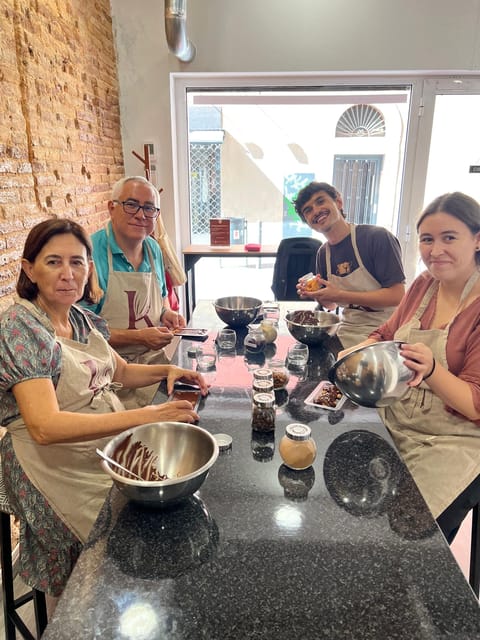
Kina Chocolates is the meeting point for this two-hour class. The setting is described as a small artisan chocolate shop, which matters because the workshop feels tied to actual chocolate production rather than set up as a generic tourist demonstration.
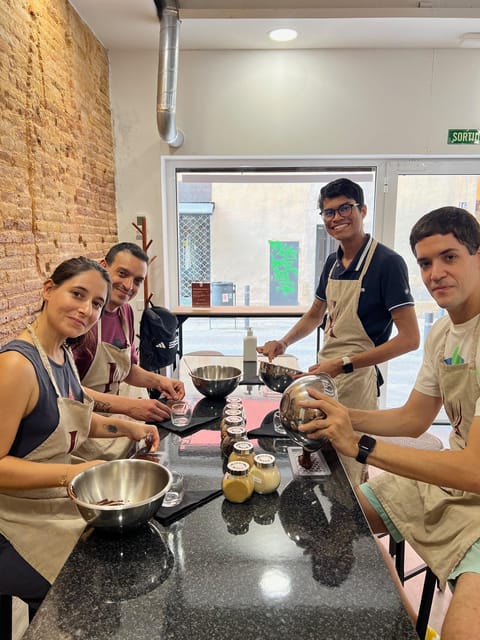
You work in a small group of no more than eight people. That is a good size for a hands-on class. You are not lost at the back of a crowded room, and the guide can respond to questions or adjust the pace when younger participants need a change of focus.
The teaching is available in Spanish and English. Some material may appear in its original language, so you should be comfortable following a little natural language switching if needed. Guides named in the feedback include Oscar, Oskar, Renée, and Franklin. The recurring strength is their enthusiasm for the subject, though the particular guide depends on the date of your booking.
You receive an apron and hat, along with the materials and utensils needed for the workshop. A certificate and a written summary are included too. The summary is handy if you want to remember the stages later, especially once you begin looking at chocolate labels with a more critical eye.
A few other Barcelona outings to compare
- Barcelona: Unique Sunset Sailing Tour with Tapas & Open Bar
★ 4.7 · 959 reviews - Barcelona Sailing: Light Snacks & Open Bar with Private Option
★ 5.0 · 874 reviews - Barcelona Sensational Sunset Tour with Open Bar and Snacks
★ 5.0 · 681 reviews
From cocoa pod to cocoa bean
The class begins with the source. You get to observe a cocoa pod and learn how cocoa is grown, harvested, and handled in the fields before the beans reach a chocolate maker.
That first step gives useful context to everything that follows. A chocolate bar can look simple on a shop shelf, but the raw material has already passed through several demanding stages before roasting begins. The workshop connects the finished food with the farming work behind it.
You also learn about the history of chocolate and the ways cocoa has been used in earlier cultures. This is not just background decoration. It helps explain why cocoa has been prepared as drinks, ground into pastes, and combined with other ingredients in different periods.
The class also addresses the lives of cocoa-producing communities and the idea of bean to bar. You gain a clearer sense of traceability and the work involved in getting cocoa from its growing region to an artisan shop in Barcelona. One especially useful theme is the link between bean quality, the final taste, and fair treatment for farmers.
Roasting and peeling the beans
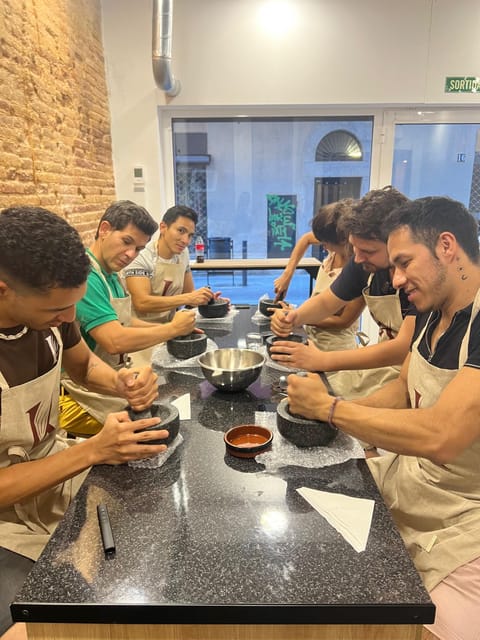
Next comes the hands-on work. You roast cocoa beans, then peel them to reveal the nibs inside.
Roasting is a key moment because it changes the aroma and flavor of the beans. You get to see and smell that change rather than hearing about it in the abstract. Peeling then shows you how much preparation is needed before the cocoa can become a smooth chocolate mixture.
This is the part that makes the class feel different from a standard tasting. You are handling the raw ingredient and seeing its texture change. Cocoa beans are not immediately sweet or creamy, and the early stages can surprise anyone who only knows chocolate in its finished form.
The work is practical but not especially difficult. The guide takes you through each stage, so you do not need cooking experience. You should expect to follow instructions rather than invent your own roasting method.
Grinding cocoa into paste
After peeling, you grind the cocoa and make your own cocoa paste. This gives you a direct look at the point where roasted nibs begin to resemble something used in chocolate making.
Grinding also makes the labor of chocolate production easier to understand. A finished bar hides the time, equipment, and control needed to break down the cocoa into a workable form. Here, you can feel the process and compare the texture as it develops.
The workshop does not promise that you will independently complete every technical stage of professional chocolate production. This is a guided introduction, with the instructor organizing the steps and explaining what is happening. That balance works well for families and first-time learners, but serious confectionery students may want a longer, more technical course.
Same city, a completely different evening:
- Barcelona: Sagrada Familia Entry Ticket with Audio Guide
★ 4.6 · 105,312 reviews - Barcelona: Park Güell Admission Ticket
★ 4.4 · 76,534 reviews - Barcelona: Casa Batlló Entry with Self-Audioguide Tour
★ 4.7 · 25,359 reviews - Barcelona: 24 or 48-Hour Hop-On Hop-Off Bus Tour
★ 4.4 · 20,872 reviews
Tasting cocoa from different regions
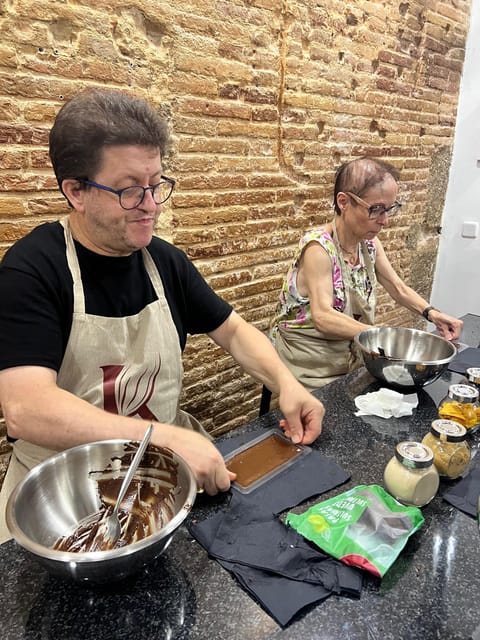
Tasting is woven into the lesson rather than saved for the final few minutes. You try chocolate made from beans associated with different climates and regions, which gives you a chance to notice how cocoa can vary.
The guide also explains how to taste the different elements of chocolate. You may find yourself paying attention to aroma, bitterness, sweetness, texture, and the character of the bean instead of simply deciding if a bar tastes good.
This is a useful part of the workshop for anyone who buys chocolate at home. It gives you a better vocabulary for comparing products and helps explain why artisan chocolate can taste very different from mass-market bars.
You also sample cocoa in forms beyond the standard bar. The session includes various cocoa-based drinks, with participants describing two different drinks in particular. These tastings show how the same raw ingredient can produce very different results when prepared in another way.
Making your chocolate bar
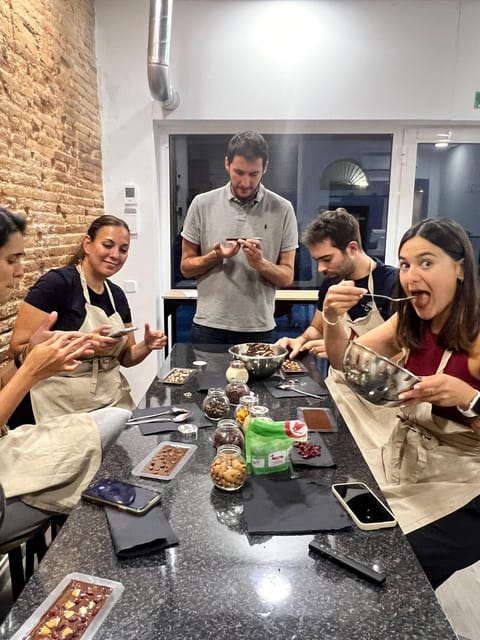
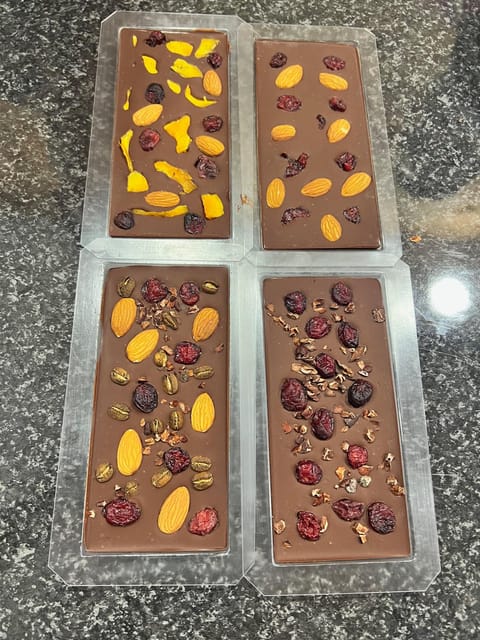
The workshop ends with your own chocolate bar to take home. You get to apply the ideas from the earlier stages and make a finished product with your group’s guidance.
The bar is the most obvious souvenir, but it also gives the class a satisfying finish. You have seen the pod, handled the beans, roasted and peeled them, ground the nibs, tasted different chocolates, and then made something of your own.
Bring a little care to the journey home. One participant found that Barcelona’s summer heat melted the bar before it arrived safely. The practical lesson is simple: keep your chocolate cool, especially in warm weather, and do not leave it in a hot bag or car.
The finished bar may not look like a polished commercial product, and that is part of the point. You are taking home evidence of the process, not just another packaged sweet. It is a good souvenir for children and teenagers because they can explain how it was made.
What the teaching is really like
The strongest part of the class is the guide. Oscar and Oskar are described as deeply passionate about chocolate, while Renée is praised for her energy, clear explanations, and friendly manner. Franklin is also noted for being engaging and willing to answer questions.
The style appears to be lively rather than formal. Expect stories, questions, tasting prompts, and the occasional joke or prank. One guide even used small tricks to keep the group entertained. That can make the two hours pass quickly, especially for teenagers who might lose interest in a lecture.
At the same time, the class covers a fair amount of material. You learn about cocoa geography, cultivation, history, fermentation, processing, tasting, and modern bean-to-bar production. The result is a good blend of information and activity.
I would not book this expecting a silent, step-by-step pastry course. The guide leads the session, and the educational side is substantial. If you want a relaxed introduction with plenty of tasting and some real handling of cocoa, the format is well judged.
Is $47 a fair price?
At $47 per person, this is not the cheapest chocolate tasting in Barcelona. It is also more than the price of buying several ordinary bars from a shop.
The value comes from the amount packed into two hours. You receive instruction, ingredients, equipment, tastings, cocoa drinks, a handmade bar, an apron and hat during the class, a certificate, and a written workshop summary. More important, you are paying for access to a process that is difficult to understand from a shop counter.
The small group improves the value. With a maximum of eight participants, you get more direct contact with the guide and more chances to work with the beans. The certificate is a pleasant extra, though I would not use it as the main reason to book.
I think the price is fair for chocolate lovers, families, and curious food-focused visitors who want more than a quick sample. It is less compelling if you only want to eat chocolate or if you have already taken a technical bean-to-bar course.
The shop also sells its own chocolate and related products. You might find cocoa bean shell tea, caramel cocoa beans, and packaged bars available to buy after the class. The workshop itself is focused on teaching rather than pressuring you to purchase, so you can browse at your own pace.
Best for families, teenagers, and curious eaters
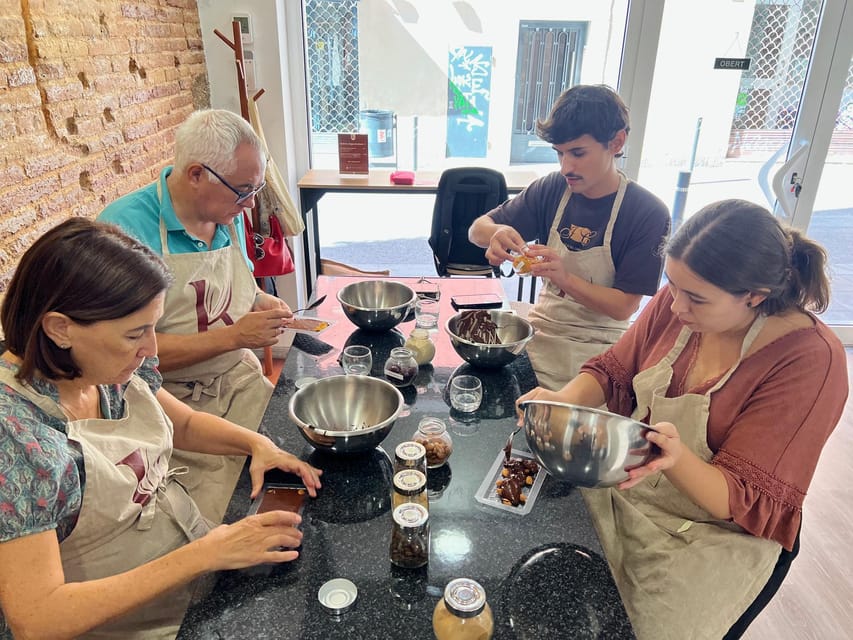
The activity is designed for adults and teenagers, and it has worked well for families with children around 10 years old and older. Younger participants can take part in roasting, peeling, grinding, tasting, and making a bar, but they should be able to follow instructions and stay engaged during the history and farming sections.
The mix works particularly well for families with different interests. One person can enjoy the food history, another can focus on the production process, and children can look forward to making the bar.
Teenagers may appreciate that the class is not simply a talk. They handle real cocoa beans and see the results of each stage. Parents get an activity that is educational without feeling like a school lesson.
Couples can also make good use of the session. You leave with a shared souvenir and a better sense of why chocolate varies in quality and flavor. Solo visitors should be comfortable joining a small group, but the limited size makes it easier to settle in.
The workshop is wheelchair accessible. If you have allergies or food intolerances, tell the provider in advance so the session can be adapted. This is important because the activity includes tasting and hands-on food preparation.
When to fit it into your Barcelona plans
The class lasts two hours, so it fits neatly into a morning or afternoon in Barcelona. Check the available starting times when you book, since the schedule can vary.
It is also a useful rainy-day plan. You spend the session indoors at the shop, and the activity gives you something more memorable to do than simply wait out bad weather in a café.
I would avoid placing it immediately before a demanding meal if you are sensitive to sweet foods. The workshop includes chocolate samples, drinks, and your finished bar, so it is best treated as a substantial tasting rather than a tiny snack.
Afterward, you may want to buy chocolate from Kina Chocolates. You do not need to purchase anything for the workshop to feel complete, but the shop gives you a chance to continue exploring the flavors and products introduced in class.
Booking, flexibility, and language
The activity costs $47 per person and offers free cancellation up to 24 hours before the start time for a full refund. You can also reserve now and pay later, which helps if you are still arranging your Barcelona schedule.
Instruction is offered in Spanish and English. The small group is capped at eight people, so booking ahead is sensible if you want a particular date or need space for a family group.
Because some content may be presented in its original language, ask questions if you miss a term or explanation. The guides are used to explaining the process and the workshop is designed to be interactive.
Should you book the bean-to-bar workshop?
Book it if you want to understand chocolate from its source, enjoy tasting, and prefer activities where you use your hands. The combination of cocoa history, farming, regional flavor, drinks, and chocolate making gives you much more than a standard shop visit.
I especially recommend it for families with children aged about 10 and older, couples seeking a different Barcelona activity, and anyone who has wondered why artisan chocolate tastes so unlike a supermarket bar.
Skip it if you want a fully independent cooking class, a long technical course, or only a quick tasting. The guide controls the pace, and the lesson includes plenty of explanation.
For most curious chocolate lovers, the two hours and $47 price make sense. You leave with a bar, a certificate, useful notes, and a new respect for the work hidden inside something as ordinary as a square of chocolate.
FAQ
Where does the bean-to-bar chocolate workshop take place?
The workshop takes place at Local Kina Chocolates in Catalonia, Spain.
How long does the workshop last?
The workshop lasts two hours. Starting times vary, so check availability when booking.
How much does the workshop cost?
The listed price is $47 per person.
What languages are available?
The instructor can lead the workshop in Spanish or English. Some content may be shown in its original language.
How many people are in each group?
The workshop is limited to eight participants.
What will I do during the workshop?
You learn about cocoa cultivation and chocolate production, observe a cocoa pod, roast and peel cocoa beans, grind them, make cocoa paste, prepare cocoa-based drinks, taste chocolate, and make a chocolate bar.
Can I take chocolate home?
Yes. You make one chocolate bar to take home with you.
What is included in the price?
Materials and utensils, an apron, a hat, a personalized completion certificate, and a written summary of the workshop are included.
Is the activity suitable for teenagers?
Yes. The workshop is intended for adults and teenagers. The activity has also been used as a family experience for children around 10 years old and older.
Is the workshop wheelchair accessible?
Yes, the activity is wheelchair accessible.
What if I have an allergy or food intolerance?
Tell the provider about any allergies or intolerances in advance so the workshop can be adapted.
Can I cancel my booking?
You can cancel up to 24 hours in advance for a full refund. The activity also offers a reserve-now-and-pay-later option.
More Workshops in Barcelona
- Barcelona Paella Cooking Class with Market Visit, Tapas & Sangria
★ 5.0 · 2,531 reviews - Barcelona: Cocktail Master Class by Mixologist with Tapas
★ 4.7 · 959 reviews - Barcelona: Paella Cooking Class with Market Visit and More
★ 4.9 · 711 reviews - Paella Cooking Class with Professional Chef: Four Course Dinner
★ 5.0 · 561 reviews
Recently added in Barcelona
- Make Authentic Espadrilles in Barcelona★ 5.0 · 172 reviews
- Sagrada Familia Skip the Line Tour Optional Small Group★ 4.5 · 173 reviews
- Barcelona Pass: Save up to 50% – Includes Sagrada Familia★ 4.0 · 175 reviews
- Barcelona: “The Shadow of the Wind” Literary Walking Tour★ 4.5 · 176 reviews
- Barcelona’s Original Bike Tour in English★ 5.0 · 176 reviews
- Barcelona: Catamaran Cruise w/ Sailing, Wine, & Tapa★ 4.7 · 176 reviews
- Guided Gaudí Trencadís Mosaic Workshop in Barcelona 2 Hours★ 5.0 · 176 reviews
- Barcelona Cable Car Sky Views, Magic Fountain & Castle Visit★ 4.2 · 177 reviews
Drinking Tours, compared.
Guided Pub Crawl Madrid Experience and Club Entry
Read the review →

Sunset Boat Party at Ibiza Boat Club with Open Bar
Read the review →
Unique Sunset Sailing Tour with Tapas & Open Bar
Read the review →
Barcelona Sailing: Light Snacks & Open Bar with Private Option
Read the review →
Barcelona Sensational Sunset Tour with Open Bar and Snacks
Read the review →
El Born and Gothic Quarter Wine & Tapas Bar Tour
Read the review →Browse the lists this tour appears in