
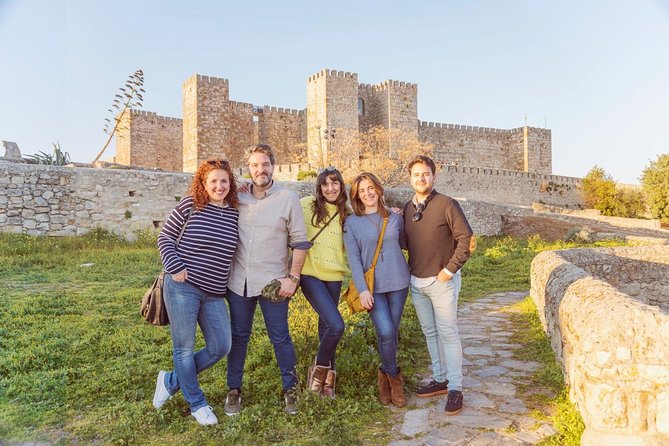
Reviewed · SPAIN
Visit Trujillo Medieval Scene and Route of the Discoverers
Trujillo’s great strength is that its past is not boxed inside a museum. It unfolds across the Plaza Mayor, up steep stone lanes, through noble houses, and onto the castle hill. This guided walk ties those pieces together, from medieval kings to the conquistadors who carried Trujillo’s name across the Atlantic.
I like the access to the castle, cisterns, and Santa María la Mayor, since those are the places that give the town real depth. I also like the guide-led focus on small details, family coats of arms, balconies, women’s roles, local biodiversity, and film locations. The main consideration is the walking: Trujillo is built on uneven, sloping streets, and the tour can run longer than its advertised two and a half hours.
Key points at a glance
- Castle and cisterns included during daytime visits, giving you more than an outside look at Trujillo’s fortress.
- Santa María la Mayor included, one of Cáceres province’s most important churches.
- A strong conquistador connection, with the Pizarro House Museum and palaces linked to figures who served in the Americas.
- Guides praised for warmth and storytelling, especially Alicia, Ana, José, and Esmeralda.
- Plaza Mayor is both the starting point and a major attraction, filled with Renaissance palaces and the famous equestrian statue of Francisco Pizarro.
- Small group size of up to 35 people, with a mobile ticket and free cancellation up to 24 hours before departure.
Trujillo begins in its grand Plaza Mayor
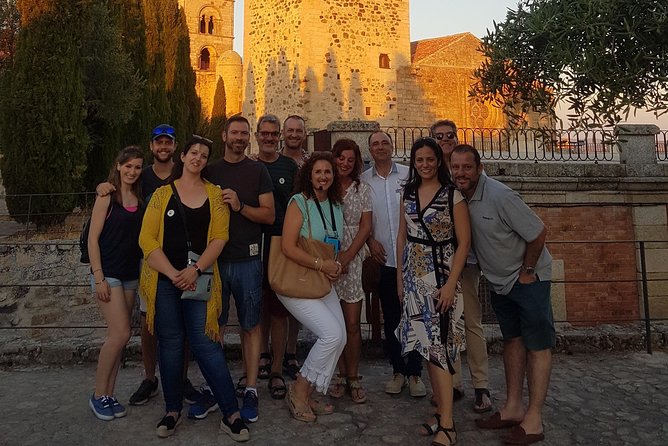
The tour starts at 10:30 a.m. in Trujillo’s Plaza Mayor, also called Plaza de la Hispanidad. This is the right place to begin because the square gives you a quick visual lesson in Trujillo’s wealth and social order.
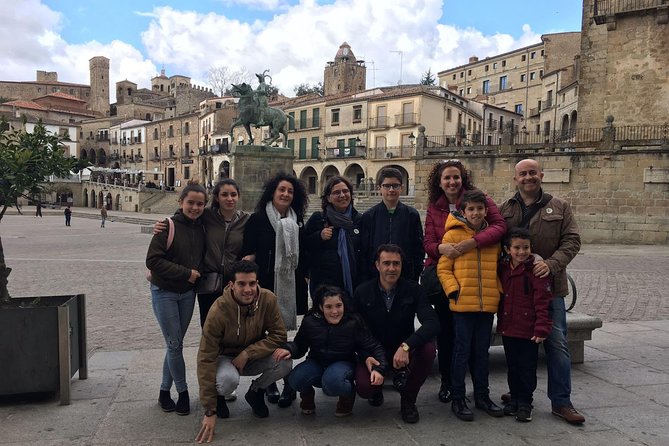
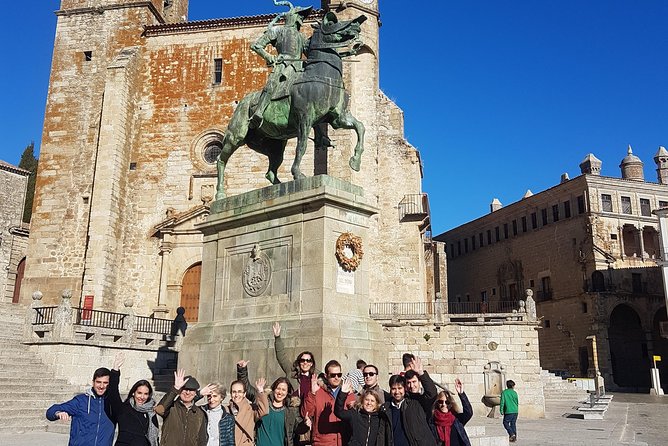
Renaissance palaces frame the open space. Their stone façades, corner balconies, carved shields, and formal proportions reflect the money brought back by powerful families connected with Spain’s American conquest. In the center, the statue of Francisco Pizarro points to the city’s most famous international connection.
I like having a guide here before heading uphill. Without context, the square can look like a handsome collection of old buildings. With explanation, each palace becomes part of a larger story about noble families, military service, trade, ambition, and the cost of empire.
The guide also points out good photo positions. That matters because Trujillo’s square changes character throughout the morning. You can photograph the palaces from the broad center, then look back at the whole square as the route climbs toward the medieval quarter.
What else fills a Spain itinerary:
- Barcelona: Sagrada Familia Entry Ticket with Audio Guide
★ 4.6 · 105,312 reviews - Barcelona: Park Güell Admission Ticket
★ 4.4 · 76,534 reviews - Seville: Royal Alcázar Entry Ticket
★ 4.6 · 28,378 reviews
Up through the medieval town
From the square, you head inside the old walled town. The route passes towers, manor houses, churches, convents, and palaces packed along cobbled streets. Trujillo works best on foot because the distance between its monuments is short, while the changes in height and architecture tell the story of the city.
The walk is not a flat stroll. You should expect uneven paving and some uphill sections. One guide specifically points out that you need to walk a bit, though the views at the end make the effort worthwhile. Wear shoes with a firm sole, and keep your pace comfortable.
This part of the tour is where guide quality makes the biggest difference. Alicia Ruiz is repeatedly praised for explaining not only the buildings but also the reason behind a balcony, coat of arms, image, or architectural detail. Ana is noted for a clear, lively style and for answering questions without rushing the group. José brings energy to the story of Trujillo and its links with the conquistador families, while Esmeralda is described as a particularly strong match for the place.
Those names are useful to know, but the exact guide is not guaranteed. The important point is the style of the experience: this is not simply a march from one landmark to the next. The guides connect buildings to people and events, and several have been willing to continue beyond the planned finish when the group needed more explanation.
The Alcazaba, castle, and underground cisterns
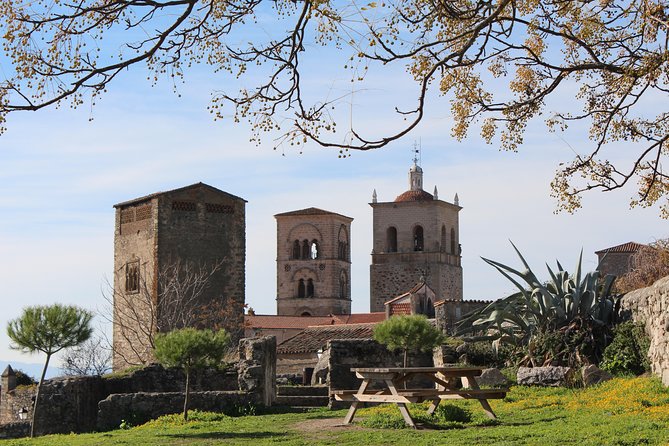
The Castillo de Trujillo occupies the highest part of the old town. Its location is practical as well as scenic. From the fortress, the city’s defensive position becomes clear, and you get broad views across the surrounding Extremadura countryside.
The castle is the oldest-feeling part of the tour. Its stone walls, towers, and elevated position give you a sense of Trujillo as a fortified settlement rather than a collection of pretty streets. The guide explains the role of the Alcazaba and helps you read the remains as part of the town’s medieval defenses.
The tour also includes the castle’s cisterns during daytime visits. These underground water stores are a valuable inclusion because they show how people lived through siege and drought. They are not as visually grand as a palace courtyard, but they offer a practical glimpse into the town’s survival system.
The advertised duration is about two hours and thirty minutes, but the timing deserves attention. One part of the schedule gives three hours for the main guided visit, and several guides have allowed the tour to continue beyond the contracted time. I would not book a tight lunch reservation immediately afterward. The extra time can be a benefit, but you should leave room in your day.
Santa María la Mayor, Trujillo’s major church
The Iglesia de Santa María la Mayor is another important included visit. It is identified as a National Interest Monument and as one of the most important churches in Cáceres province.
The church adds a different layer to the tour. The castle explains defense and power. Santa María la Mayor shows how religious authority and civic pride shaped the medieval town. Its long building history also helps you see the shift from medieval forms toward later architectural styles.
The planned stop is about 15 minutes, so this is not a long church study. I would treat it as a focused introduction rather than a complete examination of every chapel and detail. The guide’s explanation is especially useful here because the church can be difficult to read quickly on your own.
Daytime entry to Santa María la Mayor is included. The information specifies that monument tickets are not included for visits beginning at 8 p.m. Since this experience starts in the morning, that evening restriction should not affect the advertised departure, but it is worth noting if you are comparing different times or tour options.
Same city, a completely different evening:
- Barcelona: Casa Batlló Entry with Self-Audioguide Tour
★ 4.7 · 25,359 reviews - Seville: Cathedral and La Giralda Entry Ticket
★ 4.5 · 24,592 reviews - Madrid: Tour Bernabéu Entry Ticket
★ 4.5 · 21,573 reviews - Barcelona: 24 or 48-Hour Hop-On Hop-Off Bus Tour
★ 4.4 · 20,872 reviews
The palaces around the Plaza Mayor
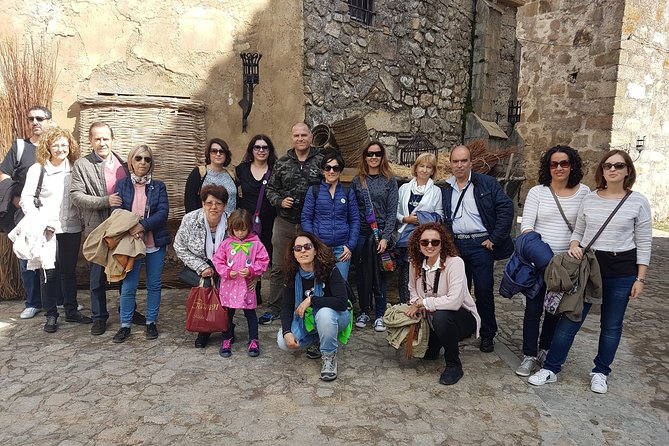
After the castle and church, the route gives more attention to Trujillo’s noble architecture. Several palace stops are brief, usually around 10 minutes each, but together they explain why the town feels unusually grand for a small provincial city.
The Palacio del Marqués de la Conquista is a Plateresque palace on the Plaza Mayor. Its façade is one of the square’s key sights, with the elaborate decoration associated with Spain’s early modern period. This is a good place to connect architecture with the wealth of the families who gained status through service and conquest.
The Palacio de San Carlos reflects the classicist style of the 16th and 17th centuries. Its cleaner design gives you a useful contrast with the more decorated Plateresque buildings nearby. A guide can help you spot these differences instead of seeing every stone façade as part of one general old-town style.
The Palacio de Orellanas-Pizarro is linked with the first corregidor of Cuzco. That connection brings the route back to the Americas, but the tour does not reduce Trujillo to a single conquistador story. The strongest guide commentary also covers art, architecture, local economics, and the lives of women in the town.
The Iglesia de San Martín sits in the Plaza Mayor and dates from the 14th to the 16th centuries. The church is included as an exterior or guided stop, but its admission is listed as not included. That distinction is easy to miss, so ask the guide if you want to enter and are prepared to pay any separate fee.
Pizarro House Museum and the conquistador story
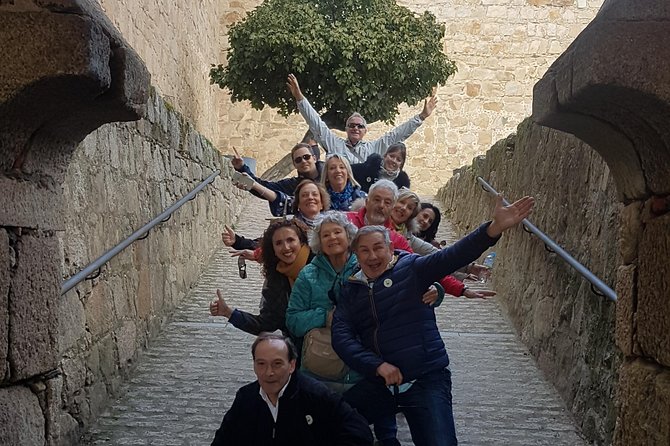
The Pizarro House Museum recreates a late 15th-century hidalgo manor house. This is a useful stop because it brings the grand names down to household scale.
Instead of only hearing about Pizarro as a historical figure, you get a sense of the type of home associated with a minor nobleman of the period. The house helps explain the social world from which many military leaders and colonial administrators came. It also gives the tour a more personal feel after the larger castle and palaces.
The conquistador theme is central to Trujillo, but it needs careful handling. The best approach is to see the city’s overseas connections as one part of its story, alongside medieval rule, religious life, architecture, family power, and local culture. Guides such as Alicia have been praised for showing Trujillo as more than a town of discoverers, including its influence on art and architecture and its economic links across the Atlantic.
That broader treatment is one reason I would choose a guided visit rather than simply walking the streets with a map. The buildings are impressive, but the uncomfortable and complicated parts of the story need explanation too.
A route with more than one historical theme
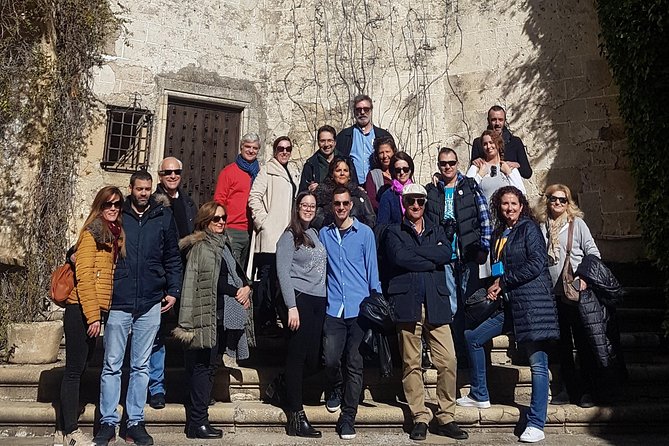
The experience is called Medieval Scene and Route of the Discoverers, but the commentary can reach beyond those two subjects. The guide may frame parts of the walk through the Isabel la Católica route, the Carlos V route, and Trujillo’s connections with cinema.
That gives you several ways to understand the town. Medieval Trujillo was shaped by defense and royal power. Later centuries brought new wealth, new architectural styles, and families whose fortunes were tied to Spain’s expansion. Modern film use adds another layer, showing how the old streets continue to serve as a convincing historical setting.
The film connection is best treated as an added theme rather than the main reason to book. The core experience remains the monuments and the guide’s interpretation of them.
I also like that local knowledge can extend beyond buildings. Alicia is praised for discussing Extremadura’s biodiversity as well as its past. That kind of regional detail helps you place Trujillo in its wider setting instead of treating it as an isolated historic town.
What the two and a half hours feel like
The timing is a little hard to pin down. The headline duration is approximately two hours and thirty minutes, while the itinerary includes a three-hour guided visit and a two-hour segment for the historic center. In practice, your tour may last longer if the guide answers questions or adds explanations.
That is good news if you want substance. It is less convenient if you have a fixed restaurant booking, a bus, or another timed activity. I would plan the tour as a substantial morning outing, not as a quick one-hour orientation.
The advertised route includes a 15-minute castle stop, 15 minutes at Santa María la Mayor, 20 minutes around the Plaza Mayor, and shorter palace visits. Those numbers are planning markers, not a promise that the guide will cut off an interesting explanation at the listed minute.
With a maximum of 35 participants, the group is not private or intimate, but it is limited enough to remain manageable. If the full group assembles, you may need to position yourself near the guide to hear every detail, especially in open squares. Mobile ticketing keeps the arrival simple.
Price, access, and who gets good value
At $18.54 per person, this is a strong value if you plan to see the included monuments. The price is not only paying for a walk through streets you could visit for free. It also covers a guide, daytime admission to the castle and cisterns, and entry to Santa María la Mayor and other listed monuments.
The value is highest for first-time visitors who want a clear introduction to Trujillo in one morning. You get the main square, medieval center, fortress, church, palaces, and Pizarro house without having to work out the town’s geography yourself.
Independent explorers may prefer to wander at their own pace. You will have less freedom to linger at one façade or skip a building that does not interest you. The tradeoff is that you gain the stories and connections that are easy to miss when you only take photographs.
Most people can participate, and service animals are allowed. The tour is near public transportation, though no specific transport route is provided. Since the old town includes slopes and uneven streets, anyone concerned about walking should contact the provider before booking rather than assume the route will be easy.
Cancellation is free up to 24 hours before the start time. Changes or cancellations inside that window are not accepted for a refund. The tour also requires a minimum number of participants, so a provider cancellation would result in another date or experience being offered, or a full refund.
Should you book the Trujillo Medieval Scene tour?
I would book this tour if you have one morning in Trujillo and want the town explained rather than simply photographed. It suits people interested in medieval fortifications, Renaissance architecture, Spanish royal history, church art, and the complicated legacy of the conquistadors.
The strongest reason to choose it is the guide-led detail. Alicia, Ana, José, and Esmeralda are all singled out for warmth, energy, and clear explanations, though your guide may be someone else. The consistent 5 out of 5 rating from 204 ratings and 100 percent recommendation rate also support the idea that this is a dependable choice.
I would hesitate only if you dislike walking on cobbles, need a tightly controlled finish time, or prefer visiting monuments alone. For everyone else, the low price, included daytime entries, broad route, and chance to see Trujillo through local stories make this one of the more useful ways to get your bearings.
FAQ
Where does the tour start?
The tour starts at Plaza Mayor de Trujillo in Trujillo, Cáceres, Spain.
What time does the tour begin?
The listed start time is 10:30 a.m.
How long does the tour last?
The advertised duration is approximately two hours and thirty minutes. Some itinerary timings indicate a longer guided visit, and guides may extend the tour while answering questions.
Where does the tour finish?
The activity ends back at the meeting point.
Are tickets to the castle included?
Yes. Daytime admission to the Castillo de Trujillo, including its Alcazaba and cisterns, is included.
Is entry to Santa María la Mayor included?
Yes. Admission to Iglesia de Santa María la Mayor is included for the daytime visit. Monument tickets are not included for visits starting at 8 p.m.
Is entry to every church included?
No. The Iglesia de San Martín stop is listed with admission not included.
How many people can join the tour?
The maximum group size is 35 participants.
Recently added in Spain
- Make Authentic Espadrilles in Barcelona★ 5.0 · 172 reviews
- Bean to Bar Chocolate Workshop in Barcelona★ 5.0 · 172 reviews
- Sagrada Familia Skip the Line Tour Optional Small Group★ 4.5 · 173 reviews
- Private Walking Tour Alcazar and Cathedral in Sevilla★ 5.0 · 172 reviews
- Fuerteventura: Top 5 Instagram Spots Full-Day Tour & Tapas★ 4.8 · 173 reviews
- Firgas, Tejeda, Guayadeque – VIP Tour Gran Canaria★ 4.5 · 173 reviews
- Surf lessons in Famara 9:15-14:30h (4 hours of class)★ 5.0 · 173 reviews
- From Dénia/Jávea: Cala Blanca Boat Trip with Jet Ski & Lunch★ 4.2 · 174 reviews