
Reviewed · SANTIAGO DE COMPOSTELA TOURS
Santiago de Compostela: Finisterre, Costa da Morte, Ézaro, Muros & Carnota
At the edge of Galicia, the old Roman world was thought to end at Cape Finisterre, where the road meets a wide Atlantic horizon. This nine-hour bus tour links that famous headland with fishing villages, a waterfall that pours into the sea, a medieval bridge, and the pilgrimage church at Muxía.
I like the wide range of stops and the fact that round-trip transport removes the hassle of connecting these scattered places yourself. I also like the bilingual guiding, with guides such as Lucia, Noelle, Ana, and Alexis praised for clear explanations and good local suggestions. The tradeoff is a full day with short visits, and the weather can make a big difference on the exposed coast.
Key points to know before booking
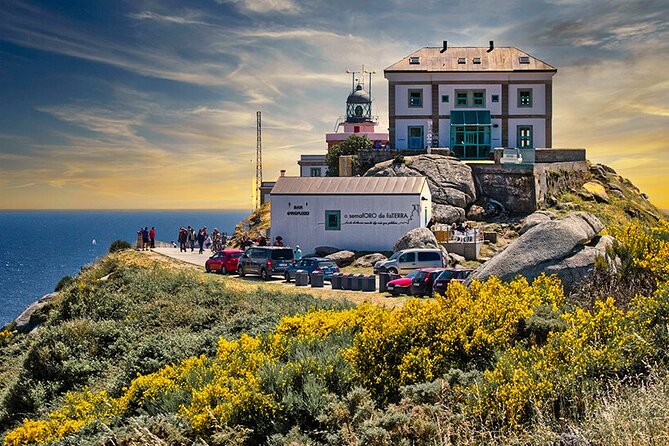
- Cape Finisterre reaches the old end of the world: Visit the lighthouse, Atlantic viewpoints, and kilometer zero of the Camino de Santiago.
- Ézaro Waterfall is unusually placed: The river drops directly into the sea, a rare sight in southern Europe.
- Seven stops fit into about nine hours: You see a lot, but some walks and visits feel brisk.
- Lunch is your responsibility: Finisterre includes about 90 minutes of free time for food and a walk.
- The bus handles a difficult route: This is a practical choice if you do not have a car.
- The pickup point deserves care: The listed meeting point is Capela do Pilar, but past guests have found conflicting address details, so confirm the exact place before departure.
Why this makes sense after the Camino
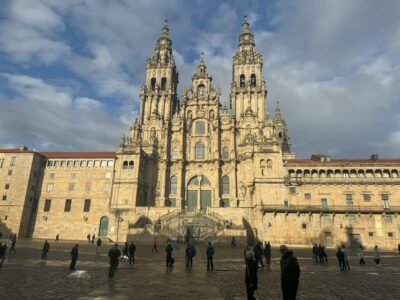
If you have just reached Santiago, Finisterre feels like a natural extra chapter. The Camino ends at the cathedral for many people, but the route west toward the ocean carries its own old symbolism. At Cape Finisterre, you stand at kilometer zero of the Camino extension, near a lighthouse built as the first on the Costa da Morte.
This tour also gives you a useful view of Galicia beyond Santiago. You pass small coastal towns, beaches, granite monuments, old churches, and rural roads without having to plan a complicated loop by rental car. For a price of about $59.28 per person, the value is strong if you want to see many places in one day and do not need long, independent visits at each one.
The most praised guides include Lucia, Noelle, Noel, Ana, and Alexis. You may not receive a particular guide, but the tour is conducted in both Spanish and English. The better guides explain where you are, add stories about the area, help with photos, and offer lunch suggestions.
The main limitation is pace. You will spend much of the day on the bus, then get out for carefully timed stops. That works well for a first look. It is less suitable if you want to linger over a village, browse shops, or walk a long stretch of shore.
A few other Santiago de Compostela outings to compare
- Santiago: Cathedral & Museum Tour + Pórtico of Glory Option
★ 4.7 · 2,116 reviews - From Santiago: Finisterre, Muxia & Costa da Morte Excursion
★ 4.7 · 1,481 reviews - Excursion to Finisterre + Muxia + Costa da Morte (7 stops)
★ 5.0 · 1,367 reviews
Muros, a quick look at a Galician fishing village
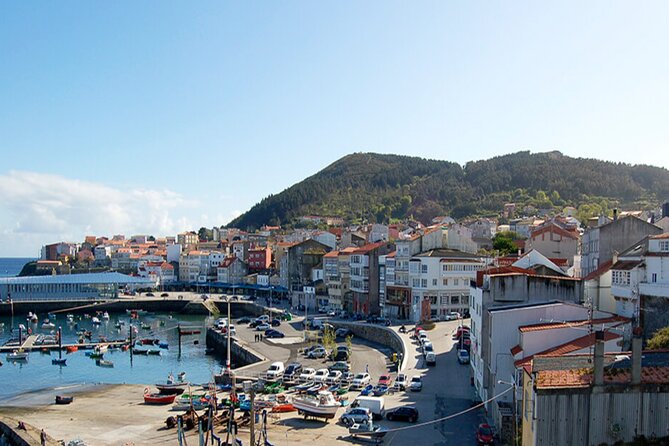
The first stop is Muros, one of Galicia’s attractive old fishing villages. You have about 30 minutes to walk its narrow streets or visit the small fish stalls.
That half hour is enough to get a feel for the town, take photos, and see the harbor area. It is not enough for a slow meal or a detailed visit. I would use the time for a short walk rather than trying to cover every lane.
Muros is valuable because it gives the day an everyday coastal starting point. Finisterre can feel symbolic and dramatic, while Muros shows the working side of Galicia, with fishing traditions and a compact old town. If you enjoy unhurried wandering, this will probably be one of the stops where you wish the clock moved more slowly.
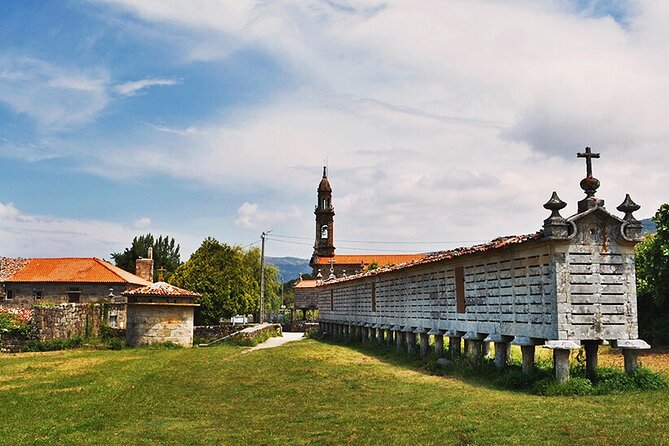
Carnota’s enormous granite horreo
The stop at Carnota focuses on its horreo, a long eighteenth-century grain store built from granite. It sits near Galicia’s longest beach, in an open setting that helps you understand its size.
You have about 20 minutes here. That is a short visit, but the monument does not require a long indoor tour. You can walk around it, take in the stonework, and hear how these raised granaries fit into local farming life.
This is one of those stops that makes more sense with a guide than it might on your own. A large stone structure can look like a simple photo stop until you know what it was built to do. The surrounding beach setting also provides a change from the lanes of Muros.
Do not expect a full beach visit. The stop is about the horreo and its setting, not swimming or a long walk along the shore.
Ézaro Waterfall where the river meets the Atlantic

Ézaro is one of the day’s most distinctive sights. The Fervenza de Ézaro is described as the only river waterfall in southern Europe that flows directly into the sea.
You have about 45 minutes here, giving you more time than at Muros or Carnota. The waterfall area is framed by Mount Pindo, known in Celtic tradition as the Celtic Olympus, along with fishing villages and beaches. The combination of falling water, granite, and the sea gives this stop a real sense of place.
This is often the photographic high point of the trip, but weather matters. Rain can make the day damp and limit views, while low cloud may soften the Atlantic outlook. Still, the waterfall itself remains a worthwhile reason to stop.
Wear shoes that can handle a short outdoor walk and bring rain protection. The tour requires good weather, and poor conditions can lead to a rescheduled date or refund, but Galicia’s coast can also be wet during a tour that goes ahead.
Same city, a completely different evening:
- Finisterre and Costa da Morte: The Most Complete Tour of Santiago
★ 5.0 · 733 reviews - From Santiago: Finisterre, Muxia, Ézaro – 7 stops day tour
★ 4.6 · 553 reviews - Santiago de Compostela: Finisterre, Muxia & Costa da Morte
★ 4.7 · 526 reviews - Santiago de Compostela Cathedral and Museum Guided Tour
★ 4.6 · 511 reviews
Finisterre, lunch, and the port
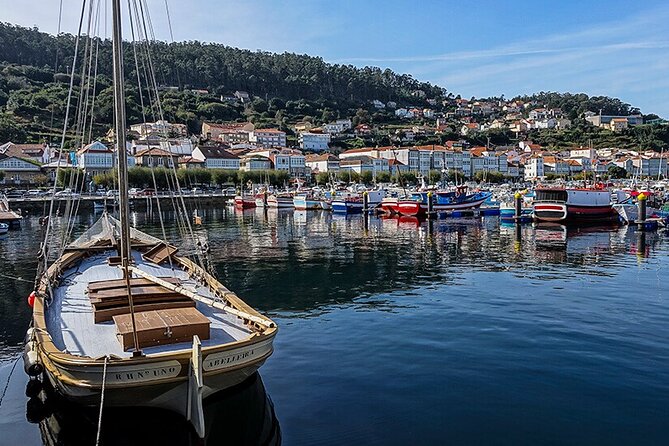
Finisterre gives you about one hour and 30 minutes for lunch and free time. This is the longest stop of the day, and it needs to cover two things: eating and seeing the small port town.
You can walk through the compact streets, look around the harbor, and choose a seafood lunch. Guides may suggest restaurants and explain what to order, which is useful when your time is limited. One guide, Noelle, was specifically praised for practical lunch advice, but the exact recommendations will depend on the person leading your group.
This stop works best if you keep lunch efficient. A long, leisurely meal could leave little time for the port. On the other hand, rushing through Galician seafood would miss part of the point. Ask your guide about timing early in the stop, then choose a meal that fits the schedule.
Finisterre itself is not just a marker on a map. The name means end of the earth, and Roman-era thinking placed this far western point at the edge of the known world. That idea later mixed with pre-Christian worship connected to the Ara Solis, or altar of the sun.
The lighthouse at Cape Finisterre
After time in town, the bus takes you to Faro de Fisterra, the lighthouse at the end of the headland. You have about 40 minutes for the lighthouse, viewpoints, and Atlantic scenery.
This is the most important stop for people completing a Camino route. Kilometer zero marks the western extension beyond Santiago, and many pilgrims come here to finish their journey beside the ocean. Even if you have not walked the Camino, the location gives the day its central theme.
The lighthouse was the first built on the Costa da Morte. Its position helps explain the coast’s name, the Coast of Death, since ships faced difficult waters, rocky points, and Atlantic weather along this stretch.
The views can be superb on a clear day. In rain or heavy cloud, the headland feels more severe and mysterious, but you may lose the broad horizon that makes the place special. Keep your expectations tied to the forecast. The tour cannot control the ocean, and past outings have been affected by heavy rain.
Forty minutes is enough for the main viewpoint and lighthouse area. It is not enough for a long coastal walk, so stay aware of the meeting time.
Muxía and the Sanctuary of Nuestra Señora de la Barca
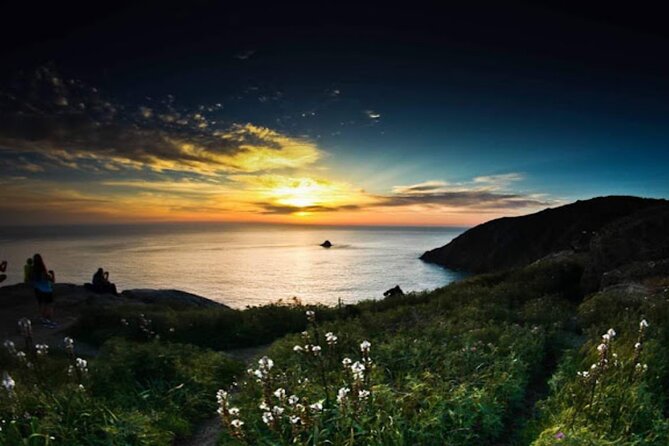
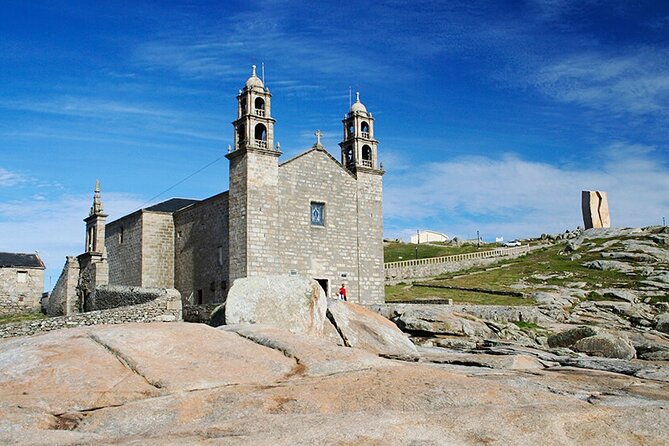
Muxía brings the tour to another major pilgrimage setting. The group visits the Sanctuary of Nuestra Señora de la Barca, positioned dramatically by the sea and linked with the Camino de Santiago.
The visit lasts about 40 minutes. You will see the church, the surrounding rocks, and the holy stones connected to local religious tradition. The site also relates to the so-called Skin way, a pilgrimage route associated with Muxía.
This stop offers a different mood from Finisterre. Finisterre centers on the lighthouse and the end of the road, while Muxía centers on devotion, legend, and the meeting of church and shore. Guides can help connect the place to the wider Camino story.
The open setting means weather again matters. Wind and rain can make the visit uncomfortable, and slippery ground is possible around coastal stones. Take care and do not treat the stop as a quick photo only. The sanctuary is one of the day’s strongest links to Galicia’s pilgrimage culture.
Ponte Maceira and its medieval bridge
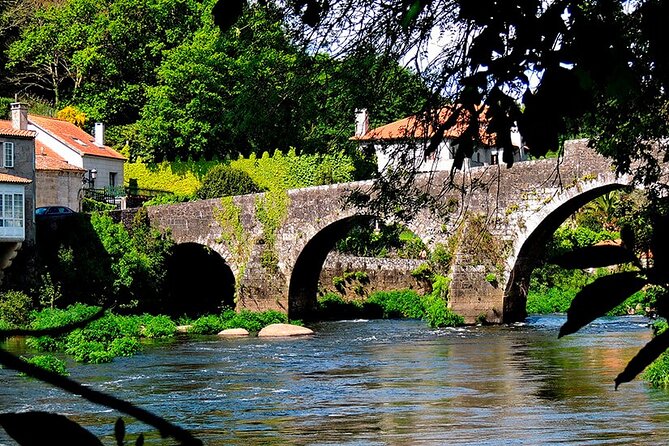
The final stop is Ponte Maceira, a small medieval town founded in the thirteenth century. You have about 30 minutes to walk near its Gothic bridge and mills.
This is a quieter ending than the exposed headlands. The river, old stone buildings, bridge, and mills give you a compact scene to explore on foot. It is also an important stop on the Camino de Santiago, so it ties the inland and coastal parts of the day together.
Thirty minutes is enough to cross the bridge area and look around, but not enough for a long walk through the wider town. One practical warning from the schedule is that the meeting point may be some distance from the center, so keep track of the return route and do not wander too far.
Some people may prefer to skip this last stop and return to Santiago earlier. I see its value, especially if you enjoy medieval villages, but it is the least essential stop for anyone focused only on the ocean and Finisterre.
The bus, bilingual guide, and group size
The tour uses a comfortable bus and allows a maximum of 55 people. That is a fairly large group, but a bus is useful here because the sights are spread across the Costa da Morte and public transport would not make this route easy in one day.
A good guide matters. The strongest guiding reported for this experience includes clear explanations in Spanish and English, local history, practical instructions, and restaurant advice. Lucia is often singled out for answering questions and helping with photos. Noelle and Noel are also associated with friendly, well-organized outings, while Ana and Alexis received praise for their explanations.
Because the tour is bilingual, the guide normally explains places in Spanish and then English. That can lengthen each stop’s briefing, but it also lets you understand the context without arranging a separate English-language outing.
Plan to stay alert for meeting times. The itinerary contains seven stops, and the bus cannot wait for a long independent walk. A seat near the front or bus door may help you get off and back on quickly, though seats are not specified.
Price, timing, and the real value
At roughly $59.28, this is an economical way to cover a large section of Galicia’s western coast. The price includes round-trip bus transport, a bilingual guided tour, and insurance. Entrance tickets are not a major concern here because the listed stops are primarily outdoor sites, while lunch is not included.
The value depends on what you want. If you would otherwise rent a car, pay for fuel, navigate unfamiliar roads, and arrange parking at several coastal sites, the bus option is attractive. You also receive historical context and help with the order of the day.
If you prefer to spend half a day at Finisterre alone, this is not the right format. You are paying for breadth, not freedom. The day starts at 9:00 a.m. and lasts about nine hours, so expect a full outing rather than a gentle afternoon excursion.
The tour is often booked around 18 days ahead, so reserve early if your Santiago schedule is fixed. You receive confirmation when booking. Free cancellation is available up to 24 hours before the local start time. If poor weather or too few bookings cancel the trip, you should be offered another date or a full refund.
Who should book this coastal day trip
I would choose this tour if you have one spare day in Santiago and want to see the Atlantic coast without driving. It is especially well suited to people finishing the Camino, since Finisterre, Muxía, and Ponte Maceira add meaning to the pilgrimage route.
It also suits first-time visitors who want a broad introduction to Galicia: fishing villages, granite architecture, coastal faith, old roads, waterfalls, and seafood. Families and most able participants can take part, and service animals are allowed.
I would hesitate if you dislike bus days, short visits, or bilingual commentary. You should also think twice if the forecast calls for steady rain. The route remains worthwhile in poor weather, but lighthouse views, waterfall walks, and coastal stones are much less enjoyable when you are soaked.
Should you book it?
Book it if you want maximum variety for a modest price and accept that each place gets a short visit. The strongest parts are Ézaro Waterfall, Cape Finisterre, Muxía, and the well-run lunch break, especially when the guide is as clear and helpful as Lucia, Noelle, Ana, or Alexis.
Skip it if you want long walks, slow meals, or time to explore Finisterre and Muxía independently. Before departure, double-check the exact pickup instructions at Capela do Pilar, especially since past passengers have encountered conflicting address details. With that small piece of planning handled, this is a practical and worthwhile way to reach Galicia’s end of the world.
FAQ
Where does the tour start?
The tour starts at Capela do Pilar, Av. de Xoán Carlos I, 6, 15701 Santiago de Compostela, A Coruña, Spain.
What time does the tour begin?
The scheduled start time is 9:00 a.m.
Where does the tour end?
The activity ends back at the meeting point in Santiago de Compostela.
How long does the tour last?
The tour lasts approximately nine hours.
Is transportation included?
Yes. Round-trip transportation from Santiago de Compostela is provided by bus.
Is the tour offered in English?
Yes. The guided tour is offered in Spanish and English.
Is lunch included?
No. Lunch is not included. You have about one hour and 30 minutes of free time in Finisterre to eat and walk around the port area.
What places does the tour visit?
The stops are Muros, the Horreo de Carnota, Ézaro Waterfall, Finisterre, the Cape Finisterre lighthouse, Muxía, and Ponte Maceira.
How many people can join the tour?
The maximum group size is 55 people.
Can I cancel for a full refund?
Yes, if you cancel at least 24 hours before the experience start time. Cancellations or changes made less than 24 hours before the start are not refundable.
Recently added in Santiago de Compostela
- Tapas Tour of Santiago de Compostela★ 4.5 · 191 reviews
- From Santiago: Rías Baixas Galicia Seafood & Wine Day Tour★ 4.6 · 209 reviews
- Santiago de Compostela: Finisterre, Muxía & Costa da Morte★ 5.0 · 235 reviews
- Masaje del Peregrino★ 5.0 · 243 reviews
- Excursion to Rias Baixas with Winery – Optional mussel boat★ 5.0 · 276 reviews
- Santiago de Compostela: Cathedral, Museum, and Old Town Tour★ 4.8 · 382 reviews
- From Santiago: Tour to Rias Baixas with Boat Trip and Winery★ 4.7 · 400 reviews
- Visit to the Cathedral of Santiago + Portico de la Gloria Option★ 4.5 · 503 reviews
Santiago de Compostela Tours, compared.
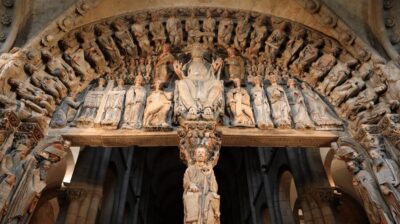
Santiago: Cathedral & Museum Tour + Pórtico of Glory Option
Read the review →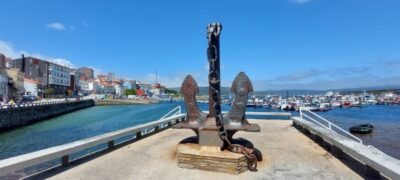
From Santiago: Finisterre, Muxia & Costa da Morte Excursion
Read the review →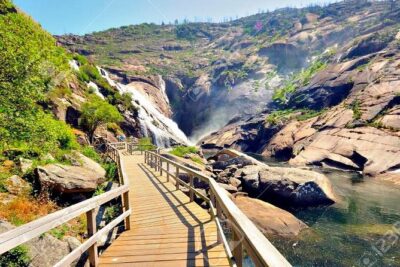
Excursion to Finisterre + Muxia + Costa da Morte (7 stops)
Read the review →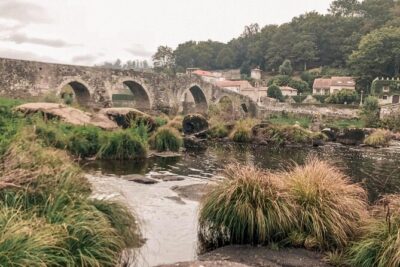
Finisterre and Costa da Morte: The Most Complete Tour of Santiago
Read the review →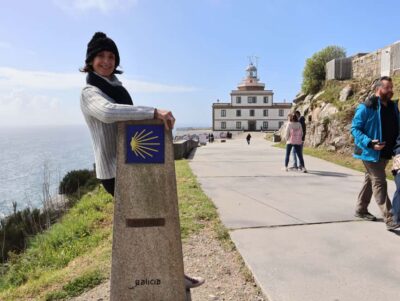
From Santiago: Finisterre, Muxia, Ézaro – 7 stops day tour
Read the review →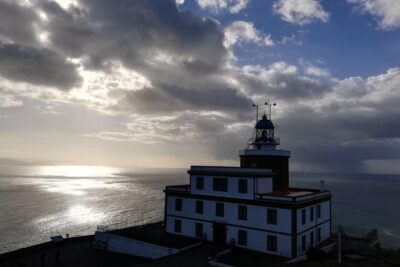
Santiago de Compostela Cathedral and Museum Guided Tour
Read the review →
Visit to the Cathedral of Santiago + Portico de la Gloria Option
Read the review →Browse the lists this tour appears in