
Reviewed · SANTIAGO DE COMPOSTELA TOURS
Santiago de Compostela: Finisterre, Muxia & Costa da Morte
The most moving part of this day is the meeting of pilgrimage and Atlantic myth. At Cape Finisterre, once thought to be the end of the known world, the Camino de Santiago reaches kilometer zero. At Muxía, waves crash beside a sanctuary and three sacred stones tied to Galician tradition. The coast feels dramatic and old, even when the weather turns gray.
I like the way this tour links several very different places in one day: a medieval bridge, a fishing town, a waterfall dropping into the sea, and two major pilgrimage sites. I also like the careful pacing. The bus is comfortable, the driver keeps the day running smoothly, and guides such as Andrea, Pablo, Christian, and Dani have been praised for clear explanations and warm attention to the group.
The main tradeoff is the driving. Nine hours covers a lot of ground, so some stops are brief, especially Cape Finisterre, while Fisterra includes a long lunch break. If you want a slow coastal day, a rental car or overnight stay gives you more freedom. For seeing the highlights without driving, though, the $58 price is hard to dismiss.
Quick take: what makes this day worthwhile
- Ponte Maceira’s 14th-century bridge: Begin or end among medieval mills, stonework, and Camino tradition beside the Tambre River.
- Ézaro Waterfall: See the Xallas River plunge directly toward the sea, one of Galicia’s most unusual natural sights.
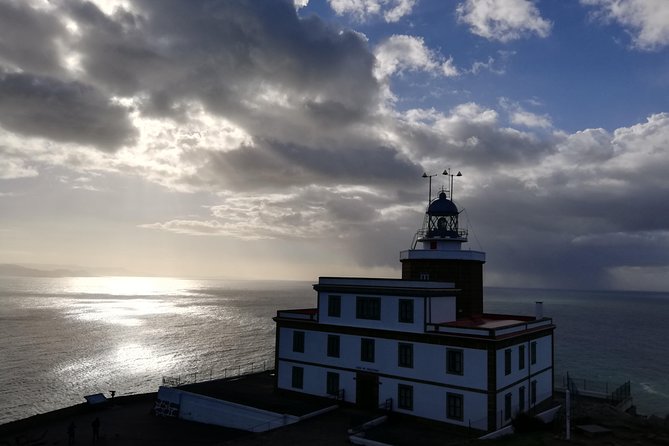
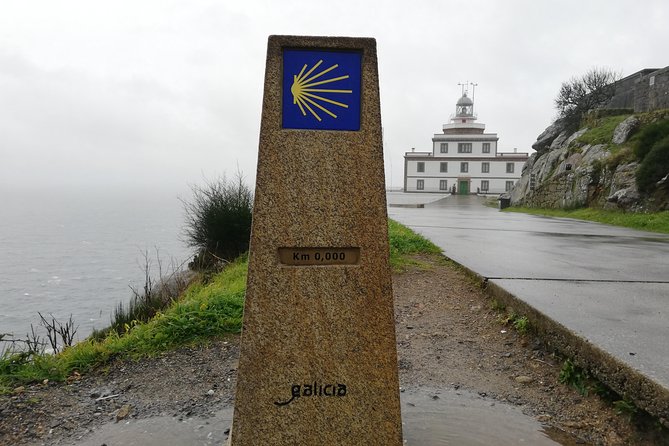
- Finisterre and kilometer zero: Visit the lighthouse at the former European end of the world, with time for views and photos.
- Muxía’s sacred shoreline: Explore the sanctuary and the three stones central to local Galician belief.
- A comfortable full-day route: Air-conditioned transport takes care of the long distances between Santiago and the coast.
- Strong guiding: Live commentary is available in Spanish, English, and Galician, with audio support in French, Korean, and German.
Why the Costa da Morte works best as a day trip
Galicia’s Costa da Morte is not a single sight. It is a long sweep of fishing villages, open Atlantic shore, pilgrimage landmarks, steep headlands, and small towns spread across the western edge of the region.
That spread is the reason this tour makes practical sense. From Santiago de Compostela, you can reach several places in one day, but connecting them by public transport would be awkward. The air-conditioned vehicle turns a complicated route into a simple one: meet at the TOXO TRAVEL office on Rúa dos Bautizados, 12, settle in, and let someone else handle the roads.
You should expect about nine hours from departure to return. This is a full day, but the stops break up the ride. The route includes scenic stretches along the Muros e Noia estuary and the coast near Lira, Carnota Beach, Boca do Río, Mount Pindo, and Cape Fisterra.
The day is especially well suited to people who have walked the Camino and want to continue toward Finisterre and Muxía without adding more miles. It also works for anyone based in Santiago who wants a first look at Galicia’s Atlantic edge.
A few other Santiago De Compostela outings to compare
- Santiago: Cathedral & Museum Tour + Pórtico of Glory Option
★ 4.7 · 2,116 reviews - From Santiago: Finisterre, Muxia & Costa da Morte Excursion
★ 4.7 · 1,481 reviews - Excursion to Finisterre + Muxia + Costa da Morte (7 stops)
★ 5.0 · 1,367 reviews
Ponte Maceira and the Tambre River
Ponte Maceira is a small, picturesque settlement with a strong link to the Camino. Pilgrims heading toward the end of the world pass through here, making it a fitting opening or closing point for a pilgrimage-themed route.
The centerpiece is the medieval bridge over the Tambre River. Its 14th-century stone arches give the stop a sense of place that a roadside viewpoint cannot match. Nearby medieval mills add another layer, showing how water once shaped everyday work in the area.
You have about 25 minutes here. That is enough to cross the bridge, look at the river, and take photographs, but not enough for a long walk through the surrounding countryside. Wear shoes with a decent grip, especially if the ground is wet.
This stop also gives the guide a useful chance to explain the legends and traditions connected with the Camino. Guides have been praised for telling stories as well as giving dates and facts, so listen during the short walk rather than treating Ponte Maceira as a quick photo stop.
Muros and the long coastal approach
The route continues along the Muros e Noia estuary toward Muros, a historic coastal town. The drive itself matters here. You see Galicia change from inland countryside to a coast shaped by tidal water, working settlements, and broad views.
The stop in Muros lasts around 30 minutes. You have free time to look around, enjoy the views, and take a coffee. It is a pleasant pause early in the day, though it is also one of the less essential stops for some people.
If your main goal is Finisterre or Muxía, Muros can feel short and slightly out of the way. One person specifically preferred more time at Cape Finisterre and Muxía, suggesting that Muros could be shortened. That is a fair criticism, particularly for pilgrims who have limited time in Galicia.
Still, I would not dismiss it. A short visit to Muros gives the day a town stop before the more exposed coast appears. It also breaks up the bus ride at a sensible point.
Carnota, Lira, and the Atlantic views
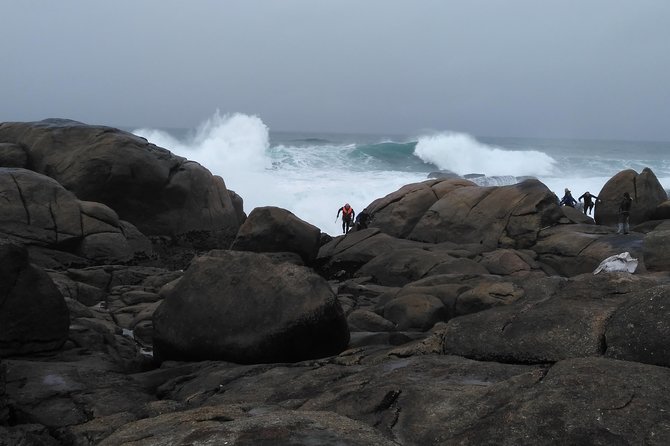
After Muros, the vehicle follows the coast toward some of the day’s most attractive scenery. You pass Lira, Carnota Beach, Boca do Río, Mount Pindo, and the approach to Cape Fisterra.
The tour description does not give long walking time at each of these places, so think of them mainly as views from the road and scenic passages between the scheduled stops. That can be a strength on a wet or windy day. You get to see a broad stretch of coast while staying warm and dry in the coach.
On a clear day, this section should be one of the visual high points. On a misty day, the mood changes rather than disappears. One June group had poor weather but still found the coach a comfortable way to experience the coast. Galicia’s Atlantic weather is part of the setting, so bring a waterproof layer even if the forecast looks kind.
Same city, a completely different evening:
- Finisterre and Costa da Morte: The Most Complete Tour of Santiago
★ 5.0 · 733 reviews - From Santiago: Finisterre, Muxia, Ézaro – 7 stops day tour
★ 4.6 · 553 reviews - Santiago de Compostela Cathedral and Museum Guided Tour
★ 4.6 · 511 reviews - Visit to the Cathedral of Santiago + Portico de la Gloria Option
★ 4.5 · 503 reviews
Ézaro Waterfall, where river meets sea
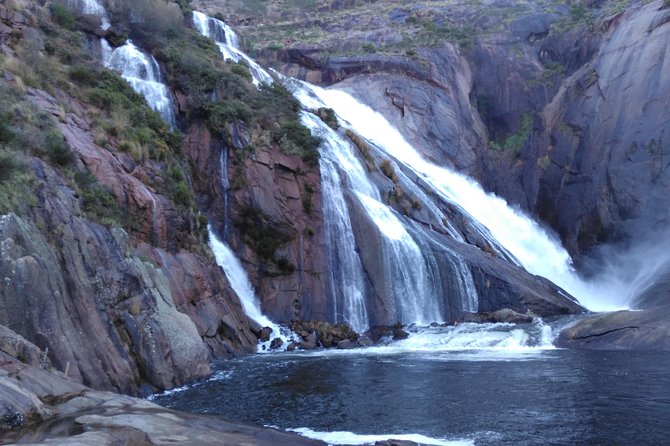
At Ézaro, the Xallas River falls toward the sea, creating the Ézaro Waterfall. The site is widely known in Galicia and is described as unique in continental Europe because of the river’s direct relationship with the Atlantic.
You get roughly 35 minutes here for sightseeing and free time. That is enough to see the waterfall and take pictures, though the exact visual impact will depend on weather, water flow, and road conditions.
The stop is worth keeping because it adds variety. After medieval stonework and estuary views, you get a natural feature with real force. It is also a good example of why this route is more than a simple pilgrimage transfer between Santiago and Finisterre.
Road conditions can affect the plan. On one occasion, a road problem meant the waterfall could not be seen. That is not something the operator can always control, but it is worth keeping in mind when deciding how much emotional weight to place on any single stop.
Cape Finisterre and the old end of Europe
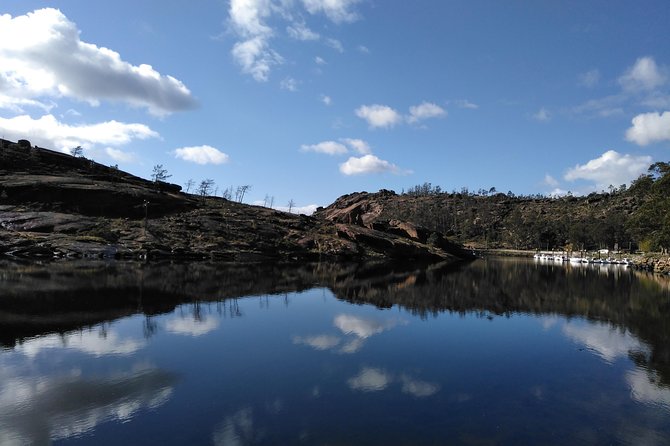
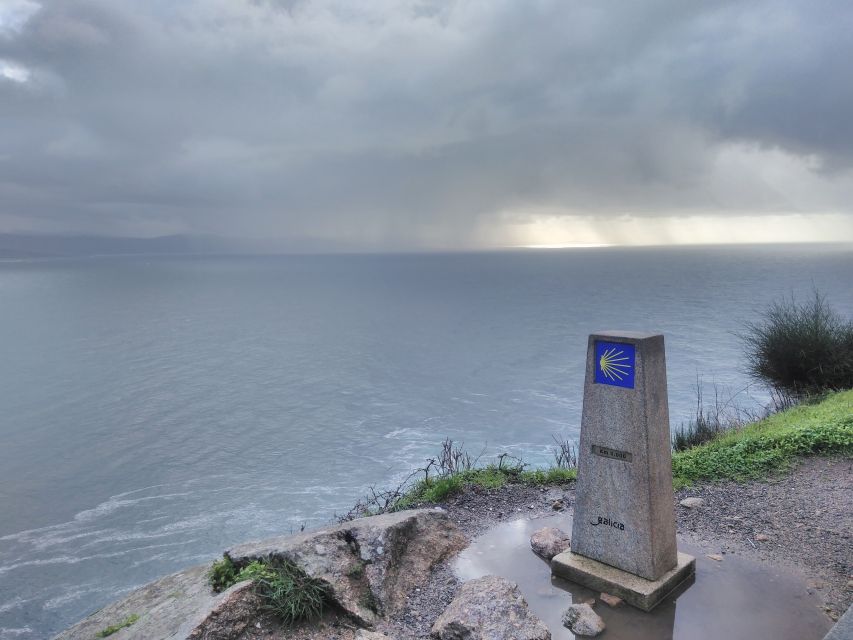
Cape Finisterre is the symbolic heart of the day. The name means end of the earth, and for centuries this western headland represented the edge of the known world. Today, it is also closely tied to the Camino de Santiago.
The lighthouse marks the headland, while kilometer zero signals the end of the Camino route beyond Santiago. For people who have walked to Santiago, this stop can feel like a second ending. You have reached the cathedral, then continued to the Atlantic, where the road gives way to open water.
The scheduled visit is about 45 minutes. That is enough to see the lighthouse area, take in the headland, and make photographs. It is not a leisurely amount of time for a long coastal walk or a quiet period of reflection.
This is the clearest weakness in the schedule. If Finisterre is your personal reason for booking, you may wish the tour allowed more time here. The route covers many sites, and the result is a broad introduction rather than a deep visit at every location.
Even so, the guide adds useful context. The best guides on this route explain why Finisterre mattered to pre-Christian belief, the Camino, and local identity, rather than simply pointing out the lighthouse. Andrea, Pablo, Christian, and Dani have each been praised for combining historical information with stories and practical direction.
Lunch and free time in Fisterra
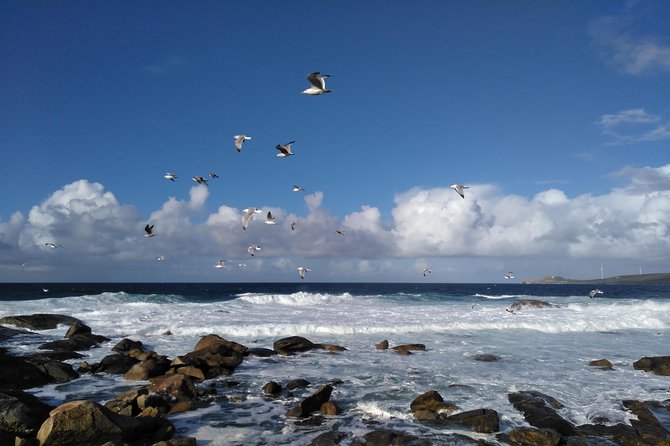
The town of Fisterra follows the cape visit. The names can be confusing: Finisterre commonly refers to the cape and the wider destination, while Fisterra is the town and fishing port.
You have about an hour and a half here for lunch, free time, and sightseeing. Food and drinks are not included, so plan to pay separately. The long pause gives you time to choose a meal, walk around the port, and recover from the day’s earlier stops.
This is a useful part of the schedule if you want a proper sit-down meal. Several people appreciated the lunch recommendations and the relaxed timing. If you prefer more time at the lighthouse or Muxía, however, 90 minutes may feel generous.
You should also remember that this is a group tour. The bus needs to leave on time, and the guide must account for a range of lunch speeds. Use the beginning of the break to get oriented, then leave enough time to return to the meeting point.
Muxía, the Atlantic sanctuary and sacred stones
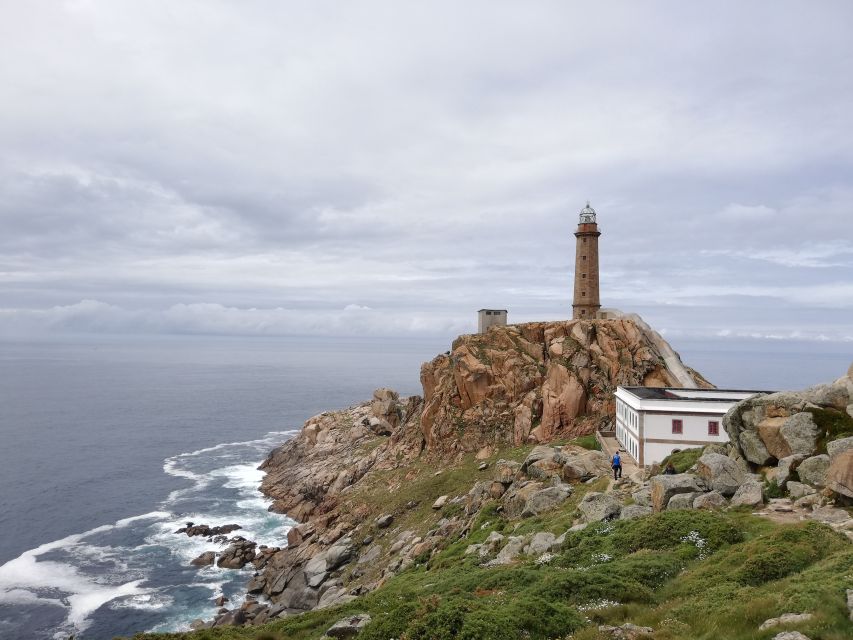
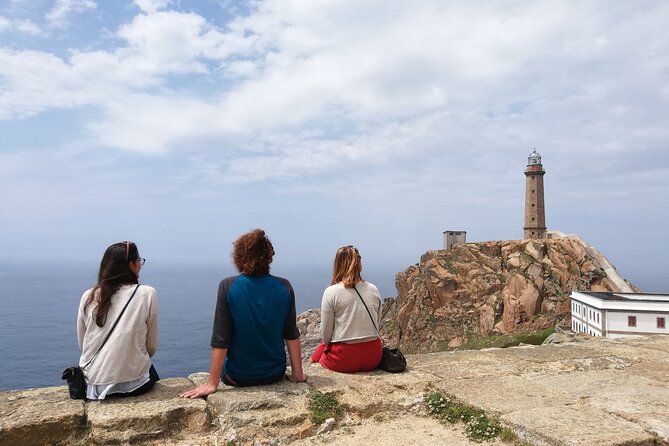
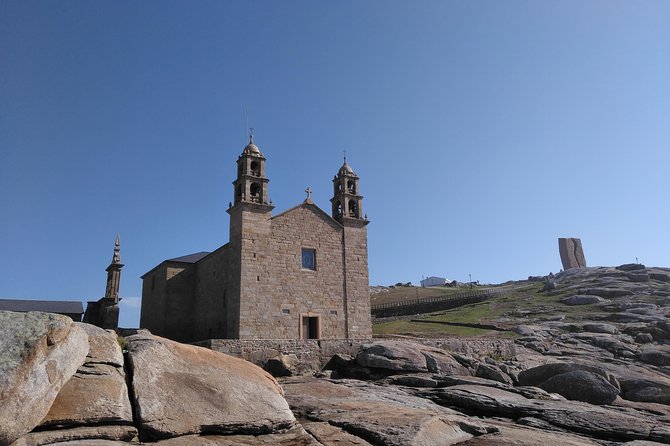
Muxía is the final major coastal stop and, for many people, the most memorable. The Sanctuary of the Virgin of the Barca sits beside the Atlantic, in a setting where stone, surf, and religious tradition come together.
The three sacred stones are central to Galician belief. The guide explains their cultural meaning, giving you more than a quick view of a church beside the sea. This is where the route moves from scenery into local tradition.
The visit lasts around 40 minutes and includes a guided portion plus free time. That is enough to see the sanctuary, hear the main stories, and stand by the water, but again, not enough for a long ramble.
Several people especially enjoyed Muxía, and I understand why. It feels less like a standard sightseeing stop and more like a place with a continuing spiritual life. If you are walking the Camino, Muxía may carry particular weight. If you are not, the setting still gives the day a strong final note.
One practical point: the route information places Ponte Maceira after Muxía, even though the broader description introduces Ponte Maceira first. Treat the order as flexible rather than a promise that one location will be the opening stop.
Guides, transport, and the pace of the day
The quality of the guide is one of the strongest reasons to choose this tour. The guides use Spanish, English, and Galician, and audio support is listed in French, Korean, and German. Commentary may be delivered in more than one language, so expect some time spent listening from the bus.
Named guides praised for their work include Andrea, Pablo, Christian, Dani, and Ruben. The useful pattern is clear: the strongest guiding combines history, geography, legends, and practical instructions. Guides have also been noted for checking that everyone is back on the bus before departure and for helping when someone was delayed.
The vehicle is air-conditioned, clean, and comfortable according to the supplied details. That matters on this route because the distances are long and the Atlantic weather can be wet. A coach also removes the strain of navigating small roads and finding parking near popular coastal sites.
The pace is generally relaxed for such a busy route. You are not rushed at every stop, but you are still moving through many locations in one day. One person found the bus ride longer than ideal, while another felt the many stops helped break up the drive.
Audio quality may not be perfect in every seat. A note about sound becoming less clear at the back of the bus is worth taking seriously. If you rely on commentary, sit closer to the guide when possible.
Price, value, and who should book
At $58 per person, this is good value if you want to see Finisterre, Muxía, Ézaro, Muros, and Ponte Maceira in a single day. The price includes transport and a guide, which are the two costly pieces of a route covering this much ground.
You still pay for lunch and drinks. Add that to the day’s budget, along with any coffee or snacks in Muros. Even so, arranging this route independently could take more time and require careful coordination between towns.
I see the value most clearly for solo visitors, couples without a car, Camino pilgrims, and anyone with only a few days in Santiago. It is also a sensible choice in poor weather, when a warm coach lets you enjoy the coast without spending nine hours exposed to wind and rain.
This is less suitable if you want long walks, quiet time at each viewpoint, or complete control over the day. The 45 minutes at Cape Finisterre and 40 minutes in Muxía may not satisfy someone with a strong personal connection to either place. A private tour or overnight stay would allow a slower rhythm.
You should bring comfortable shoes, even though this is not a strenuous walking excursion. The tour includes bridges, waterfront areas, viewpoints, and open coastal ground, where wet surfaces are possible.
Should you book this Finisterre and Muxía tour?
Book it if you want a practical, well-supported introduction to Galicia’s western coast and you value variety over long stays. The route gives you pilgrimage meaning, local stories, coastal views, a waterfall, a fishing town, and medieval architecture for $58.
Think twice if your priority is spending hours at Cape Finisterre, eating slowly, or walking the coast. The tour does a good job of covering ground, but coverage always means compromise.
For most people staying in Santiago, I would choose this over trying to patch the route together alone. Go with comfortable shoes, a rain layer, a little patience for the bus, and realistic expectations about the short stops. You will see a lot, learn why it matters, and reach two of Galicia’s most meaningful Atlantic sites without adding another pilgrimage to your legs.
FAQ
How long does the tour last?
The tour lasts about nine hours, including transportation and stops, and returns to the starting point at Rúa dos Bautizados, 12.
Where does the tour begin?
Meet at the TOXO TRAVEL office at Rúa dos Bautizados, 12.
What places does the tour visit?
The route includes Muros, Ézaro Waterfall, Cape Finisterre, the town of Fisterra, Muxía, and Ponte Maceira.
Is lunch included?
No. Food and drinks are not included. You have free time for lunch in Fisterra, where you can choose and pay for your own meal.
What languages are available?
Live guiding is available in Spanish, English, and Galician. Audio guide support is included in French, Korean, and German.
What should I bring?
Bring comfortable shoes. A rain layer is also a sensible choice for Galicia’s changeable coastal weather, though only comfortable shoes are specifically required in the tour information.
Can I cancel the booking?
Yes. You can cancel up to 24 hours in advance for a full refund. The activity also allows you to reserve now and pay later.
Recently added in Santiago De Compostela
- Tapas Tour of Santiago de Compostela★ 4.5 · 191 reviews
- From Santiago: Rías Baixas Galicia Seafood & Wine Day Tour★ 4.6 · 209 reviews
- Santiago de Compostela: Finisterre, Costa da Morte, Ézaro, Muros & Carnota★ 4.5 · 220 reviews
- Santiago de Compostela: Finisterre, Muxía & Costa da Morte★ 5.0 · 235 reviews
- Masaje del Peregrino★ 5.0 · 243 reviews
- Excursion to Rias Baixas with Winery – Optional mussel boat★ 5.0 · 276 reviews
- Santiago de Compostela: Cathedral, Museum, and Old Town Tour★ 4.8 · 382 reviews
- From Santiago: Tour to Rias Baixas with Boat Trip and Winery★ 4.7 · 400 reviews
Santiago de Compostela Tours, compared.
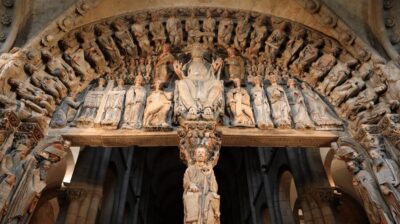
Santiago: Cathedral & Museum Tour + Pórtico of Glory Option
Read the review →
From Santiago: Finisterre, Muxia & Costa da Morte Excursion
Read the review →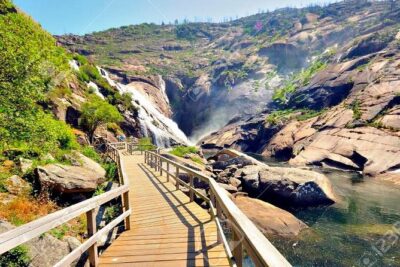
Excursion to Finisterre + Muxia + Costa da Morte (7 stops)
Read the review →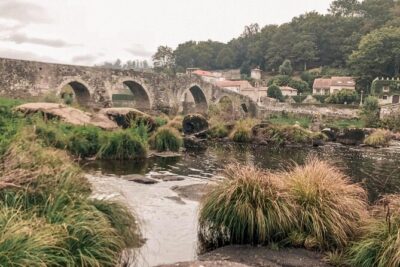
Finisterre and Costa da Morte: The Most Complete Tour of Santiago
Read the review →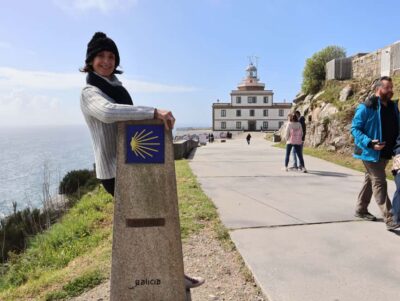
From Santiago: Finisterre, Muxia, Ézaro – 7 stops day tour
Read the review →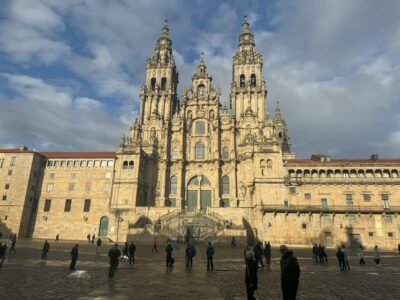
Santiago de Compostela Cathedral and Museum Guided Tour
Read the review →
Visit to the Cathedral of Santiago + Portico de la Gloria Option
Read the review →
From Santiago: Tour to Rias Baixas with Boat Trip and Winery
Read the review →Browse the lists this tour appears in