
Reviewed · TAPAS & FOOD TOURS
Spanish Cooking Class Paella Tapas and Sangria in Madrid
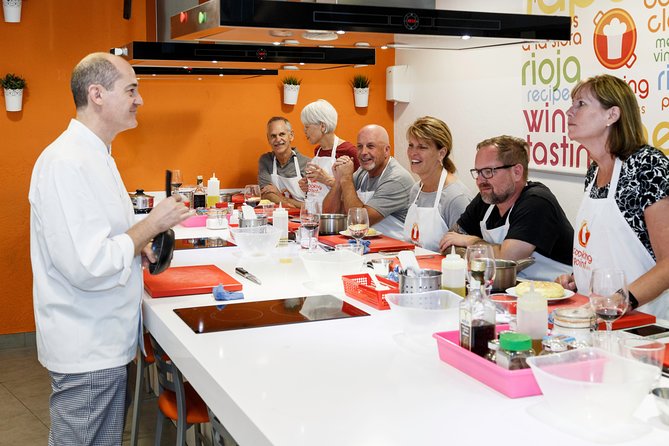
The best part of this Madrid cooking class is that you do more than watch a chef work. You shop for ingredients in a local market on the morning session, then chop, stir, season, and cook your own Spanish meal with guidance from a local instructor such as Angel, Teresa, Elisa, or Eduardo. The class is truly hands-on, not a kitchen show where you stand back and take notes.
I like the small maximum of 12 people, which gives you a real chance to ask questions and get help at the stove. I also like the choice between a morning paella class and an evening tapas class, since each offers a different taste of Spanish food and fits a different day in Madrid. The main thing to check before booking is the menu: the tapas class does not necessarily include paella, and the two sessions are separate experiences.
Key points to know before booking
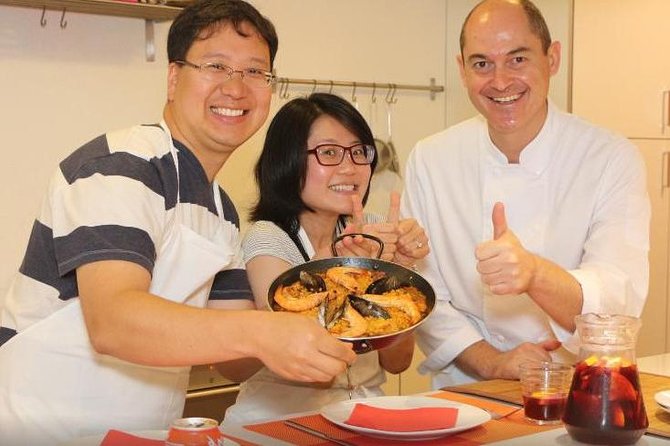
- Morning market visit: Shop for fresh ingredients with your chef before cooking paella and gazpacho.
- Two distinct menus: Choose paella in the morning or a broad tapas menu in the evening.
- Hands-on cooking: You prepare the food in pairs, with an instructor guiding each step.
- Small English-language group: The class is capped at 12 people, and solo participants are matched with a cooking partner.
- A full meal with drinks: Sangria, the dishes you prepare, and a recipe booklet are included.
- Central Madrid location: The class begins and ends at Cooking Point, Calle de Moratín 11.
Morning paella begins with Madrid’s market
The morning session is the stronger choice if you want food, local shopping, and a bit of city life in one outing. You meet at Cooking Point on Calle de Moratín 11, in Madrid’s Centro district, then head with the chef to a local market to choose the ingredients.
This market visit gives the class more purpose than simply opening containers in a kitchen. Your chef explains Spanish produce, seafood, meat, and everyday eating habits while you see where ingredients are sourced and how they are used. You also get a useful look at the food culture of the neighborhood, not just a recipe stripped from its setting.
Angel, Teresa, Elisa, and Eduardo have each led sessions, and the teaching style described across the experience is friendly, patient, and practical. You can ask about paella traditions, Spanish flavors, or local dining customs as you shop. Eduardo, in particular, is noted for explaining the background of the food while helping the group choose ingredients.
The market walk is not a long sightseeing tour, so do not book this expecting a detailed guided visit to every corner of Madrid. Its value is in connecting the meal to ordinary Spanish shopping. If you are staying nearby, it can also help you get your bearings in the neighborhood.
More Cooking Classes in Madrid
- Paella Cooking Class in Madrid with Bottomless Wine Pairing
★ 5.0 · 985 reviews - Madrid Tapas & Paella Cooking Experience with Local Market Visit
★ 5.0 · 432 reviews - Taste of Spain: Tapas Cooking Class with Bottomless Wine Pairing
★ 5.0 · 414 reviews
Cooking paella instead of watching a demonstration
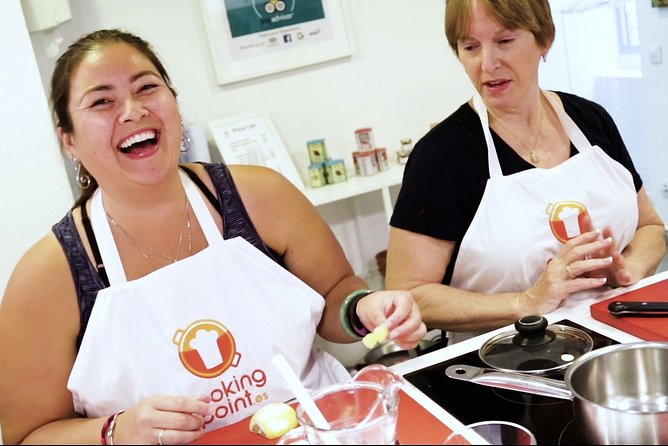
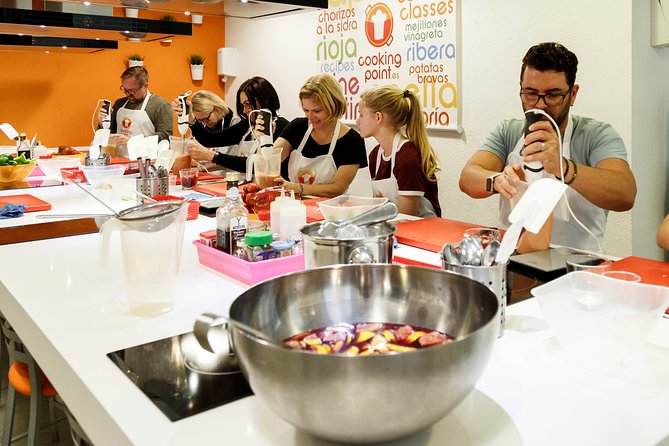
Back at the kitchen, you work in pairs. The ingredients are prepared for the class, but you still carry out the cooking, which makes a real difference. You can expect to take part in the steps rather than watch the chef do everything for you.
The exact paella ingredients can vary, and the menu is adjusted for dietary needs. The chef explains the process, gives timing advice, and steps in when help is needed. Several instructors are praised for finding the right balance between letting people cook and offering a hand before a small mistake becomes a burnt dinner.
The morning menu may include paella and gazpacho, along with sangria. You prepare the meal, then sit down with the group to eat it. The result is both lunch and a lesson: you learn how the ingredients behave, how Spanish dishes are built, and which techniques you may be able to repeat at home.
Paella can look simple on a menu, but it rewards close attention. The class gives you a chance to ask about different types of paella and the origins of the dish. You should still keep your expectations sensible. You are learning a traditional meal in about four hours, not earning professional kitchen training. The goal is a tasty, practical introduction that leaves you more confident at home.
Evening tapas covers a wider Spanish menu
The evening class takes a different route. Instead of focusing on one large rice dish, you prepare several small plates that show off different Spanish flavors and cooking methods.
The sample tapas menu may include Spanish potato omelet, garlic shrimp, chorizo in cider, patatas bravas, tomato bread with ham, crema catalana, and sangria. That is a generous spread, and it gives you more variety than the morning menu. You might work with eggs, potatoes, seafood, cured ham, sausage, sauces, and custard all in one session.
The menu is particularly useful if you are starting a longer trip through Spain and want to understand what you may see on restaurant menus. Patatas bravas introduce the familiar potato dish with sauce. Tomato bread with ham shows how a few strong ingredients can make a simple plate. Chorizo in cider and garlic shrimp add different flavors and techniques.
A key booking tip: select the evening tapas option only if you want tapas. The cooking sessions are not one combined paella-and-tapas course. One class focuses on paella, while the other focuses on tapas. This distinction has caused confusion for some people booking the evening option, so read the session name carefully.
The tapas menu is also a good pick for couples and groups who enjoy tasting several things rather than sitting down to one main dish. It may be less useful if your main goal is to learn paella from start to finish.
Sangria, conversation, and a proper meal
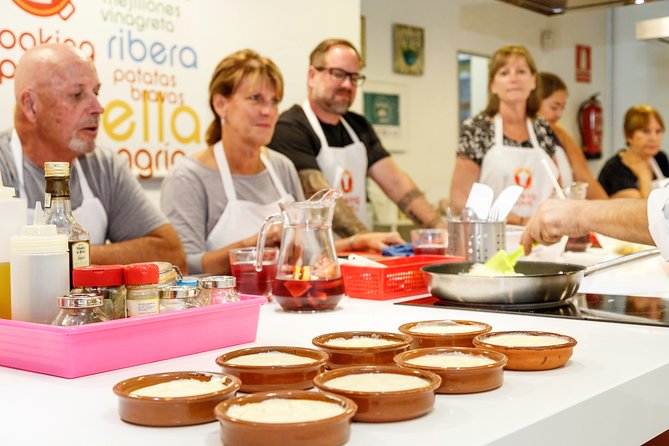
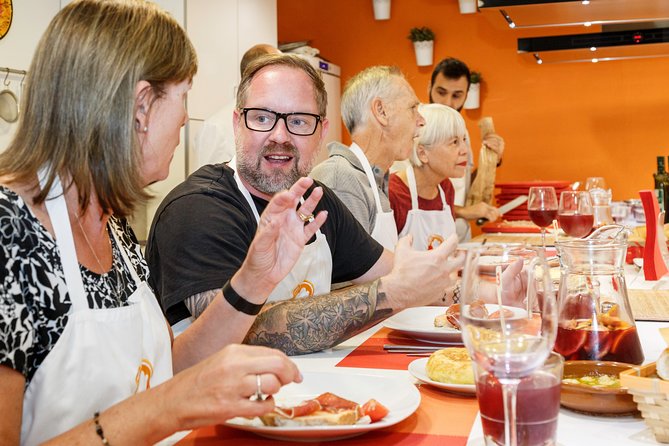
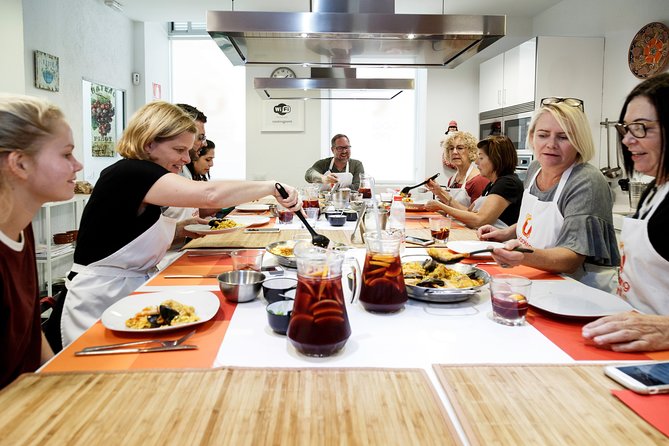
Sangria is part of the experience, not an extra purchase at the end. You prepare it during the class and drink it with the food. The social part matters here, since you share the meal with your cooking partners and classmates after the kitchen work is finished.
The class is designed around conversation. Your chef talks about Spanish food, local habits, and the background of the dishes, while you can raise your own questions. The group format makes it easy to meet people, but it also means your experience depends partly on the mix of personalities in the room.
The class is family-friendly, and a six-year-old has taken part successfully. Still, alcohol is included and the minimum drinking age is 18. If you are booking with children or anyone who does not drink, mention dietary and drink requirements when you reserve so the provider can address your needs.
Do not expect a quiet restaurant meal. This is an active class followed by shared dining. You will spend much of the session standing, preparing ingredients, and keeping an eye on the cooking. The reward is a filling meal that you helped create, often with enough food that you may have leftovers to take away.
More Tapas & Food Tours in Madrid
- Madrid: Small Group of Prado Museum Tour & Optional Tapas
★ 4.6 · 2,437 reviews - Madrid: Tapas & Wine Tasting Tour with Local Guide
★ 4.8 · 2,171 reviews - Madrid Tapas & Wine Tour with Rooftop Views and Local Guide
★ 5.0 · 2,047 reviews - Madrid by Night Small Group Tour: Stories, Sights and Tapas Bites
★ 5.0 · 1,956 reviews
The chefs make the difference
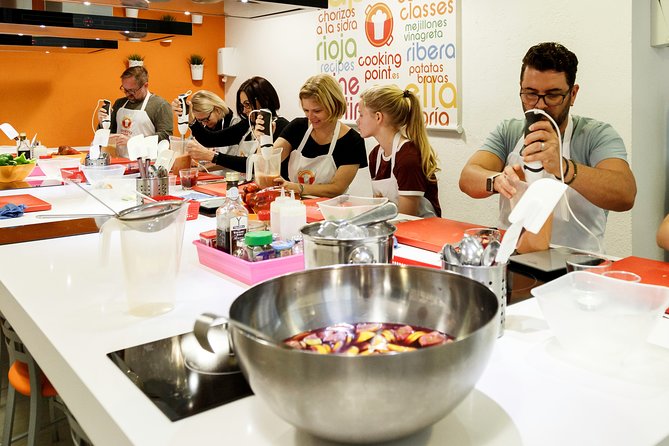
The cooking point works with several instructors, and each brings a slightly different personality. Angel is described as witty, clear, and welcoming, with a talent for explaining paella and Spanish food without making the lesson feel stiff. Teresa is praised for her enthusiasm, humor, and steady help at the cooking stations.
Elisa brings a lively style and explains both food and culture. Eduardo is noted for patience, clean working conditions, and an instinct for knowing when to guide and when to let people try things on their own. You should not assume you can choose a particular chef, but the range of teaching styles is a good sign for a class built around personal instruction.
The most important point is that the chef is present throughout the work. You are not left to decode a recipe on your own, and beginners are welcome. At the same time, cooks with more experience can ask technique questions and take a little more ownership of the dishes.
If you come alone, you are paired with another participant. That is practical, since the class works in pairs, though solo participants should be comfortable sharing a station with someone new. Couples and families can usually cook together, subject to the class setup.
What the four hours are really worth
At about $102.79 per person, this is not the cheapest meal in Madrid. You can eat tapas for far less, and a plate of paella at a local restaurant will cost less than a cooking class.
The value comes from combining several services in one outing: an English-speaking local chef, a market visit in the morning session, hands-on instruction, drinks, a substantial meal, and a recipe booklet. You also get about four hours of structured activity, which is useful on a day when you want more than another museum or a quick lunch.
I consider the price fair for people who care about food and want a lasting skill from their trip. The recipe booklet gives you a way to recreate the dishes at home, and the class explains details that are easy to miss when you simply order from a menu. It is less good value if you dislike group activities, do not want to cook on holiday, or mainly want a cheap meal.
The 99 percent recommendation rate and 5 out of 5 rating from 1,340 reviews point to a consistently strong experience, especially for the instruction, food, and market visit. I would still treat the price as a payment for an activity, not just lunch or dinner.
Practical details that shape your day
The meeting point is Cooking Point, C. de Moratín, 11, Centro, 28014 Madrid. The activity ends back at the same location, and the meeting point is near public transportation. There is no hotel pickup or drop-off, so you need to make your own way there and back.
The class lasts about four hours. That makes the morning session a substantial part of your day, while the evening class works well as a dinner plan. Give yourself enough time to reach the meeting point without rushing, especially if you are coming from another part of Madrid.
The group maximum is 12 people. That is small enough for direct help, but it is still a shared class rather than a private lesson. You cook in pairs, and solo participants are matched with a cooking partner.
Dietary requirements can be accommodated, but you must provide the details when booking. This is one of the most important practical steps, since the menu may need to change before the class begins.
You receive confirmation at booking unless you reserve within one day of the activity. Last-minute reservations are confirmed as soon as possible, subject to availability. Free cancellation is available up to 24 hours before the start time. After that point, the payment is not refunded, and changes are not accepted.
Who will enjoy this class most
I would recommend the morning session to anyone who wants a stronger connection to Madrid’s food culture. The market visit adds context, and paella gives the class a clear focus. It is also the better option if you want to take home one major Spanish dish that you can practice again.
Choose the evening session if you want variety. The tapas menu offers more dishes, more techniques, and a dinner that feels like a shared Spanish table. It is a good fit for couples, groups of friends, and food lovers who prefer tasting several small plates.
Beginners should feel comfortable booking. The chefs explain each stage, answer questions, and help keep the cooking on track. More experienced cooks should enjoy it too, though the class is aimed at a broad group rather than advanced culinary training.
Families can take part, but remember the 18-and-over drinking rule. People with dietary restrictions should contact the provider at booking. Anyone seeking a private or highly customized class should check the group format first, since the standard experience is shared and capped at 12 people.
Should you book the Madrid cooking class?
Book it if you want to do something active, social, and useful with Spanish food at the center. The market visit, hands-on cooking, local instruction, meal, drinks, and recipe booklet make this more than a demonstration.
My strongest advice is to choose the menu before you pay. Pick morning paella if the market and one substantial Spanish dish appeal to you. Pick evening tapas if you want a broad menu and a dinner built around small plates.
Skip it if you want a quiet meal, a private lesson, or a low-cost way to eat. For everyone else, the combination of clear teaching, generous food, and real participation makes the $102.79 price a reasonable splurge during a Madrid stay.
FAQ
Where does the cooking class begin?
The class begins at Cooking Point, C. de Moratín, 11, Centro, 28014 Madrid, Spain.
Where does the activity end?
The activity ends back at the cooking class meeting point.
How long does the experience last?
The experience lasts approximately four hours.
Is the class offered in English?
Yes. The class is offered in English and includes a local English-speaking chef or guide.
What is the difference between the morning and evening classes?
The morning class focuses on paella and may include gazpacho, sangria, and a visit to a local market for fresh ingredients. The evening class focuses on tapas and may include dishes such as Spanish potato omelet, garlic shrimp, chorizo in cider, patatas bravas, tomato bread with ham, crema catalana, and sangria.
Are dietary restrictions accommodated?
Yes. Dietary needs can be accommodated, but you should provide the details when booking.
What is the cancellation policy?
You can cancel up to 24 hours before the experience for a full refund. Cancellations or changes made less than 24 hours before the start time are not accepted for a refund.
More Workshops in Madrid
- Madrid: Paella and Sangria Workshop in the City Center
★ 4.9 · 1,264 reviews - Paella Workshop with Bottomless Sangria in Central Madrid
★ 5.0 · 763 reviews - Madrid: Half-Day Spanish Cooking Class
★ 5.0 · 345 reviews - Madrid: Paella & Sangria Classes- Seafood, Chicken & Vegan option
★ 5.0 · 265 reviews
More Tapas and Food Tours in Madrid
- Madrid: Highlights Bike Tour with Optional E-Bike or Tapas
★ 4.8 · 1,402 reviews - Madrid Ultimate Spanish Cuisine Food Tour
★ 5.0 · 1,010 reviews - Madrid: Highlights Guided Vintage Bike Tour and Tapas Option
★ 4.9 · 962 reviews - Madrid: Royal Palace Expert Guided Tour with Optional Tapas
★ 4.5 · 887 reviews
Recently added in Madrid
- Entrance to the Flamenco Temple Room in Madrid with Tapas Option★ 5.0 · 176 reviews
- Tapas & Paella Cooking Class in Madrid with a Professional Chef★ 5.0 · 177 reviews
- Madrid: Toledo Day Trip with Winery Visit and Wine Tasting★ 4.4 · 177 reviews
- VIP visit to the Las Ventas Bullring in Madrid★ 5.0 · 178 reviews
- VIP Entrance Ticket to Our Secret Alley in Madrid★ 5.0 · 179 reviews
- Madrid: Prado & Reina Sofía Museums Guided Tour★ 4.5 · 180 reviews
- Madrid: Royal Palace tour – semi private or private★ 4.9 · 182 reviews
- Atletico de Madrid Stadium & Interactive Museum Admission Ticket★ 4.5 · 183 reviews
Tapas & Food Tours, compared.
Montserrat & Cogwheel Train, Gourmet Wine Tasting & Tapas/Lunch
Read the review →
Barcelona Tapas and Wine Experience Small-Group Walking Tour
Read the review →
Montserrat with Black Madonna & Medieval Winery with Tapas/Lunch
Read the review →
Montserrat and Winery Tour with Tapas or Lunch
Read the review →
Tapas Walking Tour with Food, Wine, and History
Read the review →
Sevilla Food Tour: Tapas, Wine, History & Traditions
Read the review →
Valencia Old Town Tour with Wine & Tapas in 11th Century Historic Monument
Read the review →
Barcelona Paella Cooking Class with Market Visit, Tapas & Sangria
Read the review →Browse the lists this tour appears in