
Reviewed · AUDIO TOURS
Barcelona: Mies van der Rohe Pavilion Ticket and Audio Guide
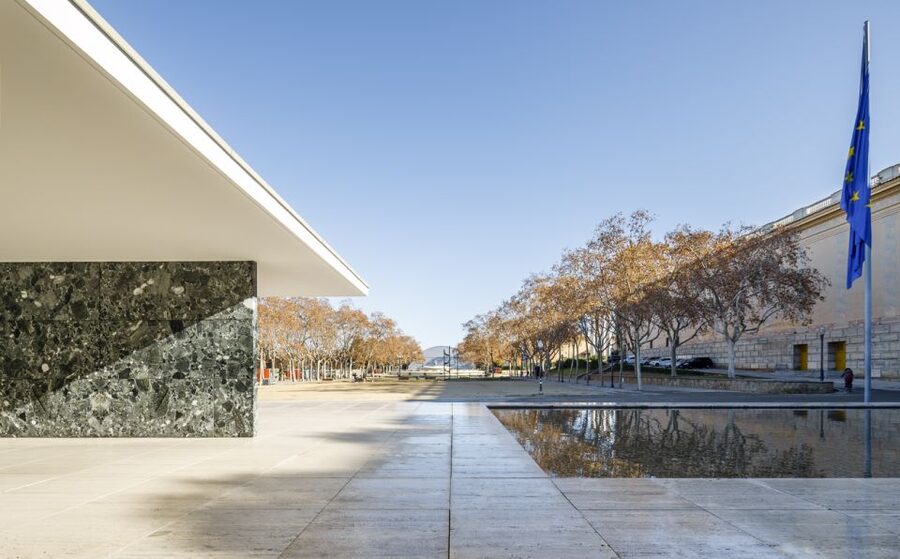
The Mies van der Rohe Pavilion is a small building with a very large reputation. Its beauty comes from restraint: slim columns, broad planes of stone and glass, shallow water, and carefully controlled views. I like the way the building makes you notice materials and space rather than filling every corner with decoration. I also like that the visit is quiet and focused, a welcome change from Barcelona’s more crowded sights.
The main consideration is value. At $10 per person, this is not a long attraction, and some visitors feel a building of such simplicity should be free. You are paying for a close look at an important work of modern architecture, not a full-day sightseeing program. Check that the audio guide is available when you arrive, since one booking reported not receiving it.
Key points
- A 1929 modernist landmark: The Pavilion was designed by Ludwig Mies van der Rohe and Lilly Reich for the German national presentation at the Barcelona International Exhibition.
- A building rebuilt from memory and plans: The original Pavilion was dismantled after the exhibition, then reconstructed on its first site and reopened in 1986.
- A short, calm architectural visit: The space is compact, so the appeal lies in close observation rather than a long route or packed schedule.
- Five audio-guide languages: Commentary is available in Spanish, Catalan, English, French, and German.
- A good pairing with nearby sights: One visitor enjoyed a short nature trail near the site, giving you a pleasant way to add a little outdoor time.
- Easy access: The Pavilion is wheelchair accessible, and the ticket lets you skip the ticket line.
Why the Pavilion still matters in Barcelona
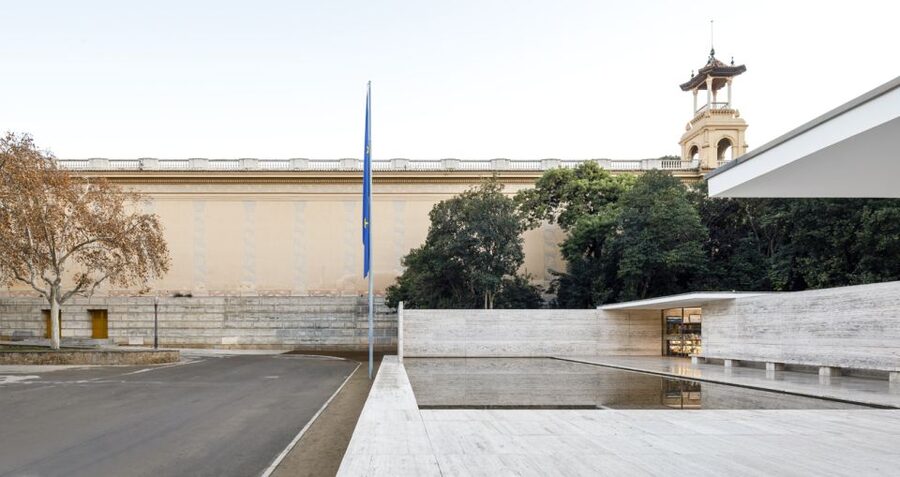
The Pavilion was created for the 1929 Barcelona International Exhibition, when countries built showcase structures to present their ideas, culture, and design. Germany’s contribution was not a grand hall packed with objects. It was an exercise in space, proportion, and materials.
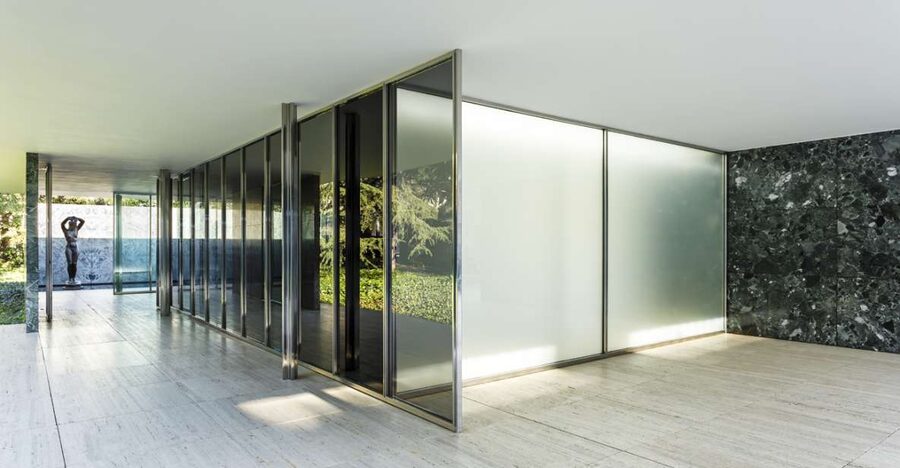
That choice made the building influential. Mies van der Rohe and Lilly Reich reduced the structure to its basic parts, then arranged those parts with great care. You will see a low, open building rather than a conventional room with a clear front and back. Walls guide your movement, but they do not simply shut you in. Glass connects the interior with the outside, while stone surfaces give the space weight.
I find the Pavilion most rewarding when I stop treating it as a quick photo stop. Look at how one wall hides part of the next room, then reveals it as you move. Notice how the pool extends the building’s lines. Pay attention to the contrast between reflective glass, polished stone, water, and the metal columns.
The design can feel almost too simple at first. That is part of the point. The Pavilion asks you to slow down and look at details that busy historic buildings usually bury under decoration.
A few other Barcelona outings to compare
- Barcelona: Sagrada Familia Entry Ticket with Audio Guide
★ 4.6 · 105,312 reviews - Barcelona: Park Güell Admission Ticket
★ 4.4 · 76,534 reviews - Barcelona: La Pedrera-Casa Milà Ticket & Audio Guide Option
★ 4.7 · 15,099 reviews
A compact route through the Pavilion
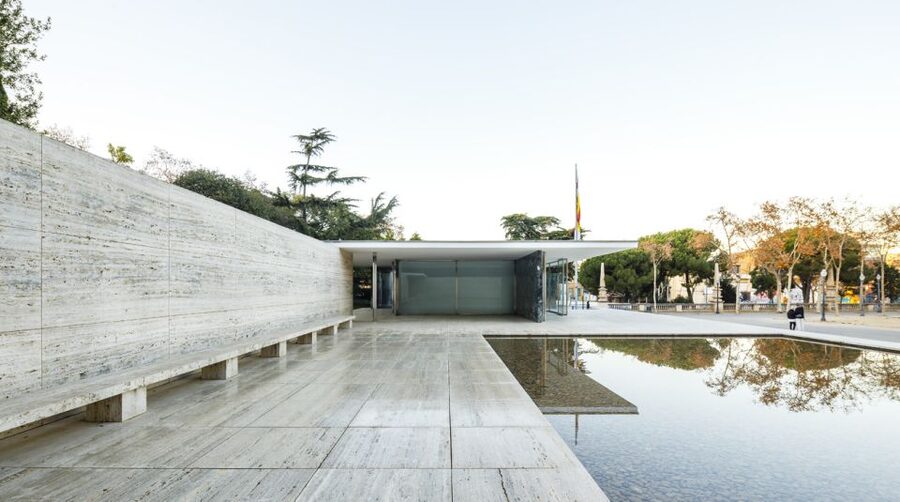
There is no long itinerary here. You enter, move through the open rooms, examine the materials and sightlines, and listen to the audio guide as you go. The visit is best understood as a carefully framed architectural walk rather than a traditional museum tour.
Start by taking in the building from outside. Its low profile and horizontal lines create a calm first impression. The structure does not try to dominate its setting. Instead, it draws your attention toward the relationship between the building, the reflecting pools, and the open space around it.
As you move inside, the route becomes a series of changing views. Walls made from different stones create divisions without making the rooms feel heavy. The spaces connect, but they are not all revealed at once. This gives the Pavilion a sense of movement even though the building itself is small.
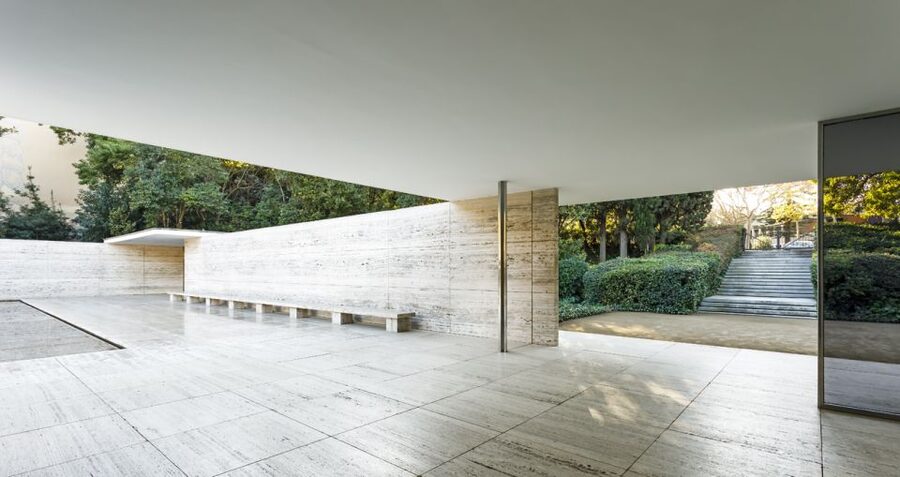
The interior and exterior work together. A pool may appear to continue the lines of an interior wall. A glass panel may reflect the outside while also allowing you to see through it. You will often be looking at two spaces at once, which is why a slow visit pays off.
The audio guide helps explain what you are seeing and why the Pavilion became so important. It also covers the structure’s reconstruction, a key part of its story. Bring your attention to the building itself, but use the commentary to put its unusual design choices into context.
Stone, glass, water, and precise restraint
The Pavilion’s materials are not background decoration. They are the main event.
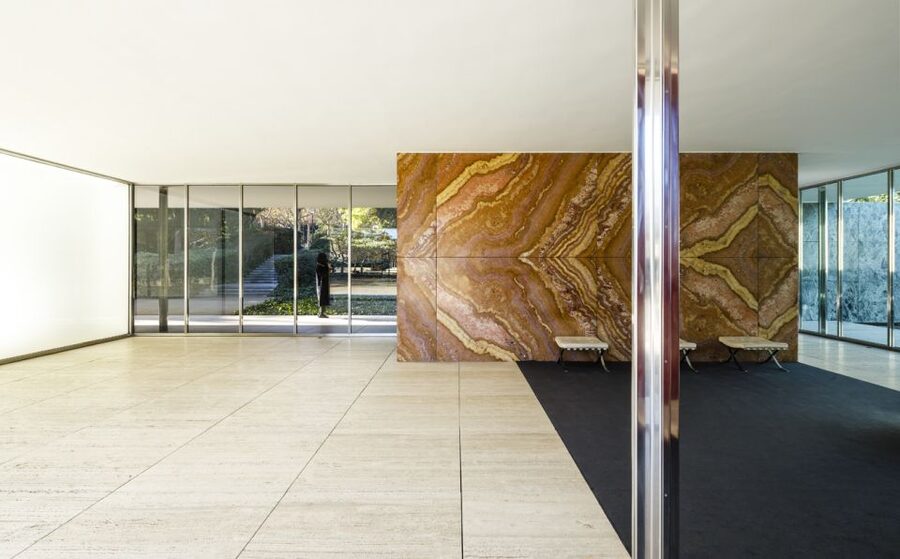
The stone was selected from several parts of the world, including the Alps, Tivoli, Atlas, and Tinos. Each surface brings a different color, pattern, and texture. The contrasts are controlled rather than loud. You will notice the stone because the rest of the building is so spare.
The glass adds another layer. It opens views, reflects light, and makes the boundaries between inside and outside less certain. The Pavilion does not give you one fixed picture. Your view changes as you walk, and the same wall or pool can look different from another angle.
Water adds stillness. The reflecting pools extend the building’s geometry and soften the hard surfaces without making the design feel ornamental. They also help create the calm atmosphere that many people value here.
The Barcelona Chair is associated with the Pavilion and its design tradition, but the information provided for this ticket does not promise a particular display or extra exhibit. If you are visiting mainly to see the building itself, you will have plenty to study. If you expect a large collection or a full museum program, this is not that kind of attraction.
The 1986 reconstruction is part of the experience
The Pavilion you see today is not the original structure from 1929. After the International Exhibition ended, the building was dismantled. Its importance became clearer over time, and it was reconstructed on the original site, reopening in 1986.
That history changes how I look at the building. You are not simply stepping into a surviving exhibition hall. You are seeing a carefully recreated work that had become important enough to bring back decades after its first appearance.
The reconstruction also makes the audio guide useful. Without some background, the Pavilion can seem almost too bare to justify its reputation. Once you understand its place in the Modern Movement and its influence on architects and artists, the simplicity becomes easier to read.
The reconstruction is not a reason to dismiss the visit. It is one of the reasons the visit matters. Barcelona has many historic structures that survived by accident or through continuous use. Here, the building’s ideas were considered important enough to restore and preserve.
Same city, a completely different evening:
- Barcelona: Casa Batlló Entry with Self-Audioguide Tour
★ 4.7 · 25,359 reviews - Barcelona: 24 or 48-Hour Hop-On Hop-Off Bus Tour
★ 4.4 · 20,872 reviews - Barcelona: Park Guell Guided Tour with Skip The Line Entry
★ 4.7 · 17,563 reviews - Barcelona in 1 Day: Sagrada Familia, Park Guell,Old Town & Pickup
★ 5.0 · 13,541 reviews
How much time should you allow?
The ticket is valid for one day, but the Pavilion is not a full-day attraction by itself. The supplied information does not set a required visit length, so plan your time around your interest in architecture rather than a fixed schedule.
A quick visit can give you the main impression: the pools, the open plan, the materials, and the clean lines. A slower visit lets you listen to the audio guide, circle back to details, and compare the views from different positions.
I would avoid rushing in just before another appointment. One booking specifically advised arriving on time, and that is sensible here. The Pavilion rewards a calm visit more than a hurried one. Opening hours can change, so check the current schedule before setting out.
The attraction works well as one stop in a broader Barcelona day. One visitor enjoyed a short nature trail near the site, which suggests a useful way to add outdoor time after your architectural visit. The available information does not identify the trail or provide directions, so treat that as an optional nearby addition rather than a guaranteed part of the ticket.
Is the $10 ticket good value?
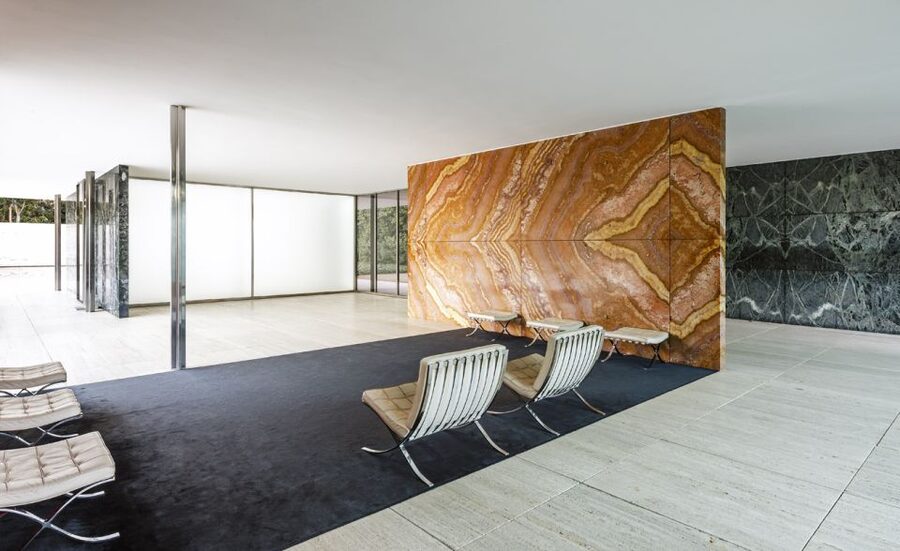
At $10, the ticket is reasonably priced for a major architectural landmark, but the value depends on your interests. You are not buying a long guided tour, a large museum collection, or a series of attractions. You are buying access to one carefully preserved building and an audio guide in five languages.
For architecture students, designers, photographers, and anyone interested in twentieth-century buildings, that can be good value. The Pavilion has influenced generations of architects and artists, and the chance to examine its proportions and materials in person is more useful than seeing a photograph.
For a casual sightseeing day, the calculation is less clear. Barcelona offers many famous sights, and the Pavilion may take less time than you expect. Some visitors feel the entry fee is unnecessary because the structure is compact and quiet. That criticism is fair if you are looking for a large experience for your money.
I would book it if you already care about modern architecture or want a peaceful break from Barcelona’s larger attractions. If you are choosing between this and a major first-time sight, consider how much time you want to spend with a single building.
The audio guide and what it adds
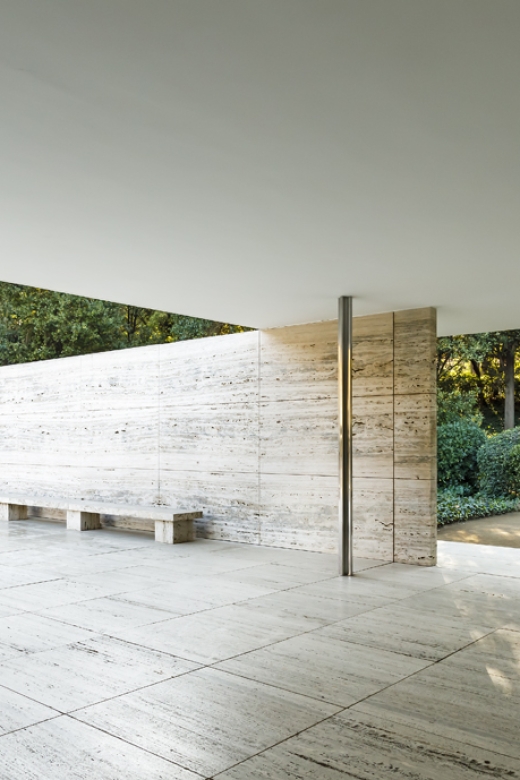
The audio guide is included in Spanish, Catalan, English, French, and German. That makes the ticket more useful than simple entry, especially if you do not already know the Pavilion’s history.
The commentary should help you connect the design to the 1929 exhibition, explain the building’s influence, and describe the 1986 reconstruction. Those points matter because the Pavilion’s physical appearance gives you few obvious clues about its purpose or past.
The supplied information does not name individual guides, because this is an audio-guide visit rather than a tour led by a person. It also does not describe the equipment or pickup process in detail. Since one booking reported that audio guides were not provided, confirm the arrangement at entry and speak up immediately if yours is missing.
Even without commentary, you can appreciate the building’s visual balance. But the historical explanation gives you a better reason to notice the choices in front of you. I would not skip the audio guide if it is available, especially on a first visit.
Photography, quiet, and the feel of the visit
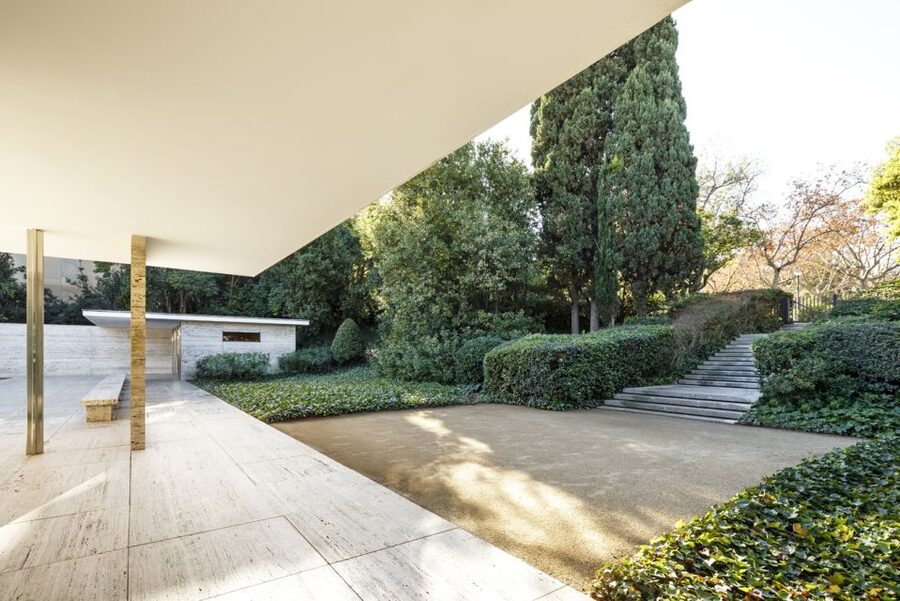
The Pavilion is visually controlled, so it is natural to want photographs. During one visit, professional photographers and models were using the site, becoming part of the scene. That can add energy and interesting human scale, but it may also affect the quiet atmosphere or make certain views harder to capture.
Tripods are not allowed. Food and drinks are also prohibited, as is smoking. Pets cannot enter, although assistance dogs are allowed. These rules protect the clean appearance of the Pavilion and keep the compact rooms comfortable for everyone.
Artistic interventions may occasionally change the appearance of the building. This is worth knowing if you are expecting the exact same view shown in promotional photographs. Such changes can give repeat visitors something new to see, but they may disappoint you if you want a completely pure presentation of the original reconstruction.
The Pavilion is wheelchair accessible. That practical point matters because the building’s open layout and connected spaces make it easier to appreciate without negotiating the sort of tight historic interiors found elsewhere in Barcelona.
Who will enjoy this experience most?
I would recommend the Pavilion to:
- Architecture and design enthusiasts who want to study a landmark in person.
- Visitors who appreciate quiet, uncluttered spaces.
- Photographers who can work without a tripod and do not mind that other photo sessions may be taking place.
- Students and professionals interested in modern architecture.
- Anyone looking for a short cultural stop with an audio guide.
- Visitors who want a calmer contrast to Barcelona’s most crowded monuments.
I would be more cautious if you need a long attraction to fill several hours. Families with young children may find the visit too restrained unless they already enjoy looking at buildings. The Pavilion offers no promise of interactive displays or entertainment, so your enjoyment depends on how willing you are to observe closely.
It is also less suitable if your priority is Barcelona’s older architectural traditions. This is a modernist work with an international design language, not a Gothic church or a richly decorated Catalan interior.
Practical planning before you go
The ticket is valid for one day, and you can skip the ticket line. You still need to check availability and opening hours because schedules may change.
Reserve and pay later is available, which can help if your Barcelona plans are not fixed. You can also cancel up to 24 hours in advance for a full refund. Keep those terms in mind when comparing this ticket with other timed attractions.
Arrive at the scheduled time rather than assuming you can wander in whenever convenient. One visitor’s advice to be punctual is useful, especially if your day includes several bookings.
Before entering, check that you have the audio guide and that it is set to your preferred language. The choices are Spanish, Catalan, English, French, and German. Do not bring food, drinks, a tripod, or a pet unless it is an assistance dog.
Allow yourself enough time to look up from the guide. The spoken explanation is helpful, but the Pavilion’s real strength is spatial. Watch how the rooms reveal themselves as you walk, and notice how the stone, glass, metal, and water relate to one another.
Should you book the Mies van der Rohe Pavilion?
Book this $10 experience if you want a focused look at one of Barcelona’s most influential modern buildings. The combination of entry and audio guide gives you both the physical experience and the background needed to understand why the Pavilion matters.
Skip it if you want a large museum, a long tour, or a major landmark packed with objects and stories. The visit is short and deliberately quiet, and the entry fee may feel high if modern architecture is not your interest.
For the right audience, I think it is a smart addition to a Barcelona itinerary. Go with time to observe, confirm the audio guide at entry, and treat the Pavilion as a lesson in how much a building can say with very little.
FAQ
Where is the Mies van der Rohe Pavilion?
The Pavilion is in Barcelona, in Catalonia, Spain. The ticket provides entry to the emblematic building on its original site.
Who designed the Mies van der Rohe Pavilion?
The Pavilion was designed by Ludwig Mies van der Rohe and Lilly Reich. It served as the German national pavilion at the 1929 Barcelona International Exhibition.
Is the Pavilion original?
The original Pavilion was dismantled after the 1929 exhibition. It was reconstructed on its original site and reopened in 1986.
What languages are available for the audio guide?
The audio guide is available in Spanish, Catalan, English, French, and German.
Is the Pavilion wheelchair accessible?
Yes. The activity information states that the Pavilion is wheelchair accessible.
What is not allowed inside?
Smoking, food and drinks, pets, and tripods are not allowed. Assistance dogs are permitted.
More Audio Tours in Barcelona
- Madrid: Las Ventas Bullring Tour with Audio Guide
★ 4.6 · 3,154 reviews - Cordoba: Mosque-Cathedral E-Ticket with Audio Guide
★ 4.1 · 2,124 reviews - Nerja: Caves of Nerja Entry Ticket with Audio Guide
★ 4.6 · 1,616 reviews - Madrid: Prado Museum Ticket with In-App Audio Guide
★ 3.6 · 1,154 reviews
More Self-Guided Tours in Barcelona
- Barcelona: Palau de la Música Self-Guided Tour
★ 4.6 · 3,603 reviews - Casa Batllo Admission Ticket with Intelligent Audio Guide
★ 4.5 · 3,168 reviews - Barcelona: Montjuïc Cable Car Ticket with Audio Guide
★ 3.9 · 270 reviews - Granada: Alhambra Entry Ticket with Audio Guide
★ 4.1 · 5,950 reviews
Recently added in Barcelona
- Barcelona: Catamaran Cruise w/ Sailing, Wine, & Tapa★ 4.7 · 176 reviews
- Guided Gaudí Trencadís Mosaic Workshop in Barcelona 2 Hours★ 5.0 · 176 reviews
- Barcelona Cable Car Sky Views, Magic Fountain & Castle Visit★ 4.2 · 177 reviews
- Barcelona Private Sunset Sailing with Drinks★ 5.0 · 177 reviews
- Barcelona: Montserrat with Winery Visit and Farmhouse Lunch★ 4.7 · 178 reviews
- Barcelona: City Sights Electric Quad Tour★ 4.8 · 178 reviews
- Barcelona: Nightmare Horror Museum Maze Entry Ticket★ 4.5 · 179 reviews
- Barcelona: Professional Photoshoot Outside Sagrada Familia★ 4.8 · 179 reviews
Audio Tours, compared.
Sagrada Familia Entry Ticket with Audio Guide
Read the review →La Pedrera-Casa Milà Ticket & Audio Guide Option
Read the review →
Casa Batllo Admission Ticket with Intelligent Audio Guide
Read the review →

Browse the lists this tour appears in