
Reviewed · SELF-GUIDED TOURS
Barcelona: Palau de la Música Self-Guided Tour
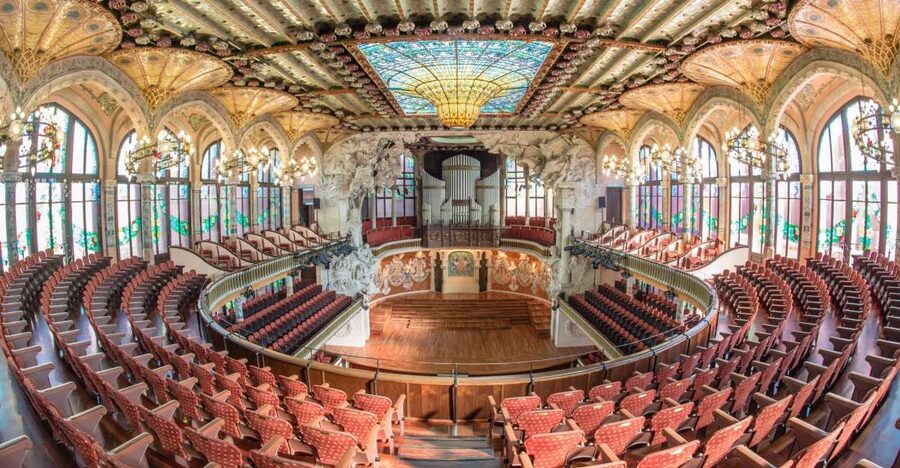
The best part of this visit is the Concert Hall, where stained glass, sculpture, flowers, and warm color turn a working music venue into a feast for the eyes. You can explore without a guide hurrying you along, then pause for the organ or a rehearsal if one happens to be scheduled.
I like the freedom of a self-guided visit, and I like how much beauty is packed into a short 50-minute route. The main consideration is value: at $21, the ticket is fair if you care about architecture and music, but it may feel costly if you receive only a brochure and do not use the phone audioguide.
Key points to know before you go
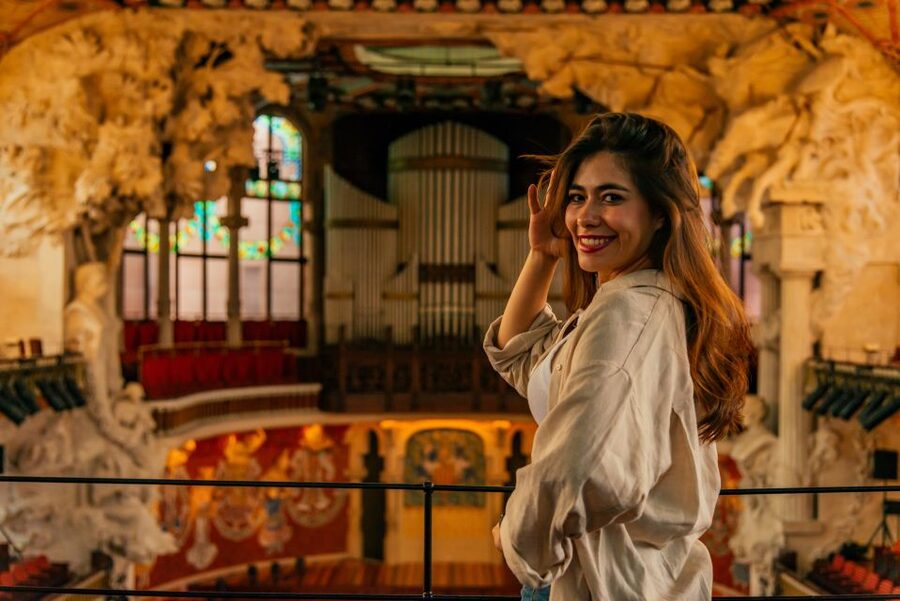
- The Concert Hall is the star: Look up at the famous light source from the second floor and take time with the ceiling and color.
- The grand staircase rewards slow looking: Iron, glass, flowers, and flags create one of the building’s most ornate entrances.
- The visit is self-guided: You receive an informative brochure and can access an audioguide on your own phone.
- Bring headphones: A phone and headphones are not supplied, and some visitors had trouble getting the app to work.
- Organ music can add a magical touch: Short recitals or music practice may be taking place during your visit, but this is not guaranteed.
- The central location is convenient: The hall is only minutes from Las Ramblas and Plaça de Catalunya.
Why the Palau de la Música deserves your time
Barcelona has no shortage of celebrated architecture. The Palau de la Música Catalana earns its place on your list because it is not simply a pretty façade to photograph from the street. Inside, the decoration keeps going, room after room, until the concert hall seems to dissolve the boundary between architecture and music.
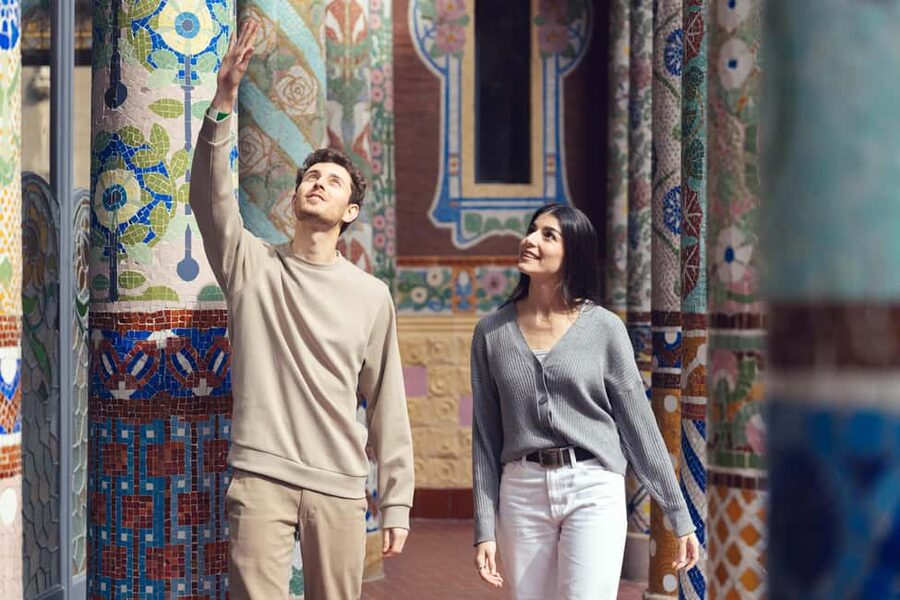
This is a building made for close looking. You will see flowers, flags, columns, glass, ironwork, color, and carefully arranged light. The design belongs to Catalan Modernisme, the local version of the Art Nouveau movement, and the result is more playful and theatrical than many formal European concert halls.
I especially like that the visit takes place in a real concert venue rather than a static museum. The space may be quiet, a piano may be tuned, musicians may rehearse, or an organ recital may fill the hall. Those moments are not promised, but they can give the building a sense of purpose that a silent architectural tour cannot match.
The Palau is also easy to fit into a Barcelona day. Its location in the city center puts it just minutes from Las Ramblas and Plaça de Catalunya. You can visit in the morning, walk onward to other central sights, or stop for coffee at the café after looking around.
A few other Barcelona outings to compare
- Barcelona: Sagrada Familia Entry Ticket with Audio Guide
★ 4.6 · 105,312 reviews - Barcelona: Park Guell Guided Tour with Skip The Line Entry
★ 4.7 · 17,563 reviews - Barcelona: La Pedrera-Casa Milà Ticket & Audio Guide Option
★ 4.7 · 15,099 reviews
Starting in the foyer beside the café
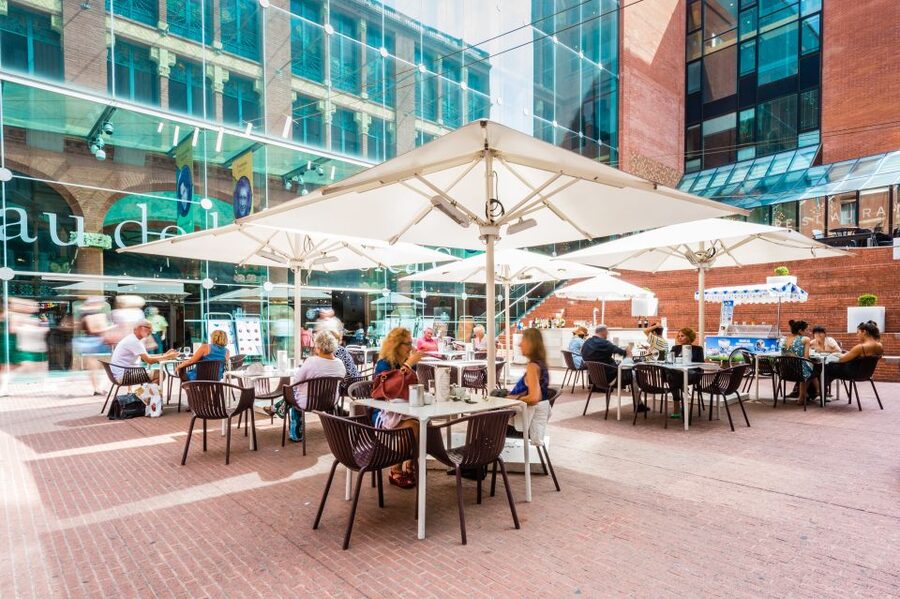
Your visit begins in the foyer area, beside the cafeteria. This is a straightforward meeting point, but do not arrive carrying a large suitcase or oversized bag. Food and drinks are not allowed inside, and large luggage is specifically excluded.
The foyer gives you a useful first look at the building’s decorative approach. Rather than starting with a long lecture, you can collect your brochure, prepare your phone if you plan to use the audio guide, and begin at your own pace.
The self-guided format works well for independent visitors. You are not tied to a named guide or a fixed group, so you can read every section carefully or move faster if you are mainly interested in photography. Families and mixed-interest groups may also appreciate the freedom. One person can study the architecture while another takes pictures or listens to the audio.
That freedom has a trade-off. A printed brochure cannot respond to your questions or point out small details based on your interests. If you want a full architectural explanation, a live guided visit may suit you better. For a short introduction to the building, though, the brochure gives you enough structure to keep the route clear.
The grand staircase and its flowers, iron, and glass
The grand staircase is an early highlight, and it deserves more than a quick climb. Floral details and flags decorate the route, while iron and glass add texture to the design. It is the sort of space where you should stop halfway and look back, then look upward before continuing.
I like this section because it gives you an immediate sense of the building’s artistic ambition. The decoration is not tucked away in a private room. It greets you on the way in, turning an ordinary architectural feature into part of the show.
Take your time with the materials. The combination of metalwork, glass, and floral decoration creates a contrast between hard structure and soft natural forms. That theme continues elsewhere in the Palau, so the staircase helps you understand the visual language before you reach the main auditorium.
This is also one of the better areas for photographs. The details can be easy to miss if you are moving with a group, but the self-guided setup lets you pause. Just remember that the building may have restricted areas on a particular day. One visit can feel more open than another, and some interior spaces may be closed.
Lluís Millet Hall and the nature-themed balcony
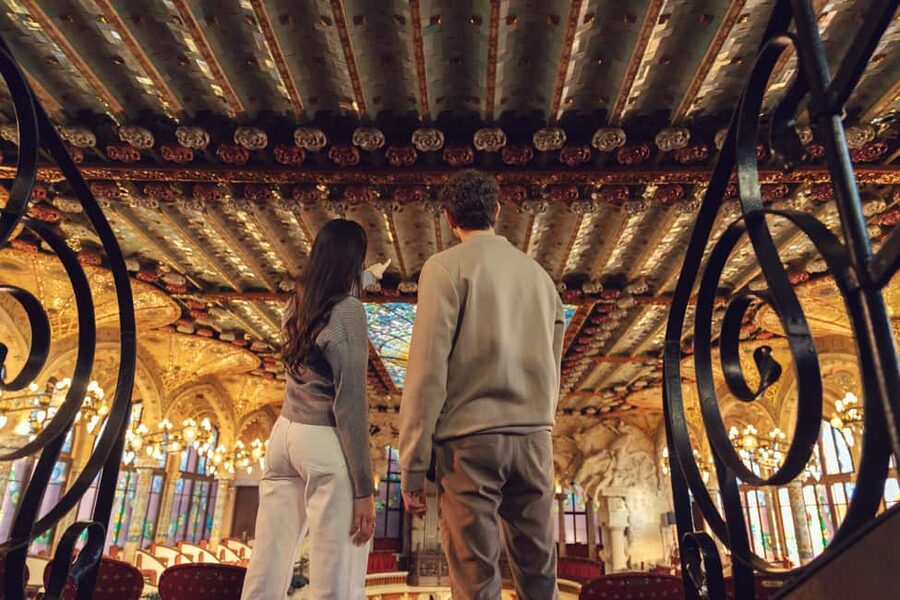
From the staircase, the route continues to the Lluís Millet Hall. This room gives you a change of scale. Instead of the grand sweep of the main auditorium, you get a more intimate setting where the balcony and its columns deserve close attention.
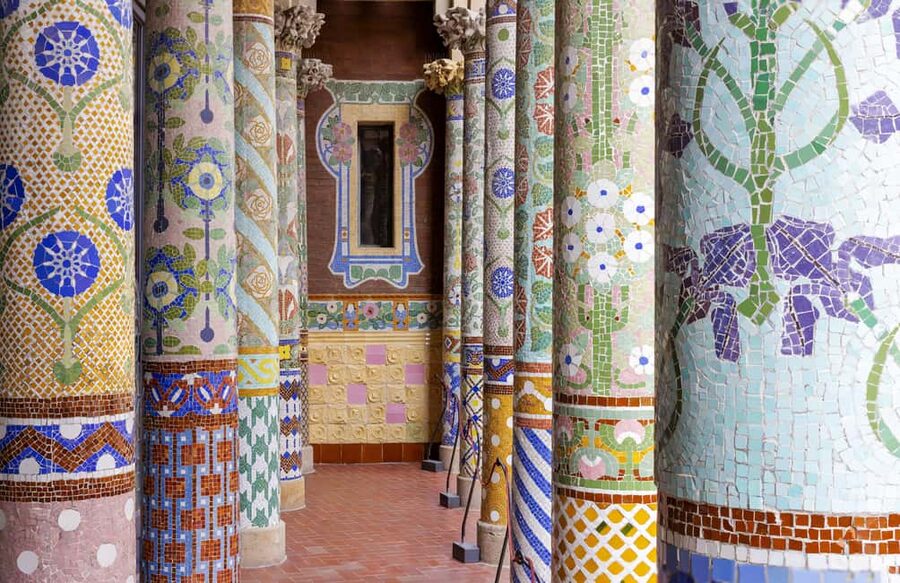
The balcony is decorated with columns that symbolize nature, with flowers of many kinds. This is a good place to look at repetition and detail. The design does not rely on one giant feature alone. It builds its effect from many smaller parts working together.
I would not rush through this room simply because the Concert Hall is still ahead. The Lluís Millet Hall helps explain why the Palau feels so distinct from a plain concert venue. Its decorative program continues through the building, so the smaller spaces matter.
The brochure can be particularly useful here because it tells you which details to look for. If you use the audio guide, you can listen in Catalan, French, German, Italian, Spanish, English, or Korean. You access it on your own phone, not through equipment handed to you at the entrance.
That point matters. Bring a charged phone and your own headphones. The ticket does not include a phone or headphones, and the audio guide is optional. Some people have found the app difficult to start, while others found the audio explanations clear and helpful. I would download or prepare everything before entering if possible, then keep the brochure as a backup.
Same city, a completely different evening:
- Barcelona: Park Güell Admission Ticket
★ 4.4 · 76,534 reviews - Barcelona: Casa Batlló Entry with Self-Audioguide Tour
★ 4.7 · 25,359 reviews - Barcelona: 24 or 48-Hour Hop-On Hop-Off Bus Tour
★ 4.4 · 20,872 reviews - Barcelona in 1 Day: Sagrada Familia, Park Guell,Old Town & Pickup
★ 5.0 · 13,541 reviews
Entering the Concert Hall, the visual high point
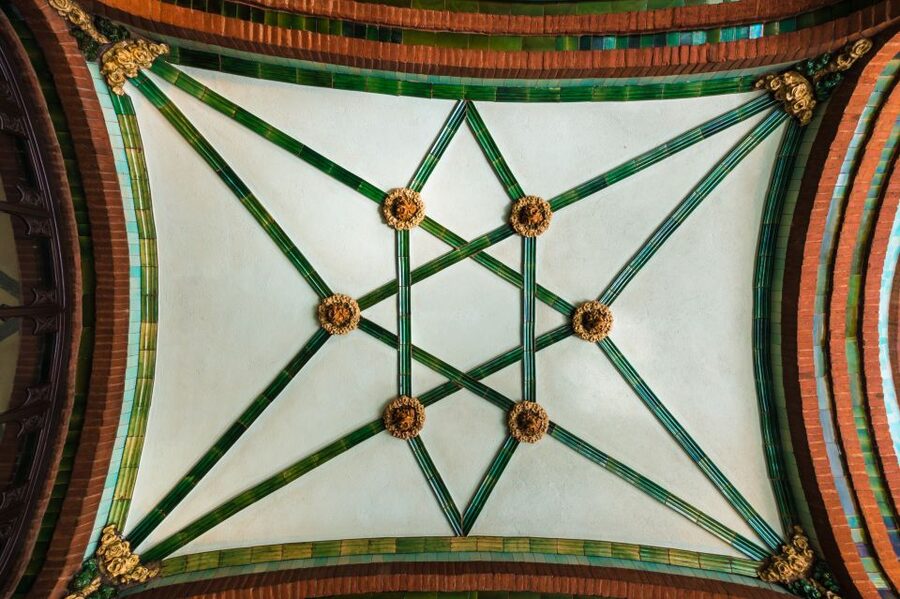
The Concert Hall is the main reason to book this experience. The change is immediate: color, shapes, and light surround you, and the decoration feels much larger than the earlier rooms.
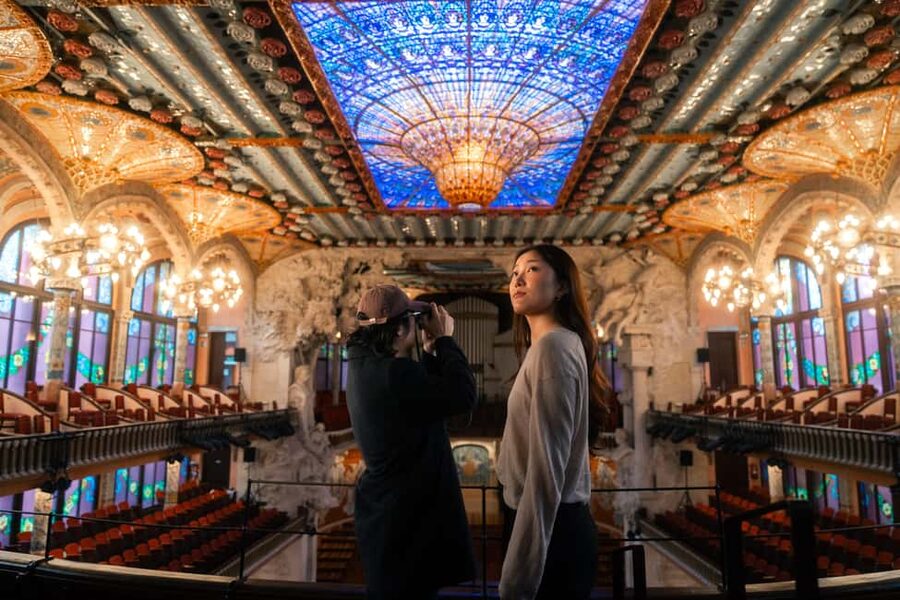
Look up before you settle into the view. From the second floor, you can see the impressive central light source at close range. This is one of the strongest moments of the visit because the ceiling is not just decoration overhead. It becomes part of the room’s identity, drawing your eye upward and shaping the atmosphere below.
The balcony is another place to pause. Its details echo the building’s nature-inspired style, while the overall auditorium combines sculpture, glass, and color in a way that rewards repeated glances. I would plan to spend at least half of your available time here, especially if you enjoy architecture or photography.
The hall is also a functioning music space, and that changes how you experience it. You may hear a piano or organ, catch part of a rehearsal, or find musicians practicing. Several people have enjoyed unexpected organ music during their visit, including short pipe-organ performances that filled the hall. A choir rehearsal or children’s concert may also be taking place.
There is an important limit: these musical moments are fortunate extras, not part of the guaranteed self-guided tour. Do not book this ticket expecting a concert. If you want a complete performance, you need to arrange a separate concert visit. The self-guided ticket gives you access to the architecture and the listed areas, with a chance of hearing activity in the venue.
The brochure and phone audioguide
The included brochure is the simplest way to approach the tour. It explains the history and main features, and it allows you to move through the building without worrying about phone reception, battery life, or an app that will not load.
The optional audioguide adds more depth if it works well on your device. It is available in seven languages: Catalan, French, German, Italian, Spanish, English, and Korean. You can choose the format that fits your attention span. Read the brochure for a fast overview, or use the audio for a slower visit.
I see this as a useful choice rather than a major flaw. Some people prefer to look at the decoration without listening. Others want context about the rooms and symbols. Since the audio guide is not mandatory, you are not paying extra for a feature you do not want.
Still, the wording at booking can be easy to misunderstand. The brochure is included, but the phone and headphones are not. If listening matters to you, treat your own equipment as part of the preparation. If you forget headphones, you can still complete the visit with the printed material.
How long the 50-minute visit really feels
The stated duration is about 50 minutes. That is enough for a focused look at the foyer, staircase, Lluís Millet Hall, and Concert Hall. It is not a long museum session with time to study every detail at leisure.
I would call 50 minutes a sensible minimum. You can move at a relaxed pace, take photographs, and listen to selected audio sections. If the building is quiet and open, you may want longer, but the formal visit itself is designed to stay compact.
Morning can be a smart choice if you want a calmer start to the day. One person found the morning timing especially good. That does not promise a crowd-free visit, but an early slot may make it easier to photograph the rooms and pay attention to the ceiling without feeling rushed.
The activity ends back at the foyer meeting point. That makes the café a handy final stop. You can have a coffee or drink and look back at the architecture from outside the tour route. A three-course meal with a glass of wine at the café was described as good value at €17, with gluten-free choices available, but food is not included in the $21 admission and the tour itself does not include drinks.
Is $21 good value?
At $21 per person, this is not the cheapest short attraction in Barcelona. The visit lasts only about 50 minutes, and the core package is an entrance ticket, brochure, and access to an audioguide on your own phone.
For me, the price makes sense if you value the building itself. The Palau offers a concentrated architectural experience, and you do not need half a day to see it. Its central location also saves travel time, which matters on a busy Barcelona itinerary.
The value drops if you expect a full concert, a personal guide, or guaranteed organ music. None of those is included as a fixed part of the experience. The organ, piano, choir, or rehearsal may be a delightful bonus, but you should consider the ticket worthwhile even if the hall is silent.
I would compare it with the cost of a standard museum entry and ask what kind of visit you prefer. If you like visual detail, historic performance spaces, and short self-paced stops, $21 is reasonable. If you prefer long tours with an expert explaining every room, you may find the brochure too brief.
Who should book this visit?
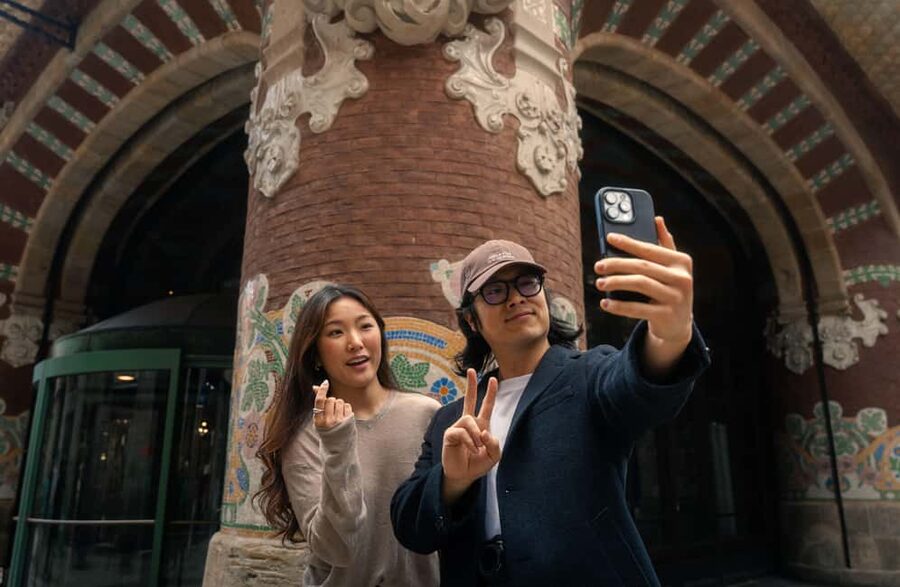
I recommend it most strongly to people who enjoy architecture, decorative arts, music venues, and photography. The building gives you plenty to examine, and the self-guided route lets you set the pace.
It also suits first-time Barcelona visitors who want a central attraction that fits between other plans. You can reach it from the Las Ramblas and Plaça de Catalunya area, see the main rooms in under an hour, and continue on foot.
Families can benefit from the short format. A child may lose patience during a long museum tour, but the changing rooms, bright decoration, and possibility of hearing music can keep the visit lively. Wheelchair access is available, though the particular route through open areas can still depend on what is operating that day.
I would hesitate to recommend it to someone who dislikes decorative interiors or wants guaranteed live music. I would also be cautious if you are carrying large luggage, since large bags are not allowed. Plan to leave those items elsewhere before arriving.
Practical tips for a smoother visit
- Bring your own phone and headphones if you want the audioguide.
- Keep the brochure with you even if you plan to listen. It is a useful backup.
- Arrive ready to look up. The ceiling and overhead light source are easy to miss when you focus only on eye-level details.
- Give the grand staircase and Lluís Millet Hall more than a passing glance.
- If you hear music, stop and listen. Organ or rehearsal sounds can make the visit feel special, but they are not guaranteed.
- Avoid bringing food, drinks, or large luggage.
- Consider a morning time if you want a more relaxed visit.
- Leave room for a café stop after the tour.
The activity offers free cancellation up to 24 hours before the scheduled visit, with a full refund, and you can reserve now and pay later. Those terms are useful if your Barcelona plans are still shifting. The available starting times vary, so check the schedule before building the rest of your day around it.
Should you book the Palau de la Música self-guided tour?
I would book it if you want to see one of Barcelona’s most ornate interiors without committing to a long guided program. The Concert Hall alone gives the visit its reason to exist, while the staircase and Lluís Millet Hall add enough detail to make the route feel complete.
Go with realistic expectations. You are buying access to a remarkable concert building, not a guaranteed performance or a private explanation from a guide. Bring headphones, allow about 50 minutes, and treat any organ or rehearsal music as an unexpected gift.
For architecture lovers, music fans, photographers, and families seeking a manageable central stop, this is a strong choice. If $21 feels high for a short visit, use the brochure carefully, spend real time in the Concert Hall, and finish with coffee nearby so the outing feels like more than a quick look inside.
FAQ
How long does the self-guided tour last?
The visit lasts about 50 minutes. Starting times vary, so check availability when choosing your visit.
What rooms will I see?
The route includes the foyer, grand staircase, Lluís Millet Hall, and Concert Hall. From the second floor, you can view the central light source in the Concert Hall up close.
Is the audioguide included?
Access to the audioguide is included, but you must use your own phone. A phone and headphones are not provided. The audioguide is available in Catalan, French, German, Italian, Spanish, English, and Korean.
Do I need to bring headphones?
Bring your own headphones if you want to use the audioguide. You can also follow the included printed brochure.
Is live music guaranteed during the visit?
No. You might hear a piano, organ, choir, musicians rehearsing, or another performance taking place, but live music is not guaranteed as part of the self-guided tour.
Is the Palau de la Música tour wheelchair accessible?
Yes, the activity is listed as wheelchair accessible. Food, drinks, luggage, and large bags are not allowed inside.
Where does the tour start and finish?
The tour starts in the foyer area of Palau de la Música Catalana, beside the cafeteria. It finishes back at the same meeting point.
Recently added in Barcelona
- Barcelona: Catamaran Cruise w/ Sailing, Wine, & Tapa★ 4.7 · 176 reviews
- Guided Gaudí Trencadís Mosaic Workshop in Barcelona 2 Hours★ 5.0 · 176 reviews
- Barcelona Cable Car Sky Views, Magic Fountain & Castle Visit★ 4.2 · 177 reviews
- Barcelona Private Sunset Sailing with Drinks★ 5.0 · 177 reviews
- Barcelona: Montserrat with Winery Visit and Farmhouse Lunch★ 4.7 · 178 reviews
- Barcelona: Nightmare Horror Museum Maze Entry Ticket★ 4.5 · 179 reviews
- Barcelona: City Sights Electric Quad Tour★ 4.8 · 178 reviews
- Barcelona: Professional Photoshoot Outside Sagrada Familia★ 4.8 · 179 reviews
Self-Guided Tours, compared.
Sagrada Familia Entry Ticket with Audio Guide
Read the review →La Pedrera-Casa Milà Ticket & Audio Guide Option
Read the review →
Casa Batllo Admission Ticket with Intelligent Audio Guide
Read the review →
Valencia Bike Tour from the City to the Beach, plus Bike Guy App!
Read the review →Browse the lists this tour appears in