
Reviewed · WALKING TOURS
The Spanish Civil War & Franco Barcelona Walking Tour
Barcelona’s Civil War story is written in places most people hurry past: a square, a church wall, an old hospital, and a narrow lane that looks almost too pretty to carry such painful memory. This 2.5-hour walking tour connects those places and explains how the war, political infighting, working-class movements, and Franco’s dictatorship shaped the city.
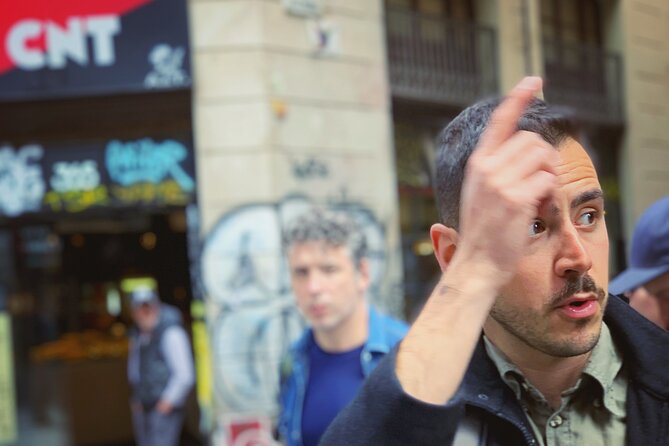
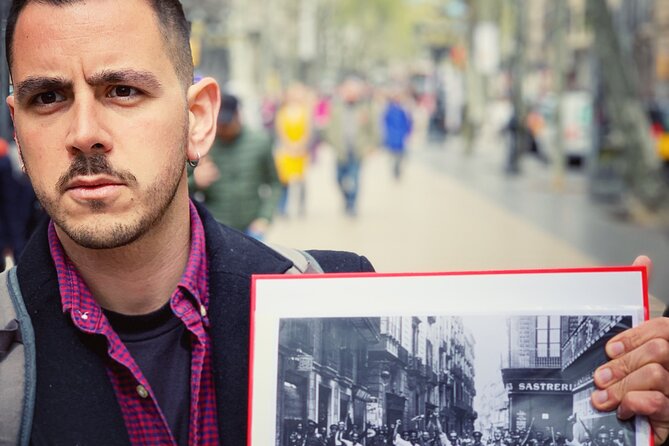
I like two things right away. First, the guide uses historic photographs and posters beside the actual streets, so you can compare Barcelona before and during the conflict with what you see today. Second, the tour tackles the difficult political maze of Republicans, anarchists, and other factions instead of reducing the war to a simple battle between two sides.
The main consideration is that this is a history class on foot, not a casual stroll with a few dates added. You need comfortable shoes, attention, and some patience with complicated names and events. A €1 radio headset is also paid separately at the meeting point.
Key points to know before you book
- Barcelona’s Civil War scars: Visit Plaça de Catalunya, La Rambla, Santa Maria del Pi, and Plaça Sant Felip Neri, all tied to the city’s wartime story.
- Guides with different strengths: Henrieta, Filipa, Evan, Chrysa, Yannis, Evangelos, and others have led sessions, with a strong focus on clear explanations and questions.
- Useful visual material: Historic photos, maps, and posters help you connect present-day streets with events from 1936 to late 1938.
- A serious political focus: Learn about anarcho-syndicalism, working-class Barcelona, Republican factions, and Franco’s dictatorship.
- Small enough for discussion: Groups can reach a maximum of 25 people, and the guide takes questions along the way.
- Plan for extra costs and walking: The tour costs $47.16 per person, with a €1 headset fee paid separately. One church admission is not included.
Why this tour changes the way you see Barcelona
Most first walks through Barcelona focus on Gaudí, Roman remains, food markets, or the grand streets of the Eixample. This experience takes a different route through the city’s political memory. It asks you to look at ordinary corners and consider what happened there when Barcelona became one of the key centers of the Spanish Civil War.
That approach has real value. You do not just hear that the war divided Spain. You learn how divisions among the Republican side affected Barcelona itself, how anarcho-syndicalist ideas shaped working-class life, and how the Franco period left difficult questions about identity and memory.
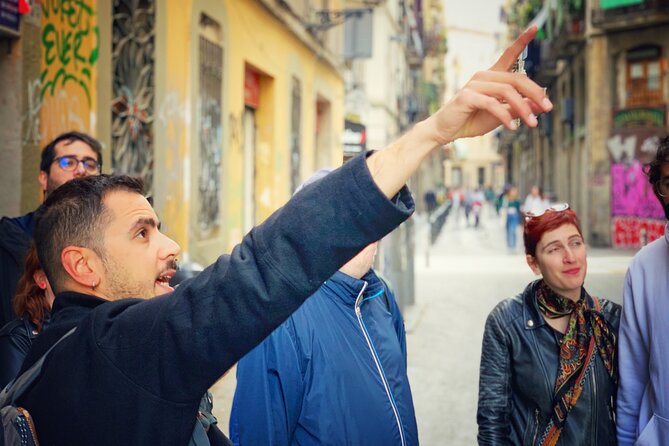
The subject is sensitive. A good guide must explain competing political groups without turning the tour into a slogan-filled lecture. The strongest guides on this walk, including Henrieta, Filipa, Evan, Chrysa, Yannis, and Evangelos, are praised for making the subject understandable while keeping its moral weight.
I would choose this near the beginning of a Barcelona stay if modern Spanish history matters to you. It gives later sightseeing more meaning. A church, public square, or surviving mark on a building may look different after you know what it witnessed.
More Walking Tours in Barcelona
- Barcelona Tapas and Wine Experience Small-Group Walking Tour
★ 5.0 · 5,804 reviews - Barcelona: Tapas Walking Tour with Food, Wine, and History
★ 4.8 · 4,261 reviews - Barcelona Tapas Walking Tour: Food, Wine & History
★ 4.5 · 1,928 reviews
Plaça de Catalunya: beginning at Barcelona’s political center
The meeting point is outside Foot Locker at Plaça de Catalunya, 20. This is a practical place to begin because the square is easy to reach by public transportation and sits at the top of La Rambla and the edge of the Old Town.
The square receives about 10 minutes of focused attention. The guide explains its importance during the Civil War and uses the setting to establish the Barcelona context before moving into the smaller streets.
This opening matters because the Spanish Civil War can feel confusing if you begin with a list of factions and dates. The guide first gives you a sense of Barcelona as a working city caught inside a national crisis. From there, the political story has a place to land.
Do not expect a large monument explaining the conflict. One useful point of this tour is also one of its limits: Barcelona does not always mark these events clearly. You often need the guide’s photos, maps, and explanation to see what is no longer obvious.
La Rambla: war history beneath the city’s tourist surface
The walk continues down La Rambla, where several Civil War-related sites are discussed over roughly 10 minutes. Today, the street is one of Barcelona’s busiest visitor routes. The contrast is the point. Beneath the restaurants, shops, and constant foot traffic lies a record of political conflict and wartime disruption.
This section works best when you pay attention to the guide’s images. The current street will not always provide a clear physical marker, so the historical photographs help bring the earlier city into view.
The tour also begins to explain the different Republican factions active in Barcelona. This is where the subject can become difficult. You may hear unfamiliar names and organizations, and the story does not always move in a straight line. Guides who slow down for questions make a real difference.
Evan is praised for taking time with the political details and making the complicated relationships clearer. Yannis is also noted for connecting the past with everyday life in the city. Those qualities matter here, because La Rambla can be noisy and crowded, making it harder to follow a dense explanation.
Antic Hospital de la Santa Creu: an older building in a newer conflict
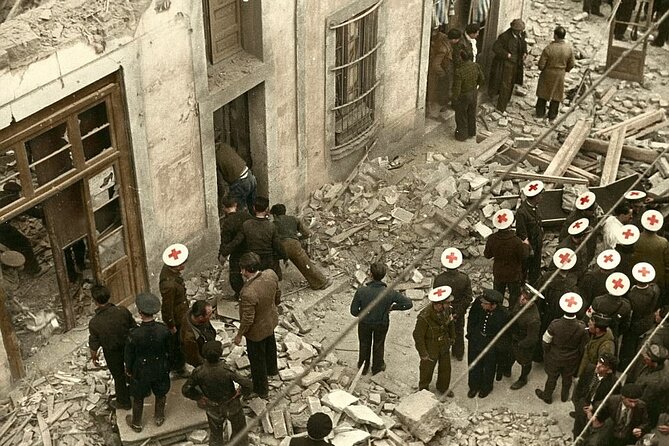
The Antic Hospital de la Santa Creu receives about five minutes. The hospital dates to the 15th century, giving the tour a useful change of scale. Barcelona’s Civil War story did not happen in a city built only for the conflict. It unfolded inside much older streets and institutions.
The stop helps you see how layers of Barcelona overlap. A medieval or early modern building can become part of a 20th-century political story without changing its outward appearance. That is one reason a local guide adds so much: the city does not always explain its own layers.
Because the stop is short, expect a focused explanation rather than a full visit to the hospital complex. The tour is about the connection between place and event, not a complete architectural tour of the building.
Same city, a completely different evening:
- Barcelona: Sagrada Familia Entry Ticket with Audio Guide
★ 4.6 · 105,312 reviews - Barcelona: Park Güell Admission Ticket
★ 4.4 · 76,534 reviews - Barcelona: Casa Batlló Entry with Self-Audioguide Tour
★ 4.7 · 25,359 reviews - Barcelona: 24 or 48-Hour Hop-On Hop-Off Bus Tour
★ 4.4 · 20,872 reviews
Santa Maria del Pi: a church with a wartime connection
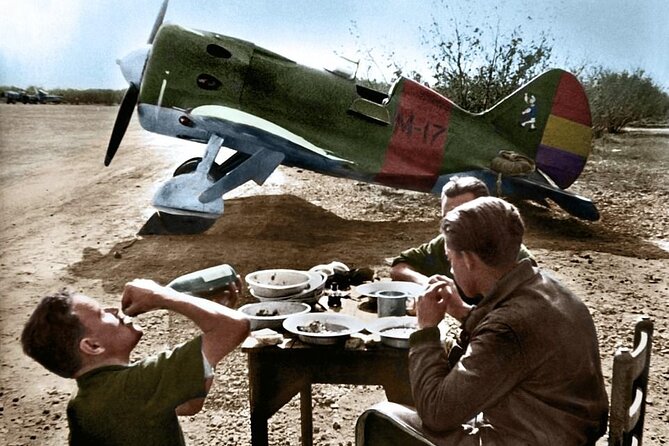
The Basilica de Santa Maria del Pi is another brief stop, lasting about five minutes. The church has an unexpected connection to the Civil War, and the guide uses it to show how religious buildings fit into the conflict’s wider social and political setting.
Admission is not included here, so you should be prepared for a possible separate entry cost if access inside is part of the visit. The supplied details do not give the admission price or confirm how much interior time is included, so ask the guide at the start if seeing the inside matters to you.
I like this stop because it broadens the story. The tour is not only about military action or government decisions. It also deals with institutions, beliefs, class, and the pressure placed on everyday life during a period of extreme upheaval.
Plaça Sant Felip Neri: beauty and destruction in one small square
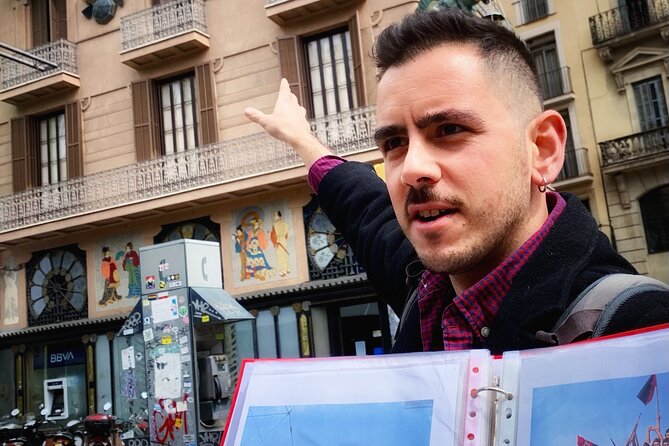
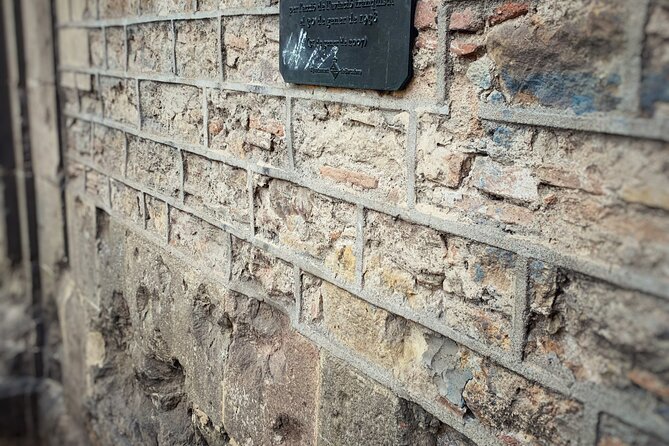
Plaça Sant Felip Neri is the most emotionally charged stop. It is often admired for its quiet beauty, but it also carries visible reminders of Civil War destruction. The tour spends about five minutes here, though the subject may stay with you much longer.
This is a good example of the tour’s method. The guide does not need a large museum display to make the past feel present. The physical setting, paired with a photograph and a careful explanation, can do more than a long list of battlefield dates.
The square is also a reminder to keep the discussion respectful. This is not simply a photogenic pause. You are standing in a place connected with loss, and the guide treats it as part of Barcelona’s memory rather than as a backdrop.
The politics are the heart of the experience
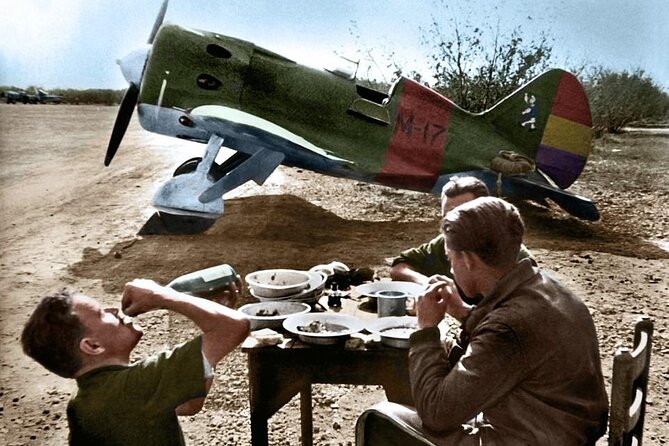
The Spanish Civil War is often presented as a simple struggle between Republicans and Nationalists. Barcelona’s story makes that explanation inadequate. The tour focuses on the competing groups within the Republican camp and explains the role of anarcho-syndicalism and the city’s working-class movements.
You should come ready to hear about disagreements among people who opposed Franco but did not share the same political goals. That internal conflict is essential to understanding why Barcelona became such a tense and important setting.
Filipa is praised for explaining both political structures and social undercurrents in a clear, lively way. Chrysa is noted for handling questions patiently and thoughtfully. Those skills are especially useful for anyone who arrives with little prior knowledge.
The guide also covers the period leading up to the war, not just the fighting itself. That background helps you understand why the conflict emerged and why the issues did not vanish when the war ended.
Franco’s dictatorship and the memory Spain carried forward
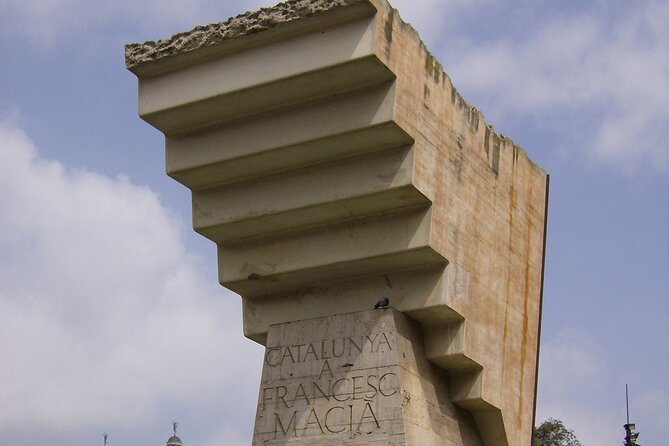
The final part of the story reaches beyond the war and into Franco’s dictatorship. This is important because the tour is not treating 1936 to 1939 as an isolated historical episode. It considers how the dictatorship shaped Spanish and Catalan identity, public memory, and the way the past was discussed or left unspoken.
Evan is praised for explaining the drama of the era while also keeping the political structure clear. Another guide, Evangelos, is noted for answering questions and giving participants further reading and film suggestions at the end. That kind of follow-up is useful if the walk sparks an interest that a single afternoon cannot satisfy.
You may also find that the tour raises questions rather than closing them. That is appropriate for a subject still tied to identity and memory. The guide’s job is to give you a firm framework, not pretend that every family, political group, or region experienced the period in exactly the same way.
What the pace and group size feel like
The advertised duration is about two hours and 30 minutes. Some sessions may run close to three hours, particularly when the group asks many questions. The official stops themselves are short, with 10 minutes at Plaça de Catalunya, 10 minutes along La Rambla, and about five minutes at each of the remaining three locations.
Much of the value comes between those stops, as the guide links one place to the next. This is why the experience can feel walking-intensive even though several individual explanations are brief.
The maximum group size is 25 people. That is not private-tour intimacy, but it is small enough for a guide to invite questions and check whether the group is keeping up. A radio headset costs €1 per person and is paid to an outside provider at the meeting point. Bring that extra euro, and use the headset if street noise makes it hard to follow.
Wear comfortable shoes. One participant specifically noted the need for good footwear and headphones, while another described the walking as minimal. The safest reading is that the physical demand depends on the pace, route, and group, but you should not book it expecting to stand in one square the whole time.
Is $47.16 good value?
At $47.16 per person, this costs more than a basic free walking tour, but the comparison is not quite fair. You are paying for a specialist subject, a guide who can explain competing political forces, visual historical material, and a route built around events that are not always marked in the city.
The value is strongest if you have a real interest in 20th-century Spain or want more than Barcelona’s usual architectural highlights. It is also useful for repeat visitors who have already seen the major sights and now want to understand the city’s social and political character.
The value is weaker if you want a relaxed introduction to Barcelona or prefer a tour with major interiors and long sightseeing stops. There are no substantial included admissions, and the Santa Maria del Pi entry is not included. The tour’s product is explanation and context, not access to a major attraction.
A 99 percent recommendation rate and a five-star score from 539 ratings suggest very strong overall satisfaction, but the one sharply negative account points to a real risk: guide quality can affect a complicated history tour. One participant found the presentation disorganized and difficult to follow, while most praised guides for being clear, warm, thorough, and open to questions.
Who should book this Barcelona history walk?
I would recommend it to:
- You if you already know a little about the Spanish Civil War and want the Barcelona setting.
- You if you know almost nothing and want a clear starting point.
- You if modern Catalan and Spanish identity interest you.
- You if you prefer social and political history to standard sightseeing.
- You if you enjoy asking questions and following a detailed explanation.
- You if you are comfortable walking through busy Old Town streets.
I would think twice if you want a light, humorous city orientation or if dense political history quickly loses you. Families with older children may find it useful, but the supplied information does not give a minimum age or a special youth format.
The tour is offered in English. Most people can participate, service animals are allowed, and the meeting point is near public transportation. It requires good weather, and the operator may cancel if too few people book. You can cancel up to 24 hours before the start for a full refund, but changes or cancellations inside that window are not refunded.
My verdict: book it for the story behind the streets
Book this tour if you want to understand why Barcelona feels politically distinct and why ordinary squares can carry such weight. The strongest guides turn a difficult subject into a clear, human story without pretending that the factions or memories are simple.
I would place it early in a Barcelona visit, ideally when you have the energy to concentrate and walk. Choose it over a standard city tour if you care about the Civil War, anarcho-syndicalism, working-class history, or Franco’s legacy. Skip it if your priority is architecture, food, or easy sightseeing.
Bring comfortable shoes, one extra euro for the headset, and an open mind. The city will look much less neutral afterward.
FAQ
Where does the tour begin?
It begins at Foot Locker, Plaça de Catalunya, 20, Ciutat Vella, Barcelona.
Where does the tour end?
The activity ends at a different location from the starting point. The supplied details do not specify the exact end address.
How long does the tour last?
The stated duration is approximately two hours and 30 minutes. Some sessions may take close to three hours when the guide spends extra time answering questions.
What language is the tour offered in?
The tour is offered in English.
How much does the tour cost?
The listed price is $47.16 per person.
Is there an extra fee?
Yes. A €1 per person radio headset fee is paid at the meeting point to an external provider.
Are attraction admissions included?
Admission is free at Plaça de Catalunya, La Rambla, the Antic Hospital de la Santa Creu, and Plaça Sant Felip Neri. Admission to the Basilica de Santa Maria del Pi is not included.
How large can the group be?
The maximum group size is 25 people.
Is the tour suitable for most people?
Most people can participate. The activity is near public transportation, and service animals are allowed. Comfortable shoes are recommended because the experience takes place on foot.
Can I cancel for a refund?
You can cancel at least 24 hours before the start time for a full refund. Cancellations or changes made less than 24 hours before the start are not accepted or refunded. Poor weather or failure to meet the minimum number of participants may lead to a different date, another experience, or a full refund.
Recently added in Barcelona
- Barcelona: Catamaran Cruise w/ Sailing, Wine, & Tapa★ 4.7 · 176 reviews
- Guided Gaudí Trencadís Mosaic Workshop in Barcelona 2 Hours★ 5.0 · 176 reviews
- Barcelona Cable Car Sky Views, Magic Fountain & Castle Visit★ 4.2 · 177 reviews
- Barcelona Private Sunset Sailing with Drinks★ 5.0 · 177 reviews
- Barcelona: Montserrat with Winery Visit and Farmhouse Lunch★ 4.7 · 178 reviews
- Barcelona: Nightmare Horror Museum Maze Entry Ticket★ 4.5 · 179 reviews
- Barcelona: City Sights Electric Quad Tour★ 4.8 · 178 reviews
- Barcelona: Professional Photoshoot Outside Sagrada Familia★ 4.8 · 179 reviews
Walking Tours, compared.

Barcelona Tapas and Wine Experience Small-Group Walking Tour
Read the review →
Tapas Walking Tour with Food, Wine, and History
Read the review →
Albaicín and Sacromonte Guided Sunset Walking Tour
Read the review →
Toledo Tour & Vineyard Walk with Wine Tasting from Madrid
Read the review →

Barcelona Tapas Walking Tour: Food, Wine & History
Read the review →
Madrid Old Town & Royal Palace Walking Tour Skip the Line Ticket
Read the review →
Browse the lists this tour appears in