Reviewed · TICKETS
Royal Site of San Lorenzo de El Escorial Entrance Ticket
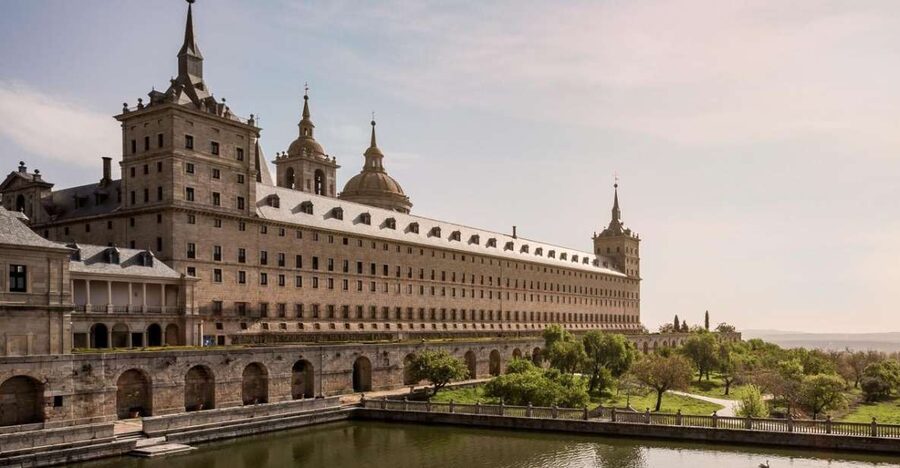
El Escorial is the kind of place that surprises you from the inside. Its stern stone exterior can look almost prison-like, but beyond the walls you find royal rooms, a grand basilica, frescoes, gardens, a library, and a crypt filled with Spanish monarchs. Philip II’s vision is written into every corridor.
I like the freedom of a self-guided visit, and I like how much history sits under one roof. The building brings together monastery, palace, church, burial place, and library in one remarkable complex. The main drawback is that you receive no guide, and finding the correct entrance or dealing with a queue can take some patience.
- One building, several worlds: Explore a monastery, royal residence, basilica, library, and royal crypt in a single visit.
- A strong Renaissance setting: See how Italian and Flemish artistic styles shaped Spain during the reign of Philip II.
- Gardens with mountain views: On a clear day, the grounds look toward the Sierra de Guadarrama and the Valley of the Fallen basilica.
- A practical day trip from Madrid: The train journey takes under an hour, followed by an uphill walk of about 25 to 30 minutes from the station.
- Self-guided rather than escorted: You set your pace, but you must supply the historical context yourself.
- Good value for serious sightseers: At about $21, the ticket is reasonably priced if you plan to examine the major rooms instead of rushing through.
Why El Escorial Feels Like a City in Stone
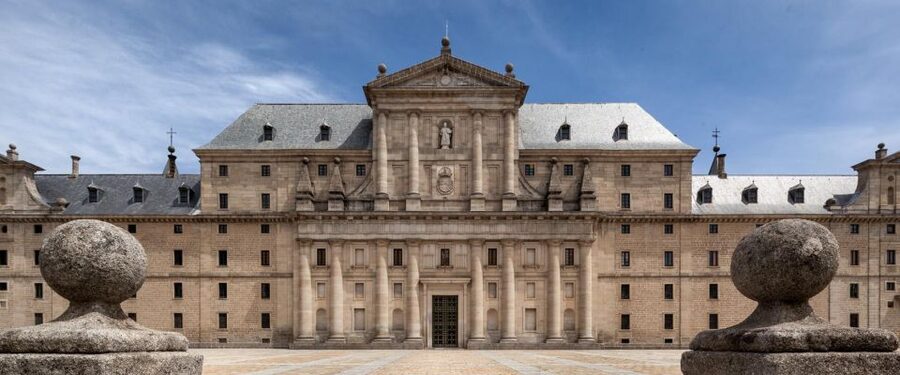
San Lorenzo de El Escorial was created to express the religious, political, and cultural ambitions of Spain during its Golden Age. Philip II wanted a place that could serve several purposes at once, and that ambition is still clear in the building’s unusual scale.
You are not simply visiting a monastery. The complex also contains a palace, a basilica, royal burial spaces, a library, chapels, and courtyards. The arrangement feels deliberate and controlled, reflecting the personality and priorities of Philip II.
The outside is severe. Broad walls and restrained stonework give the building a practical, almost defensive look. That plain exterior makes the interior more effective. Once you enter, color, decoration, religious art, and royal furnishings change the mood completely.
I find this contrast one of El Escorial’s greatest pleasures. You might arrive expecting a grand palace with an ornate facade, then discover that the real drama is held behind the walls.
Starting With the Monastery and Royal Rooms
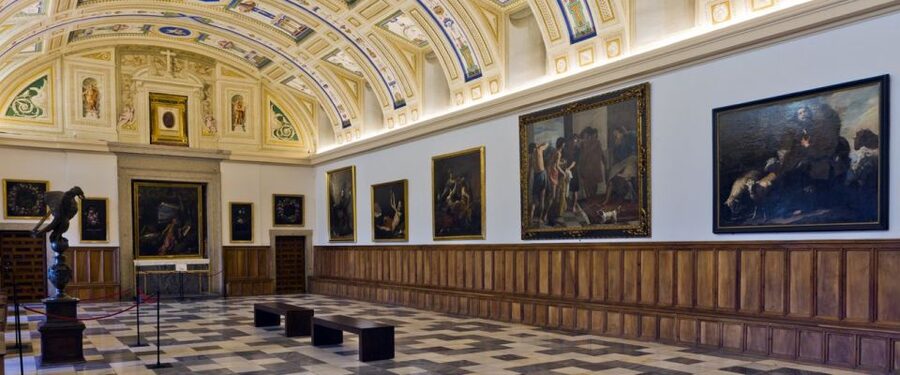
The monastery of San Lorenzo el Real was established for monks of the Order of St. Jerome. As you move through the complex, you see how religious life and royal power were placed side by side.
The monastery areas offer a quieter way to understand the site. Chapels, corridors, and courtyards show the building as a working religious institution rather than just a royal showpiece. This matters because El Escorial was designed around faith as much as kingship.
The royal rooms add another layer. The complex is connected with Emperor Charles V and his wife, and it later became closely tied to Philip II and the Spanish monarchy. The palace areas are not presented as a separate attraction. They are part of the same carefully planned structure.
That combination makes the visit feel more substantial than a standard palace tour. You can move from spaces intended for prayer to rooms connected with royal life, then continue toward the church and burial areas. The shift is sometimes abrupt, but that is part of the point. El Escorial was designed as one complete statement.
The layout remains largely unaltered, which gives the visit a sense of continuity. You are not walking through a modern reconstruction or a heavily rearranged museum. The building’s original organization still guides your route.
A few other Spain outings to compare
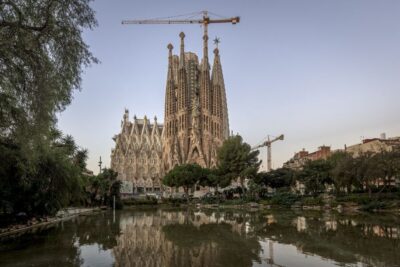
- Barcelona: Sagrada Familia Entry Ticket with Audio Guide
★ 4.6 · 105,312 reviews - Barcelona: Park Güell Admission Ticket
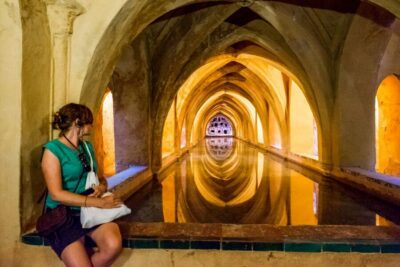
★ 4.4 · 76,534 reviews - Seville: Royal Alcázar Entry Ticket
★ 4.6 · 28,378 reviews
The Basilica Built for Royal Ceremony
The Basilica is one of the major stops inside El Escorial. It was erected in 1574, and its scale gives the complex a clear center.
Even if you are more interested in architecture than religious history, you should slow down here. The basilica brings together the spiritual and political purposes of the site. It was a place of worship, but it also formed part of the royal setting Philip II wanted to create.
The artwork took years to complete, and that long process is visible in the level of detail. You might find yourself looking less at one individual object than at the combined effect of the architecture, chapels, paintings, and decorative program.
This is also a place where a guide would add real value. Without one, you can appreciate the size and beauty of the basilica, but you may miss why certain spaces matter or how the parts fit into Spanish royal history. If you visit independently, read the available information carefully and give yourself enough time to look rather than simply pass through.
The Royal Crypt and the Weight of Succession
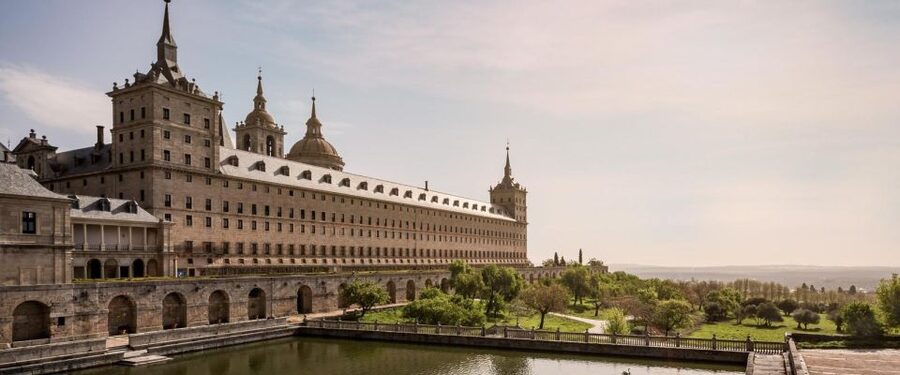
The crypt is one of the most memorable parts of the visit. It houses members of the Spanish royal family who once lived within the world represented by El Escorial.
A burial place changes how you understand the palace above it. The royal rooms can seem formal and distant, while the crypt makes the succession of monarchs feel physical and immediate. This is not just a story about Philip II’s reign. It is also a place shaped by generations of Spanish rulers.
For me, the crypt gives the complex emotional weight. You are no longer looking only at architecture and art. You are seeing how the monarchy presented its own place in history, religion, and national identity.
The atmosphere is more serious than festive, so this is not a quick decorative stop. Take your time, but be respectful and attentive to the setting.
The Library and Spanish Golden Age Ambition
The library helps explain why El Escorial was more than a religious house or royal residence. It reflects the intellectual goals of the Spanish Golden Age and the desire to gather learning within the complex.
The visit allows you to connect the library with the broader ambitions of Philip II. Books, religious study, art, architecture, and royal administration all belonged to the same world here. The result is a building that feels like a center of power and thought, not just a monument to personal wealth.
You may find the library more rewarding if you already have an interest in the period, but even a casual visitor can see how carefully it fits into the overall plan. It gives the complex a scholarly side that balances the grander palace and basilica rooms.
Because the ticket is self-guided, you will need to set your own rhythm. I would resist rushing from one major room to the next. The smaller spaces often help you understand how the building operated as a complete institution.
Same city, a completely different evening:
- Barcelona: Casa Batlló Entry with Self-Audioguide Tour
★ 4.7 · 25,359 reviews - Seville: Cathedral and La Giralda Entry Ticket
★ 4.5 · 24,592 reviews - Madrid: Tour Bernabéu Entry Ticket
★ 4.5 · 21,573 reviews - Barcelona: 24 or 48-Hour Hop-On Hop-Off Bus Tour
★ 4.4 · 20,872 reviews
Italian and Flemish Art in a Spanish Setting
El Escorial reflects the way Spain absorbed outside artistic influences during Philip II’s reign. Italian and Flemish forms appear alongside Spanish religious and royal traditions.
This blend gives the interiors variety. The artistic program does not feel limited to one local style. Instead, it shows Spain engaging with the wider European art world while shaping those influences for its own religious and political purposes.
You can also look for the connection between architecture and painting. The decorative work is not simply placed on top of the building. It was planned as part of the spaces, chapels, and ceremonial rooms.
Juan de Villanueva is associated with important architectural and artistic work connected with El Escorial. The experience is not a guided presentation focused only on his career, so do not expect a dedicated lecture about him. Still, his name adds another point of interest for anyone who wants to pay closer attention to the design and later artistic development of the site.
Gardens, Courtyards, and the View Beyond
The gardens are an important part of the visit, especially after the darker interiors. They are maintained in a formal style and give you room to step back from the building.
On a clear day, the grounds offer views toward the Sierra de Guadarrama and the Basilica of the Valley of the Fallen. These views are a major reason to avoid treating the gardens as an afterthought. Fog or cold weather can reduce the distance you can see, but the gardens remain worthwhile for their layout and calm atmosphere.
The contrast between the ordered grounds and the rugged mountain setting adds to the character of the site. You get a sense of why this location mattered to the Spanish court, even when the weather does not cooperate.
If you are visiting on a foggy or cold day, bring realistic expectations. The interiors still provide plenty to see, but you may not receive the wide mountain panorama shown in ideal conditions. A clear day gives the outdoor portion much more impact.
Getting There From Madrid
The journey from Madrid takes under an hour by train, according to the practical route information available for this visit. From the station, the walk to the monastery takes about 25 to 30 minutes and is uphill.
That walk is manageable for many people, but it matters when planning your day. You are not stepping off the train directly at the entrance. Allow time for the uphill approach, especially if you are carrying bags or visiting in cold weather.
The walk can also help you arrive gradually. Instead of appearing at the monument with no sense of place, you move through the town before reaching the monastery. Still, the experience is specifically marked as unsuitable for people with mobility impairments, so check the route and your own needs carefully before booking.
The ticket lasts for one day, and starting times depend on availability. You should check the available time before paying, since the activity is non-refundable.
What the $21 Ticket Buys You
At about $21 per person, the admission ticket offers reasonable value if you want to explore El Escorial independently. You receive entry to the complex, including its key interior areas and gardens, without paying for a full guided tour.
The value depends on how you visit. If you spend time with the basilica, library, palace, crypt, chapels, and gardens, the price feels fair for the amount contained within the site. If you rush through in an hour, you may feel that you have paid for more than you used.
The ticket includes an express security check, but you should not assume that every visit will be completely free of waiting. Confusion over the meeting or entry location has caused problems for some customers, including having to join a long line or being directed toward the wrong place. Confirm the entry instructions before you arrive and keep your booking confirmation available.
One important point: there is no guide included. That keeps the price down, but it also means you will not automatically hear the story behind the rooms. Visitors who want context may prefer a separate guided option. Those who like setting their own pace may prefer this ticket.
How to Make a Self-Guided Visit Work
I would plan this as a real half-day outing rather than a quick stop. The stated duration is one day, giving you flexibility, but the amount of material inside deserves more than a hurried look.
A useful approach is to divide the visit into four parts:
- Begin with the monastery and palace areas, so you understand the building’s several functions.
- Give the basilica and chapels proper attention instead of treating them as corridors between rooms.
- Visit the library and crypt while you still have enough energy to read and observe carefully.
- Finish with the gardens and outdoor views, allowing extra time if the weather is clear.
You may also want to carry a phone or printed notes about Philip II, Charles V, the Order of St. Jerome, and the artistic mix of Italian and Flemish influences. The ticket gives you access, not interpretation.
The building can feel imposing, and its unchanged layout may not always be easy to follow. That is another reason to slow down. Let the sequence of monastery, palace, basilica, library, and crypt tell the story in its own way.
Who Should Book This Ticket
This ticket suits you if you enjoy historic buildings, religious art, royal history, and independent sightseeing. It is especially useful for anyone staying in Madrid who wants a major day trip without committing to a group tour.
You will get the most from it if you are comfortable reading information on your own and spending time in large architectural spaces. The experience is also a good fit for photographers and architecture fans, although outdoor views depend on weather and the ticket itself does not provide a photography-focused route.
You may want another option if you need step-free access, personal assistance, or detailed explanations from a guide. The uphill walk from the train station and the mobility warning deserve serious attention.
I also would not book this casually if you dislike uncertainty at busy entrances. The price is fair, but the practical details matter. Check the exact entry point, allow time for security, and do not count on walking straight in without any delay.
Should You Book San Lorenzo de El Escorial?
Yes, if you want to see one of Spain’s most ambitious royal and religious complexes at your own pace. The interiors are far more impressive than the plain exterior suggests, and the basilica, crypt, library, royal rooms, and gardens provide a full day of history and art for a modest admission price.
Book it if you value freedom and are willing to provide your own context. Choose a guided experience instead if you want someone to explain Philip II’s plans, the role of Charles V, the artistic influences, and the meaning of each major room.
The best practical choice is to go on a clear day if the mountain views matter to you, verify the entry instructions before leaving Madrid, and leave enough time for the uphill walk from the station. El Escorial rewards patience. Its first impression may be plain, but the interior keeps unfolding.
FAQ
Where is the Royal Site of San Lorenzo de El Escorial?
It is in the Community of Madrid, Spain, at San Lorenzo de El Escorial.
How much does the entrance ticket cost?
The listed price is $21 per person.
How long is the ticket valid?
The ticket provides access for one day.
Does the ticket include a guide?
No. The ticket includes admission only, and a guide is not included.
What can I see inside El Escorial?
You can see the monastery, palace areas, basilica, library, chapels, royal crypt, gardens, and Renaissance artwork.
Is security included with the ticket?
The ticket includes access through an express security check.
How long does it take to reach El Escorial from Madrid by train?
The journey from Madrid to El Escorial takes under an hour by train.
How far is the monastery from the train station?
The walk from the station takes about 25 to 30 minutes and is uphill.
Can I see the Valley of the Fallen from El Escorial?
The grounds provide views of the Valley of the Fallen’s basilica and the Sierra de Guadarrama mountain range, particularly when conditions are clear.
Is this activity suitable for people with mobility impairments?
No. The activity is listed as unsuitable for people with mobility impairments.
Can I cancel the ticket for a refund?
No. This activity is non-refundable.
When will I receive my booking confirmation?
The booking confirmation is sent within 48 hours after purchase.
Recently added in Spain
- From Andratx: Formula Sunset Driving Tour★ 4.8 · 176 reviews
- Barcelona: Catamaran Cruise w/ Sailing, Wine, & Tapa★ 4.7 · 176 reviews
- Entrance to the Flamenco Temple Room in Madrid with Tapas Option★ 5.0 · 176 reviews
- Fuerteventura: Round-Trip or 1-Way Ferry Ticket to Lanzarote★ 4.7 · 176 reviews
- Mallorca Sailing Adventure with Snorkeling, Snacks & Drinks★ 5.0 · 176 reviews
- Valencia Private Walking Tour with Official Valencian Guide★ 5.0 · 176 reviews
- Benahavís: Canyoning Guided Tour at Guadalmina River★ 5.0 · 177 reviews
- Guided Gaudí Trencadís Mosaic Workshop in Barcelona 2 Hours★ 5.0 · 176 reviews
Tickets, compared.
Sagrada Familia Entry Ticket with Audio Guide
Read the review →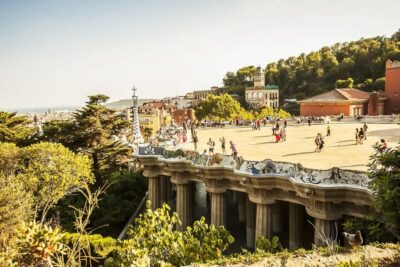

Live Flamenco Dancing Show Ticket at the Theater
Read the review →