Reviewed · TICKETS
Palau de la Musica Catalana Admission Ticket with Audioguide
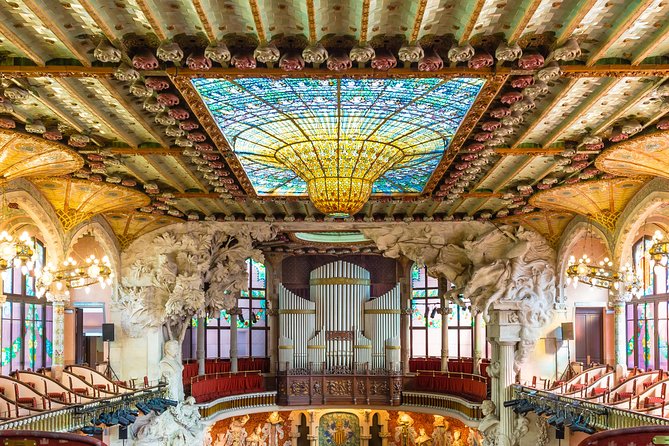
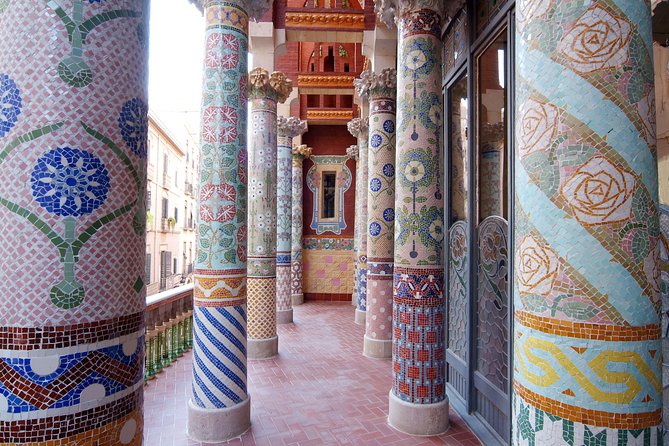
The real surprise here is how much artistry is packed into a working concert hall. Barcelona’s Palau de la Música Catalana is not simply a place to look at from the outside. Inside, you move through colored glass, mosaics, sculpted figures, flowers, palms, and musical symbols before reaching the main hall and, when access permits, the stage itself.
I like the freedom of the self-guided format, especially if you want to linger over a column or take photographs without keeping up with a group. I also like the multimedia material, which adds images, music, video, and a 360-degree concert view to the building’s design.
The main drawback is the audio setup. You use your own phone and your own headphones, and several people have had trouble connecting or hearing the guide. Bring earbuds, download everything before entering, and allow extra time at the start.
Key points to know before you go
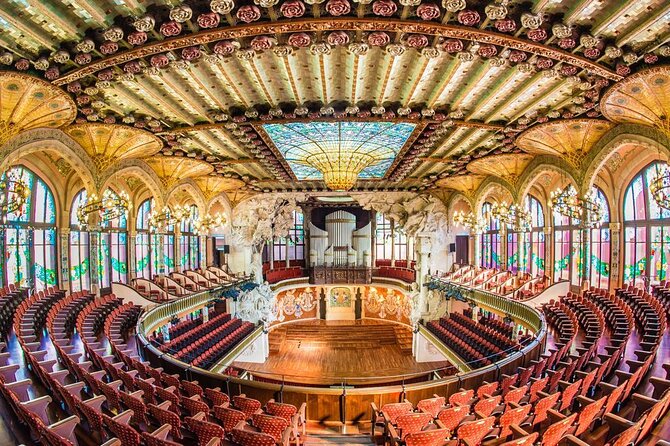
- The concert hall is the star: The ceiling, stained glass, organ, balconies, and decorative details reward slow looking.
- The tour lasts about 50 minutes: You can move at your own pace, though access to some areas may vary during rehearsals or other building activity.
- The audio guide runs on your phone: Headphones are not supplied, and the booking includes access rather than a separate listening device.
- The route includes Sala Millet: This room works like a Modernist catalogue, with ornament and symbolism at every turn.
- You may hear live music: Rehearsals or organ playing can make the visit feel far more immediate than a silent museum stop.
- The price is reasonable for architecture lovers: At $28.96, it costs more than a quick photo stop but less than a concert ticket, with free cancellation up to 24 hours ahead.
Why the Palau is worth your Barcelona time
Barcelona has no shortage of famous buildings, but the Palau de la Música Catalana gives you a different kind of architectural visit. It is a temple of music that was designed to be seen from within, not just admired from a pavement.
The building was created by Lluís Domènech i Montaner, and the tour lets you study his Modernist approach at close range. Instead of a plain concert box, the interior is filled with visual references to nature and performance. Look for figures, flowers, fruit, palms, mosaics, and the flowing use of color.
I especially like the way the route connects decoration with music. The building does not treat ornament as an afterthought. The stained glass, sculpted forms, organ, balconies, and stage all support the idea that this is a place made for sound and spectacle.
The Palau is also a UNESCO World Heritage site, which gives the visit some weight beyond its photo appeal. You are seeing one of Barcelona’s major cultural buildings, but the experience remains fairly compact. Plan on about 50 minutes, or a little longer if you stop often for pictures and audio segments.
A few other Barcelona outings to compare
- Barcelona: Sagrada Familia Entry Ticket with Audio Guide
★ 4.6 · 105,312 reviews - Barcelona: Park Güell Admission Ticket
★ 4.4 · 76,534 reviews - Barcelona: La Pedrera-Casa Milà Ticket & Audio Guide Option
★ 4.7 · 15,099 reviews
Starting at C/ Palau de la Música, 4-6
Your visit begins at C/ Palau de la Música, 4-6, in Barcelona’s Ciutat Vella. The activity ends at the same meeting point, so you do not need to arrange a separate pickup or find your way to another part of the city afterward.
The entrance process is simple once you know what to expect. Show your mobile ticket near your scheduled visit time, and staff scan it before you go upstairs. There is no traditional guide leading the group, and there is no supplied earpiece.
The tour is offered in English, using a downloadable guide on your own phone. The access code is a four-digit code shown with the booking. Download the guide before you arrive if possible, since connecting at the entrance can take time and the application has occasionally stopped during use.
The building is near public transportation, though access conditions can change. One visit was made harder by nearby train-station construction, which meant a longer walk from a main plaza. Give yourself a cushion rather than cutting it close.
The maximum group size is listed as 55 people, but the self-guided system means the experience does not feel like a single guided lecture. You can move forward when ready, sit for a moment, or wait for a clear view of the hall.
The entrance stairs and first view inside
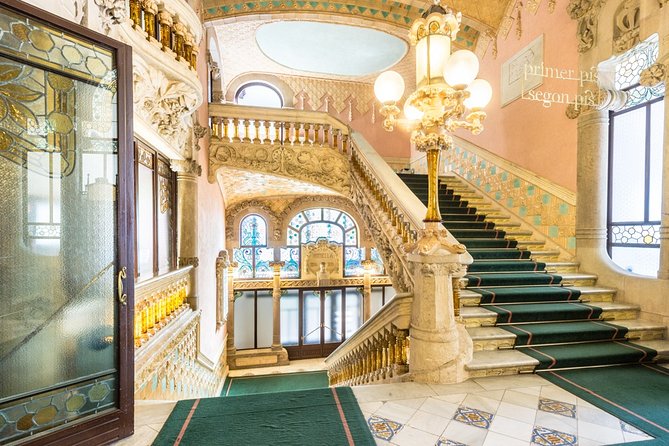
The emblematic access stairs begin the route with a sense of ceremony. This is not a plain museum entrance leading to a series of display cases. The building starts presenting its ideas immediately, using structure and decoration together.
As you move upward, pay attention to the materials around you. The Palace is full of small details that are easy to miss if you rush straight toward the concert hall. The guide helps point out the symbolism, although the audio content is not as detailed as a strong human-led tour would be.
This is where headphones matter most. Holding your phone to your ear makes it difficult to see the images and videos connected to the audio. Earbuds let you listen while keeping both hands free for the phone, your camera, and the rail.
The self-guided pace works well for people who like to stop and examine surfaces. It works less well if you expect staff to explain the building personally at every point. Staff are available in the lobby and can help with the technology, but they do not replace a dedicated guide.
Sala Millet, a Modernist catalogue in one room
Sala Millet is one of the more interesting stops because it gathers many of the building’s visual ideas in one place. The room has been described as a Modernist encyclopaedia, and that is a useful way to approach it: look around for repeated natural forms, decorative patterns, and references to music and performance.
The audio guide provides explanations along with images, music, and video. That extra material matters here because some details are high above eye level or easy to overlook. The guide gives you a reason to pause and scan the room rather than simply walk through.
I would not treat the audio as a substitute for a specialist architectural tour. Some visitors find it a little light on design detail, and anyone who prefers a person answering questions may wish for a live guide. Still, it gives enough structure to turn a casual look around into a more informed visit.
This is also a good place to practice the right rhythm for the tour. Listen to a segment, look around, take a few photographs, and then continue. If you rush through every recording, you will hear the information but miss the point of the visit.
Same city, a completely different evening:
- Barcelona: Casa Batlló Entry with Self-Audioguide Tour
★ 4.7 · 25,359 reviews - Barcelona: 24 or 48-Hour Hop-On Hop-Off Bus Tour
★ 4.4 · 20,872 reviews - Barcelona: Park Guell Guided Tour with Skip The Line Entry
★ 4.7 · 17,563 reviews - Barcelona in 1 Day: Sagrada Familia, Park Guell,Old Town & Pickup
★ 5.0 · 13,541 reviews
The main hall and its remarkable ceiling
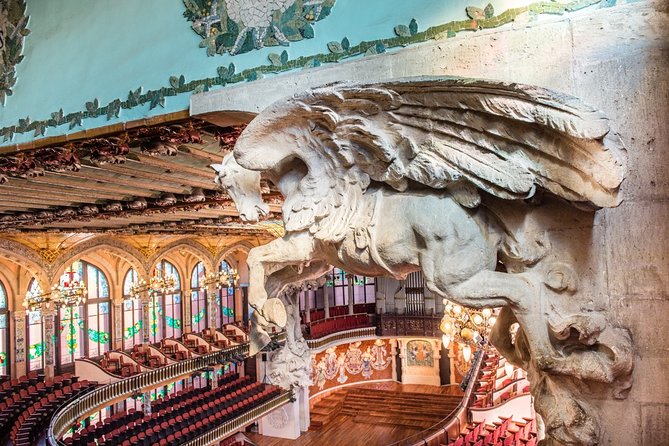
The concert hall is the payoff. It is the part of the building that makes the admission fee easier to justify, especially if you have an interest in architecture, music, or photography.
The room is filled with light, color, shape, and ornament. Stained glass gives the ceiling a luminous quality, while the surrounding balconies and columns create layer after layer of detail. The design is theatrical without becoming a mere backdrop. You feel that the room was made to enhance a performance.
The organ is another major feature. If it is being played during your visit, stop and listen. The sound gives you a better sense of why the hall was designed this way than a silent explanation can. A pianist has also been heard playing on the stage during visits, and rehearsals can add an unexpected live element.
These musical moments are not guaranteed, so do not book this admission ticket expecting a concert. Think of them as a lucky bonus. The ticket is for the building and the self-guided visit, not for a scheduled performance.
You may be able to sit in the hall while listening to the audio guide. That is useful because the room rewards stillness. Instead of trying to photograph every angle in one quick burst, sit down, look toward the ceiling, and let your eyes adjust to the amount of ornament.
Balconies, the stage, and changing access
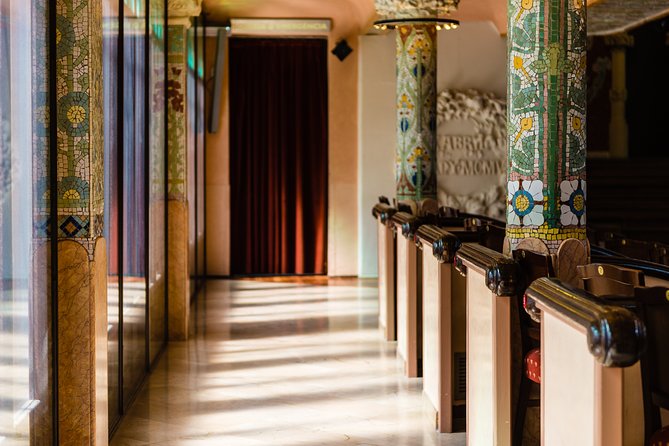
The balconies provide some of the best views and photographs. From there, you can understand the hall’s shape and see how the decorative parts relate to the performance space. The upper levels also help you appreciate how much work went into areas that might be missed from the floor.
The planned route includes the chance to go up to the stage, where famous musicians have performed. That is an appealing detail because it changes the visit from looking at a hall to briefly occupying its performance space.
Access is not always identical on every visit. One stop on the lower level was blocked, and another visit allowed access only to the top level. Rehearsals, scheduling, crowd movement, or building operations may affect which sections are open.
This is worth keeping in mind if you are buying the ticket for one exact viewpoint. The Palau remains worthwhile even if a section is unavailable, but the experience can feel shorter when areas are closed. The stated visit time is about 50 minutes, while a restricted route may take under 30 minutes.
What the mobile audio guide actually adds
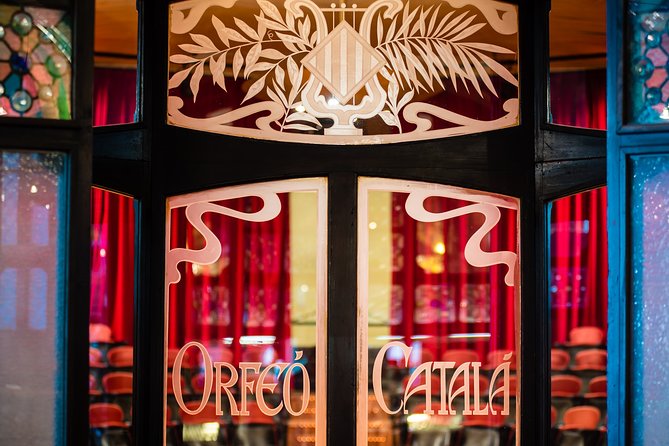
The audio guide is more than a basic recording. It includes spoken explanations, images, music, video, and a 360-degree concert-night experience. That multimedia approach is useful because the Palau is both an architectural object and a music venue.
The 360-degree feature gives you a sense of the hall during a concert, rather than only as an empty room. Music clips can also help you picture the building in use. For anyone who cannot attend a performance, this is a welcome bit of context.
Still, the technology is the weak link. The guide can be confusing to install, and the application has occasionally stopped. The phone audio may be hard to hear in a large room, especially without earbuds.
I recommend this simple preparation:
- Bring fully charged headphones or earbuds.
- Find the four-digit access code before you reach the entrance.
- Download the guide before the visit if the system allows it.
- Keep your phone available so you can view images while listening.
- Arrive early enough to ask for help if the connection fails.
Staff can assist, but the process is not always smooth. A few minutes of preparation can prevent the audio problem from becoming the main memory of an otherwise beautiful visit.
Café, restrooms, and a useful pause
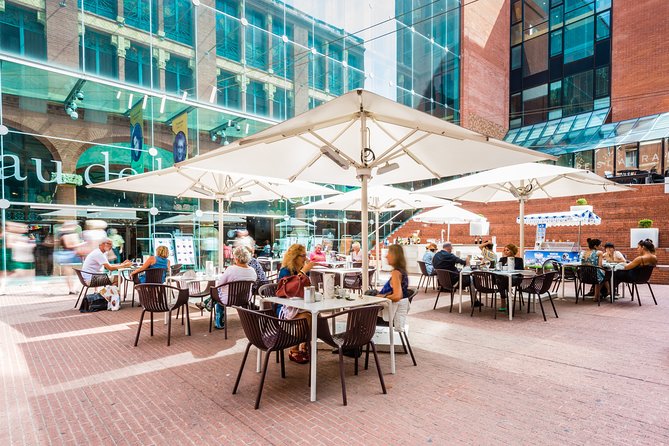
The Palau has a café that can be entered from the street without a ticket. There is also an outdoor seating area with tables and umbrellas, along with restrooms and a gift shop.
That makes the building easier to fit into a walking day. You can visit the hall, pause for coffee or a pastry, and continue through Ciutat Vella without planning a separate meal stop. A croissant and the café setting have both been singled out as pleasant additions.
Do not assume the café is part of the $28.96 admission. Food and drink are not included. Treat it as a convenient extra rather than part of the tour package.
The café is also useful if you arrive early or need a calm place to regroup after the audio visit. Just remember that the ticketed tour and the café are separate parts of the building.
Is $28.96 good value?
At $28.96 per person, this is not a bargain basement attraction. It is also not an unreasonable price for access to a UNESCO-listed concert hall in central Barcelona, especially when you compare it with the cost of a full evening performance.
The value depends on what you want. If you love Modernist architecture, stained glass, music venues, or close-up photography, I think the ticket earns its place in your budget. You are paying for access to the interior, not just an exterior view and a quick lobby visit.
If you only have time for a fast look at Barcelona’s major sights, the 50-minute visit may compete with other priorities. The audio system also means you are paying for a self-guided experience, not a personal explanation from an expert.
For me, the strongest value comes from the hall itself. The audio adds useful context, but the architecture carries the visit. A rehearsal or organ performance can make the ticket feel like an even better buy, but those moments are not promised.
Who should book this visit?
I would recommend it most strongly to:
- People interested in Barcelona’s Modernist architecture.
- Music lovers who want to see a historic concert venue.
- Photographers looking for stained glass, balconies, mosaics, and sculptural detail.
- Independent visitors who prefer to set their own pace.
- Anyone with about an hour to spare in Ciutat Vella.
- Visitors who may not have time or budget for a full concert.
Families and most people who can participate in a standard walking visit should manage the experience. Service animals are allowed, and the site is near public transportation.
I would think twice if you dislike listening to tours on a phone or need a detailed, personal explanation of architectural symbolism. In that case, the building may still be worth visiting, but the audio component may not match your expectations.
Free cancellation is available if you cancel at least 24 hours before the local start time. Inside that window, the amount paid is not refunded, and changes are not accepted.
Final decision: book it if the hall matters to you
Book this ticket if you want to see the inside of one of Barcelona’s great Modernist buildings and you are happy to guide yourself. The concert hall, organ, stained glass, balconies, and dense decorative work provide plenty to see in roughly an hour.
Prepare for the phone-based audio, bring headphones, and leave room for possible access changes. If you happen to hear a rehearsal, pianist, or organ during the visit, you may get a brief taste of the Palau as a living music venue rather than simply a beautiful building.
I would not choose this ticket for a full music performance or a deeply detailed architectural lesson. For a practical, compact introduction to the Palau de la Música Catalana, though, it is a sound choice.
FAQ
How long does the Palau de la Música Catalana visit take?
The visit lasts approximately 50 minutes. The actual time can be shorter if some areas are closed or if you move quickly through the audio stops.
Is the audio guide included?
Yes. Admission includes access to an audio guide that you use on your own phone. The guide includes explanations, images, music, video, and a 360-degree concert experience.
Are headphones provided?
No. Headphones are not included, so you should bring your own headphones or earbuds.
Is the audio guide available in English?
Yes. The experience is offered in English.
Where does the activity begin and end?
It begins at Palau de la Música Catalana, C/ Palau de la Música, 4-6, Ciutat Vella, Barcelona. The activity ends back at the same meeting point.
Can I cancel for a full refund?
Yes, if you cancel at least 24 hours before the experience’s local start time. Cancellations or changes made less than 24 hours in advance are not refunded or accepted.
Recently added in Barcelona
- Barcelona: Catamaran Cruise w/ Sailing, Wine, & Tapa★ 4.7 · 176 reviews
- Guided Gaudí Trencadís Mosaic Workshop in Barcelona 2 Hours★ 5.0 · 176 reviews
- Barcelona Cable Car Sky Views, Magic Fountain & Castle Visit★ 4.2 · 177 reviews
- Barcelona Private Sunset Sailing with Drinks★ 5.0 · 177 reviews
- Barcelona: Montserrat with Winery Visit and Farmhouse Lunch★ 4.7 · 178 reviews
- Barcelona: Nightmare Horror Museum Maze Entry Ticket★ 4.5 · 179 reviews
- Barcelona: City Sights Electric Quad Tour★ 4.8 · 178 reviews
- Barcelona: Professional Photoshoot Outside Sagrada Familia★ 4.8 · 179 reviews
Tickets, compared.
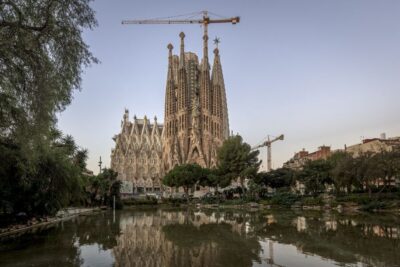
Sagrada Familia Entry Ticket with Audio Guide
Read the review →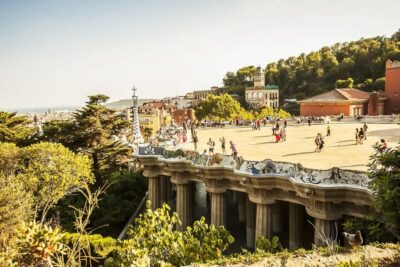


Live Flamenco Dancing Show Ticket at the Theater
Read the review →