
Reviewed · PRADO & MADRID MUSEUM TOURS
Madrid: Reina Sofía Museum Guided Tour
Picasso’s Guernica is the main event here, but the painting makes more sense when you first see the artistic and political ideas that shaped it. This 75-minute visit leads you through Cubism, Surrealism, abstract art, and modernism before bringing you face to face with Picasso’s huge anti-war work.
I like the way a good guide turns difficult modern art into something you can actually read, pointing out symbols, technique, and small details you might miss alone. I also like the efficient route through the museum, followed by free time to keep exploring. The main drawback is simple: 75 minutes goes quickly, and some guides may move fast to cover the key works.
Key points to know before you go
- Guernica comes near the end: You build up to Picasso’s famous anti-war painting rather than seeing it immediately.
- The tour covers three Spanish masters: Expect major attention on Picasso, Salvador Dalí, and Joan Miró.
- Art movements are explained in plain terms: Cubism, Surrealism, abstraction, and modernism are part of the story.
- English and Spanish are available: The tour is bilingual, and private groups can be booked.
- You can stay after the guided visit: Use the remaining museum time to explore galleries and temporary exhibitions.
- Pack light: Large bags, luggage, selfie sticks, tripods, and flash photography are not allowed.
Why the Reina Sofía works best with a guide
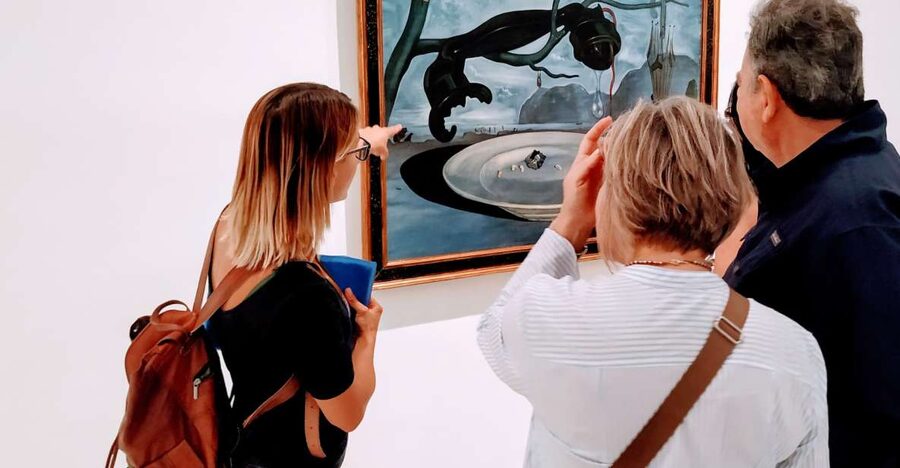
The Reina Sofía is not a tidy collection where every painting tells its story at a glance. It is a large modern and contemporary art museum, and its works can be puzzling without some context. A guide gives you a path through the galleries and explains why an artist chose a strange shape, a fractured body, or an unsettling arrangement of color.
I find that especially useful with Cubism and Surrealism. It is easy to look at an abstract or distorted image and decide you simply do not like it. A guide such as Paula, Elena, Alex, or Livia can instead show you how the work fits into a period of artistic change, and how the artist’s life and political setting affected the result.
The strongest part of this format is comparison. You do not just look at one famous work in isolation. You see different approaches to modern art and begin to notice how Picasso, Dalí, and Miró handled shape, color, dreams, violence, and ordinary life in different ways.
That is useful for first-time museum visitors, couples with different levels of art interest, and families who want more than a silent walk past paintings. The guide’s questions can also make the visit more active. One guide, Julie’s guide, was praised for asking what people saw and thought before explaining the work, a good method when the art initially feels hard to understand.
More Museums in Madrid
- Madrid: Prado Museum Entry Ticket
★ 4.6 · 17,509 reviews - Madrid: Reina Sofía Museum Entrance Ticket
★ 4.5 · 6,889 reviews - Madrid: Small Group of Prado Museum Tour & Optional Tapas
★ 4.6 · 2,437 reviews
Meeting at C. de Sta. Isabel, 52
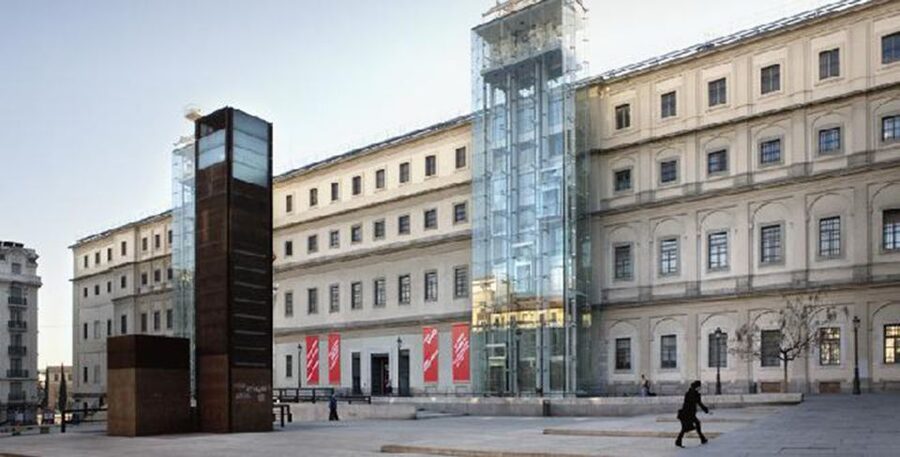
The stated meeting address is C. de Sta. Isabel, 52, at the Reina Sofía Museum. Check your booked option carefully because the exact meeting point can vary. The activity does not include transportation, so you make your own way to the museum.
The route begins with admission and a guided walk through selected galleries. Skip-the-line entry is included, which matters at a major Madrid museum, especially when you have a short visit planned. It does not mean you will see every room. It means your limited time is spent with the collection rather than starting with the ticket queue.
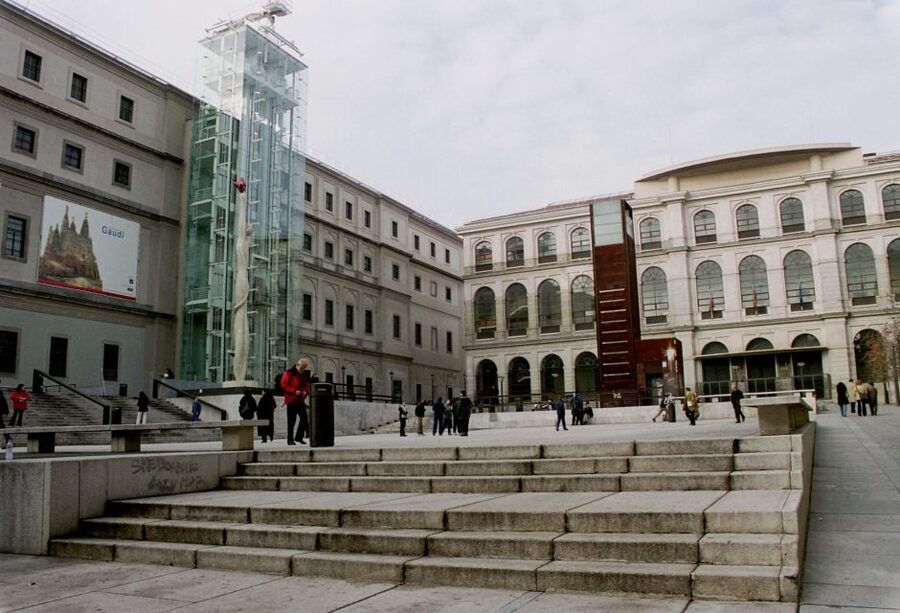
Wear comfortable shoes. The museum occupies a former hospital building, and the visit includes vaulted hallways, galleries, and a look at the gardens outside. The architecture gives the outing more character than a simple sequence of white rooms, although the building itself is not the central purpose of the tour.
Because meeting arrangements can vary, arrive with enough time to identify your guide and settle the language arrangement. The advertised tour is conducted with live commentary in English and Spanish, simultaneously. Some past departures have used separate English and Spanish groups when an additional guide was available, but you should expect the activity to be bilingual rather than assume a private English-only visit.
Following Cubism, Surrealism, and modern art
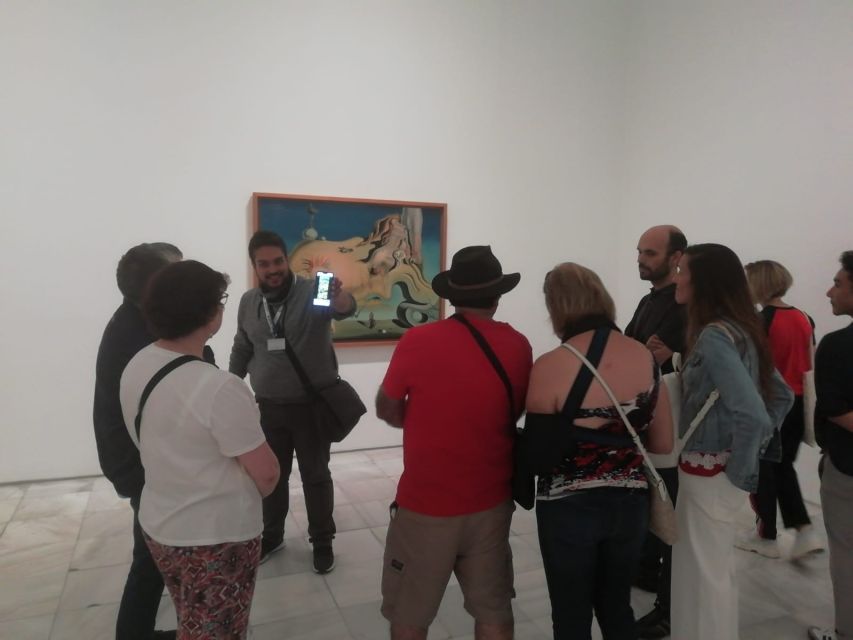
The tour is designed as a guided overview rather than an exhaustive study of every gallery. You move through selected works while the guide provides a timeline of twentieth-century Spanish art and the larger movements that shaped it.
Cubism is an important early stop in that story. Picasso and his fellow artists broke forms into overlapping planes and showed subjects from more than one viewpoint. A guide can point out how this changes the act of looking. Instead of asking only what a painting depicts, you begin to ask how the image has been built.
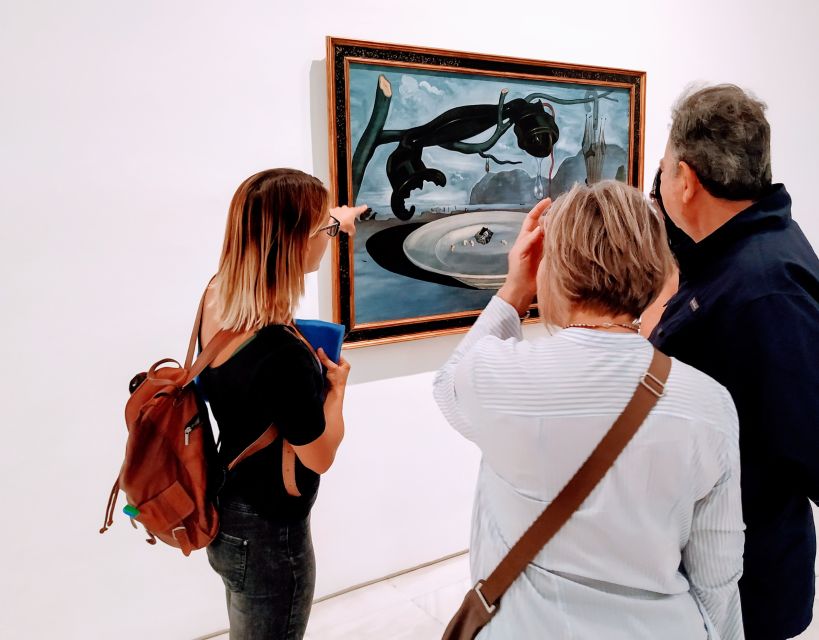
Surrealism brings a different kind of challenge. Dalí’s work invites questions about dreams, memory, desire, and the logic of the unconscious. The point is not to force one answer onto every painting. It is to understand why unexpected images and distorted forms became serious artistic tools rather than mere oddities.
Abstract art and modernism widen the discussion. The guide may focus on line, color, space, and gesture instead of a recognizable subject. That explanation is one of the tour’s most useful services. Several visitors specifically valued guides who made difficult or abstract pieces easy to follow, while one person felt the pace through individual works was too quick. Both points are worth keeping in mind: you get a clear introduction, but not a long seminar beside each painting.
The tour also adds Spanish art history to the experience. That makes the museum more than a display of famous names. You learn how artists responded to their time, how styles changed, and how political events shaped the meaning of important works.
Picasso, Dalí, and Miró in one focused visit
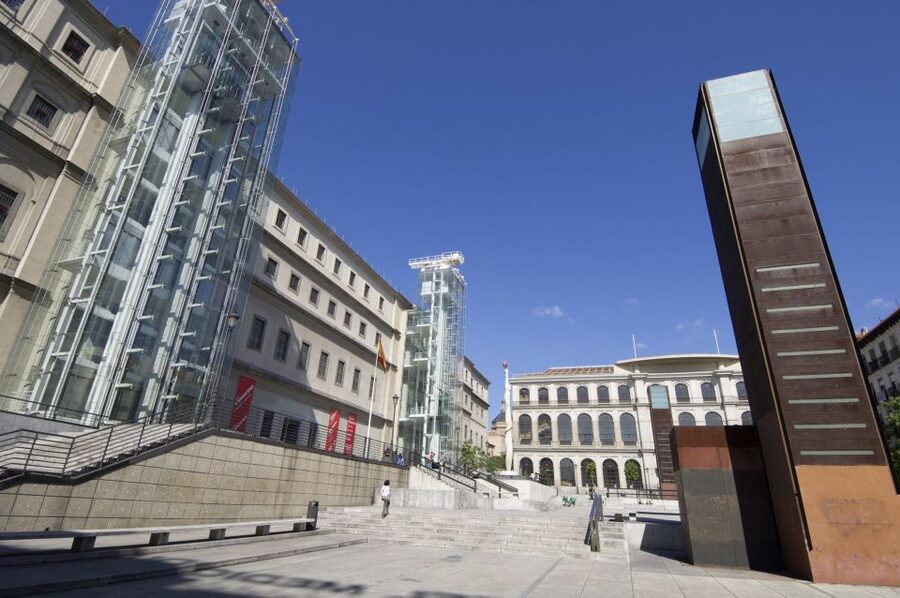
The Reina Sofía is especially strong for Spain’s three major twentieth-century artists: Pablo Picasso, Salvador Dalí, and Joan Miró. Seeing them in the same museum lets you compare their visual languages rather than treating each artist as a separate island.
Picasso’s work is presented through the larger story of invention, fracture, and political response. Dalí brings a more dreamlike and psychologically charged approach. Miró’s paintings can appear playful or spare, yet their shapes and marks reward a closer look at how an artist can suggest a world without describing it in a traditional way.
Your guide explains the artists’ methods and the symbolism in selected works. That distinction matters. You are not just told the date and title. You are shown what to look for and given a reason the image may have been made in that particular way.
The emphasis on selected paintings is also a benefit. A huge museum can leave you tired and unsure what you actually saw. This route gives you a manageable set of works to remember. The downside is that your guide chooses the focus, so you may pass rooms that interest you more than the scheduled route. The free time afterward helps correct that.
Guides have different styles. Alex was described as passionate and humorous. Ali was praised for keeping a good pace and explaining paintings in a way that made sense to a casual art lover. Irene received special credit for adapting the visit for children and adults. These details suggest that the experience can work for mixed groups, though your exact guide will shape the tone.
A few other Madrid outings to compare
- Madrid: Prado Museum Guided Tour with Skip-the-Line Ticket
★ 4.5 · 2,018 reviews - Madrid: Prado Museum Guided Tour With Fast Access
★ 4.8 · 1,785 reviews - Prado Museum Small Group Tour with Skip the Line Ticket
★ 5.0 · 1,738 reviews - Royal Palace & Prado Museum Skip the Line Guided Tour
★ 4.5 · 1,347 reviews
The emotional center: Picasso’s Guernica
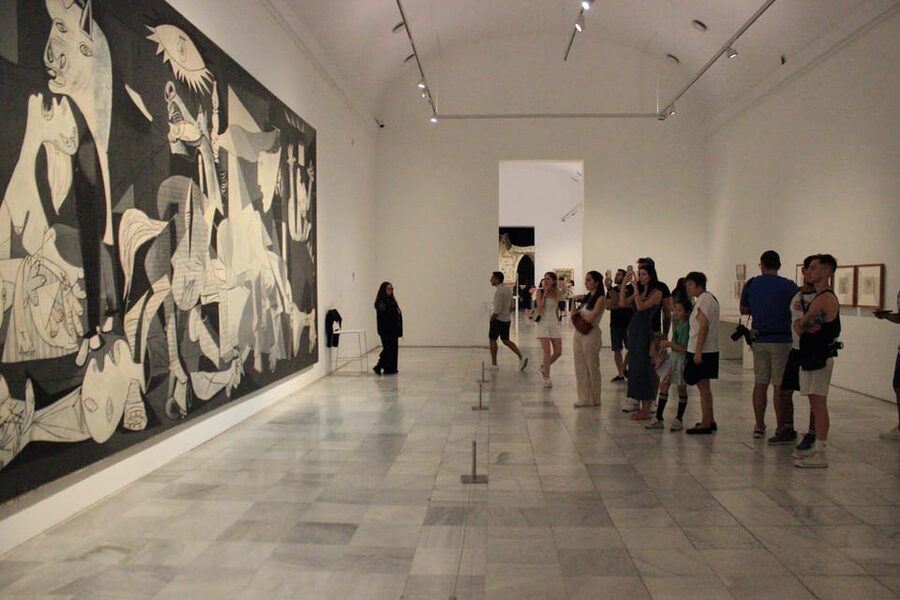
The visit builds toward Guernica, Picasso’s mural-sized painting and one of the most powerful anti-war works in modern art. Seeing it in person is different from seeing a reproduction. Its scale fills your field of vision, while the crowded figures and stark black, white, and gray tones create an immediate sense of distress.
A strong explanation helps you look past the first emotional response. The guide discusses the painting’s history, symbolism, and technique, showing how Picasso communicates fear, pain, chaos, and mourning without relying on a conventional battle scene.
The work is often the reason people book this tour, and the schedule sensibly leaves it until the end. That placement gives you a sequence: artistic change first, then Picasso’s response to war in a work that pulls many of those ideas together.
There is a practical tradeoff. If Guernica is your only priority, reaching it late may test your patience. If the guide spends more time on the earlier movements, you may want to ask how much time remains for the final painting. One person found the tour shorter than the advertised 75 minutes, while another estimated about an hour and a half. Allow for some variation and treat the guided portion as an introduction, not a guaranteed fixed-length lecture at every artwork.
The painting can also be emotionally heavy. That is part of its power, but you may want a quieter period afterward rather than scheduling a rushed activity immediately following the museum.
Free time after the 75-minute guided visit
Once the guided portion ends, you can remain inside and explore independently. This is one of the best features of the booking because a short tour alone cannot do justice to a museum of this size.
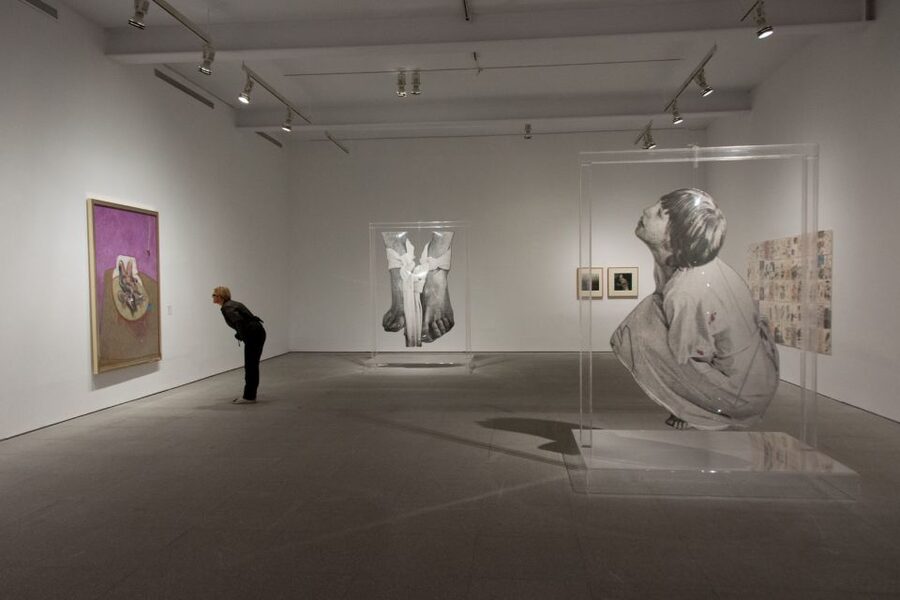
Use the guide’s route as a map. Return to a work that went by too quickly, look for a painting by an artist not covered in detail, or spend more time with the temporary exhibitions. The Reina Sofía presents international artists as well as Spanish art, so your independent time can take you beyond the main Picasso, Dalí, and Miró route.
I recommend saving energy for this second phase. The guided walk gives you a framework, but independent browsing lets you follow your own curiosity. If you are new to modern art, the explanation first can prevent the galleries from feeling random. If you already know the collection, the tour can serve as a quick orientation before you choose your own targets.
Photography rules require attention. Some rooms do not allow pictures at all. In areas where photography is permitted, use no flash and no stabilization equipment such as selfie sticks or tripods. The supplied information also says photography inside is not allowed, so follow the signs and staff instructions rather than assuming every gallery has the same policy.
Is $38 good value?
At $38 per person, the tour costs more than entering a museum alone, but the price includes admission, skip-the-line access, and a professional guide. The value depends on how you use the 75 minutes.
For a first visit, I think the price is reasonable if you want the famous works explained rather than simply located. Modern art can be difficult to approach, and a clear guide may save you from wandering through a large collection without knowing what deserves your attention.
The value is weaker for confident museum-goers who prefer a slow, self-directed visit. You still receive entry and can stay afterward, but the guided pace may feel restrictive if you want to spend twenty minutes with one painting.
A private group is available, which may make sense for families, friends, or anyone who wants more control over the pace. The standard arrangement is more practical for most people who want a focused introduction without paying for a full private experience.
The booking also allows cancellation up to 24 hours before the activity for a full refund, and you can reserve now and pay later. Those terms make it easier to fit the museum into a changing Madrid schedule.
Who should book this Reina Sofía tour?
I would choose this tour if you are visiting Madrid for the first time, have limited museum experience, or want a clear route through modern Spanish art. It is also a good choice if Guernica is high on your list and you want to understand the painting rather than simply take a quick look.
Families can benefit from the guide-led format, especially with a guide who engages children. The visit is wheelchair accessible, though a short advance check of the meeting point is sensible because the starting details may vary.
You may prefer independent entry if you already know the Reina Sofía well, want to examine a small number of works at length, or dislike bilingual commentary. A few people found the explanations moved too quickly, and another wished the tour lasted longer. Those are fair concerns for anyone who values slow looking.
For most visitors, the best plan is to book the guided visit early in your museum day, then remain inside for a self-guided second pass. That gives you structure without giving up freedom.
Final decision: book it for context, not just entry
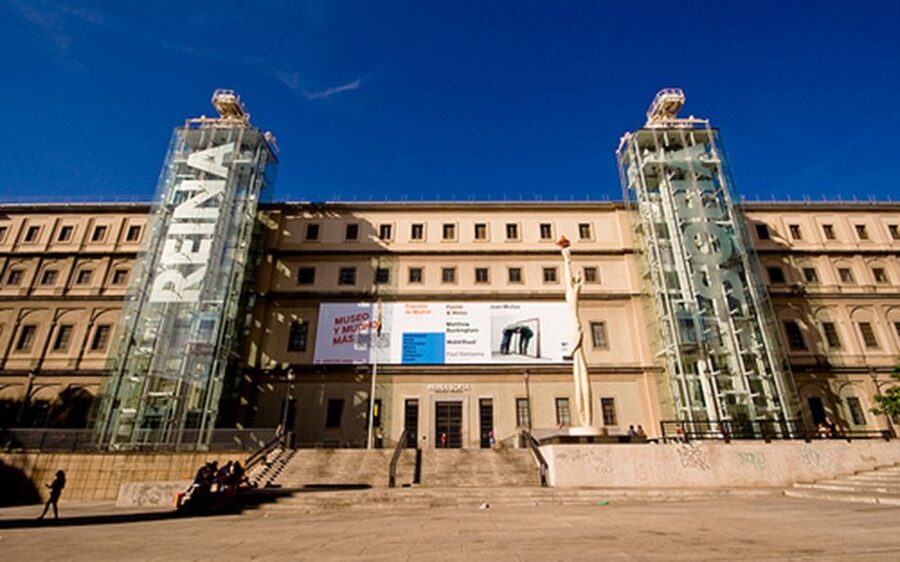
Book this Reina Sofía tour if you want Guernica with an explanation, a useful introduction to Cubism and Surrealism, and a practical route through a large museum. The strongest guides, including Paula, Elena, Alex, Livia, and Irene, have been praised for clear language, warmth, humor, and genuine interest in the art.
Skip it if your main goal is complete independence or long, quiet stretches beside individual paintings. At $38, the tour earns its price through guidance and saved time, not through the admission ticket alone.
My choice would be to book it, especially for a first visit, and then stay on after the 75-minute route. The guided portion gives you the tools. Your extra time lets you decide what deserves a second look.
FAQ
How long does the Reina Sofía guided tour last?
The advertised duration is 75 minutes. Some past visits have taken about an hour and a half, while one person found the tour slightly shorter than 75 minutes, so timing can vary.
What is included in the price?
The $38 price includes entrance to the Reina Sofía Museum, a professional guide, the guided tour, and live commentary in English and Spanish.
Is transportation included?
No. Transportation is not included, and you must make your own way to the museum.
Where does the tour meet?
The stated meeting address is C. de Sta. Isabel, 52, at the Reina Sofía Museum. The exact meeting point may vary according to the option booked.
Is Guernica included in the visit?
Yes. The guided route includes Picasso’s Guernica and explains its history, symbolism, and anti-war meaning.
Can I stay in the museum after the guided tour?
Yes. Once the guided portion ends, you can remain inside and continue exploring independently, including temporary exhibitions.
Is the tour available in English?
Yes. Live commentary is available in English and Spanish. The activity is advertised as bilingual, with both languages used simultaneously.
Is the Reina Sofía accessible by wheelchair?
Yes. The museum is wheelchair accessible. Comfortable shoes are recommended, and luggage or large bags are not allowed.
Recently added in Madrid
- Entrance to the Flamenco Temple Room in Madrid with Tapas Option★ 5.0 · 176 reviews
- Tapas & Paella Cooking Class in Madrid with a Professional Chef★ 5.0 · 177 reviews
- Madrid: Toledo Day Trip with Winery Visit and Wine Tasting★ 4.4 · 177 reviews
- VIP visit to the Las Ventas Bullring in Madrid★ 5.0 · 178 reviews
- VIP Entrance Ticket to Our Secret Alley in Madrid★ 5.0 · 179 reviews
- Madrid: Prado & Reina Sofía Museums Guided Tour★ 4.5 · 180 reviews
- Madrid: Royal Palace tour – semi private or private★ 4.9 · 182 reviews
- Atletico de Madrid Stadium & Interactive Museum Admission Ticket★ 4.5 · 183 reviews
Prado & Madrid Museum Tours, compared.
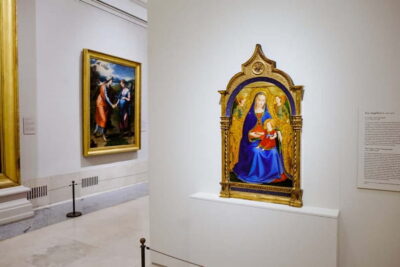
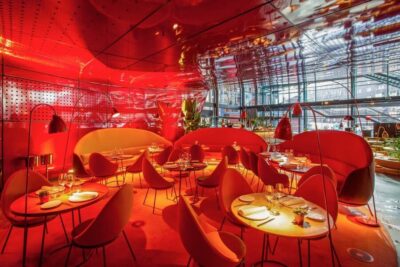

Small Group of Prado Museum Tour & Optional Tapas
Read the review →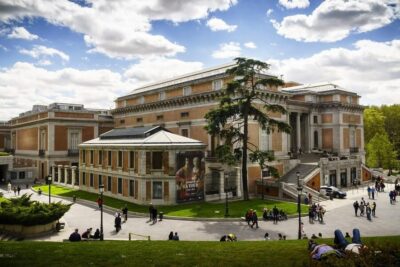
Prado Museum Guided Tour with Skip-the-Line Ticket
Read the review →
Prado Museum Small Group Tour with Skip the Line Ticket
Read the review →
Royal Palace & Prado Museum Skip the Line Guided Tour
Read the review →
Browse the lists this tour appears in