
Reviewed · PRADO & MADRID MUSEUM TOURS
Madrid: Prado Museum Guided Tour
The best reason to visit the Prado Museum with a guide is simple: this is a huge collection, and a good guide helps you see the famous works before your attention gives out. In 90 focused minutes, you can meet Velázquez, Goya, El Greco, Rubens, and El Bosco without wandering past important paintings by accident.
I like the way this tour connects art to Spanish politics and history, rather than treating each painting as a pretty object on a wall. I also like that your ticket lets you stay inside after the guided visit, so the tour works as a smart introduction rather than a complete stop.
The main caution is sound and timing. The museum can be crowded, and one past participant found the guide hard to hear through the crowd and audio equipment. In winter, English and Spanish may also be combined, which can stretch the visit.
Key points at a glance
- See the Prado’s essential masterpieces: Focus on Las Meninas, The Garden of Earthly Delights, works by Goya, El Greco, Rubens, and other major European painters.
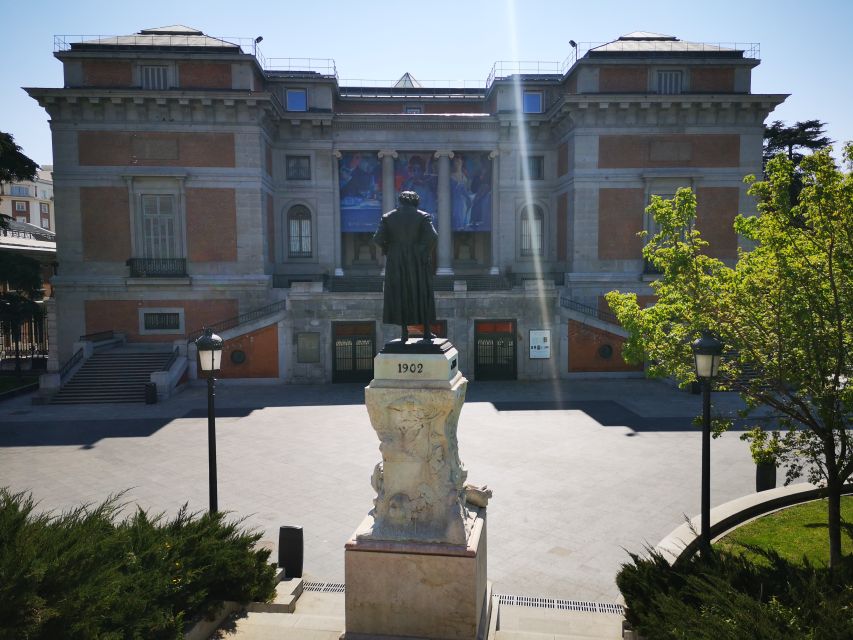
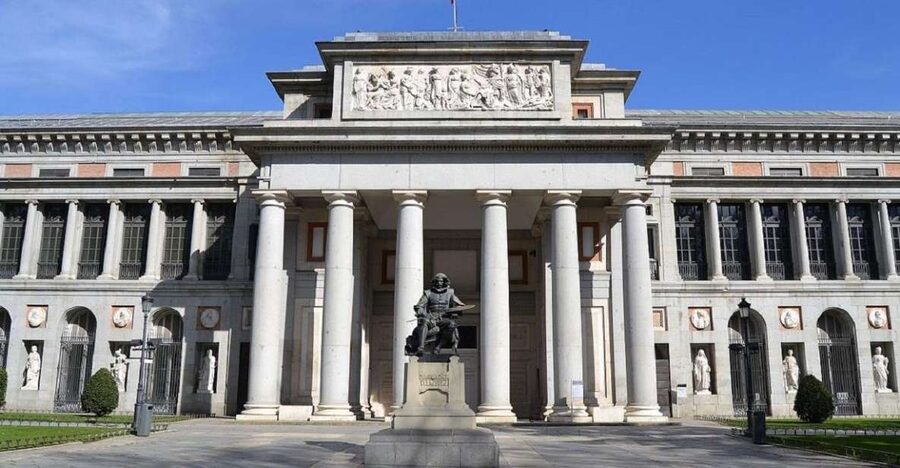
- Meet at the Velázquez statue: The starting point is outside the museum at Paseo del Prado, 11, beside the building.
- Get a useful art-history lesson: Your guide explains artistic methods, political setting, religious ideas, and the lives of the painters.
- Enter with a skip-the-ticket-line arrangement: The guide organizes entry, though you should allow extra time before the formal 90-minute visit begins.
- Keep exploring after the tour: Once the guided portion ends, you may remain in the museum and continue independently.
- Choose the format that suits you: English, Spanish, or Italian options are available, with private and small-group choices.
Why a Prado guide earns its place
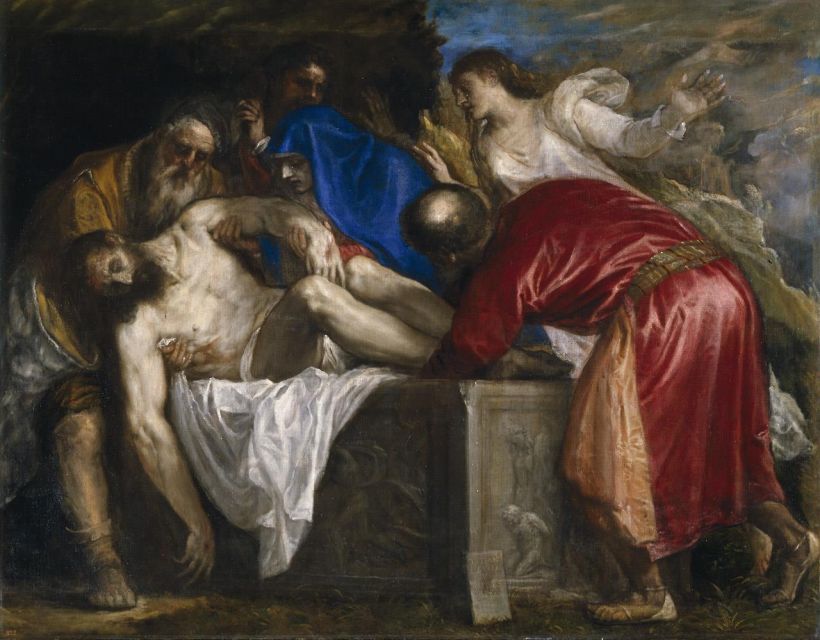
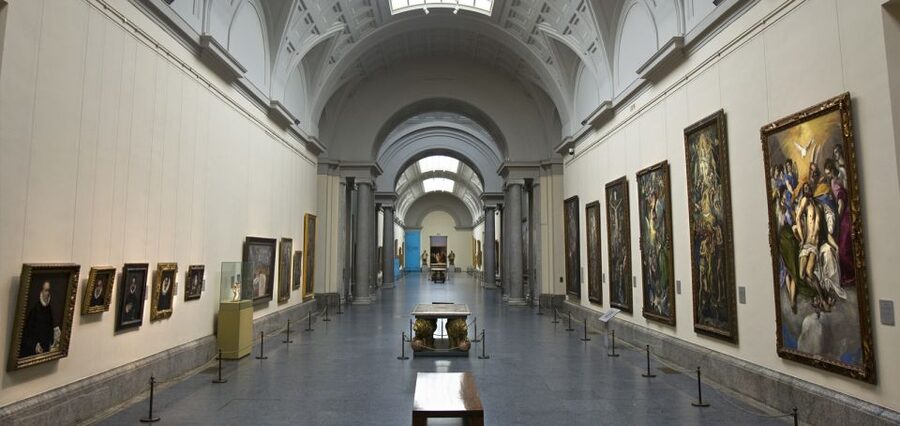
Madrid has several excellent museums, but the Prado is the one I would choose when I want a concentrated lesson in European painting. Its collection reaches from the beginning of the 12th century to the end of the 20th century, and the main strength is its connection to Spain’s royal and political past.
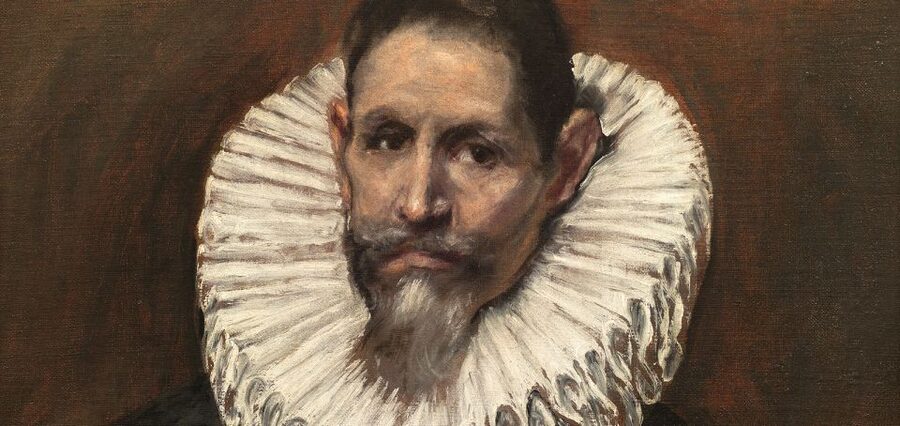
You will see major Spanish painters alongside Italian and Flemish masters. That mix matters. El Greco’s stretched figures, Velázquez’s controlled realism, Goya’s dark social commentary, and El Bosco’s strange visions make more sense when you compare them in the same building.
A guide also saves you from the common first-time mistake: trying to see everything. The Prado has far more art than you can absorb in one visit. A focused route gives you a framework, then leaves you free to return to the works that caught your eye.
The best guides make the paintings approachable without reducing them to simple stories. Past guides named Kostas, Flor, Helena, Alfonso, Paula, and Minerva have been praised for clear explanations, patience, and enthusiasm. Guide assignments can change, but these comments point to the qualities to expect: strong command of the collection, a calm manner, and a willingness to answer questions.
More Museums in Madrid
- Madrid: Prado Museum Entry Ticket
★ 4.6 · 17,509 reviews - Madrid: Reina Sofía Museum Entrance Ticket
★ 4.5 · 6,889 reviews - Madrid: Small Group of Prado Museum Tour & Optional Tapas
★ 4.6 · 2,437 reviews
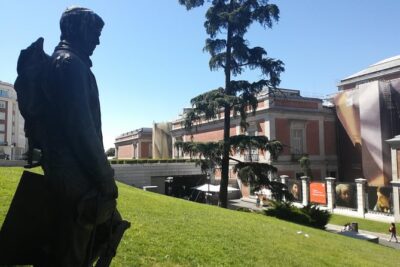
Meeting at the Velázquez statue
The tour begins at the Monumento a Velázquez, located at Paseo del Prado, 11, on the side of the museum. Look for a guide carrying an Amigo Tours sign.
This meeting point is practical, but give yourself time to find it. The Prado sits along a major museum corridor, and the statue is outside rather than at an obvious interior ticket desk. You do not receive hotel pickup, so plan your own way to the Paseo del Prado.
The guide needs extra time to organize tickets and whisper devices before the actual museum visit begins. The listed museum tour lasts 1.5 hours, but the full meeting and entry process can take longer. I would not schedule a tight lunch reservation immediately afterward.
Once the group is assembled, the guide leads you to the entrance. The skip-the-line arrangement is valuable at a popular museum, especially during busy periods, though it does not mean you can ignore security or the guide’s instructions.
Entering the 18th-century Neoclassical museum
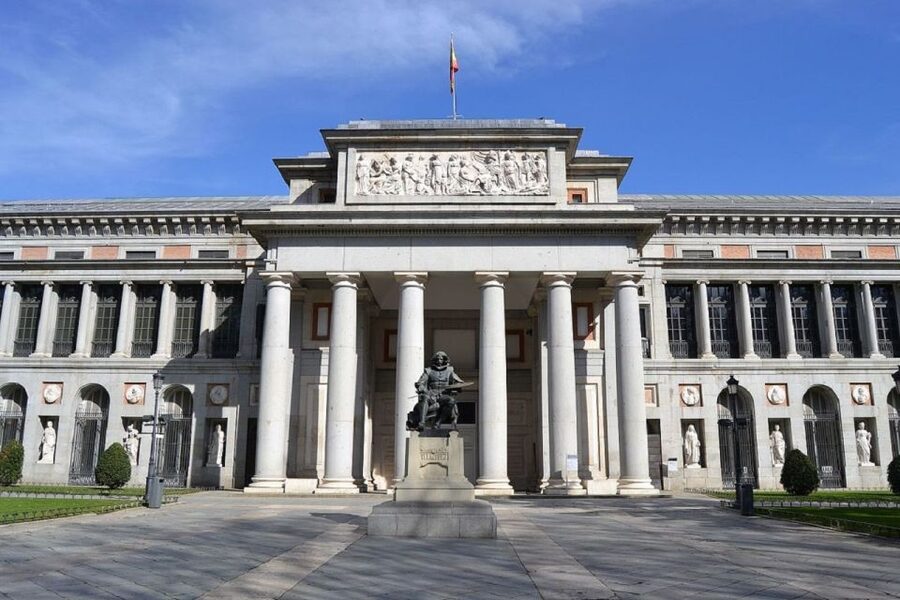
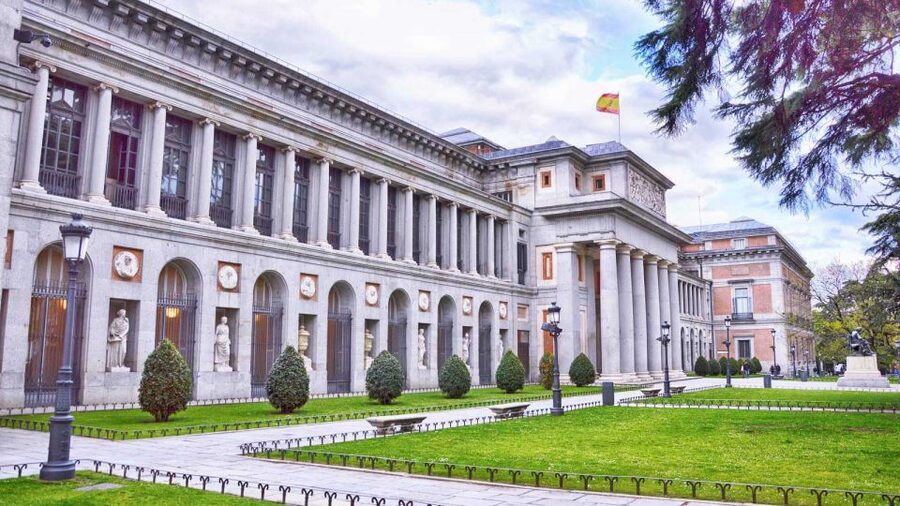
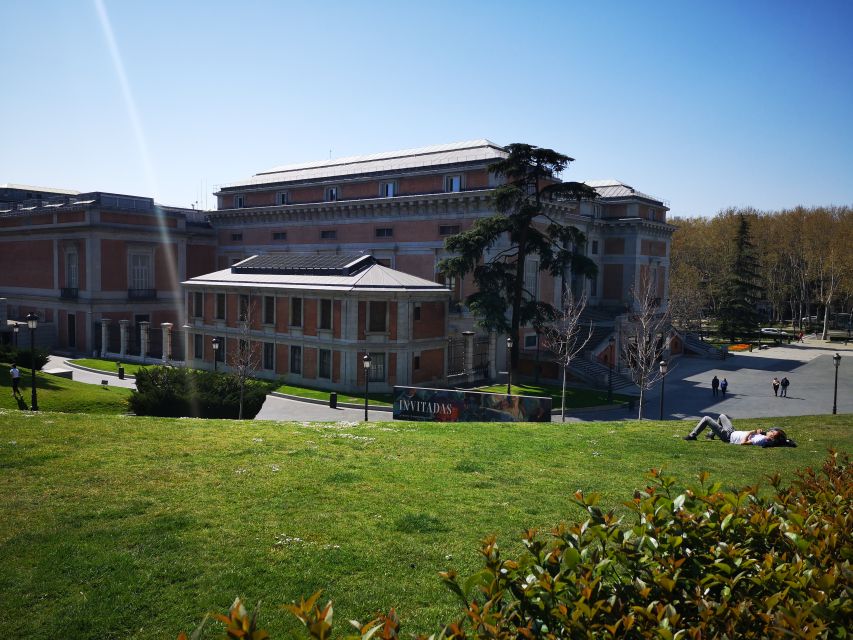
The Prado’s building is part of the experience. This 18th-century Neoclassical structure was conceived as Spain’s National Art Gallery, and its formal exterior suits a collection tied closely to Spanish royalty and national identity.
You will not spend the whole tour discussing architecture. The building works more like a frame for the art, giving the collection a sense of order even when the subjects become strange, violent, or emotionally heavy.
Your guide will usually shape the route around major works rather than follow every gallery in sequence. That is the right approach for a short visit. You get a strong first look at the museum’s central strengths, then you can explore other rooms once the tour ends.
The museum’s size is both its gift and its problem. A 90-minute route cannot cover every important painting. It can, however, show you enough of the collection to help you decide where to spend another hour or two.
Las Meninas and Velázquez’s visual tricks
Velázquez is one of the main reasons to visit the Prado, and Las Meninas is the essential stop. This painting can look puzzling at first: a royal child, attendants, a dog, the painter himself, and a mirror create a scene that seems to shift between portrait, studio view, and royal theater.
A guide helps you notice how Velázquez controls your position as a viewer. The painting asks who is being painted, who is looking, and where you are meant to stand. The explanation of perspective techniques is especially useful because the work’s reputation can otherwise feel bigger than the painting itself.
I like this part of the tour for another reason. It turns a famous masterpiece into a problem you can investigate. Instead of hearing only that Velázquez was important, you begin to see how he built the scene and why later artists admired him.
The guide may also compare Velázquez’s restrained style with painters from other periods. Those comparisons help you recognize that artistic progress is not a straight line from simple to advanced. Different painters were solving different visual and political problems.
A few other Madrid outings to compare
- Madrid: Prado Museum Guided Tour with Skip-the-Line Ticket
★ 4.5 · 2,018 reviews - Madrid: Prado Museum Guided Tour With Fast Access
★ 4.8 · 1,785 reviews - Prado Museum Small Group Tour with Skip the Line Ticket
★ 5.0 · 1,738 reviews - Royal Palace & Prado Museum Skip the Line Guided Tour
★ 4.5 · 1,347 reviews
El Bosco’s strange and crowded world
The Garden of Earthly Delights by El Bosco is another highlight, and it offers a sharp change of mood. The triptych is packed with unusual figures, unsettling scenes, and tiny details that reward close looking.
It is easy to treat the painting as a collection of bizarre images. A guide gives you a way to think about its layers, symbols, and moral questions. You may still disagree about what every detail means, but you will look longer and more carefully.
This is one of the strongest arguments for taking a guided visit. A label can identify the artist and date. A live explanation can point out how the panels work together and why the painting remains so memorable.
The contrast with Velázquez is useful. Velázquez draws you into a controlled moment in a royal interior. El Bosco presents a dense, fantastical world that seems to keep changing as you look at it. Seeing both during one route makes the Prado’s range clear.
El Greco, Rubens, and changing styles
The tour also introduces other major artists, including El Greco and Rubens. El Greco’s dramatic forms and unusual proportions are easy to recognize once someone explains what makes them different from the work around them.
This comparison is particularly helpful if you do not have much background in art. You may not know the formal terms for color, composition, or brushwork, but you can learn to spot the differences when the guide places them side by side.
Rubens brings another kind of energy. His work provides a useful counterpoint to the inward intensity of El Greco and the controlled observation of Velázquez. The point is not to rank the artists. It is to show how many ideas about beauty, movement, power, and devotion can exist in the same museum.
The guide also places the painters in their time. That context can include royal commissions, religious belief, social rank, and the political world in which the paintings were made. You are not just looking at European art in general. You are seeing how Spain’s connections with other parts of Europe shaped its collection.
Goya and the darker side of Spain
Goya gives the visit a more unsettling turn. His work can move from court portraiture to images marked by fear, violence, and disillusionment. The Black Paintings are especially powerful in person, and their mood can stay with you long after you leave the gallery.
A guide can explain the circumstances surrounding the works without turning the visit into a lecture. This is where the tour’s link between painting and Spanish history matters most. Goya’s art becomes more than a display of technique. It becomes a record of a society under pressure and a mind confronting disturbing ideas.
I would pay close attention here even if Goya is not your favorite painter. The contrast between his public portraits and darker works shows how an artist’s role can change. It also helps you understand why the Prado is not simply a museum of royal decoration.
Because the tour moves at a set pace, you may not have as long with the Black Paintings as you would on your own. If they affect you strongly, make a note of the room and return after the guided section.
How the 90-minute pace works
The formal tour lasts 1.5 hours. That is long enough for a strong introduction, but not long enough for every room or extended discussion of each painting.
The best way to approach it is as an opening route. You will see the museum’s major names, learn how to look at several signature works, and gain enough context to continue on your own. Past participants have especially valued this arrangement because the Prado can feel overwhelming without a plan.
Expect the guide to keep moving. In crowded galleries, stopping for too long can block other groups and make it harder for everyone to hear. A good guide may give you the key point, answer a question, and then lead you onward.
The tour may run longer than the stated museum time because of ticket organization and audio equipment. That is normal for this format, but it is worth remembering when planning the rest of your day.
If your group is bilingual, the pace can be slower. During winter, lower demand may lead to English and Spanish being conducted together. One older participant appreciated the chance to look at works between translations, while another preferred having an English-only group. If language is important to you, a private or small-group option is worth considering.
Sound, crowds, and practical limits
Crowds are the main weakness. The Prado is a major cultural attraction, and famous rooms can be noisy. One participant found it difficult to hear the guide through the crowd and audio system, so stand close when the group gathers.
The guide’s position also matters. If you are at the back, you may miss both the explanation and the small visual details being discussed. Arriving at the meeting point on time and staying near the group will improve the visit.
Cameras, large bags, flash photography, and photography inside the museum are not allowed. Pack lightly. You will have more freedom to look when you are not managing a large bag, and you will avoid problems at entry.
The tour is wheelchair accessible. There is no hotel pickup or drop-off, so you need to arrange transportation to and from the Paseo del Prado yourself.
What the $34 price really buys
At $34 per person, this is a fair price if you want direction and interpretation rather than just admission. The fee includes entry, a professional local guide, the guided visit, and live commentary in English or Spanish. Italian is also available.
The value comes from the use of your time. A self-guided visit can cost less in some circumstances, but you may spend your first hour finding the famous works, reading labels, and trying to understand how the collection fits together. This tour gives you a route and a basic vocabulary for looking.
I would especially consider it good value for a first Prado visit, a short stay in Madrid, or anyone who feels unsure around old master paintings. It is less essential for a dedicated art student who already has a detailed plan and wants to move slowly through particular galleries.
Private and small-group formats are available. They may suit you better if you want to ask many questions, need a calmer pace, or want to avoid the drawbacks of a bilingual group. The standard option is likely enough for most people who want a clear introduction.
You can reserve now and pay later, and cancellation is free up to 24 hours in advance for a full refund. Those terms help if your Madrid schedule is still changing.
Staying after the guide leaves
One of the tour’s best practical features is that you can remain in the Prado after the guided visit. I recommend doing this if you have the energy.
Use the guided route to identify the works you most want to revisit. Then slow down. Look again at Las Meninas without trying to keep up with a group. Return to El Bosco and search for details you missed. Spend more time with Goya if the darker rooms captured your attention.
The guided visit is an appetizer, not a full museum day. That is not a complaint. The Prado is too large for a short tour to cover properly, and the chance to continue independently gives you control over the rest of the visit.
Who should book this Prado tour
I would choose this tour if you are visiting the Prado for the first time, have about two hours, or want Spanish history explained through art. It is also a good match if you normally feel lost in large museums.
Families and mixed-interest groups can benefit from the focused route. You do not need an art background, and the explanations are designed to make technique and context easier to follow.
Art lovers should book it if they want a guided first pass before returning alone. If you already know exactly which rooms you want and prefer to study one painting for 20 minutes, the fixed pace may frustrate you.
The main choice is group size and language. A standard group keeps the cost reasonable. A small or private group gives you more room for questions and may help with hearing, translation, and personal interests.
Should you book the Madrid Prado guided tour?
Book it if you want the Prado’s major works to make sense quickly. The strongest parts are the explanations of Velázquez’s perspective, El Bosco’s dense imagery, El Greco’s style, and Goya’s disturbing view of Spanish society.
Do not book it expecting to see the entire museum or linger at every painting. You will follow a focused route, deal with some crowd noise, and possibly share explanations in English and Spanish during the winter.
At $34, the tour earns its price through structure, entry assistance, and human interpretation. I would take it early in a Madrid visit, then stay inside afterward to explore the galleries that interest you most.
FAQ
Where does the Prado Museum tour meet?
Meet your guide at the Velázquez Statue at Paseo del Prado, 11. The statue is beside the museum, and the guide carries an Amigo Tours sign.
How long does the Prado guided visit last?
The guided visit inside the Prado lasts 1.5 hours. Allow extra time before that for the guide to organize tickets and whisper devices.
What languages are available?
Tours are available in Spanish, English, and Italian. During winter, English and Spanish may be combined in one tour if demand is low.
Can I stay in the museum after the guided tour?
Yes. After the guided portion ends, you may remain in the Prado and continue exploring independently.
Is museum entry included in the price?
Yes. The $34 price includes entrance to the Prado Museum, the local guide, the guided visit, and live commentary.
Are cameras and large bags allowed?
Cameras, large bags, flash photography, and photography inside the museum are not allowed. Plan to visit with only what the museum permits.
Recently added in Madrid
- Entrance to the Flamenco Temple Room in Madrid with Tapas Option★ 5.0 · 176 reviews
- Tapas & Paella Cooking Class in Madrid with a Professional Chef★ 5.0 · 177 reviews
- Madrid: Toledo Day Trip with Winery Visit and Wine Tasting★ 4.4 · 177 reviews
- VIP visit to the Las Ventas Bullring in Madrid★ 5.0 · 178 reviews
- VIP Entrance Ticket to Our Secret Alley in Madrid★ 5.0 · 179 reviews
- Madrid: Prado & Reina Sofía Museums Guided Tour★ 4.5 · 180 reviews
- Madrid: Royal Palace tour – semi private or private★ 4.9 · 182 reviews
- Atletico de Madrid Stadium & Interactive Museum Admission Ticket★ 4.5 · 183 reviews
Prado & Madrid Museum Tours, compared.

Small Group of Prado Museum Tour & Optional Tapas
Read the review →
Prado Museum Guided Tour with Skip-the-Line Ticket
Read the review →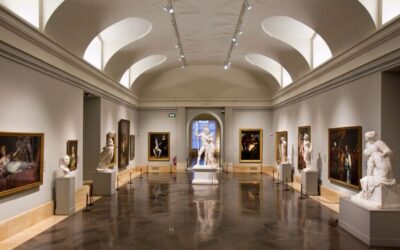
Prado Museum Small Group Tour with Skip the Line Ticket
Read the review →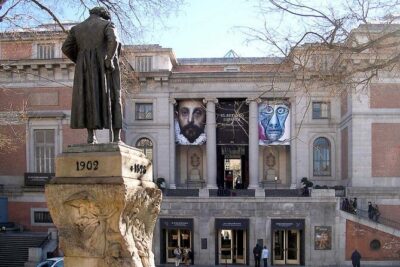
Royal Palace & Prado Museum Skip the Line Guided Tour
Read the review →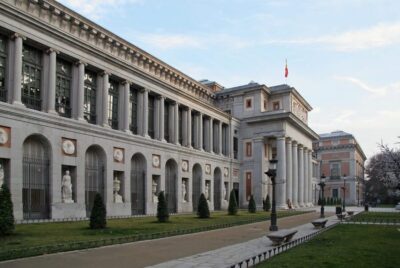
Browse the lists this tour appears in