

Reviewed · MUSEUMS
Madrid: Museum of Illusions Ticket
Madrid’s Museum of Illusions turns a short visit into a friendly argument with your own eyes. A floor may appear to tilt, a tunnel can make your balance wobble, and a simple photograph may seem to change as you move around it. The fun comes from testing each trick yourself, not just looking at displays behind glass.
I like the hands-on design, especially the rotating tunnel and footbridge, which give you something physical to try rather than another wall of information. I also like the family appeal: young children can enjoy the funny effects, while older children and adults can think through why the illusion works and help stage the photos.
The main drawback is size. You may finish in 35 to 45 minutes if you move quickly, though an hour is a sensible plan if you read the instructions and take photos. At $17 per person, the value depends on how much you enjoy playing with each exhibit.
Key points at a glance
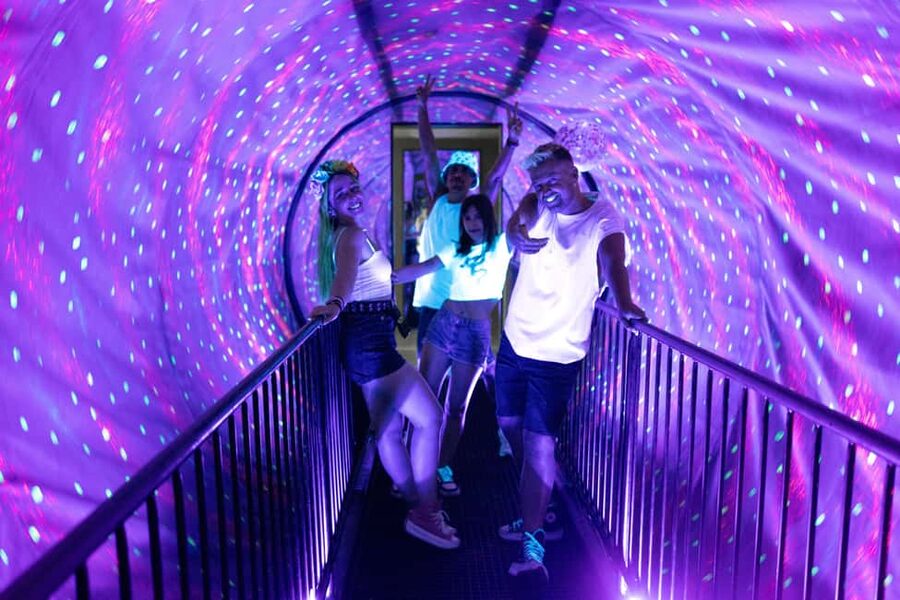
- Expect about one hour: Some people finish in 35 minutes, while a slower visit with photos takes longer.
- Bring a full phone battery: Many displays are made for creative photographs, often with instructions showing where to stand.
- Try the moving tunnel and rotating footbridge: These are physical illusions that challenge balance as well as eyesight.
- Go with at least one other person: Several photo effects work best with two or three people.
- Use the Tirso de Molina stop: The museum is close to Tirso de Molina Metro station on Line 1.
- Check access needs before booking: The venue is described as wheelchair accessible, but some exhibitions are not suitable for wheelchairs.
What the Museum of Illusions Madrid actually offers

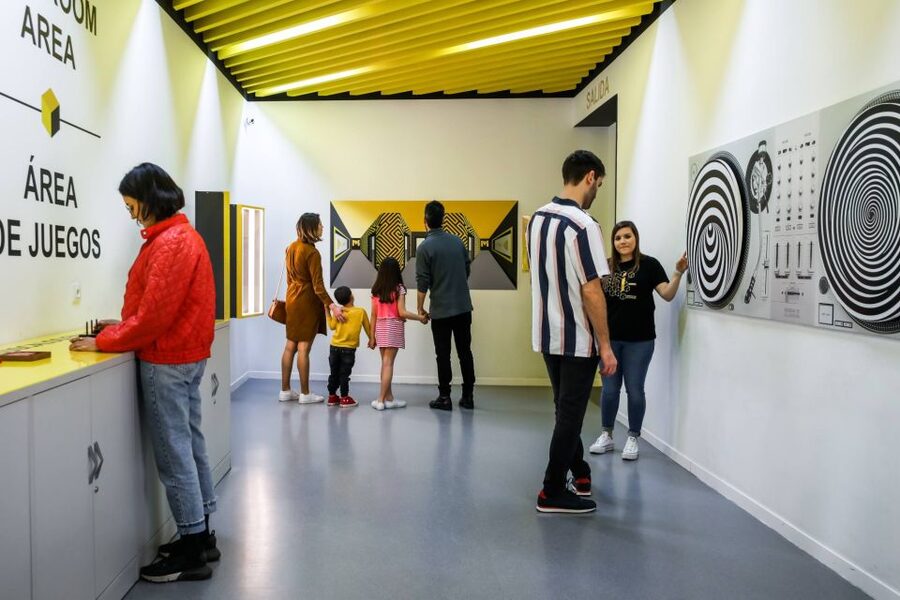
This is a compact, interactive museum about vision, perception, and the human brain. You walk from one exhibit to the next, read a short explanation, then test the trick with your own eyes and body.
The displays are designed to be playful rather than academic. You might see an image that changes its appearance, a moving cube that seems to shift, or a portrait that plays with perspective. The point is not to admire a finished work. It is to catch your senses making a mistake.
That makes the experience easy to share. You can ask your child what they see, compare impressions with your partner, or work out how to stand for a photograph. The exhibits reward a little patience, since the first glance often tells only part of the story.
The museum does not require a guide. Host and greeter support is available in Spanish and English, but the activity is primarily self-directed. You set your own pace, which is useful if one exhibit fascinates you and another holds your attention for only a few seconds.
More Museums in Madrid
- Madrid: Prado Museum Entry Ticket
★ 4.6 · 17,509 reviews - Madrid: Reina Sofía Museum Entrance Ticket
★ 4.5 · 6,889 reviews - Madrid: Small Group of Prado Museum Tour & Optional Tapas
★ 4.6 · 2,437 reviews
The opening exhibits and first test of perception
Your visit begins with the basic idea behind the museum: your eyes do not always give your brain a complete or accurate picture. Explanations help you understand why lines, colors, shadows, movement, and perspective can fool you.
This opening section works best if you resist the urge to rush. Read the short instructions, look from more than one angle, and try the display again after you understand the trick. Children often enjoy the surprise first, while adults tend to start searching for the mechanism behind it.
The museum uses both optical and photographic illusions. Some ask you to look carefully, while others provide a clear pose or camera angle. You are not simply walking through a gallery. You are part of the image.
I find this style more engaging than a traditional museum visit for a short break in Madrid. You get an immediate result from each station, and the activity keeps conversation going. The tradeoff is that the exhibits are small in number compared with a major museum, so the experience can feel brief if you do not stop to experiment.
Moving cubes, Einstein, and the visual tricks
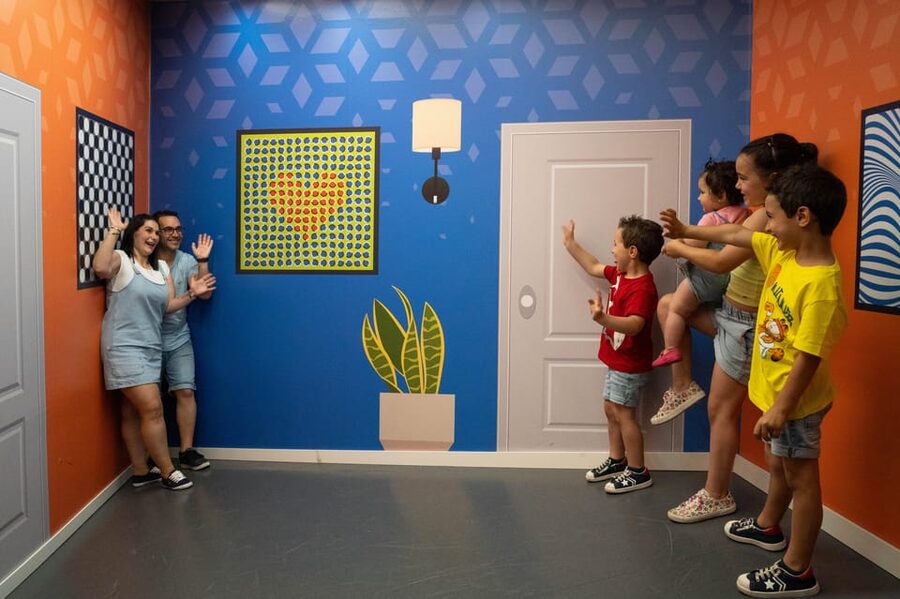
Several displays focus on changing images and shifting perspective. A yellow moving cube is one of the memorable stops, and an Einstein picture gives you a chance to see how a familiar face can behave strangely when viewed from different positions.
These exhibits are good for families because there is no single correct way to enjoy them. A child may simply notice that the picture seems to move. You may want to stand in different places and work out why the effect changes. Both responses are valid.
The photographic displays also give you a practical reason to slow down. Many include directions on where to place the camera or how to pose. If you are traveling with friends, take several versions rather than settling for the first picture. Small changes in distance and position can make the final image much more convincing.
If you are alone, the experience is still possible, but it loses some of its spark. Staff members may help take a picture, yet many of the best effects are made for two or three people. A couple, family, or group of friends will get more out of the photo side of the museum than a solo visitor.
The rotating tunnel and footbridge
The rotating tunnel and footbridge bring movement into the experience. Instead of only asking whether an image is real, these exhibits challenge your sense of balance and direction.
The rotating tunnel is especially useful for showing how strongly your brain relies on visual signals. You may feel that the room is moving even when the floor beneath you is stable. The footbridge inside the rotating drum adds a physical task to the illusion, making it one of the more memorable parts of the visit.
This is also where the museum feels less like a collection of photo backdrops and more like a small experiment. You can watch someone else try first, then take your turn. It works well for children old enough to follow instructions, though very young children may need close attention around moving or visually confusing displays.
The physical effects are a reason to avoid treating the museum as a quick photo stop. Give each one a moment. Look at the exhibit before trying it, then repeat it after reading the explanation. The second attempt often makes the illusion easier to understand.
Same city, a completely different evening:
- Madrid: Tour Bernabéu Entry Ticket
★ 4.5 · 21,573 reviews - Madrid: Royal Palace Fast-Access Admission Ticket
★ 4.6 · 13,856 reviews - Madrid: “Emociones” Live Flamenco Performance
★ 4.8 · 12,866 reviews - Madrid: Panoramic Route City Tour
★ 4.1 · 12,259 reviews
How long should you allow?
The stated duration is one hour, and I would use that as your planning figure. Several people can complete the displays in about 35 to 45 minutes, particularly if they take only a few photographs and move directly from one station to the next.
You can stretch the visit by reading every explanation, trying each effect more than once, and taking turns behind the camera. If the museum is quiet, you have more freedom to return to a favorite exhibit. One visit has also been described as taking a couple of hours, but that appears to depend on a relaxed pace and time spent with children.
This is a useful Madrid activity when you have a spare hour rather than a full afternoon. It can fill a gap between major sights, give children a break from long museum halls, or offer shelter from hot weather. I would not make it the main cultural event of your day.
The small scale is both an advantage and a limitation. You will not feel worn out, and you can fit it into a busy schedule. On the other hand, anyone expecting a large museum with many rooms may find the $17 admission harder to justify.
Is $17 a fair price?
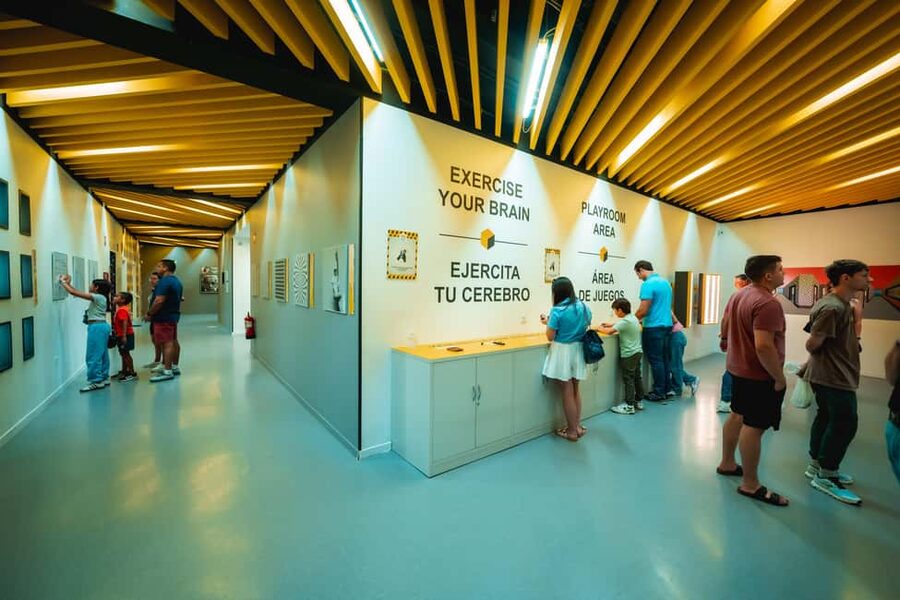
At $17 per person, the ticket is reasonable if you treat the museum as an interactive hour and use the exhibits fully. You are paying for hands-on entertainment, photo opportunities, and simple lessons about perception rather than for a long collection of objects.
The value improves for families and couples because the displays become group activities. One person poses, another takes the picture, and then you switch places. Children can also return to the same trick to see whether they can explain it or reproduce the effect.
The value is weaker for a solo visitor who moves quickly. You may still enjoy the visual puzzles, but many of the most memorable photographs require another person. If you are deciding between this and a full day at one of Madrid’s major art museums, this experience is the shorter, lighter choice, not a substitute for the city’s major collections.
I would book it when you want a playful indoor stop and know that your group enjoys puzzles and silly photographs. I would think twice if you expect a large venue or need several hours of entertainment from one ticket.
The best way to take photographs
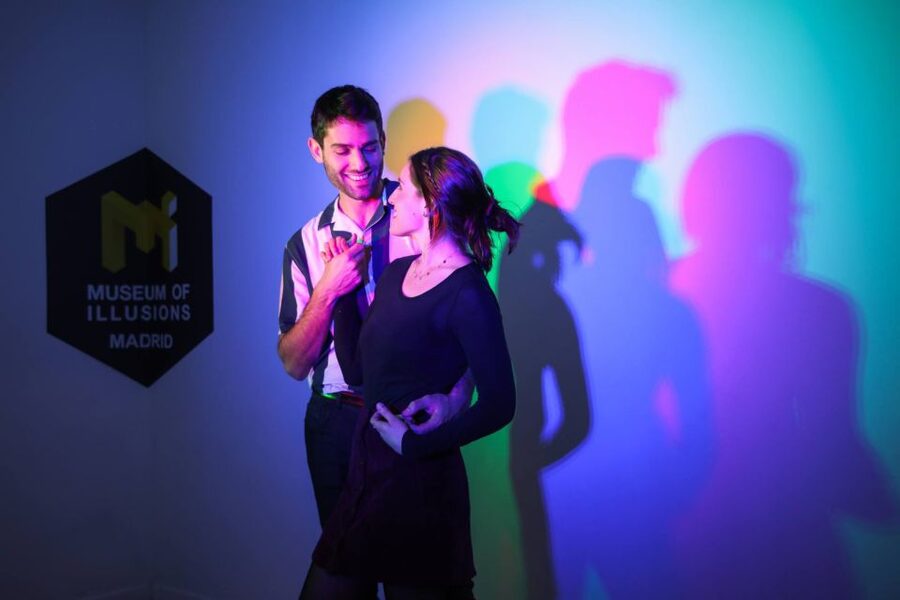
Charge your phone before arriving. That sounds basic, but the museum’s photo stations are a central part of the experience, and a low battery can cut the fun short.
Look for the instructions at each display. The recommended camera position is often the difference between an ordinary snapshot and a convincing illusion. Keep the phone level when asked, use the marked viewpoint if one is provided, and take turns so everyone appears in the pictures.
Do not let the camera replace the experiment. First understand what the display is doing, then take the photo. This gives you better pictures and helps explain the trick when you show them to friends at home.
A group of two or three has the easiest time. You can create perspective effects, compare body positions, and ask another person to frame the shot. If you arrive alone, staff may take some photos, but you will have less control and fewer chances to stage group effects.
Who will enjoy this most?
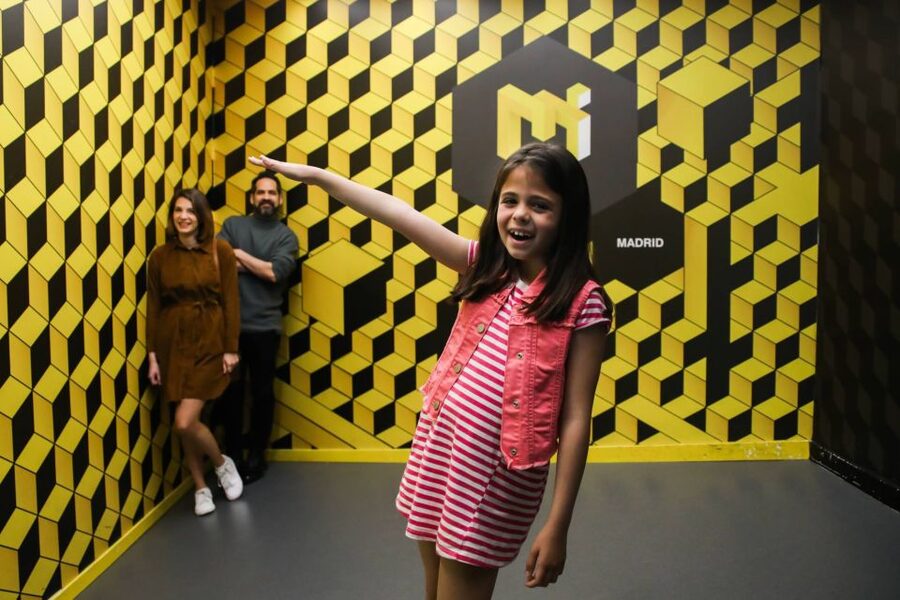
Families with school-age children are a strong match. The exhibits are short, physical, and easy to discuss, so children do not need to stand quietly for long. Younger children can enjoy the visual surprises, while older children can think through the puzzles.
Couples and groups of friends will also find plenty to do, especially if they enjoy taking unusual photographs. The activity gives you a shared task, which can be more entertaining than simply looking at exhibits side by side.
Adults without children can enjoy it too, but expectations matter. This is light entertainment with educational touches, not a serious science museum. I would choose it for an easygoing hour, particularly on a hot day or when you want something that does not demand much concentration.
Solo visitors should consider the photo issue before booking. The museum remains accessible on your own, but you may miss part of the fun because several exhibits work better with a partner.
Location and arrival
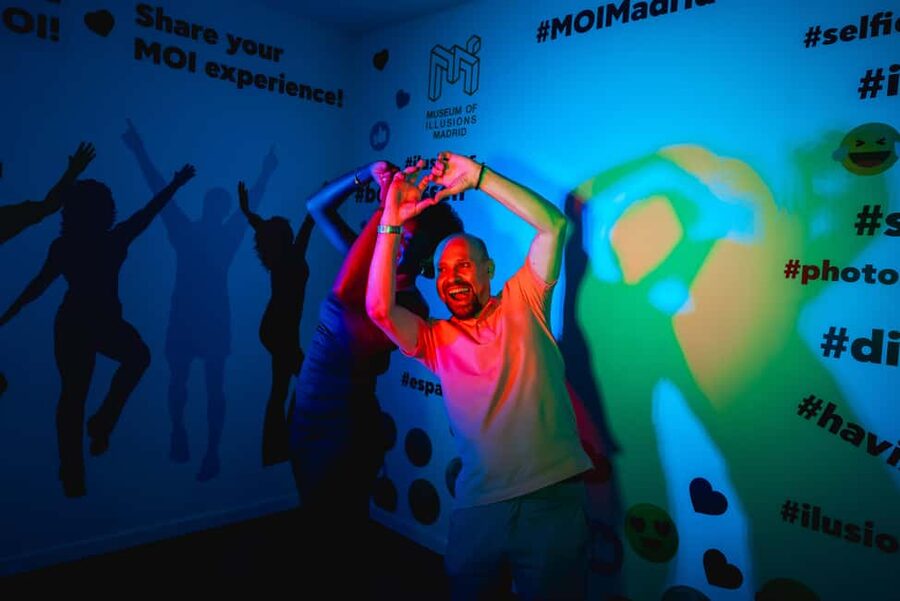
The museum is in Madrid’s Community of Madrid region, near Tirso de Molina. The nearest Metro station is Tirso de Molina on Line 1, making the venue straightforward to reach by public transport.
The nearest listed bus stop is also Tirso de Molina, served by Lines 6, 26, 32, and M1. Once you arrive in the area, use the museum’s name as your destination rather than relying only on the station name.
The experience is timed, so check the available starting times when you book. The activity has a small-group format limited to seven participants, although the museum itself is compact and self-guided. A smaller scheduled group should make the visit easier to manage than a large tour party.
The ticket is non-refundable, so check your plans carefully before paying. This matters more here than it might for a flexible sightseeing stop, since the experience is short and admission depends on the selected time.
Wheelchair access and practical limits
The activity is described as wheelchair accessible, but the important qualification is that some exhibitions are not suitable for wheelchair users. I would contact the provider before booking if full access to every display is essential.
That limitation may affect how much of the museum you can experience, since some illusions rely on a particular position, a moving area, or a walkway. The available information does not identify which exhibits are affected, so do not assume that accessibility to the building means access to every attraction.
For everyone else, the main practical issue is crowd flow. If a large group of children is using the displays, you may prefer to hang back and return to an exhibit once it is free. The compact layout means a little patience can make the visit more comfortable.
My advice for planning the visit
Book ahead rather than assuming you can walk in. The museum may not accept walk-in visitors, so an online ticket and a checked starting time are the safer choice.
Plan one hour, bring a charged phone, and visit with at least one other person if you want the best photo results. Read the instructions, take turns, and do not judge the museum after the first quick circuit.
I would pair it with other sights in central Madrid instead of setting aside half a day. It is a good reset after a long morning, a family-friendly indoor option during hot weather, and a simple way to add something playful to an itinerary filled with churches, plazas, and art collections.
Should you book the Museum of Illusions Madrid?
Book it if you like optical tricks, mind games, and photographs that make friends ask how you took them. Families, couples, and small groups will get the strongest value, and an hour is easy to fit into a Madrid schedule.
Skip it if you want a large museum, a long guided visit, or a serious art collection. At $17, the ticket works best when you take your time with the exhibits and treat the visit as interactive entertainment.
My practical call: book it for a relaxed hour, especially with children or friends, but arrive with realistic expectations about the compact size. The rotating tunnel, footbridge, moving cube, and photo stations provide enough variety for a fun break, just not an all-day attraction.
FAQ
How long does the Museum of Illusions Madrid experience last?
The stated duration is one hour. Some people complete the museum in about 35 to 45 minutes, while a slower visit with reading and photographs can take longer.
How much does admission cost?
The ticket costs $17 per person.
Where is the meeting point?
Go directly to the Museum of Illusions in Madrid. The nearest Metro station is Tirso de Molina on Line 1, and the nearest listed bus stop is Tirso de Molina, served by Lines 6, 26, 32, and M1.
What languages are available?
Host or greeter support is available in Spanish and English.
Is the museum wheelchair accessible?
The activity is described as wheelchair accessible, but some exhibitions are not suitable for wheelchair users. Check with the provider before booking if you need access to every exhibit.
Can I cancel my ticket?
No. This activity is non-refundable, so check the time and date carefully before booking.
Recently added in Madrid
- Entrance to the Flamenco Temple Room in Madrid with Tapas Option★ 5.0 · 176 reviews
- Tapas & Paella Cooking Class in Madrid with a Professional Chef★ 5.0 · 177 reviews
- Madrid: Toledo Day Trip with Winery Visit and Wine Tasting★ 4.4 · 177 reviews
- VIP visit to the Las Ventas Bullring in Madrid★ 5.0 · 178 reviews
- VIP Entrance Ticket to Our Secret Alley in Madrid★ 5.0 · 179 reviews
- Madrid: Prado & Reina Sofía Museums Guided Tour★ 4.5 · 180 reviews
- Madrid: Royal Palace tour – semi private or private★ 4.9 · 182 reviews
- Atletico de Madrid Stadium & Interactive Museum Admission Ticket★ 4.5 · 183 reviews
Museums, compared.
Park Güell and Gaudí House Museum Entry Ticket
Read the review →
Puro Flamenco Show with Optional Museum Ticket
Read the review →

Girona & Dali Museum Small Group Tour with Pick-up from Barcelona
Read the review →
Oceanogràfic, Hemisfèric & Science Museum Combo
Read the review →
Small Group of Prado Museum Tour & Optional Tapas
Read the review →Browse the lists this tour appears in