
Reviewed · PRADO & MADRID MUSEUM TOURS
Madrid: Afternoon Prado Museum Tour with Skip-the-Line Entry
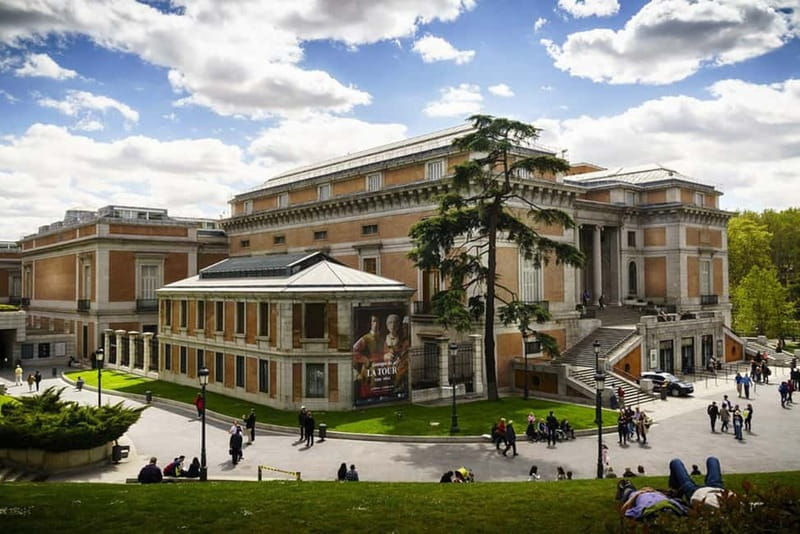
The best thing about this Prado Museum tour is its clear sense of purpose. In two hours, an English-speaking guide leads you through major works by Goya, Velázquez, El Greco, and Rubens, so you can get your bearings in one of Europe’s great museums without wandering room to room in a daze.
I like the small-group format, which gives you a better chance to hear the guide and ask questions. I also like the separate entrance, a practical advantage when the regular queue can stretch to two hours. The main drawback is simple: two hours only gives you an introduction to the Prado, not a full visit.
Key points
- Meet at the Velázquez Monument: The tour begins and ends at Paseo del Prado, 11, outside the museum.
- See essential works quickly: The route focuses on Goya’s The Third of May 1808, Velázquez’s Las Meninas, El Greco’s The Burial of the Count of Orgaz, and major works by Rubens.
- Small groups make a difference: You can stay closer to the guide and ask questions more easily than on a large coach-style tour.
- Skip the regular queue: Your ticket uses a separate entrance, saving valuable afternoon time.
- Guides shape the experience: Guides including Blanca, Juan, Eva, Nerea, Javi, Lorena, and Ruben have been praised for clear explanations, humor, patience, and strong storytelling.
- Useful for first-time visitors: The guide gives you a logical route through major periods instead of leaving you to guess where to begin.
A smart first look at the Prado in two hours
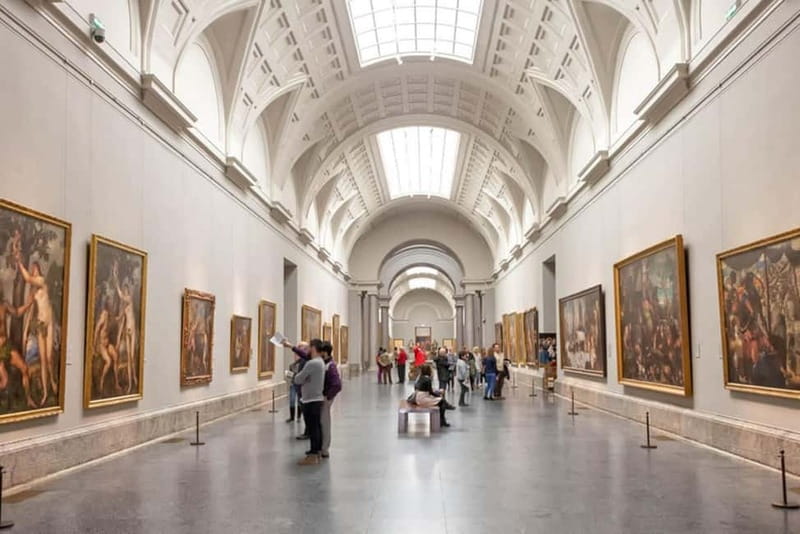
The Prado is the kind of museum that can swallow an entire day. It holds European art from the 12th century through the early 20th century, and its famous rooms contain far more important paintings than most people can see in one visit.
That makes a guided highlights tour a sensible choice if you have limited time or feel unsure about art museums. Rather than handing you a map and pointing toward the galleries, the guide chooses a route and explains why each painting matters. You still see only a fraction of the collection, but you leave with a useful framework for returning on your own.
The tour costs $67 per person. That is not a bargain admission ticket, but the price includes the museum ticket, a guide, and skip-the-line access. I see the value mainly in the time saved and the interpretation. If you would happily spend hours reading labels and finding the major paintings yourself, the extra cost may not be necessary. If you want the Prado to make sense quickly, it is easier to justify.
The experience has a 4.4 rating from 491 reviews, with especially strong praise for the guides’ ability to make art approachable. Blanca is described as funny and cheerful, while Juan, Eva, Nerea, Javi, Ruben, and Lorena are praised for clear explanations, enthusiasm, and personal attention. Those details matter because the guide is the heart of this tour.
More Museums in Madrid
- Madrid: Prado Museum Entry Ticket
★ 4.6 · 17,509 reviews - Madrid: Reina Sofía Museum Entrance Ticket
★ 4.5 · 6,889 reviews - Madrid: Small Group of Prado Museum Tour & Optional Tapas
★ 4.6 · 2,437 reviews
Meeting at the Velázquez Monument on Paseo del Prado
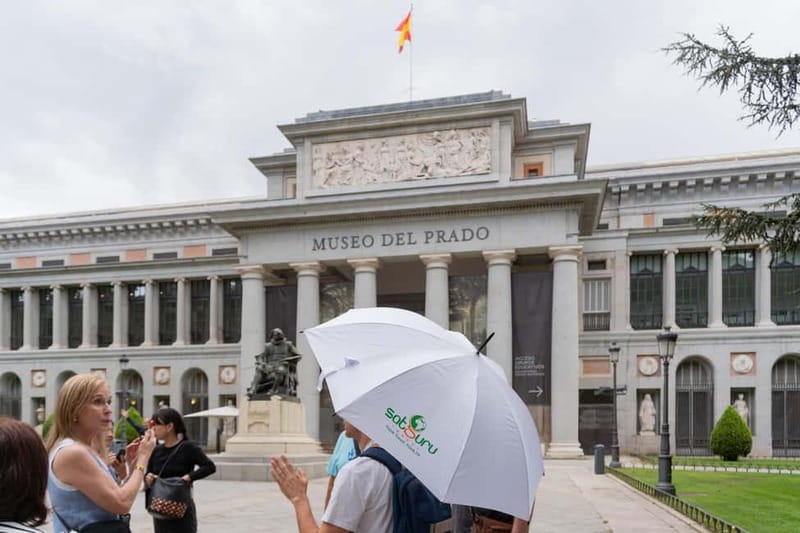
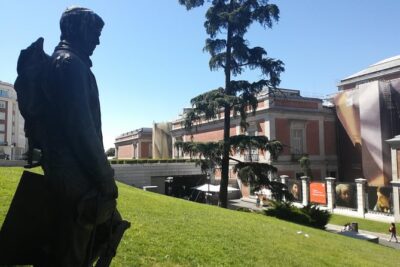
You meet at the Monument to Velázquez at Paseo del Prado, 11, 28014 Madrid. This is also where the tour ends, so you do not need to arrange a transfer back to your hotel or another part of the city.
The meeting point is fitting. Velázquez is one of the central figures in the Prado, and his work becomes one of the main stops inside the museum. Arrive early rather than cutting it close. The courtesy waiting time is 10 minutes, and a museum group cannot easily pause once the guide has begun the entry process.
The activity does not include hotel pickup, transportation, food, or drinks. Plan around those omissions. You will need to reach Paseo del Prado on your own, and it is sensible to have water or a snack before the two-hour visit, especially if you have already spent the afternoon walking around Madrid.
The tour runs in the afternoon, but starting times depend on the date you select. Check availability before building the rest of your day around it. The museum is closed to this activity on some holidays, including December 25 and January 1.
Entering the Prado without the regular queue
The separate entrance is one of the most useful parts of the experience. The Prado is popular, and waiting outside can eat into the time you have set aside for Madrid. Skip-the-line access does not mean you skip every security or entry procedure, but it does allow the group to avoid the standard admission queue.
That benefit is especially valuable for a short tour. If you spend an hour or two waiting, a two-hour museum visit quickly loses its point. With the entry arranged, your time is used for the collection itself.
The guide meets you at the designated location and leads the group inside. The tour is offered in English, and the guide stays with the group during the visit. Some guides have also handled bilingual tours in English and Spanish. One guide, Jorge, was praised for giving the same information in both languages without cutting the English explanation short, though a bilingual tour can naturally take longer at each stop.
Goya and the difficult side of Spanish history
Francisco de Goya gives the tour some of its strongest emotional moments. His paintings are not simply attractive scenes for a museum checklist. They show fear, violence, power, superstition, and the strain of Spanish life during periods of war and political upheaval.
One key stop is The Third of May 1808, Goya’s famous painting of executions during the Peninsular War. A good guide can help you notice how the scene is arranged, where your eye goes first, and how Goya uses light and expression to make the victims feel immediate rather than distant.
The tour also introduces you to Goya’s Black Paintings, a group of severe and unsettling works. These paintings are a sharp contrast to more formal royal portraits and elegant court scenes elsewhere in the museum. They show why Goya is such an important figure in Spanish art: his work can move from official grandeur to private dread without losing its force.
This part of the tour may be especially rewarding if you like art tied to politics and human experience. It may be less comfortable for young children or anyone expecting only bright, decorative paintings. The guide’s job here is to give context without turning the visit into a lecture, and the strongest guides use questions and visual clues to keep you involved.
A few other Madrid outings to compare
- Madrid: Prado Museum Guided Tour with Skip-the-Line Ticket
★ 4.5 · 2,018 reviews - Madrid: Prado Museum Guided Tour With Fast Access
★ 4.8 · 1,785 reviews - Prado Museum Small Group Tour with Skip the Line Ticket
★ 5.0 · 1,738 reviews - Royal Palace & Prado Museum Skip the Line Guided Tour
★ 4.5 · 1,347 reviews
Velázquez and the puzzle of Las Meninas
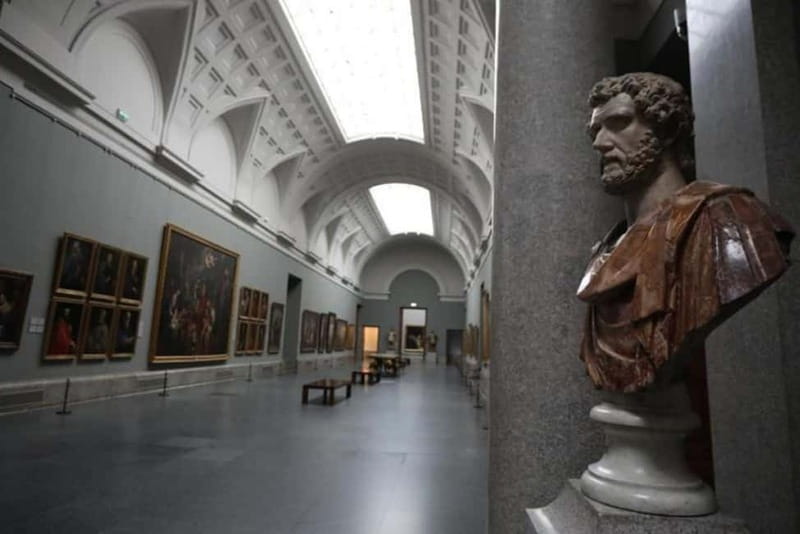
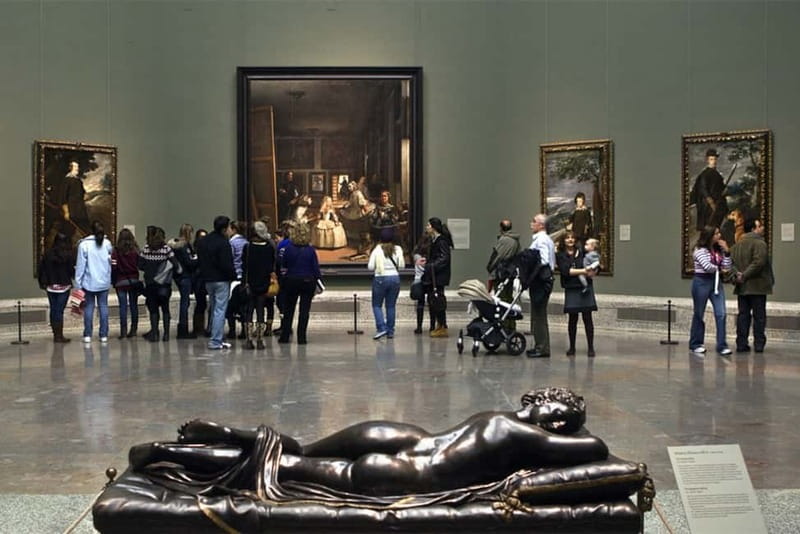
Velázquez’s Las Meninas is the painting most visitors expect to see, and it deserves the attention. At first glance, it appears to show a young princess surrounded by attendants, a dog, and members of the royal household. Look longer and the scene becomes a puzzle about sight, status, and the act of painting itself.
The guide can point out where Velázquez placed himself, how the mirror changes the scene, and how the figures seem to respond to something outside the canvas. These details help you understand why the painting has attracted so much study. You are not simply looking at a royal portrait. You are being asked to think about who is watching whom.
This is also where the guide’s storytelling ability matters most. Several guides, including Juan and Ruben, have been praised for making technical and historical points easy to follow. A good explanation gives you a way to look at the painting after the tour, even if you are not familiar with art terms.
One caution: guides may spend a long time on a single masterpiece. That can be worthwhile, but it means fewer works receive detailed attention. One visitor specifically wished the guide had moved on sooner from the first painting to cover two or three more. If you want a fast checklist of famous works, tell your guide early that you prefer a quicker pace.
El Greco and the meeting of earth and heaven
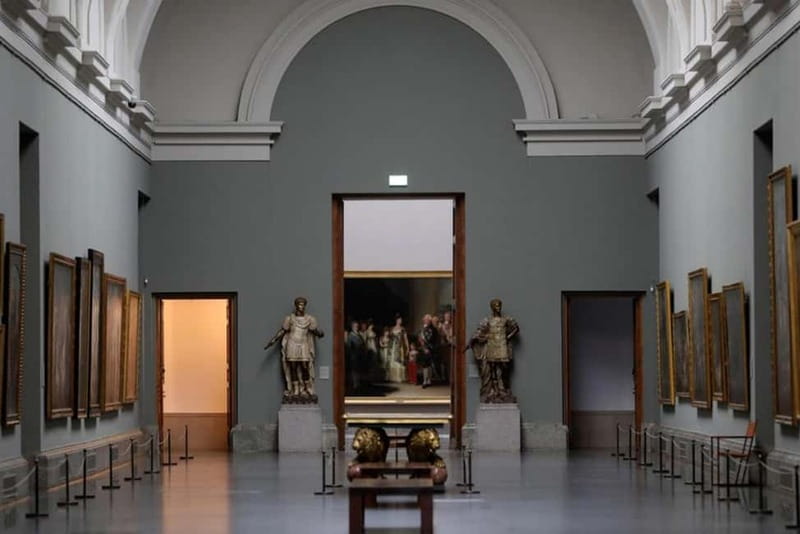
El Greco’s work changes the mood again. His elongated figures, dramatic gestures, and strong colors are easy to recognize once someone explains what you are seeing. His style can look strange beside the controlled realism of Velázquez, but that difference is part of the Prado’s appeal.
The tour includes The Burial of the Count of Orgaz, one of El Greco’s best-known paintings. It combines a funeral scene on earth with a heavenly vision above, bringing human figures and saints into one tall, crowded composition.
A guide can help you follow the painting from bottom to top and explain how the two sections relate to each other. You may also notice how El Greco stretches bodies and faces to create a spiritual rather than natural effect. This is the sort of detail that can pass you by when you visit alone and simply read the artist’s name.
El Greco is a good reminder that the Prado is not only a museum of Spanish realism. Its collection covers different ideas about beauty, faith, movement, and the purpose of art. The tour’s period-by-period route helps you see those changes instead of treating every gallery as a separate room.
Rubens and the force of Baroque painting
Peter Paul Rubens brings another strong change in style. His paintings are known for movement, rich color, muscular figures, and dramatic emotion. The guide may discuss works such as The Descent from the Cross and paintings based on biblical or mythological stories.
Rubens can feel overwhelming if you are looking at a large composition without guidance. There may be several gestures, faces, bodies, and diagonal lines competing for your attention. The guide’s value is in showing you how the scene is built and where to look first.
This section also places Spanish painting in a wider European setting. Goya, Velázquez, and El Greco are the stars of the Spanish collection, but Rubens helps show how artistic ideas moved across borders. You see a broader picture of European painting rather than a narrow national story.
As with the other sections, the amount of time spent here depends on the guide and the group. The stated route is a plan for the main highlights, not a promise that every listed work will receive equal attention. If Rubens is your priority, mention it when the tour begins.
Why the guide matters more than the route
The museum route is important, but the guide shapes your experience more than the order of the rooms. The strongest comments about this activity focus on guides who are friendly, clear, and willing to involve the group.
Blanca has been praised for using humor and fun facts to make art feel less intimidating. Juan is repeatedly described as personable and good at explaining the most important paintings. Eva is noted for careful detail, while Nerea is praised for making the visit relaxed and rewarding. Javi is described as especially strong on art and history, and Ruben is noted for passion and flexibility.
You may also find that the guide adjusts the pace to the group. One guide accommodated different interests, while another handled guests who separated from the group in a professional way. Maria even found a chair and brought water when someone needed a break. Those moments suggest that the experience is not built around rushing people from one painting to another.
Still, guide quality can vary from one departure to another. The names above reflect guides who have led this experience, but you cannot choose a specific person based on the information provided. What you can do is arrive ready to ask questions and tell the guide which artists matter most to you.
Small groups, accessibility, and the two-hour limit
The small-group setup is a real advantage inside a major museum. You can stand closer to the guide, hear explanations more clearly, and ask about a painting without raising your voice across a crowd.
Group sizes are not fixed in the details provided. One group had only six people, but you should not assume every departure will be that small. The activity requires a minimum number of participants, and if that number is not reached, you will be contacted with alternatives.
The tour is wheelchair accessible. That makes it a practical choice for visitors who need an accessible route, though you may still want to confirm any personal mobility needs when booking.
Two hours is long enough for a strong introduction. One guide led the group through the main works in a logical sequence without making the museum feel overwhelming. Another person wished the tour were longer, which captures the tradeoff well. You gain focus, but you give up the freedom to linger.
I recommend treating the tour as your orientation visit. Afterward, you can return to one or two artists on your own if your admission arrangements and schedule allow. The experience itself ends back at the meeting point after the guided two-hour visit, so do not assume that the paid activity includes extra independent museum time.
Who gets the best value for $67
At $67, this is best suited to you if the Prado is a priority but your Madrid schedule is tight. The ticket, guide, and separate entrance cover the basics, and the route saves you from spending your first hour figuring out where the famous works are located.
It is also a good fit if art museums sometimes feel difficult to enter without preparation. The guide gives you visual clues, historical background, and a sequence to follow. You do not need an art degree, and the repeated praise for humor, questions, and plain explanations suggests the tour is designed for a general audience.
Families may appreciate the short format, though the darker Goya paintings may not suit every child. Art students and serious museum fans may find the visit too brief, but they can use it to locate favorite works before returning independently.
I would be less likely to book this if I had an entire day for the Prado and enjoyed exploring alone. In that case, the fixed pace and focus on famous works could feel restrictive. I would also think twice if my main goal were quiet contemplation, since a guided group naturally involves conversation and movement.
The cancellation terms are helpful for a changing schedule: you can cancel up to 24 hours in advance for a full refund, and you can reserve now while paying later. That flexibility reduces the risk of committing before your Madrid plans are settled.
Should you book this Prado Museum tour?
Book it if you want a focused first visit, dislike museum queues, or want someone to explain why the Prado’s famous paintings matter. The strongest value comes from the combination of skip-the-line entry and a skilled guide, not from the ticket alone.
Expect a highlights tour, not an exhaustive survey. You will see important works by Goya, Velázquez, El Greco, and Rubens, but you will not cover every major room in two hours. Arrive early at the Velázquez Monument, wear comfortable shoes, and tell the guide which artists you most want to see.
For many first-time visitors, that is the right balance: enough structure to make the Prado understandable, enough time left in the day to enjoy Madrid, and a clear sense of what deserves a second look.
FAQ
How long is the Prado Museum tour?
The guided visit lasts two hours.
Where does the tour begin?
You meet at the Monument to Velázquez on Paseo del Prado, 11, 28014 Madrid, Spain.
Where does the tour end?
The activity ends back at the meeting point on Paseo del Prado, 11.
Is skip-the-line entry included?
Yes. The ticket uses a separate entrance to help you avoid the regular admission queue.
Which language is the tour offered in?
The live tour guide speaks English. Some guides have also conducted bilingual English and Spanish tours.
Which artists and paintings are included?
The tour focuses on major works by Goya, Velázquez, El Greco, and Rubens. Featured examples include The Third of May 1808, the Black Paintings, Las Meninas, The Burial of the Count of Orgaz, and The Descent from the Cross.
Is the tour wheelchair accessible?
Yes, the activity is listed as wheelchair accessible.
Is hotel pickup included?
No. You must make your own way to the meeting point, and hotel pickup or transfers are not included.
Can I cancel the tour for a refund?
Yes. You can cancel up to 24 hours in advance for a full refund. You can also reserve now and pay later.
More Skip the Line in Madrid
- Madrid: Royal Palace Expert Guided Tour with Skip-the-Line
★ 4.7 · 6,986 reviews - Madrid: Royal Palace Skip-the-line Guided Tour
★ 4.9 · 3,146 reviews - Madrid: Royal Palace Skip-the-Line Guided Tour
★ 4.5 · 2,140 reviews - Madrid Old Town & Royal Palace Walking Tour Skip the Line Ticket
★ 4.5 · 1,829 reviews
Recently added in Madrid
- Entrance to the Flamenco Temple Room in Madrid with Tapas Option★ 5.0 · 176 reviews
- Tapas & Paella Cooking Class in Madrid with a Professional Chef★ 5.0 · 177 reviews
- Madrid: Toledo Day Trip with Winery Visit and Wine Tasting★ 4.4 · 177 reviews
- VIP visit to the Las Ventas Bullring in Madrid★ 5.0 · 178 reviews
- VIP Entrance Ticket to Our Secret Alley in Madrid★ 5.0 · 179 reviews
- Madrid: Prado & Reina Sofía Museums Guided Tour★ 4.5 · 180 reviews
- Madrid: Royal Palace tour – semi private or private★ 4.9 · 182 reviews
- Atletico de Madrid Stadium & Interactive Museum Admission Ticket★ 4.5 · 183 reviews
Prado & Madrid Museum Tours, compared.

Small Group of Prado Museum Tour & Optional Tapas
Read the review →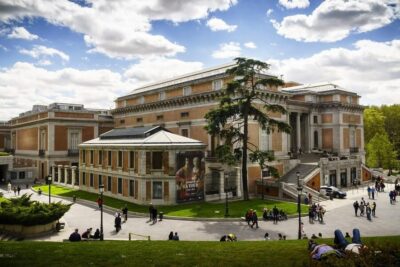
Prado Museum Guided Tour with Skip-the-Line Ticket
Read the review →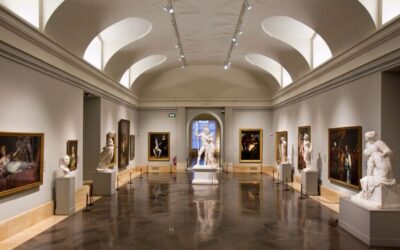
Prado Museum Small Group Tour with Skip the Line Ticket
Read the review →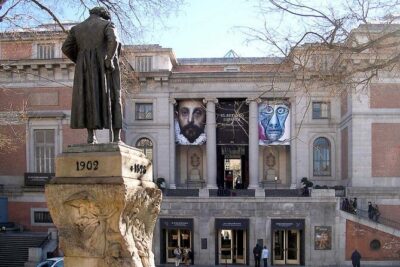
Royal Palace & Prado Museum Skip the Line Guided Tour
Read the review →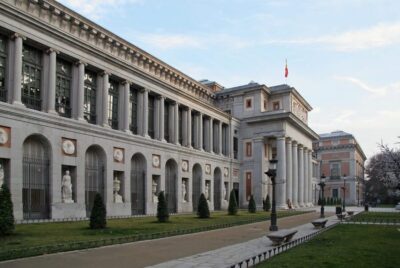
Browse the lists this tour appears in