
Reviewed · WALKING TOURS
Guided Walking Tour of Immortal Toledo
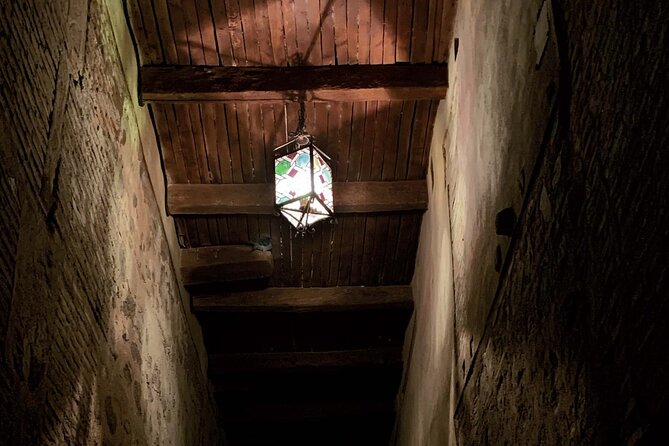
Toledo after sunset is a different city. The traffic of the day fades, convent streets grow quiet, and old stories about relics, prisons, epidemics, executions, and secret institutions feel more at home. I like that this two-hour evening walk focuses on the side of Toledo many daytime tours skip.
I also like the mix of documented history and local legend, plus the final view from Mirador del Azor. Guides such as Alberto and Lara are praised for clear, lively storytelling. The main drawback is that the tour is almost entirely outdoors, and every stop is an exterior visit, so bad weather or tired legs can affect the experience.
Key points about Toledo after dark
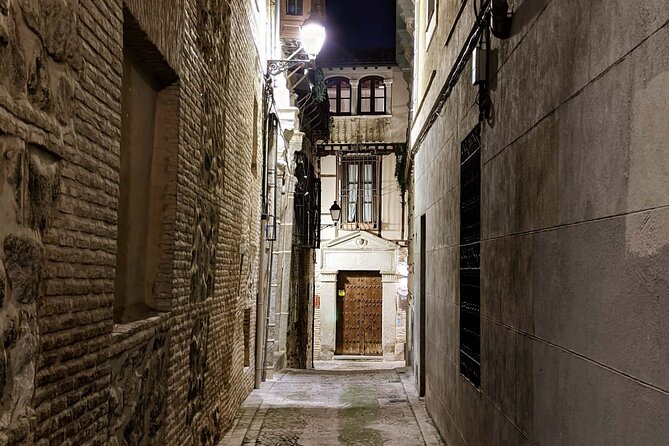
- A night route through the convent quarter: Quiet streets and dim squares create the right setting for Toledo’s darker stories.
- A strong focus on Imperial Toledo: Hear about the Inquisition, hospitals, epidemics, executions, relics, and daily life during the Renaissance and Baroque periods.
- Local guides lead the walk: Alberto and Lara are among the guides specifically praised for warm, engaging explanations.
- El Greco appears on the route: See the outside of the first place in Spain for which he painted, where two original Cretan works remain.
- Every stop is viewed from outside: This is a storytelling walk, not an interior monument tour.
- A scenic ending: The route finishes at Mirador del Azor, about five minutes from Plaza de Zocodover.
Why night changes the Toledo experience
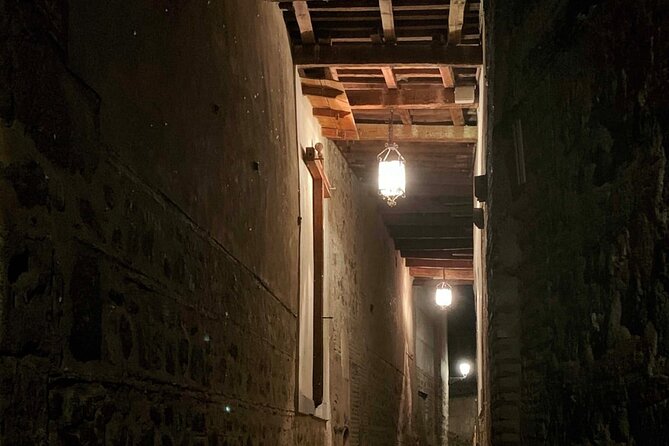
Toledo is famous for its cathedral, Alcázar, synagogues, and museums. Those sights matter, but this tour takes a different road. It uses the old city after dark as a setting for stories about fear, faith, death, and superstition.
The timing is important. During the day, Toledo can feel busy and tightly packed. At night, the narrow streets around the convents become calmer. That quiet helps you notice the shape of the city: sudden bends, stone walls, small squares, gates, and stretches of medieval fortification.
I like this approach because the tour is not simply a list of dates and buildings. The guide connects places to the people who used them. You hear about the Mozarabic community, religious brotherhoods, relics, prisons, hospitals, and public punishment. Toledo becomes a city of ordinary anxieties as well as grand monuments.
The mood leans toward the mysterious, but the subject matter is not limited to ghost stories. The route covers the Holy Inquisition, secret jail cells, epidemics, executions, and ancestral relics. It also looks at Toledo through the eyes of 19th-century romantics, who helped shape the city’s image as a place of shadows and legends.
That blend should suit you if you want history with atmosphere. If you prefer long interior visits, museum displays, or a tightly academic lecture, this may feel less substantial.
More walking tours in Toledo:
- Toledo: Guided Monument Walking Tour with Wristband Pass
★ 4.5 · 487 reviews - Barcelona Tapas and Wine Experience Small-Group Walking Tour
★ 5.0 · 5,804 reviews - Barcelona: Tapas Walking Tour with Food, Wine, and History
★ 4.8 · 4,261 reviews
Starting at Plaza de Zocodover
The tour begins at Plaza de Zocodover, Toledo’s central meeting point. This is a practical place to start because it is easy to identify and close to much of the old city.
From here, the route moves into older streets and quieter corners. You should arrive ready to walk uphill and over uneven pavement. The tour lasts about two hours, so comfortable shoes matter more than dressy evening clothes.
The route is limited to 30 people. That is not a private walk, but it is small enough for a guide to keep the group together in narrow lanes. Your experience can still depend on where you stand, especially in a dark square or beside a small church facade. Stay near the guide if you want every detail.
The mobile ticket is useful for a walking tour. You do not need to handle a paper voucher, and confirmation is provided at booking. Public transportation is nearby, though the most important practical point is simply reaching Plaza de Zocodover on time.
The Mozarabic community and Spain’s oldest brotherhood
One early stop introduces the Mozarabic community and the Cofradía de la Caridad, described as the oldest brotherhood in Spain. The visit is from the outside, so the value comes from the explanation rather than from entering a decorated interior.
The Mozarabs were Christians who lived under Muslim rule and kept elements of their own religious and cultural practices. Toledo’s past cannot be reduced to one faith or one political era. This stop points toward the city’s layered identity and helps explain why its religious history is so complex.
The Cofradía de la Caridad adds a more human angle. Brotherhoods were not just ceremonial groups. They were tied to charity, care, death, and the treatment of people who had few other forms of help. That makes this a fitting opening for a route concerned with life, illness, punishment, and burial.
You may find the stop brief, since there is no interior visit. Still, it gives the rest of the walk a useful frame. Toledo’s old institutions were not abstract names. They shaped how people faced poverty, illness, prison, and death.
San Ildefonso and the stolen relic
The next stop concerns San Ildefonso, Toledo’s patron, along with the theft of one of his relics in the 17th century. Again, you see the site from outside, but the story gives the guide a chance to explain how relics worked in religious life.
Relics were objects of devotion, identity, and political value. The theft of one could become a serious event, not a minor curiosity. This story is likely to appeal if you enjoy the odd, specific details that make old history memorable.
I especially like this part of the route because it turns a broad subject, religious devotion, into a concrete mystery. You are not just hearing that relics mattered. You are hearing about one object, one theft, and the trouble that followed.
The limit is clear: there is no chance to study the relic or an interior shrine during this tour. The guide’s story has to carry the stop. That makes the quality of the explanation important, and the experience will be strongest with a guide who tells the tale with the energy praised in the comments about Lara and Alberto.
A few other Toledo outings to compare
- Toledo Private Tour with Licensed Local Guide
★ 5.0 · 884 reviews - Madrid: Full-Day Guided Tour of Toledo with Cathedral Visit
★ 4.6 · 647 reviews - Night Guided Tour of Magical Toledo
★ 4.5 · 459 reviews - Toledo: Cathedral Tour with a Local Guide
★ 4.4 · 390 reviews
San Pedro Mártir, Casa de Mesa, and the Visigoth councils
The route reaches one of Toledo’s highest points. From here, you can see the front of the church of the Convent of San Pedro Mártir, Casa de Mesa, and the former Church of San Román, now the Visigoth Councils Museum.
This stop brings together several layers of Toledo in one view. Religious buildings, old residences, and a museum connected to the Visigoth councils all point to different periods of the city’s past. The high position also gives the guide a natural place to explain how Toledo’s streets and districts fit together.
Because the museum is viewed from outside, do not book this walk expecting access to its exhibits. The payoff is orientation and context. You get a sense of how Toledo’s buildings sit within the old city, while the guide links the visible facades to earlier institutions.
A high point can also mean a climb. The tour information does not give a detailed difficulty rating, so you should assume a normal city walking pace rather than a flat stroll. Most people can participate, but anyone with mobility concerns should think about Toledo’s hills and old paving before booking.
El Greco’s first Spanish commission
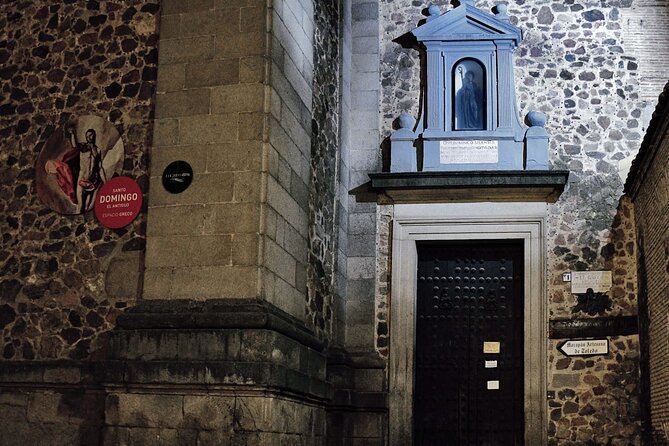
One of the most appealing artistic stops is the first place for which El Greco painted in Spain. Two original Cretan works are still preserved there, though the visit is from outside.
El Greco was born in Crete, and his early work carried that background with him. Knowing that two Cretan originals remain at this location adds a personal thread to the stop. You are not just passing another historic church. You are standing outside a place tied to the beginning of his Spanish career.
This is a good example of the tour’s limits and strengths. You do not get a gallery visit or a close look at the paintings. If El Greco is a major reason for your visit to Toledo, add a dedicated museum or church visit during the day.
Still, the exterior stop works well in an evening route. The guide can connect the building to the artist, then place El Greco within the Toledo of the late 16th and early 17th centuries. It adds an artistic note to a walk otherwise centered on religion, institutions, fear, and death.
A small square where legend takes over
The itinerary includes the outside of a charming little square where history and legend meet. No specific name is provided, and that is part of the route’s character. This is not a parade of Toledo’s biggest landmarks. It is a stop built around atmosphere and storytelling.
Small squares often work best at night. Their scale makes the city feel close, while the surrounding walls and empty lanes leave room for old tales to grow. The guide uses the setting to show how fact and local legend can sit side by side in Toledo.
You should keep your expectations realistic. There is no promise of a dramatic performance, supernatural event, or interior access. The appeal is the story attached to the place and the way the guide presents it.
This is also where a lively guide matters most. The comments about Lara describe passionate, enjoyable explanations that never became heavy. That is exactly the skill needed for a stop with fewer visible monuments and more reliance on words.
Walls, gates, and the final view
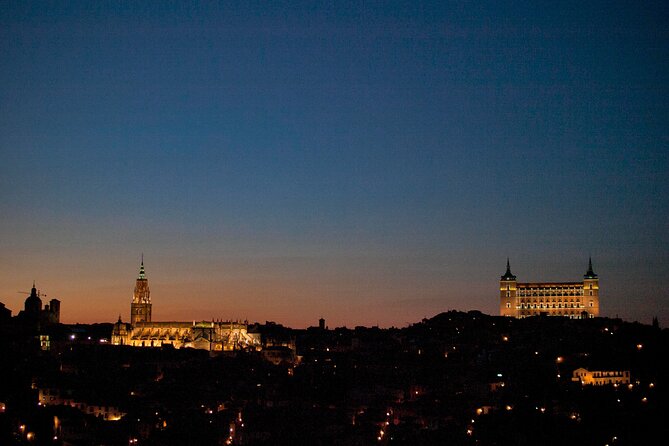
The walk ends at Mirador del Azor on Callejón de San José, about five minutes from Plaza de Zocodover. The viewpoint offers a broad look toward the Toledo district, along with some of the city’s gates and walls.
Ending at a viewpoint is a smart choice. After two hours of enclosed lanes and dark convent streets, you get space and perspective. The walls and gates help you understand Toledo as a fortified city, while the view gives the tour a clean visual finish.
The end point is not far from the starting plaza, but it is not the same location. Plan your evening from the viewpoint rather than assuming you will finish exactly where you began. The information does not specify transport back, so you should be comfortable making your own way from the viewpoint after the guide says goodbye.
The view also gives you a final chance to place the stories in a larger setting. In the lanes, you hear about prisons, hospitals, relics, and executions. From the viewpoint, you see the city that held those institutions together.
What the guide can make or break
A night walking tour depends heavily on the guide. The subject matter is strong, but the stops are exterior locations, and some are small or visually quiet. You need a guide who can explain rather than simply point.
Alberto is specifically praised for excellent knowledge and genuine conversation throughout the two-hour route. Lara is praised for magnificent explanations, passion, and an easy style that kept the walk enjoyable. Those details suggest that the provider uses local official guides, not a recorded audio system or a script you follow alone.
The best guide for this route will give you dates and names, but also explain why a relic mattered, how a brotherhood functioned, or why Toledo’s romantic image grew in the 19th century. The tour description promises both Imperial Toledo and the city seen by romantic writers. Listen for those connections.
Group size can reach 30. That is worth considering if you want a private, quiet conversation with the guide. For most people, the group limit is a reasonable compromise at a low price, but you should not expect a one-on-one experience.
Is $13.90 a fair price?
At $13.90 per person, this is an inexpensive way to add a guided evening activity in Toledo. The two-hour length gives you enough time for several stops without taking the whole night, and the route includes subjects that are not always part of a standard daytime sightseeing plan.
The value is strongest if you appreciate interpretation. You are paying for the guide’s stories about the Inquisition, secret jails, epidemics, executions, relics, El Greco, and romantic Toledo. You are not paying for admission to monuments, since the sites are visited from outside.
That distinction matters. If you want a tour with included tickets, interiors, or art close-ups, this is not the right price comparison. If you want a low-cost way to understand the old city after dark, the fee is easy to justify.
The tour is also booked an average of 24 days ahead. That does not mean every date will sell out, but it tells you the route is often planned well before the day of departure. If the time fits your schedule, reserving early is sensible.
Weather, cancellation, and practical fit
The experience requires good weather because it takes place outdoors. If poor weather cancels the tour, you are offered another date or a full refund. The same applies if the minimum number of participants is not reached.
You can cancel for a full refund up to 24 hours before the start time. Within 24 hours, the amount paid is not refunded, and changes are not accepted. The cut-off follows Toledo local time, so check the clock carefully if you are arranging plans from another time zone.
Service animals are allowed, and most people can participate. The route is still a two-hour walk through an old hilltop city, so you should consider your own comfort with hills, uneven surfaces, and standing outside at night.
This is best for you if:
- You want Toledo history beyond the major monuments.
- You enjoy legends, religious stories, and darker subjects.
- You prefer a guided walk to an audio guide.
- You want a short evening activity at a modest price.
- You can manage a two-hour outdoor walk.
- You are happy seeing buildings from the outside.
It may not suit you if you need interior access, dislike stories about executions and epidemics, or want a fully private tour.
Should you book the Immortal Toledo walk?
Book it if you want to meet Toledo after sunset, hear the city’s stranger stories, and understand how religion, illness, punishment, art, and legend shaped daily life. The low price and two-hour format make it an easy addition to a Toledo stay.
I would pair it with daytime visits to Toledo’s major interiors, especially if you care about art or architecture. This route gives you setting and interpretation, not admission tickets or long time inside monuments.
For the best experience, wear comfortable shoes, arrive at Plaza de Zocodover on time, stay close enough to hear the guide, and check the forecast. If the idea of a quiet convent district, a stolen relic, El Greco’s first Spanish commission, and a final city view sounds appealing, this is a smart evening choice.
FAQ
How long is the Guided Walking Tour of Immortal Toledo?
The tour lasts approximately two hours.
Where does the tour start?
It starts at Plaza de Zocodover, Pl. de Zocodover, 45001 Toledo, Spain.
Where does the tour finish?
The tour ends at Mirador del Azor on Callejón de San José, 19, Toledo. The viewpoint is about five minutes from Plaza de Zocodover.
Are the sites visited from inside?
No. The listed stops are external visits, so the tour focuses on the guide’s explanations and the outdoor setting.
How many people can join the tour?
The maximum group size is 30 participants.
Can I cancel for a full refund?
Yes. You can cancel at least 24 hours before the experience start time for a full refund. Cancellations or changes made within 24 hours are not refunded or accepted.
Recently added in Toledo
- Toledo Private Tour with Cathedral Skip the Line Ticket★ 5.0 · 204 reviews
- Toledo Jewish Heritage Private Tour with expert local guide★ 5.0 · 210 reviews
- Private tour in Toledo with train station pick-up and panoramic taxi tour★ 5.0 · 228 reviews
- Toledo and its 7 Monuments: Tourist Bracelet + Guided Visit★ 4.7 · 236 reviews
- English Tour “TOLEDO ALL IN ONE”★ 4.7 · 245 reviews
- From Madrid: Toledo & Jewish Quarter Half-Day Tour★ 4.4 · 251 reviews
- From Madrid: Toledo Tour with Wine Tasting and 3 Monuments★ 4.5 · 267 reviews
- Toledo Private Tour with Local Guide. Pick up in Madrid optional★ 5.0 · 277 reviews
Walking Tours, compared.

Barcelona Tapas and Wine Experience Small-Group Walking Tour
Read the review →
Tapas Walking Tour with Food, Wine, and History
Read the review →
Albaicín and Sacromonte Guided Sunset Walking Tour
Read the review →
Toledo Tour & Vineyard Walk with Wine Tasting from Madrid
Read the review →

Barcelona Tapas Walking Tour: Food, Wine & History
Read the review →
Madrid Old Town & Royal Palace Walking Tour Skip the Line Ticket
Read the review →
Browse the lists this tour appears in