

Reviewed · HISTORICAL TOURS
Toledo Jewish Heritage Private Tour with expert local guide
Toledo’s Jewish story is best understood on foot, in the tight lanes where homes, synagogues, ritual spaces, churches, and palaces once crowded together. This private tour takes you beyond the usual cathedral-and-El Greco route, pairing two remarkable synagogues with underground archaeological remains and the wider story of Spain’s Jewish community.
I like the choice of meeting in Toledo or adding a private Madrid transfer. I also like the personal format: guides such as Sonia, Irene, Javi, Daniel, and Fernando adjust the pace, answer questions, and sometimes open lesser-known sites that you would likely miss alone. The main drawback is the walking. Toledo is hilly, its lanes are uneven, and popular sights can be crowded.
Key points to know before booking
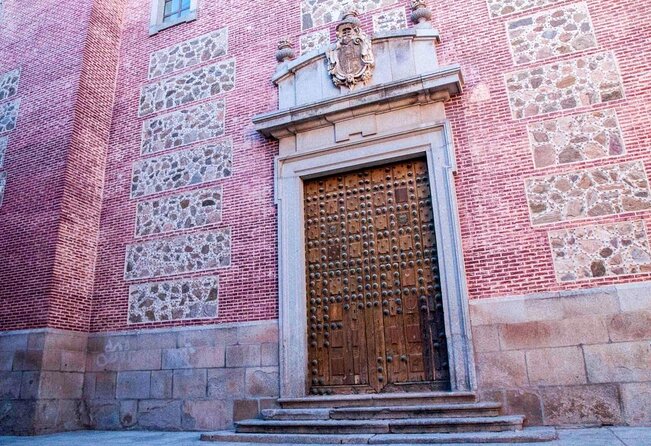
- Two important synagogues: Visit El Tránsito Synagogue and Santa María la Blanca, each with a very different design and story.
- A private guide in English: Your group receives the guide’s full attention, with time to shape the tour around your interests.
- More than surface history: Expect context about Jewish life, Christian rule, the Inquisition, conversion, and expulsion.
- Possible access to hidden spaces: Guides have taken groups into former house cellars, cisterns, and other archaeological places not normally open for casual visits.
- Flexible arrival choices: Meet at Plaza de Zocodover, your Toledo hotel, or Toledo train station, or arrange pickup from Madrid.
- Plan for hills: Comfortable shoes matter, and summer heat can make shade and water breaks especially useful.
Why Toledo’s Jewish quarter deserves a focused tour
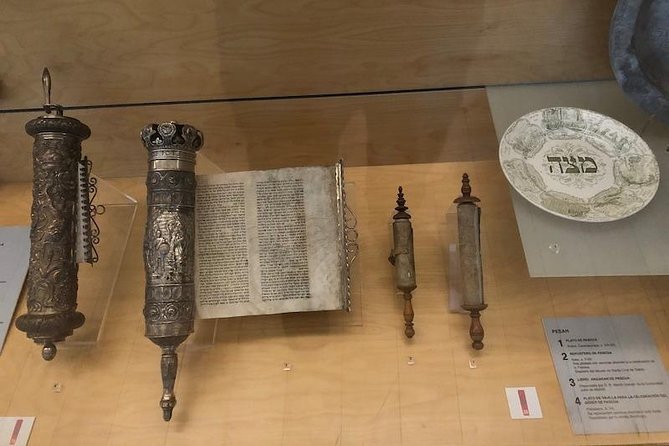
Toledo is often presented as Spain’s City of Three Cultures, shaped by Jewish, Christian, and Muslim communities. That phrase is useful, but it can also flatten a complicated past into a tidy slogan. A good guide helps you see how these communities lived alongside one another, where cooperation existed, and how pressure, violence, forced baptism, the Inquisition, and expulsion changed the city.
The Jewish presence here reaches back at least to the Roman period. Written evidence places Jews in Toledo in the fourth century, though they may have arrived earlier. By the medieval era, Toledo had one of Europe’s major Jewish quarters, with synagogues, homes, schools, workshops, markets, and ritual facilities woven into the urban fabric.
That is why this experience works better than simply checking off two historic buildings. You walk through the streets between the monuments, and the guide connects the architecture to daily life. You learn where the Jewish quarter sat, how it related to the rest of Toledo, and what happened to its people as political and religious conditions shifted.
I especially value the private format for a subject like this. You can ask about Jewish customs, family life, architecture, Spanish politics, or the Inquisition without waiting for a large group to move along. Several guides are also praised for explaining difficult subjects with care and humor, a useful balance in a tour that eventually reaches persecution and expulsion.
More historic sites in Toledo:
- Madrid Essential: Historic Center, Plaza Mayor & Royal Palace
★ 5.0 · 6,416 reviews - Barcelona: Tapas Walking Tour with Food, Wine, and History
★ 4.8 · 4,261 reviews - Sevilla Food Tour: Tapas, Wine, History & Traditions
★ 5.0 · 3,468 reviews
Walking the old town for about an hour
The tour begins in Toledo’s old town, a UNESCO World Heritage City since 1986. The historic center is a maze of stone lanes and small squares, with grand buildings appearing suddenly around corners. Even before entering the Jewish quarter, you get a sense of why Toledo was such an important capital and crossroads.
This opening walk gives your guide room to set the political and religious scene. Rather than treating Jewish history as a separate footnote, the tour places it within the larger story of Toledo under Roman, Muslim, Jewish, and Christian rule.
The old town is atmospheric, but it is not easy walking. Expect hills, slopes, narrow streets, and surfaces that can be hard on tired feet. One practical advantage of a private guide is that you can ask for a slower pace or adjust the route to your group. Still, wear supportive shoes and avoid treating the three-hour version as a completely effortless stroll.
Crowds may appear around major sights. They need not spoil the experience, but you should expect some stops to feel busy, particularly at well-known monuments. Your guide can still make the streets meaningful by pointing out details you might otherwise pass without noticing.
Through the Jewish quarter’s narrow lanes
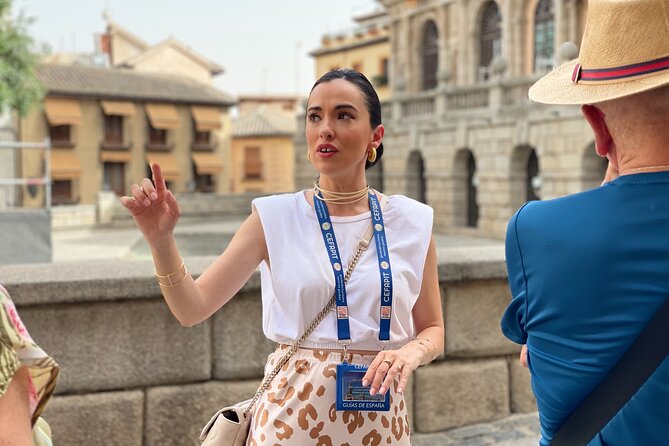
The dedicated walk through Toledo’s Jewish quarter takes about an hour. This is the part of the experience where the city’s layout becomes as important as its monuments.
The streets are narrow and winding, and that closeness helps you imagine a compact neighborhood rather than an isolated museum district. The guide explains the age of the Jewish presence, the former importance of the community, and the archaeological traces left beneath later buildings.
Some of the most memorable moments may come from places that are easy to miss. Guides have shown groups the cellar of a former Jewish house and underground cisterns or ritual remains that are not part of the standard self-guided walk. Access depends on the guide and the site on the day, so you should not book expecting a guaranteed secret entrance. But the private format gives you a better chance of seeing these less obvious corners.
This section also gives you a chance to ask practical questions about Jewish life. A guide with strong training in Jewish history and customs can explain the purpose of ritual spaces, the design of synagogues, and how the neighborhood changed after the Jewish community was expelled, killed, or forced to convert.
I would pay attention to the guide’s storytelling here. The best guides do not present a list of dates. They explain how a community functioned, then show you what remains. That makes the later synagogue visits easier to understand.
El Tránsito Synagogue and the Sephardic Museum
El Tránsito Synagogue is the tour’s central stop, with about 30 minutes inside. It is also called the Synagogue of Samuel Leví, after the treasurer of King Peter I who ordered its construction in 1355.
The political setting matters. New synagogue construction was restricted at the time, yet King Peter I approved this building as a gesture of thanks to Toledo’s Jewish community for supporting him during his war against his brother, Enrique de Trastámara. That detail shows how closely Jewish life could be tied to royal politics, even during periods of legal and social limits.
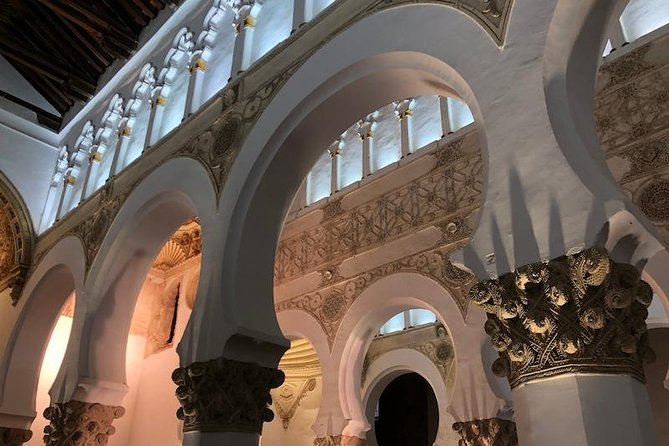
Inside, the prayer room is known for its elaborate plasterwork. The decoration is a sharp contrast to the building’s more restrained exterior, and your guide can help you read the inscriptions, patterns, and spatial arrangement as more than attractive ornament.
The building also houses the National Museum of Sephardic Culture. This adds material about Sephardic traditions and the wider Jewish experience in Spain. For me, this is where the tour moves from Toledo’s streets to the larger question of what Sephardic culture means, how it developed, and how it survived after the expulsion from Spain.
Thirty minutes is enough for a guided introduction, though it is not a long museum visit. If you enjoy reading every display, you may want to return independently if your schedule allows. The private tour is strongest when the guide explains what you are seeing and draws links between the building, the community, and Spanish history.
A few other Toledo outings to compare
- Toledo Private Tour with Licensed Local Guide
★ 5.0 · 884 reviews - Toledo Private Tour with Local Guide. Pick up in Madrid optional
★ 5.0 · 277 reviews - Private tour in Toledo with train station pick-up and panoramic taxi tour
★ 5.0 · 228 reviews - Toledo Private Tour with Cathedral Skip the Line Ticket
★ 5.0 · 204 reviews
Santa María la Blanca’s unusual interior
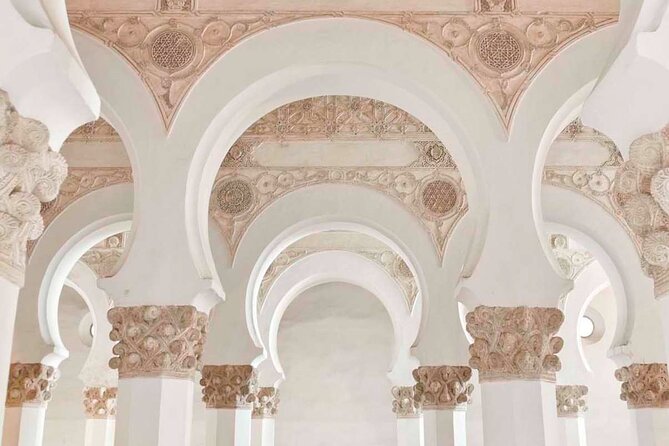
The visit to Santa María la Blanca lasts about 25 minutes. It was one of eleven synagogues in Toledo until the end of the fourteenth century and is considered one of Europe’s oldest surviving synagogues.
The building dates from the late twelfth or early thirteenth century and uses Mudejar design. Its exterior is fairly plain, while the interior has a more striking rhythm of white arches and columns. That contrast makes it a useful companion to El Tránsito. You see two Jewish buildings from different periods and with different visual moods, rather than repeating the same kind of stop.
The site also illustrates Toledo’s layered religious past. Its later identity as Santa María la Blanca reflects the changes that followed the decline and expulsion of the Jewish community. A guide can explain how buildings were reused and reinterpreted, and how that process shaped what you see today.
The short visit works well as part of a walking tour, but it may feel brief if architecture is your main interest. Ask questions as you go, since the private setting gives you a better chance to focus on the details that matter most to you.
What the private format changes
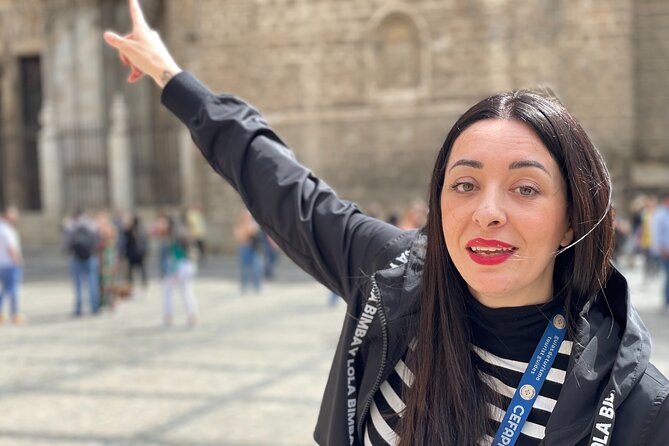
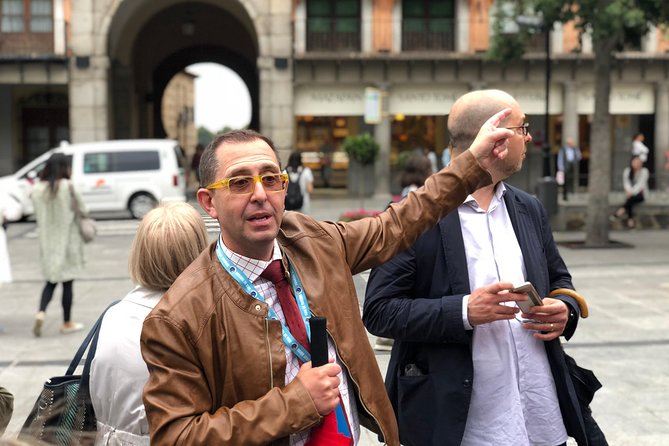
A private tour is not automatically better than a group tour, but here it makes a real difference. Your group is the only group participating, so the guide can spend more time on subjects that interest you and move past material you already know.
The guides associated with this experience have different strengths. Sonia is frequently praised for her warmth, clear explanations, and close study of Jewish history and customs. Irene is noted for her careful treatment of Toledo’s past and her strong English. Javi brings local roots, humor, and broad knowledge of Toledo’s religious and political history. Daniel is especially associated with early Jewish-history tours in the area and offers a strong connection between Jewish history and the events that led to the Inquisition and expulsion.
These are not promises that you will receive a particular guide unless your booking confirms one. They do show the sort of service to expect: personal attention, flexibility, and an ability to connect Jewish history with the broader story of Spain.
Some guides have also helped groups add worthwhile details. One guide took a group to a scenic viewpoint before beginning the Jewish quarter, then offered an explanation of El Greco’s Burial of the Count of Orgaz when the group wanted to see more of Toledo’s art. Another made sure the group found shade and stayed hydrated during hot weather. Those touches matter because Toledo’s climate, hills, and crowded lanes can affect the day.
Meeting in Toledo or coming from Madrid

You have several ways to begin. The simplest is to meet at Plaza de Zocodover, at your Toledo hotel, or at the Toledo train station. If you arrive from Madrid by train, the guide can meet you at the station, but you must pay separately for the taxi ride into the historic center or to the El Valle viewpoint.
The train option can be good value. Madrid to Toledo is a fast, inexpensive connection, and meeting your guide in Toledo avoids paying for a private vehicle from Madrid. The station is not in the old center, so you need to account for the taxi cost and a little extra coordination.
For maximum ease, choose the Madrid pickup option. A private driver collects you from your Madrid hotel in a luxury car and brings you to Toledo. This costs more, but it is attractive for families, small groups, or anyone who prefers not to manage train tickets, station transfers, and directions before a full day of walking.
The optional transfer has another benefit: it can make scenic stops possible on the way into the city, depending on the arrangement. Do not assume every transfer includes a viewpoint stop, but you can ask about it when organizing your pickup.
Is $151.23 per person a fair price?
At $151.23 per person, this is not a budget walking tour. The value depends on your group size, the length you choose, and whether you add Madrid transportation.
For a small group that wants a specialist guide and private pacing, the price can make sense. Admission to both synagogues is included, and the guide adds interpretation that you would not get from simply entering the buildings. The ability to ask questions, adjust the pace, and possibly visit restricted archaeological spaces adds real value.
The shorter three-hour format is likely the better choice if you mainly want the Jewish quarter and synagogues. The longer option, up to about eight hours, makes more sense if you want extensive time in Toledo, scenic stops, extra historic sites, or help planning the rest of your afternoon.
The cost rises when you add round-trip Madrid transport. Compare that with the price and convenience of the train, then consider how many people are in your group. For two people, the private car may feel expensive. For a larger group, the added cost can be easier to justify.
Who will get the most from this tour?
I would choose this for anyone with a serious interest in Jewish Spain, Sephardic culture, religious architecture, or the forces that reshaped Toledo after the medieval period. It also suits visitors who have already seen Spain’s grand cathedrals and want a different way into the city.
Families and mixed-interest groups can benefit from the private setup because the guide can explain Jewish history while also covering Toledo’s architecture, politics, art, and Christian-Muslim connections. If one person in your group is focused on El Greco or medieval Spain, the tour can sometimes be adapted to include related sights or suggestions for the rest of the day.
You should think twice if you dislike hills, uneven streets, or historical subjects that include persecution and expulsion. This is not a light sightseeing loop with a few decorative buildings. It asks you to consider how a community lived, contributed to the city, and then faced forced conversion, violence, or removal.
The tour is offered in English, and most people can participate. Service animals are allowed, and the route is near public transportation. Ask about the exact meeting point and walking demands before booking if anyone in your group has mobility concerns.
Booking details and cancellation
The price includes the licensed local guide and admission to El Tránsito Synagogue, including the Sephardic Museum, plus Santa María la Blanca. Madrid pickup and return are included only when you select that option. Hotel or train station pickup in Toledo is also dependent on the option you book.
Confirmation is normally sent at booking. If you reserve within one day of departure, confirmation comes as soon as possible and depends on availability. Free cancellation is available up to 24 hours before the start time. Later cancellations and changes are not refunded or accepted.
Because this experience is often booked about 55 days ahead, I would reserve early if you need Madrid pickup, a particular date, or a longer private itinerary.
FAQ
How long does the Toledo Jewish Heritage Private Tour last?
The experience lasts approximately three to eight hours, depending on the option selected and how much time you spend exploring Toledo.
What sites are included?
The tour includes Toledo’s old town, the Jewish quarter, El Tránsito Synagogue and the National Museum of Sephardic Culture, and Santa María la Blanca. It also covers archaeological remains connected with Toledo’s Jewish past.
Is transportation from Madrid included?
Round-trip transfer from Madrid is included only if you select that option. You can also travel from Madrid by train and meet the guide in Toledo.
Can the guide meet me at Toledo train station?
Yes. The guide can meet you at Toledo train station. A taxi ride from the station to the historic center or the El Valle viewpoint is not included.
Is this a group tour?
No. This is a private activity, so only your group participates.
What is included in the price?
The price includes a licensed local guide specializing in Jewish culture and admission to Santa María la Blanca and El Tránsito Synagogue. Madrid transportation and Toledo pickup are included only when the relevant option is selected.
Should you book the Toledo Jewish Heritage tour?
Book it if you want Toledo explained through its Jewish past rather than simply viewed as a collection of grand buildings. The two synagogues are essential stops, but the real strength is the connection between those buildings, the streets around them, and the larger story of Sephardic life in Spain.
Choose the train meeting option if you want to control costs and are comfortable arranging a short taxi ride from Toledo station. Pay for Madrid pickup if convenience matters more than price, especially for a larger group or a long day of sightseeing.
Wear good shoes, carry water, and leave room for questions. With a guide such as Sonia, Irene, Javi, or Daniel, this can become much more than a standard Toledo walk. It gives you a human scale for a complicated past, one lane, synagogue, cellar, and story at a time.
Recently added in Toledo
- Toledo Private Tour with Cathedral Skip the Line Ticket★ 5.0 · 204 reviews
- Private tour in Toledo with train station pick-up and panoramic taxi tour★ 5.0 · 228 reviews
- Toledo and its 7 Monuments: Tourist Bracelet + Guided Visit★ 4.7 · 236 reviews
- English Tour “TOLEDO ALL IN ONE”★ 4.7 · 245 reviews
- From Madrid: Toledo & Jewish Quarter Half-Day Tour★ 4.4 · 251 reviews
- From Madrid: Toledo Tour with Wine Tasting and 3 Monuments★ 4.5 · 267 reviews
- Toledo Private Tour with Local Guide. Pick up in Madrid optional★ 5.0 · 277 reviews
- Toledo: Cathedral Tour with a Local Guide★ 4.4 · 390 reviews
Historical Tours, compared.
Madrid Essential: Historic Center, Plaza Mayor & Royal Palace
Read the review →
Tapas Walking Tour with Food, Wine, and History
Read the review →
Sevilla Food Tour: Tapas, Wine, History & Traditions
Read the review →
Valencia Old Town Tour with Wine & Tapas in 11th Century Historic Monument
Read the review →
Barcelona Tapas Walking Tour: Food, Wine & History
Read the review →
Ultimate Seville Tapas, Wine & History Small Group Tour
Read the review →
Skip-the-Line Great Mosque-Cathedral History Tour
Read the review →
Browse the lists this tour appears in