Reviewed · TOURS
Complete Roman Tour in Merida (Spain)
Mérida’s Roman past is not packed into one grand monument. It is spread across the city, where a villa, circus, baths, temple, amphitheatre, and theatre still fit into a half-day walk. This tour gives those ruins a clear order and a human story, from household pets and banquet rooms to gladiators and chariot drivers.
I like Lucía’s lively guiding, especially her use of pictures, jokes, Roman anecdotes, and questions. I also like that the archaeological-site ticket lets you return later to places not covered on the walk, including the Muslim citadel, Muslim quarter, and Basilica of Saint Eulalia.
The main catch is simple: the $29 price does not include the archaeological-site ticket, and you should expect about three hours of walking, steps, sun, and hard surfaces. Buy or arrange the site ticket early enough to meet the guide at the Casa del Anfiteatro.
Key points at a glance
- Roman life beyond the famous ruins: Start with bedrooms, mosaics, gardens, food, toys, and pets in a remarkably preserved Roman villa.
- A complete core route: See the circus, baths, Temple of Diana, amphitheatre, and theatre in one organized walk.
- Lucía’s personal style: She is praised for clear English, strong Spanish, French support when needed, warmth, humor, and careful answers.
- A useful ticket advantage: The site ticket also allows later visits to other Mérida archaeological areas not included in the guided route.
- Plan for the heat: Comfortable shoes and sunscreen are essential, especially in summer, when much of the route is outdoors.
- Optional museum finish: Add a one-hour visit to the National Museum of Roman Art, with mosaics, jewelry, toys, and large sculpture.
Why this tour works well in Mérida
Mérida can be confusing at first. Its Roman remains are not all gathered in one fenced complex, and the city’s later Islamic and modern layers sit right beside them. You can walk past an ancient column or a fragment of wall without seeing what made it important.
This route solves that problem. It links the main Roman sites into a story rather than treating them as isolated photo stops. You begin with private life, move to public entertainment, pass through religion and bathing, and finish with the theatre and amphitheatre.
That order matters. A house shows how people lived. The circus shows how they spent a morning watching races. The baths reveal public engineering and social life. The temple explains power and worship. The amphitheatre and theatre show how Rome entertained a city.
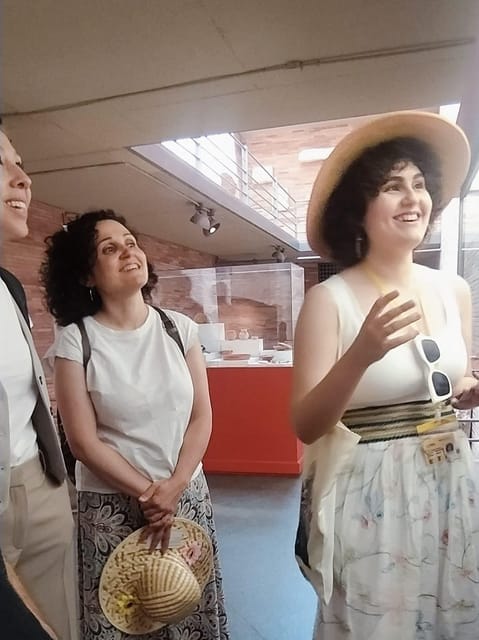
Lucía is the key part of the experience. Her approach combines facts with visual aids and small details. She uses illustrative images to help you picture missing structures and past events, and she has games for children. Her English is described as excellent, and she can guide in Spanish as well. The tour information also lists French and Portuguese among her language abilities, though the live tour is advertised primarily in English and Spanish.
What else fills a Spain itinerary:
- Barcelona: Sagrada Familia Entry Ticket with Audio Guide
★ 4.6 · 105,312 reviews - Barcelona: Park Güell Admission Ticket
★ 4.4 · 76,534 reviews - Seville: Royal Alcázar Entry Ticket
★ 4.6 · 28,378 reviews
Starting at the Roman House of the Amphitheatre
Meet in front of the Casa del Anfiteatro, marked by a large MÉRIDA sign. This is more than a convenient meeting point. It begins the tour with one of the best ways to understand Roman Mérida: by entering a home.
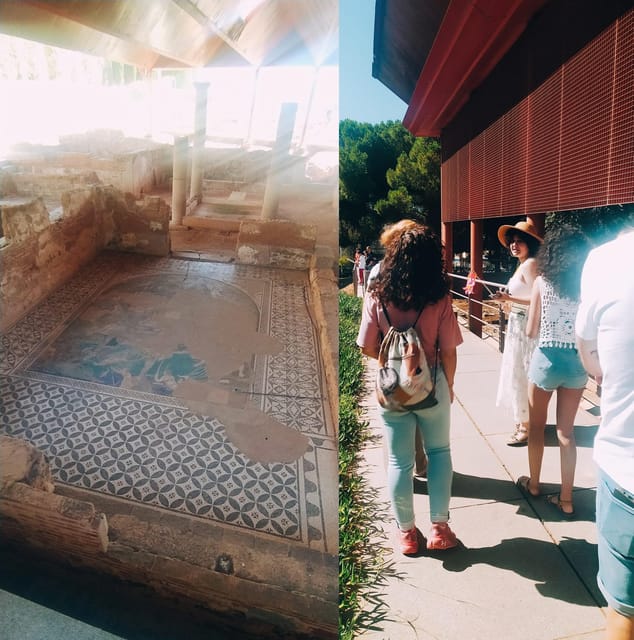
The Roman House of the Amphitheatre gives you a close look at domestic life. You walk through rooms with colorful mosaics, bedrooms, gardens, and spaces once used for lavish meals. Lucía explains details such as food, toys, and household animals, so the site feels less like an empty foundation and more like a place where ordinary routines unfolded.
Allow about 30 minutes here. That is enough for a guided introduction, but not enough to study every mosaic or read every sign at length. If you like taking your time with archaeological displays, return later using your site ticket.
The ticket is purchased through Mérida’s Archaeological Consortium and cannot be resold by the tour provider. Its cost varies according to age group, party size, family status, date, and local events. The guide can explain possible discounts or free-entry rules, but do not assume the $29 tour price covers admission.
Chariot races at Mérida’s Roman Circus
The next stop is the Roman Circus, a broad open site built for chariot racing. It is described as the largest and best-preserved Roman circus in Europe, and its scale is easier to grasp when you are standing among its long tracks and surviving seating areas.
This is where the tour moves from private life to mass entertainment. Lucía can explain how the pathways, seating, and racing space worked, while her stories help you picture the noise, speed, rivalries, and danger of a race day.
The circus is also one of the more exposed sections of the route. Morning is a smart time to visit, since the heat can become serious in Mérida. The tour information specifically advises sunscreen and comfortable shoes, and a hat or water would be sensible additions, although only shoes and sunscreen are listed as required items.
Plan on about 30 minutes. You will get the setting and its purpose, but this is not an extended architectural study. The benefit is that you see it as part of the city’s social life, not just a large field with old stones.
Roman baths, furnaces, and the snow well
From the circus, the route returns toward the center through parks and quieter streets. The Roman baths offer a change of scale and mood. Here, the focus is on engineering and daily routine rather than spectacle.
You can see how different pools were heated or cooled through furnaces. The snow well is a particularly unusual detail. It shows how Romans used cold storage and imported snow to provide relief from heat, a reminder that ancient comfort depended on clever systems rather than modern machinery.
This stop takes roughly 30 minutes. The baths are valuable because they make Roman technology tangible. Instead of hearing only about aqueducts and public works in the abstract, you see the practical arrangements that supported washing, relaxation, and social contact.
The route includes outdoor walking between sites, so the transition itself is part of the experience. It also means you should not expect a museum-like sequence of shaded rooms. Mérida’s Roman remains are spread through the living city, and the walk is unavoidable.
Same city, a completely different evening:
- Barcelona: Casa Batlló Entry with Self-Audioguide Tour
★ 4.7 · 25,359 reviews - Seville: Cathedral and La Giralda Entry Ticket
★ 4.5 · 24,592 reviews - Madrid: Tour Bernabéu Entry Ticket
★ 4.5 · 21,573 reviews - Barcelona: 24 or 48-Hour Hop-On Hop-Off Bus Tour
★ 4.4 · 20,872 reviews
The Temple of Diana and the Roman Forum
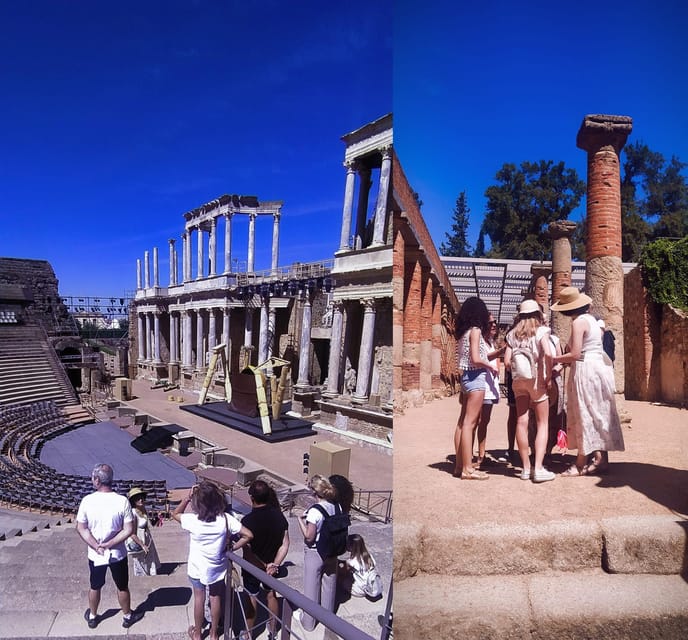
At the Temple of Diana, Lucía shifts the story toward religion and imperial power. The temple was tied to worship of the gods and the emperor, and the surviving structure gives you a strong sense of how Roman beliefs were presented in public space.
Nearby, the route passes through remains of the Roman Forum. This was the civic center of ancient Mérida, where commerce, government, religion, and public life met. The modern setting adds an interesting twist: shops now sell handmade terracotta and mosaic crafts in the same general urban area.
This is one of the best places to ask questions. The temple is visually striking, but its meaning becomes clearer when you understand how worship and political loyalty overlapped in the Roman world. Lucía’s use of anecdotes helps prevent the explanation from turning into a list of dates and names.
Expect around 30 minutes here. You will see the main features and get historical context, but you may want extra time afterward for photographs. Lucía provides advice on good picture spots throughout the tour, which is useful in a city where the best angle is not always obvious from the entrance.
Gladiators and wild beasts in the amphitheatre
The amphitheatre brings the public entertainment story into sharper focus. Here, you learn about gladiatorial combat, fights with wild animals, and even staged boat battles.
The arena is not just a smaller version of Rome’s Colosseum. Its value is the way it sits alongside Mérida’s other Roman remains, allowing you to compare entertainment with religion, bathing, and household life within one city. Lucía’s historical images and explanations help you imagine how the seating, arena floor, and backstage areas worked.
The amphitheatre can be uneven underfoot, and the route includes stairs. A practical warning from the experience is worth taking seriously: this is not an easy stroll for people with mobility, knee, or foot problems. The overall tour involves about three hours of walking, and summer heat makes the effort greater.
Still, this stop is likely to be one of the most memorable. The themes are familiar, but the site gives them physical scale. You can see where the crowd sat and where the action took place, then connect that spectacle with the circus visited earlier.
The Roman Theatre, Mérida’s grand finale
The Roman Theatre is the final major monument on the walking portion. It is described as the largest and best-preserved Roman theatre in Spain, and its surviving stage setting makes it a powerful finish.
The theatre also has a living connection to the present. Each summer, a classical theatre festival brings well-known actors to the venue. That continuing use helps you understand the building as a place designed for performance, not simply an archaeological shell.
Lucía explains how the theatre worked and how Roman audiences experienced drama. After the formal visit, the route ends near restaurants and bars, making lunchtime easy to arrange. You have about 30 minutes of break time at this point.
The schedule is fairly full, so do not expect to sit and read every information panel at each monument. One person found that the pace left too little time for all the on-site text. I see that as the tradeoff for covering so much in three to four hours: you gain structure and explanation, but you give up some independent browsing.
The optional National Museum of Roman Art
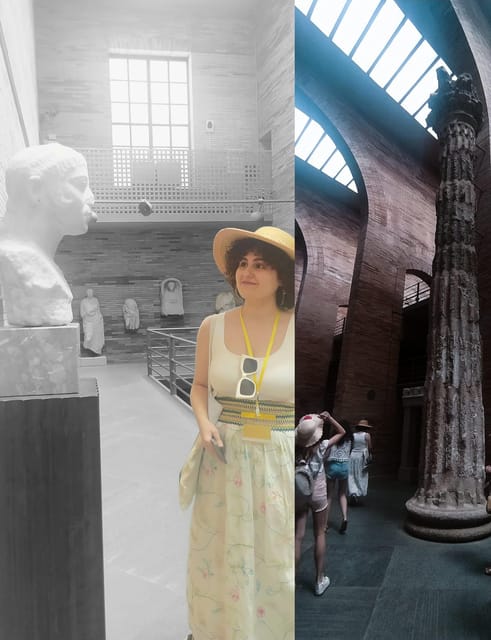
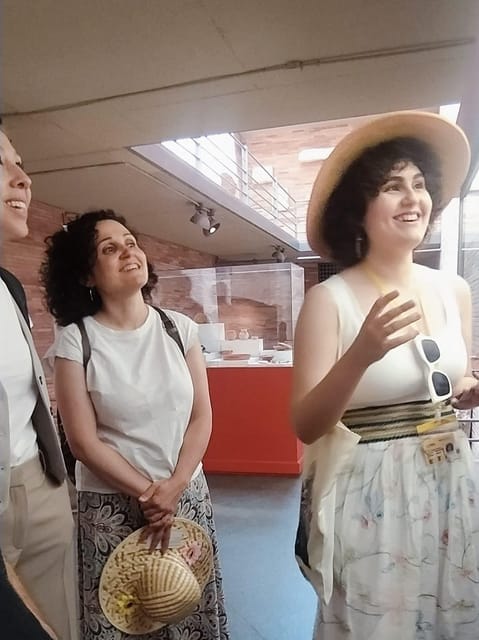
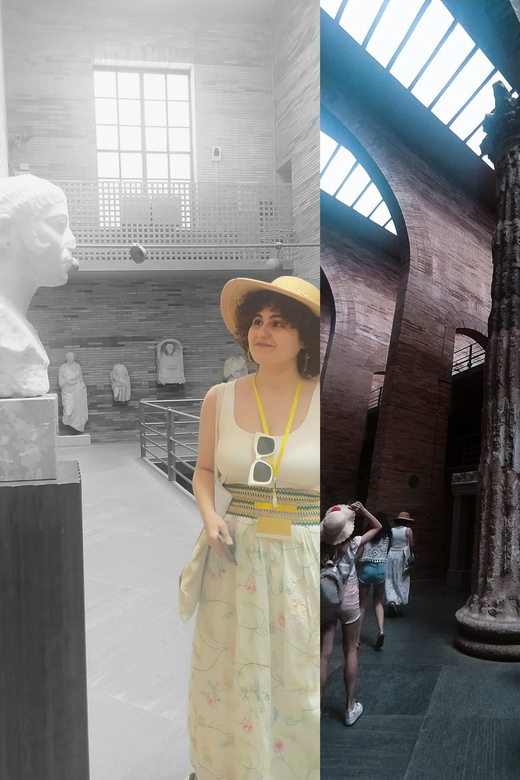
If you choose the museum option, the break is followed at 1 p.m. by a one-hour guided visit to the National Museum of Roman Art. This adds indoor context to the outdoor ruins.
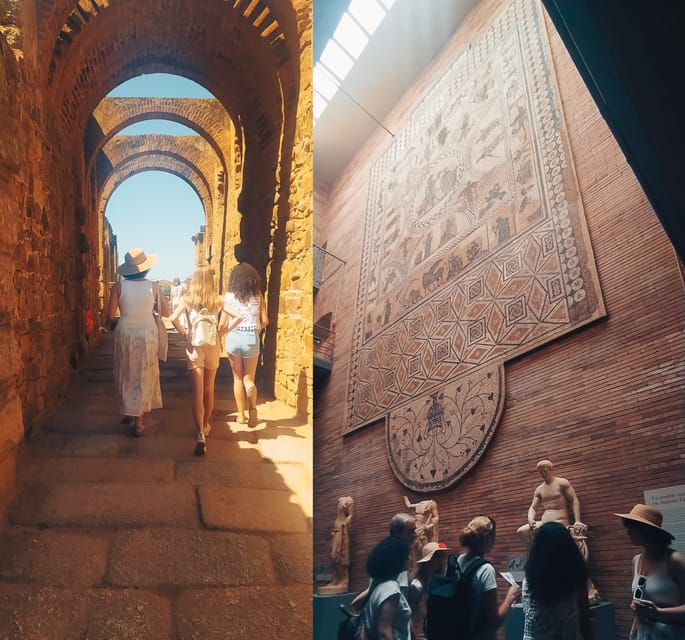
The collection includes objects recovered from excavations around Mérida, from jewelry and toys to enormous sculptures and mosaics. The museum can help you read the smaller clues of Roman life that are easy to miss in a large ruin. A piece of jewelry, a child’s toy, or a household object often says more about daily habits than a monumental column.
Lucía’s background in Latin is especially useful here. She can point out messages and inscriptions that you might otherwise pass without understanding. The museum option makes sense if you have a strong interest in Roman art, language, and material culture, or if the day is hot and you welcome an indoor hour.
It also changes the length and shape of the experience. The standard route is already a substantial morning walk. Adding the museum makes the day more content-heavy, so choose it because you want the extra detail, not simply because it sounds like the complete version.
What the $29 price really buys you
At $29 per person, the tour is priced as an affordable guided introduction, but the total cost is higher once the archaeological-site ticket is added. The admission price is not fixed in the tour information, since the consortium sets it according to several factors.
The tour fee pays for a live guide, radio equipment with earphones, illustrative pictures, children’s games, photo advice, and guided access to the main Roman monuments. That is useful in Mérida because the sites are spread out and their purpose is not always obvious from the remains.
The ticket has a second value. After the guided route, you can use it to visit other archaeological areas that are not part of the tour, including the Muslim citadel and quarter and the Basilica of Saint Eulalia. This makes the purchase more worthwhile if you plan to stay overnight or have another half-day in Mérida.
I would not choose this tour if you want a slow, independent visit with long stretches of quiet time at every monument. I would choose it if you want the city’s Roman core explained efficiently and prefer to return later for closer study.
Walking, weather, and practical planning
Wear shoes with good support. The route includes uneven archaeological ground, stairs, and roughly three hours of walking. One clear practical warning is that people with foot, knee, or mobility problems may find it difficult.
Mérida can be very hot in summer. The circus and other outdoor sites offer limited relief, so sunscreen is essential. Starting in the cooler morning hours helps, and the guide may adjust the pace when conditions allow, but you should still plan for heat.
Arrive early enough to deal with the site ticket before the meeting time. The guide waits in front of the Casa del Anfiteatro at the large MÉRIDA lettering. Since the tour depends on entry to several monuments, a ticket delay can affect the start.
The experience is suitable for families because of the games for children, but the subject matter and walking distance still require patience. It also works well for solo visitors. On quieter dates, Lucía has continued with very small groups, including private tours for a single person.
Who should book this tour
I would recommend it to first-time visitors who want a clear introduction to Mérida’s Roman remains. It is especially useful if you have only one day in the city and want to cover the essential monuments before choosing which sites deserve a second look.
It suits people who enjoy history told through stories rather than dates alone. Lucía is repeatedly praised for her humor, warmth, clear English, and ability to answer questions without drowning you in information. Her personal connection to Mérida also adds a local point of view beyond the ancient buildings.
Families can benefit from the visual aids and games. Couples and solo visitors may appreciate the flexible feel of a small group, when numbers are low. The French and Portuguese language ability may also help mixed-language groups, though you should confirm the language offered at booking.
Skip it if you need a fully accessible route or dislike outdoor walking in the heat. Also think twice if your main goal is detailed museum study, since the standard tour keeps moving. In that case, add the museum option and reserve separate time for the sites you want to examine closely.
Should you book the Complete Roman Tour in Mérida?
Yes, if you want one well-planned morning covering Mérida’s major Roman sights and you value a guide who can turn stones into scenes of household life, religious ritual, racing, drama, and combat.
The 4.9 rating from 190 reviews reflects a very consistent strength: Lucía’s guiding. Her energy, humor, English, historical command, and willingness to answer questions are the strongest reasons to book.
Just budget for the separate archaeological-site admission, arrive in time to arrange that ticket, and treat the walking warning seriously. For $29 plus admission, this is a strong-value orientation to Mérida, with the added benefit of being able to explore the remaining sites on your own afterward.
FAQ
How long does the Complete Roman Tour in Mérida last?
The tour lasts about three to four hours. The main walking route includes roughly 30-minute visits to the Roman house, circus, baths, Temple of Diana, amphitheatre, and theatre, followed by a break. The optional museum visit adds one hour.
What sites are included in the guided tour?
The guided route includes the Roman House of the Amphitheatre, Roman Circus, Roman baths, Temple of Diana, Roman Forum remains, amphitheatre, and Roman Theatre. The museum is an optional addition.
Is the archaeological-site ticket included in the $29 price?
No. The archaeological-site ticket is purchased through Mérida’s Archaeological Consortium and is not included in the tour price. The cost varies according to age group, group size, family status, date, and festivities.
Can I use the ticket to visit other sites later?
Yes. The ticket purchased at the beginning also allows you to visit archaeological areas not included in the guided route, including the Muslim citadel and Muslim quarter and the Basilica of Saint Eulalia.
What languages are available?
The live tour is offered in English or Spanish. The guide information also lists French and Portuguese language ability, and Lucía has provided explanations in both English and French during tours.
Where does the tour meet?
Meet in front of the Casa del Anfiteatro on José Ramón Mélida Street. The guide waits near the large MÉRIDA lettering.
What should I bring?
Bring comfortable shoes and sunscreen. You should be prepared for about three hours of walking, stairs, uneven surfaces, and heat during summer.
Recently added in Spain
- From Andratx: Formula Sunset Driving Tour★ 4.8 · 176 reviews
- Barcelona: Catamaran Cruise w/ Sailing, Wine, & Tapa★ 4.7 · 176 reviews
- Entrance to the Flamenco Temple Room in Madrid with Tapas Option★ 5.0 · 176 reviews
- Mallorca Sailing Adventure with Snorkeling, Snacks & Drinks★ 5.0 · 176 reviews
- Valencia Private Walking Tour with Official Valencian Guide★ 5.0 · 176 reviews
- Fuerteventura: Round-Trip or 1-Way Ferry Ticket to Lanzarote★ 4.7 · 176 reviews
- Benahavís: Canyoning Guided Tour at Guadalmina River★ 5.0 · 177 reviews
- Guided Gaudí Trencadís Mosaic Workshop in Barcelona 2 Hours★ 5.0 · 176 reviews
Tours, compared.
Park Guell Guided Tour with Skip The Line Entry
Read the review →
Sagrada Familia Skip-the-Line Entry Ticket & Tour
Read the review →
Caminito del Rey Guided Tour with Transportation
Read the review →
Caminito del Rey: Guided Tour and Entry Ticket
Read the review →