Reviewed · TICKETS
Barcelona: Museu Nacional d’Art de Catalunya Entrance Ticket
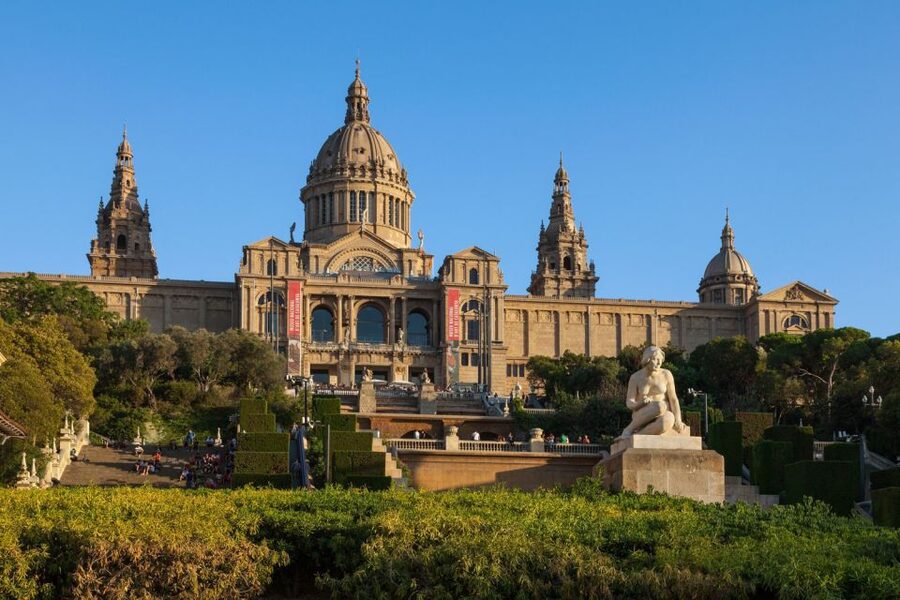
The most remarkable thing here is the setting: the Palau Nacional on Montjuïc, a grand 1929 exhibition building overlooking Barcelona. Inside, you’ll find Catalan Romanesque murals rescued from old churches, Modernist art, Renaissance and Baroque paintings, and photography spread across two floors.
I like the museum’s broad time span and its clear layout. You can move from medieval church art to Gaudí and Casas, then on to Tiziano and Velázquez without crossing the city to visit several museums. I also like the ticket’s flexibility, with a full day of access, temporary exhibitions, and an audio guide app in nine languages.
The main drawback is that the terraces and rooftop are temporarily closed under current regulations, despite the building’s wonderful city views. The museum is also large enough to require at least two hours, and some medieval-art labels may offer little or no English translation.
Key points to know before you go
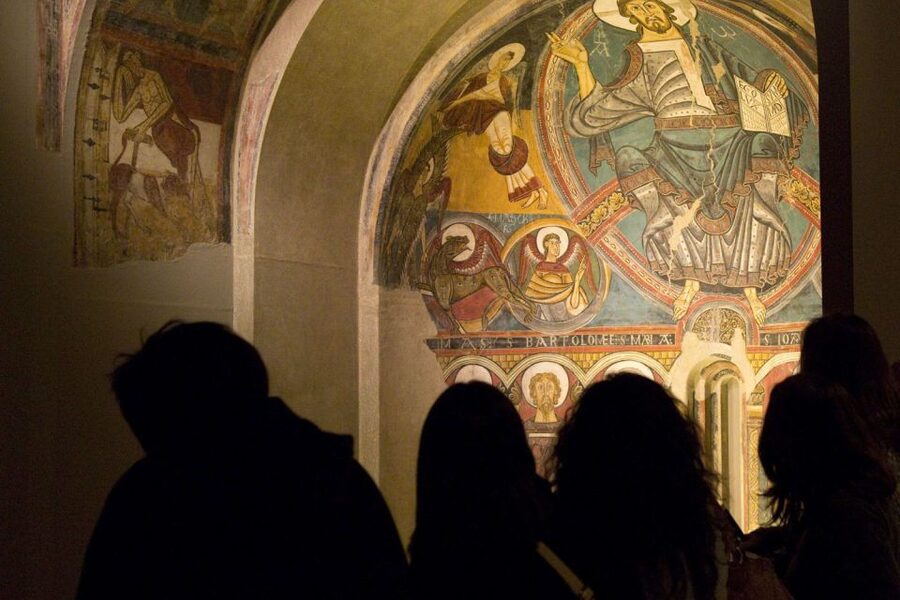
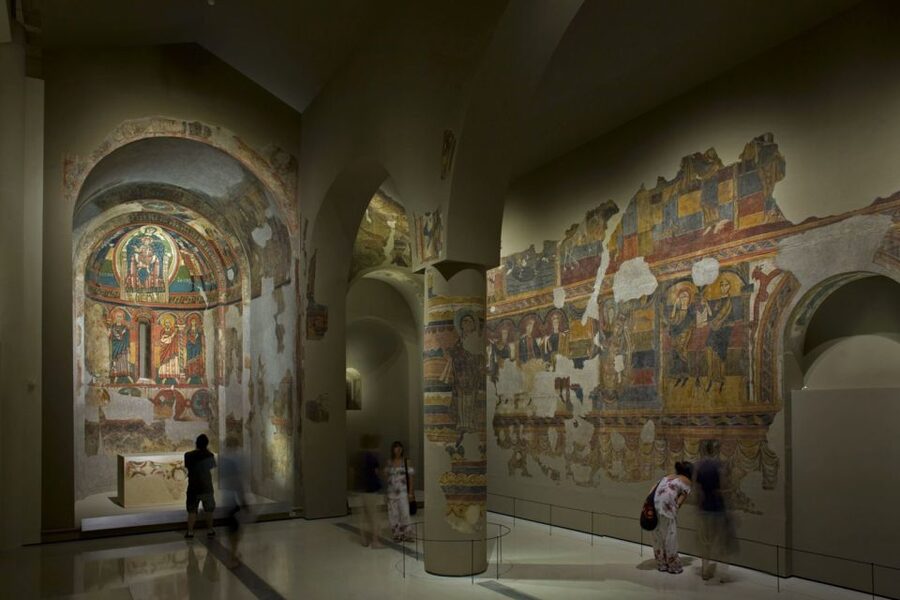
- The Romanesque murals are the museum’s signature sight, displayed in settings that suggest their original church interiors.
- The Palau Nacional is part of the experience, with grand architecture inside and out on Montjuïc.
- Two floors cover many periods, including Catalan Modernism, Gothic art, Renaissance, Baroque, and photography.
- The $14 ticket is strong value if you want several hours of art and access to temporary exhibitions.
- The multilingual audio guide app helps, but bring a charged smartphone and headphones.
- Plan your timing carefully, since the rooftop is temporarily unavailable and museum rooms close before the building does.
Why MNAC deserves time on your Barcelona itinerary
Barcelona has no shortage of famous architecture, but the Museu Nacional d’Art de Catalunya gives you a different way to understand the city and Catalonia. The museum is not only a collection of paintings in white galleries. Its central strength is the way art, buildings, and regional identity come together.
The museum occupies the Palau Nacional, built for the International Exposition of 1929. Its formal exterior and monumental entrance make a strong first impression, while the galleries inside are more modern and practical. That contrast works well. You get the drama of a palace without having to navigate old, cramped rooms throughout the collection.
I would allow two to four hours, depending on how closely you read labels and how much time you spend with the Romanesque murals and Modernist rooms. A quick visit can cover the major sections in about two hours, but anyone interested in Catalan art could easily stay longer.
The building is on Montjuïc, so getting there involves some uphill movement, steps, escalators, or nearby elevators. The setting rewards the effort, but summer heat can make the approach tiring. Plan a little breathing room before you enter rather than arriving already worn out.
A few other Barcelona outings to compare
- Barcelona: Sagrada Familia Entry Ticket with Audio Guide
★ 4.6 · 105,312 reviews - Barcelona: Park Güell Admission Ticket
★ 4.4 · 76,534 reviews - Barcelona: La Pedrera-Casa Milà Ticket & Audio Guide Option
★ 4.7 · 15,099 reviews
The Romanesque murals are the main event
Start with the Romanesque collection. This is the part I would prioritize even if your museum time is limited.
The collection is known for its exceptional group of mural paintings from the Romanesque period. Many works were removed from historic churches and preserved here. They are displayed in a way that helps you understand how they functioned in their original religious settings, rather than treating them as isolated fragments on a normal gallery wall.
That presentation gives the collection unusual force. You are not simply looking at old paint. You are seeing how medieval Catalan churches were decorated, what religious images occupied the most important spaces, and how artists used bold outlines, strong colors, and simplified forms to tell sacred stories.
Some visitors find the medieval sections less immediately accessible because English explanations can be limited in parts of the Romanesque and Gothic displays. The audio guide app helps, though the amount of information available may vary by section. If you want detailed historical interpretation, download the app before you arrive and bring headphones.
Give these rooms your freshest attention. It is easy to rush toward the more familiar Modernist names, but the murals are what make this museum different from a standard European art museum.
Gothic and Renaissance art connect the collection
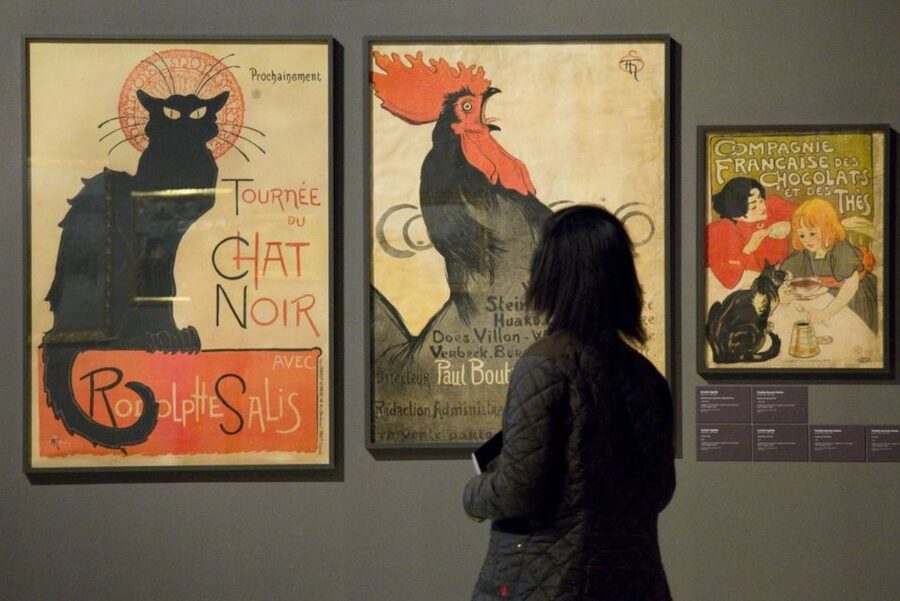
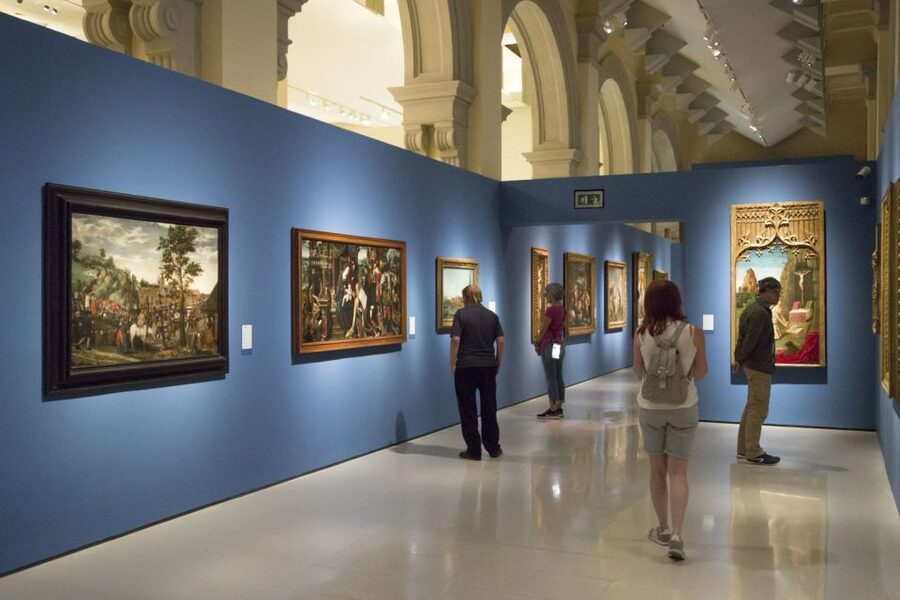
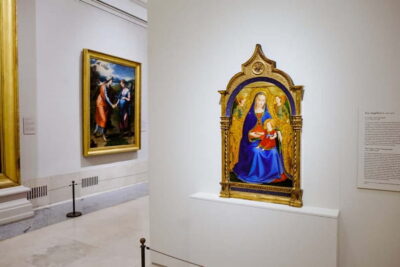
After the Romanesque rooms, continue into the Gothic and Renaissance material. These sections show how Catalan art changed over time, with different approaches to figures, space, decoration, and religious storytelling.
The route gives you a useful sense of artistic development instead of presenting unrelated masterpieces. You can watch medieval painting move toward greater naturalism and then encounter the influence of major European Renaissance traditions.
The collection includes work by Tiziano, one of the major names of the Venetian Renaissance. The presence of a painter of this stature helps place Catalan art within a wider European setting. You are not limited to a local story, although Catalonia remains the museum’s center of gravity.
The Gothic rooms can be especially rewarding if you enjoy religious art, altarpieces, and works with a strong architectural or devotional purpose. They may be less appealing to children or visitors who prefer modern painting, so use the museum map and audio guide to set your own pace.
Velázquez and European Baroque works add range
The European Renaissance and Baroque collections give the museum a broader reach. Works by Velázquez and other major European artists provide a useful counterpoint to the Catalan rooms.
I like this change of scale. After spending time with rescued church murals and regional medieval art, you can shift to paintings associated with the grand European court and religious traditions. The museum becomes a story about both Catalonia and its place within Europe.
This section is not necessarily the reason to choose MNAC over every other museum in Barcelona. The strongest argument for coming is the combination of Romanesque art, Catalan Modernism, and the building itself. Still, the European paintings make the visit feel more complete and give you familiar points of reference.
If your group has mixed interests, this range matters. One person can focus on medieval art, another on Velázquez and Tiziano, and another on the nineteenth and twentieth-century rooms. The two-floor layout helps prevent the collection from feeling like one endless corridor.
Same city, a completely different evening:
- Barcelona: Casa Batlló Entry with Self-Audioguide Tour
★ 4.7 · 25,359 reviews - Barcelona: 24 or 48-Hour Hop-On Hop-Off Bus Tour
★ 4.4 · 20,872 reviews - Barcelona: Park Guell Guided Tour with Skip The Line Entry
★ 4.7 · 17,563 reviews - Barcelona in 1 Day: Sagrada Familia, Park Guell,Old Town & Pickup
★ 5.0 · 13,541 reviews
Catalan Modernism brings you closer to Gaudí and Casas
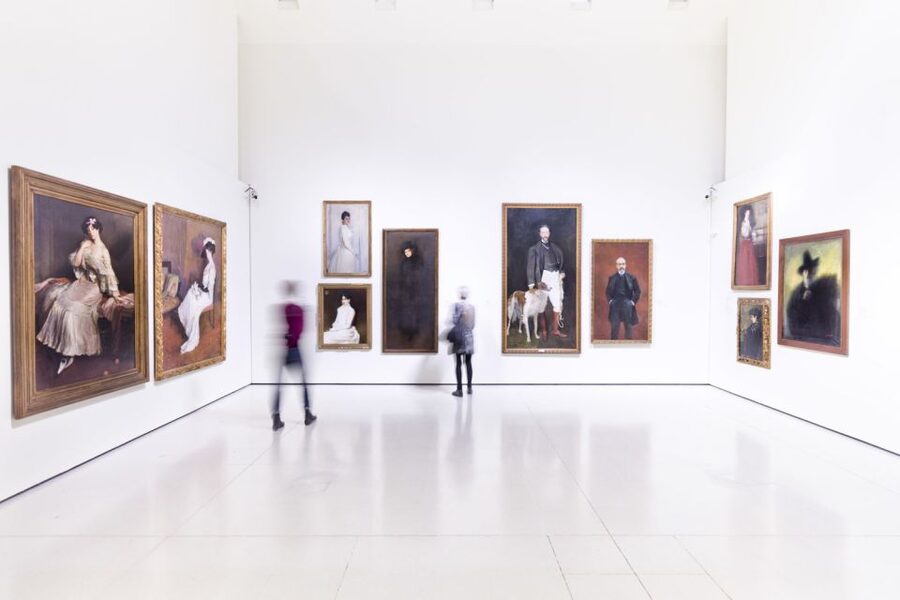
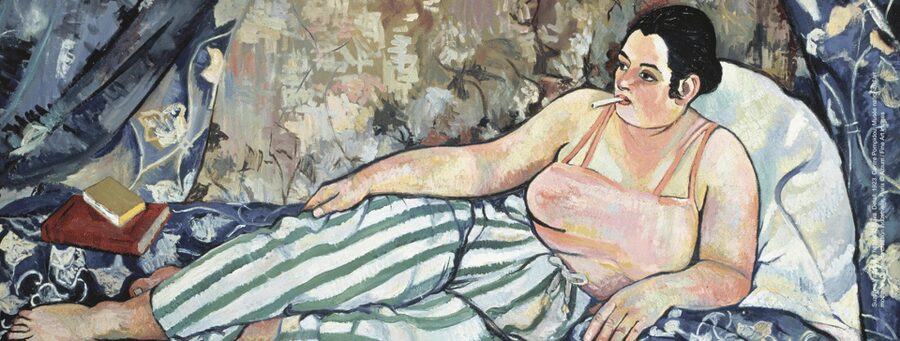
The Modernist rooms are likely to be the easiest section for many Barcelona visitors to connect with. The museum includes works by Antoni Gaudí and Ramon Casas, allowing you to see Catalan Modernism in an art-museum setting rather than only through architecture.
Gaudí is often associated with buildings, but seeing his work within a larger collection adds context. Casas, meanwhile, helps show the wider artistic world around Barcelona’s Modernist period. These rooms can make a useful companion visit after seeing Gaudí’s architecture elsewhere in the city.
The Modernist collection is not just a parade of famous names. It also gives you a chance to compare painting, design, sculpture, and decorative ideas from a period when artists were rethinking everyday life and the relationship between art and architecture.
Several visitors with limited interest in art found this section especially approachable. If you are unsure how to spend your time, begin with the Romanesque rooms, then make the Modernist collection your second priority.
Photography and temporary exhibitions broaden the visit
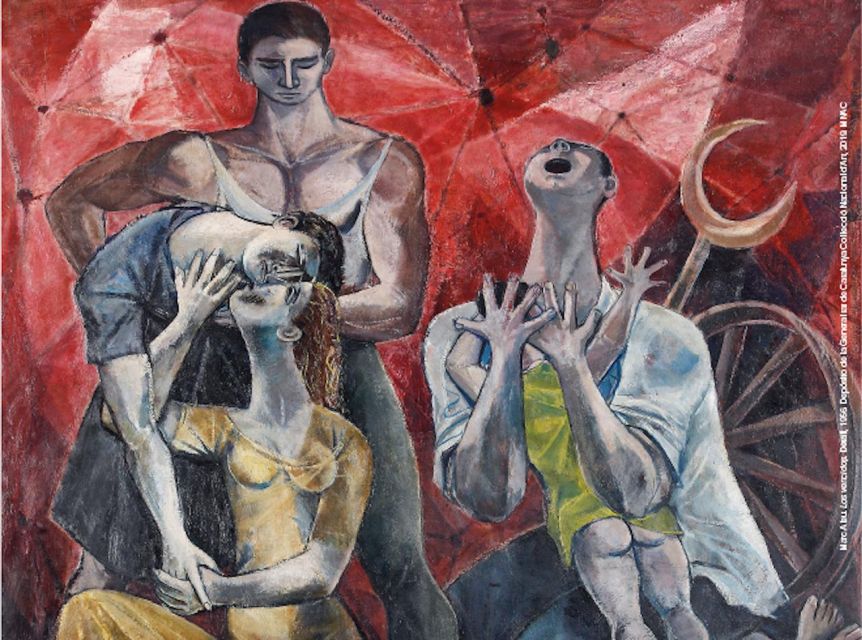
Photography is also part of the museum’s collection. This adds a different pace and visual language after the painted galleries. Photography can be a welcome pause for anyone who has reached their limit with religious panels or formal portraits.
Your admission includes the permanent collection and a temporary exhibition. The exact temporary display changes, so check what is scheduled for your date. This inclusion improves the value of the ticket, particularly if the temporary show is substantial.
The gallery layout is divided into sections, which makes the large museum easier to manage. You do not have to see every room in one push. I recommend choosing two or three priorities, then allowing time for anything that catches your attention.
Clear maps and signs make it easier to find your way. The museum store is another practical stop if you want a book or a more detailed explanation of the art after your visit.
The Palau Nacional and Montjuïc views
Even if you are not a dedicated museum visitor, the building and location justify a trip to Montjuïc.
The Palau Nacional has a formal, monumental character that fits its exhibition origins. From the entrance area, you get broad views across Barcelona, and the surrounding outdoor spaces offer plenty of places for photographs. The city appears spread below the museum, making this a useful stop for orientation as well as art.
The rooftop and terraces have traditionally been a major attraction, but they are temporarily out of service because of health-regulation requirements. Do not buy the ticket assuming you will reach the roof. Check the current status before your visit.
This matters because older information and past visits may describe a rooftop experience that is not available now. You can still enjoy the views from the museum’s elevated Montjuïc setting, but the exact panorama and access points may differ.
The outdoor area also gives you a chance to rest after the galleries. There are cafés and places to stop for a drink or snack. One café was described as a calm, well-priced place to recover after seeing the collection.
How much time should you set aside?
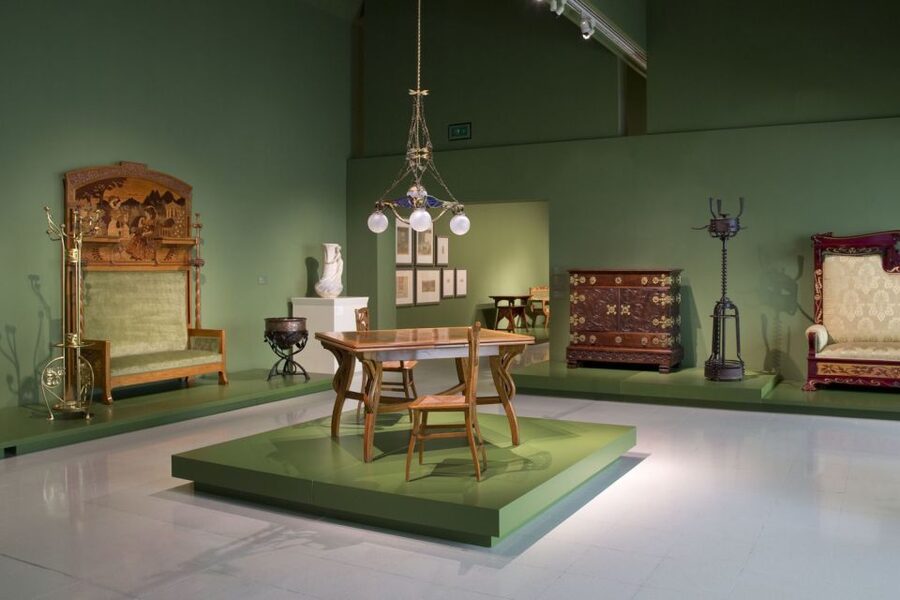
For a first visit, I would plan on at least two hours. That gives you enough time to see the main sections without reading every label.
Set aside three or four hours if you want to study the murals, visit the Gothic and Renaissance rooms, spend time with Modernism, and see the temporary exhibition. Some visitors have found the collection large enough to fill four hours comfortably.
A late arrival is risky. Ticket offices close 30 minutes before the museum itself, and the galleries are emptied 15 minutes before closing. A one-hour visit can work only if you choose one section in advance. It is not enough for the full museum.
The ticket is valid for one day, with starting times based on availability. Some past ticket holders also received a free return option within a later period, but this detail appears to vary, so check the terms attached to your booking rather than relying on it.
Is the $14 ticket good value?
At $14 per person, this is a good-value admission for anyone prepared to spend several hours inside. Your ticket includes the permanent collection, a temporary exhibition, and the audio guide app. You are paying for a substantial museum visit, not a short single-gallery stop.
The value is even better if you care about Catalan art or want to combine art with Montjuïc. The building, location, and city views add something beyond the wall-to-wall collection.
However, the ticket is not automatically the cheapest choice for every date. Admission is free on Saturdays from 3 p.m. onward and on the first Sunday of each month. It is also free on February 12, May 18, September 11, and September 24.
If your schedule matches one of those times, compare the free entry option before paying. The tradeoff is that free periods may be shorter or busier, and a restricted visit may not give you enough time to see the museum properly. One visitor had only an hour on a Sunday and managed to see just one gallery.
Skip-the-line entry is included. At quiet times, you may find no queue, so the advantage can be modest. During busy periods, avoiding a ticket line is useful, especially when you have a fixed Montjuïc schedule.
You can cancel up to 24 hours ahead for a full refund, and the reserve-now, pay-later option keeps your plans flexible.
Practical advice for a smoother visit
Bring a charged smartphone and headphones for the audio guide app. The guide is available in Catalan, Spanish, English, French, German, Italian, Russian, Japanese, and Chinese.
Do not arrive without checking your phone battery. The app is most useful when you can listen at your own pace, especially in sections where English labels are limited.
The museum is wheelchair accessible. The route to Montjuïc still involves a hill and some walking, but elevators are available near the access points described by visitors.
Wear comfortable shoes. The museum covers two floors, and the surrounding Montjuïc area invites additional walking after your visit.
Toilets have received mixed practical comments. Some visitors found them small, cramped, or poorly maintained, while others found them clean. This is not a reason to skip MNAC, but it is worth knowing if you are planning a long afternoon.
The cafés are useful for a break, but meals and drinks are not included in the ticket. If you are visiting with children, set a clear meeting point and agree on how quickly you want to move through the less familiar medieval sections.
Who will enjoy MNAC most?
I recommend this museum most strongly to:
- Anyone interested in Catalan culture and art
- Visitors who want to see Romanesque murals in an original-looking display
- Fans of Gaudí, Casas, Modernism, Tiziano, or Velázquez
- Museumgoers who enjoy moving across several centuries in one building
- Photographers and anyone looking for Montjuïc views
- Visitors seeking a quieter alternative to Barcelona’s busiest attractions
Families should judge the museum by the interests of the children in the group. The varied collection gives you options, but the building is large and some medieval displays may feel slow to younger visitors.
If your main goal is contemporary art, MNAC may not be your first choice. The Modernist and photography sections help, but the museum’s identity is firmly rooted in Catalan and European art from earlier periods.
Should you book the Museu Nacional d’Art de Catalunya?
Book it if you want a serious museum visit with a strong sense of place. The Romanesque murals, Catalan Modernist works, grand Palau Nacional, and Montjuïc setting make this more than a routine art stop.
At $14, the ticket makes financial sense when you can give the museum two or more hours. Check the free-entry dates first, and confirm rooftop access before you go, since the terraces are currently closed.
For a short Barcelona visit, I would choose MNAC over it if you care about art, history, or city views. For everyone else, use the museum map, focus on the Romanesque and Modernist rooms, and treat the building and surroundings as part of the visit.
FAQ
Where is the Museu Nacional d’Art de Catalunya?
The museum is at Palau Nacional s/n, Parc de Montjuïc, 08038 Barcelona, in Catalonia, Spain.
How long is the ticket valid?
The ticket is valid for one day. Available starting times depend on the date you select.
How much does admission cost?
The listed price is $14 per person.
What does the ticket include?
Admission includes the permanent collection, a temporary exhibition, and an audio guide app for your smartphone.
Is the audio guide available in English?
Yes. The audio guide is available in English, Catalan, Spanish, French, German, Italian, Russian, Japanese, and Chinese.
What should I bring?
Bring a charged smartphone and headphones for the audio guide app.
Is the museum wheelchair accessible?
Yes, the museum is wheelchair accessible.
Are the rooftop and terraces open?
The terraces and rooftop are temporarily out of service because of the difficulty of meeting current health regulations. Check the current status before visiting.
When is museum admission free?
Admission is free on Saturdays from 3 p.m. onward, the first Sunday of each month, February 12, May 18, September 11, and September 24.
Recently added in Barcelona
- Barcelona: Catamaran Cruise w/ Sailing, Wine, & Tapa★ 4.7 · 176 reviews
- Guided Gaudí Trencadís Mosaic Workshop in Barcelona 2 Hours★ 5.0 · 176 reviews
- Barcelona Cable Car Sky Views, Magic Fountain & Castle Visit★ 4.2 · 177 reviews
- Barcelona Private Sunset Sailing with Drinks★ 5.0 · 177 reviews
- Barcelona: Montserrat with Winery Visit and Farmhouse Lunch★ 4.7 · 178 reviews
- Barcelona: Nightmare Horror Museum Maze Entry Ticket★ 4.5 · 179 reviews
- Barcelona: City Sights Electric Quad Tour★ 4.8 · 178 reviews
- Barcelona: Professional Photoshoot Outside Sagrada Familia★ 4.8 · 179 reviews
Tickets, compared.
Sagrada Familia Entry Ticket with Audio Guide
Read the review →

Live Flamenco Dancing Show Ticket at the Theater
Read the review →