Reviewed · BARCELONA TOURS
Barcelona Gothic Quarter’s Deepest Secrets & Sangria
Barcelona’s Gothic Quarter is easy to admire and surprisingly easy to misunderstand. Its narrow lanes can hide Roman ruins, Civil War scars, old Jewish-quarter sites, Picasso connections, and quiet squares just steps from crowded Las Ramblas. This tour links those pieces with stories instead of leaving you to wander past them.
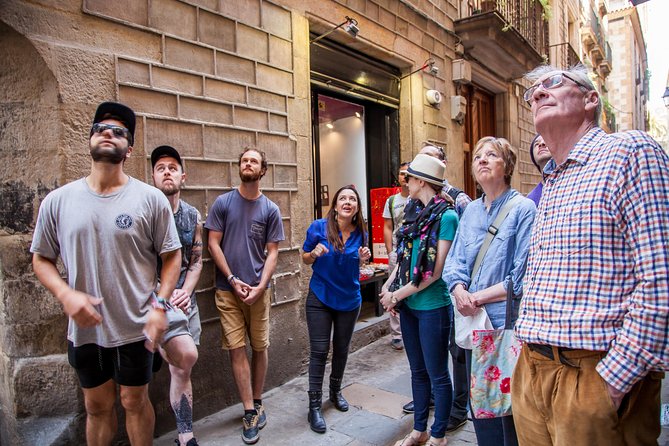
I like the small group of no more than 15, which gives you room to ask questions in streets that can feel tight and confusing. I also like the route’s useful finish near Barceloneta and Port Vell, with sangria and local recommendations at the end. The main consideration is simple: this is a walking tour, and three hours on old city streets may feel long if you want a seated sightseeing experience.
Key points to know
- Roman Barcelona appears beneath the medieval city, including old walls and ancient ruins.
- The route covers famous sights and quieter corners, from Barcelona Cathedral to Plaça Sant Felip Neri.
- History takes center stage, with stories about the Civil War, Jewish Barcelona, Picasso, Miró, Gaudí, and George Orwell.
- The group is capped at 15 people, though some departures may be much smaller.
- Sangria is included at the finish, with the tour ending near Port Vell and Barceloneta.
- It works especially well early in your stay, since guides share practical ideas for the rest of your time in Barcelona.
Why this Gothic Quarter walk is more than a photo stop
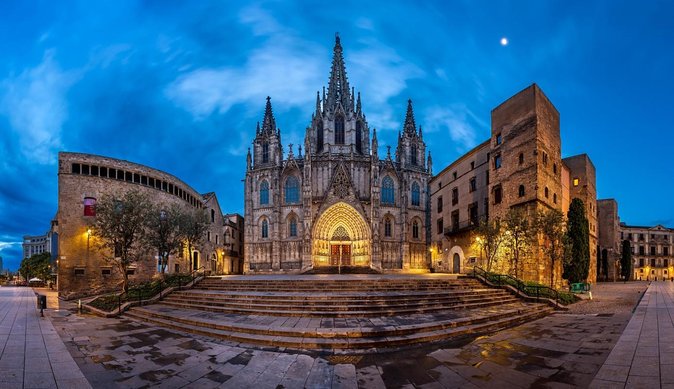
The Gothic Quarter, or Barri Gòtic, is one of Barcelona’s most rewarding areas to explore on foot. It is also one of the easiest places to visit without understanding what you are seeing. A Roman wall may look like a medieval remnant. A quiet square may seem merely pretty. A church doorway may conceal centuries of political and religious drama.
This experience is built around those missed details. You move through well-known places such as Plaça de Catalunya, Las Ramblas, Barcelona Cathedral, and Plaça de Sant Jaume, but the guide also points out less obvious corners and objects.
I especially like the historical range. The tour reaches back to Barcelona’s Roman beginnings, passes through the medieval Jewish quarter and Gothic churches, and continues into the Civil War and modern cultural life. That gives you a more useful picture than a tour focused only on architecture.
The guides named in the feedback include Juliana, Valentina, Sabrina, Angelina, and Daniel. Juliana is praised for turning political and cultural history into memorable stories, while Valentina is noted for answering questions and adapting the walk. The experience is not tied to one personality every time, so your guide may differ, but the strongest pattern is clear: the guide’s storytelling matters as much as the route.
A few other Barcelona outings to compare
- Barcelona: Sagrada Familia Entry Ticket with Audio Guide
★ 4.6 · 105,312 reviews - Barcelona: Park Güell Admission Ticket
★ 4.4 · 76,534 reviews - Barcelona: Casa Batlló Entry with Self-Audioguide Tour
★ 4.7 · 25,359 reviews
Starting at Plaça de Catalunya
The meeting point is Cafe Zurich at Plaça de Catalunya, 1. This is a practical place to begin because the square sits between the Eixample and the old city, with public transportation nearby.
The first 15 minutes are set aside for meeting the guide and getting introduced to the walk. From here, you move toward the Gothic Quarter and Las Ramblas.
Plaça de Catalunya itself is not the main historical prize of the tour, but it gives you a useful orientation. Barcelona’s newer grid begins on one side, while the older, tighter streets begin on the other. You can quickly see why a guide helps: the city changes character within a short distance.
If this is your first full day in Barcelona, the start is particularly useful. Several people found the early orientation helped them plan later visits, including return trips to the cathedral and other parts of the old city.
Las Ramblas and Carrer Petritxol
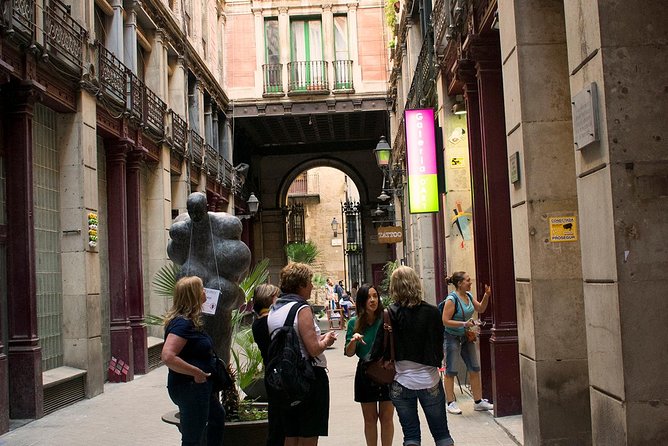
Las Ramblas receives about 15 minutes as Barcelona’s best-known pedestrian avenue. The route uses it as a starting contrast: this is the public, heavily visited face of the city, while the Gothic Quarter’s side streets offer a quieter and more layered experience.
You will not spend the entire tour on Las Ramblas, which is a good thing. The avenue is worth seeing, but its scale and crowds can make it hard to focus on details. The guide helps put it in context before leading you into the older streets.
Next comes Carrer Petritxol, known as one of Barcelona’s sweetest streets. The stop lasts about 10 minutes. It is a good place to learn about the city’s chocolate traditions and pause for a small taste or shopping opportunity, as one especially detailed tour account describes.
That stop adds a welcome food note before the final sangria. If you want to buy chocolate to take home, this is one place where you may want to leave yourself a little attention and time. The tour is not a dedicated food crawl, though, so food lovers should keep expectations in check.
Santa Maria del Pi and Barcelona Cathedral
The Basilica de Santa Maria del Pi receives a brief five-minute exterior stop, and the same is true for Barcelona Cathedral. Admission to these churches is not included.
The short timing suggests that the tour is mainly about the streets, setting, and stories rather than long interior visits. You should not book this experience expecting extended time inside either church. Instead, the guide provides context and may point out details you can return to later.
Santa Maria del Pi is a Gothic landmark on a square that feels more intimate than the cathedral’s surroundings. Barcelona Cathedral, by contrast, is one of the quarter’s major anchors. It is also a useful place to return after the tour if you want a closer look inside.
One practical benefit of learning the cathedral’s stories first is that a later self-guided visit becomes more rewarding. A reviewer who had a cathedral visit scheduled afterward said the tour gave useful background about the figures represented there, including the famous story of the 13 geese.
The entry fees are separate, and the supplied details do not give the current admission prices or visiting hours. Check those directly if you plan to go inside.
Same city, a completely different evening:
- Barcelona: 24 or 48-Hour Hop-On Hop-Off Bus Tour
★ 4.4 · 20,872 reviews - Barcelona: Park Guell Guided Tour with Skip The Line Entry
★ 4.7 · 17,563 reviews - Barcelona: La Pedrera-Casa Milà Ticket & Audio Guide Option
★ 4.7 · 15,099 reviews - Barcelona in 1 Day: Sagrada Familia, Park Guell,Old Town & Pickup
★ 5.0 · 13,541 reviews
Roman walls, archives, and the old city beneath your feet
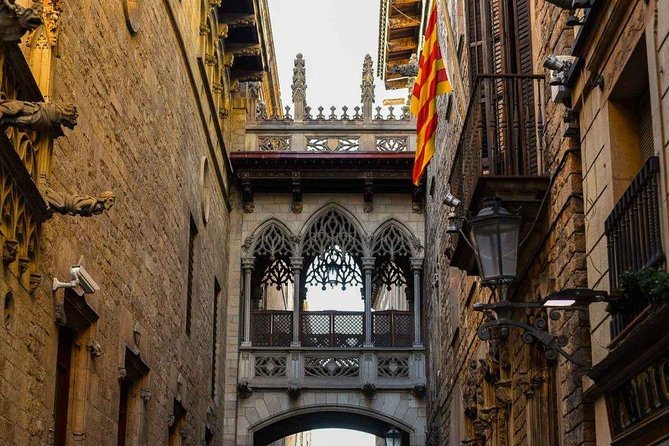
Barcelona’s Roman past appears in the route through ancient ruins and sections of the original Roman walls. This is one of the best reasons to take a guided walk rather than simply follow a map.
The remains are woven into the later city. You may be standing beside a medieval building while looking at stones from an earlier settlement. Without explanation, the layers can blur together. With a guide, the old walls become a clue to how Barcelona grew.
The Archivo Histórico de la Ciudad de Barcelona is listed as a five-minute stop. It is associated here with the Crown of Aragon and adds political context to the buildings around you.
This part of the tour suits anyone who likes seeing how a city developed over time. It is less suited to someone seeking long interior visits or formal museum time. The appeal is in connecting fragments as you walk.
The Jewish quarter and the medieval churches
The walk includes Barcelona’s Jewish quarter and its synagogue, along with the Gothic churches of the old city. These are important stops because they complicate the usual postcard version of Barcelona.
The Jewish quarter offers a chance to consider a community that shaped the city and then suffered displacement and persecution. The tour’s focus on the area’s history gives the narrow lanes a human dimension, not just an architectural one.
The churches add another layer. Their stonework and religious art are part of the city’s medieval identity, but the guide also brings attention to the political and social forces behind them.
You should expect a story-led walk rather than a specialist religious tour. The synagogue and church references are part of a broad route, and the precise amount of time spent at each site may depend on the group and guide.
Plaça Sant Jaume and Plaça Sant Felip Neri
Plaça Sant Jaume is Barcelona’s government square. It is a compact but significant stop, and the route gives it about five minutes.
This is where the city’s political life comes into view. The square helps explain Barcelona’s civic identity and the importance of Catalonia’s institutions. It also makes a natural link between the older medieval city and modern political debates.
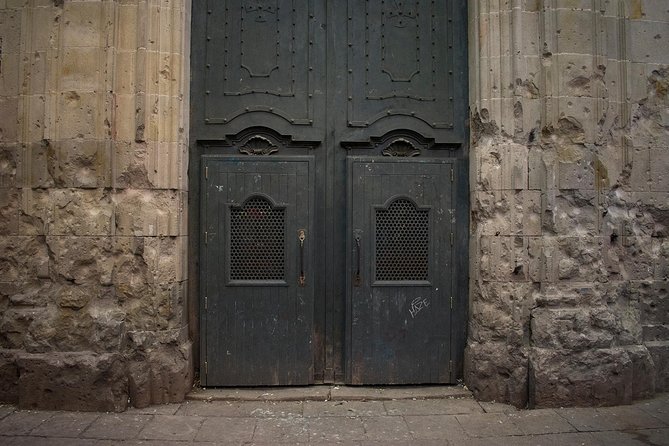
Plaça Sant Felip Neri receives about eight minutes and is one of the most memorable stops on the route. The square is associated with the Spanish Civil War, and its walls still carry the marks of violence.
This is the darker side of the experience. The title promises secrets, and this is where the tour earns that mood without turning suffering into a cheap spectacle. The guide’s job is to explain what happened and why the scars matter.
If you prefer light sightseeing with little difficult history, this portion may feel heavy. I consider it a strength, but it is worth knowing that the walk does not avoid Barcelona’s painful past.
Picasso, Miró, Gaudí, and George Orwell
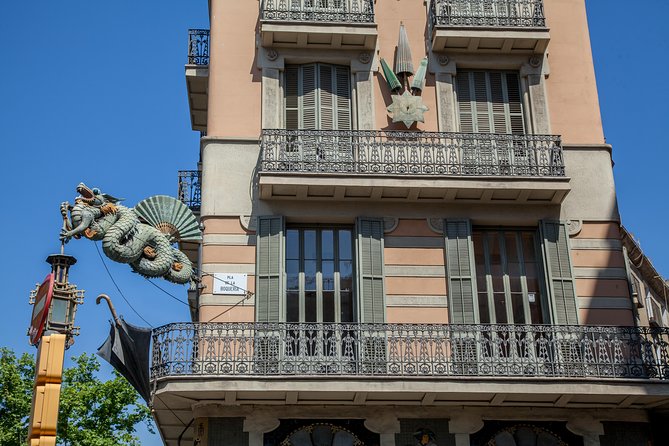
The route links several cultural figures to actual places in the old city. You see the Royal Artistic Circle of Barcelona, connected with Gaudí’s first work of art, and the school of applied arts where Picasso studied.
The art-school stop is listed as five minutes. That is enough for an explanation and an exterior look, not a full art visit. Still, the connection is valuable because it shows how Barcelona’s creative life grew out of ordinary streets and institutions.
The tour also includes Miró’s place of birth and Plaça George Orwell, sometimes called Plaça Tripi. The Orwell stop covers the writer and the Spanish Civil War. It is a useful modern counterpoint to the Roman and medieval material earlier in the walk.
This mixture is one of the tour’s strongest features. You are not asked to remember a long list of dates. Instead, the guide connects buildings, people, war, art, and daily city life.
One person who had already walked through the quarter alone said the tour revealed details that would have been easy to miss, including actual Picasso art. That is the value of a local guide here: not simply pointing at famous names, but showing you where the stories physically happened.
From the old city to Barceloneta

The route continues toward Barceloneta, with stops connected to the port, beach, and Barcelona’s relationship with the sea. The Pailebot Santa Eulalia stop lasts about four minutes and includes a story about the torture of the city’s patron saint.
Barceloneta receives about five minutes. It is a quick look rather than a beach visit, so do not expect time for swimming, a long waterfront pause, or a full port tour.
Still, ending near the water changes the mood. After Roman ruins, medieval lanes, religious history, and Civil War stories, the port and beach show Barcelona as a living coastal city.
The advertised end point is Port Vell in Ciutat Vella. This gives you a practical launch point for dinner or further walking, though the included sangria stop is the main closing feature.
Sangria, conversation, and local advice
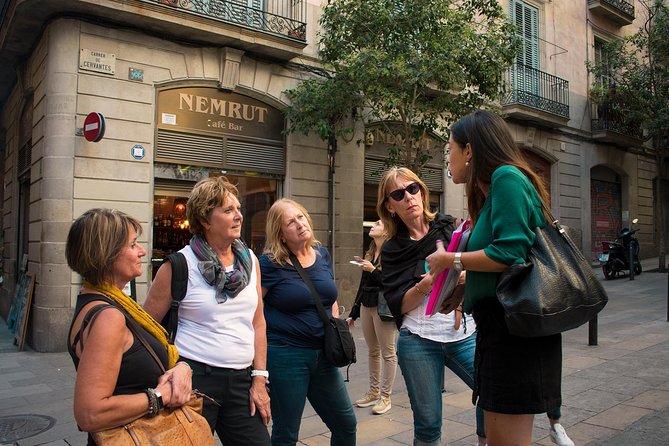
Sangria is included, and the experience ends with a drink and conversation. This is more useful than it may sound. A shared table gives you time to ask about restaurants, neighborhoods, transport, and what to do next.
The strongest feedback repeatedly points to the final stop as a real part of the experience, not an afterthought. One detailed account describes sangria alongside tapas, olives, paella, and other local dishes at Pasa Tapas Barceloneta. The tour details confirm sangria is included, but they do not promise a full meal, a fixed restaurant, or all of those dishes for every departure.
So treat the food suggestions as possibilities, not guarantees. You should expect sangria, conversation, and recommendations. If you want dinner afterward, the Port Vell and Barceloneta location gives you a practical area to continue eating.
I like this finish because it turns a history walk into a social evening. You have a chance to clarify what you saw and get ideas while the information is still fresh.
Small groups make a real difference
The maximum group size is 15. That is small enough to help in the Gothic Quarter, where narrow lanes and busy squares can make a large tour hard to follow.
The group size also changes the question-and-answer rhythm. Several accounts describe unusually small departures, including one with only two participants. That can make the experience feel close to a private tour, though you should not assume every departure will be that small.
There is a tradeoff. A group tour gives you less control than booking a private guide, and the exact pace depends on the people with you. Still, the small cap offers a good middle ground for visitors who want interaction without paying private-tour prices.
The guides are repeatedly praised for being warm, energetic, and helpful with practical questions. Juliana, in particular, is described as adapting the walk to a special request and helping with other activity plans. That sort of flexibility is most useful when you take the tour near the start of your stay.
Is $65.33 a fair price?
At $65.33 per person, this is not the cheapest way to see the Gothic Quarter. You can walk through the area for free, and many of the stops are viewed from outside.
The value comes from the range of subjects covered in about three hours: Roman Barcelona, the medieval quarter, Jewish history, the Civil War, Catalan government, major artists, Las Ramblas, Barceloneta, and sangria. You are paying for interpretation, route planning, a small group, and the included drink.
I think the price is fair if you want an introduction that saves you from wandering past important details. It is less compelling if you already know the old city well or plan to spend most of your time inside the cathedral and churches.
The tour is also a practical investment for a first day. Several guides offer recommendations for the rest of your stay, and the route helps you recognize places you may revisit on your own.
Walking demands and timing
The experience lasts about three hours and covers a lot of ground. The stop times listed for individual sights are often short, from four to 15 minutes, which tells you to expect a steady walking pace rather than long rests.
Wear comfortable shoes. The old city has tight lanes and historic paving, and the route continues from the central city toward the port and beach. Bring water, especially in warm weather, and keep your belongings secure in crowded areas.
The tour is offered in English and uses a mobile ticket. Confirmation arrives when you book. Most people can participate, but the supplied information does not give a precise distance, step-free route, or detailed accessibility plan. If those points matter to you, ask the provider before booking.
Free cancellation is available up to 24 hours before the start time for a full refund. Changes or cancellations made inside that window are not accepted for a refund, and the local time controls the cutoff. The tour also needs a minimum number of participants. If that minimum is not met, you are offered another date or experience, or a full refund.
Who should book this Barcelona tour?
I would choose this walk for a first or second day in Barcelona, especially if you want the old city to make sense before exploring it alone.
It suits you if you enjoy:
- Short historical stories tied to real streets and buildings
- A mix of famous sights and less obvious corners
- Civil War and political history alongside art and architecture
- Small groups and time for questions
- A casual drink at the end
- Local advice for the rest of your visit
I would hesitate if you dislike walking, want extensive interior access, or prefer a tightly focused architecture tour. The route covers many subjects, so some stops are brief.
Should you book Barcelona Gothic Quarter’s Deepest Secrets & Sangria?
Book it if you want the Gothic Quarter explained rather than simply photographed. The mix of Roman walls, medieval lanes, Civil War evidence, art-school connections, and Barceloneta gives you a broad understanding of the city in one evening.
The best booking strategy is to schedule it early in your stay. That lets you return to the cathedral, churches, markets, or favorite streets with better context. At $65.33, the tour earns its price through the guide, small group, route, and sangria, not through paid admission to major monuments.
Skip it if you want a relaxed drink with little walking or a long visit inside each church. For most first-time visitors who like stories, questions, and a clear introduction to Barcelona’s old center, it is a strong choice.
FAQ
How long is the Gothic Quarter and sangria tour?
The experience lasts approximately three hours.
What language is the tour offered in?
The tour is offered in English.
Where does the tour begin?
It begins at Cafe Zurich, Plaça de Catalunya, 1, in Barcelona.
Where does the tour end?
The advertised end point is Port Vell in Ciutat Vella.
Is sangria included?
Yes. Sangria is included in the tour.
How large is the group?
The group has a maximum of 15 participants.
Which major sights are included?
The route includes Plaça de Catalunya, Las Ramblas, Barcelona Cathedral, Santa Maria del Pi, Plaça Sant Jaume, Plaça Sant Felip Neri, the Roman walls, the Jewish quarter, Barceloneta, and Port Vell.
Are church admission fees included?
No. Admission to Santa Maria del Pi and Barcelona Cathedral is not included.
Is the tour suitable for most people?
The supplied information states that most people can participate. It does not provide a detailed accessibility description.
Can I cancel for a full refund?
Yes, if you cancel at least 24 hours before the experience starts. Cancellations or changes made less than 24 hours before the start are not accepted for a refund.
Recently added in Barcelona
- Barcelona: Catamaran Cruise w/ Sailing, Wine, & Tapa★ 4.7 · 176 reviews
- Guided Gaudí Trencadís Mosaic Workshop in Barcelona 2 Hours★ 5.0 · 176 reviews
- Barcelona Cable Car Sky Views, Magic Fountain & Castle Visit★ 4.2 · 177 reviews
- Barcelona Private Sunset Sailing with Drinks★ 5.0 · 177 reviews
- Barcelona: Montserrat with Winery Visit and Farmhouse Lunch★ 4.7 · 178 reviews
- Barcelona: Nightmare Horror Museum Maze Entry Ticket★ 4.5 · 179 reviews
- Barcelona: City Sights Electric Quad Tour★ 4.8 · 178 reviews
- Barcelona: Professional Photoshoot Outside Sagrada Familia★ 4.8 · 179 reviews
Barcelona Tours, compared.
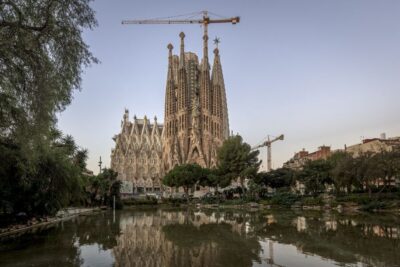
Sagrada Familia Entry Ticket with Audio Guide
Read the review →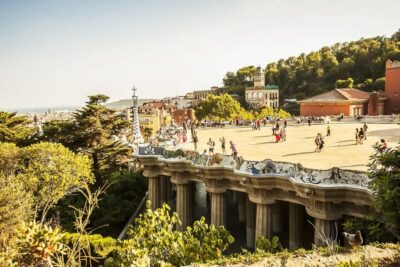
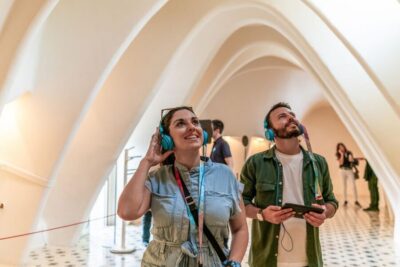
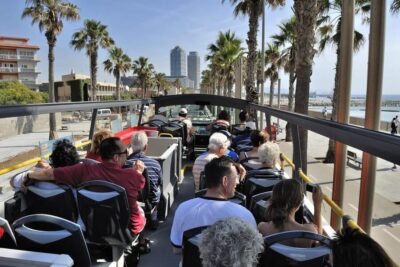
Park Guell Guided Tour with Skip The Line Entry
Read the review →La Pedrera-Casa Milà Ticket & Audio Guide Option
Read the review →
Barcelona in 1 Day: Sagrada Familia, Park Guell,Old Town & Pickup
Read the review →