
Reviewed · WALKING TOURS
Barcelona: Gothic Quarter Walking Tour
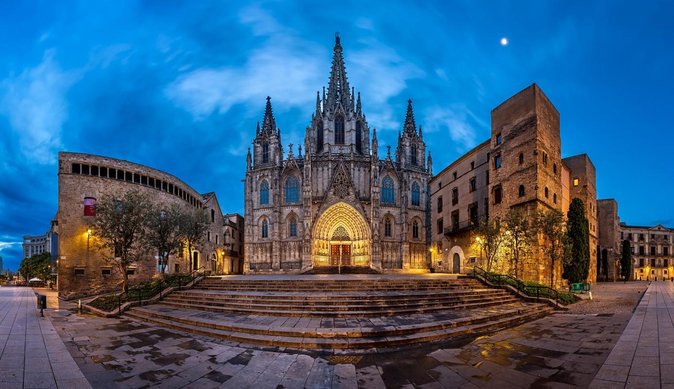
Barcelona’s old city is not a neat museum display. It is a working maze of lanes, squares, churches, shops, and everyday city life, with Roman stones and medieval walls tucked beside modern cafés. This tour follows that collision of old and new, moving from Plaça de Catalunya through the Gothic Quarter and onward to the Ribera Quarter.
I like the German-language storytelling, especially for a subject packed with names, dynasties, legends, and political twists. I also like the slow pace: you have time for photographs, questions, and a bathroom stop instead of being marched from monument to monument.
The main consideration is that you will see most sights from the outside. Museum entries and interior visits are not part of the plan, apart from a couple of exceptions, so this suits you best if you want context and orientation rather than a ticketed sightseeing circuit.
Key points at a glance
- Roman beginnings: Learn how flowing water served a convalescent colony and how the Roman settlement helped shape later Barcelona.
- A German-language walk: The tour is designed for German speakers, with historical stories, practical city tips, and room for questions.
- Gothic lanes and Ribera squares: Follow a route through narrow streets, the old Jewish Quarter, royal sites, and the medieval seafaring district.
- Exterior-focused sightseeing: See churches, palaces, walls, and unusual buildings without spending the tour inside museums.
- Santa Maria del Mar: Hear about the church’s communal construction, legends, heroes, and the political forces that shaped the neighborhood.
- A private group for up to four: At $212 per group, the full group price works out to $53 per person before any booking changes, making the format more appealing for a small party.
From Plaça de Catalunya into the old city
The meeting point is in front of Hotel Olivia Plaza at Plaça de Catalunya, 19. This is a practical place to begin because you are starting at one of central Barcelona’s best-known reference points, then leaving the open square for the tighter streets of the old city.
The route is listed as 3.5 hours, with about 3.25 hours assigned to the guided walk and sightseeing. That is a useful amount of time for this part of Barcelona. The Gothic Quarter can look compact on a map, but its story is anything but simple. Roman foundations, medieval power struggles, religious institutions, Jewish life, royal politics, and modern reconstruction all occupy the same few blocks.
Your guide’s job here is less about ticking off monuments and more about helping you read the street. A wall may point to Roman Barcelona, a square may recall a medieval institution, and a building that looks ancient may be far newer than it appears. The tour’s title topics suggest a lively approach, with stories about dragons, military violence, saints, royal fears, public advice, and even a dancing egg.
That mix is useful because Barcelona’s old center can otherwise become a blur of stone façades. You will hear why a place mattered, who used it, and how the city changed around it.
More Walking Tours in Barcelona
- Barcelona Tapas and Wine Experience Small-Group Walking Tour
★ 5.0 · 5,804 reviews - Barcelona: Tapas Walking Tour with Food, Wine, and History
★ 4.8 · 4,261 reviews - Barcelona Tapas Walking Tour: Food, Wine & History
★ 4.5 · 1,928 reviews
Roman water and the birth of Barcelona
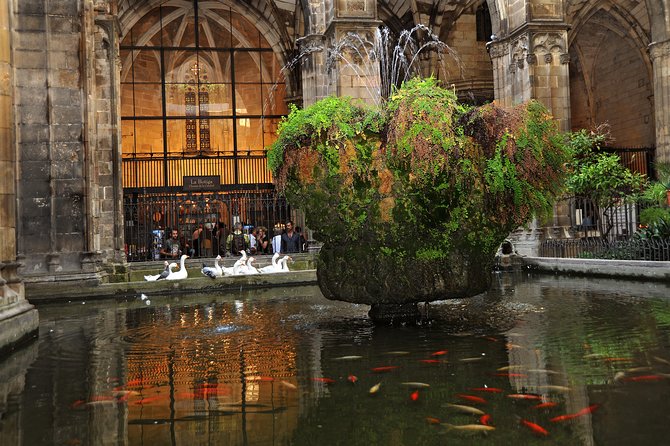
The first historical layer reaches back to Roman times. One of the tour’s featured subjects is Roman luxury and the use of flowing water for a convalescent colony. That detail gives you a more human picture of Roman settlement than a simple date and list of ruins.
You can expect the guide to connect Barcelona’s Roman beginnings with the physical remains still visible in the old city. The point is not only to identify ancient masonry, but to understand how water, health, settlement, and trade shaped the city’s early life.
The route then moves into the religious and political changes that followed. The suggested themes include a holy city facing competition, the birth of a nation through a nasty and bloody affair, and the growth of the Crown of Aragon from a small city into a maritime force.
This is where a guide adds real value. Barcelona’s past is often reduced to Roman ruins, Gothic architecture, and Gaudí. The bigger story includes shifting power between religious authorities, rulers, citizens, military leaders, and merchants. You get a better sense of why the city became a force around the Mediterranean.
Narrow lanes, romantic squares, and local legends
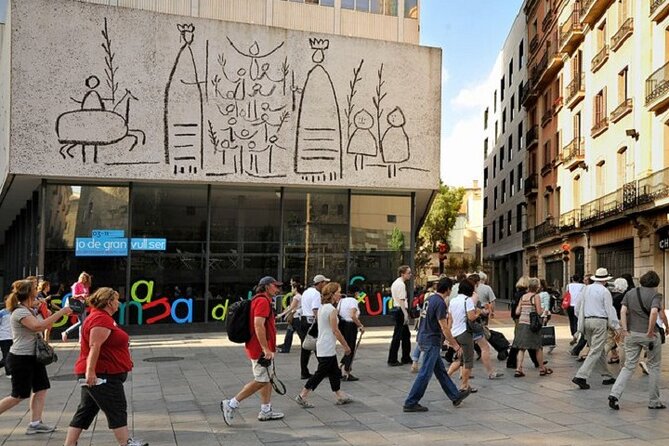
The Gothic Quarter is at its best on foot. Its small alleyways and picturesque squares reward a slow pace, and the tour is specifically built around walking streets and squares rather than rushing from one indoor attraction to another.
The route uses legends as well as documented events. One story concerns how the dragon came to Barcelona. Another involves a young girl in the pines and a French soldier’s bayonet. There is also a slightly spooky brotherhood, the Inquisition, and the warning that praise is nothing to play with.
These subjects may sound theatrical, but that is part of the appeal. A good old-city walk needs memorable handles. You may not remember every date, but you are more likely to remember a dragon, a dangerous brotherhood, or a tale tied to a particular corner.
The guide also brings the city into the present. Barcelona is presented as a port city that keeps changing, not as a frozen medieval set. Old stone sits beside daily life, and the tour helps you notice that contrast without treating modern Barcelona as an interruption.
The Jewish Quarter and the remnants of a lost world
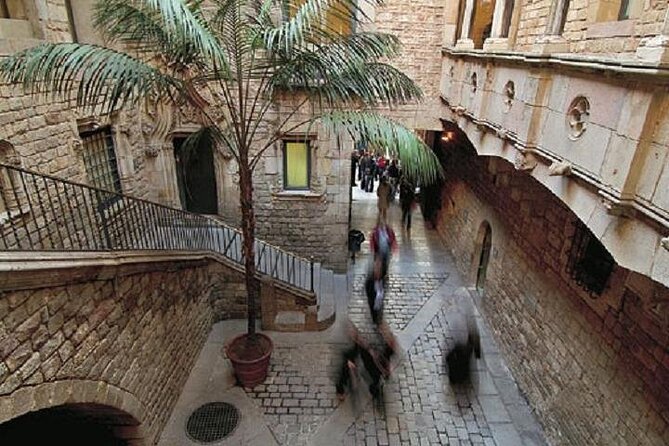
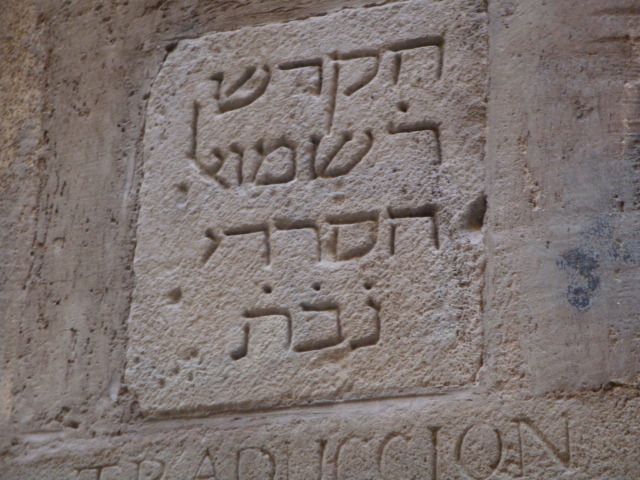
The old Jewish Quarter is one of the more important parts of the walk. The route focuses on remnants of a lost world, which means you should expect historical interpretation rather than a large museum display or a fully preserved district.
This section matters because it adds another voice to the story of medieval Barcelona. Royal power, Christian institutions, maritime trade, and civic authority are only part of the picture. The Jewish Quarter points to a community whose presence shaped the city and whose disappearance left physical and cultural traces.
The tour also covers the Inquisition and the hound kings, a phrase used in the program’s historical themes. The exact meaning may become clearer during the walk, but the wider subject is the danger of religious and political authority when public praise, accusation, and punishment become tools of power.
Because interior visits are generally not included, you should approach this section as a street-level history lesson. The value comes from placing the surviving traces in context.
Same city, a completely different evening:
- Barcelona: Sagrada Familia Entry Ticket with Audio Guide
★ 4.6 · 105,312 reviews - Barcelona: Park Güell Admission Ticket
★ 4.4 · 76,534 reviews - Barcelona: Casa Batlló Entry with Self-Audioguide Tour
★ 4.7 · 25,359 reviews - Barcelona: 24 or 48-Hour Hop-On Hop-Off Bus Tour
★ 4.4 · 20,872 reviews
Royal power, public voices, and a change in direction
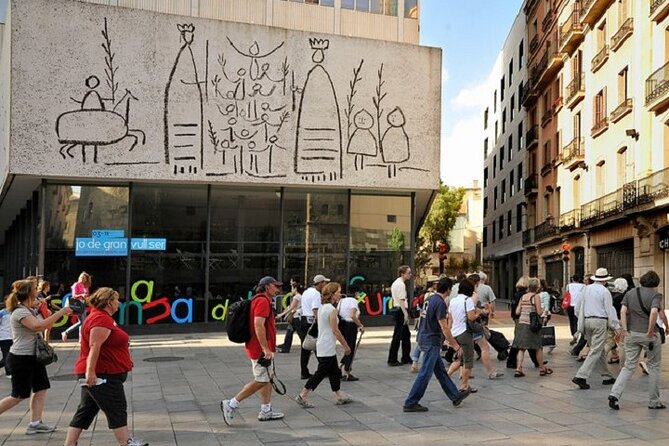
Barcelona’s medieval government was not simply a line of kings issuing commands. One of the tour’s themes asks who was being addressed by the city’s public advice and the general, while another looks at King Martin’s death and the beginning of the end of civic participation.
That kind of subject helps explain the city as a political community. You will hear about the relationship between the crown and the people who lived, traded, worshipped, and governed in Barcelona.
The royal palace section adds a more personal note. King Fernando is described as fighting his fears and not receiving Columbus at home. This is a useful corrective to tidy historical legends. Famous names do not always arrive at the moment or in the setting later generations imagine.
A guide can turn these fragments into a clearer story about power, uncertainty, and reputation. You are not just looking at a palace façade. You are considering what happened there, who had access, and whose version of events survived.
The old city’s altered buildings and the dancing egg
One of the most curious themes is the Gothic Quarter as a kind of Gothic theme park, including houses that moved stone by stone. This points to Barcelona’s complicated relationship with its medieval image.
The old city contains genuine historic fabric, but not every Gothic-looking building has the same age or story. Some structures were altered, reconstructed, or repositioned as Barcelona shaped its historic center. That makes the guide’s explanation especially useful. You learn to look beyond the style of a façade and ask how it got there.
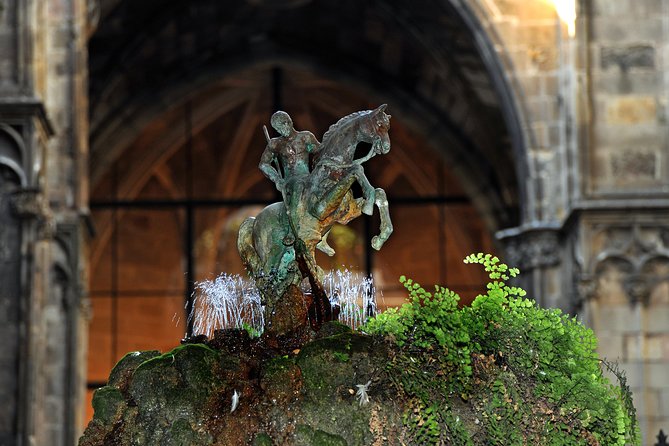
The tour also includes the dancing egg, a long-running Barcelona tradition associated with a fountain and a carefully balanced egg. Since the walk is exterior-focused, the guide can explain the custom and its setting even if the event itself is seasonal.
These details keep the tour from becoming a parade of solemn dates. You get politics and religious conflict, but also odd local customs and architectural surprises.
Santa Maria del Mar and the Ribera Quarter
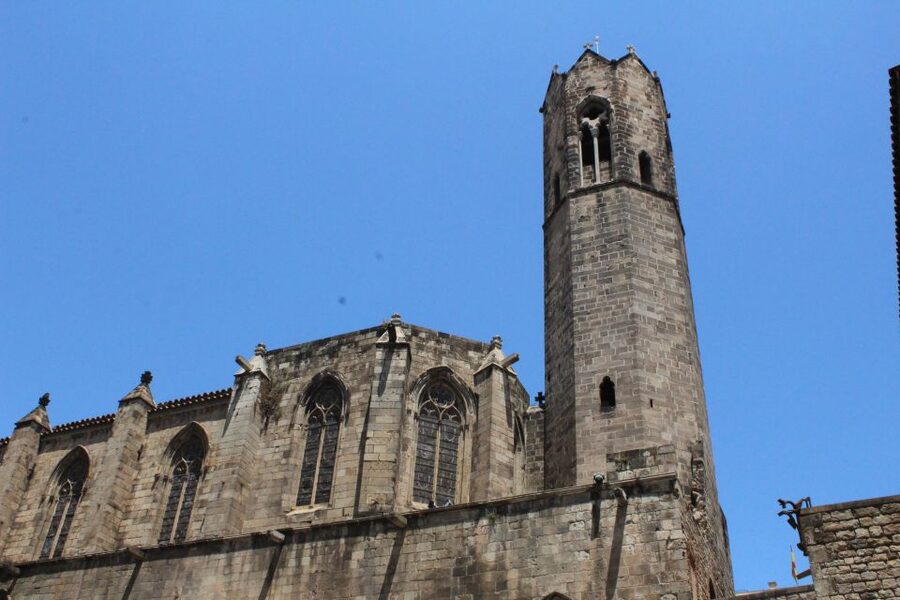
The tour ends at Passeig del Born, 22, in the Ribera Quarter. This change of neighborhood is important. The walk does not stop with the Gothic Quarter’s lanes, but carries the story into an area tied to maritime power, commerce, and the famous church of Santa Maria del Mar.
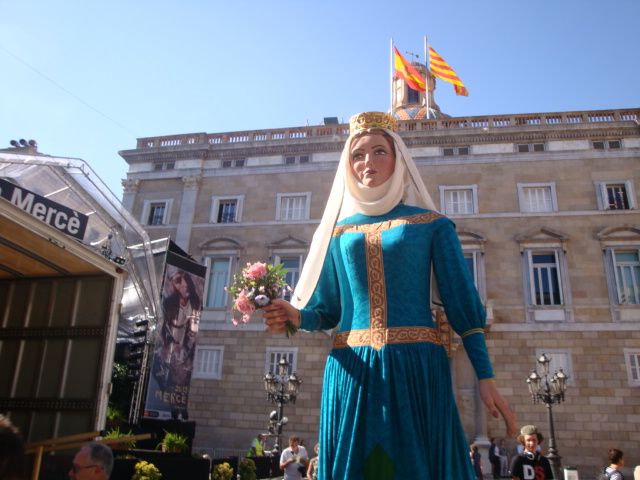
Santa Maria del Mar is presented as the first collaborative project, with legends and heroes attached to it. Even without an interior visit, the exterior gives the guide a strong setting for explaining how ordinary people, workers, merchants, and the wider community could shape a major religious building.
The church is also a reminder that Barcelona’s medieval strength was connected to the sea. The Crown of Aragon’s rise as a maritime force was not an abstract royal achievement. It depended on people, money, labor, trade, and the city’s position as a port.
You will also hear about the mulberry grave, the vengeance of the Bourbon kings, and the head of the general. These subjects bring the route into the aftermath of political defeat and repression. The Ribera Quarter is therefore not just a pretty end point. Its stones carry memories of power being taken away and civic life being forced into a new shape.
Ending near Passeig del Born is convenient if you want to continue exploring the Ribera area afterward. The tour does not include a meal or a formal activity at the finish, but the guide’s practical advice can help you decide what to do next.
What the guide adds
The tour is conducted in German, and the strongest fit is for German-speaking visitors who want history explained in their own language. The supplied feedback specifically praises a guide named Johannes for presenting plenty of useful information, adapting to personal needs, and making the walk entertaining.
One especially useful touch is the use of extra historical photographs. Seeing an old image beside the present-day street can help you understand what changed, what survived, and why certain corners look the way they do.
Johannes was also praised for practical suggestions about restaurants, shopping, and local specialties. That advice can be more useful than another list of monuments because you can apply it during the rest of your Barcelona stay.
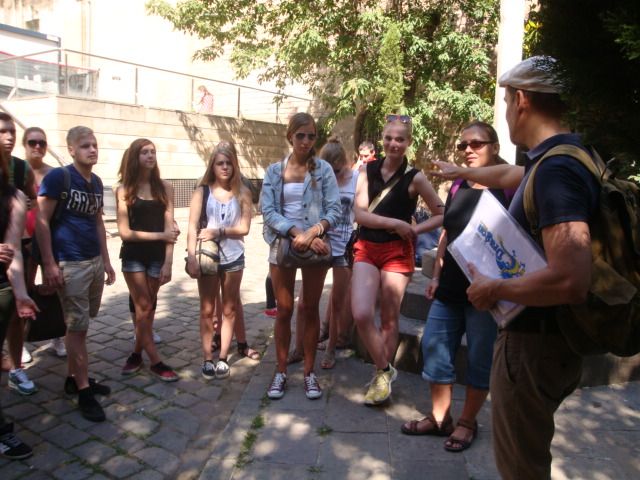
The tour is a private group, which should make it easier to ask questions and adjust the pace. The supplied details also say the walk is suitable for all weather and continues in sun, rain, wind, and strong showers. In summer, bring a hat, sunglasses, sunscreen, and water. In winter, a jacket or thin coat should be enough.
The tour is wheelchair accessible, but the old city’s narrow streets and changing surfaces can still make any historic-center walk physically demanding. One recent rating described the walk as tiring but still very good. That is a fair warning: 3.25 hours on foot is not extreme, but it is not a quick stroll either.
What you will not get
This is not an entry-ticket tour. Museum visits and interior explorations are excluded, with a couple of exceptions. You will admire monuments from the outside and use the streets themselves as the main classroom.
That keeps the group moving and allows the guide to cover a broad span of history. The tradeoff is clear: if your priority is seeing the inside of Santa Maria del Mar, royal buildings, or museums, you will need to arrange those visits separately.
There is a clothing requirement for the cloister visit. Wear clothing that reaches at least the knees and covers your shoulders. This is easy to manage, but it is worth planning for, especially in hot weather.
The relaxed pace is another strength, but the route still covers a lot. You will hear about Roman Barcelona, medieval politics, the Jewish Quarter, the Inquisition, royal history, the Spanish Civil War, architectural reconstruction, and the Ribera Quarter in one outing. If you prefer one narrow subject explored at length, this may feel broad. If you want a strong first map of the old city, that range is helpful.
Is $212 good value for up to four people?
The price is $212 per group of up to four, not $212 per person. With four people, that works out to $53 each. For a private German-language walk lasting 3.5 hours, that can be a sensible deal, particularly if you value personal questions, a flexible pace, and practical advice for the rest of your visit.
For one or two people, the per-person cost rises. You should compare it with the value you place on a private format and German-language guiding. The tour does not include admissions, meals, or transport, so its value rests on the guide, the route, and the quality of the historical explanation.
The high overall rating of 4.9 from 383 ratings supports the idea that the experience is consistently well received, while the detailed praise points to specific strengths: clear structure, useful historical photographs, personal attention, restaurant and shopping tips, and an entertaining presentation.
Who should book this Gothic Quarter walk?
I would choose this tour if you want a broad introduction to Barcelona’s old center and prefer hearing complex history in German. It is especially suited to couples, families, or small groups who can share the $212 private-group price.
It also works well early in a Barcelona visit. The guide’s suggestions about restaurants, shopping, and local specialties can shape the days that follow, and the route gives you a useful sense of how the Gothic Quarter and Ribera connect.
You should think twice if you mainly want interiors, museum collections, or a short orientation walk. The route is long enough to feel tiring, and the old city’s history comes through stories and exterior places rather than formal exhibits.
Should you book it?
Book it if you want Barcelona explained as a living city, with Roman traces, medieval politics, Jewish history, royal drama, local legends, and the Ribera Quarter all tied together on foot. The German-language format, small private group, relaxed pace, and practical city advice add real value.
Skip it if you need included entry tickets or want to spend most of your time indoors. For everyone else, this is a strong choice for seeing the old city with more meaning than you would get from simply following a map from one handsome square to the next.
FAQ
Where does the Gothic Quarter walking tour begin?
It begins in front of Hotel Olivia Plaza at Plaça de Catalunya, 19, 08002 Barcelona.
Where does the tour end?
The walk finishes at Passeig del Born, 22, 08003 Barcelona, in the Ribera area.
How long does the tour last?
The activity lasts 3.5 hours. The listed guided walk and sightseeing portions total about 3.25 hours.
What language is the tour conducted in?
The live tour guide speaks German.
Is this a private or shared tour?
The tour is offered as a private group experience for up to four people.
Are museum entries and interior visits included?
No. Entry fees and interior visits are not included, apart from a couple of exceptions noted for the program.
What should I wear for the cloister visit?
Wear clothing that covers your shoulders and reaches at least your knees.
Recently added in Barcelona
- Barcelona: Catamaran Cruise w/ Sailing, Wine, & Tapa★ 4.7 · 176 reviews
- Guided Gaudí Trencadís Mosaic Workshop in Barcelona 2 Hours★ 5.0 · 176 reviews
- Barcelona Cable Car Sky Views, Magic Fountain & Castle Visit★ 4.2 · 177 reviews
- Barcelona Private Sunset Sailing with Drinks★ 5.0 · 177 reviews
- Barcelona: Montserrat with Winery Visit and Farmhouse Lunch★ 4.7 · 178 reviews
- Barcelona: Nightmare Horror Museum Maze Entry Ticket★ 4.5 · 179 reviews
- Barcelona: City Sights Electric Quad Tour★ 4.8 · 178 reviews
- Barcelona: Professional Photoshoot Outside Sagrada Familia★ 4.8 · 179 reviews
Walking Tours, compared.

Barcelona Tapas and Wine Experience Small-Group Walking Tour
Read the review →
Tapas Walking Tour with Food, Wine, and History
Read the review →
Albaicín and Sacromonte Guided Sunset Walking Tour
Read the review →
Toledo Tour & Vineyard Walk with Wine Tasting from Madrid
Read the review →

Barcelona Tapas Walking Tour: Food, Wine & History
Read the review →
Madrid Old Town & Royal Palace Walking Tour Skip the Line Ticket
Read the review →
Browse the lists this tour appears in