
Reviewed · SAGRADA FAMILIA TOURS
Barcelona: Casa Batlló Be The First Entry Ticket
Casa Batlló is at its best before the crowds arrive. The early-entry ticket gives you a calmer look at Gaudí’s fanciful rooms, with better chances to photograph the curving walls, colored glass, bone-like details, and shafts of morning light. By the time some visitors leave, the entrance line may already be long.
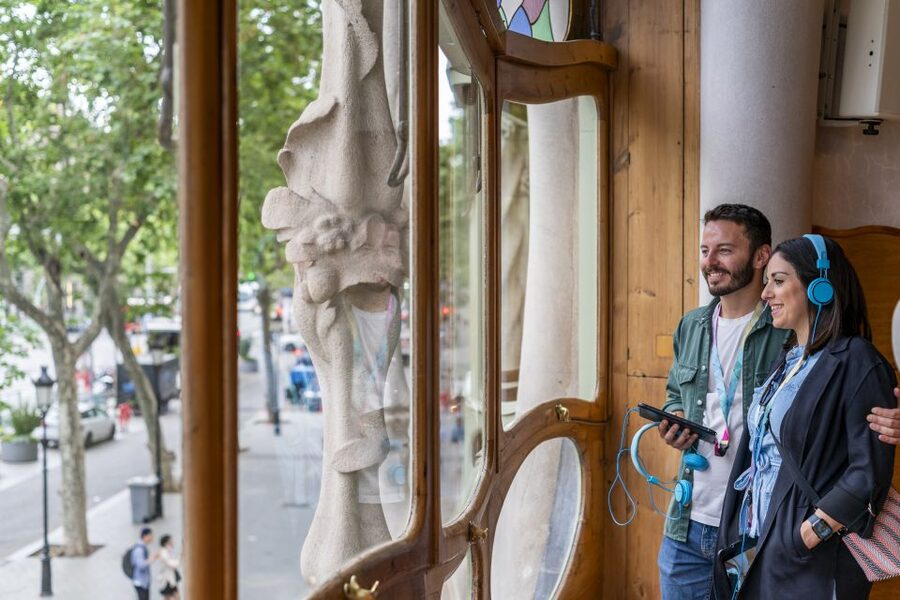
I like the small early capacity and the clever tablet, which shows how rooms may have looked when furnished and adds virtual reality and augmented reality scenes. I also like that the visit is self-paced, so you can linger over a window or move on when the screen begins to feel like too much technology.
The main drawback is price. At about $53 per person, this is not a quick look at a famous facade. You are paying for the early time, the audio equipment, the digital rooms, and access to areas that may not be included in every ticket category.
Key points to know before you book
- The first time slot matters: The house becomes much busier later, so arrive early and enter promptly.
- The tablet adds context: It can reveal former furnishings and animated views, but carrying it through the house can become awkward.
- The Gaudí Cube is the finale: This six-sided LED room is playful and striking, though one visitor found the moving visuals uncomfortable.
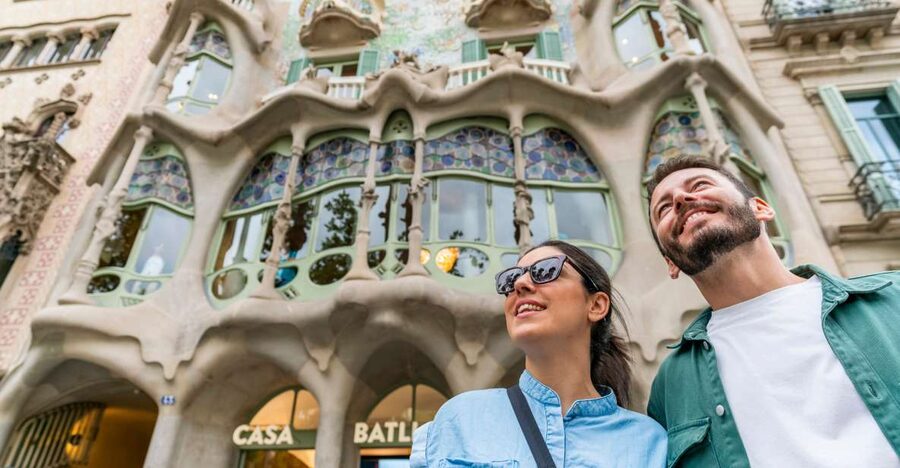
- The visit is self-guided: You receive headphones and a tablet, not a live guide.
- The route includes special spaces: Your ticket includes the Gaudí Dome, Gaudí Cube, and original Concierge Room.
- The ticket is useful for many languages: Audio is available in 15 languages, including English, Spanish, French, German, Italian, Portuguese, Chinese, Japanese, Korean, Dutch, Polish, Romanian, Russian, and Catalan.
Why the early entrance changes Casa Batlló
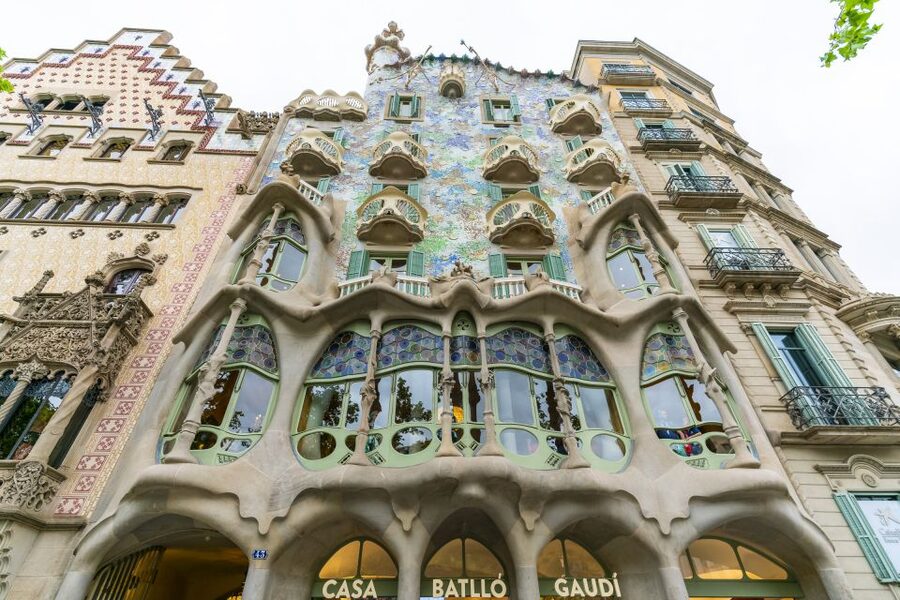
Casa Batlló is one of those buildings that can be hard to appreciate from a crowded hallway. Its charm depends on small details: a ceiling that seems to swirl overhead, a railing shaped like a mask, changing colors in the windows, and rooms designed to make ordinary household functions feel theatrical.
The first-entry option gives you more breathing room for those details. You may still share the house with other early visitors, but the difference later in the morning can be substantial. Several early visitors finished after roughly 90 minutes and found the building filling up as they exited.
An early booking around 8:30 or 8:45 has another advantage. The morning light in the main room can be especially attractive, and there are fewer people standing behind you when you frame a photograph. One practical tip is to arrive a little before your assigned time, since the first people through the entrance have the clearest rooms and easiest photo opportunities.
This is not a private visit. Limited capacity does not mean you have the building entirely to yourself. Still, the early slot is the best choice if your priorities are photography, quiet observation, or a slower pace.
A few other Barcelona outings to compare
- Barcelona: Sagrada Familia Entry Ticket with Audio Guide
★ 4.6 · 105,312 reviews - Barcelona: Park Güell Admission Ticket
★ 4.4 · 76,534 reviews - Barcelona: Casa Batlló Entry with Self-Audioguide Tour
★ 4.7 · 25,359 reviews
Getting started with the tablet and audio guide
At Casa Batlló, you pick up your audio guide and virtual reality tablet before beginning the route. There is no live guide leading a group, so you control the pace from the first room to the last.
The audio script is available in 15 languages. It gives you background on Antoni Gaudí, explains the purpose of different spaces, and helps connect the fanciful shapes to the way the house once functioned. You can pause and listen closely, or move on if a section is less interesting to you.
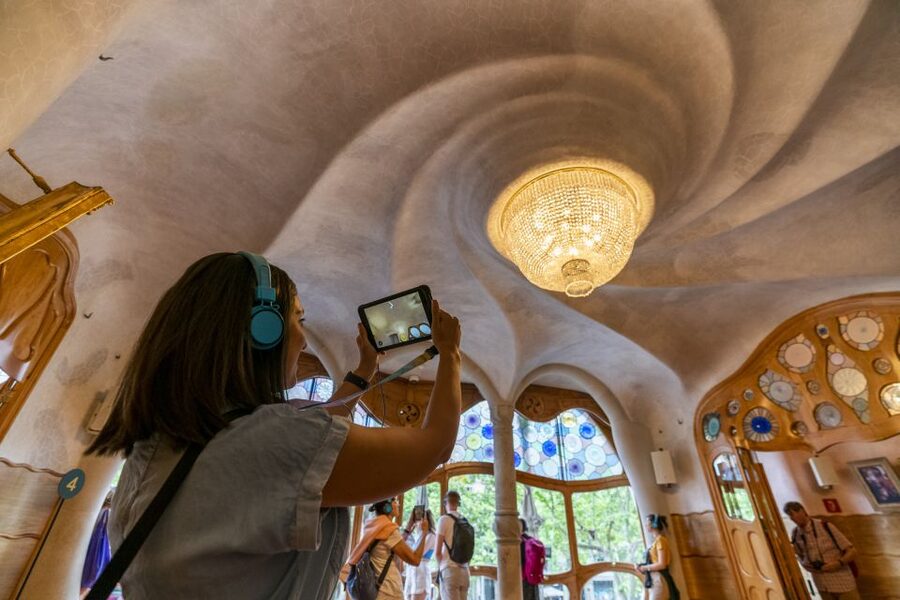
The tablet is more than a simple map. In selected areas, it uses augmented reality and machine learning to add movement, furnishings, and reconstructed views. You can see how a room may have appeared before it became an exhibition space, which is useful when the architecture alone leaves you wondering how people actually lived there.
The equipment has one clear weakness: you must carry it. One visitor found the tablet annoying to hold, even while appreciating what it showed. If you want to stop often for photographs, you will be switching between the tablet, headphones, and camera. The early hour helps because you are less likely to feel rushed while doing this.
I suggest listening first in the rooms that interest you most, then looking at the tablet only where it adds something new. If you try to watch every digital feature while studying every architectural detail, the technology can compete with Gaudí rather than help you see him.
Casa Batlló’s rooms and Gaudí’s playful design
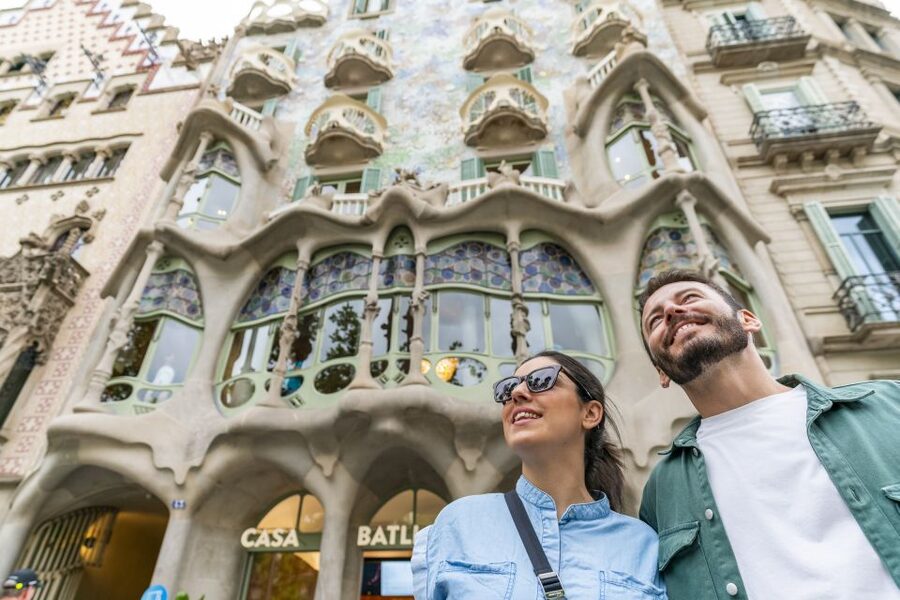
The original house is the heart of the visit. Casa Batlló is not presented as a conventional museum filled with paintings. The building itself is the artwork, and the route lets you study its surfaces, proportions, light, and furniture.
Gaudí worked with natural forms rather than straight, rigid lines. Curves appear in the doors, ceilings, windows, railings, and walls. The effect is playful, but it is not random. Color, ventilation, light, and movement all shape the design.
The main rooms are particularly rewarding in the early light. Look up often. Ceilings can be as important as walls here, and the changing angles create photographs that do not look alike even when taken only a few steps apart.
The furnished areas are among the most useful parts of the visit because they make the building feel like a home rather than an empty architectural shell. The tablet’s reconstructions add another layer, showing how the rooms could have been arranged and helping you picture daily life inside Gaudí’s design.
The route is well signed, which keeps the self-guided format simple. You do not need to guess where to go next. That said, the signs and technology make this feel more like a modern attraction than a quiet historic house. If you prefer a building with no screens or audio, this may feel overproduced.
For most people, the balance works. The digital material explains what you are seeing without replacing the original rooms. You can always lower the audio or put the tablet aside for a few minutes and simply look.
The Concierge Room and the detail that rewards patience
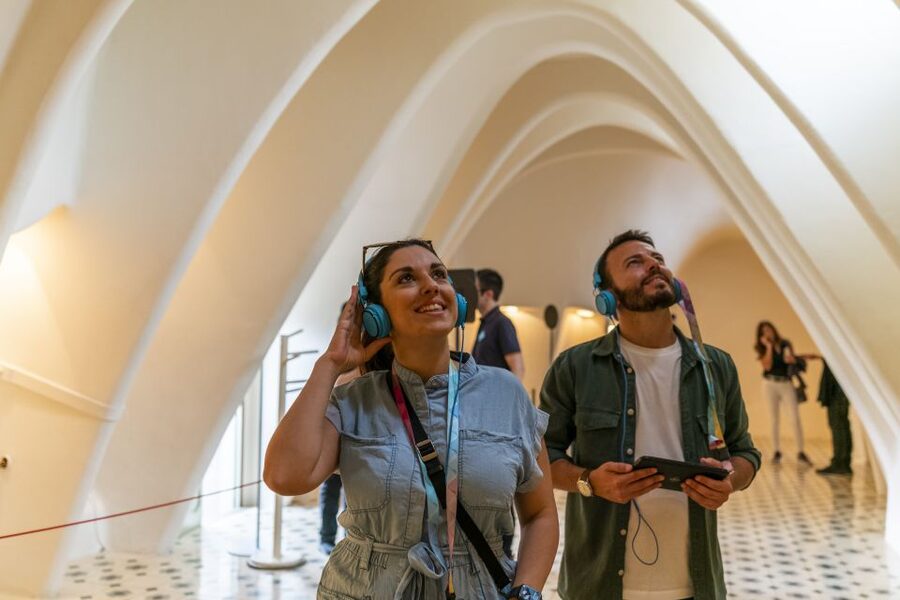
The original Concierge Room is included with this ticket. It is a useful reminder that Casa Batlló was a working residence, not only a showpiece for modern visitors.
Small spaces such as this can be easy to rush through after the grander rooms. I would slow down here and listen to the audio explanation. The house makes more sense when you see both its grand public areas and the practical spaces that supported them.
This is also where the limited morning capacity helps. You have a better chance of examining a doorway, window, or piece of built-in furniture without a steady stream of people moving around you. The building offers so many shapes that a quick walk can leave you remembering only the most famous staircase and facade.
A photo tip: one visitor paid extra for a balcony photograph and suggested stepping back instead of gripping the balcony section in the foreground. The attraction may offer optional photographs at an additional cost, so do not assume every image service is part of the $53 ticket.
Same city, a completely different evening:
- Barcelona: 24 or 48-Hour Hop-On Hop-Off Bus Tour
★ 4.4 · 20,872 reviews - Barcelona: Park Guell Guided Tour with Skip The Line Entry
★ 4.7 · 17,563 reviews - Barcelona: La Pedrera-Casa Milà Ticket & Audio Guide Option
★ 4.7 · 15,099 reviews - Barcelona in 1 Day: Sagrada Familia, Park Guell,Old Town & Pickup
★ 5.0 · 13,541 reviews
The Gaudí Dome, where architecture gives way to light

The Gaudí Dome is one of the newer additions. It uses more than a thousand screens to create a room with a domed ceiling and changing visual effects.
This is not an original Gaudí room in the same way as the house’s historic interiors. Think of it as an artistic interpretation that sets the building’s ideas into motion. It helps explain the attraction’s broader approach: original architecture paired with sound, images, and technology.
The soundtrack was created by Dani Howard and performed by the Berlin Symphony Orchestra. That music matters because the room is designed as a sensory presentation, not simply a display of screens. It gives the visit a dramatic pause between the historic sections and the later digital finale.
Some people will find this addition memorable. Others may prefer to spend more time with the actual building. You are not required to treat every digital room as equally important. Give the Dome a few minutes, notice how it changes the mood, and then decide how long you want to stay.
The Gaudí Cube, a memorable but intense finale
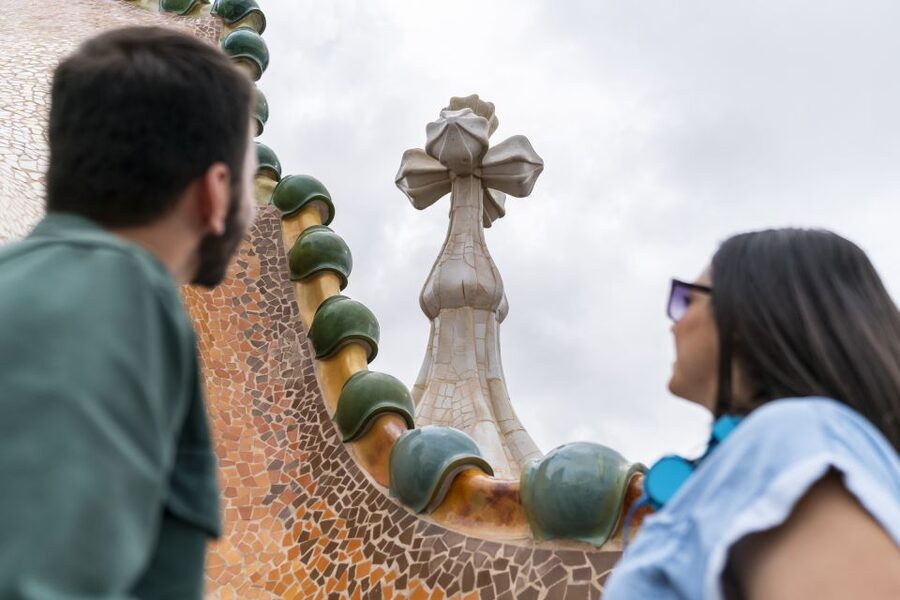
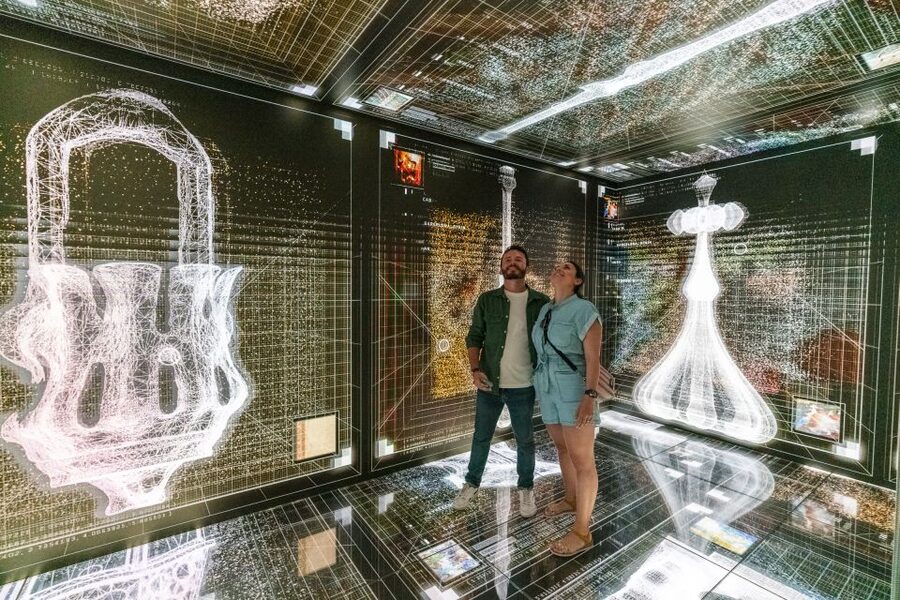
The Gaudí Cube is a six-sided LED cube described as unique in the world. It provides one of the most talked-about moments in the visit, with moving images surrounding you on multiple planes.
The room is fun, unusual, and highly visual. Early visitors have a real advantage here. With only a few people inside, you can find a clear view and take in the entire installation instead of peering between heads.
The Cube is not comfortable for everyone. One person felt nauseous during the presentation, so anyone sensitive to motion, shifting images, or enclosed visual effects should be prepared to step out or keep the viewing short. This is a good reason not to rush through the historic rooms just to reach the finale.
The Cube is best understood as a bonus rather than the main reason to visit Casa Batlló. If you love digital art, it may be a highlight. If you come mainly for Gaudí’s original work, treat it as an optional last chapter.
Kengo Kuma’s marble staircase and newer additions
The visit also includes a newer vertical communication core designed by Japanese architect Kengo Kuma. Its centerpiece is a floating ladder made from 13 tons of polished marble.
This staircase gives the route a striking modern counterpoint. Gaudí’s work is full of organic curves and natural references, while Kuma’s installation feels polished, light, and engineered despite the weight of the material.
You will also encounter six-sided indoor mapping on a patio connected with Gaudí’s use of light. These additions show how Casa Batlló continues to develop as a cultural site rather than preserving the building as a frozen period display.
That approach will appeal to you if you enjoy architecture presented through several eras and media. It may disappoint you if you want an entirely untouched historic-house visit. The ticket is designed for both: you see the original rooms, then encounter modern interpretations that explain or echo them.
The new Simbolic store comes near the end. It sells souvenirs and design-focused objects, with some items more distinctive than the usual museum-shop stock. You can browse without making the shop a central part of the visit.
How much time should you allow?
The ticket is valid for one day, with entry tied to an available starting time. The visit itself is self-paced. Many people complete the route in about 90 minutes, though the supplied information does not set a fixed tour length.
If you want to hear most of the audio, use the tablet, take photographs, and pause in the Dome and Cube, allow at least an hour and a half. You can move faster, but that defeats much of the reason to pay for the early slot.
The route is well signed, and the house is wheelchair accessible. A checkroom is available for luggage and strollers, which can make the visit easier if you are carrying more than a small day bag.
Casa Batlló also works with neurodivergent staff through Specialisterne, an organization focused on employment inclusion for people on the autism spectrum. The site describes this as the first cultural institution internationally to have a neurodivergent team assisting visitors. That is a meaningful part of how the attraction welcomes its audience.
Is $53 good value for Casa Batlló?
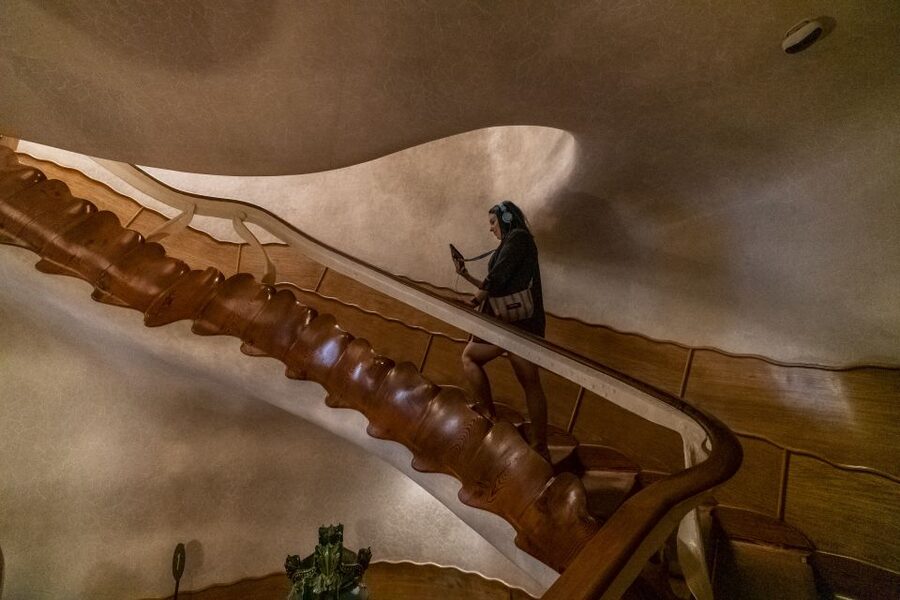
At around $53, this is a costly admission for a visit that many people complete in 90 minutes. The value depends on what you want from Casa Batlló.
If you only want to see Gaudí’s facade, the price will feel high. You can admire the outside from Passeig de Gràcia without paying for admission. If you want to understand the interior, take photographs without constant crowds, and use the audio and visual material, the ticket makes more sense.
The early access is the strongest part of the value. A standard admission at a later time may let you see the same principal spaces, but the quiet morning window can change the quality of the visit. You can stop in front of a window, wait for better light, and take a photograph without several people crossing the frame.
The technology is a matter of taste. Some people find the tablet a clever guide to the house. Others find it cumbersome or prefer the architecture without digital effects. Since the tablet and audio are included, you can use them lightly rather than treating every feature as compulsory.
Check the exact ticket category when booking. One visitor discovered that a silver ticket did not include some rooms reserved for gold ticket holders. The product details provided for this Be The First Entry ticket include the Gaudí Dome, Gaudí Cube, and original Concierge Room, but category names and access levels should still be checked carefully before payment.
The activity is non-refundable, so choose your time with care. Audio is available in Catalan, Spanish, English, Italian, French, Chinese, Dutch, German, Japanese, Korean, Polish, Portuguese, Romanian, and Russian.
Who should choose the first-entry ticket?
I would choose it for photographers, architecture fans, first-time Casa Batlló visitors, and anyone who dislikes being moved along by a crowd. It also suits independent sightseers who prefer audio and visual guidance instead of a scheduled live tour.
Families may appreciate the tablet and Cube, though carrying the equipment and managing headphones can add a little fuss. The checkroom can help with strollers, and the site is wheelchair accessible.
You may want to skip the premium early option if you are mainly interested in seeing the outside, dislike screens, or have no interest in audio interpretation. The house remains beautiful, but the technology and early timing account for much of the extra cost.
If you are choosing between Gaudí attractions, Casa Batlló offers a more theatrical interior than Casa Milà, according to the way this visit is structured and presented. It is not only a series of rooms. It is a carefully paced combination of architecture, sound, reconstructed views, and light.
Should you book Casa Batlló Be The First Entry?
Yes, if you can manage the early start. The limited morning capacity is the clearest reason to book this version, and the quiet rooms make it easier to appreciate Gaudí’s details and take clean photographs.
I would not book it expecting a private house tour or a live expert guide. You receive an audio guide and virtual reality tablet, then follow the signed route at your own speed. The Gaudí Dome and Cube add a modern finish, but the original rooms remain the real reason to come.
Book this ticket when you want Casa Batlló at its most manageable, and enter as close to your assigned time as possible. If you are willing to pay for calm, better light, and a fuller look at the building, the early slot earns its premium.
FAQ
What does the Casa Batlló Be The First Entry ticket include?
It includes entry to Casa Batlló, an audio guide, a virtual reality tablet, and access to the Gaudí Cube, Gaudí Dome, and original Concierge Room.
Is there a live guide?
No. This is a self-guided visit using headphones, an audio guide, and a virtual reality tablet.
What languages are available for the audio guide?
The audio guide is available in Catalan, Spanish, English, Italian, French, Chinese, Dutch, German, Japanese, Korean, Polish, Portuguese, Romanian, and Russian.
How long is the ticket valid?
The ticket is valid for one day, with starting times based on availability.
Is Casa Batlló wheelchair accessible?
Yes. Casa Batlló is wheelchair accessible.
Can I store luggage or a stroller?
Yes. Casa Batlló has a checkroom where you can store luggage and strollers if needed.
Recently added in Barcelona
- Barcelona: Catamaran Cruise w/ Sailing, Wine, & Tapa★ 4.7 · 176 reviews
- Guided Gaudí Trencadís Mosaic Workshop in Barcelona 2 Hours★ 5.0 · 176 reviews
- Barcelona Cable Car Sky Views, Magic Fountain & Castle Visit★ 4.2 · 177 reviews
- Barcelona Private Sunset Sailing with Drinks★ 5.0 · 177 reviews
- Barcelona: Montserrat with Winery Visit and Farmhouse Lunch★ 4.7 · 178 reviews
- Barcelona: Nightmare Horror Museum Maze Entry Ticket★ 4.5 · 179 reviews
- Barcelona: City Sights Electric Quad Tour★ 4.8 · 178 reviews
- Barcelona: Professional Photoshoot Outside Sagrada Familia★ 4.8 · 179 reviews
Sagrada Familia Tours, compared.
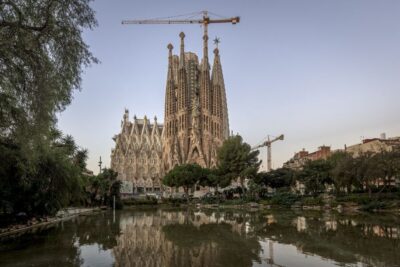
Sagrada Familia Entry Ticket with Audio Guide
Read the review →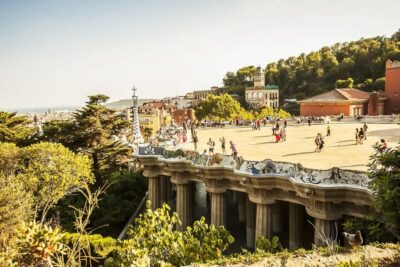
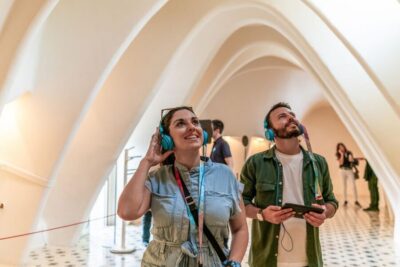
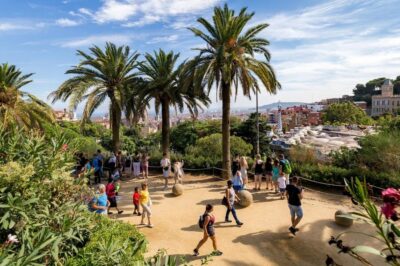
Park Guell Guided Tour with Skip The Line Entry
Read the review →La Pedrera-Casa Milà Ticket & Audio Guide Option
Read the review →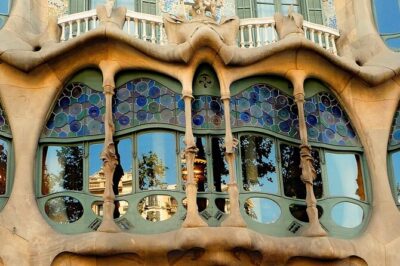
Barcelona in 1 Day: Sagrada Familia, Park Guell,Old Town & Pickup
Read the review →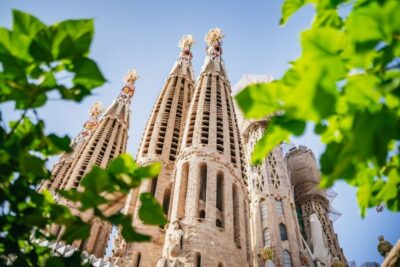
Sagrada Familia Skip-the-Line Entry Ticket & Tour
Read the review →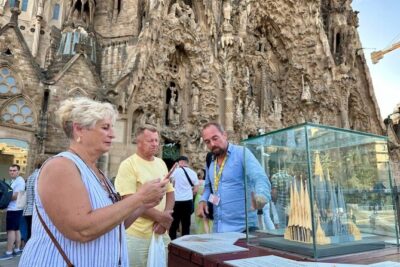
Browse the lists this tour appears in