
Reviewed · SPAIN
From Madrid: Escorial Monastery and the Valley of the Fallen
El Escorial is not simply a palace visit. It is a monastery, royal residence, basilica, library, art collection, and burial place wrapped into one stern granite complex. The Pantheon of Kings and the paintings inside are especially striking, while the Valley of the Fallen adds a powerful and difficult chapter about Spain’s Civil War.
I like the way this tour joins two sites that are awkward to reach together without a car, and I like the five-hour schedule, which gives you a clear half-day outside Madrid without eating your whole day. Guides such as Cristina, Beatriz, Sergio, and Rafael have been praised for clear English, strong historical background, and a good sense of pace.
The main drawback is physical: both sites involve substantial walking and many steps, and the tour is not suitable for wheelchair users or people with mobility impairments. You also get limited independent time, especially at the Valley of the Fallen, so this suits you best if guided explanation matters more than wandering alone.
Key points to know before booking
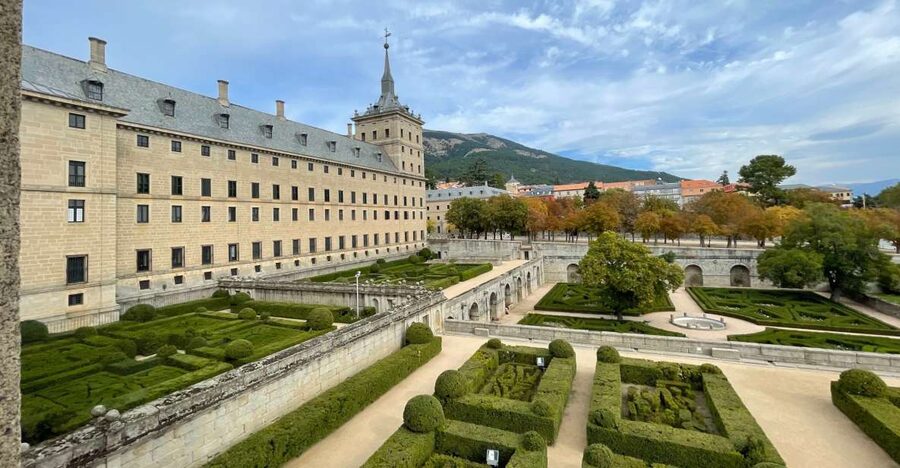
- El Escorial compresses several centuries of Spanish power into one visit: See royal rooms, cloisters, chapter rooms, the library, basilica, and royal tombs.
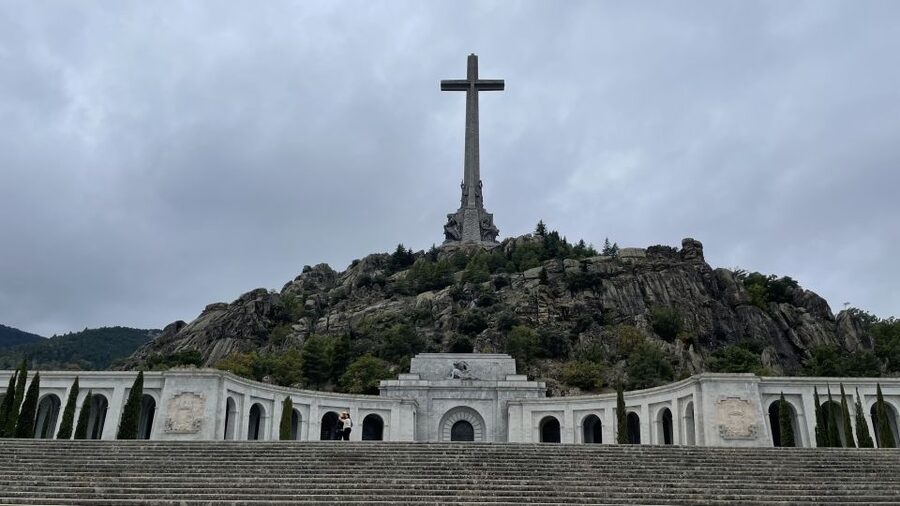
- The Valley of the Fallen is historically serious: The basilica was carved into granite and contains the burial place of 33,847 people connected to the Spanish Civil War.
- The five-hour format is efficient: About 105 minutes are spent at El Escorial and one hour at the Valley of the Fallen, with transport between each stop.
- Transport adds real value: Air-conditioned round-trip bus service takes you to both places from central Madrid, with Wi-Fi available onboard.
- Expect an active morning: Wear comfortable shoes and clothes, since the route includes steps and walking through large monumental spaces.
- The guide shapes the experience: English and Spanish live guiding, headsets, and skip-the-line entry help keep the group together and the history easy to follow.
Why El Escorial deserves half a day from Madrid
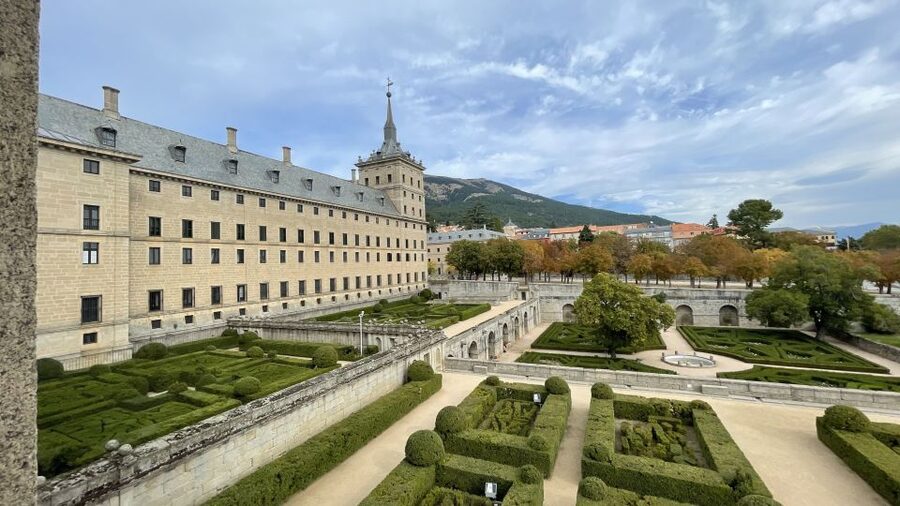
If you see only Madrid’s central palaces and museums, you miss the building that best expresses the ambitions of Felipe II. San Lorenzo de El Escorial was designed as a statement of royal authority, Catholic devotion, learning, and Spanish power during the Golden Age.
That combination makes it unusual. You are not walking through a palace with a few religious rooms attached. You move through a working religious complex with royal apartments, monumental courtyards, burial chambers, artwork, and spaces for study. The scale can be hard to grasp from photographs.
The setting also helps. San Lorenzo de El Escorial lies in the Sierra de Guadarrama area, roughly 45 to 50 minutes from Madrid by coach. The trip gives you a change from city streets to open mountain scenery, while the short distance keeps the outing practical for a busy Madrid schedule.
I would choose this tour for its historical range. In a single morning, you move from the reign of Felipe II to the Spanish Civil War and the present democratic era. That is a lot of ground, but the sites give the story physical form.
What else fills a Spain itinerary:
- Barcelona: Sagrada Familia Entry Ticket with Audio Guide
★ 4.6 · 105,312 reviews - Barcelona: Park Güell Admission Ticket
★ 4.4 · 76,534 reviews - Seville: Royal Alcázar Entry Ticket
★ 4.6 · 28,378 reviews
Leaving Madrid and reaching San Lorenzo de El Escorial
The meeting point is outside the Commercial Gallery at San Bernardo Street 7. From there, an air-conditioned coach takes about 45 minutes to San Lorenzo de El Escorial. The listed schedule allows about 50 minutes for the outward journey, so the exact road time can vary.
The bus is an important part of the value here. You could visit El Escorial by public transport, but combining it with the Valley of the Fallen is much less simple without a car. With round-trip transport arranged, you do not need to work out separate connections between two distant sites.
Wi-Fi is included on the bus, and headsets are supplied for the guided visits. The vehicle has been described as comfortable, and drivers such as Javier, Juan Antonio, Enrique, and Eugenio have received praise for safe, courteous service.
On arrival, the group uses the bathroom before beginning the main visit. This is a useful practical stop, since the tour then moves through a large complex and continues on to the Valley of the Fallen. Bring water, since food and drinks are not included and there is no meal break built into the five-hour plan.
Inside the Monastery of San Lorenzo del Escorial
The guided visit to El Escorial lasts about 105 minutes. That is enough time to see the main interiors at a steady pace, but not enough for a slow study of every painting, room, and garden. I see this as a good trade for a half-day outing, especially if you want a structured introduction rather than an exhaustive art tour.
The Patio de Reyes, or Courtyard of the Kings, provides a strong opening. Its formal design prepares you for the building’s mix of religious and royal purpose. From there, the route continues through the cloister and chapter rooms, where the architecture carries much of the story.
The library is one of the most memorable spaces. Its presence reflects Felipe II’s interest in learning and the monastery’s role as more than a place of worship. If books, scholarship, or architectural interiors interest you, pay close attention here. The tour’s time is limited, so you may need to keep moving rather than linger over every detail.
The Royal Rooms add another layer. These rooms show how the monarchy connected private life with religious duty and political power. The complex feels more restrained and spiritual than many grand European royal residences, which is one reason it can surprise you.
The basilica is normally part of the route, but it is excluded on Sundays. If seeing the basilica is a priority, check the departure date and current arrangements before paying. Inside, you can expect a major religious space tied closely to the monastery’s purpose and the Spanish monarchy.
The Pantheon of Kings and Pantheon of Infants are among the most important stops. These burial places turn the building into a record of royal succession and dynastic memory. The atmosphere is formal and sombre, and your guide’s explanation helps connect the tombs to the wider story of Spain.
Paintings are another strength. You will see important religious and courtly artwork, though the tour is not designed as a specialist art-history lecture. One useful tip is to tell your guide if paintings are your main interest. Guides including Cristina and Beatriz have been praised for explaining the art as well as the architecture, but the route must still keep to schedule.
Why a guide matters at El Escorial
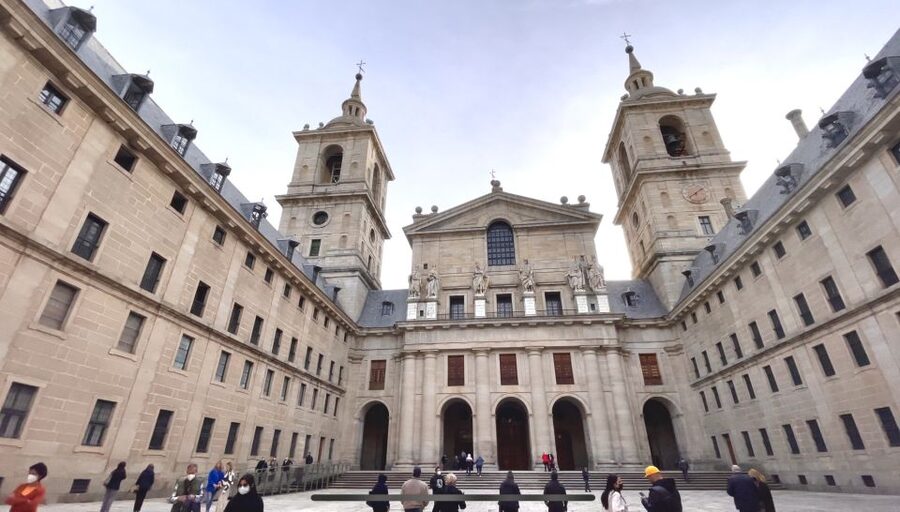
El Escorial can look impressive even without explanation, but its purpose is not obvious at first glance. A guide helps you understand why a single complex includes royal accommodation, religious rooms, tombs, art, and a library.
The best guides on this route have been described as clear, friendly, and able to switch between Spanish and English. Cristina has been especially praised for fluent bilingual explanations and for answering questions throughout the visit. Beatriz, Sergio, Rafael, Pilar, Oscar, and Maria have also been singled out for making the history accessible and engaging.
That consistency matters because the building can otherwise become a parade of grand rooms. You want someone to explain how the spaces relate to Felipe II, the Golden Age, Catholic Spain, and the monarchy. The headsets help you hear without crowding around the guide, although one past experience included some background noise in the sound system.
You will have a little time for photographs and personal exploration, but this is not a free-roaming visit. If you want to examine every artwork or sit quietly in the gardens, a longer independent visit would suit you better.
Same city, a completely different evening:
- Barcelona: Casa Batlló Entry with Self-Audioguide Tour
★ 4.7 · 25,359 reviews - Seville: Cathedral and La Giralda Entry Ticket
★ 4.5 · 24,592 reviews - Madrid: Tour Bernabéu Entry Ticket
★ 4.5 · 21,573 reviews - Barcelona: 24 or 48-Hour Hop-On Hop-Off Bus Tour
★ 4.4 · 20,872 reviews
The short ride to the Valley of the Fallen
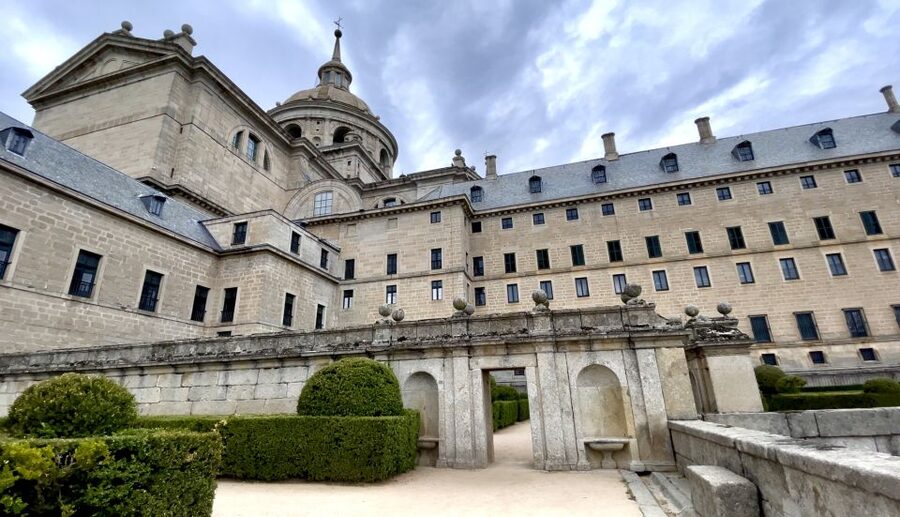
After El Escorial, the coach travels about 15 minutes to the Valley of the Fallen, located in the Peña de Cuelga Muros. The short transfer keeps the morning moving and avoids the wasted time that can make a two-site excursion tiring.
The mood changes sharply. El Escorial presents royal and religious power over several centuries. The Valley of the Fallen is tied to the Spanish Civil War and its aftermath, making it a place of political memory as well as monumental architecture.
Your guide should set the tone carefully here. The site carries a serious and contested legacy, and the strongest explanations treat it with historical care rather than turning it into a simple sightseeing stop. The tour description connects the site to the present democratic period, which helps place the monument within Spain’s changing understanding of its past.
Entering the basilica carved into the rock
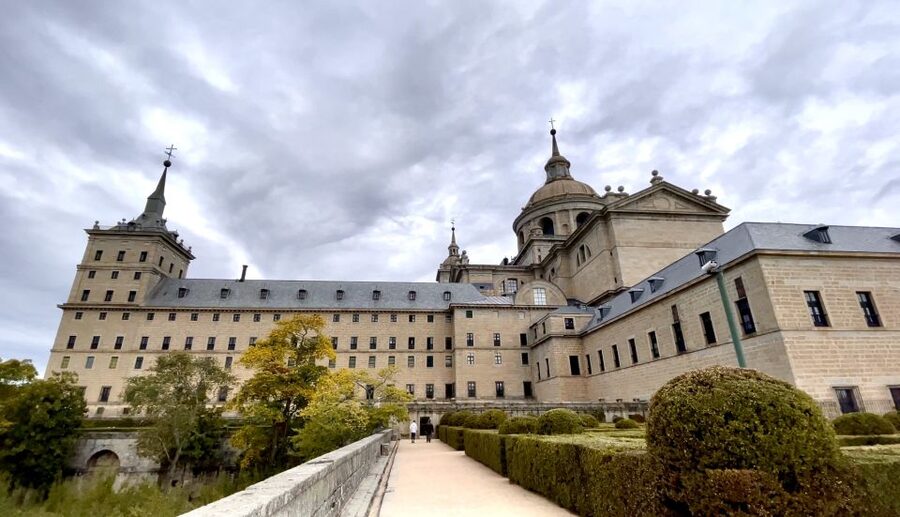
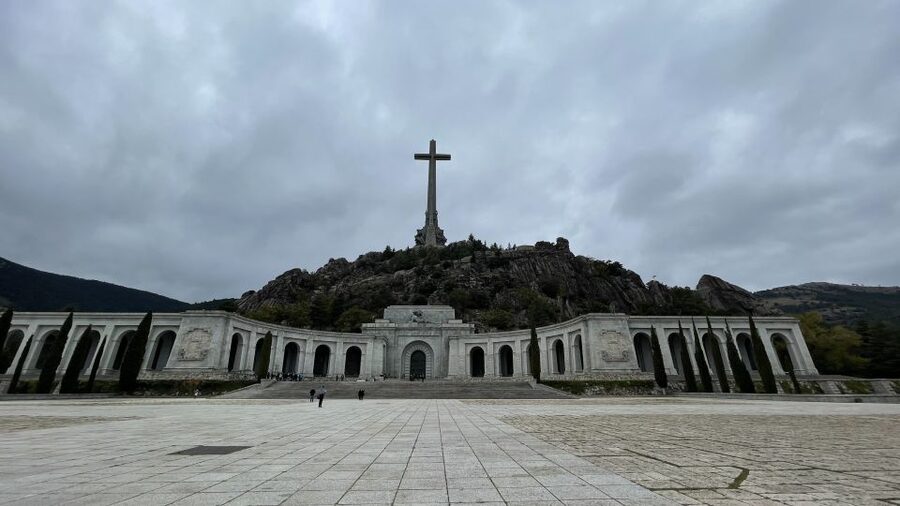
The basilica at the Valley of the Fallen is carved into granite. That alone makes the visit unusual, but the scale is what leaves the lasting impression. The great cross above the site can be seen from many kilometres away, while the underground church creates a very different experience from the open courtyards of El Escorial.
The basilica also serves as a burial place for 33,847 people who died in the Spanish Civil War. This fact gives the visit weight. You are not simply admiring a large church or taking pictures beneath a famous cross. You are standing in a memorial connected to one of Spain’s most painful periods.
The guided visit lasts about one hour. That is enough to hear the main history, see the basilica, and take in the surroundings, but several people have wanted more time here. One guest had to hurry back to the bus and missed part of the site. Keep an eye on your watch, and do not assume you can explore every corner at leisure.
Access to the basilica can occasionally be affected by events. A wedding once required the guide to work around the schedule, though the group was still able to enter. Conditions can change, so treat the visit order and precise access as flexible.
Pace, walking, and practical comfort
The tour runs for five hours from Madrid and returns to the same meeting point on San Bernardo Street. The timetable is tight enough to cover both monuments, but the pace is generally designed to be relaxed rather than frantic.
You should still prepare for a physically active morning. El Escorial is large, and the Valley of the Fallen includes walking through a monumental basilica and surrounding areas. Steps are part of the experience, not a minor detail. Comfortable shoes are essential.
This outing is not suitable for wheelchair users or people with mobility impairments. If stairs or long periods of standing are difficult for you, the route may be frustrating. Ask the operator about current access conditions before booking if you have any uncertainty.
Weather can also affect the experience. Rain has not stopped people from enjoying the tour, but the outdoor portions at the Valley of the Fallen are less pleasant in poor conditions. The great cross and mountain setting are best appreciated when visibility is good, so check the forecast and bring suitable clothing.
There is no included lunch or drinks. The schedule includes a bathroom stop, but not a proper refreshment break. Eat before departure and carry water. The coach ride is short enough that the lack of a meal stop is manageable, but hungry families should plan ahead.
Is $73 good value?
At $73 per person, the tour is priced sensibly for what it includes. You receive round-trip coach transport, a live English or Spanish guide, headsets, Wi-Fi on the bus, and skip-the-line entry to both sites.
The value is strongest if you do not have a rental car. These monuments are close enough to Madrid for a half-day trip, yet far enough apart that visiting both independently takes planning. The coach removes that problem and gives you historical context at each stop.
Skip-the-line entry also matters. El Escorial is a major heritage site, and a separate entrance can make the morning more predictable. The tour does not include food, drinks, or unlimited free time, so you are paying mainly for transport, admission, and the guide’s interpretation.
I would call it a good-value choice for a first visit to these sites. An independent visit might give you more control, but you would lose the convenience and the connected story. The tour is less appealing if you already know Spanish royal history well or want to spend hours studying art on your own.
Who should book this half-day tour?
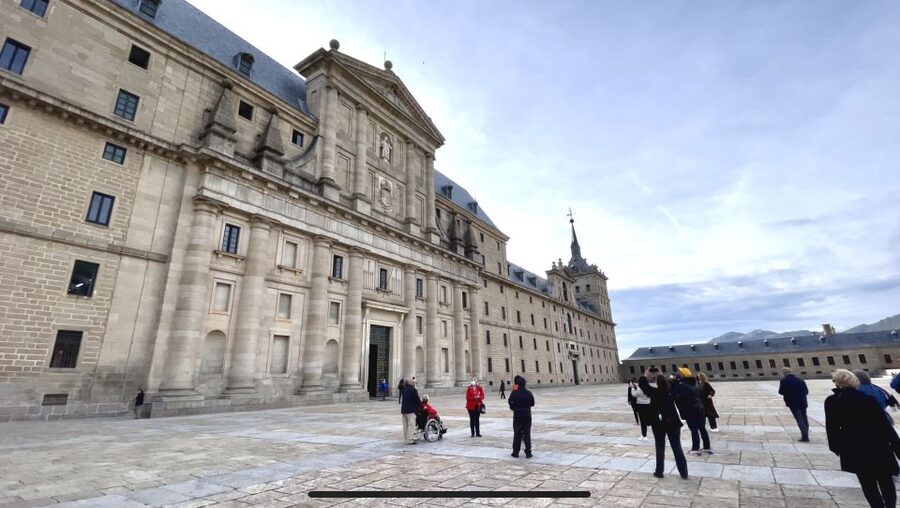
I would recommend it to you if you want to understand Spain beyond Madrid’s central sights. El Escorial gives you monarchy, Catholicism, architecture, art, and the Golden Age. The Valley of the Fallen adds Civil War memory and a difficult modern political context.
It also suits families and older teenagers who enjoy stories more than unstructured sightseeing. A 17-year-old has found the historical explanation engaging, and the guides are used to presenting the material in both Spanish and English.
This is a particularly useful choice for a short Madrid stay. You leave in the morning, visit two major sites, and return after five hours. You still have much of the day for Madrid, although transport times and the fixed schedule mean you should not book another activity too tightly against the return.
I would skip it if your priority is shopping, food, or a slow day in the city. I would also skip it if you dislike guided groups, need step-free access, or want extensive time alone at the Valley of the Fallen.
Final verdict: a strong history trip with one clear tradeoff
Book this tour if you want an efficient, well-explained introduction to two major sites that are hard to combine without a car. The strongest features are the excellent guides, comfortable transport, clear pacing, and the contrast between Felipe II’s monumental monastery and the Civil War memorial in the mountains.
Go in knowing that the Valley of the Fallen deserves more time than the schedule allows, and that both stops require walking. With comfortable shoes, water, and an open mind about Spain’s complicated past, this is one of the more worthwhile half-day excursions from Madrid.
FAQ
How long does the tour last?
The total duration is five hours, including transport from Madrid, the guided visits, and the return journey.
Where does the tour begin?
Meet your driver outside the Commercial Gallery at San Bernardo Street 7 in Madrid.
How long is the journey to El Escorial?
The coach journey from Madrid to San Lorenzo de El Escorial takes about 45 to 50 minutes.
How much time is spent at El Escorial?
The guided visit to the Monastery of San Lorenzo del Escorial lasts about 105 minutes.
How much time is spent at the Valley of the Fallen?
The guided visit to the Valley of the Fallen lasts about one hour.
Is the basilica at El Escorial always included?
The basilica is included except on Sundays. Check the details for your selected date if this part of the monastery is important to you.
Are food and drinks included?
No. Food and drinks are not included, so you should eat before departure and bring water.
Is the tour suitable for wheelchair users?
No. The activity is not suitable for wheelchair users or people with mobility impairments. Comfortable shoes and clothing are recommended.
Recently added in Spain
- From Andratx: Formula Sunset Driving Tour★ 4.8 · 176 reviews
- Barcelona: Catamaran Cruise w/ Sailing, Wine, & Tapa★ 4.7 · 176 reviews
- Entrance to the Flamenco Temple Room in Madrid with Tapas Option★ 5.0 · 176 reviews
- Mallorca Sailing Adventure with Snorkeling, Snacks & Drinks★ 5.0 · 176 reviews
- Valencia Private Walking Tour with Official Valencian Guide★ 5.0 · 176 reviews
- Fuerteventura: Round-Trip or 1-Way Ferry Ticket to Lanzarote★ 4.7 · 176 reviews
- Benahavís: Canyoning Guided Tour at Guadalmina River★ 5.0 · 177 reviews
- Guided Gaudí Trencadís Mosaic Workshop in Barcelona 2 Hours★ 5.0 · 176 reviews