Reviewed · TICKETS
Calasparra: Cueva del Puerto Entry Ticket with Guided Tour
A 20-meter-high bridge is not what most people expect from a cave visit, but Cueva del Puerto adds a little height and drama to its underground tour. You walk 50 meters below the mountains of Calasparra, through about 700 meters of limestone galleries shaped over millions of years.
I like the mix of natural formations and clear explanations. Stalactites that look like roots, small popcorn-like deposits, and the gallery named for Antoni Gaudí give the route plenty to look at, while the guide explains how water made each shape. I also like the luminescent minerals room, a small but unusual feature that adds something beyond the standard cave walk.
The main drawback is simple: the tour is in Spanish. The cave also stays humid and can feel warm, so the advice to bring warm clothing may be too much for some visitors. You should wear closed-toe shoes, expect a short flight of stairs, and skip this outing if enclosed spaces make you uncomfortable.
Key points at a glance
- A 20-meter bridge adds real drama: You cross raised walkways above the cave floor, not just flat paths.
- The route reaches 50 meters underground: The 1.5-hour visit gives you a proper look at several galleries.
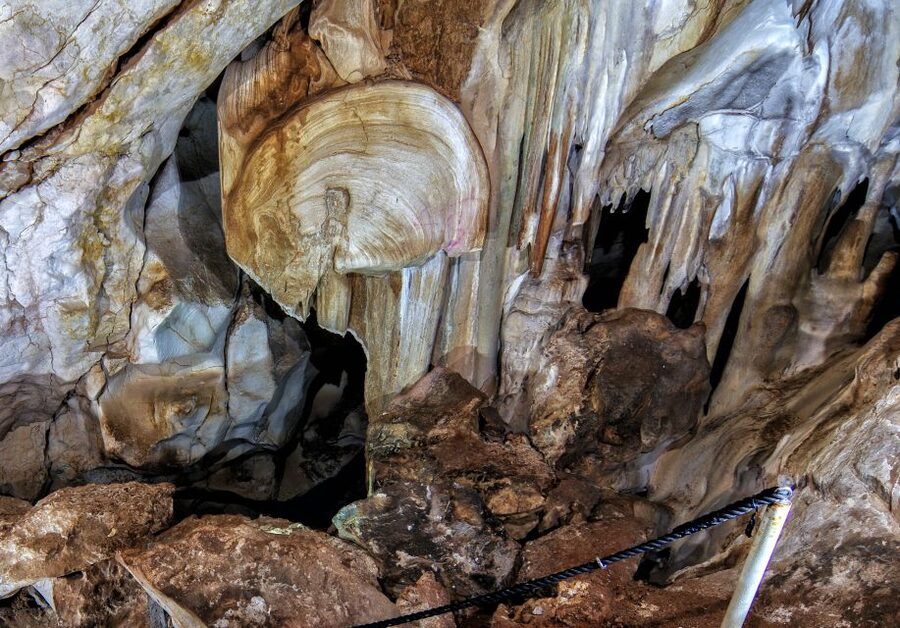
- Natural shapes do the main work: Root-like stalactites, popcorn forms, sculpted ceilings and the Gaudí Gallery are the visual highlights.
- The guide brings the geology to life: Manolo, Ana and Mavi are among the guides named in recent bookings.
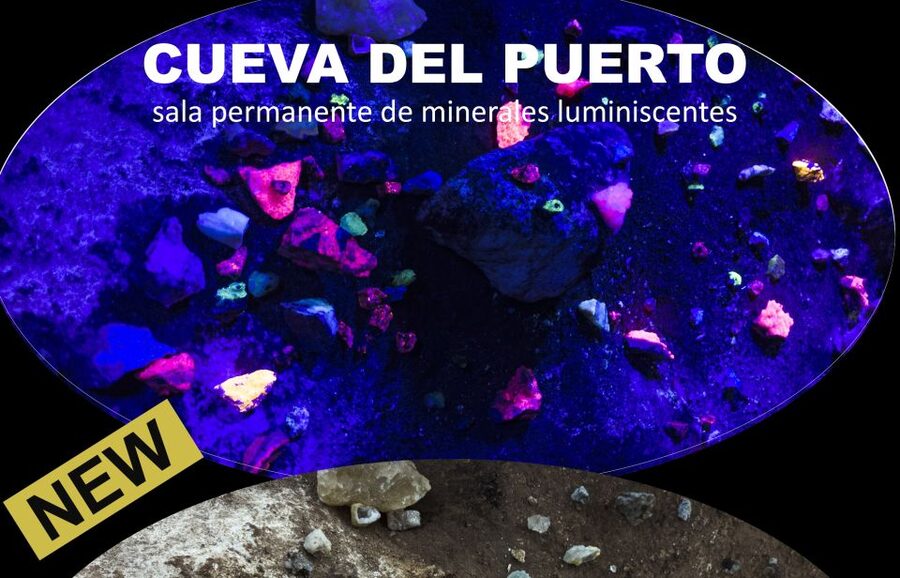
- The luminescent minerals room is unusual: LED lighting creates bright minerals, shadows and changing shapes on the rock.
- Spanish is the tour language: You will get the most from the visit if you understand Spanish or are happy to follow the visual side of the tour.
Reaching Cueva del Puerto in Calasparra
Cueva del Puerto is in the Region of Murcia, near Calasparra, where the cave system is tucked into the mountains rather than placed in a busy city center. That setting is part of the appeal. You are not walking into a polished urban attraction. You are heading to a natural cavity in a quieter part of southeastern Spain.
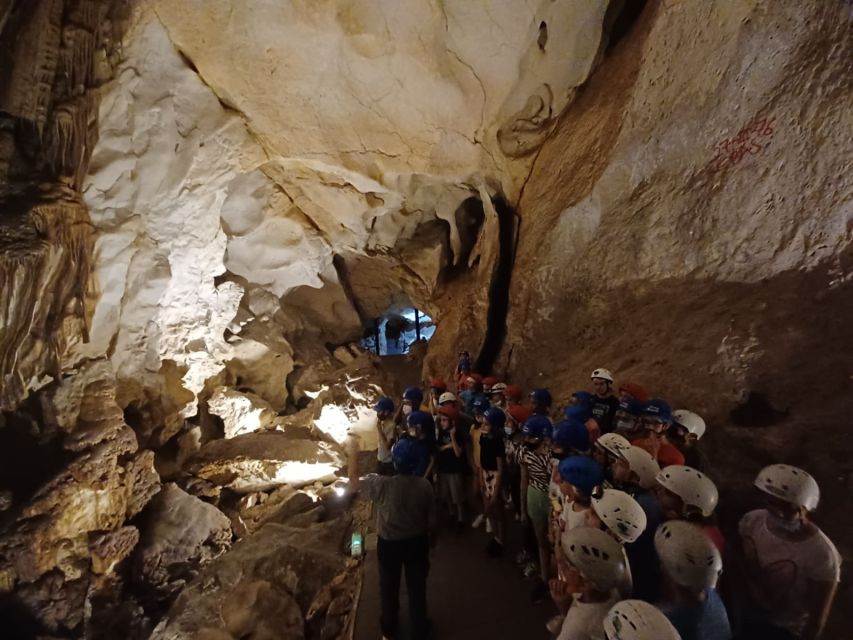
Your meeting point is the main entrance. Entry is included in the $22 price, and you meet the local guide there before the walk begins. The format is straightforward: reception, introduction, then the route underground.
The tour lasts about 1.5 hours. That is long enough to see the main galleries without turning the visit into an exhausting half-day outing. If you are planning a full day in the area, the timing leaves room for other stops around Calasparra. If you are coming only for the cave, the duration still gives you enough time to feel that you have seen a real underground network rather than one short chamber.
The tour is guided in Spanish. This matters. The shapes and lighting are easy to appreciate without much language, but the explanations about formation, discovery and geology are a major part of the experience. If you understand Spanish, you can follow the full story. If not, you can still enjoy the route, though some of the detail will pass you by.
A few other Spain outings to compare
- Barcelona: Sagrada Familia Entry Ticket with Audio Guide
★ 4.6 · 105,312 reviews - Barcelona: Park Güell Admission Ticket
★ 4.4 · 76,534 reviews - Seville: Royal Alcázar Entry Ticket
★ 4.6 · 28,378 reviews
Descending 50 meters below the mountain
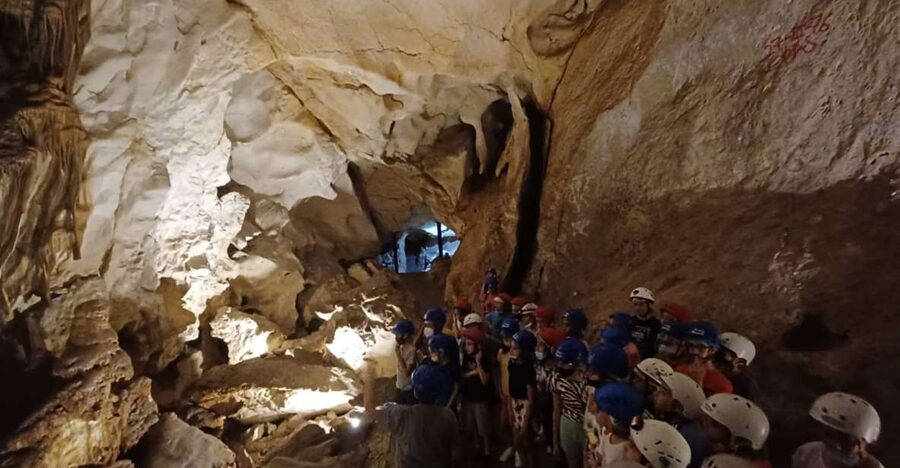
The first strong impression comes from the change in setting. Within the route, you leave ordinary daylight behind and enter galleries estimated to be 15 million years old. The cave is not just a dark room with a few stalactites. It is a series of natural spaces, each with different ceilings, walls and formations.
Your guide explains that water shaped the cave over thousands of years. That long process is easier to understand when you look closely at the stone. Water has left mineral deposits in uneven layers, creating ridges, drips and small rounded forms. Some stalactites resemble roots. Other little formations look like popcorn.
These comparisons are useful because cave rock can be hard to read at first. A guide helps you notice the difference between a smooth flow of mineral deposits and a sharper formation hanging from the ceiling. The lighting also picks out shadows and edges that might disappear in total darkness.
The cave was discovered in 1966, a detail that gives the route a modern human story alongside its much older geology. You can imagine the first people finding their way through a natural network hidden in the mountain, without the installed walkways and lights that make the current visit manageable.
Galleries shaped by water and time
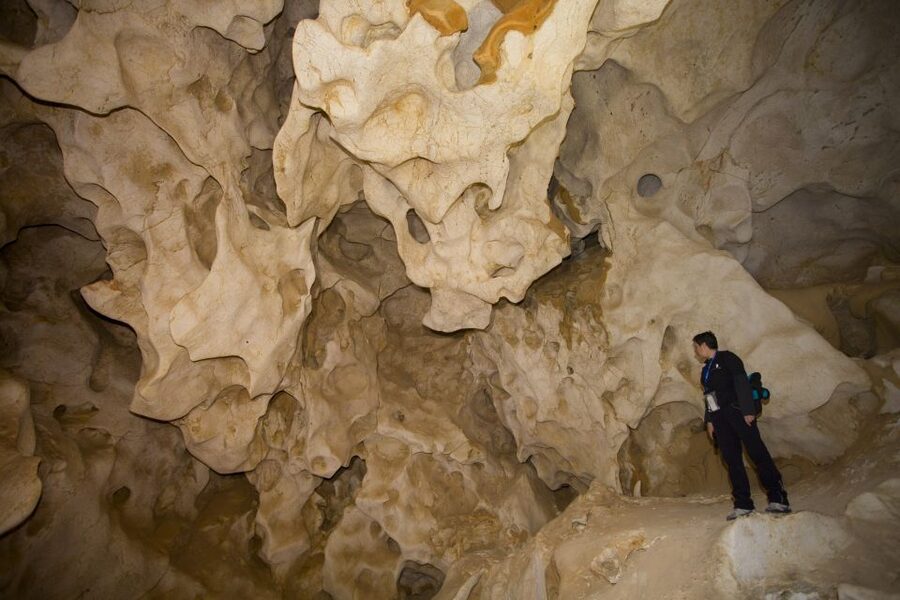
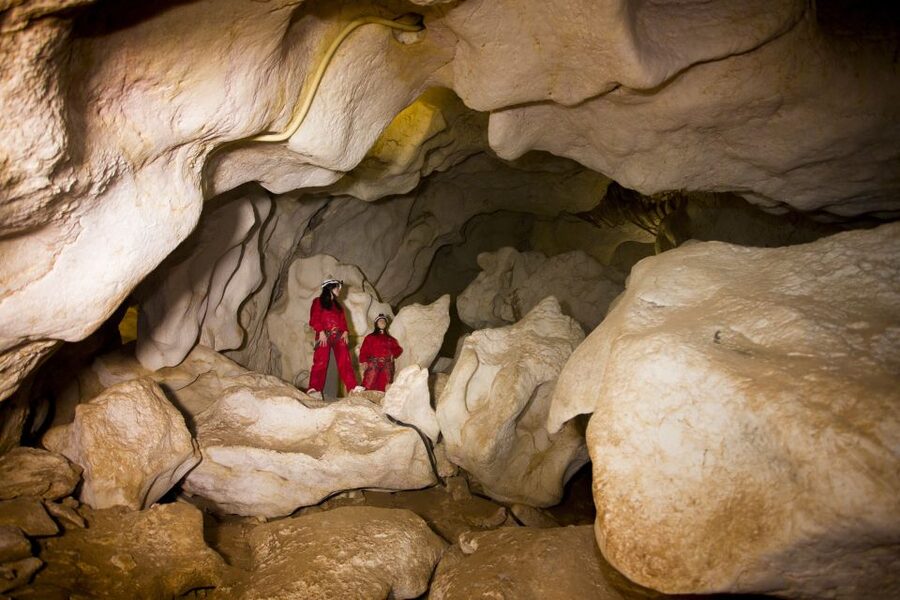
The tour covers roughly 700 meters through a number of natural galleries. You do not simply walk in a straight line and turn around. The changing rooms give the visit its rhythm, with different ceiling heights, wall patterns and clusters of formations.
One gallery is named after Antoni Gaudí. The name points to the sculptural quality of the rock. Gaudí drew ideas from natural shapes, and the cave formations have the same irregular, flowing quality that makes his work easy to recognize. This is not a museum display or a reconstruction. The stone itself creates the curves and patterns.
Look up as often as the walkway allows. Formations on the ceiling can be more interesting than the walls, especially where mineral deposits hang in clusters or spread across the rock like draped fabric. Some shapes are obvious at once. Others take a moment to see, which is why the guide’s pointing and explanations matter.
The LED lights are set to reveal the cave rather than leave you guessing in the dark. They create shadows across the walls and make the contours appear sharper. That lighting helps with photos, though the cave is best understood in person. A picture may record a shape, but it cannot show the scale of a chamber or the way the rock changes as you move through it.
Crossing the 20-meter bridges
The raised bridges are the most surprising part of the visit. Some are about 20 meters above the cave floor, giving you a view down into the space below. This is where the tour moves from a calm geology walk to something with a little Indiana Jones flavor.
You do not need to be an extreme adventurer to appreciate the bridges, but you should be comfortable with height. The route includes well-lit walkways and bridges, yet anyone uneasy around drop-offs may find this section stressful. The information provided does not describe the exact width or railing design, so it is sensible to ask at the entrance if height is a concern.
For most people, the bridges add scale. From a low path, a cave can feel like a collection of walls and ceilings. From above, you get a better sense of the hollow space and the distance between levels. The view down helps you understand that this is a substantial underground cavity, not a small decorative grotto.
The bridges also break up the walking. After studying mineral shapes at close range, you get a wider look across the chamber. Shadows from the LED lights stretch over the rock, and the combination of height, darkness and unusual shapes makes this the most memorable section of the route.
Same city, a completely different evening:
- Barcelona: Casa Batlló Entry with Self-Audioguide Tour
★ 4.7 · 25,359 reviews - Seville: Cathedral and La Giralda Entry Ticket
★ 4.5 · 24,592 reviews - Madrid: Tour Bernabéu Entry Ticket
★ 4.5 · 21,573 reviews - Barcelona: 24 or 48-Hour Hop-On Hop-Off Bus Tour
★ 4.4 · 20,872 reviews
The luminescent minerals room
The luminescent minerals room gives the tour a different mood. Here, lighting brings attention to the minerals and makes the rock glow in ways that are not as obvious in the other galleries.
This is a designed presentation within a natural cave, so it is worth seeing as a contrast. Much of the tour asks you to look at formations made slowly by water. The minerals room uses light to show how color, texture and shadow can alter your view of the same underground setting.
Do not expect the entire experience to be a glowing fantasy show. The main attraction remains the natural cave, its formations and its high walkways. The minerals room works best as a short visual change before you return to the broader route.
What the guides add to the visit
The guide is central to the value of this tour. Without explanations, you would still see the cave, but you might miss why certain shapes formed or how long the process took.
Manolo is named for giving a particularly complete explanation of the different rooms and how they formed. Ana is also named as a guide who made a strong impression, while Mavi led a visit that was described as especially good. The guide assigned to your departure can vary, but these names give you an idea of the local staff involved.
The tone of the visit is educational without needing to feel like a classroom. You walk, stop, look and listen. The guide links what you see to the action of water over thousands of years, then adds the story of the cave’s discovery in 1966.
Because the tour is in Spanish, language should be part of your booking decision. Spanish speakers can get the full benefit of the geological details. If you speak little Spanish, pay attention to gestures, formation names, lighting changes and the visual layout. You may still enjoy the route, but you should not book it expecting an English talk.
Comfort, clothing and the cave climate
The advice says to bring warm clothing, but the cave may not feel cold. A recent visit found the interior warm and quite humid, so a heavy jacket could become uncomfortable. I would bring a light layer rather than dressing for winter, unless you know you feel cold underground.
Closed-toe shoes are required in practical terms. The route includes walkways, bridges and a short flight of stairs, so secure footwear is a better choice than sandals or loose shoes. The information does not describe the route as strenuous, but you should be ready for ordinary walking and steps.
Humidity can make the air feel warmer than expected. It may also affect how comfortable you feel during a 1.5-hour visit. If you dislike warm, enclosed spaces, this is worth considering before you book.
Pets are not allowed. People with claustrophobia should also avoid the tour. The cave has lit paths and open galleries, but it remains an enclosed underground environment, and parts of the experience include height as well as confined surroundings.
Is $22 a fair price?
At $22 per person, the price is reasonable for a 1.5-hour guided visit with entry included. You are paying not only to enter the cave, but also for a structured route through about 700 meters of galleries, explanations in Spanish, maintained walkways, lighting, bridges and access to the luminescent minerals room.
The value is strongest if you care about geology or want a guided experience. A bare admission ticket would let you see the formations, but the story of water erosion, the cave’s age and its 1966 discovery would be harder to piece together on your own.
The price is less compelling if you are only looking for a quick photo stop or dislike guided pacing. You will follow the group and listen at set points rather than wander freely. Visitors who want a silent, private cave experience should look elsewhere.
The attraction has a 4.7 rating from 228 reviews, and the recurring strengths are clear: guides who explain the cave well, a route that feels complete, and a strong overall impression of the formations. One useful practical note is that a bar service may be available when you come out, which can be welcome after the warm, humid interior, though it is not part of the tour inclusions.
Who should book this cave tour?
I would recommend Cueva del Puerto to you if you enjoy natural history, unusual rock formations and small doses of adventure. The Gaudí Gallery, the mineral room and the high bridges give it more variety than a simple walk through one chamber.
It also suits visitors who want an off-the-beaten-path stop in the Region of Murcia. The setting in the Calasparra mountains gives the outing a sense of discovery, and the 1966 story adds a human touch to the ancient geology.
Families and older visitors may enjoy it if they are comfortable with stairs, heights and enclosed spaces. The available information does not provide a specific age limit or accessibility rating, so anyone with mobility concerns should confirm the route before booking.
I would be cautious if you need an English-speaking guide, have strong claustrophobia, or feel uneasy crossing bridges above a cave floor. The tour is not presented as a specialist climbing activity, but those raised sections are a real part of the experience.
Should you book Cueva del Puerto?
Book it if you want a well-priced, guided look at a genuine cave system rather than a quick attraction with a few decorative rocks. The 700-meter route, 50-meter descent, Gaudí Gallery, mineral room and 20-meter bridges make the visit varied and memorable.
Before paying, check that the departure is in Spanish and plan for humidity rather than bitter cold. Wear closed-toe shoes, bring a light layer, and be ready for a short set of stairs. For $22, this is a strong choice for curious visitors who enjoy geology and a little height with their underground scenery.
FAQ
Where is Cueva del Puerto?
Cueva del Puerto is in Calasparra, in the Region of Murcia, Spain. The cave is located in the mountains near Calasparra.
How long does the guided tour last?
The tour lasts about 1.5 hours.
How far underground does the route go?
The tour descends approximately 50 meters underground.
How long is the cave route?
The route through the cave covers about 700 meters.
How old is Cueva del Puerto?
The caves are estimated to be about 15 million years old.
What language is the tour in?
The live guided tour is in Spanish.
Are entry tickets included?
Yes. The entry ticket, walking tour and local guide are included.
Are there stairs on the route?
Yes. The route includes a short flight of stairs.
What should I wear?
Bring warm clothing and wear closed-toe shoes. Since the cave can feel warm and humid, a light layer may be more comfortable than a heavy coat.
Are pets allowed, and is the tour suitable for people with claustrophobia?
Pets are not allowed. The tour is not suitable for people with claustrophobia.
Recently added in Spain
- From Andratx: Formula Sunset Driving Tour★ 4.8 · 176 reviews
- Barcelona: Catamaran Cruise w/ Sailing, Wine, & Tapa★ 4.7 · 176 reviews
- Entrance to the Flamenco Temple Room in Madrid with Tapas Option★ 5.0 · 176 reviews
- Fuerteventura: Round-Trip or 1-Way Ferry Ticket to Lanzarote★ 4.7 · 176 reviews
- Mallorca Sailing Adventure with Snorkeling, Snacks & Drinks★ 5.0 · 176 reviews
- Valencia Private Walking Tour with Official Valencian Guide★ 5.0 · 176 reviews
- Benahavís: Canyoning Guided Tour at Guadalmina River★ 5.0 · 177 reviews
- Guided Gaudí Trencadís Mosaic Workshop in Barcelona 2 Hours★ 5.0 · 176 reviews
Tickets, compared.
Sagrada Familia Entry Ticket with Audio Guide
Read the review →



Live Flamenco Dancing Show Ticket at the Theater
Read the review →