Reviewed · BARCELONA TOURS
Barcelona: White Rabbit Catalonia’s Top Immersive Experience
Barcelona’s White Rabbit is less a traditional museum than a playful cultural set, where Catalan traditions become light, sound, VR, and hands-on art. In 10 rooms, you meet local legends, Gaudí-inspired designs, castellers, Sant Jordi, and the correfoc in ways that work especially well for families and curious first-time visitors.
I like the central address, just two minutes from Casa Batlló, and the strong mix of technology and local culture. The $18 price is fair for an hour of entertainment, though some rooms are more polished and engaging than others, so visitors seeking detailed art scholarship may find the treatment light.
Key points to know before you go
- Gaudí-style trencadís: See Catalan mosaic ideas translated into a 360-degree visual room.
- VR with a cultural purpose: Virtual reality helps tell stories tied to Catalonia, rather than serving only as a visual gimmick.
- Ten rooms in about an hour: The visit is compact, easy to fit between major sights on Passeig de Gràcia.
- A strong family stop: Children can touch, watch, move, and play, while adults get a quick introduction to Catalan customs.
- A convenient location: White Rabbit is one minute from Casa Batlló, according to the attraction’s directions.
- Useful practical details: Tickets cost $18 per person, the venue is wheelchair accessible, and last entry is at 7:00 PM.
White Rabbit puts Barcelona inside the room

Barcelona often asks you to look up: at Gaudí’s curved façades, tiled rooftops, church towers, and ornate balconies. White Rabbit asks you to step into a version of that city and experience it through projections, sound, movement, and digital effects.
The venue calls itself an OFF-Museum, which is a good clue to the tone. You will not find long rows of framed paintings or quiet galleries built for close reading. Instead, the experience uses 10 installations by local artists to give you a fast, playful introduction to Catalan culture.
That approach has a clear benefit. If you are visiting Barcelona with children, or if you want a break from churches and art museums, the format keeps the city’s traditions approachable. You are not expected to arrive with a background in Catalan history. You can simply enter, follow the visual story, and pick up the meaning as you go.
The tradeoff is just as clear. This is an entertainment-focused cultural experience, not a substitute for the Museu Nacional d’Art de Catalunya, the Picasso Museum, or a serious walking tour. You will get memorable images and cultural references, but not a detailed historical lesson.
A few other Barcelona outings to compare
- Barcelona: Sagrada Familia Entry Ticket with Audio Guide
★ 4.6 · 105,312 reviews - Barcelona: Park Güell Admission Ticket
★ 4.4 · 76,534 reviews - Barcelona: Casa Batlló Entry with Self-Audioguide Tour
★ 4.7 · 25,359 reviews
Ten installations, ten ways to see Catalonia
The visit moves through 10 distinct rooms. The supplied information does not give a fixed room-by-room sequence, and the exact presentation may change, but the main themes and technologies are clear.
You can expect VR, 360-degree screens, artificial intelligence, an immersive cube, and what the attraction describes as its largest infinity room. These tools give each section a different feel, so the hour does not depend on one large projection alone.
The best way to approach the visit is to treat each room as a short visual chapter. Some sections are made for watching. Others invite you to move around, look from different angles, or take part in the effect. That variety is a major reason the hour can feel quick, especially for younger children.
A few visitors have found some rooms more entertaining than others. I would set your expectations accordingly. White Rabbit is strongest when the technology supports a clear Catalan idea. When an effect is mainly decorative, it may feel like a colorful pause between the more memorable installations.
Gaudí’s trencadís becomes a 360-degree show
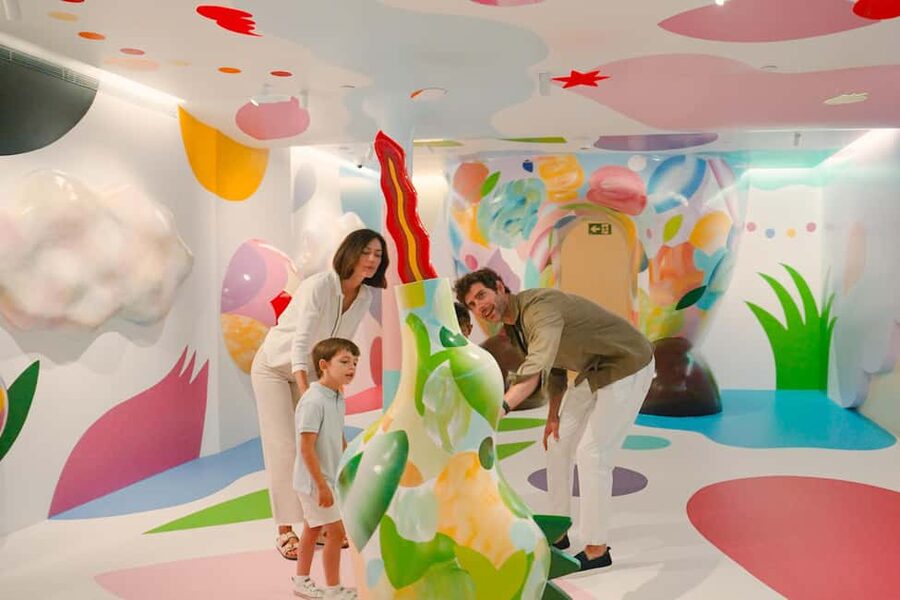
One of the clearest links to Barcelona is the room inspired by trencadís, the broken-tile mosaic technique closely associated with Catalan modernisme and the work of Antoni Gaudí.
You may know the style from Park Güell or the tiled surfaces around Casa Batlló. At White Rabbit, that familiar visual language is presented as a 360-degree experience rather than as a fixed wall or façade. The result gives you a chance to notice the color, fragments, and flowing patterns from inside the design.
This section works well before or after visiting Casa Batlló. White Rabbit is only about one minute from that landmark, so you can compare the digital interpretation with the real building while the details are fresh in your mind.
Do not expect the same architectural depth you would get from a guided visit to Casa Batlló. The value here is different. It helps children and casual museumgoers recognize one of Barcelona’s signature artistic ideas, then enjoy it as a room-sized visual event.
VR turns legends into short stories
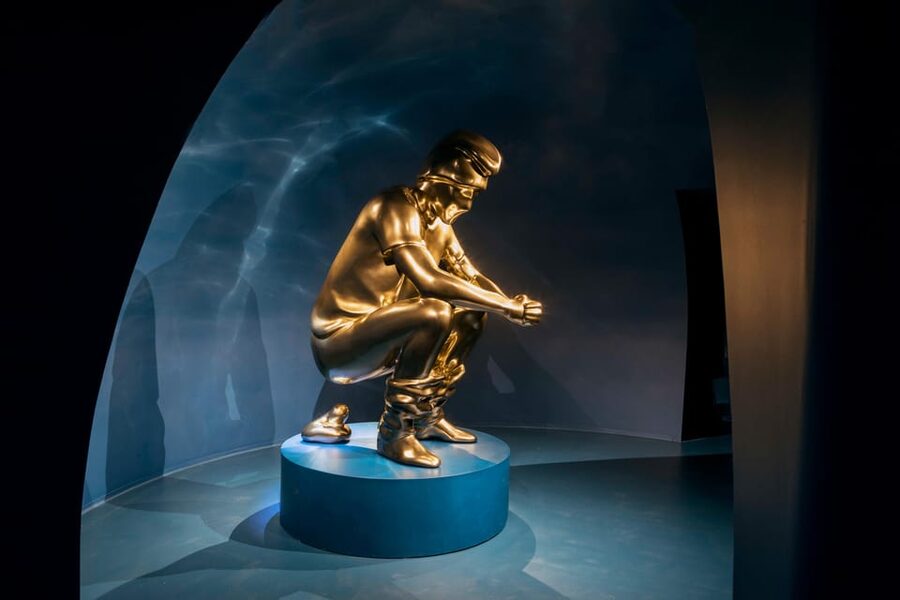
The virtual reality section is one of the more useful parts of the experience because it gives Catalan stories a sense of place and movement.
The program refers to legends such as Sant Jordi, the castellers, and the correfoc. Sant Jordi is connected with the famous Catalan celebration of books and roses. Castellers are the human tower builders seen at Catalan cultural events. Correfoc is the fire-filled street tradition involving costumed figures, sparks, and drums.
White Rabbit does not present these customs as dry definitions. VR lets the attraction bring them into a more immediate format. You may find this especially helpful if you have seen these words on signs or in guidebooks but have not yet understood why they matter.
The cultural storytelling is concise. That is good for attention spans, but it means you should not rely on this one-hour visit for a complete explanation of Catalonia’s traditions. Think of it as a lively introduction that may give you more interest in seeing these customs in real life if your timing matches a local event.
Same city, a completely different evening:
- Barcelona: 24 or 48-Hour Hop-On Hop-Off Bus Tour
★ 4.4 · 20,872 reviews - Barcelona: Park Guell Guided Tour with Skip The Line Entry
★ 4.7 · 17,563 reviews - Barcelona: La Pedrera-Casa Milà Ticket & Audio Guide Option
★ 4.7 · 15,099 reviews - Barcelona in 1 Day: Sagrada Familia, Park Guell,Old Town & Pickup
★ 5.0 · 13,541 reviews
The cube and infinity room provide the big visual moments
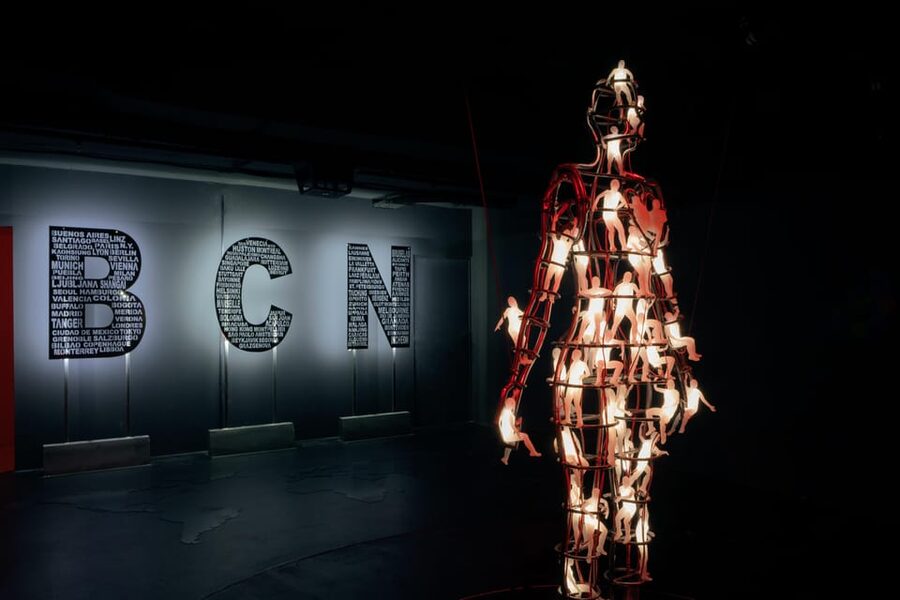
The cube is designed to surround you with changing images and light. It is one of the places where the technology does the most work, and it is likely to be a favorite for anyone who enjoys photographic spaces and strong visual effects.
The infinity room offers a different kind of spectacle. Mirrors, light, and repeated reflections create the sense that the room extends far beyond its physical walls. This is the sort of installation that makes a short visit feel more eventful because you are not simply looking at an object. You become part of the picture.
These rooms are fun, but they also explain one of White Rabbit’s limitations. The experience is built around quick visual impact. If you prefer slow observation, original objects, and detailed labels, you may find the effects more impressive than meaningful.
For most families, that is not a problem. Children can react to the space immediately, and adults can enjoy the unusual setting without needing to decode a long explanation. One child-friendly detail even extends to the toilet, which has become part of the attraction’s playful character.
Catalan culture without the formal museum tone

The attraction’s biggest success is its tone. It treats culture as something you can play with, not something you must approach carefully from behind a rope.
That matters in Barcelona, where visitors often move from one monumental site to another without learning much about everyday Catalan identity. White Rabbit offers a quick look at local customs and legends in a setting that feels modern and accessible.
I particularly like the way the program connects cultural references to different senses. A screen can show a tradition, VR can place you inside a story, and a room can turn an artistic technique into a physical environment. The result will not satisfy every question, but it can make the city feel less like a collection of famous buildings.
Some installations are highly interactive. Others are more passive. One comment specifically suggested that even more interactive elements would improve the visit, which is useful to keep in mind. If you are buying a ticket because you want constant participation, the experience may not meet that exact expectation.
Why families tend to get good value here
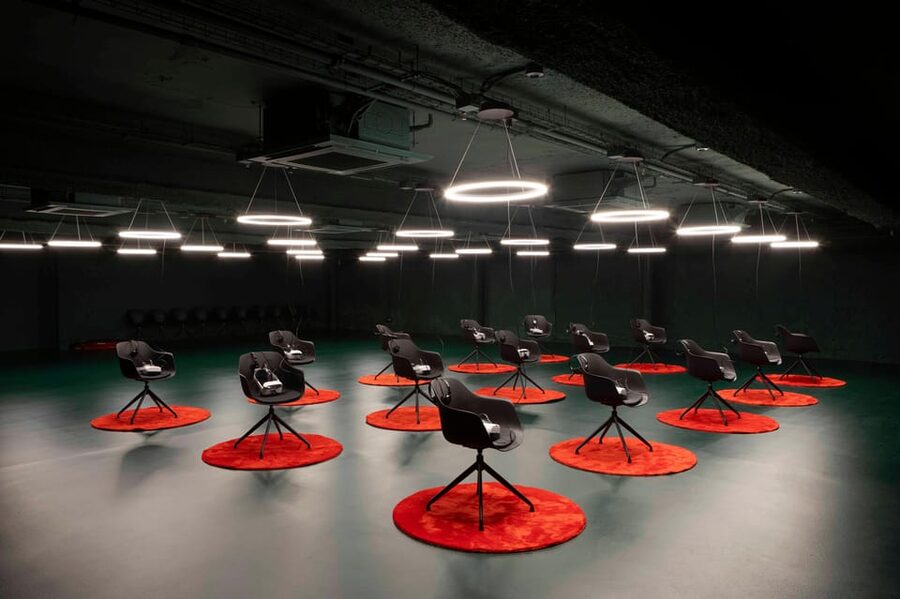
White Rabbit is a particularly practical choice for families with school-age children. The visit lasts about 60 minutes, which is long enough to feel worthwhile but short enough to fit into a busy sightseeing day.
Children can respond to color, movement, mirrors, screens, and the VR section without needing a long attention span. The different rooms also make it easier to reset attention. Just as a child starts to tire of one effect, the setting changes.
Adults are not left with nothing to do. The subject matter gives you a quick introduction to Catalan culture, and the strongest rooms offer visual ideas that connect back to Barcelona’s architecture and public festivals. The attraction is also air-conditioned, a useful point during a hot afternoon.
I would be more cautious about bringing very young children if they are sensitive to loud or changing visual effects, since the supplied information does not describe the intensity of every room. The venue is wheelchair accessible, but if you need detailed access information for a particular installation, confirm directly before booking.
An easy stop on Passeig de Gràcia

Location is one of White Rabbit’s strongest practical advantages. You will find it on Passeig de Gràcia, one of central Barcelona’s main avenues, close to Casa Batlló.
That makes it easy to combine with the modernist sights in the Eixample. You could visit Casa Batlló, stop at White Rabbit, then continue along Passeig de Gràcia toward La Pedrera. The hour-long format gives you a clear time block, rather than an open-ended museum visit that can expand and disrupt your plans.
The ticket is an open-time ticket for the selected date. You can enter at any time during opening hours on that date, but last entry is at 7:00 PM. Since the duration is about one hour, do not arrive at the final minute and expect a full visit.
The host or greeter service is available in English, Spanish, and Catalan. That language range is helpful if you want basic explanations of the cultural references rather than simply moving from room to room.
Is $18 a fair price?
At $18 per person, White Rabbit is priced like a moderate city attraction rather than a major museum or full guided tour. For an hour of timed content, the value depends on what you want from Barcelona.
I think the price works well for families, couples, and friends who enjoy interactive art. The visit gives you 10 installations, several different technologies, cultural themes, and access to the OFF-SHOP. It also offers a cool indoor break in a very central part of the city.
The value is weaker if you want a large collection of original art or a long historical presentation. You are paying for design, technology, and a compact experience, not for a traditional museum’s collection.
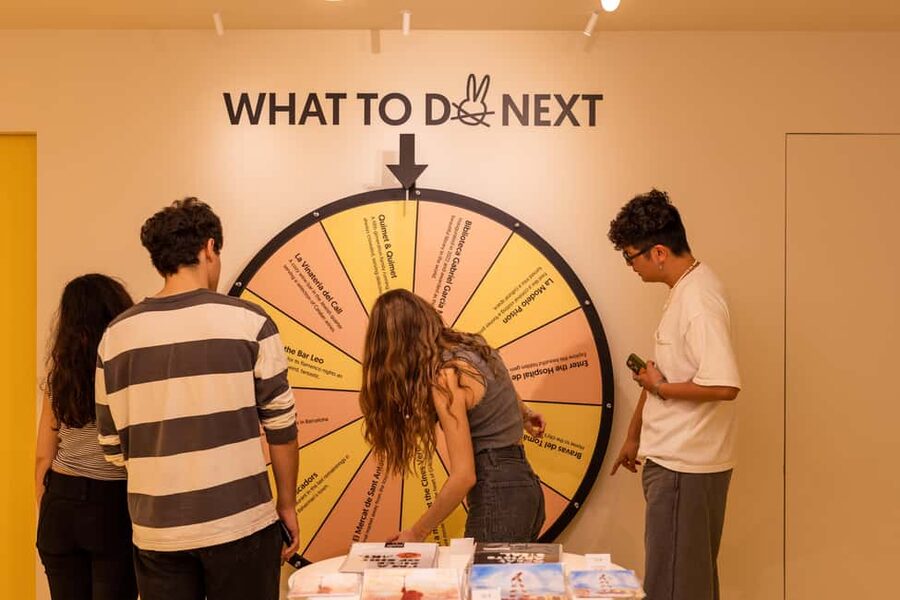
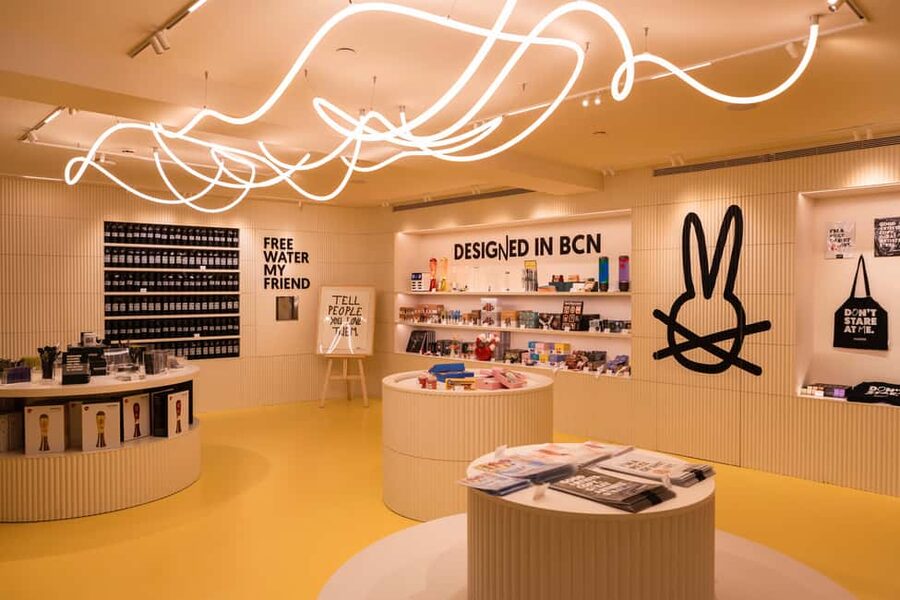
The shop adds a small bonus, though purchases are not included. You can browse exclusive gifts and find coffee and ice cream connected with local brands. Food and drinks are extra, so think of the shop as an optional ending, not part of the ticket’s core value.
Free cancellation is available up to 24 hours before the visit for a full refund. You can also reserve now and pay later, which helps if you are still adjusting a Barcelona itinerary.
Who should book White Rabbit?
I would put White Rabbit high on the list for:
- Families looking for a one-hour activity that holds children’s attention
- First-time visitors who want a quick introduction to Catalan customs
- Anyone who enjoys VR, projection art, mirrors, and unusual photo settings
- Couples or friends seeking something different from Barcelona’s standard sights
- Visitors needing an air-conditioned break near Casa Batlló
- Repeat visitors who have already seen the main landmarks and want a modern cultural stop
I would choose a traditional museum or a specialist walking tour instead if your main goal is detailed art history, original objects, or sustained historical context.
The strongest praise has focused on the fun, the interactive rooms, the VR storytelling, the light show, the friendly staff, and the family value. A few practical impressions also matter: the venue can feel uncrowded at times, and the staff has been singled out for helpful explanations. There is no named guide listed, so you should not book this expecting a personal guided tour led by a particular person.
Final verdict: book it for a playful cultural hour
White Rabbit is a good choice when you want Barcelona culture delivered with color, technology, and a sense of humor. It will not replace Casa Batlló, Park Güell, or a serious museum, but it can help you see familiar Catalan ideas in a new way.
Book it if you are traveling with children, need an indoor break, or want an easy activity near Passeig de Gràcia. At $18, the price is reasonable for the location and the range of installations.
Skip it if you dislike digital effects or expect every room to offer substantial historical detail. For everyone else, White Rabbit makes a useful one-hour stop, especially when you pair it with the modernist sights just outside its door.
FAQ
Where is White Rabbit in Barcelona?
White Rabbit, The OFF-Museum of Barcelona, is located on Passeig de Gràcia, about one minute from Casa Batlló.
How long does the experience last?
The visit lasts about 60 minutes.
How much does admission cost?
The listed price is $18 per person.
How many installations are included?
Your ticket includes access to 10 art installations by local artists.
What kinds of technology are used?
The experience includes virtual reality, 360-degree screens, artificial intelligence, an immersive cube, and a large infinity room.
Is White Rabbit suitable for children?
Yes. The experience is family-friendly, with interactive rooms and visual installations that are designed to appeal to children and adults.
What Catalan traditions are featured?
The experience includes references to Sant Jordi, castellers, correfoc, Catalan mosaic traditions, and the magic of Montjuïc.
Is the venue wheelchair accessible?
Yes, White Rabbit is wheelchair accessible.
What languages are available?
Hosts or greeters are available in English, Spanish, and Catalan.
What is the latest entry time?
The last entry is at 7:00 PM. The open-time ticket allows entry during opening hours on the selected date.
Are food and drinks included?
No. Food and drinks are not included, though the OFF-SHOP offers coffee and ice cream from local brands.
Can I cancel my booking?
Yes. You can cancel up to 24 hours in advance for a full refund.
Can I pay later?
Yes. The reserve-now, pay-later option lets you hold your plans without paying at the time of booking.
Recently added in Barcelona
- Barcelona: Catamaran Cruise w/ Sailing, Wine, & Tapa★ 4.7 · 176 reviews
- Guided Gaudí Trencadís Mosaic Workshop in Barcelona 2 Hours★ 5.0 · 176 reviews
- Barcelona Cable Car Sky Views, Magic Fountain & Castle Visit★ 4.2 · 177 reviews
- Barcelona Private Sunset Sailing with Drinks★ 5.0 · 177 reviews
- Barcelona: Montserrat with Winery Visit and Farmhouse Lunch★ 4.7 · 178 reviews
- Barcelona: Nightmare Horror Museum Maze Entry Ticket★ 4.5 · 179 reviews
- Barcelona: City Sights Electric Quad Tour★ 4.8 · 178 reviews
- Barcelona: Professional Photoshoot Outside Sagrada Familia★ 4.8 · 179 reviews
Barcelona Tours, compared.

Sagrada Familia Entry Ticket with Audio Guide
Read the review →


Park Guell Guided Tour with Skip The Line Entry
Read the review →La Pedrera-Casa Milà Ticket & Audio Guide Option
Read the review →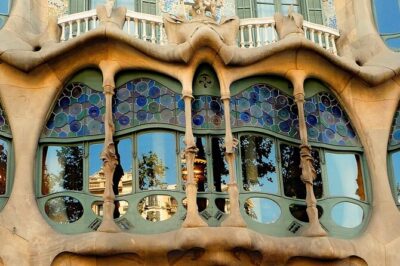
Barcelona in 1 Day: Sagrada Familia, Park Guell,Old Town & Pickup
Read the review →