
Reviewed · HISTORICAL TOURS
Historical Italica: Half-Day Guided Tour from Seville
Just outside Seville, Italica gives you a direct look at Roman life in southern Spain. You walk through the remains of a planned city, study enormous floor mosaics, and enter the tunnels beneath an amphitheater built on a scale that still feels startling today.
I like the short ride from Seville and the way a guide turns scattered walls into a readable city. I also like the unexpected visit to San Isidoro del Campo, a fortress-like monastery with its own long story. The main caution is time keeping: late departures or extra pickup stops have occasionally shortened the visit or delayed the return.
Key things to know before booking
- Roman Italica is only about 15 to 20 minutes from central Seville, so little of your half-day is lost on the road.
- The large mosaics and upper-class domus houses are the main attraction, not just the amphitheater.
- San Isidoro del Campo adds about an hour and brings medieval and religious history into a Roman-focused outing.
- English guide quality can vary, although guides such as Jesús, Rebecca, Leon, Miguel, Juanra, and Alberto have been singled out for clear explanations and lively storytelling.
- Bring water, sun protection, and identification, especially in summer. Food and drinks are not included.
- The tour is capped at 60 people, so this is a shared group outing rather than a private archaeological walk.
Why Italica matters near Seville
Italica was a Roman settlement founded in what is now Santiponce, just outside Seville. It is often described as the first Roman city on the Iberian Peninsula, making it an important site for understanding Rome’s expansion into Hispania.
The ruins are not a single monument. You are walking through the remains of a city, with roads, houses, public buildings, decorative floors, and the amphitheater spread across an open archaeological area. That city scale is what makes the visit worthwhile. Instead of seeing one isolated ruin, you begin to understand how wealthy Roman residents lived and how public entertainment fitted into daily life.
I find the site especially useful for visitors who have already seen Roman ruins in Italy. Italica has a different feel. It is quieter than Rome’s famous monuments, and the exposed plan of the city lets you look across streets and house complexes rather than simply admire one enormous structure.
The settlement also connects to famous Roman figures. Italica is associated with the emperors Trajan and Hadrian, though your guide’s treatment of that subject will depend on the day’s route and presentation. A good guide helps separate what is firmly established from what is often simplified for a general audience.
More Historical Tours in Seville
- Sevilla Food Tour: Tapas, Wine, History & Traditions
★ 5.0 · 3,468 reviews - Ultimate Seville Tapas, Wine & History Small Group Tour
★ 5.0 · 1,766 reviews - Seville: Tapas, Taverns, and History Walking Tour
★ 4.9 · 676 reviews
Walking through Italica’s streets and domus houses
The two-hour visit to the archaeological ensemble is the heart of the excursion. Expect a guided walk rather than a museum-style visit. You move through the remains while the guide explains how the buildings may have functioned and points out details that are easy to miss without context.
The domus houses are a major strength. These were large residences for wealthy Romans, laid out around interior courtyards and decorated with patterned floors. Even when walls are low or incomplete, the floor plans make the social gap between rich and poor clear. These were not simple homes. They were designed to impress.
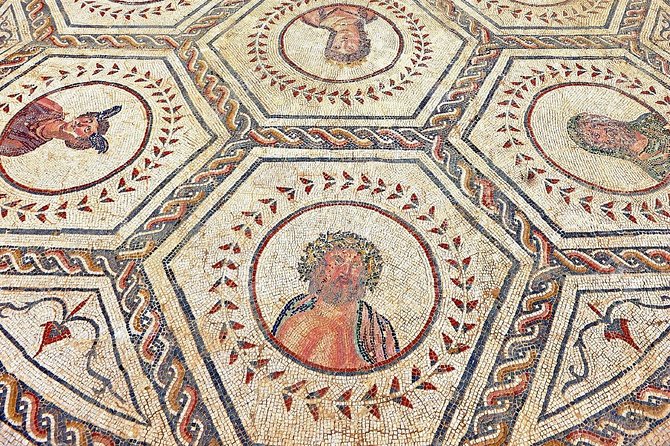
The mosaics are the real stars. Intricate geometric patterns and mythological scenes remain visible across several rooms. One frequently noted detail is the mosaic connected with Theseus and the Minotaur. Look closely at the borders as well as the central figures. The repeated patterns show how much care went into areas that were meant to be walked across every day.
A guide is useful here because the site can otherwise feel like a collection of foundations. Guides including Jesús, Rebecca, Miguel, Juanra, Leon, and Alberto have been praised for explaining Roman daily life, the excavation work, and the changing understanding of Italica. The best presentations help you picture streets filled with people, rather than treating each ruin as an isolated object.
You should also expect active archaeological work in parts of the site. That can be interesting, since you see that Italica is still being studied and uncovered. It also means the exact route may vary, and not every area is necessarily open on every visit.
The amphitheater and its underground passages
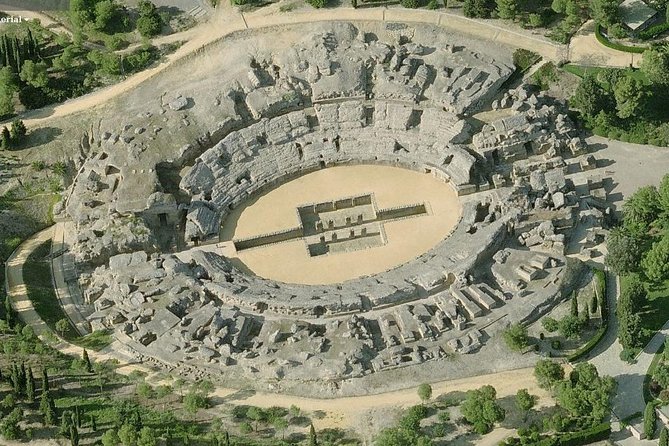
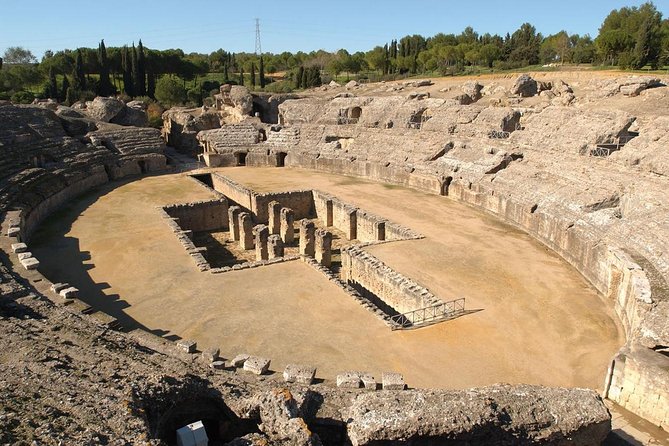
The amphitheater is the site’s most dramatic structure. It was enormous for its time and is commonly described as capable of holding about 25,000 spectators. Some accounts place it just behind Rome’s Colosseum in size during the Roman period, though comparisons depend on how ancient structures are measured.
From the upper levels, you can grasp the shape of the arena and the scale of the seating. The underground tunnels are another highlight. Walking through these passages gives you a more physical sense of how performers, animals, and workers may have been moved beneath the arena floor.
Do not confuse the amphitheater with a separate Roman theater. The excursion information emphasizes the amphitheater, while some visitors have found that the theater and baths were not part of their actual route. If seeing the theater is essential to you, ask the guide at the start exactly which areas are open and included that day.
The amphitheater rewards a slow look. Notice the entrances, the curves of the seating structure, and the contrast between the massive public venue and the more intimate homes elsewhere in Italica. This is where the city’s public life becomes easiest to imagine.
San Isidoro del Campo: a useful extra or a long second act
After Italica, the group visits San Isidoro del Campo, a former fortress monastery near the archaeological complex. The stop lasts about an hour and admission is included.
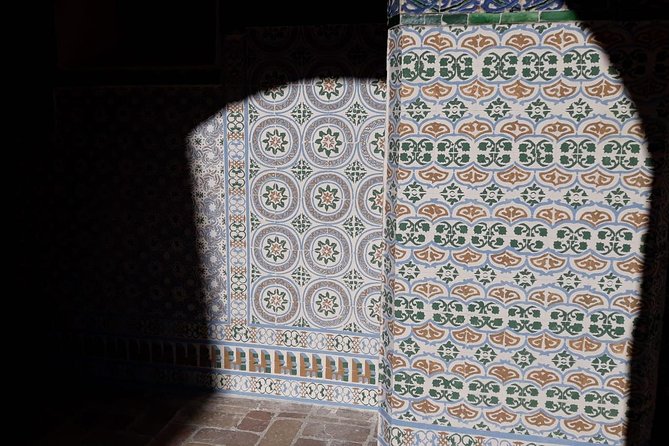
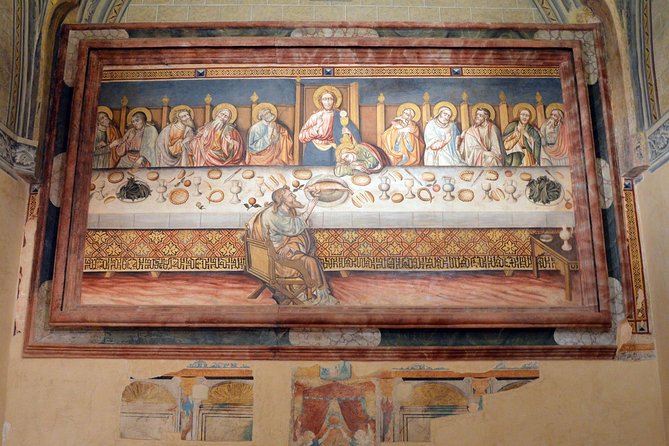
The monastery is a very different experience. Italica is open-air Roman archaeology. San Isidoro del Campo brings you into a religious complex shaped by medieval and later Spanish history. You may see architectural details, church interiors, and artwork that give the stop value for anyone interested in Spain beyond the Roman period.
I like the contrast. It prevents the outing from becoming four straight hours of foundations and mosaics, and the monastery is not a place many people would find on their own. Several guides have added stories about its past rather than simply walking the group through the building.
Still, this stop will not suit everyone. If your interest is strictly Roman archaeology, you may find the monastery less compelling, especially after two hours in the sun at Italica. Some visitors consider it an unnecessary addition, while others enjoy it as an unexpected bonus. Think of it as part of the tour, not a minor photo stop.
A few other Seville outings to compare
- Montserrat Half-Day Tour with Tapas and Gourmet Wines
★ 5.0 · 7,359 reviews - From Barcelona: Montserrat Half-Day Wine and Tapas Trip
★ 4.8 · 1,918 reviews - Montserrat: Morning or Afternoon Half-Day Trip with Pickup
★ 4.7 · 1,454 reviews - From Barcelona: Half-Day Montserrat Experience
★ 4.8 · 1,096 reviews
The guides make a real difference
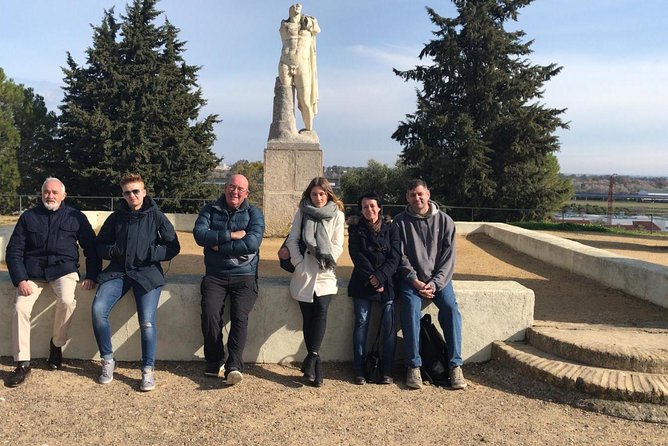
The tour is sold in English, but the guide assigned to your departure matters. Past guides praised for their delivery have included Jesús, Rebecca, Leon, Miguel, Juanra, Catherine, Inez, and Alberto. Their strengths have included storytelling, Roman history, Latin terms, local archaeology, and practical explanations of what you are seeing.
Alberto, in particular, has been noted for turning the ruins into a vivid account of ancient city life. Jesús has been praised by people with a serious interest in Roman history, while Rebecca has been appreciated for pointing out small details and making solo visitors feel included. Leon has received praise for his enthusiasm and ability to keep a large group involved.
That said, English fluency and historical precision have not been consistent on every departure. One English-language guide was difficult for some people to understand, and another visit combined English and French at the monastery despite being sold as an English tour. If you need very polished English or detailed academic treatment, this is worth considering.
I also prefer guides who explain uncertainty. Roman and Spanish history can be complicated, and quick group tours sometimes flatten it into a simple story. You will get the most from the experience if you treat the guide as an interpreter of the site, then ask specific questions when a point seems unclear.
Transport, timing, and the four-hour schedule
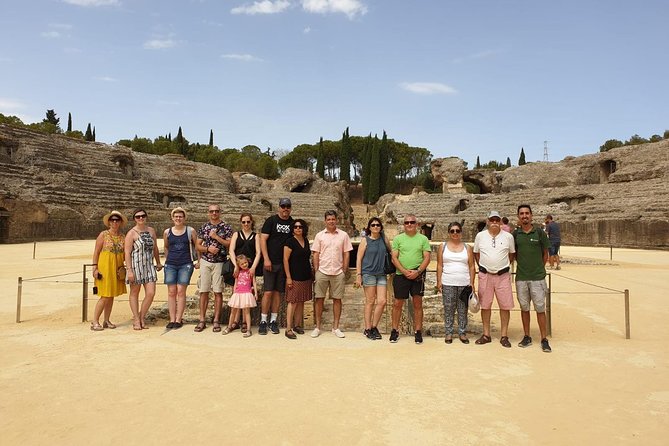
Round-trip shared transport is included, which makes this easy to fit into a Seville itinerary. The ride is short, and the bus has generally been described as clean and comfortable.
The advertised duration is about four hours. A typical day includes roughly two hours at Italica and one hour at the monastery, with the remaining time used for transport, meeting the group, and moving between sites.
The schedule is the main practical weakness. Multiple pickup points can make the start slower than expected, and delays of around 30 minutes have occurred. That matters if you have a train, flight, lunch booking, or another timed activity afterward. I would leave a generous buffer and avoid scheduling anything important immediately after the stated return time.
The group may include up to 60 people. That is a fairly large number for an archaeological site, though the operation may divide people into separate language groups. English, Spanish, and French groups have been used on some departures.
A larger group keeps the price down, but it can make it harder to hear or ask questions. Stay close to the guide, especially in open areas where sound carries poorly. The guided format is still useful, since Italica has enough detail to reward explanation, but do not expect the pace or personal attention of a private tour.
Heat, walking, and what to bring
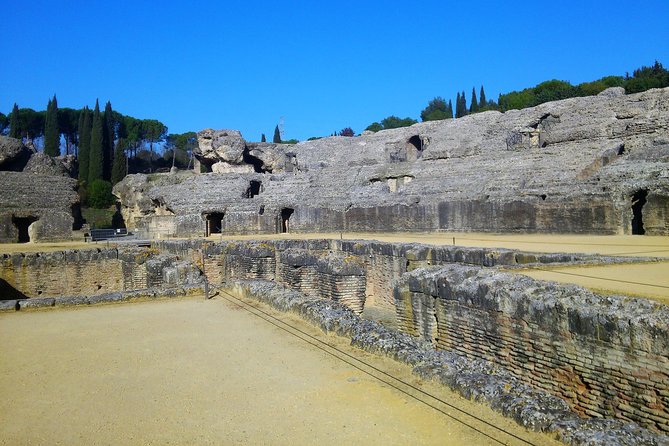
Italica is an outdoor archaeological site with limited shade. Summer heat can become the deciding factor. In August, you may find yourself moving from one patch of shade to the next, particularly during the amphitheater visit.
Bring:
- Water, since food and drinks are not included
- A hat and sunscreen
- Comfortable walking shoes
- Identification
- A phone or other secure way to access your booking details
One important point is identification. Some people were not clearly told to bring it and had to rely on passport images stored on their phones. Carry the required ID in the form requested by the operator rather than assuming a screenshot will be accepted.
Most people can participate, but the walk is outdoors and includes uneven archaeological surfaces. The available information does not promise a specific accessibility arrangement. If you have mobility concerns, ask before booking how the current route works.
Rain does not necessarily ruin the visit. Italica can still be interesting in wet weather, though mosaics and open paths are less comfortable when conditions turn poor. Good shoes matter more than style here.
Is the $47.18 price good value?
At $47.18 per person, this is a reasonable price for round-trip shared transport, a professional guide, admission, and two historical sites. You are paying for convenience as much as for entry tickets. The short transfer from Seville means you can see Italica without working out the local bus, finding the entrance, and building your own explanation of the ruins.
The value is strongest if you want a structured half-day and have limited time in Seville. A good guide adds meaning to the mosaics, explains the amphitheater, and connects the site to Roman society. The monastery then gives you a second setting at no extra admission charge.
The value is weaker if you already have strong archaeological knowledge, prefer to move slowly, or dislike group schedules. A self-guided visit may cost less in transport, and you can choose your own pace. But you will need to arrange the journey and do more preparation yourself.
For most first-time visitors with a real interest in Roman history, the price is fair. The key is to judge the tour as a convenient guided outing, not as a specialist excavation tour.
Who should book this Italica excursion?
I would recommend it to:
- People fascinated by Roman cities, mosaics, and amphitheaters
- Visitors who want to get beyond Seville’s central monuments
- Solo visitors who like meeting others through a shared activity
- Anyone who wants transport and admission handled in one booking
- History lovers who appreciate a second stop with a medieval focus
I would be more cautious if you need a guaranteed punctual return, dislike walking in heat, or want only Roman sites. Families and older visitors should also consider the weather, group size, and walking surface before booking.
The strongest part is clearly Italica. The mosaics are unusually impressive, and the city plan gives you more to explore than a single standing monument. San Isidoro del Campo is a pleasant addition for some people, but it may feel like an obligation if your attention is already spent.
Should you book it?
Book this tour if you want an easy, affordable way to see Italica from Seville and you value a guide’s explanation more than complete independence. The amphitheater, underground passages, and domus mosaics justify the trip, and the monastery adds an unusual second chapter.
Skip it, or arrange your own visit, if you have advanced knowledge of Roman archaeology and want to control every minute. If you do book, carry water, bring ID, wear sun protection, and leave extra time after the tour. Those small precautions address the main problems without taking away from what makes Italica memorable.
Free cancellation is available up to 24 hours before the start time for a full refund. The experience requires a minimum number of participants, so a cancellation by the operator may lead to another date or a full refund.
FAQ
How long does the Historical Italica tour from Seville last?
The tour lasts approximately four hours, including the visit to Italica, the monastery stop, and shared transportation from Seville.
How much does the tour cost?
The listed price is $47.18 per person.
Is the tour offered in English?
Yes. The experience is offered in English, though the guide assigned to a particular departure may vary.
What is included in the price?
The price includes a professional guide or driver-guide, round-trip shared transfer, admission, and all taxes.
Are food and drinks included?
No. Food and drinks are not included, so bring water, especially during hot weather.
How much time is spent at Italica?
The scheduled visit to the archaeological ensemble lasts about two hours.
Is the monastery included?
Yes. The itinerary includes San Isidoro del Campo, with about one hour allocated to the visit and admission included.
How many people can join the tour?
The maximum group size is 60 people. Language groups may be separated on some departures.
Can I cancel for a full refund?
Yes. You can cancel at least 24 hours before the experience start time for a full refund. Cancellations or changes made less than 24 hours in advance are not accepted for a refund.
More Historic Sites in Seville
- Seville Evening Historical Tour with Haunted History
★ 5.0 · 626 reviews - Historic Gibraltar Rock and St Michael’s Cave Tour from Seville
★ 4.5 · 590 reviews - Seville: Tapas, Taverns and History Guided Walking Tour
★ 4.9 · 515 reviews - Private Seville Tapas & History Tour
★ 5.0 · 380 reviews
Recently added in Seville
- 3-hour Guided Bike Tour along the Highlights of Seville★ 5.0 · 315 reviews
- Cordoba City Tour with Mosque-Cathedral from Seville★ 4.5 · 326 reviews
- Seville: Guided Sunset Bike Tour★ 4.9 · 332 reviews
- Seville: Alcazar & Cathedral Skip-the-Line Guided Tour★ 4.5 · 332 reviews
- Seville: Flavors of Andalucía Guided Food Tour with Tastings★ 4.9 · 332 reviews
- Seville Private Walking Tour with Alcazar & Cathedral Tickets★ 5.0 · 332 reviews
- Seville & Alcazar Skip the Line from Cadiz Port (Cruisers Only)★ 5.0 · 337 reviews
- Seville: Authentic and Romantic Horse-Drawn Carriage Ride★ 4.5 · 341 reviews
Historical Tours, compared.
Madrid Essential: Historic Center, Plaza Mayor & Royal Palace
Read the review →
Tapas Walking Tour with Food, Wine, and History
Read the review →
Sevilla Food Tour: Tapas, Wine, History & Traditions
Read the review →
Valencia Old Town Tour with Wine & Tapas in 11th Century Historic Monument
Read the review →
Barcelona Tapas Walking Tour: Food, Wine & History
Read the review →
Ultimate Seville Tapas, Wine & History Small Group Tour
Read the review →
Skip-the-Line Great Mosque-Cathedral History Tour
Read the review →
Browse the lists this tour appears in