
Reviewed · MADRID TOURS
Andalusia: Cordoba, Seville & Granada from Madrid – 4 Nights
The star of this five-day trip is the Alhambra, but the real appeal is the sweep of it all. From Don Quixote country and Cordoba’s striped Mosque-Cathedral to Seville’s tiled plazas and Toledo’s medieval lanes, you get a fast, well-packed introduction to southern Spain without arranging trains, hotels, and admission tickets yourself.
I like the four included hotel nights and the local guides in each major city. I also like the way the route builds from Cordoba to Seville and Granada, then finishes in Toledo. The catch is simple: this is a lot of Spain in a short time, and some stops feel more like previews than proper visits.
Key points at a glance
- The Alhambra and Generalife Gardens are included, with a three-hour guided visit and a passport requirement.
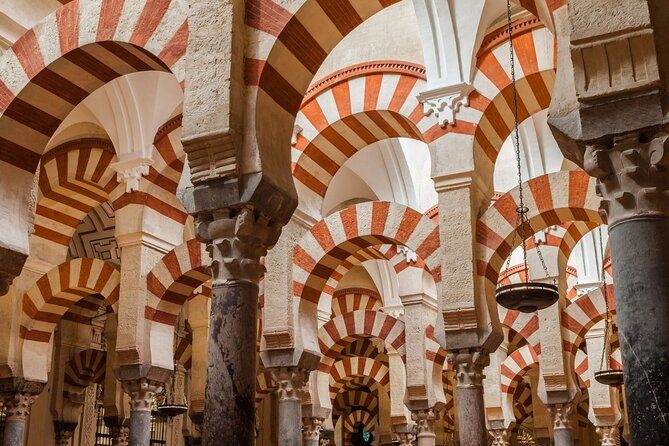
- Cordoba’s Mosque-Cathedral and Jewish Quarter give you the strongest first taste of Andalusia’s layered past.
- Seville includes the Cathedral exterior, Santa Cruz, Maria Luisa Park, and Plaza de España, but not the Royal Alcazar.
- Four nights in four-star-category hotels make the package convenient, though Spanish hotel grades can feel lower than expected.
- Toledo is the final cultural stop, but the guided visit leaves little time to explore alone.
- A maximum of 40 people, air-conditioned transport, four breakfasts, and several optional evening activities are part of the setup.
Why this route works from Madrid
Madrid sits far enough from Andalusia that independent day trips become tiring and expensive. This tour handles the long southbound and northbound drives by coach, giving you a single booking for transport, hotels, guided visits, and major entry tickets.
The route is not designed for slow travel. You will cover four famous cities, cross much of central and southern Spain, and spend plenty of time on the road. Still, the sequence makes sense. Cordoba introduces the Islamic and Christian layers of Andalusia. Seville adds royal, religious, and popular culture. Granada brings the grand finale at the Alhambra. Toledo then gives you a final look at Christian, Muslim, and Jewish traditions before returning to Madrid.
At $949.11 per person, the price is easiest to justify if you value convenience. Four nights of accommodation, an air-conditioned coach, guided visits, travel insurance, four breakfasts, and the main entrance fees are bundled together. If you are comfortable arranging rail tickets, hotels, and Alhambra admission on your own, you may prefer independent travel. The Alhambra ticket alone requires careful planning, so the package has real value for a first visit.
A few other Madrid outings to compare
- Madrid: Tour Bernabéu Entry Ticket
★ 4.5 · 21,573 reviews - Madrid: Prado Museum Entry Ticket
★ 4.6 · 17,509 reviews - Madrid: Royal Palace Fast-Access Admission Ticket
★ 4.6 · 13,856 reviews
Day 1: Don Quixote country and Cordoba’s Mezquita
The morning begins at 8:00 am at the Meliá Castilla in Madrid. Hotel pickup is not included, so you need to reach the meeting point yourself. From there, the coach heads south through Castile-La Mancha, the dry central region associated with Cervantes and Don Quixote.
A short stop in Puerto Lapice breaks up the drive. It is a modest pause rather than a major sightseeing visit, but it gives you a sense of the old road south and the literary Spain behind the route.
The bigger reward comes after crossing Despeñaperros into Andalusia. This natural pass marks a clear change in scenery and region. You then reach Cordoba, once a major center of Islamic Spain and now a UNESCO World Heritage city.
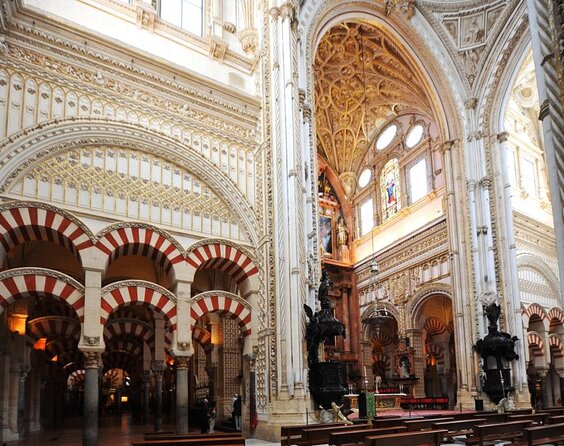
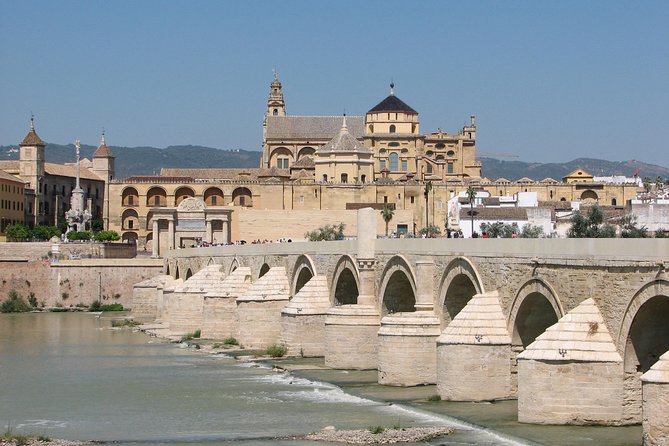
The Mezquita Cathedral de Cordoba is the day’s essential sight. Inside, rows of red-and-white arches create one of the most memorable interiors in Spain. The building’s present form reflects several periods of worship and political change, with the Catholic cathedral inserted into the former mosque. A guide helps you read the building as a historical document rather than just a striking photograph.
The visit lasts about two hours and includes admission. Afterward, you walk through Cordoba’s Jewish Quarter, where narrow, winding streets and whitewashed walls give the old city an intimate feel. Wear shoes with a firm grip. The cobbled lanes are attractive, but they can be uneven and tiring after a long morning.
The coach then continues to Seville, about two hours away. This is a full opening day, with roughly five hours of transport and touring combined. The schedule works best if you accept that the first day is about orientation, not complete sightseeing.
Day 2: Seville’s famous squares and free afternoon
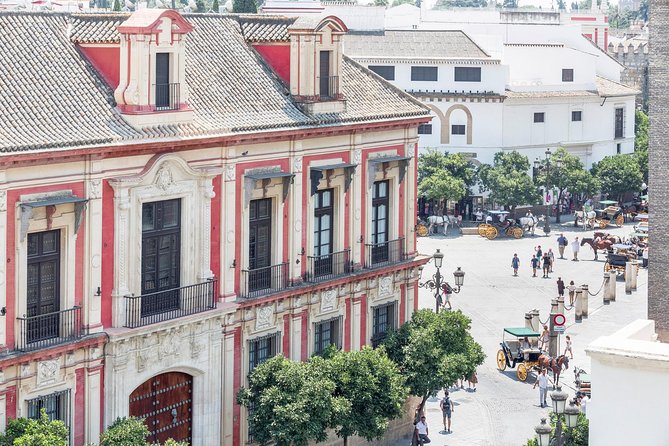
Seville receives a guided city tour on the second morning. The route includes the outside of Seville Cathedral, the Santa Cruz quarter, Maria Luisa Park, and Plaza de España.
The cathedral’s exterior is worth seeing, but the admission arrangement needs attention. The tour information lists entry to Seville Cathedral as included, while the daily itinerary describes a visit to the exterior and says admission is not included. Treat this as a point to confirm before departure. Several major sights in Seville require your own planning, and the Royal Alcazar is not included.
Santa Cruz is the old Jewish quarter and one of Seville’s most atmospheric areas. Its lanes twist past small plazas and old buildings, with stories connected to Carmen and Don Juan. The stop is brief, about 30 minutes, so you will get an introduction rather than a detailed exploration.
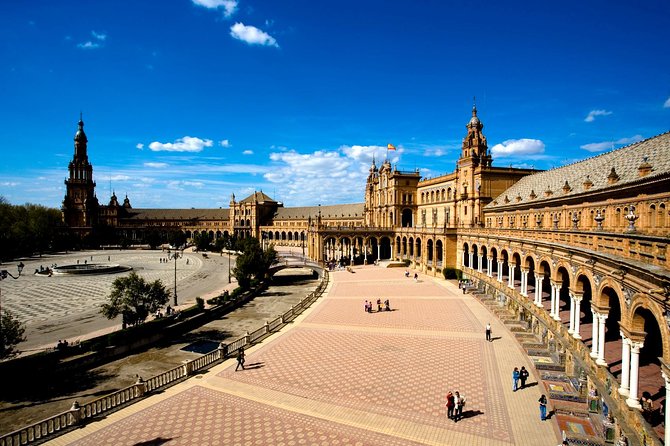
Maria Luisa Park and Plaza de España provide the city’s grand public face. Plaza de España combines tiled alcoves, bridges, towers, and a wide semicircular design that has become one of Seville’s signature views. You have about 30 minutes at each listed stop, so keep your camera ready and listen closely for meeting instructions.
The afternoon is free for your own plans. This is where the tour’s value depends on how well you prepare. I would use the free hours for the Royal Alcazar, the cathedral interior if not included, or simply a longer wander through Santa Cruz. Buy any separate timed tickets online in advance if possible, because the tour does not provide those entries.
An optional flamenco performance is one of the strongest add-ons. Seville is a sensible place to see flamenco, and the show gives the evening a cultural focus that a short daytime walk cannot provide. By contrast, the optional river cruise receives weaker practical feedback and is generally less useful than spending that time at the Alcazar or in the historic center.
A jewelry or craft-factory stop has also been part of some departures. These commercial visits can use time that would be better spent at a major monument. If your schedule includes one, ask how long it lasts and compare it with your own priorities.
Day 3: Granada and the Alhambra
The drive from Seville to Granada takes you east through olive-growing country. The repeated rows of olive trees offer a strong visual introduction to Andalusia’s agricultural identity, though this is another substantial road day.
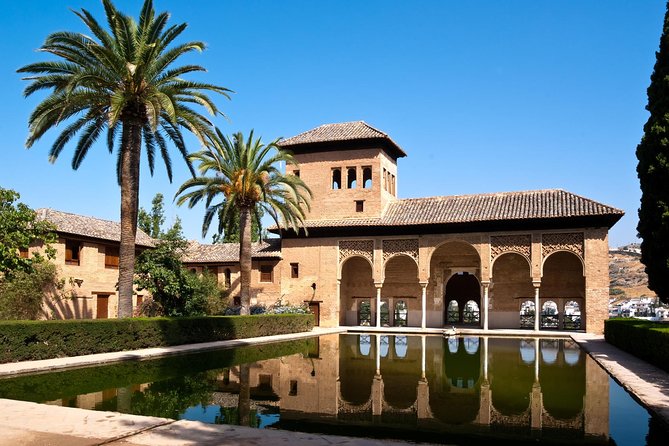
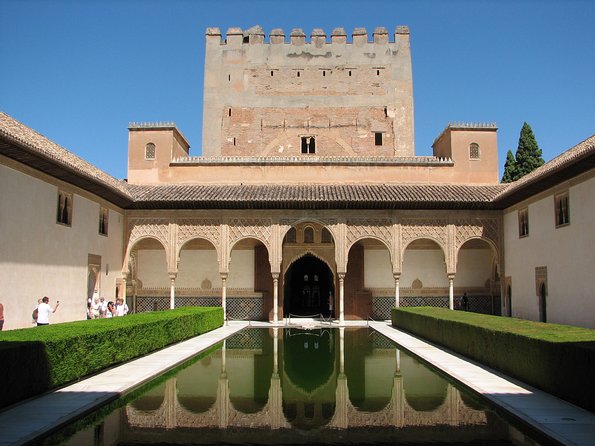
Granada is the former capital of the Nasrid Muslim kingdom and the last major Moorish stronghold in Iberia before 1492. That background matters once you reach the Alhambra. The palace complex is not just a pretty collection of courtyards. It represents the final flowering of Nasrid rule, with carved plaster, patterned tile, water channels, formal gardens, and carefully framed views.
The guided Alhambra and Generalife visit lasts about three hours and includes admission. This is the tour’s most important practical advantage. Alhambra tickets are limited and tied to a specific date, and admission arrangements can be difficult to secure during busy periods. You must bring your passport on the day of the visit. Do not leave it locked in your hotel or coach.
Expect a good amount of walking, including outdoor paths and garden areas. The complex is large, and the pace can feel demanding if you have mobility concerns. The local guide is especially valuable here because the details are easy to miss without context: the relationship between water and architecture, the function of courtyards, and the way the palace controlled movement and views.
An optional evening visit to the Sacromonte quarter may include a Gypsy-style flamenco performance. Decide carefully if you already attend the Seville show. Some visitors find the second performance worthwhile, while others find the two activities too similar. The late timing can also make the next day harder.
Same city, a completely different evening:
- Madrid: “Emociones” Live Flamenco Performance
★ 4.8 · 12,866 reviews - Madrid: Panoramic Route City Tour
★ 4.1 · 12,259 reviews - Madrid: Live Flamenco Show with Food and Drinks Options
★ 4.5 · 9,901 reviews - Avila & Segovia Tour with Tickets to Monuments from Madrid
★ 5.0 · 9,762 reviews
Day 4: Your free day in Granada
The fourth day is your chance to slow down, at least by this tour’s standards. Granada is more than the Alhambra, and you now have about five hours to explore the city on your own.
The Albaicin is the obvious choice. This old hillside quarter has narrow streets, former mosques converted into churches, old palaces, and views toward the Sierra Nevada. It is a place for wandering rather than ticking off a short list. The slopes and cobbles require sensible shoes, and the route may be strenuous for anyone who has difficulty walking uphill.
You can also use the free time to revisit central Granada, find a traditional meal, or see sites missed during the organized portion. The tour does not provide a detailed independent plan, so prepare before you leave home. Mark the places you care about and check their opening times separately.
Food is one area where expectations should be moderate. Breakfasts are included, but the quality of included hotel meals can vary. One Granada stay received criticism for buffet organization and limited vegetarian choices. If you have dietary needs, plan backup meals rather than relying entirely on a group dinner.
The optional Sacromonte experience is best judged against your energy level and the Seville flamenco option. You do not need to buy every add-on to enjoy the core itinerary.
Day 5: Toledo before Madrid
The final day heads north toward Toledo, the hilltop city surrounded on three sides by the Tagus River. Its compact old center brings together Christian, Muslim, and Jewish traditions, which is why it makes such a fitting final stop.
The guided walking visit lasts about five hours, including the approach, touring, and onward travel to Madrid. Toledo’s narrow lanes, stone buildings, churches, former synagogues, and old city walls reward careful attention. The town is a summary of Spanish art, faith, and power in one concentrated setting.
The drawback is time. The guided portion can leave only about an hour for independent exploration, depending on the day’s schedule. If you want to see interiors or shop for Toledo’s well-known crafts, you may feel rushed. Some commercial stops can also take time away from the old center, so keep your priorities clear.
The coach returns to Madrid, but confirm the exact drop-off point. The return location may not be identical to the departure point, and an unexpected change can be stressful if you do not know Madrid well.
Hotels, coach travel, and group rhythm
The package includes four nights in four-star-category hotels, with standard and superior room choices. Hotel standards in Spain do not always match what you expect from the same star label elsewhere. Standard rooms may feel closer to a basic three or four-star stay, while superior rooms usually offer better facilities or locations.
Several stays use Meliá properties, including Meliá Lebreros in Seville and a Meliá hotel in Granada. The Granada hotel has been a particular favorite for some departures, while the included dinner service has not always been consistent. If comfort matters greatly, the superior room upgrade may be worth considering.
The coach is air-conditioned, but it has no bathroom. Breaks are generally spaced out, yet you should use every stop. With drives between Madrid, Cordoba, Seville, Granada, and Toledo, this is not a good trip for anyone who dislikes long road stretches.
The group can reach 40 people. That size keeps the price down, but it also means boarding, seating, head counts, and restaurant service can take time. Ask the tour leader at the start how seating works, since unclear arrangements have caused friction on some departures.
The experience is offered in English, but the main tour leader may speak to a mixed-language group. Some departures have had extensive Spanish explanations before the English version, and the translation may not cover every detail. Local guides in Cordoba, Seville, Granada, and Toledo add much of the useful site-specific information, but you should not assume every minute of bus commentary will be in English.
Guides such as Grace, Josep, and Sergio have received especially warm praise for their organization, humor, and local explanations. The quality of the main tour leader can shape the whole trip, so ask about the language format and daily schedule when booking.
What to pack and how to prepare

Bring one regular suitcase and one handbag per person. Extra luggage may cost more, and you are responsible for handling your own bags. Pack light enough to move through hotels and coach stops without help.
You should also bring:
- Your passport for the Alhambra visit
- Comfortable shoes for cobbles, slopes, and long guided walks
- A small water bottle, since there is no coach bathroom
- A phone charger for the long road days
- A little cash in euros for optional activities, since card payment may not always be available
The departure is early, and some schedules include very early wake-up calls. Check each morning’s meeting time rather than relying on a standard routine. You will get more from the tour if you use the free time for priority sights instead of trying to see everything.
Who should book this five-day Andalusia trip?
I would choose this tour if you have limited time, want the main transport and hotels handled, and prefer guided access to difficult-to-plan monuments. It suits first-time visitors who want a broad look at Andalusia and Toledo rather than a slow, neighborhood-by-neighborhood stay.
It is less suitable if you want deep time in each city. Seville deserves more than a guided morning and free afternoon. Granada can easily occupy two or three days, and Cordoba and Toledo both reward a longer stay.
The walking is serious but manageable for many people who are comfortable on cobbles and hills. You may struggle if you need a slow pace, frequent unscheduled breaks, or step-free routes. A mixed-language group can also affect how much English commentary you receive.
Should you book it?
Book this trip for convenience, coverage, and the included Alhambra visit. The combination of Cordoba, Seville, Granada, and Toledo is hard to beat for a five-day introduction from Madrid, and the included transport removes a great deal of planning.
Before paying, confirm the Seville Cathedral admission, hotel category, daily language arrangements, and return drop-off point. Plan to visit Seville’s Royal Alcazar independently, think twice about the river cruise, and bring enough cash for optional outings.
If you can spare a week or more, travel independently and give each Andalusian city the time it deserves. If you have only five days and want the big sights without managing every reservation, this is a solid, fast-moving introduction, with the Alhambra as its clear high point.
FAQ
How long is the tour?
The experience lasts approximately five days and includes four nights of accommodation.
Where does the tour start in Madrid?
The tour starts at 8:00 am at Meliá Castilla, C. del Poeta Joan Maragall, 43, Tetuán, Madrid.
Is hotel pickup included?
No. Hotel pickup and drop-off in Madrid are not included. The tour starts and ends at the stated meeting point, though the return drop-off point may differ, so confirm the details before the final day.
Which entrance fees are included?
Admission is included for the Mosque-Cathedral of Cordoba, the Alhambra and Generalife Gardens, and the listed Seville Cathedral entry. The daily schedule describes the Seville Cathedral visit as exterior only and says admission is not included, so confirm this detail before travel.
Do I need my passport for the Alhambra?
Yes. Presenting your passport on the day of the Alhambra visit is mandatory.
Is there a bathroom on the coach?
No. The air-conditioned coach does not have a bathroom, so use facilities during scheduled stops.
Recently added in Madrid
- Entrance to the Flamenco Temple Room in Madrid with Tapas Option★ 5.0 · 176 reviews
- Tapas & Paella Cooking Class in Madrid with a Professional Chef★ 5.0 · 177 reviews
- Madrid: Toledo Day Trip with Winery Visit and Wine Tasting★ 4.4 · 177 reviews
- VIP visit to the Las Ventas Bullring in Madrid★ 5.0 · 178 reviews
- VIP Entrance Ticket to Our Secret Alley in Madrid★ 5.0 · 179 reviews
- Madrid: Prado & Reina Sofía Museums Guided Tour★ 4.5 · 180 reviews
- Madrid: Royal Palace tour – semi private or private★ 4.9 · 182 reviews
- Atletico de Madrid Stadium & Interactive Museum Admission Ticket★ 4.5 · 183 reviews
Madrid Tours, compared.
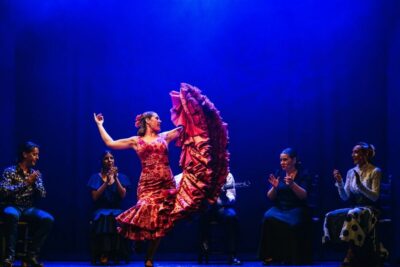

Live Flamenco Show with Food and Drinks Options
Read the review →
Avila & Segovia Tour with Tickets to Monuments from Madrid
Read the review →
Three Cities in One Day: Segovia, Avila and Toledo from Madrid
Read the review →
Segovia and Toledo Tour, Alcazar, and Cathedral
Read the review →
Royal Palace Expert Guided Tour with Skip-the-Line
Read the review →Browse the lists this tour appears in