
Reviewed · MUSEUMS
Barcelona: Small Group Picasso Tour with Picasso Museum
Picasso’s Barcelona is best understood on foot, before you look at his paintings behind glass. This two-hour tour links the café where he held his first exhibition, the art school that saw his talent early, and the streets that fed his imagination with a guided visit to the Picasso Museum.
I like the clear connection between place and painting, and I like the small group limit of nine, which gives you a better chance to ask questions. Guides such as Olga Escribano, Jorge, Julie, Pilar, and Sylvie have been praised for lively storytelling and strong art knowledge. The main drawback is time: 50 minutes of walking and about an hour in the museum leaves little room for a slow look at every gallery.
Key points at a glance
- Els Quatre Gats: Visit the café linked to Picasso’s first exhibition and the young artists who shaped Barcelona’s art scene.
- Picasso’s only public artwork: Stop at the Architects’ Association Building to see a work many people pass without noticing.
- Llotja de Mar: Learn about the academy where Picasso began studying seriously at just 13.
- Museum focus: See early works, the complete Las Meninas series, portraits, ceramics, and engravings.
- Small-group format: The group is limited to nine, with live guiding in English or French.
- Practical setup: Wear comfortable shoes, bring a charged smartphone and headphones, and leave large bags behind.
Why Picasso makes sense in Barcelona
Picasso was not simply a famous painter who happened to live in Barcelona. The city was where he grew from a highly trained young artist into someone willing to challenge accepted ideas about art.
This tour helps you see that change in physical terms. You walk through the Gothic Quarter, pass places tied to his student years, and visit the café where artists, writers, and political outsiders met. Then you enter the museum and watch his style shift across the works themselves.
That order matters. If you begin with the museum, you may see a celebrated name and a long procession of paintings. If you first hear about the teenage artist, his friends, his training, and his surroundings, the early works have more weight.
I also like that the experience is not limited to the museum. Barcelona’s streets supply the setting, while the collection supplies the evidence.
More Museums in Barcelona
- Barcelona: FC Barcelona Museum “Barça Immersive Tour” Ticket
★ 4.4 · 10,944 reviews - Barcelona: Park Güell and Gaudí House Museum Entry Ticket
★ 4.5 · 6,326 reviews - Barcelona: Picasso Museum Skip-the-Line Guided Tour
★ 4.5 · 3,355 reviews
Starting at Plaça de Catalunya
The meeting point is the Tourist Information Point at Plaça de Catalunya, 17-S. Look for the escalators between two large pillars and go down to reach the office.
Plaça de Catalunya is one of the easiest places in central Barcelona to reach, but it can be crowded and confusing. Arrive early enough to locate the information point rather than searching for it at the exact start time. One person missed the opening walk after going to the wrong place and still found the museum portion excellent, but that is not a good way to begin.
The tour then heads toward the Gothic Quarter. You should expect city streets, pavement, and regular foot traffic, so comfortable shoes are more useful than stylish ones. The tour lasts two hours, with roughly 50 minutes devoted to the walking section and about one hour inside the museum.
Walking through the Gothic Quarter
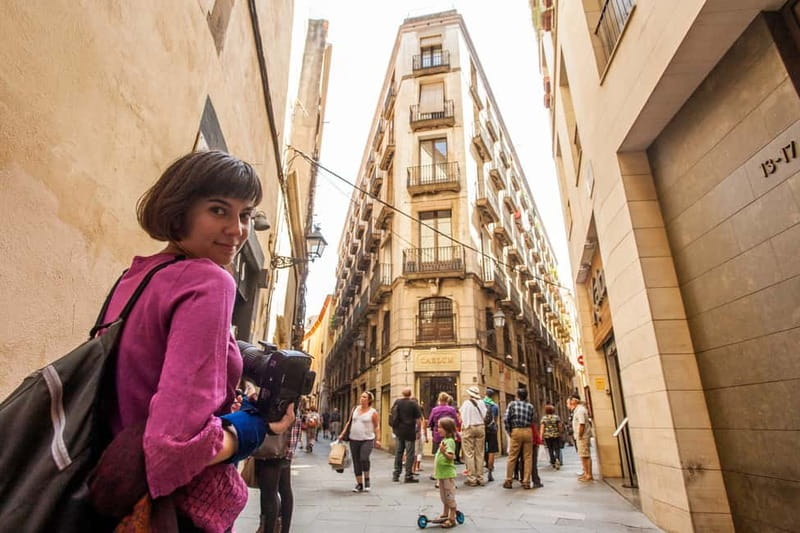
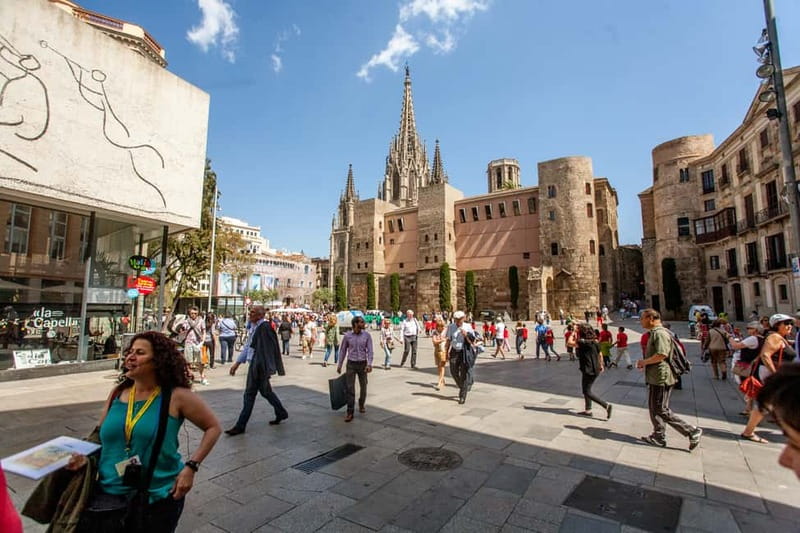
The Gothic Quarter is more than a backdrop here. Its narrow streets and old buildings help you picture the Barcelona Picasso knew as a young man.
The guide explains the places connected with his student years and the wider artistic community around him. You may hear about the poets, anarchists, artists, cafés, circuses, street scenes, and less respectable corners that shaped his view of city life.
The walking section is particularly useful if you are interested in biography. Picasso’s art can seem detached from ordinary life when you see it in a museum. Hearing how his early years connected with Barcelona’s cafés and streets gives the paintings a human setting.
The guide uses an audio system or headphones when needed, which helps in noisy streets. Bring your own headphones and make sure your smartphone is charged. The instructions list headphones and a charged phone among the items to bring, so do not treat those as optional extras.
Plaça Reial and Picasso’s early city
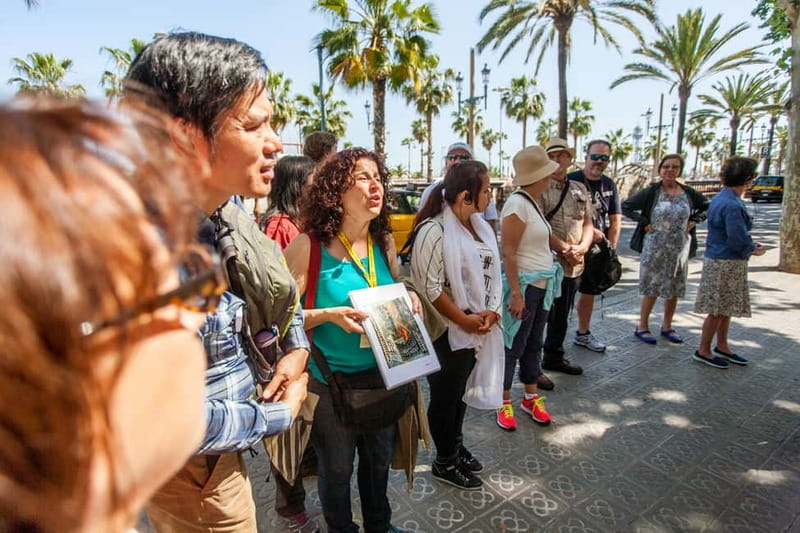
Plaça Reial is one of the first important stops. The square offers a useful way to discuss the café life and street activity that Picasso observed as a young artist.
The point is not that you will see a preserved Picasso studio at every corner. Instead, you begin to understand the subjects that drew his attention: people in public places, nightlife, performers, workers, and the less polished side of urban life.
A good guide makes this section work by tying the surroundings to changes in Picasso’s art. The best accounts of this experience have singled out guides such as Olga Escribano and Jorge for explaining why Picasso’s artistic periods changed alongside events in his life.
That kind of explanation is more helpful than a string of dates. You are given a way to look at the paintings later, asking what Picasso was responding to rather than simply trying to identify a style.
Same city, a completely different evening:
- Barcelona: Sagrada Familia Entry Ticket with Audio Guide
★ 4.6 · 105,312 reviews - Barcelona: Park Güell Admission Ticket
★ 4.4 · 76,534 reviews - Barcelona: Casa Batlló Entry with Self-Audioguide Tour
★ 4.7 · 25,359 reviews - Barcelona: 24 or 48-Hour Hop-On Hop-Off Bus Tour
★ 4.4 · 20,872 reviews
Llotja de Mar and the teenage Picasso
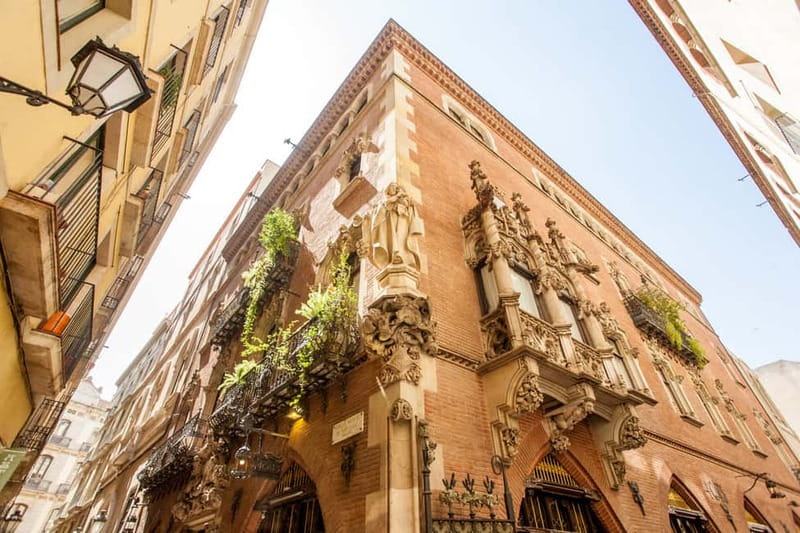
The visit to Llotja de Mar adds an important piece to the story. Picasso entered this prestigious art academy at 13, an age when most young artists are still learning the basics.
This stop makes clear that Picasso’s later experiments did not come from a lack of traditional training. He had strong technical skills and understood academic methods before he began to question them.
The museum’s childhood sketches reinforce that point. You can see a young artist with remarkable control, then follow how that control was altered, stretched, or rejected over time.
For me, this is one of the tour’s strongest ideas: Picasso’s radical work becomes easier to appreciate when you first see the disciplined artist underneath it. The guide can explain the shift in plain terms, which is useful if modern art usually leaves you cold.
Els Quatre Gats, Picasso’s café world
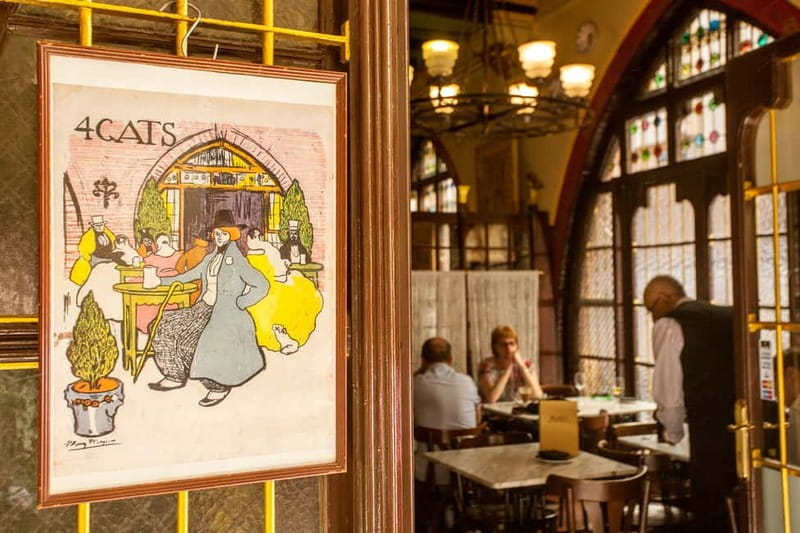
Els Quatre Gats is the most atmospheric stop on the walk. This café was a meeting place for Barcelona’s young artistic crowd, and Picasso held his first exhibition there at 18.
He also designed the café’s famous menu, which is still used. That detail makes the place feel more personal than a simple plaque or address. Picasso was not yet the worldwide name you know, but he was already taking part in the design and social life of the café.
The guide explains how artists and writers gathered there to argue, drink, and share ideas. The setting helps you picture the bohemian side of Barcelona without requiring you to treat the café as a museum full of original Picasso objects.
The scheduled stop is about 10 minutes, so expect an introduction rather than a long café break. If Els Quatre Gats is open for your visit, you may have a chance to appreciate the interior, but the tour information promises a visit and guided explanation, not a meal or extended free time.
This is also where the tour’s storytelling matters most. Guides praised for their passion, including Sylvie and Olga Escribano, can turn a short stop into a lively account of Picasso’s friends, artistic arguments, and early ambitions.
Picasso’s only public artwork in Barcelona
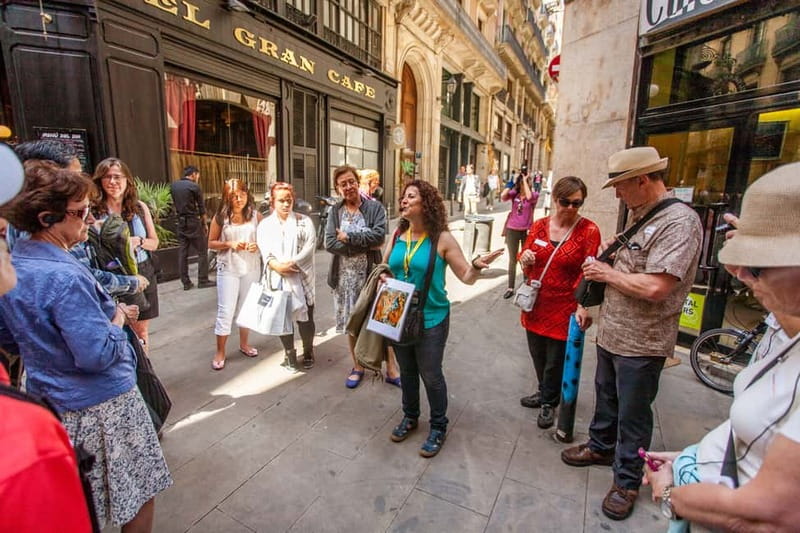
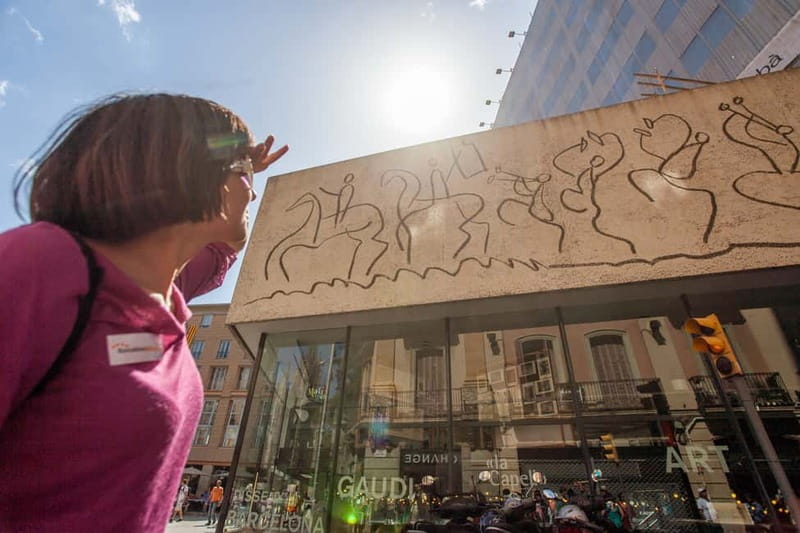
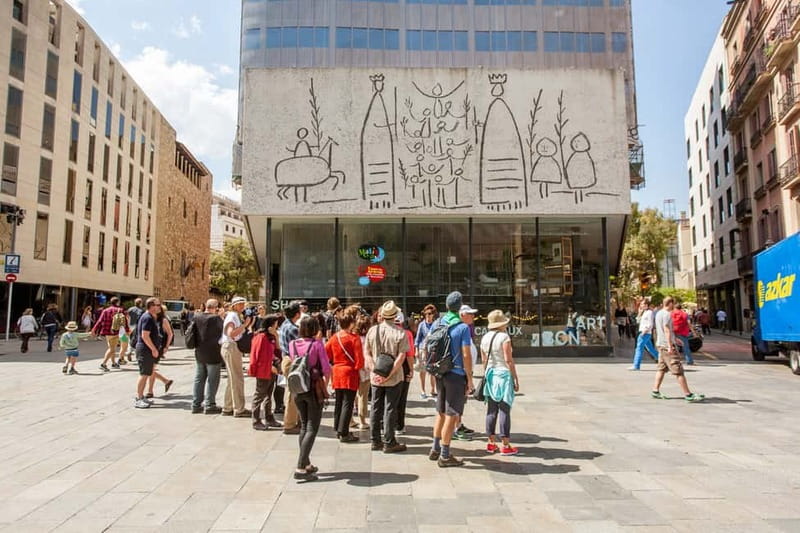
The Architects’ Association Building provides one of the tour’s most unusual stops. Here you can see Picasso’s only public artwork.
That claim gives the building a clear purpose in the itinerary. You are not merely passing another architectural landmark. You are being shown a piece of Picasso’s work in the open city, away from the museum setting.
The work is easy to miss if you do not know where to look. A guide can point out what you are seeing and explain why it matters within Picasso’s connection to Barcelona.
This stop is best for people who enjoy finding art in ordinary urban settings. It is also a reminder that Picasso’s presence in Barcelona is not confined to framed paintings. The city itself holds traces of his career.
Entering the Picasso Museum
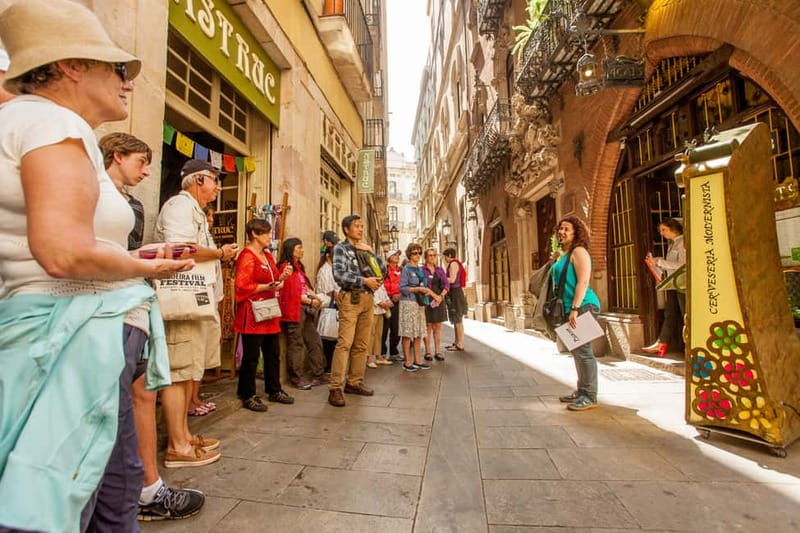
The museum portion lasts about an hour and includes skip-the-ticket-line access. That is a real advantage in Barcelona, where popular cultural sites can absorb time before you even reach the galleries.
The Museu Picasso occupies five Gothic palaces and holds more than 4,200 pieces. You will not examine all of them in one hour. The benefit of the guided visit is selection: the guide chooses works that show Picasso’s development and gives you a route through a large collection.
Expect to see childhood drawings, early paintings, portraits of friends and lovers, ceramics, engravings, and the complete Las Meninas series. The collection is especially strong for understanding Picasso’s early work, rather than treating his career as one unbroken march toward Cubism.
The museum is also where the walking tour pays off. A painting can look different after you have heard about the places and people around Picasso in Barcelona. The guide helps connect the physical city with the images in front of you.
Several guides have been praised for explaining Picasso’s periods and the reasons behind their changes. That is important because the museum can otherwise feel like a collection of disconnected experiments.
Seeing the Las Meninas series
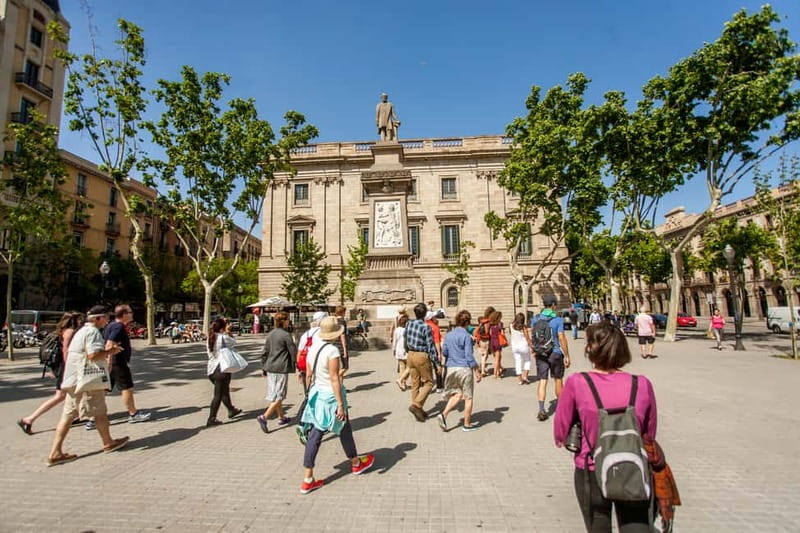
The Las Meninas series is one of the key works included in the museum visit. Picasso reworked Velázquez’s famous painting in 1957, creating a radical set of variations on the original.
You do not need to arrive as an art specialist to get something from this section. The guide can help you compare the different versions and notice how Picasso broke apart and rebuilt a familiar image.
This is one of the places where a guided hour has real value. You can walk through the paintings on your own, but a clear explanation gives you a better sense of the choices Picasso made.
The tradeoff is that an hour passes quickly. One person specifically wanted more time to learn about Picasso’s sculpture and ceramics. If those areas matter most to you, plan to continue exploring after the guided portion.
How much attention do you get in a group of nine?
The small-group limit is nine people. That is a useful size for a walking tour, especially in narrow streets where a large crowd can become a nuisance.
A group this small also makes questions easier. You can ask about a particular painting, Picasso’s friendships, or the connection between a location and a period in his work without stopping an entire coachload of people.
The experience is led by a live guide in English or French. An optional English audio guide is also available. The supplied information does not promise a specific guide for every date, but past guide names include Pilar, Stephen, Julie, Olga, Ali, Jordi, Jorge, Catarina, and Sylvie.
The guide quality appears to be one of the strongest parts of the experience. Descriptions of Pilar, Julie, Olga, Jorge, and others emphasize clear explanations, passion for Picasso, humor, patience, and good organization. One guide even noticed a pickpocket attempt and confronted the person, a reminder to keep your belongings secure in busy central Barcelona.
Price, pace, and overall value
At $46 per person, the tour is reasonably priced if you want both a city walk and a guided museum visit. Museum admission, the walking tour, and skip-the-line entry are included, so you are not paying only for a short introduction outside.
The value depends on how you like to visit museums. If you prefer to wander alone for several hours, the one-hour guided visit may feel too brief. If you want a strong route and an expert explanation before exploring by yourself, the format works well.
You can also use the tour as an introduction, then remain at the museum to continue on your own if the rules and opening arrangements allow. One person did exactly that in spirit, pairing the morning Picasso visit with other Barcelona art stops later in the day.
The pace is brisk but sensible. You spend enough time in the Gothic Quarter to understand the setting, then enough time in the museum to see a focused selection. You should not expect a relaxed café lunch, a full museum study session, or long pauses for photography.
Who should book this Picasso tour?
I would choose this for first-time Barcelona visitors who want art and city history in one compact outing. It is also a good fit if Picasso is important to you but you would like help making sense of the museum’s many periods.
Families with older children may find the mix of street stories and visual art easier to handle than a long indoor museum tour. Art students and serious Picasso fans will appreciate the early sketches and Las Meninas series, but should plan extra museum time if they want to study ceramics, engravings, or sculpture in detail.
You should think twice if you dislike walking on city streets, need a slow pace, or want a completely private visit. The group is small, but it is still a group, and the 50-minute Gothic Quarter section requires steady movement.
The tour is offered in English and French. Since the guide leads the walk and museum visit, choose the language in which you can follow art explanations comfortably.
Practical advice before you go
Wear shoes you can use on pavement for two hours. Bring headphones and a charged smartphone, especially if you plan to use the optional English audio guide or the tour’s listening equipment.
Do not bring pets or luggage. Large bags are not allowed, and carrying unnecessary items will only make the Gothic Quarter walk harder.
Confirm the meeting point before leaving your hotel. Start at the Tourist Information Point at Plaça de Catalunya, 17-S, reached by the escalators between the two large pillars. The information gives the Picasso Museum as the finish point, while another part of the booking information says the activity ends back at the meeting point. Check the exact ending arrangement when you reserve.
You can cancel up to 24 hours before the start for a full refund, and the reserve-now, pay-later option lets you keep your schedule flexible. Starting times vary, so check availability before planning lunch or another timed attraction.
Should you book it?
Book this tour if you want Picasso’s Barcelona explained as a connected story rather than a list of museum labels. The strongest features are the walk through his old artistic circle, the brief stop at Els Quatre Gats, the public artwork at the Architects’ Association Building, and the focused museum visit.
I would not book it as your only Picasso experience if you want several hours with the collection. The tour gives you a strong foundation, then works best when you treat the museum hour as a guided beginning and continue independently if you have the time.
At $46, the combination of admission, skip-the-line access, a small group, and a two-hour route offers solid value. Arrive early, bring the right gear, and choose it for insight and structure rather than a leisurely afternoon.
FAQ
How long does the Picasso tour last?
The tour lasts two hours.
Where does the tour begin?
It begins at the Tourist Information Point at Plaça de Catalunya, 17-S, Barcelona. Go down the escalators between two large pillars to reach the information point.
Where does the tour finish?
The itinerary lists the Museu Picasso de Barcelona as the finish point. The activity information also says it ends back at the meeting point, so confirm the exact ending details when booking.
Is entrance to the Picasso Museum included?
Yes. The guided visit to the Museu Picasso and the entrance fee are included.
Does the tour include skip-the-line access?
Yes. Skip-the-ticket-line access is included.
What languages are available?
The live tour guide is available in English or French. An optional English audio guide is also listed.
How large is the group?
The group is limited to nine participants.
What places does the walking section visit?
The route includes the Gothic Quarter, Els Quatre Gats, Plaça Reial, Llotja de Mar, and the Architects’ Association Building.
What can I see at the Picasso Museum?
The visit includes early works, childhood sketches, the Las Meninas series, portraits, ceramics, and engravings. The museum holds more than 4,200 pieces across five Gothic palaces.
What should I bring?
Bring comfortable shoes, headphones, and a charged smartphone. Pets, luggage, and large bags are not allowed.
Can I cancel the booking?
You can cancel up to 24 hours in advance for a full refund. A reserve-now, pay-later option is also available.
Recently added in Barcelona
- Barcelona: Catamaran Cruise w/ Sailing, Wine, & Tapa★ 4.7 · 176 reviews
- Guided Gaudí Trencadís Mosaic Workshop in Barcelona 2 Hours★ 5.0 · 176 reviews
- Barcelona Cable Car Sky Views, Magic Fountain & Castle Visit★ 4.2 · 177 reviews
- Barcelona Private Sunset Sailing with Drinks★ 5.0 · 177 reviews
- Barcelona: Montserrat with Winery Visit and Farmhouse Lunch★ 4.7 · 178 reviews
- Barcelona: Nightmare Horror Museum Maze Entry Ticket★ 4.5 · 179 reviews
- Barcelona: City Sights Electric Quad Tour★ 4.8 · 178 reviews
- Barcelona: Professional Photoshoot Outside Sagrada Familia★ 4.8 · 179 reviews
Museums, compared.
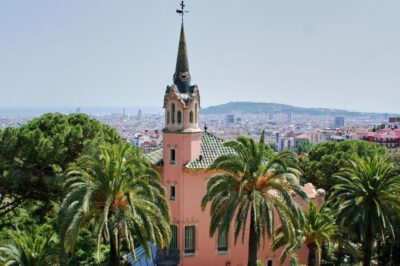
Park Güell and Gaudí House Museum Entry Ticket
Read the review →
Puro Flamenco Show with Optional Museum Ticket
Read the review →
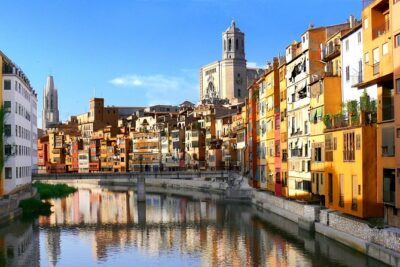
Girona & Dali Museum Small Group Tour with Pick-up from Barcelona
Read the review →
Oceanogràfic, Hemisfèric & Science Museum Combo
Read the review →
Small Group of Prado Museum Tour & Optional Tapas
Read the review →Browse the lists this tour appears in