
Reviewed · WALKING TOURS
Barcelona: Old Town and Gothic Quarter Walking Tour
Barcelona’s oldest streets tell their story in layers: Roman stone under medieval arches, political power in Plaça de Sant Jaume, and modern cafés tucked into centuries-old lanes. This $21 walking tour gives you a practical way to connect those layers without spending half your day trying to decode the city map.
I especially like the route’s strong historical backbone, from the former Roman Forum to the old city walls and the medieval Plaça del Rei. I also like the local flavor along La Rambla and La Boqueria, where the tour shifts from monuments to flowers, food, street performers, and daily city life.
The main drawback is the pace. Two and a half hours on narrow, busy streets can feel long if you prefer museums or relaxed café stops, and the route includes several landmarks viewed from outside or passed on foot. The advertised duration can also vary from 2.5 to 4 hours, so check the time offered for your date.
Key points to know before booking
- Roman Barcelona comes first: Begin at Plaça de Sant Jaume, once the site of the Roman Forum, then see preserved walls and the Pati Llimona Roman baths area.
- La Boqueria is part of the walk: You can browse more than 300 stalls selling local produce and prepared foods, though personal purchases are not included.
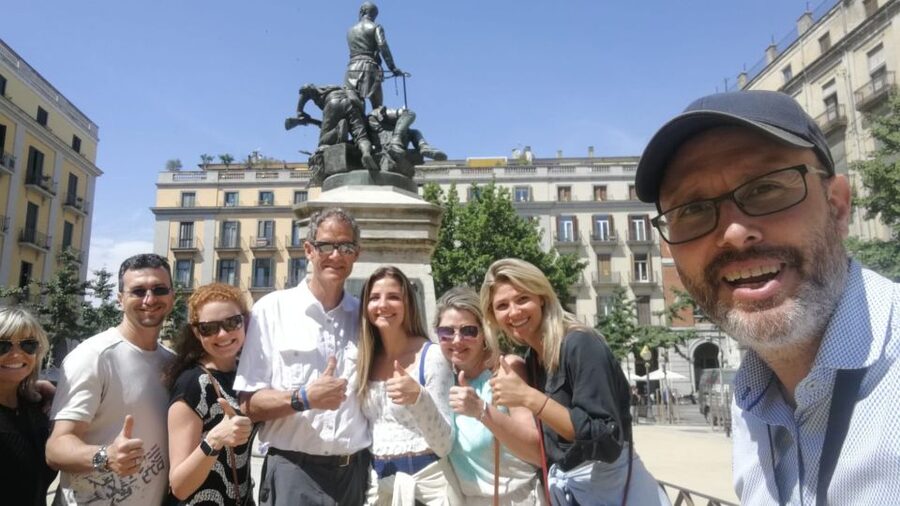
- Small groups help: The maximum is 15 people, with private group options available.
- The guides make the difference: Alba, Joris, Nilo, Isabel, Ane, Steven, Laura, and others are praised for clear storytelling, humor, questions, and restaurant advice.
- The finish is in El Born: The tour ends at Passeig del Born, a useful location for continuing toward Santa Maria del Mar, shops, and cafés.
- Pack light: Comfortable shoes are essential, and luggage or large bags are not allowed.
Why this walk is a smart first look at Barcelona
Barcelona can feel confusing at first. Its Old Town is not one neat historic district but a cluster of areas with different moods and stories. The Gothic Quarter, La Rambla, El Born, and the streets around the cathedral all sit close together, yet the experience changes every few minutes.
That is where a guide earns the $21 price. You are not simply checking buildings off a list. You are learning why a square mattered, how Roman Barcelona shaped the modern city, and how medieval churches fit into Catalan culture.
The tour is especially useful on a first visit. It gives you a mental map before you return on your own. You can mark the places you want to revisit, decide which market stalls look appealing, and get suggestions for food and other sights.
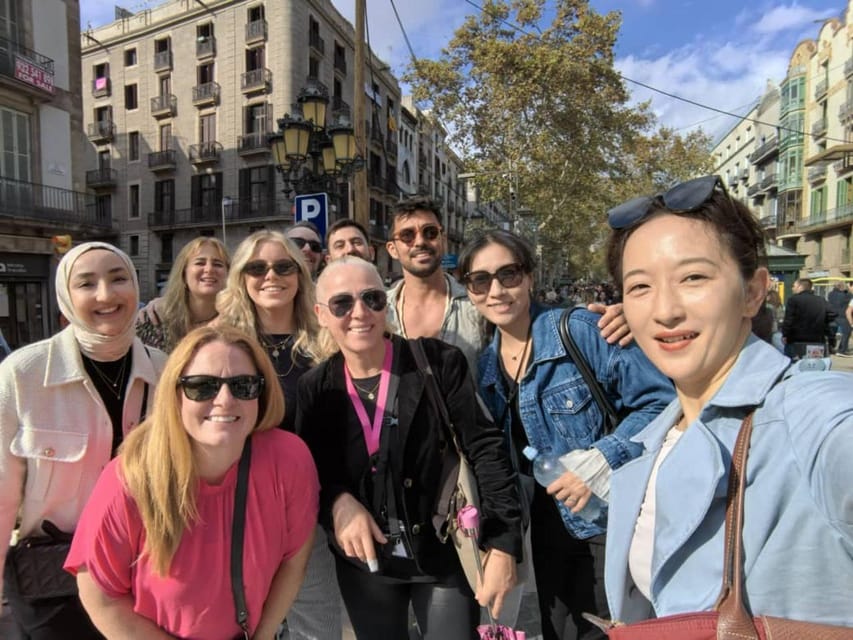
The group limit of 15 is another plus. That is not a private tour, but it is small enough for a guide to keep an eye on the group and take questions. Several guides are praised for making sure everyone could hear and stay together. The actual feel will depend on attendance and the guide assigned that day.
More Walking Tours in Barcelona
- Barcelona Tapas and Wine Experience Small-Group Walking Tour
★ 5.0 · 5,804 reviews - Barcelona: Tapas Walking Tour with Food, Wine, and History
★ 4.8 · 4,261 reviews - Barcelona Tapas Walking Tour: Food, Wine & History
★ 4.5 · 1,928 reviews
Starting at Plaça de Sant Jaume and the Roman Forum
The walk begins at the Movistar Centre, though the exact meeting point can vary with the booking option. From there, the tour moves into the Gothic Quarter and reaches Plaça de Sant Jaume, one of the most important squares in Barcelona.
The key idea here is continuity. The square occupies the area where the Roman Forum once stood, and it has remained a political center of Catalonia for more than 2,000 years. That makes it more than a pretty open space surrounded by official buildings. It is a place where ancient civic life and modern government meet.
Your guide uses this stop to explain Barcelona’s Roman beginnings and the way those beginnings still shape the city. This context helps you read the rest of the walk. The old streets are not random; many grew from the structure of the Roman settlement.
I like this opening because it gives the tour a clear purpose. Instead of starting with a list of dates, you get a simple question: how did Barcelona grow from a Roman town into the Catalan capital you see today?
Roman walls and the Pati Llimona baths
The next portion brings you close to one of the best-preserved Roman walls in the world. In a city filled with ornate medieval and modernist architecture, these heavy stone remains can be easy to overlook. A guide points out what you are seeing and explains how the wall protected the early city.
The Roman baths at Pati Llimona add a more personal note. Walls tell you about defense and power, but baths suggest ordinary routines and social life. The stop helps bring ancient Barcelona down to a human scale.
This is also where a strong guide matters most. The supplied guide information promises an expert English or Spanish-speaking guide, and the guide team includes people such as Alba, Joris, Nilo, Isabel, Ane, Steven, Laura, Montse, and others. Their approaches differ, but the most praised traits are clear explanations, local stories, humor, and the ability to answer unexpected questions.
Do not expect a long archaeological visit at every Roman site. This is a walking tour, not a museum program. You will see and discuss important remains, then continue through the streets.
Gothic Quarter lanes and Plaça del Rei
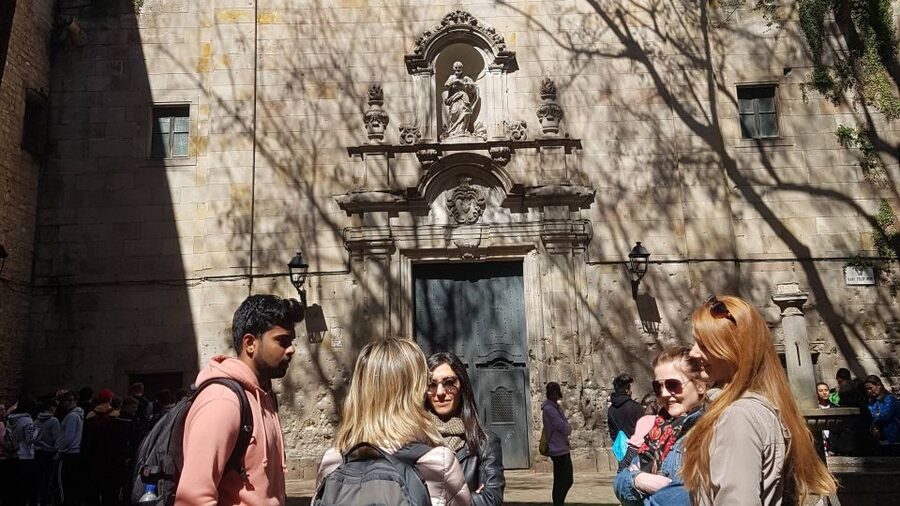
The Gothic Quarter is the tour’s central stage. Its narrow lanes, stone façades, courtyards, and small squares reward slow looking, but it is easy to miss details when walking alone. Guides point out architectural clues and tell stories that turn a short street into part of a much larger narrative.
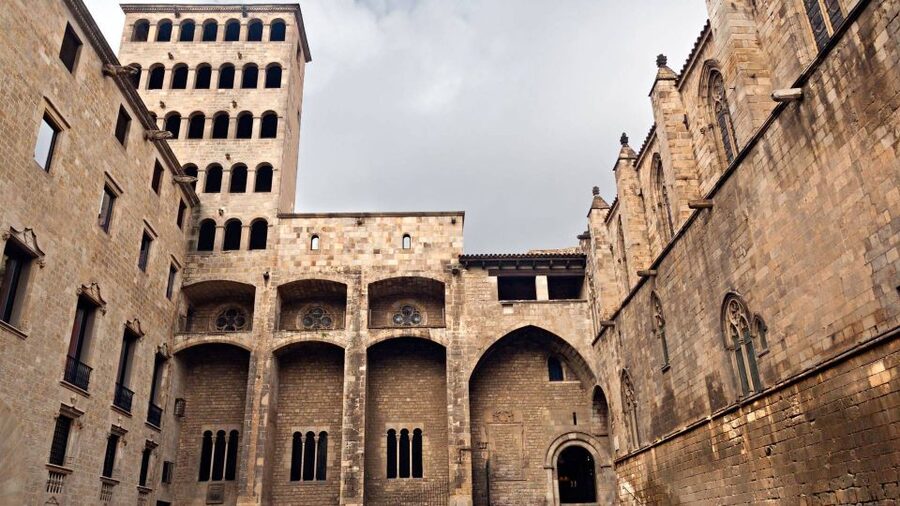
Plaça del Rei is one of the strongest stops. It is associated with the Palace of the Viceroy and the Palau Reial, and it carries the weight of medieval Barcelona’s royal and political life. The square also connects to the well-known story of Christopher Columbus being welcomed by Ferdinand and Isabella after his journey to the Americas.
The value here is not just the buildings. It is the connection between architecture and power. You begin to see how royal ceremonies, trade, religion, and government shaped the Old Town.
The lanes can be crowded, and some passages are tight. Keep your belongings secure and stay close to the guide. One guide, Alba, was specifically praised for paying attention to group safety and personal belongings. That is useful in any busy European center, especially around major sights and markets.
Same city, a completely different evening:
- Barcelona: Sagrada Familia Entry Ticket with Audio Guide
★ 4.6 · 105,312 reviews - Barcelona: Park Güell Admission Ticket
★ 4.4 · 76,534 reviews - Barcelona: Casa Batlló Entry with Self-Audioguide Tour
★ 4.7 · 25,359 reviews - Barcelona: 24 or 48-Hour Hop-On Hop-Off Bus Tour
★ 4.4 · 20,872 reviews
Barcelona Cathedral and Catalan Gothic design
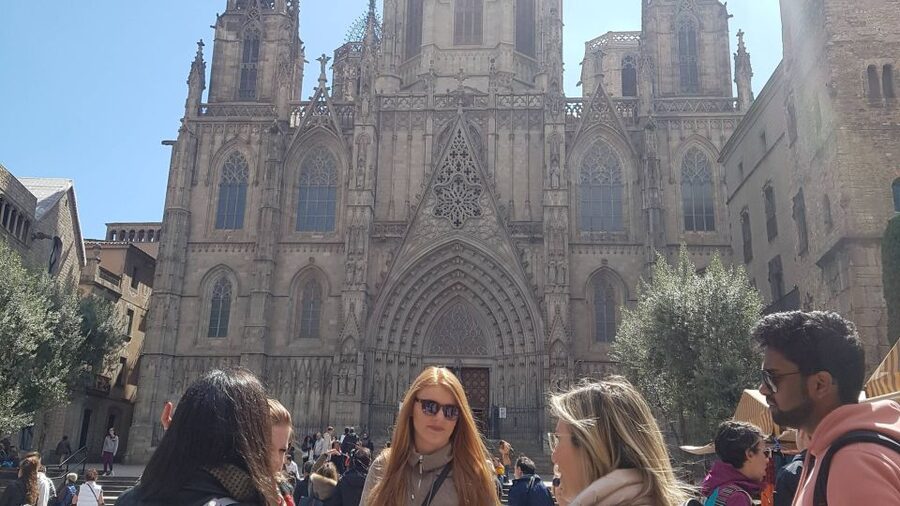
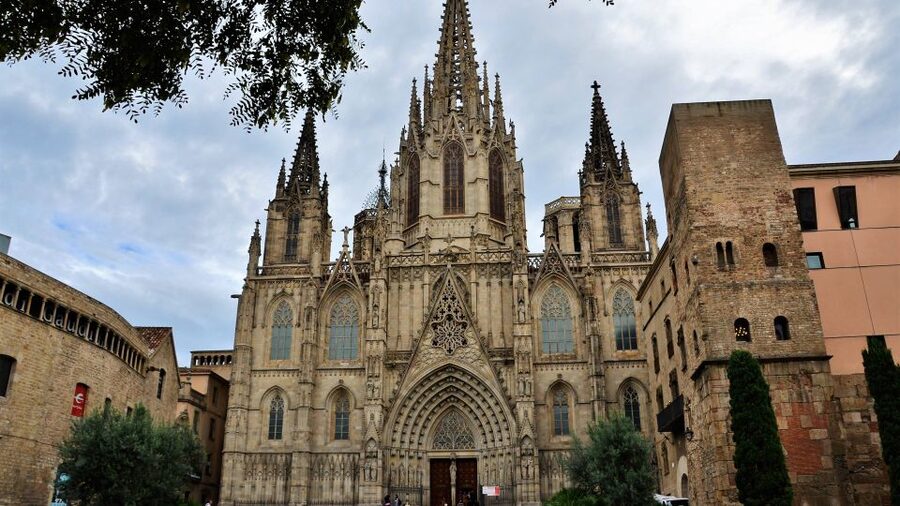
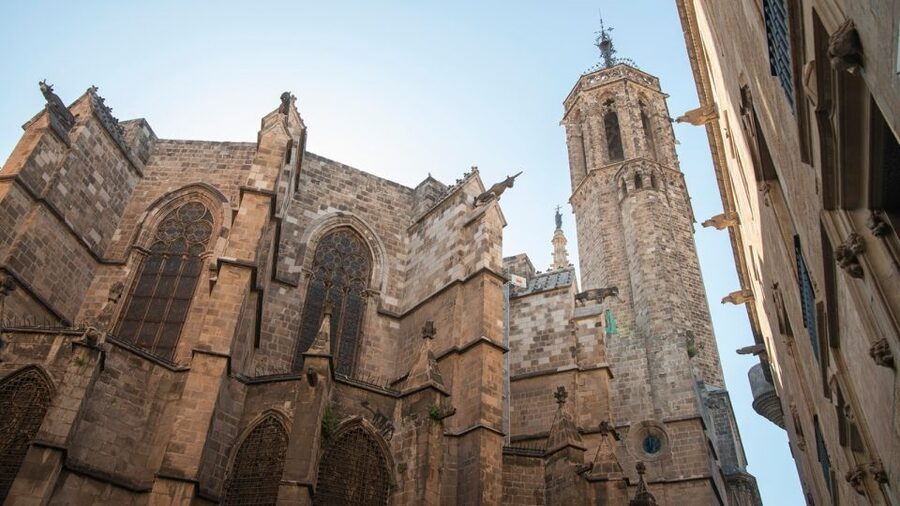
Barcelona Cathedral is seen along the route, with the guide explaining its place in the city’s medieval story. Because the itinerary describes this as a pass-by sightseeing stop, you should not assume that entry or an extended interior visit is included.
Even from the outside, the cathedral helps explain Catalan Gothic architecture. Your guide can draw your attention to the scale, details, and relationship between the church and the surrounding quarter. This is one of those moments when a short explanation saves you from simply taking a photograph and moving on.
The tour also passes Santa Maria del Mar, often called the Cathedral of the Sea. Its importance lies in both its design and its construction. The church was built in an unusually short period for a medieval structure, a feat that points to strong organization, engineering, and the resources of Barcelona’s maritime and merchant community.
Santa Maria del Mar is in El Born, where the atmosphere shifts. The streets feel more open in places, and you find cafés, boutiques, and a lively local scene alongside old stone buildings. The route lets you see how historic Barcelona continues to function as a neighborhood rather than sitting apart as a preserved monument.
La Rambla, from street performers to La Boqueria
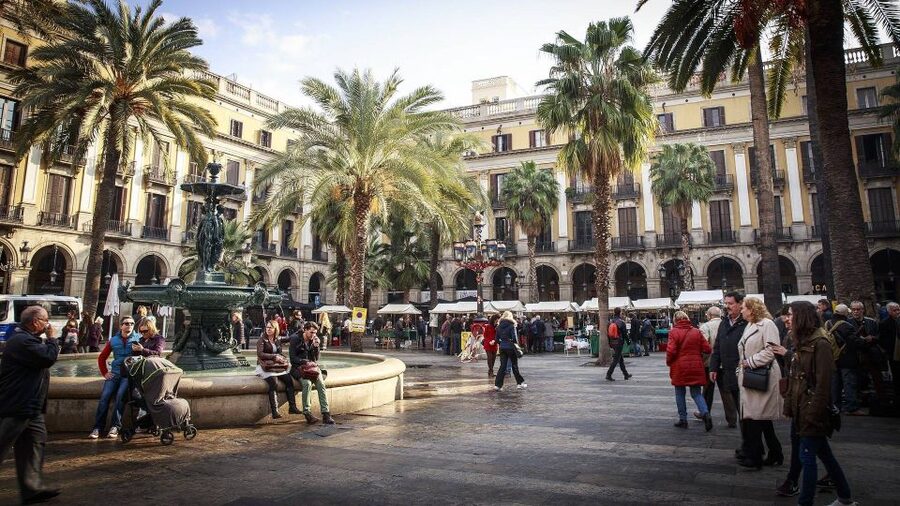
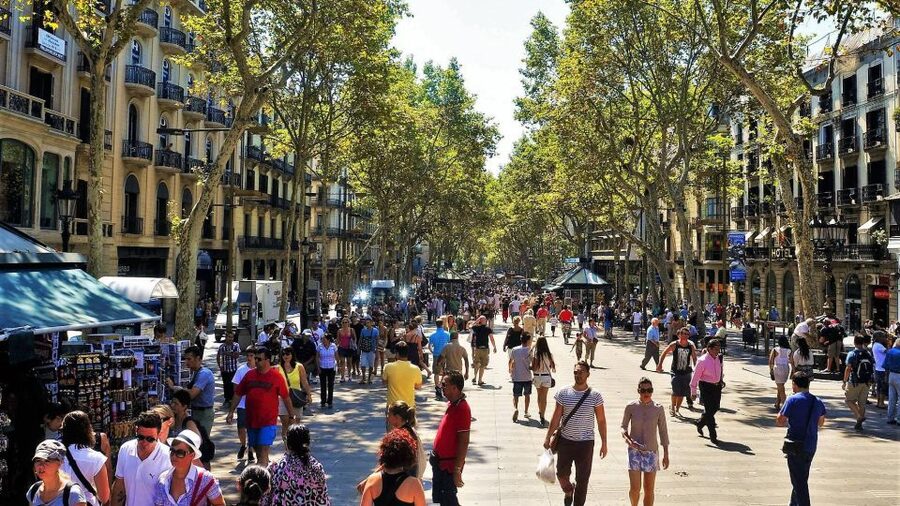
The walk continues along La Rambla, Barcelona’s famous boulevard. This is the most public and theatrical part of the route, with flower stalls, entertainers, outdoor cafés, and plenty of foot traffic.
La Rambla can be enjoyable, but it is not always peaceful. It is busy, tourist-oriented, and best approached with awareness. A guide helps you understand its role in the city rather than treating it as a simple photo stop.
La Boqueria brings a welcome change of pace. More than 300 stalls offer produce, local products, prepared foods, and Catalan specialties. You can look at the colors, smells, and displays, then decide if you want to return later to buy something.
Personal expenses are not included, so food and drinks cost extra. The tour also does not promise a tasting, which is important if you are booking specifically for a food experience. Think of La Boqueria as a guided introduction to Barcelona’s market culture, not a meal package.
Market conditions vary during the day. Crowds may make browsing slow, and not every stall will suit every budget. Still, this is one of the most useful places on the route for getting a feel for how food fits into Barcelona life.
El Born and the finish at Passeig del Born
The tour ends at Passeig del Born, in El Born. That finish is well chosen because you are not dropped at an isolated transport point. You are left in an area with more streets to explore, along with access to nearby cultural and historic sights.
Santa Maria del Mar is passed during this part of the route, and the surrounding district is a good place to continue on foot. You might use the end of the tour to revisit a church, browse shops, or follow up on a restaurant suggestion from the guide.
Some guides are especially helpful with this practical side of the experience. Alba, Ane, Laura, Stephen, and others are praised for recommending places to eat and suggesting what to see next. That advice can be worth more than a generic city guide because it comes after the guide has learned something about your interests.
The route also passes the Palace of Catalan Music. The supplied itinerary lists it as a sightseeing stop, so treat it as an exterior or passing reference rather than a concert hall visit. If you want to see the interior, you will need a separate plan.
What the guides do best
The strongest part of this activity is the human guide. Names that receive particular praise include Alba, Joris, Nilo, Isabel, Ane, Steven, Laura, Omid, Mariah, Montse, Isabella, and Stephanie.
The feedback points to several qualities worth seeking in a walking tour:
- Clear storytelling: Omid is praised for giving enough detail without losing the group.
- Energy and humor: Steven is noted for making several hours entertaining and even adding puzzles and visual details, including dragons and a double-tailed mermaid.
- Local advice: Alba, Ane, Laura, and Stephen are praised for food and sightseeing suggestions.
- Personal attention: Small groups allow guides such as Nilo and Isabel to answer questions and adjust parts of the walk to group interests.
- Strong subject knowledge: Stephanie’s background in architecture added extra depth to the buildings and city planning.
- Care with the group: Several guides are praised for keeping everyone together and making sure the guide could be heard.
No tour can guarantee a particular guide unless the booking specifically says so. You should expect the overall route and language to remain similar, while the tone may range from architectural detail to lively local anecdotes.
Timing, price, and practical comfort
At $21 per person, this is a good-value introduction to central Barcelona. A private guide, museum entry, food tasting, or transport would change the price comparison, but for a small-group history walk, the cost is modest.
The stated duration is 2.5 hours, while availability may show time slots lasting up to 4 hours. That difference matters if you have a train, timed museum booking, or dinner reservation. Leave a buffer rather than planning another fixed activity immediately afterward.
You will be on your feet for the entire walk. Wear comfortable shoes, especially for uneven paving and long stretches through narrow streets. The tour does not allow luggage or large bags, so arrange hotel storage or leave bulky items elsewhere before you arrive.
English and Spanish are available. Children under two can join free, though parents should consider whether a long historical walk fits their child’s routine. Private groups are also available if you want more control over the pace and questions.
Cancellation is flexible: you can cancel up to 24 hours in advance for a full refund. You can also reserve and pay later, which helps if your Barcelona schedule is still taking shape.
Who should book this Barcelona walking tour?
I would choose this tour for a first-time visitor who wants history, orientation, and local atmosphere in one outing. It is also a good fit if you enjoy architecture but want explanations in plain language rather than a lecture packed with dates.
Food-minded visitors will appreciate the La Boqueria stop, though you should not book this as a tasting tour. Families can join, but the narrow streets, walking time, and no-large-bag rule require some planning.
You may want something else if you have already spent several days studying the Gothic Quarter independently, dislike group walks, or need extensive indoor access. Several major sights are viewed from outside or passed on foot, and the route is shaped by the city streets rather than by long museum visits.
Should you book it?
Book this tour if you want a well-priced first orientation to Barcelona’s oldest districts, especially if you like stories about Roman ruins, medieval politics, churches, food markets, and everyday city life.
The best reason to go is not simply the number of stops. It is the chance to learn what you would probably miss while wandering alone: the Roman structure beneath the Gothic Quarter, the political meaning of Plaça de Sant Jaume, the social role of the old churches, and the small architectural details scattered through the lanes.
Choose a morning or early time if you want to continue exploring El Born afterward, and bring only a small day bag. With a maximum of 15 participants, English or Spanish guiding, flexible cancellation, and a strong record of lively guides, this tour earns its place near the start of a Barcelona itinerary.
FAQ
How long does the Barcelona Old Town and Gothic Quarter tour last?
The tour is described as lasting 2.5 hours, though available options may show durations from 2.5 to 4 hours. Check the specific time slot before booking.
How much does the walking tour cost?
The listed price is $21 per person.
Which languages are available?
The tour is offered in English and Spanish with a live guide.
Where does the tour start?
The meeting point may vary by booking option. One listed starting location is the Movistar Centre.
Where does the tour finish?
The tour finishes at Passeig del Born, 08003 Barcelona, Spain.
What places are included on the route?
The route includes the Gothic Quarter, La Rambla, La Boqueria, Plaça Reial, Barcelona Cathedral, El Born, Santa Maria del Mar, and the Palace of Catalan Music. Some sites are sightseeing or pass-by stops.
Is this a private tour?
A small group is standard, with a maximum of 15 participants. Private group options are available.
What should I bring, and can I bring luggage?
Bring comfortable shoes. Luggage and large bags are not allowed on the tour.
Recently added in Barcelona
- Barcelona: Catamaran Cruise w/ Sailing, Wine, & Tapa★ 4.7 · 176 reviews
- Guided Gaudí Trencadís Mosaic Workshop in Barcelona 2 Hours★ 5.0 · 176 reviews
- Barcelona Cable Car Sky Views, Magic Fountain & Castle Visit★ 4.2 · 177 reviews
- Barcelona Private Sunset Sailing with Drinks★ 5.0 · 177 reviews
- Barcelona: Montserrat with Winery Visit and Farmhouse Lunch★ 4.7 · 178 reviews
- Barcelona: Nightmare Horror Museum Maze Entry Ticket★ 4.5 · 179 reviews
- Barcelona: City Sights Electric Quad Tour★ 4.8 · 178 reviews
- Barcelona: Professional Photoshoot Outside Sagrada Familia★ 4.8 · 179 reviews
Walking Tours, compared.

Barcelona Tapas and Wine Experience Small-Group Walking Tour
Read the review →
Tapas Walking Tour with Food, Wine, and History
Read the review →
Albaicín and Sacromonte Guided Sunset Walking Tour
Read the review →
Toledo Tour & Vineyard Walk with Wine Tasting from Madrid
Read the review →

Barcelona Tapas Walking Tour: Food, Wine & History
Read the review →
Madrid Old Town & Royal Palace Walking Tour Skip the Line Ticket
Read the review →
Browse the lists this tour appears in