Reviewed · TICKETS
Sant Pau Recinte Modernista Entrance Ticket in Barcelona
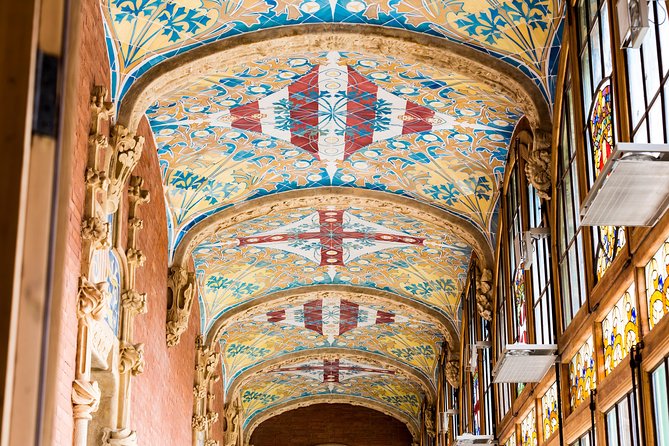
Barcelona’s Sant Pau is more than a pretty Modernist building. It is a former hospital city, planned with pavilions, gardens, underground passages, tiled roofs, stained glass, and rooms designed to make medical care less grim. The old hospital’s layout is the star attraction, and you can explore it without being tied to a group or guide.
I like the freedom to spend 60 minutes here or stretch the visit closer to two hours. I also like the mix of architecture and medical history: you are not simply admiring mosaics, you are seeing how an early 20th-century hospital was planned. The main drawback is the self-guided route, which can feel unclear in places, and an audio guide is not included in the $21.78 ticket.
Key points to know before you go
- A hospital designed as a small city: Separate pavilions, gardens, and underground tunnels reveal an unusual approach to patient care.
- Mosaics, stained glass, and tiled roofs: Sant Pau gives you close views of Barcelona Modernisme beyond the better-known Gaudí sites.
- A flexible one to two-hour visit: You set the pace, with no large tour group moving you from room to room.
- Audio guide costs extra: The admission ticket does not include narration, but an audio device can be rented for €4 at the entrance.
- A useful pairing with Sagrada Família: Sant Pau is a short distance from Barcelona’s famous basilica, making the two sites easy to combine.
- Book ahead in busy periods: Your mobile voucher confirms admission and saves you from relying on same-day availability.
Why Sant Pau feels different from other Barcelona sights
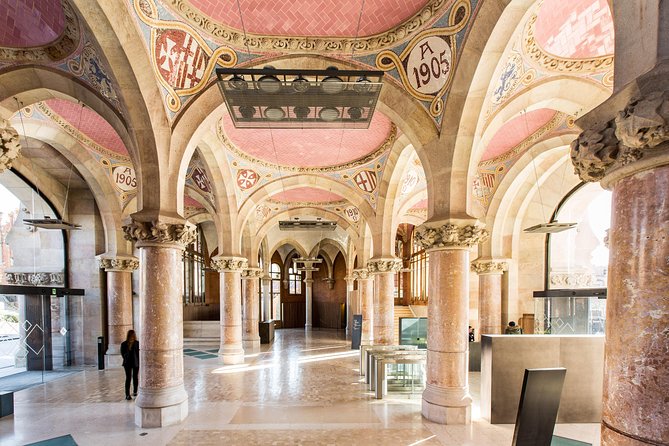
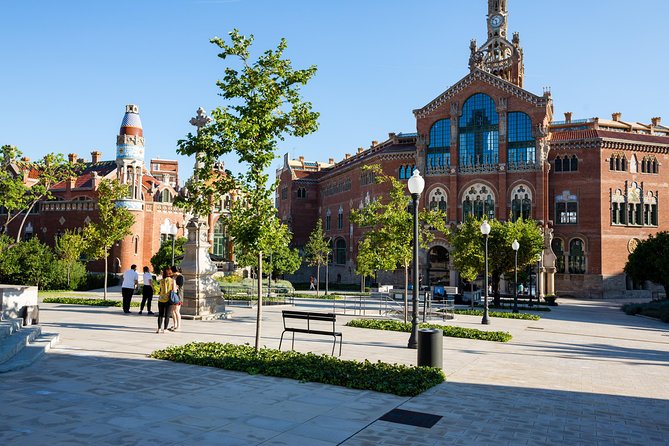
Sant Pau Recinte Modernista occupies a large former hospital complex on Sant Antoni Maria Claret. It was part of the Hospital de la Santa Creu i Sant Pau, an institution with roots reaching back to 1401, but the buildings you see today belong to Barcelona’s Modernisme period.
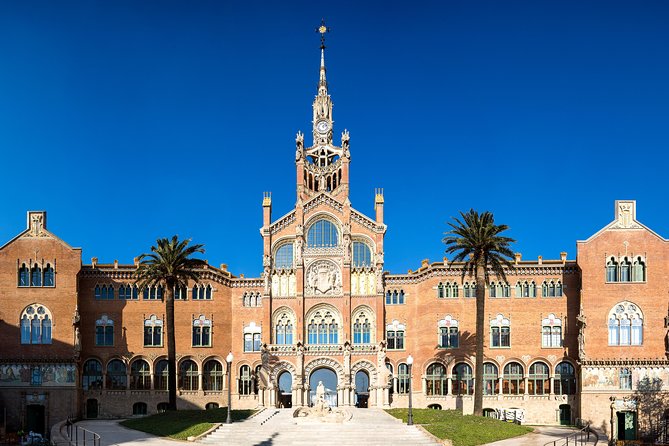
The complex was designed by Lluís Domènech i Montaner, one of the central figures of Catalan Art Nouveau. His idea was not to create one imposing hospital block. Instead, he planned a series of pavilions connected by gardens and underground tunnels. This gave patients, staff, and supplies room to move between buildings while keeping the wards open to air and daylight.
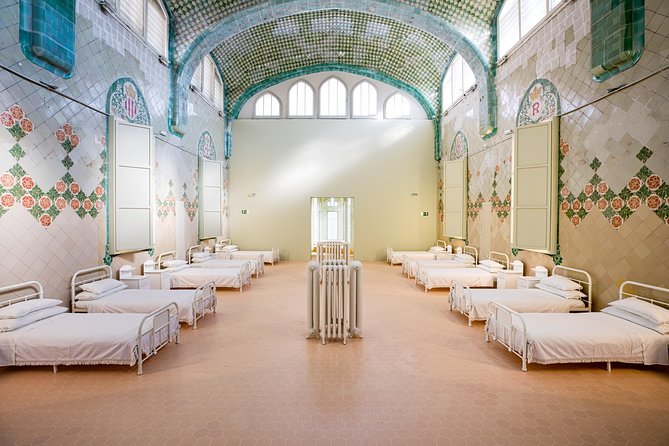
That practical plan is what makes Sant Pau worth your time. You are looking at art, but you are also looking at an early attempt to make a hospital healthier and more humane. The decorated walls and colorful tilework were not an afterthought. They helped create an environment very different from the dark, crowded hospital model common in older European cities.
The site was still used as a hospital in the 1990s. That detail gives the visit extra weight. These are not ruins built only for display. They were working medical buildings within living memory, later restored and opened as a cultural site.
A few other Barcelona outings to compare
- Barcelona: Sagrada Familia Entry Ticket with Audio Guide
★ 4.6 · 105,312 reviews - Barcelona: Park Güell Admission Ticket
★ 4.4 · 76,534 reviews - Barcelona: La Pedrera-Casa Milà Ticket & Audio Guide Option
★ 4.7 · 15,099 reviews
Start at the Administration Pavilion
Your visit begins at the Administration Pavilion, where you show the mobile voucher and enter the complex. The check-in is simple: have the ticket ready on your phone, as this is a mobile admission experience rather than a guided tour with a meeting point.
The exhibition area introduces Sant Pau’s medical and architectural story. Interactive displays include a touch table and a video presentation, giving you a useful orientation before you walk among the pavilions.
I recommend taking a few minutes here instead of rushing outside. Sant Pau covers a large area, and the introductory material helps you understand why the buildings are arranged as they are. Without that context, you may notice beautiful façades but miss the larger plan behind them.
The paper guide supplied at entry can also help you find your way. Signposting is not perfect, and one of the recurring practical concerns is that the self-guided route can feel hit-and-miss. Look at the map early and keep it with you. It is possible to miss a pavilion or overlook part of the route if you simply wander without checking the suggested path.
Follow the tunnels beneath the pavilions
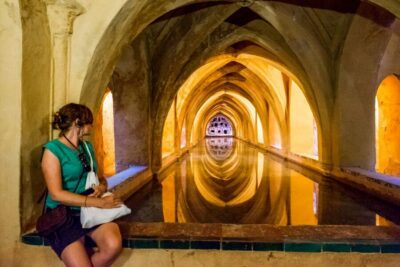
One of Sant Pau’s most memorable features is below ground. A network of tiled tunnels connects the pavilions and extends toward the gardens. These passages were used to move patients and supplies without sending every activity through the open courtyards.
The tunnels also make the hospital’s design easier to understand. From above, the complex can seem like a set of decorative buildings. Below, you see the working system that held it together.
The tilework is a highlight here. The colorful surfaces give the underground spaces a character that is both practical and artistic. This is one of the places where Sant Pau feels unlike a standard palace or church visit. The decoration is woven into a functioning medical plan.
You may find some sections closed during your visit, and access to lifts can be limited. If stairs are difficult for you, ask staff about the available route before setting off. Most people can participate, and service animals are allowed, but the site is not presented as a completely effortless, step-free experience.
See the restored pavilions and the old Surgery Room
From the tunnels and gardens, the visit continues through restored pavilions. The Sant Rafael Pavilion is one of the central stops. Its restoration gives you a strong sense of how the hospital once looked, with carefully preserved architectural details and a calmer atmosphere than many of Barcelona’s busiest sights.
The old Surgery Room adds a more direct medical connection. Here, the visit shifts from decorative architecture to the realities of treatment and hospital care. The combination is valuable because Sant Pau is not only a Modernist showpiece. It also explains how medical ideas and building design worked together.
You can also see the Lluís Domènech i Montaner Room, the Pau Gil Room, and the Main Hall. These spaces provide some of the complex’s grandest interiors. Look up and around rather than focusing only on the floors and walls. Stained glass, sculptural details, domes, frescoes, and tilework reward a slow pace.
The architecture can easily take up your entire visit, especially if you enjoy Barcelona Modernisme. Still, I would make time for the exhibits. The story of treatment from earlier periods to the present gives the place a human scale and keeps the visit from becoming a purely visual walk-through.
Same city, a completely different evening:
- Barcelona: Casa Batlló Entry with Self-Audioguide Tour
★ 4.7 · 25,359 reviews - Barcelona: 24 or 48-Hour Hop-On Hop-Off Bus Tour
★ 4.4 · 20,872 reviews - Barcelona: Park Guell Guided Tour with Skip The Line Entry
★ 4.7 · 17,563 reviews - Barcelona in 1 Day: Sagrada Familia, Park Guell,Old Town & Pickup
★ 5.0 · 13,541 reviews
Explore the Sant Salvador Pavilion and the dragon installation
The Sant Salvador Pavilion presents the story of the Hospital de la Santa Creu i Sant Pau from its foundation in 1401 through the 21st century. This is the main historical stop, and it helps connect the medieval institution with the Modernist complex surrounding you.
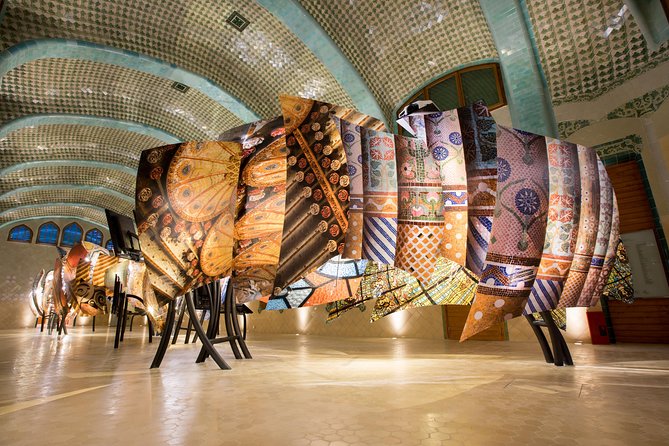
On the upper floor, a contemporary installation takes the shape of a dragon. It honors Domènech i Montaner and his role in Catalan Modernisme. The piece adds a modern note to a site otherwise filled with historic materials and medical displays.
This pavilion is especially useful if you want more than attractive photographs. It explains the long development of the hospital and shows that Sant Pau is part of a much older institution, not an isolated architectural project.
The exhibits are translated into English, so you can follow the basic story without a guide. Still, the amount you take away will depend on how carefully you read and watch the material. If you prefer spoken explanations, the audio guide is worth considering.
Take time with the gardens and exterior details
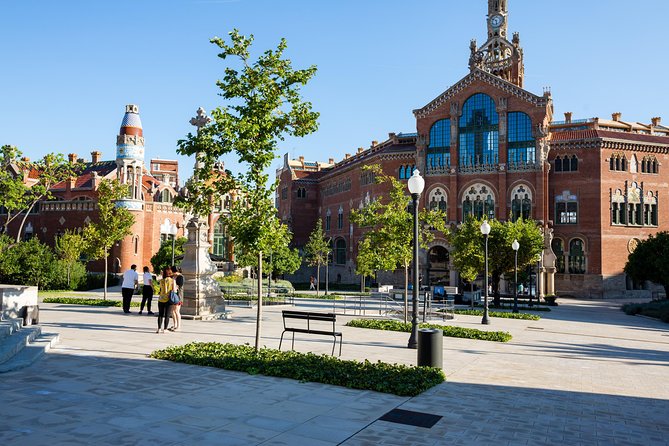
The gardens are not just a passage between buildings. They were part of the hospital’s original plan, giving patients access to open air and creating separation between wards. The grounds also offer some of the best views of the pavilions as a group.
From outside, focus on the details that are easy to miss from a distance. Stained-glass windows, sculptures, domes, frescoes, and tile-covered roofs give each building its own character. The complex feels large because it is large, but the decoration keeps the walk varied.
The gardens are also a practical break during a longer visit. Sant Pau is generally quieter than Barcelona’s most famous Modernist attractions, so you can pause without feeling pushed along by a crowd. On a hot day or during rain, indoor areas, seating, and air conditioning can make the visit more comfortable.
Bring patience for photography. The colorful surfaces and symmetrical paths invite constant stops, and a rushed visit will leave you seeing the complex only as a series of façades. Allow at least an hour if your schedule is tight. Two hours is more sensible if you plan to read the exhibits and use the audio guide.
Finish with temporary exhibitions at Sant Jordi Pavilion
The Sant Jordi Pavilion hosts rotating temporary exhibitions. Because these displays change, the exact subject will depend on your visit. Treat this as an extra rather than the main reason to buy the ticket.
The pavilion provides a natural ending to the route. By this point, you have seen the hospital’s history, its restored interiors, the surgical space, the tunnels, and the gardens. A changing exhibition gives the complex a current cultural role instead of leaving it frozen in the past.
If you are visiting with limited time, prioritize the historic pavilions and tunnels first. Then check the Sant Jordi Pavilion if time remains.
How the self-guided format works
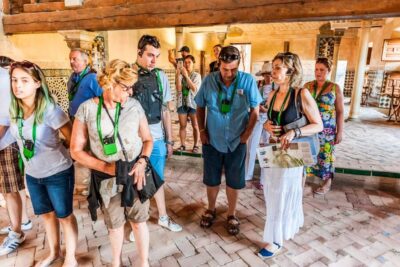
This is an admission ticket, not a guided walking tour. You enter independently and move through the complex at your own speed. That makes the visit easy to fit between other Barcelona plans, especially if you dislike being attached to a fixed group.
The English information is available in the exhibits, and the printed guide helps with orientation. An audio device can be rented for €4, and that extra cost is sensible if you want the hospital’s story explained as you walk. Several people who visited without narration felt they missed some of the meaning, while those who used the audio option found it added value.
The tradeoff is structure. A live guide would make the route clearer and could point out small details as you go. With the self-guided format, you need to pay attention to signs and the map. Some areas may be closed, and the route is not always obvious.
For independent sightseers, this is a fair compromise. You can linger over a mosaic, skip a video, or sit in the gardens without holding up anyone else.
Is the $21.78 ticket good value?
At $21.78 per person, Sant Pau is not a bargain-basement stop, but it offers more than a single room or façade. Your ticket covers the full Modernist complex, including the exhibition areas, restored pavilions, tunnels, gardens, and historic rooms.
The value is strongest if you care about architecture, medical history, or Barcelona’s cultural development. You are paying for access to a substantial site, not a quick photo opportunity. A normal visit takes one to two hours, and the complex can fill a useful part of your day.
The ticket also removes some uncertainty. Sant Pau is a popular attraction, and advance booking guarantees entry. There may be little or no line on a quiet weekday, but buying ahead protects your plans during busier periods.
The audio guide is extra, and food and drinks are not included. There is also no personal guide. If you compare the ticket with a guided tour, remember that the lower price comes with more responsibility for you to read, listen, and find your way.
Sant Pau can be paired with Sagrada Família because the sites are a short distance apart. It is also near public transportation, and the Green Line stop 12 of the hop-on hop-off bus is directly outside, according to the available visitor information.
Who should visit Sant Pau?
I would send architecture fans here without hesitation. The mosaics, tile roofs, stained glass, domes, sculptures, and restored rooms provide a close look at Modernisme beyond the best-known Gaudí buildings.
It also suits people who enjoy institutions with a strong social story. The hospital’s long development, former surgery room, medical displays, and underground system give the visit substance.
Families and independent sightseers may appreciate the freedom of the format. You can keep the visit short or spend longer with the exhibits. The interactive touch table and video presentation give the opening section some variety.
The site is less suitable if you want a tightly organized guided experience. The route can be confusing, some areas may be unavailable, and the audio guide costs extra. Visitors with knee or mobility concerns should ask about lift access before starting, since some parts involve stairs and lift access may be limited.
Booking, timing, and cancellation
The mobile ticket is offered in English and confirmation arrives when you book. The advertised visit length is approximately one to two hours, though your pace and interest in the exhibits will determine the actual time.
The ticket has free cancellation if you cancel at least 24 hours before the experience start time. Changes or cancellations made inside that 24-hour window are not accepted for a refund, and the cut-off follows local Barcelona time.
The experience is operated by Fundació Privada Hospital de la Santa Creu i Sant Pau. Admission begins at the Administration Pavilion during opening hours, so check the time printed on your voucher and allow enough time to find the entrance.
Should you book Sant Pau Recinte Modernista?
Book it if you want Barcelona history with room to breathe. Sant Pau offers some of the city’s finest Modernist architecture, but its real strength is the way art, medicine, gardens, and hospital planning come together.
The $21.78 price makes sense for a one to two-hour visit, especially when you want guaranteed admission and the freedom to explore alone. Add the €4 audio guide if you want a clearer explanation of the buildings and medical story.
Skip it only if your schedule is extremely tight, you dislike self-guided sites, or stairs and uneven access could make the route frustrating. For most visitors who have time after Sagrada Família, Sant Pau is a thoughtful and less frantic way to see Barcelona’s Modernisme.
FAQ
Where is Sant Pau Recinte Modernista located?
It is located on Sant Antoni Maria Claret in central Barcelona.
How long does the visit take?
The visit takes approximately one to two hours, depending on how much time you spend with the exhibits, rooms, tunnels, and gardens.
Is this a guided tour?
No. The ticket provides admission for a self-guided visit. A guide is not included.
Is an audio guide included?
No. An audio guide is not included in the admission ticket. It can be rented at the entrance for €4.
Is the ticket available on a mobile phone?
Yes. The experience includes a mobile ticket, and confirmation is received at the time of booking.
Is the information available in English?
Yes. The experience is offered in English, and the exhibits include English translations.
What can I see inside the complex?
You can see the exhibition area, restored pavilions, the old Surgery Room, the Lluís Domènech i Montaner Room, the Pau Gil Room, the Main Hall, the Sant Salvador Pavilion, and the Sant Jordi Pavilion.
Can I see the underground tunnels?
Yes. The route includes underground tunnels connecting the pavilions and gardens, although some areas may be closed during your visit.
Is Sant Pau near public transportation?
Yes. The site is near public transportation, and the Green Line stop 12 of the hop-on hop-off bus is directly outside.
Can I cancel for a full refund?
Yes, if you cancel at least 24 hours before the experience start time. Cancellations or changes made less than 24 hours before the start time are not accepted for a refund.
Recently added in Barcelona
- Barcelona: Catamaran Cruise w/ Sailing, Wine, & Tapa★ 4.7 · 176 reviews
- Guided Gaudí Trencadís Mosaic Workshop in Barcelona 2 Hours★ 5.0 · 176 reviews
- Barcelona Cable Car Sky Views, Magic Fountain & Castle Visit★ 4.2 · 177 reviews
- Barcelona Private Sunset Sailing with Drinks★ 5.0 · 177 reviews
- Barcelona: Montserrat with Winery Visit and Farmhouse Lunch★ 4.7 · 178 reviews
- Barcelona: Nightmare Horror Museum Maze Entry Ticket★ 4.5 · 179 reviews
- Barcelona: City Sights Electric Quad Tour★ 4.8 · 178 reviews
- Barcelona: Professional Photoshoot Outside Sagrada Familia★ 4.8 · 179 reviews
Tickets, compared.

Sagrada Familia Entry Ticket with Audio Guide
Read the review →


Live Flamenco Dancing Show Ticket at the Theater
Read the review →