Reviewed · BARCELONA TOURS
Barcelona Old Town & Gothic Quarter Small Group Tour
Barcelona’s oldest streets are easiest to understand on foot, and this tour gives you a useful thread through the maze. In about two and a half hours, you’ll move from Roman remains and medieval lanes to La Rambla, Boqueria Market, El Born, and the Catalan-modernist Palau de la Música Catalana. The history comes in manageable pieces, not as a long lecture.
I like two things here: the small-group format, advertised for up to 12 people, and the chance to ask questions as you go. Guides including Alba, Joris, Isabel, Miguel, Steven, and Tatiana are repeatedly praised for clear storytelling, humor, patience, and practical advice. The route also works well for a first morning in Barcelona, since it helps you get your bearings quickly.
The main consideration is that this is an orientation walk, not an admission tour. Cathedral and basilica entry fees are not included, food is extra, and La Rambla can be crowded. Also check the exact meeting pin carefully, since one booking note reports that the mapped location and the written address were more than 100 meters apart.
Key things to know before booking
- Roman Barcelona meets medieval Barcelona: Look for ancient remains tucked into the Gothic Quarter’s narrow lanes.
- A compact route with broad coverage: In roughly 150 minutes, you see Ciutat Vella, La Rambla, Boqueria Market, Plaça Reial, El Born, and major churches.
- Small groups make questions easier: The tour is designed for a personal feel, with up to 12 people stated in the inclusions and a maximum of 15 noted in the additional information.
- Market time is useful, not rushed: You can look over the stalls, buy a fresh juice, or return later for another visit.
- The finish is near Palau de la Música Catalana: You end in the central Born area, well placed for further sightseeing.
- Morning and afternoon departures are available: That makes it easier to fit around museum visits, meals, or an arrival day.
Why this walk is a smart first look at Barcelona
Barcelona’s Old Town can feel confusing at first. Streets twist, neighborhoods overlap, and the most interesting details are often above eye level or tucked beside a busy thoroughfare. A guide gives those pieces a story and saves you from spending your first hours stopping every few minutes to consult a map.
The route covers the Gothic Quarter and El Born, two historic areas with different personalities. The Gothic Quarter is the denser maze of Roman traces, medieval buildings, church towers, and small squares. El Born feels more mixed, with old structures beside trendy streets and cultural attractions.
I especially like the broad time span. You’ll hear about Barcelona as a Roman settlement, its medieval growth, Catalan Gothic architecture, the old city walls, and the later modernist movement. That range helps you see that Barcelona is not simply a Gaudí city. Gaudí appears here too, but the tour gives you a wider view of the people and buildings that shaped the center.
The walk is offered in English and includes a professional local guide. Morning and afternoon choices are practical, especially if you are arranging the tour around Sagrada Família tickets or a fixed lunch reservation. At $22.15 per person, the price is modest for a guided walk lasting about two and a half hours. You are paying mainly for local explanation and route planning, rather than for entry tickets.
A few other Barcelona outings to compare
- Barcelona: Sagrada Familia Entry Ticket with Audio Guide
★ 4.6 · 105,312 reviews - Barcelona: Park Güell Admission Ticket
★ 4.4 · 76,534 reviews - Barcelona: Casa Batlló Entry with Self-Audioguide Tour
★ 4.7 · 25,359 reviews
Starting near Plaça de Catalunya and Carrer de Fontanella
The listed meeting point is Carrer de Fontanella 2 in Ciutat Vella. This puts you close to the central part of Barcelona, which is sensible for a walking tour of the Old Town.
Give yourself extra time to locate the guide. The written meeting address and map point have not always matched perfectly, with one note placing them more than 100 meters apart. I would check the booking confirmation and map pin on the morning of the tour instead of relying only on the street name.
No hotel pickup or drop-off is included. That is not much of a drawback for this experience, since private transport would be awkward in the narrow central streets anyway. Plan to arrive by public transport or on foot, and wear shoes that can handle uneven pavement.
The tour is generally suitable for most people, and children must be accompanied by an adult. Children under two can join free, while children aged three to eight receive a 30 percent discount. One family account describes the route as stroller friendly, though the Old Town’s lanes and crowded areas may still require patience.
Roman traces and the Gothic Quarter’s winding lanes
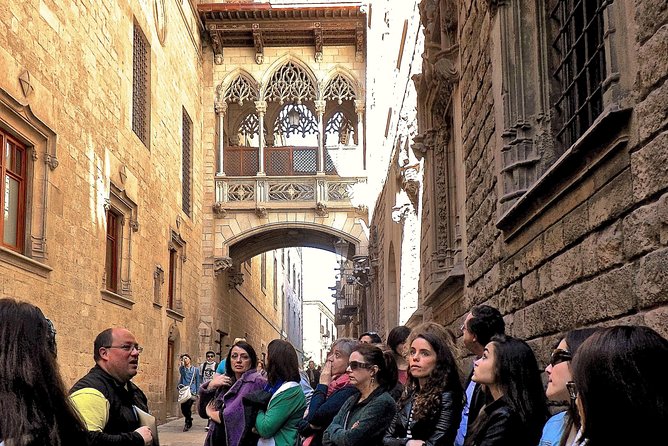
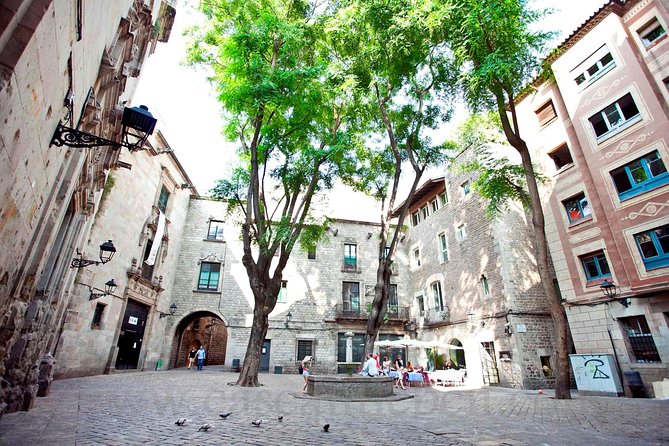
The first substantial part takes you into the Gothic Quarter, where the city’s narrow streets create the feeling of a maze. That is exactly where a guide earns the fee. You can look at doorways, walls, courtyards, and corners without worrying that you are walking in circles.
The tour points out Roman remains still visible in the district. Barcelona began as a Roman settlement, and fragments of that earlier city survive among later medieval buildings. These remains are not always presented in a grand, separate monument. Often, the pleasure comes from noticing how old stone has been absorbed into the modern city.
The Gothic Quarter grew during the medieval period, when Barcelona expanded beyond its Roman beginnings. Your guide explains how the streets and squares developed, and adds local legends and stories along the way. Guides such as Isabel and Anna have been praised for connecting Roman, Visigoth, Moorish, medieval, and later Spanish history into a clear sequence.
That storytelling matters. Without context, a medieval lane can look like a pretty backdrop. With context, you begin to understand why the streets are so narrow, why the churches occupy such central positions, and how the old city functioned before modern boulevards cut through it.
The listed time here is about 45 minutes, though the full experience can run close to three hours depending on the group and guide. The pace is intended to be comfortable. Steven, for example, has been singled out for setting a good pace, while other guides are praised for patience when questions slow the walk.
Ciutat Vella, Barcelona’s oldest city district
Ciutat Vella means Old City in Catalan. It is not one single attraction, but the larger historic area that includes the Gothic Quarter and El Born.
This portion helps tie the route together. Instead of treating each church or square as an isolated stop, your guide explains how the Old City worked as a whole. You’ll hear stories about Barcelona itself, local customs, and Catalan culture and politics.
That last point is useful because Barcelona’s identity cannot be separated from Catalonia. A good guide can give you a basic sense of the city’s regional character without turning the walk into a political seminar. Steven has been praised for discussing local customs and politics in an approachable way, while Alba is often described as warm, funny, and enthusiastic when explaining her country.
Same city, a completely different evening:
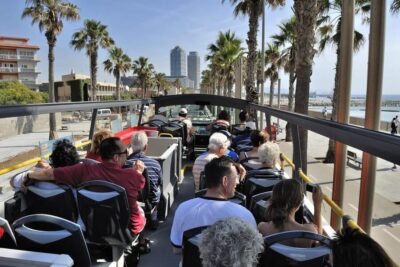
- Barcelona: 24 or 48-Hour Hop-On Hop-Off Bus Tour
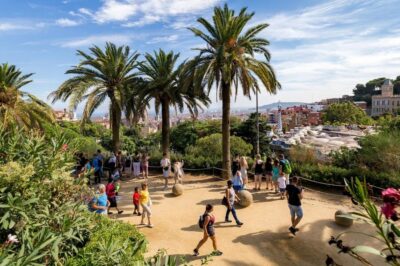
★ 4.4 · 20,872 reviews - Barcelona: Park Guell Guided Tour with Skip The Line Entry
★ 4.7 · 17,563 reviews - Barcelona: La Pedrera-Casa Milà Ticket & Audio Guide Option
★ 4.7 · 15,099 reviews - Barcelona in 1 Day: Sagrada Familia, Park Guell,Old Town & Pickup
★ 5.0 · 13,541 reviews
La Rambla and the Boqueria Market
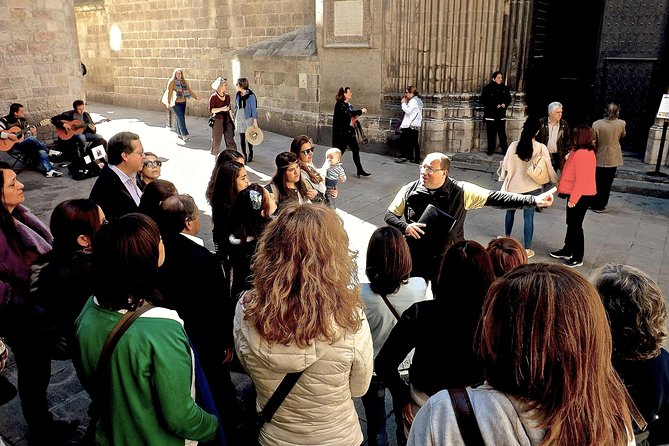
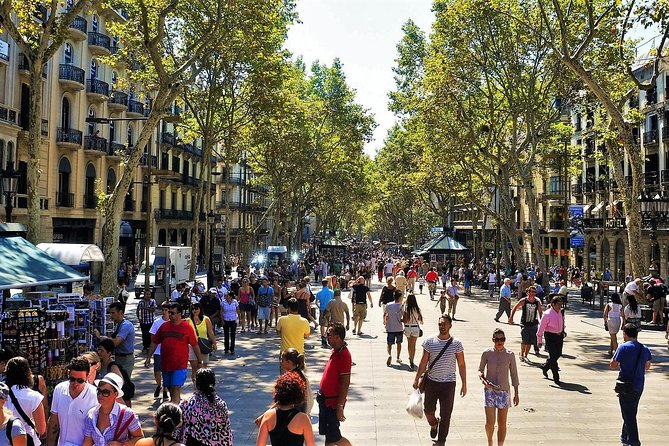
The route then reaches La Rambla, Barcelona’s most famous avenue. Today it is lined with restaurants, bars, shops, street artists, and constant foot traffic. Your guide also explains its earlier role as a sandy watercourse that formed a natural defense at the edge of the old city walls.
That contrast is one of the more useful lessons of the walk. La Rambla can seem like a modern tourist strip, but its location reflects the older shape of Barcelona. Understanding that past changes how you read the avenue.
The Boqueria Market gets about 15 minutes. That is enough to walk through, see the colors and displays, and learn about Catalan food traditions. You can buy a fresh fruit juice or a snack, but food and drinks are not included in the tour price.
I like the market stop because it gives the walk a sensory change after the stone lanes and church facades. It also lets you mark a place to revisit. One guide, Tatiana, is specifically praised for making the market portion enjoyable, and the market can be a useful return stop later in your Barcelona stay.
Still, do not expect a full food tour. Fifteen minutes is a short visit, and the market may be crowded. If you want to shop or eat slowly, plan to come back on your own after the walk.
Plaça Reial and the first public work linked to Gaudí
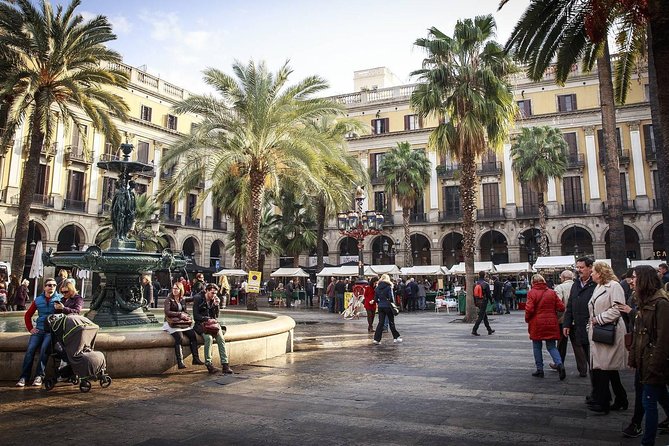
Plaça Reial opens up suddenly after the tight streets of the Gothic Quarter. Its large proportions, palm trees, terraces, and elegant fountain make it a natural pause in the route.
The square is associated with Napoleonic architecture and has long attracted artists, bohemians, and visitors. The guide explains how it became a meeting place in the middle of the Old Town.
Look closely at the lamps. They were designed by a young Antoni Gaudí for one of his first public commissions. The tour does not treat this as a substitute for seeing Gaudí’s major works, but the detail gives you a small, early chapter in the career of Barcelona’s best-known architect.
Plaça Reial is also a practical place to remember for later. Its terraces offer a break, though you should choose carefully before sitting down, since the tour does not include food or drinks and restaurant prices can vary.
Barcelona Cathedral and the story of Saint Eulalia
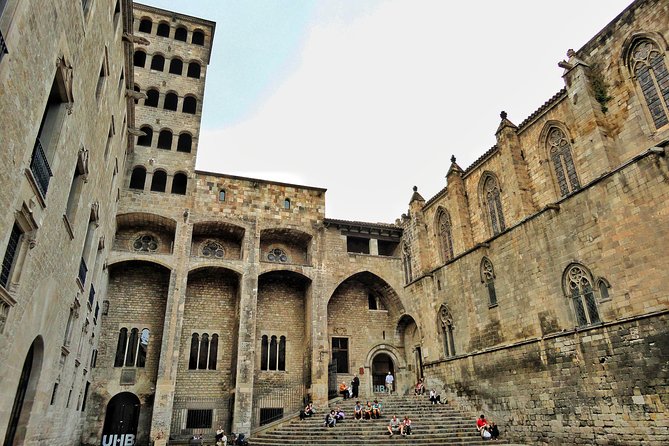
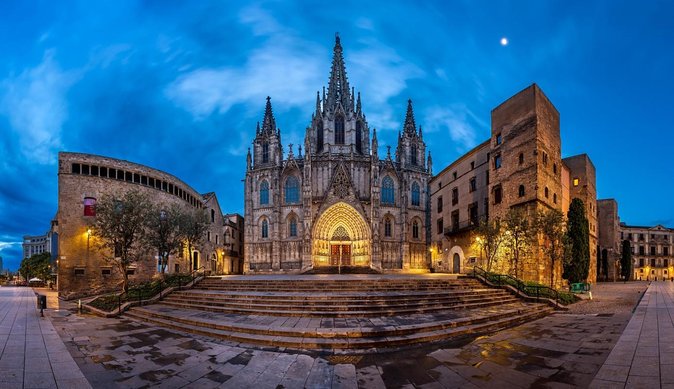
The walk passes Barcelona Cathedral, one of the major Gothic landmarks in the Old City. You’ll see the gargoyles high on the towers and hear about the building’s dedication to Saint Eulalia, a young virgin who is the city’s patron saint.
The cathedral’s interior includes a bright patio and tall columns. However, the tour does not include admission, so the visit from the group is primarily an exterior look unless you choose to pay for entry separately.
This is an important distinction when comparing city walks. The guide supplies explanation, but you should not expect every church on the route to be entered. If the cathedral interior is a priority, check the current opening hours and admission rules separately, then return after the tour or plan another visit.
The stop is listed at about 15 minutes. That is enough for orientation and photographs, but not a full architectural inspection.
El Born and Santa Maria del Mar
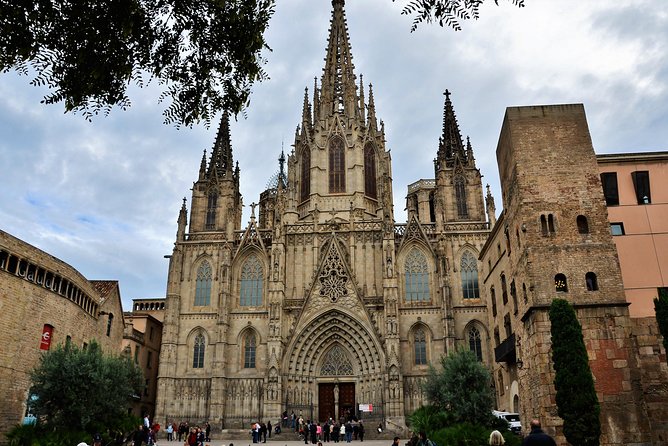
From the Gothic Quarter, the route continues into El Born. This district is known for its combination of old and new buildings, small squares, and cultural sites. The change in feel is part of the appeal. You remain in the historic center, but the streets can feel less solemn and more contemporary.
The guide points out attractions such as the Basilica of Santa Maria del Mar and Palau de la Música Catalana. El Born is a good area to explore after the tour because you finish nearby rather than being taken back to the starting point.
Santa Maria del Mar is one of the great examples of Catalan Gothic architecture. It is sometimes called the real cathedral of the Old Town because local residents helped build it during the medieval period. That community connection gives the church a different meaning from a monument commissioned only by a royal or religious authority.
Admission is not included. The stop is listed at about 15 minutes, so you will likely receive an exterior introduction rather than a full interior visit. If the basilica interests you, plan extra time and confirm entry details separately.
The Born section is also where the tour can feel most useful for independent exploration. A guide points out the main route, then you can return later to browse the streets at your own pace.
Finishing beside Palau de la Música Catalana
The tour ends near Palau de la Música Catalana on Carrer del Palau de la Música. This is a strong finishing point because it leaves you in the central Born area rather than at a distant transport stop.
The concert hall was designed by Lluís Domènech i Montaner, who taught Gaudí. It is a major work of Catalan modernism and a UNESCO World Heritage Site. Its decoration combines sculpture, mosaics, stained glass, and wrought iron, creating the impression of a music box built from many applied arts.
The tour only brings you near the building. Entry is not listed as included, so an interior visit requires a separate ticket or tour. Even from outside, the ending gives you another architectural reference point and a good idea of how Barcelona’s modernist tradition extends beyond Gaudí.
I also like the route’s final geography. You can continue through El Born, stop for a meal, seek out a café, or make your own way to another central attraction. The tour ends in the city center, not at the edge of town.
Guide style, group size, and the value of questions
The strongest part of this experience is the guide. Alba is frequently praised for enthusiasm, humor, clear explanations, and her ability to keep children interested. Isabel is noted for weaving history together with present-day life and broader thoughts about how the city changes. Joris receives high marks for friendliness, patience, and interesting facts.
Miguel’s style seems especially useful if you want practical help. He has been praised for answering questions, orienting people in the city, suggesting places to visit, and even helping with a paella reservation during a private tour. Those extra recommendations can be valuable at the start of a stay.
The small-group design matters in crowded lanes. A guide can gather the group near a church or market, speak without shouting quite so much, and notice when someone has fallen behind. One account describes Miguel calling separated group members so they could rejoin. That is a simple but reassuring detail in a city center where streets quickly become confusing.
The supplied information gives two group limits: the inclusions describe a maximum of 12 for a personal experience, while the additional information lists a maximum of 15. I would expect a small group, but check the final booking details if group size is a major factor in your decision.
Who should book this Barcelona walking tour?
I would choose this for a first visit, a short stay, or an arrival day when you want the city explained before exploring alone. It is also a good fit if you like history but do not want to spend an entire morning inside one museum.
Families can benefit from the stories and short stops. The guide can make old stones more engaging for children, and the route is described as stroller friendly. Teenagers may respond well to the market, street scenes, legends, and lively guide personalities.
This is less suitable if you want long interior visits, a food-focused experience, or a slow photography walk. The itinerary covers a lot of ground, and several stops last only 15 minutes. La Rambla and Boqueria Market can also feel crowded, so people seeking quiet streets should expect a busy central-city setting.
The $22.15 price is good value if you use the tour as a city orientation. You receive a local guide, a route through several major districts, and explanations that would take time to assemble alone. The value drops if you mainly want admission to the cathedral, Santa Maria del Mar, or Palau de la Música Catalana, since those costs are separate.
Free cancellation is available up to 24 hours before the start time. Cancellations made within 24 hours are not refunded, and late changes are not accepted.
My verdict on the Old Town and Gothic Quarter tour
Book it if you want a friendly, efficient introduction to Barcelona’s oldest center, especially early in your stay. The route covers Roman traces, medieval lanes, Catalan Gothic churches, La Rambla, market life, El Born, and modernist architecture without requiring you to navigate the maze alone.
I would be most inclined to request a guide such as Alba, Isabel, Joris, or Miguel if that option is available, since their clear storytelling and practical help are repeatedly highlighted in the tour’s guide roster. Just confirm the meeting pin, wear comfortable shoes, and budget extra time if you want to enter the cathedral or basilica.
FAQ
How long does the Barcelona Old Town tour last?
The walking tour lasts approximately 2 hours and 30 minutes. The listed stops add up to about 150 minutes, though the exact timing can vary.
What neighborhoods and attractions are included?
The route covers the Gothic Quarter, Ciutat Vella, La Rambla, Boqueria Market, Plaça Reial, Barcelona Cathedral, El Born, Santa Maria del Mar, and the area near Palau de la Música Catalana.
Is admission to the cathedral or basilica included?
No. Admission to Barcelona Cathedral and the Basilica of Santa Maria del Mar is not included. Food and drinks are also extra.
Where does the tour start and finish?
It starts at Carrer de Fontanella 2 in Ciutat Vella and ends near Carrer del Palau de la Música in the Born district, close to Palau de la Música Catalana.
How large is the group?
The tour is described as a small-group experience for up to 12 people in the inclusions. The additional information lists a maximum of 15 participants.
Can children join the tour?
Yes. Children must be accompanied by an adult. Children under two years old can join free of charge, and children aged three to eight receive a 30 percent discount.
Recently added in Barcelona
- Barcelona: Catamaran Cruise w/ Sailing, Wine, & Tapa★ 4.7 · 176 reviews
- Guided Gaudí Trencadís Mosaic Workshop in Barcelona 2 Hours★ 5.0 · 176 reviews
- Barcelona Cable Car Sky Views, Magic Fountain & Castle Visit★ 4.2 · 177 reviews
- Barcelona Private Sunset Sailing with Drinks★ 5.0 · 177 reviews
- Barcelona: Montserrat with Winery Visit and Farmhouse Lunch★ 4.7 · 178 reviews
- Barcelona: Nightmare Horror Museum Maze Entry Ticket★ 4.5 · 179 reviews
- Barcelona: City Sights Electric Quad Tour★ 4.8 · 178 reviews
- Barcelona: Professional Photoshoot Outside Sagrada Familia★ 4.8 · 179 reviews
Barcelona Tours, compared.
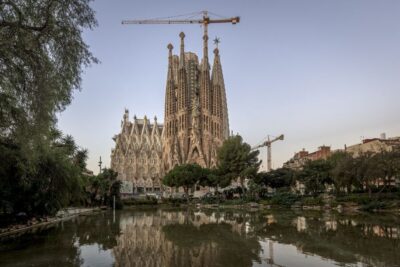
Sagrada Familia Entry Ticket with Audio Guide
Read the review →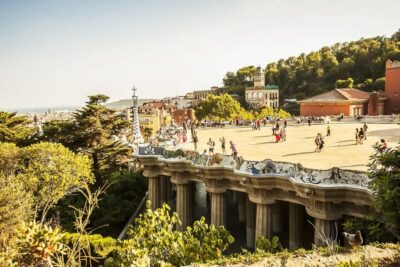
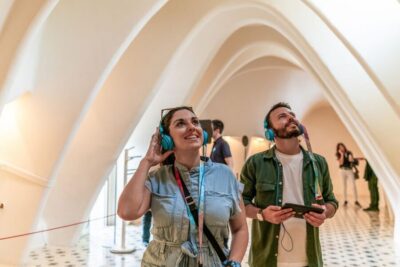
Park Guell Guided Tour with Skip The Line Entry
Read the review →La Pedrera-Casa Milà Ticket & Audio Guide Option
Read the review →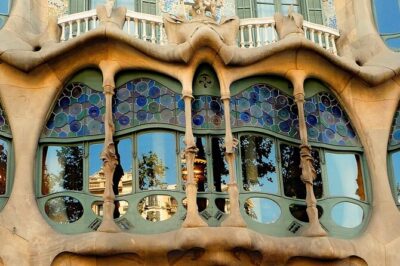
Barcelona in 1 Day: Sagrada Familia, Park Guell,Old Town & Pickup
Read the review →