
Reviewed · WALKING TOURS
Barcelona: Guided Walking Tour
Barcelona’s best stories often hide in plain sight: a Roman street beneath your feet, a narrow lane with a grim past, or a quiet square tucked behind the Cathedral. This two-hour walking tour traces those layers through the Gothic Quarter, with a finish near Santa Maria del Mar and the El Born district.
I like the route for two reasons. First, it gives you a useful 2,000-year overview without asking you to spend half a day on your feet. Second, the guides put real personality into the walk. Sara, Petra, Tamara, Lindsay, Mariah, Vanessa, and others have been praised for lively storytelling, good pacing, humor, and thoughtful answers.
The main consideration is that this is an outdoor history walk, not a detailed interior tour. You’ll see major buildings from the outside, and the old lanes can be crowded and uneven. Also, the meeting instructions say the walk ends back at the starting point, while the route description names Santa Maria del Mar as the finish, so confirm the final arrangement when you book.
Key points to know before you book

- Roman Barcelona begins at Plaça Nova: Meet beside the large Barcino letters and look for the yellow Carpe Diem Tours sign.
- The route covers Gothic and Born districts: You get more than a quick look at the Cathedral area, with Santa Maria del Mar as the final listed stop.
- Storytelling is the main attraction: Guides connect Roman Barcino, medieval power, local legends, dark episodes, and modern Catalan life.
- The pace suits a first visit: Each listed stop takes about 10 minutes, leaving enough time to see the area without turning the walk into a physical test.
- The $22 price is fair for orientation: A live English-speaking guide gives you context that is hard to pick up from plaques alone.
- Bring sensible basics: Comfortable shoes, weather-ready clothing, and a camera will serve you better than a heavy day bag.
Starting beside the Roman city of Barcino
The meeting point is Plaça Nova, 40, directly in front of the large sculpture displaying the word Barcino. Look for the yellow Carpe Diem Tours sign. This is a smart place to begin because the square sits beside the old city center and gives the guide a natural way to explain Barcelona’s Roman beginnings.
The name Barcino refers to the Roman settlement that grew into today’s Barcelona. You will not get a full archaeology lecture here, but the opening helps you understand that the Gothic Quarter is not simply a collection of medieval buildings. It is a city built in layers.
Arrive with a few minutes to spare. The Gothic Quarter has a maze of lanes, and the sign is more useful than relying on a general sense of the square. Since the tour is conducted in English, it works well for visitors who want a clear historical introduction early in their stay.
More Walking Tours in Barcelona
- Barcelona Tapas and Wine Experience Small-Group Walking Tour
★ 5.0 · 5,804 reviews - Barcelona: Tapas Walking Tour with Food, Wine, and History
★ 4.8 · 4,261 reviews - Barcelona Tapas Walking Tour: Food, Wine & History
★ 4.5 · 1,928 reviews
Els Quatre Gats and Barcelona’s artistic side
The first listed stop is Els Quatre Gats, a famous Barcelona meeting place associated with the city’s artistic and intellectual life. The guide spends about 10 minutes here, using the building as a bridge between old Barcelona and the creative energy that shaped the modern city.
This is one of the route’s useful contrasts. You start with Roman foundations, move through medieval streets, and then encounter a place linked with Barcelona’s later cultural identity. The tour does not focus only on stones and dates. It aims to show how the city changed and how its buildings gained meaning over time.
You should expect an exterior explanation rather than a long indoor visit. If you have a particular interest in art or modernisme, this stop will likely make you want to return later on your own.
The Kiss of Freedom and a modern public memory
The Kiss of Freedom is a more contemporary sight along the walk. It gives your guide a chance to discuss public art, memory, and the way Barcelona presents its past in public spaces.
This stop is valuable because it breaks up the medieval sequence. A two-hour tour can become a procession of old churches and stone walls, but this piece adds a modern emotional note. Guides have used humor, anecdotes, and personal delivery to keep the walk moving, and a stop like this benefits from that style.
The exact amount of time is listed as about 10 minutes. You will have enough time for photographs and a short explanation, but not an extended art-history lesson.
Barcelona Cathedral and the heart of the Gothic Quarter
Barcelona Cathedral is one of the route’s main sights. Its scale and position make it a useful anchor for understanding the old city. You’ll hear about the medieval period, the importance of the Gothic Quarter, and the way religious buildings shaped the surrounding streets.
The guide’s role matters here. A cathedral can be easy to reduce to a photograph, especially when you are surrounded by tour groups and busy lanes. A good explanation helps you notice the building’s setting, the age of the quarter around it, and the layers of Barcelona’s past.
The stop lasts about 10 minutes, so plan on a concise introduction from outside. The tour does not include food, drinks, or a clearly stated interior admission. If seeing the inside of the Cathedral is a priority, treat this walk as an orientation and return separately with time to explore.
This is also a good point to assess the walking conditions. The route passes through old streets rather than broad modern avenues. Comfortable shoes are not a minor suggestion here. They make the difference between enjoying the stories and thinking about your feet.
Same city, a completely different evening:
- Barcelona: Sagrada Familia Entry Ticket with Audio Guide
★ 4.6 · 105,312 reviews - Barcelona: Park Güell Admission Ticket
★ 4.4 · 76,534 reviews - Barcelona: Casa Batlló Entry with Self-Audioguide Tour
★ 4.7 · 25,359 reviews - Barcelona: 24 or 48-Hour Hop-On Hop-Off Bus Tour
★ 4.4 · 20,872 reviews
Casa de l’Ardiaca and the Bishop’s Bridge
Casa de l’Ardiaca, or the Archdeacon’s House, follows the Cathedral. The building and its setting help show how church officials and civic life were tied together in medieval Barcelona.
Next comes the Bishop’s Bridge, one of the most photographed passages in the Gothic Quarter. It crosses the narrow street between historic buildings and has become a familiar symbol of old Barcelona. Your guide will explain its place in the city’s visual identity and may add one of the legends or stories that make this quarter more than a backdrop.
These two stops work well together. You see the architecture, then hear how later generations interpreted and presented the medieval past. Do not expect a long pause at either location. Each is listed at roughly 10 minutes, so the guide has to keep the group moving.
Photography is easy at both sites, but stopping in the middle of a narrow passage can create congestion. Be ready to step aside and listen from the edge when asked.
Sant Felip Neri Square and the city’s darker stories
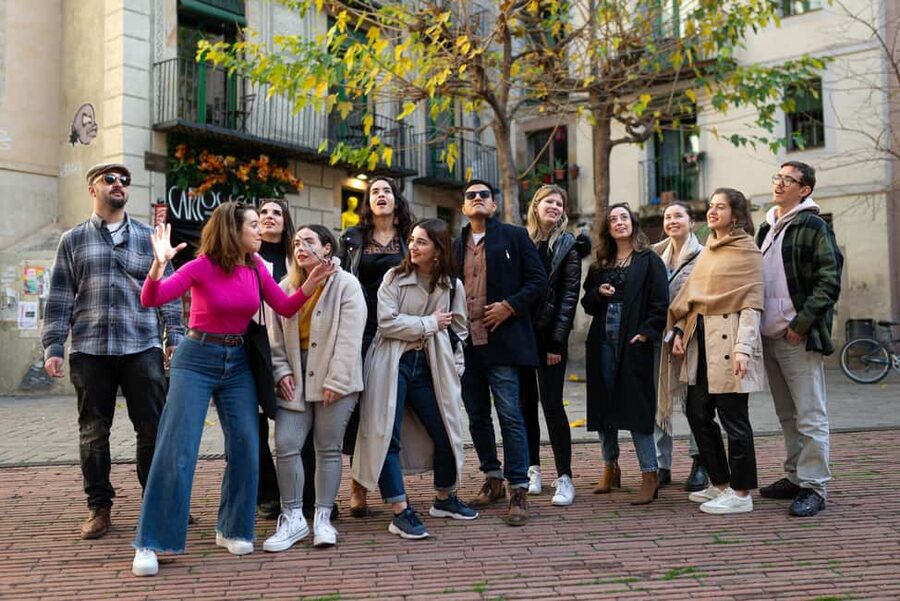
Plaça Sant Felip Neri is one of the most affecting stops on the route. It is quieter than the Cathedral area and has an atmosphere that invites a slower explanation. The square is closely associated with painful episodes in Barcelona’s past, and the damaged walls provide a visible reminder of that history.
This is where the tour’s promise of dark history becomes more tangible. The guide will not simply list dates. The strongest guides on this route, including people such as Petra, Sara, and Mariah, have been praised for bringing emotion and energy to historical accounts while keeping the tone suitable for the place.
You may find this stop more serious than the earlier ones. That change is helpful. Barcelona is often sold through food, sunshine, and architecture, but the city’s past also includes violence, hardship, and political conflict. A responsible guide can give those subjects space without letting them overwhelm the whole walk.
The square is also a reminder that the Gothic Quarter is not a museum frozen in time. People live, work, and pass through these spaces. Listen closely and keep the group’s footprint small.
Plaça de l’Àngel and the route toward El Born
Plaça de l’Àngel shifts the walk toward the El Born side of central Barcelona. Several people who have taken the route enjoyed that it went beyond the Gothic Quarter and included part of Born as well. That broader reach gives you a better sense of how the old city connects together.
A walking tour is especially useful here because the change between districts is easy to miss when you are following a map. The guide can point out how the streets, squares, and old civic centers relate to one another. You’ll get a feel for Barcelona as a lived-in city rather than a checklist of isolated monuments.
The route descriptions give this stop about 10 minutes. It is enough for a compact explanation and questions, but you will not explore every side street. Make a mental note of places you want to revisit after the tour.
Guides such as Lindsey, Tamara, and Vanessa have received strong praise for maintaining a relaxed pace. That matters in an area where it is tempting to rush from one photo stop to the next. The walk is designed to give you a framework, not to show you every corner of central Barcelona.
Santa Maria del Mar and the El Born finish
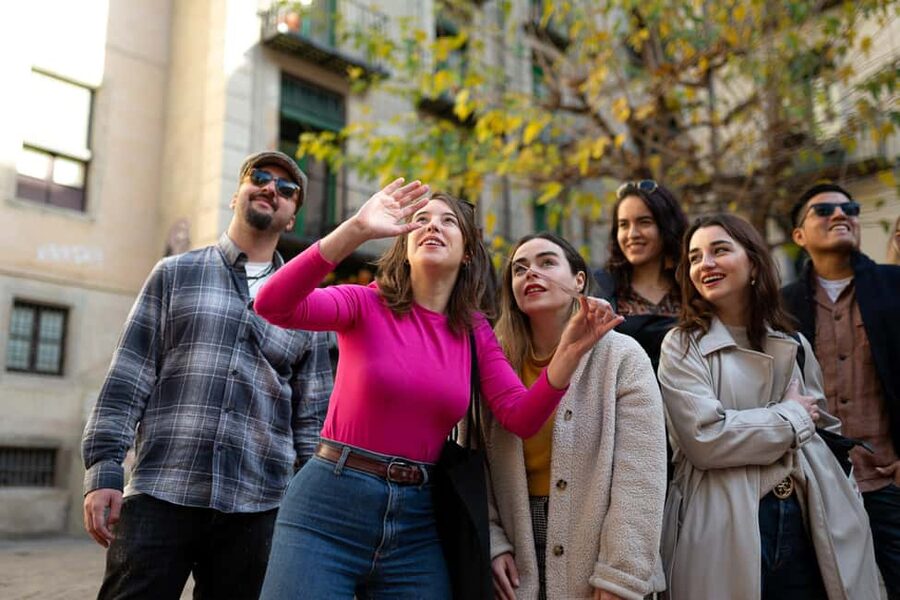
The final listed sight is Basílica de Santa Maria del Mar, one of Barcelona’s most important churches. Its location places you at the edge of El Born, an area known for its historic streets and strong connection to the old city.
Ending here makes sense. After starting with Roman Barcino and moving through the Gothic Quarter, the route gives you a second major church and a different part of central Barcelona. You can continue exploring El Born afterward, stop for food, or use the location as a base for the rest of your day.
The information for the activity also says the tour ends back at the meeting point. Because those two details do not match perfectly, ask the operator where your guide will finish on your chosen departure. This is a small planning issue, but it matters if you have a timed booking, a restaurant reservation, or luggage waiting elsewhere.
As with the Cathedral, the activity does not list interior entry. You should think of Santa Maria del Mar as the closing landmark and a useful place to continue on your own, not as a guaranteed guided church visit.
How the guides shape the experience
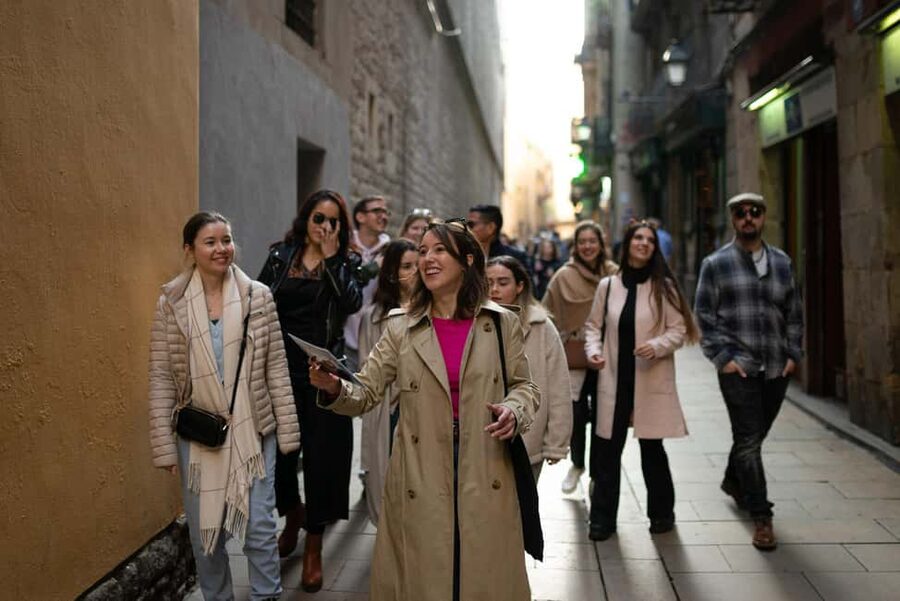
The strongest feature of this walk is the guide’s delivery. The route itself is excellent, but the Gothic Quarter is much better with someone who can explain what you are seeing and keep the stories connected.
The guides named in the feedback include Darren, Mariah, Lindsey, Vanessa, Lidia, Sara, Jordan, Tamara, Petra, Jamie, and others. Their styles vary. Some bring comedy and high energy. Others are more relaxed and story-focused. The common thread is a strong command of Barcelona’s past and a willingness to answer questions.
Sara has been praised for clear explanations and interesting stories at each attraction. Tamara has been described as considerate with photo stops, bathroom breaks, and group questions. Lindsey’s relaxed pace suits anyone who dislikes being hurried, while Petra has been singled out for staying professional and helpful when local interruptions made the walk harder.
You cannot choose a particular guide from the information provided, so do not book expecting one named person. Still, the range of guide styles is encouraging. If you enjoy history presented as conversation rather than a formal lecture, this tour should suit you.
The tour is listed in English. A private group option is available, which may be worth considering if your party wants more control over questions and pace.
Is two hours enough for Barcelona’s old city?
Two hours is enough for a first look, not a complete study. The listed route has eight guided stops, with about 10 minutes at each location. That leaves time for walking between sites, introductions, questions, and the occasional photo pause.
I like this length for your first morning or afternoon in Barcelona. You can learn the basic shape of the old city without exhausting yourself. Several guides have been praised for keeping the pace comfortable and for making the tour feel short without leaving people lost.
The tradeoff is depth. You will hear a useful sweep from Roman origins to medieval Barcelona and the present day, but you will not receive an extended lecture at every building. You may leave with a list of places to revisit, which is exactly what a good orientation walk should do.
The route is also not a substitute for a modernist Barcelona tour. If you want Gaudí, the Eixample, or the city’s later architectural expansion, plan a separate experience. This walk concentrates on the old center and gives only a limited look at later cultural developments.
What the $22 price really buys you
At $22 per person, this is a modest-cost introduction to central Barcelona. You are paying for a live English-speaking guide and the structure of a planned route. Food, drinks, entrance tickets, and other personal costs are not included.
The value comes from context. You can walk through the Gothic Quarter for free, but it is harder to understand why the Cathedral matters, how the Roman city fits beneath the medieval one, or what gives Sant Felip Neri Square its serious tone without help.
The price is strongest for first-time visitors, short stays, and anyone who wants to get oriented before exploring independently. It is less useful if you already know Barcelona’s old center well or prefer to spend time inside monuments rather than hearing outdoor explanations.
The tour also offers free cancellation up to 24 hours before the activity and a reserve-now, pay-later option. Those terms make it easier to place the walk into a changing itinerary, though you should still check the current time and meeting details before booking.
Practical advice for a smoother walk
Wear comfortable shoes and comfortable clothes. You will spend the full two hours walking through old streets, and the surface may not feel as easy as a modern sidewalk.
Bring a camera, but do not let photography take over the stops. The best details are often in the explanation, especially at the Bishop’s Bridge, Sant Felip Neri Square, and the Cathedral.
Keep your schedule slightly open after the tour. The guide may leave you at Santa Maria del Mar, or the activity may conclude at the original meeting point, depending on the final arrangement. Either way, you will be in the historic center and can continue exploring nearby.
I would also avoid booking this as your only Barcelona activity. Use it to get your bearings, then choose a separate visit for modernist architecture, a church interior, a museum, or a food-focused experience.
Who should book this Barcelona walk?
You should book it if you want a quick, story-led introduction to the oldest parts of Barcelona. It suits first-time visitors, couples, families with older children, and anyone who prefers a relaxed walk to a long bus tour.
It is particularly useful if you enjoy local anecdotes and cultural context. The guides have been praised for humor, warmth, energy, and the ability to connect old events with the city you see today.
You may want another option if you need wheelchair-specific route details, want guaranteed interior access to the Cathedral or Santa Maria del Mar, or dislike outdoor tours in busy historic districts. The available information does not provide accessibility details, so ask before reserving if that affects your plans.
Should you book it?
I would book this tour as a good-value first look at Barcelona’s old center. The route covers Roman beginnings, medieval power, religious landmarks, public memory, and the transition toward El Born in a manageable two hours.
The best reason to choose it is the guide. A lively storyteller can turn familiar sights into a connected story, and guides such as Sara, Petra, Tamara, Lindsay, Mariah, and Vanessa have shown the kind of energy and care that make a short walking tour worthwhile.
Just keep your expectations clear. This is an outdoor overview, not a full monument tour, and the ending point should be confirmed. If those limits suit you, $22 buys a useful introduction and several ideas for what to explore next.
FAQ
How long does the Barcelona walking tour last?
The tour lasts two hours. Starting times vary, so check availability for the date you want.
Where does the tour begin?
Meet at Plaça Nova, 40, in front of the large Barcino letter sculpture. Look for the yellow Carpe Diem Tours sign.
Where does the tour end?
The route description lists Basílica de Santa Maria del Mar as the final stop. The activity information also says the tour ends back at the meeting point, so confirm the final location with the provider before you go.
Which language is the tour conducted in?
The live tour guide speaks English.
What sights are included on the route?
The route includes Els Quatre Gats, The Kiss of Freedom, Barcelona Cathedral, Casa de l’Ardiaca, Bishop’s Bridge, Plaça Sant Felip Neri, Plaça de l’Àngel, and Basílica de Santa Maria del Mar.
Are food and drinks included?
No. Food and drinks are not included in the activity price.
What should I bring?
Bring comfortable shoes, comfortable clothes, and a camera. The tour is conducted on foot for two hours.
Recently added in Barcelona
- Barcelona: Catamaran Cruise w/ Sailing, Wine, & Tapa★ 4.7 · 176 reviews
- Guided Gaudí Trencadís Mosaic Workshop in Barcelona 2 Hours★ 5.0 · 176 reviews
- Barcelona Cable Car Sky Views, Magic Fountain & Castle Visit★ 4.2 · 177 reviews
- Barcelona Private Sunset Sailing with Drinks★ 5.0 · 177 reviews
- Barcelona: Montserrat with Winery Visit and Farmhouse Lunch★ 4.7 · 178 reviews
- Barcelona: Nightmare Horror Museum Maze Entry Ticket★ 4.5 · 179 reviews
- Barcelona: City Sights Electric Quad Tour★ 4.8 · 178 reviews
- Barcelona: Professional Photoshoot Outside Sagrada Familia★ 4.8 · 179 reviews
Walking Tours, compared.

Barcelona Tapas and Wine Experience Small-Group Walking Tour
Read the review →
Tapas Walking Tour with Food, Wine, and History
Read the review →
Albaicín and Sacromonte Guided Sunset Walking Tour
Read the review →
Toledo Tour & Vineyard Walk with Wine Tasting from Madrid
Read the review →

Barcelona Tapas Walking Tour: Food, Wine & History
Read the review →
Madrid Old Town & Royal Palace Walking Tour Skip the Line Ticket
Read the review →
Browse the lists this tour appears in