
Reviewed · SAGRADA FAMILIA TOURS
Barcelona & Gaudi. Regular Tour
Barcelona’s Modernist buildings can look like beautiful oddities until someone explains the ideas behind them. This three-hour walk follows Gaudí’s path from social concerns toward religious vision, while setting his work beside the rival styles of Domènech i Montaner and Puig i Cadafalch. You’ll see Casa Milà, Casa Batlló, and Casa Calvet from the outside, with an architect guiding the story.
I like the tour’s small maximum of 20 people, which gives you a better chance to hear the guide on busy streets. I also like its social and political angle: anarchism, utopian socialism, the intellectual bourgeoisie, and the Spanish Civil War all help explain why Barcelona looks the way it does.
The main drawback is clear: you do not go inside any building. If your main goal is the Sagrada Família interior or Casa Batlló’s rooms, you’ll need separate tickets and time. This is a street-level architecture lesson, not an admission tour.
Key points to know before you book
- Architect-led interpretation: Practicing architects explain the buildings and the Modernist movement in English.
- Five listed stops: The route includes Casa Milà, Casa Batlló, Casa Calvet, La Mansana de la Discordia, and the Antoni Tàpies Foundation.
- More than Gaudí: You also examine work by Domènech i Montaner and Puig i Cadafalch.
- Small walking group: The group is limited to 20 people, allowing more personal attention than a large city tour.
- Three hours on foot: The walk begins at 10:30 a.m. and returns to its starting point in the Eixample.
- No interiors included: The value comes from explanation, comparison, and close exterior views rather than entry tickets.
Why an architect-led walk changes the way you see Barcelona
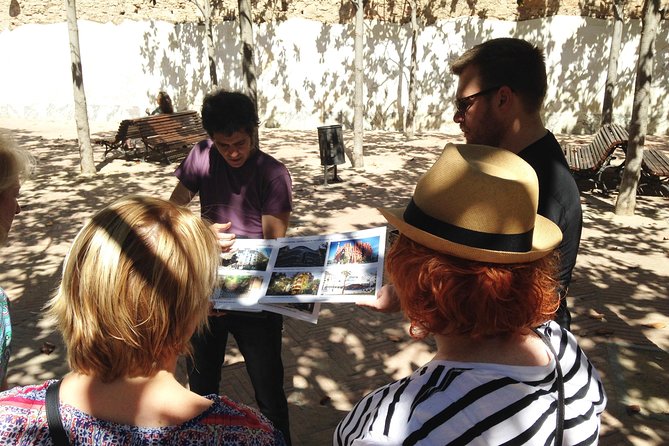
Gaudí’s buildings are easy to admire and surprisingly easy to misunderstand. You may notice the soft stone, twisted balconies, and colorful surfaces, then move on without seeing the argument each building makes. An architect can point out how structure, decoration, religion, social thought, and the client’s wishes meet on the same façade.
That is the central strength of this walk. It treats Barcelona’s Modernism as more than a collection of pretty houses. The route connects architecture to the city’s growth, the ambitions of its business class, utopian social ideas, positivist materialism, and the political upheaval that shaped Catalonia and Spain.
The guide’s story also follows Gaudí’s changing outlook. The route begins with his concern for society and moves toward an increasingly spiritual vision. This helps explain why his work can feel practical in one moment and almost otherworldly in the next.
Pia is one guide associated with the experience, and the strongest praise for her centers on warmth, humor, kindness, and a clear command of Gaudí’s life and work. Those qualities matter on a subject that can become dry very quickly. A good guide must explain technical ideas without turning the walk into a lecture, and Pia’s approach is described as both personal and lively.
You should still expect an architecture lesson, not a general sightseeing stroll. Terms such as eclecticism, beatification, and deliquescent surfaces appear in the subject matter. If you enjoy learning how a city was shaped, that level of detail is a benefit. If you want only quick photo stops, three hours may feel long.
A few other Barcelona outings to compare
- Barcelona: Sagrada Familia Entry Ticket with Audio Guide
★ 4.6 · 105,312 reviews - Barcelona: Park Güell Admission Ticket
★ 4.4 · 76,534 reviews - Barcelona: Casa Batlló Entry with Self-Audioguide Tour
★ 4.7 · 25,359 reviews
Casa Milà, where Gaudí makes stone appear to move
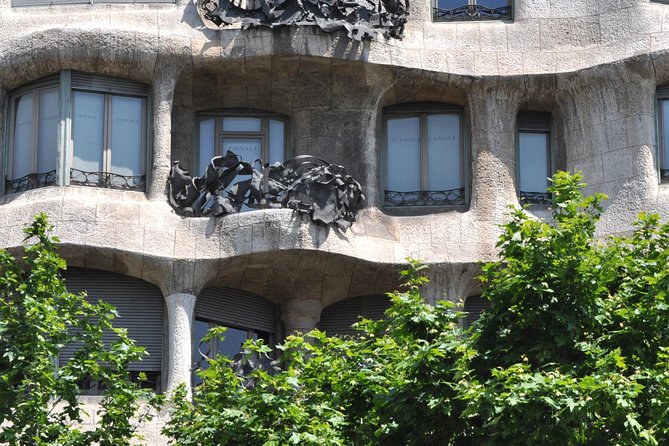
The walk begins with Casa Milà, better known as La Pedrera. Its rippling façade gives the building a sense of motion, as though the stone were soft rather than fixed. From the pavement, you can study the undulating balconies and the way the building rejects the straight, orderly appearance expected of a traditional apartment block.
This is a useful first stop because it introduces Gaudí’s mature style. The building is not presented as an isolated trick of design. It belongs to a period when Barcelona’s expanding Eixample district gave wealthy clients room to commission ambitious homes and apartment buildings.
Since the group does not enter, the guide’s explanation becomes especially important. You will not get the full experience of the courtyards, roof, or interior spaces here. Instead, you learn how to read the exterior and how La Pedrera fits into Gaudí’s development.
I would pay attention to the relationship between the façade and the building’s larger purpose. This is not simply a sculpture placed beside the street. It is architecture made for urban life, but reshaped by Gaudí’s refusal to treat walls as flat limits.
Casa Batlló and the strange beauty of a city house
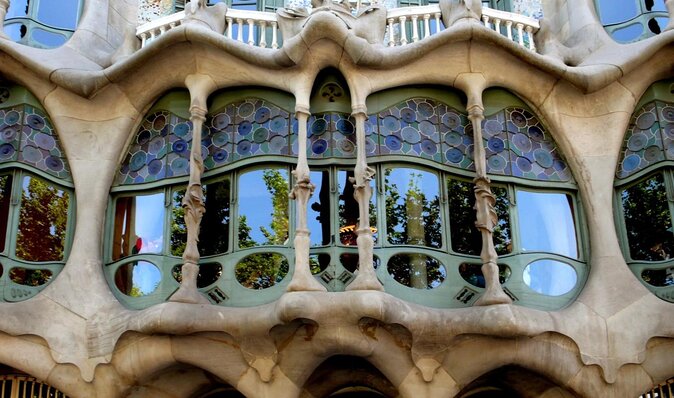
Casa Batlló gives the tour another chance to show how Gaudí transformed an existing urban building into something that feels almost like a creature or a dream. The surface is full of movement, unusual openings, and decorative details that reward a slow look.
You will see the façade from outside, which is both useful and limiting. The exterior is one of Barcelona’s most memorable sights, but the interior would add another layer to the story. Plan separate time if you want to see the rooms and other spaces inside, because admission is not part of this walk.
The guide can help you separate Gaudí’s work from the neighboring buildings on the same block. Without that comparison, it is tempting to treat the entire row as one burst of decorative invention. The better lesson is that several architects were responding to the same city, the same clients, and the same Modernist moment in very different ways.
Casa Batlló is also where the route’s attention to symbolism becomes useful. Gaudí’s forms invite interpretation, but a careful guide can keep you grounded in what can actually be observed. You get a sense of his movement toward spiritual ideas without reducing every curve and color to a simple hidden message.
La Mansana de la Discordia, Barcelona’s architectural rivalry

La Mansana de la Discordia, or Block of Discord, places several important façades side by side. This is one of the best parts of the route for comparison. Instead of seeing Gaudí alone, you can examine how Casa Batlló relates to Casa Amatller by Puig i Cadafalch and Casa Lleó Morera by Domènech i Montaner.
The point is not merely that all three buildings are ornate. Their differences show the variety within Catalan Modernism. Each architect had a distinct way of handling decoration, geometry, craft, and historical reference.
The comparison also makes Barcelona’s bourgeois ambitions more visible. These were not anonymous structures dropped into an empty setting. Their façades announced taste, wealth, modern thinking, and competition along one of the city’s grand avenues.
I especially value this stop for readers who have already seen Gaudí photographs and want a wider picture. It keeps the tour from becoming a single-artist biography. You learn that Barcelona’s architectural identity was shaped by several strong personalities, not just one famous name.
The street can be busy, and the façades attract constant attention. A group of up to 20 is still fairly manageable, but you should stay close to the guide and expect some street noise. The reward is the chance to compare details in real time, rather than seeing each building on a separate day.
Same city, a completely different evening:
- Barcelona: 24 or 48-Hour Hop-On Hop-Off Bus Tour
★ 4.4 · 20,872 reviews - Barcelona: Park Guell Guided Tour with Skip The Line Entry
★ 4.7 · 17,563 reviews - Barcelona: La Pedrera-Casa Milà Ticket & Audio Guide Option
★ 4.7 · 15,099 reviews - Barcelona in 1 Day: Sagrada Familia, Park Guell,Old Town & Pickup
★ 5.0 · 13,541 reviews
Casa Calvet and the less theatrical Gaudí
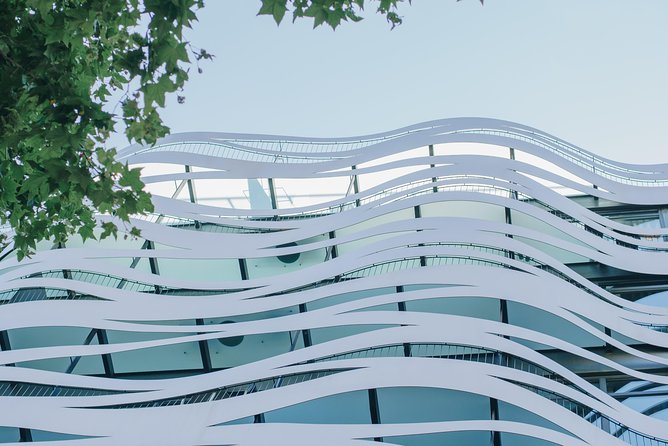
Casa Calvet presents a different side of Gaudí. Compared with Casa Batlló and Casa Milà, it can appear more restrained. That contrast is helpful because it shows that Gaudí was not always pursuing the most dramatic possible shape.
The building allows the guide to discuss how an architect works within practical and social limits. A project can reflect its era without looking as wild as the works most often shown in guidebooks. You may find Casa Calvet particularly useful if you want to understand Gaudí as a working architect rather than only as a maker of dreamlike façades.
Again, the visit is exterior only. You will need to rely on the guide to explain what cannot be seen from the street. This is a recurring tradeoff throughout the tour: you cover several major works in a short time, but the experience stays focused on public views and interpretation.
The Antoni Tàpies Foundation adds a modern counterpoint
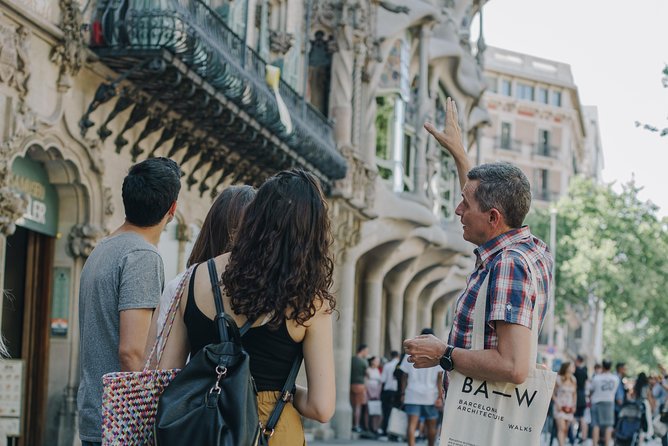
The Antoni Tàpies Foundation broadens the route beyond the main Modernist houses. Its connection to a later artistic period gives the walk a chance to consider how Barcelona’s architectural and artistic ideas continued to change.
This stop also helps explain the end of Modernism. The city’s design story did not stop with Gaudí, Domènech i Montaner, or Puig i Cadafalch. By placing the foundation on the route, the experience encourages you to think about shifts in artistic taste and public culture.
You should not expect the foundation to function as a separate museum visit here. The tour is using the building and its setting as part of a larger street lesson. If you want to spend time with the foundation’s collection, that would require separate planning.
Eixample courtyards and the spaces most people miss
The route includes some less obvious Eixample courtyards. This is a valuable change of pace after the famous façades. Barcelona’s grand blocks are often understood from the street, but their internal spaces reveal another side of the city’s planning and social ideals.
The courtyards connect with the tour’s discussion of utopian socialism and urban development. They help you consider how the Eixample was meant to function, not only how its most expensive buildings were decorated.
Details about access to particular courtyards are not specified, so you should not assume that every interior block space will be open in the same way. Still, their inclusion signals that the route is trying to show more than the standard postcard sights.
This is also where a smaller group helps. A guide can pause, point out a detail, and keep the conversation moving without the feel of a large procession. You get a more attentive walk through the Eixample rather than a checklist of façades.
Gaudí’s ideas, from social concerns to sacred architecture
The tour’s main intellectual thread is Gaudí’s movement from social concern toward religious purpose. The description connects this path with the Crypt of Colònia Güell and the Sagrada Família, though those places are discussed rather than visited on this three-hour route.
That distinction matters. You will hear how Gaudí’s thinking developed toward the role of a great cathedral builder, but you will not tour the Sagrada Família as part of this experience. If the basilica is central to your plans, treat this walk as preparation for a separate visit.
The historical subjects are broad. They include eclecticism, the end of Modernism, positivist materialism, the intellectual bourgeoisie, the Spanish Civil War, anarchism, and beatification. These are not small side notes. They explain why architecture in Barcelona can carry social and political meaning along with decoration.
Some of the vocabulary may be demanding, particularly if you are new to architectural history. That is not a flaw, but it does affect who will enjoy the experience most. I would choose this tour if you want the reasons behind the buildings. I would choose a simpler orientation walk if you prefer basic city history and quick photo opportunities.
What three hours and $54.44 really buy you
At $54.44 per person, this is not the cheapest way to see Barcelona’s famous façades. You are paying for a three-hour walk, an English-speaking architect guide, a limited group size, and an organized explanation of several major works.
The value is strongest if you would otherwise look at Casa Milà, Casa Batlló, and the Block of Discord as separate sights without understanding their relationship. It is also strong for repeat visitors who have already covered Barcelona’s standard attractions and want a more thoughtful route through the Eixample.
The value is weaker if you expect entrance tickets. No building interiors are included, so you may spend more later on admission to places such as Casa Batlló, Casa Milà, or the Sagrada Família. That is not a surprise when you know the format, but it should be part of your budget.
The group limit of 20 is another part of the price. It is not a private tour, yet it should feel more focused than a large city walk. The start time is 10:30 a.m., and the tour returns to the Monument al Llibre at Gran Via de les Corts Catalanes, 634, in the Eixample.
Wear shoes suited to three hours of walking and expect to remain outdoors for most of the experience. The tour requires good weather, and the provider may offer another date or a full refund if conditions are poor or the minimum group size is not reached.
Free cancellation is available up to 24 hours before the start time. Changes or cancellations made later are not refunded, so keep the local cut-off time in mind when arranging a packed Barcelona schedule.
Who will get the most from this Barcelona walk
I would recommend this experience to you if architecture is a main reason for visiting Barcelona, or if you want a stronger grasp of Gaudí than photographs can provide. It suits curious first-time visitors, repeat visitors, design students, and anyone who enjoys connecting buildings with social ideas.
It is also a good match if you appreciate a guide with personality. The strongest descriptions of Pia focus on her humor, kindness, passion, and ability to explain a large subject without losing the human side. Those qualities can make a difficult topic much easier to follow.
You may want another option if you need wheelchair-specific route information, since the supplied details confirm general participation and service animals but do not describe the walking surface or courtyard access. You should also choose another experience if your priority is going inside Gaudí’s buildings.
Should you book Barcelona & Gaudí?
Book it if you want Barcelona’s Modernist architecture explained by an architect rather than simply pointed out. The route covers major Gaudí works, adds Casa Amatller, Casa Lleó Morera, the Antoni Tàpies Foundation, and Eixample courtyards, and places the buildings in their social and political setting.
Skip it if you want admission to the Sagrada Família, Casa Batlló, or Casa Milà, because none is included. For the right reader, the $54.44 cost is fair: you are buying context, comparison, and a carefully planned three-hour walk, not a bundle of entry tickets.
FAQ
Where does the tour begin?
It begins at the Monument al Llibre, Gran Via de les Corts Catalanes, 634, in Barcelona’s Eixample district.
What time does the tour start?
The scheduled start time is 10:30 a.m.
How long does the tour last?
The tour lasts approximately three hours.
What language is offered?
The experience is offered in English.
Does the tour enter Casa Milà, Casa Batlló, or the other buildings?
No. The tour visits and discusses the buildings from the outside, but interior entry is not included.
How large can the group be?
The maximum group size is 20 people.
Can I cancel for a full refund?
Yes. You can cancel at least 24 hours before the experience start time for a full refund. Late cancellations and changes are not refunded, and poor weather or an insufficient minimum group may lead to a different date or a full refund.
Recently added in Barcelona
- Barcelona: Catamaran Cruise w/ Sailing, Wine, & Tapa★ 4.7 · 176 reviews
- Guided Gaudí Trencadís Mosaic Workshop in Barcelona 2 Hours★ 5.0 · 176 reviews
- Barcelona Cable Car Sky Views, Magic Fountain & Castle Visit★ 4.2 · 177 reviews
- Barcelona Private Sunset Sailing with Drinks★ 5.0 · 177 reviews
- Barcelona: Montserrat with Winery Visit and Farmhouse Lunch★ 4.7 · 178 reviews
- Barcelona: Nightmare Horror Museum Maze Entry Ticket★ 4.5 · 179 reviews
- Barcelona: City Sights Electric Quad Tour★ 4.8 · 178 reviews
- Barcelona: Professional Photoshoot Outside Sagrada Familia★ 4.8 · 179 reviews
Sagrada Familia Tours, compared.
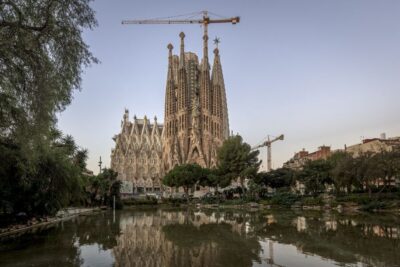
Sagrada Familia Entry Ticket with Audio Guide
Read the review →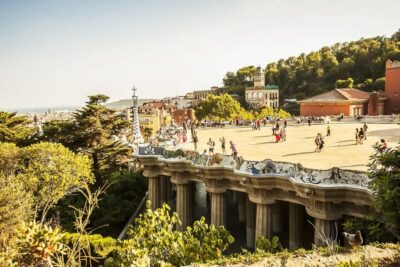
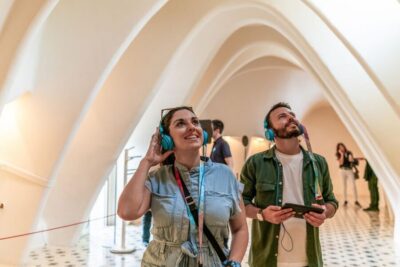
Park Guell Guided Tour with Skip The Line Entry
Read the review →La Pedrera-Casa Milà Ticket & Audio Guide Option
Read the review →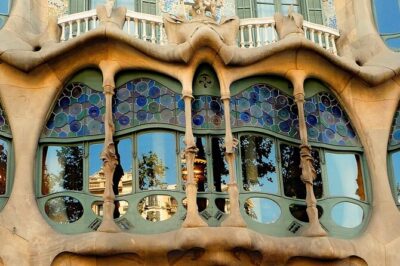
Barcelona in 1 Day: Sagrada Familia, Park Guell,Old Town & Pickup
Read the review →
Sagrada Familia Skip-the-Line Entry Ticket & Tour
Read the review →
Browse the lists this tour appears in