
Reviewed · NATIONAL PARKS
Teide National Park: Guided Large Telescope Stargazing Tour
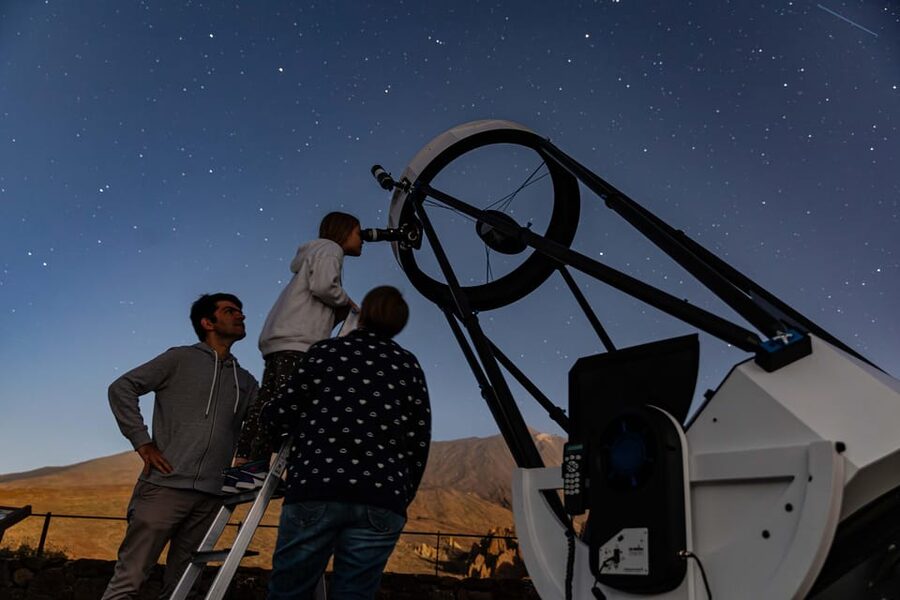
The most remarkable part of this Teide stargazing tour is the 32-inch private telescope, said to be the largest of its kind in the Canary Islands. It brings galaxies, nebulae, star clusters, planets, and supernova remnants into view with a brightness and level of detail that ordinary holiday telescopes cannot match. Guide Alessandro explains what you are seeing in clear language, then adjusts the session to suit your questions.
I like the small groups, which give everyone proper time at the eyepiece, and I like that dedicated astrophotography equipment produces photos you can keep. The guide’s passion is a major part of the evening, and thoughtful touches such as hot tea, biscuits, and spare coats have helped make cold mountain nights more comfortable.
The main drawback is the weather. Wind can stop work with the large telescope, and the meeting point may change on the day. You also need to arrange your own transport, bring serious warm clothing, and accept that the three-hour format may feel long if someone in your party has little interest in astronomy.
Key points to know before booking
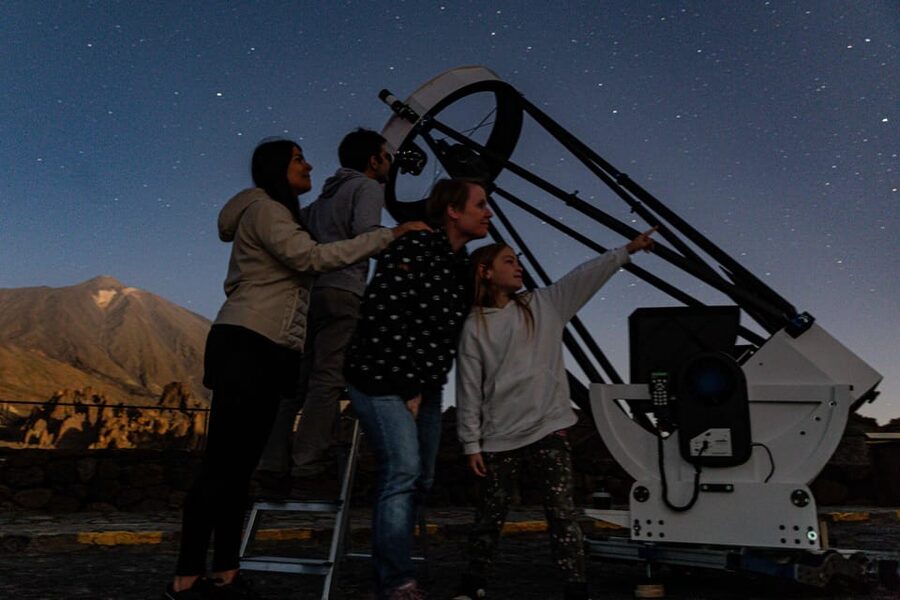
- A huge 32-inch telescope: The main session uses a computerized Dobsonian telescope with a one-meter mirror, giving you views of faint deep-sky objects that smaller scopes may miss.
- Small groups of up to 12: You should have time at the eyepiece and room to ask questions without being rushed.
- Alessandro leads the astronomy: He explains difficult ideas in simple terms, while still offering enough detail for amateur astronomers.
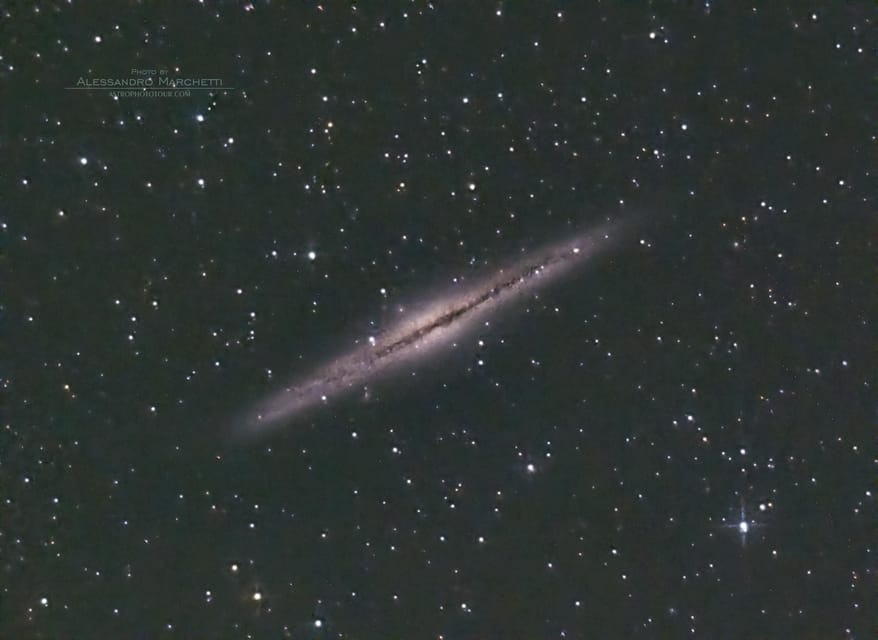
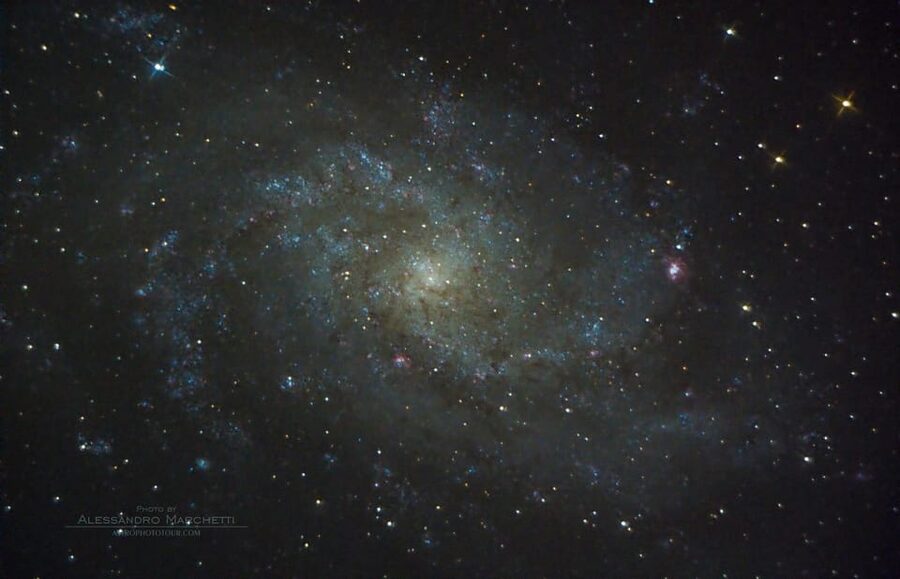
- Photos are included: A cooled astro-camera captures images during the session, and additional telescope images are shared as part of the astrophotography package.
- Night Vision is a separate option: The modified 12-inch telescope uses light amplification for a different, real-time observing style.
- Weather controls the plan: The start time and GPS meeting point are confirmed by WhatsApp on the day, often around 9:30 a.m.
Why Teide is such a good place for stargazing
Teide National Park gives this activity the right setting: high volcanic terrain, dark skies, and distance from the bright coastal towns. The tour is built around observing rather than simply pointing out a few constellations, so the quality of the sky matters as much as the equipment.
You are not heading to a large observatory visitor center for a fixed presentation. Instead, you meet the small group at a location chosen for that night’s wind direction. Large telescopes need calm conditions, so the provider sends exact GPS coordinates after checking the forecast.
That last-minute arrangement is practical, but it requires flexibility. Do not plan a tightly packed evening around this tour. The starting time changes with sunset across the year, and poor conditions can lead to a postponement for the following day or a refund.
A few other Tenerife outings to compare
- Tenerife: Sunset and Stargazing at Teide National Park
★ 4.7 · 2,826 reviews - Teide National Park Sunset & Stargazing with Dinner (Star Safari)
★ 5.0 · 2,601 reviews - Tenerife: Snorkeling Tour in a Marine Protected Area
★ 4.9 · 636 reviews
What the three-hour evening looks like
The experience begins when you meet Alessandro and the rest of the group at the confirmed location. There is no hotel pickup or drop-off, and food and drinks are not included, so you need to reach the site independently with water and a snack.
The opening section usually gives you the basic map of the night sky. Alessandro talks through the solar system, the Milky Way, stars, galaxies, and the life cycle of stars. This introduction matters because the telescope view becomes more meaningful when you understand the object’s place in space and time.
His strength is explaining big ideas without making them feel like a school lecture. Beginners can follow the story, while people who already use telescopes or practice astrophotography can ask more technical questions. The experience can become quite detailed, so it suits curious adults better than anyone seeking a quick photo stop.
The main observing period then moves between objects selected for the season and the conditions. You might look at a planet, a star cluster, a galaxy, a nebula, or the remains of an exploded star. The exact menu cannot be guaranteed because visibility changes with the time of year, position in the sky, wind, and viewing conditions.
The large scope is the reason to book this particular tour. Its mirror measures about one meter across, and the supplied information identifies it as a 32-inch computerized Dobsonian. That size gathers far more light than a basic backyard telescope, which helps reveal faint objects and finer details.
You will not see every celestial object as a bright, full-color space photograph through the eyepiece. Real-time viewing is subtler, and your eye needs time to adjust. Still, the scale of the telescope can show structures that are difficult or impossible to see through a regular small telescope.
The session ends with photography and a chance to leave with a visual record of the night. A dedicated cooled astro-camera is attached to the setup, and photos are taken during the tour. Images from earlier sessions may also be shared, helping you understand what the equipment can record beyond what your eye sees in a short glance.
The 32-inch scope is the main reason to choose this tour
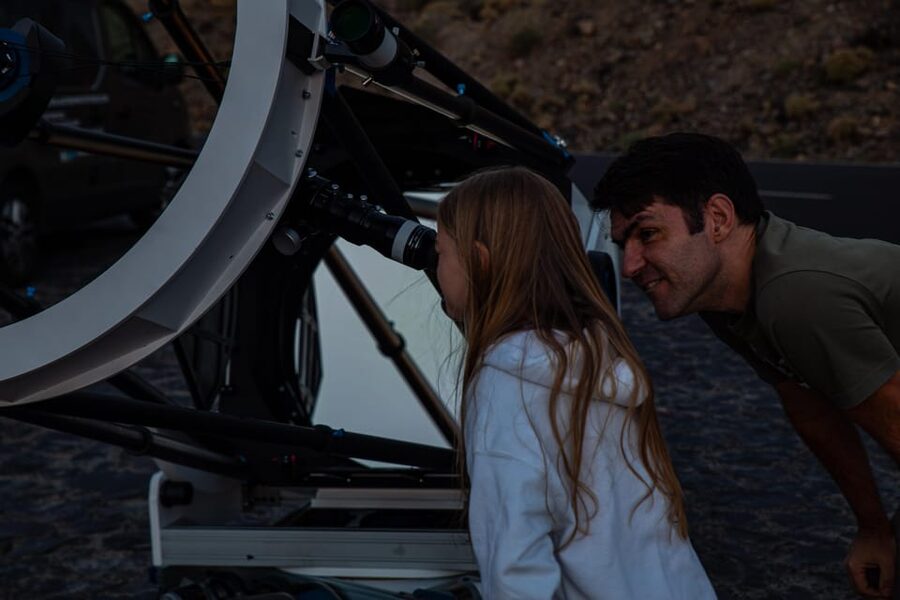
The Grand 32 Scope Adventure is the classic version and the best fit if the telescope itself is your priority. It offers the largest private telescope available through this experience, plus an experienced guide who can spend time answering questions.
The group limit is 12 people. That is not the same as a private evening, but it is small enough to make a real difference. You should have repeated opportunities to look through the telescope, and the guide can help adjust the explanation for adults, children, beginners, and amateur astronomers.
One family described seeing another galaxy, a star cluster, an exploded supernova, and a dead star through the scope. Those descriptions give you a sense of the tour’s ambition: this is not limited to the Moon and a few bright planets. The objects available depend on the season, but the plan reaches well beyond familiar solar-system sights.
Planetary viewing can be especially rewarding when conditions cooperate. At different times of year, people have seen Saturn, Jupiter, Mars, and major moons through the telescope. Saturn’s rings remain a strong target, while Jupiter can appeal to children who may not yet have the patience for a long explanation of a distant nebula.
Alessandro’s teaching is part of the value
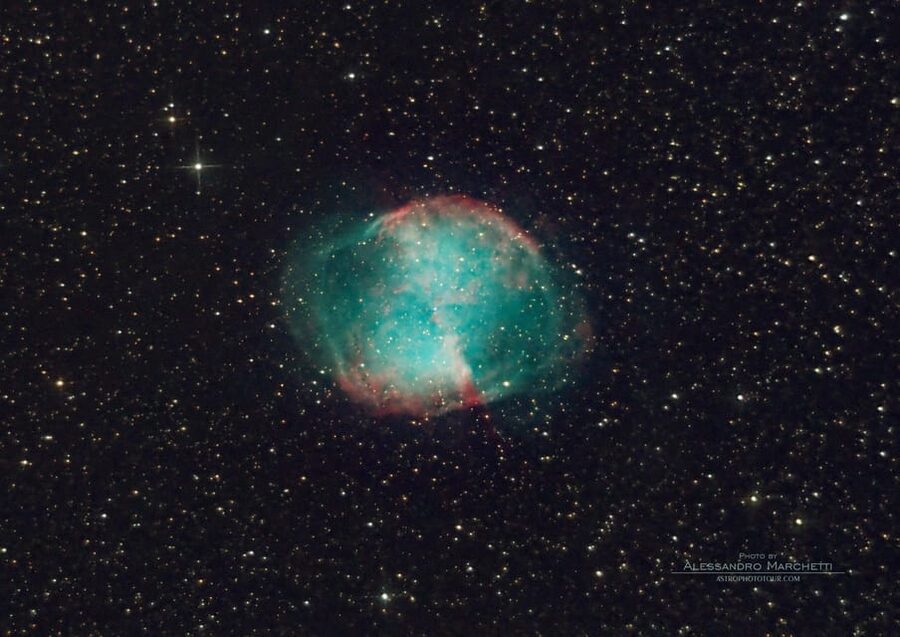
The telescope would be impressive on its own, but the guide makes the experience easier to understand. Alessandro combines astronomy, storytelling, and astrophotography, and he is comfortable moving between simple explanations and more advanced astrophysics.
I would book this tour for the guide as much as for the equipment. He takes time to make sure everyone understands what they are looking at, rather than rushing through a list of objects. He can explain how stars form, change, and die, then connect that process to the point of light in the eyepiece.
That approach works well for mixed groups. Children can focus on planets and striking shapes, while adults can ask about galaxies, supernova remnants, or how the camera produces its images. One family specifically appreciated having time to translate the explanations for children, which suggests that the pace can work for multilingual groups too.
Italian, English, and Spanish are available. Alessandro and Antonella have both been involved in the warm, personal welcome described for the experience. Tea and biscuits are not listed as guaranteed inclusions, so treat them as a thoughtful possibility rather than something to rely on.
Same city, a completely different evening:
- Siam Park Entry Tickets
★ 4.5 · 15,710 reviews - Tenerife: Eco-Yacht Whale and Dolphin Watching and Swimming
★ 4.7 · 15,619 reviews - Los Cristianos Respectful No-Chase Whale and Dolphin Safari
★ 4.6 · 12,782 reviews - Tenerife: Loro Parque Entry Ticket
★ 4.8 · 12,411 reviews
Night Vision gives you a different kind of sky tour
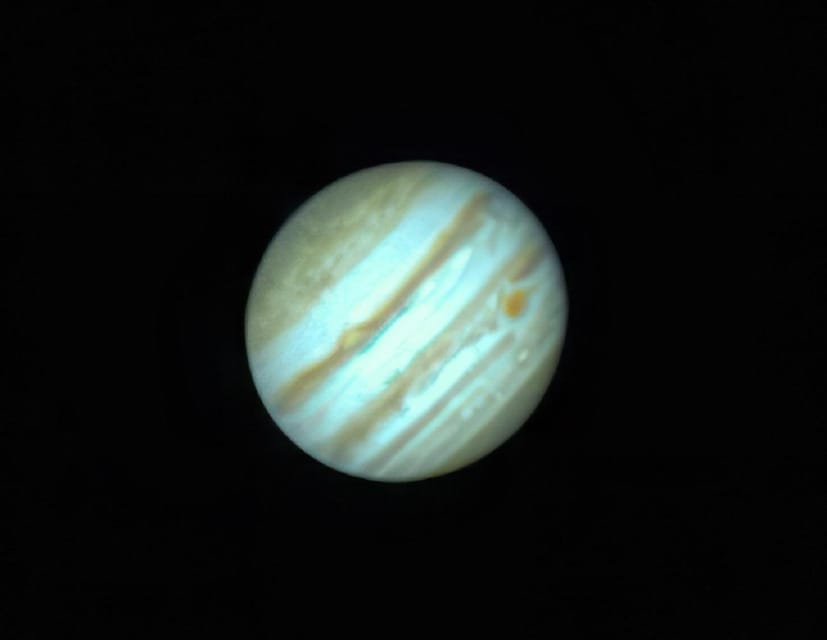
The Night Vision Voyage uses a modified 12-inch telescope with a Night Vision system that amplifies available light. It is smaller than the main 32-inch scope, but the viewing style is different rather than simply inferior.
This option is aimed at people who want real-time observing with an unusual piece of equipment. Night Vision can reveal faint sights in a striking way, and the live effect may be especially fun if you want to watch the guide adjust the setup and show you what the system is doing.
Choose the 32-inch experience if maximum light-gathering power and deep-sky detail matter most. Choose Night Vision if the technology and the immediate visual effect sound more appealing. Since the two formats use different telescopes, check the option carefully when booking rather than assuming every session includes both.
There is also an Exclusive Starlight Experience for couples, families, or friends who want the same type of telescope opportunity in a private setting. That should be the better choice for a group with very different interests, or for anyone who wants the guide’s attention without sharing the session.
Astrophotography adds lasting value
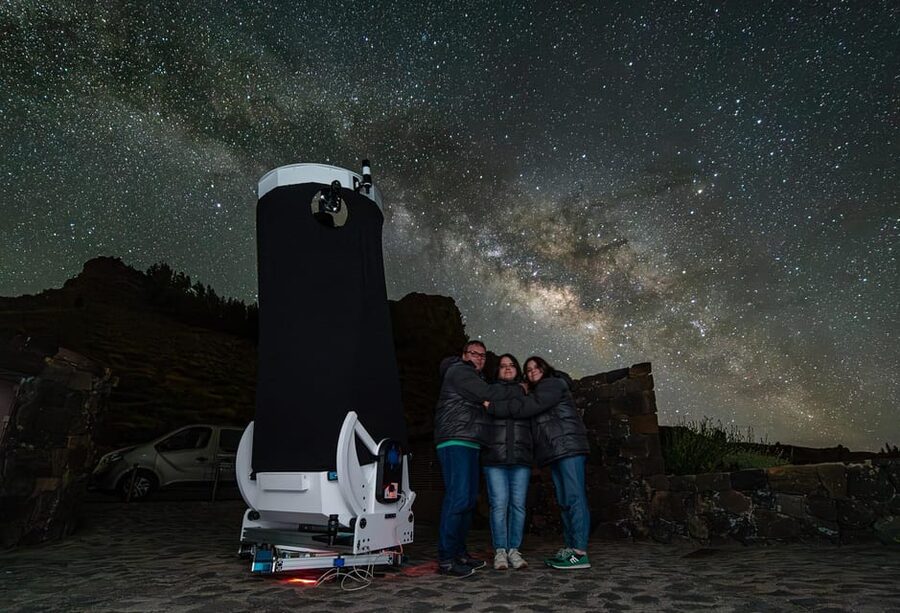
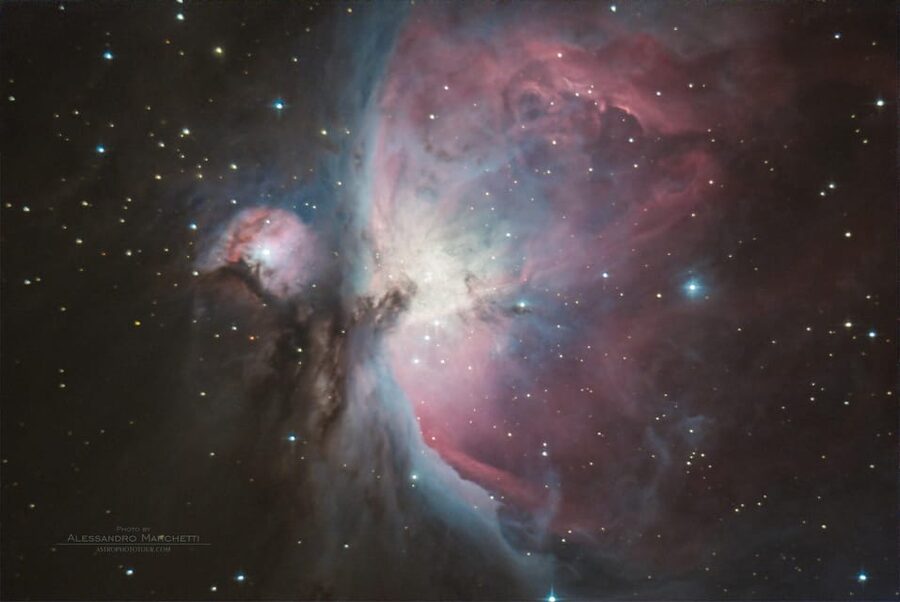
The included photography is more than a souvenir snapshot. A cooled astro-camera is designed for capturing faint objects, and the tour includes photos taken during the session as well as images from previous observing nights.
The guide may also create a photo with your group under the night sky. One practical detail from the experience is that the camera can require you to keep your eyes focused on it for several seconds during a long exposure. That can produce blurred faces, but it also gives the final image a clear night-sky setting and a more memorable feel than an ordinary phone picture.
Keep your expectations sensible. The photos will not necessarily look identical to what you see with your eye, because astrophotography gathers light over time and processes the image. That is a benefit, not a flaw: the camera shows detail that your eye cannot hold in a brief look through the eyepiece.
Cold, wind, and clothing are not minor details
Teide can become very cold after sunset, even if your hotel by the coast is warm. Wear several layers, long trousers, and closed shoes. Shorts and open-toed shoes are not allowed, and a flashlight is also listed as prohibited.
Bring water and a snack. Food and drinks are not included, and the three-hour duration is long enough that you may want something small to eat. The provider has sometimes supplied coats, tea, and biscuits, but I would still arrive prepared for a cold wait outdoors.
Wind is the bigger practical risk. Strong gusts can make it unsafe or impractical to use a large telescope. In one case, the group stayed on to look at constellations and view the guide’s astrophotography after the telescope work stopped. That is a useful fallback, but you should book with the understanding that cloud or wind can change the program.
If conditions are unsuitable, the activity can move to the next day or be refunded. Free cancellation is also available up to 24 hours before the tour, and the reserve-now, pay-later option helps if your weather plans are still uncertain.
Is $58 a fair price?
At $58 per person, this is not the cheapest way to spend an evening in Tenerife. The price does not include transport, dinner, or drinks, so your real cost will be higher if you need a taxi or rental car to reach the meeting point.
The value comes from the equipment and the group size. You are paying for access to a very large private telescope, a guide who can answer questions for three hours, a cooled astro-camera, and included photos. A lower-priced astronomy activity may give you a general talk and a look through smaller scopes, but it may not offer the same level of deep-sky viewing.
I think the price is fair for serious beginners, amateur astronomers, and families who want more than a standard night outing. It is less compelling for someone who simply wants to see a few stars and take a quick picture. If transport is already sorted and the sky is clear, the combination of telescope time and personal guidance makes the fee reasonable.
Who should book this Teide stargazing tour?
I would choose this experience if you enjoy asking questions, want to see galaxies and nebulae, or have ever wondered what a serious telescope can reveal. It also works well for families with children over five, especially when adults are willing to help younger children follow the explanations.
The tour is a good match for amateur astronomers because Alessandro can discuss equipment and astrophotography in more technical terms. Beginners will not be left behind, since the explanations are designed to make complex subjects understandable.
I would think twice if your group dislikes the cold, needs guaranteed transport, or prefers a short and highly visual activity. The three-hour format rewards attention and curiosity. It is not a quick bus excursion with a fixed route.
The activity is not suitable for children under five. The languages are English, Spanish, and Italian, and private or small-group formats are available.
Should you book it?
Book the Grand 32 Scope Adventure if the biggest possible private telescope and serious guidance are your priorities. Choose the Night Vision option for a more experimental, live-observation style, or pay more for the private format if your group wants complete control of the pace.
I would reserve this tour as an evening highlight, not as a backup plan squeezed between other commitments. Bring warm layers, arrange your own transport, and leave room for weather changes. If you can handle those conditions, the chance to see distant galaxies, nebulae, planets, and stellar remains through a one-meter mirror makes this one of the more distinctive astronomy experiences in Tenerife.
FAQ
How long does the Teide stargazing tour last?
The tour lasts three hours. The start time changes with sunset and the season.
How many people are in the group?
The small-group format allows up to 12 people. A private version is also available for couples, families, or groups of friends.
Which telescope is used?
The main experience uses a computerized 32-inch Dobsonian telescope. The Night Vision option uses a modified 12-inch telescope with a Night Vision system.
Is hotel pickup included?
No. Hotel pickup and drop-off are not included, so you must arrange your own transportation to the confirmed meeting point.
When will I receive the meeting point?
The provider confirms the meeting time and GPS coordinates through WhatsApp on the same day, usually around 9:30 a.m. The location can change based on wind direction.
What happens if the weather is bad?
If conditions are unsuitable for observation, the activity can be postponed to the next day or refunded.
What should I bring?
Bring warm clothing, comfortable clothes, water, and snacks. Shorts and open-toed shoes are not allowed, and flashlights are prohibited.
Are photos included?
Yes. The tour includes a dedicated cooled astro-camera and photos taken during the experience, along with images from previous sessions.
Recently added in Tenerife
- Tenerife: Teide National Park Guided Buggy Tour★ 4.6 · 299 reviews
- Tenerife: Kayak and snorkel with marine life safari★ 5.0 · 303 reviews
- Tenerife: Quad Adventure Teide Tour★ 4.5 · 305 reviews
- Group Surf Lessons★ 5.0 · 310 reviews
- Most Famous Catamaran in Tenerife Island (2 hours and 3 hours tours)★ 4.5 · 313 reviews
- Tenerife: Full-Day Guided Island Tour★ 4.4 · 315 reviews
- Tenerife: Sunset Night Tour and Stargazing at Teide + Dinner★ 3.8 · 316 reviews
- La Gomera Day Trip from Tenerife★ 4.0 · 320 reviews
National Parks, compared.
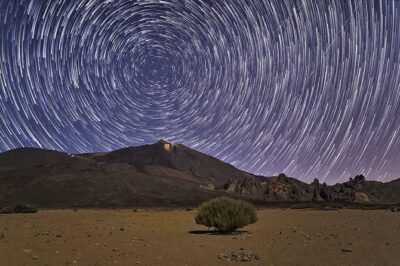
Teide National Park Sunset & Stargazing with Dinner (Star Safari)
Read the review →
Arrecife/Playa Blanca: Timanfaya National Park Area Day Tour
Read the review →
Jávea: Cala Tango and San Antonio Nature Reserve Kayak Tour
Read the review →
Browse the lists this tour appears in