
Reviewed · MUSEUMS
Seville: Museum of Fine Arts Guided Tour
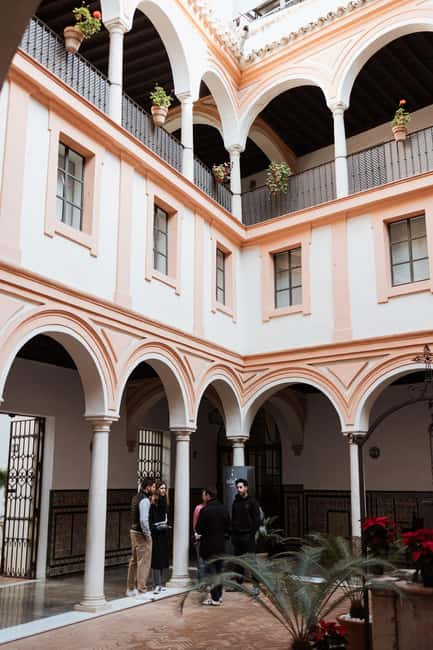
Seville’s Museum of Fine Arts is not just a collection of paintings. It is a former convent, with grand courtyards, quiet cloisters, carved details, and rooms filled with the art that shaped Andalusia. The two-hour guided visit helps you connect the building, the paintings, and Seville’s religious and artistic past.
I like the small group, limited to eight people, and the way a guide can point out symbols you would likely miss alone. I also like the price: at $23 per person, admission and a licensed guide are included, making this a sensible choice for anyone who wants more than a quick wander through the galleries.
The main consideration is time. Two hours is enough for a focused introduction, not every room and every painting. If you prefer to read labels at your own pace, you may want to stay after the tour and continue independently.
Key points to know before you go
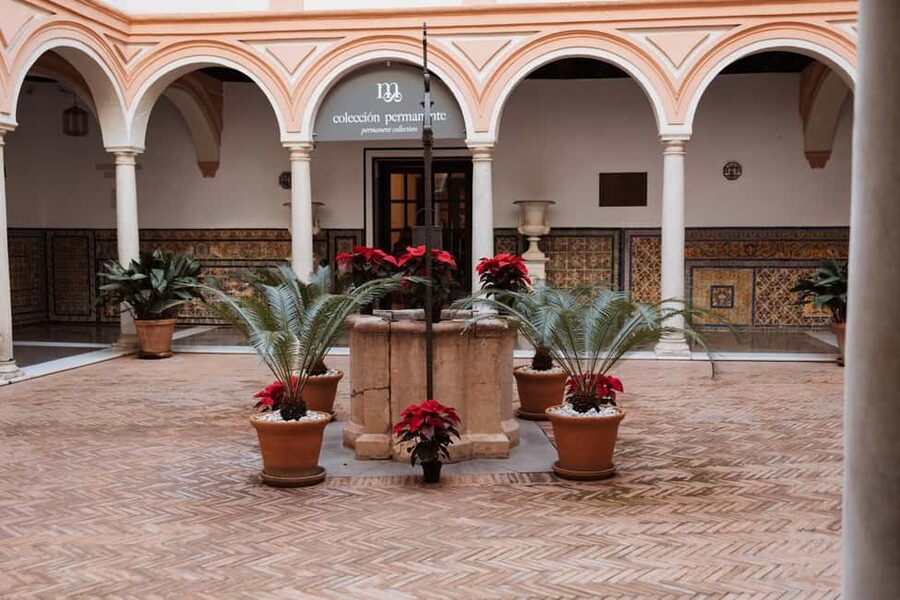
- A former convent makes the building part of the experience: Explore the Claustro de los Bojes and the Claustro Mayor, not just the galleries.
- The tour covers several major periods: You move from Sevillian Gothic works to Renaissance and Baroque masterpieces, then to nineteenth-century Sevillian Costumbrismo.
- Murillo receives special attention: A dedicated room presents selected works by Bartolomé Esteban Murillo, one of Seville’s best-known painters.
- Torrigiano gives you an early highlight: Saint Jerome Penitent shows the power and detail of Renaissance sculpture.
- The group stays small: With no more than eight participants, it is easier to hear the guide and ask questions.
- You can remain after the guided visit: The two-hour tour ends back at the meeting point, but you may continue looking around the museum afterward.
Why this museum deserves two hours
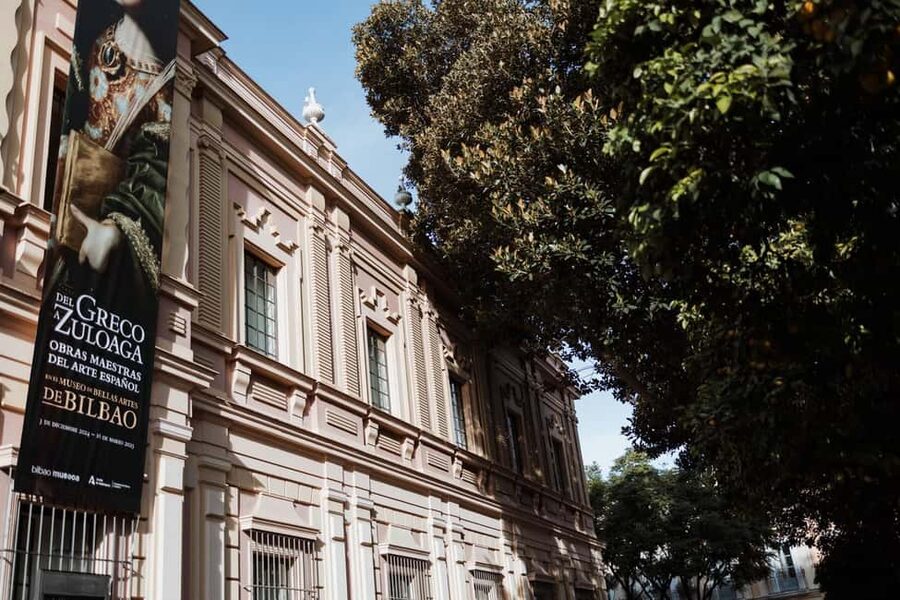
The Museum of Fine Arts of Seville is easy to underestimate if you think of it as simply another European art museum. Its setting changes the experience. The institution occupies the old Convent of La Merced, a building with Renaissance and Baroque features that gives the visit a strong sense of place.
You begin at Plaza del Museo, beside the statue of Murillo. The guide waits with a blue umbrella or a name tag reading Sevilla Guías & Tours. This meeting point is simple, but take a moment to identify the correct person before the tour begins, especially if the square is busy.
From there, you enter the museum with the group. An express security check helps you get inside without spending time in a standard entry line. The tour includes admission, so you do not need to arrange a separate museum ticket.
The museum’s importance comes from its focus on Seville and Andalusia. You see art made for churches, convents, and local patrons, along with works that show how artists responded to the wider European Renaissance and Baroque movements. The setting keeps the subject from feeling abstract. You are seeing the art in the city where many of its artists lived and worked.
More museums in Seville:
- Seville: Puro Flamenco Show with Optional Museum Ticket
★ 4.8 · 6,088 reviews - Seville: Museum of Illusions Entry Ticket
★ 4.2 · 1,196 reviews - A Fantastic Visit To The Museum Of Illusions Seville
★ 4.5 · 390 reviews
The Convent of La Merced before the paintings
The first part of the visit should not be rushed. La Merced’s architecture provides the framework for everything that follows. The building’s courtyards and cloisters create a calmer rhythm than the busy streets outside.
The Claustro de los Bojes and the Claustro Mayor are especially important stops. Their arches, proportions, and decorative details show the changing taste of the convent over time. You can look at them as architecture, but they also help explain how religious communities used these spaces for movement, prayer, and daily life.
I find this setting more rewarding than a modern gallery because the rooms do some of the teaching. A painting here is not floating on a white wall with no connection to its original world. The old convent gives you a better sense of the atmosphere in which religious art was seen.
That said, the building may appeal more to some people than to others. If your main aim is to see famous individual paintings, the introductory architecture portion uses time that could otherwise be spent in the galleries. For most first-time visitors, though, the setting is one of the museum’s strongest features.
From Gothic Seville to Renaissance sculpture
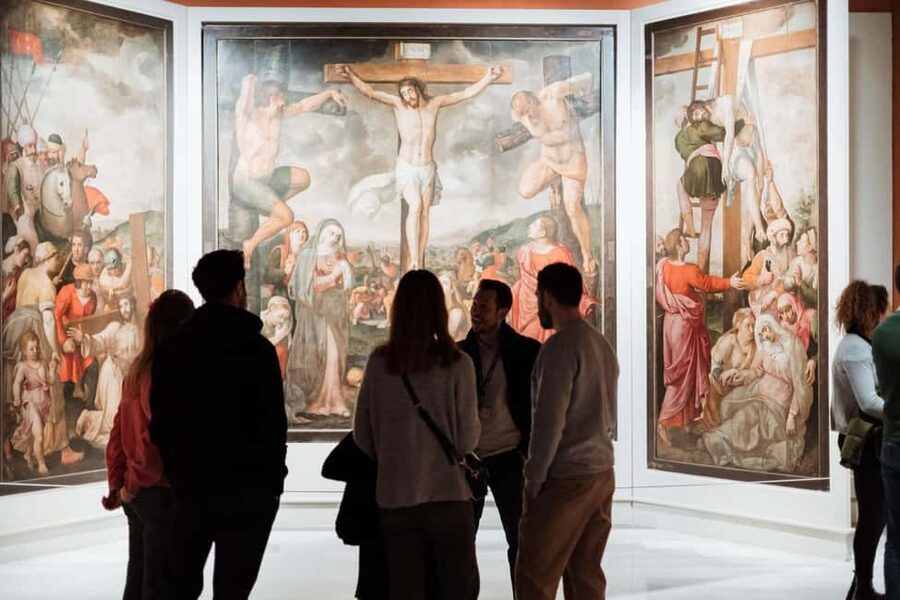
The collection lets you follow artistic change across several centuries. Early Sevillian Gothic works show a more formal approach to religious subjects, while later Renaissance pieces bring greater attention to the human body, space, and emotional expression.
One key work is Torrigiano’s Saint Jerome Penitent. The sculpture is a useful way to see what Renaissance artists were trying to achieve. Rather than treating the saint as a distant symbol, the work presents a physical figure with age, strain, and concentrated feeling.
A guide adds value here by explaining what you are looking at and why it matters. You do not need a background in art to follow the tour. The strongest explanations place each object in its time period, identify the artist or school, and point out details in the image that carry meaning.
Julio Dean Del Junco has led many of the English-language visits and is especially effective for this kind of museum. He is a historian and art guide who connects paintings to the social and religious setting of Seville. His approach is not just a list of dates. It links the image to the people who commissioned it, the beliefs it expressed, and the artistic choices you can still see.
Another guide, Lorraine, has also received praise for clear explanations, humor, and the use of an earpiece. The device matters in a museum. Instead of gathering tightly around a painting while trying to catch a soft voice, you can look at the artwork and hear the explanation more easily.
Murillo and the art of Seville
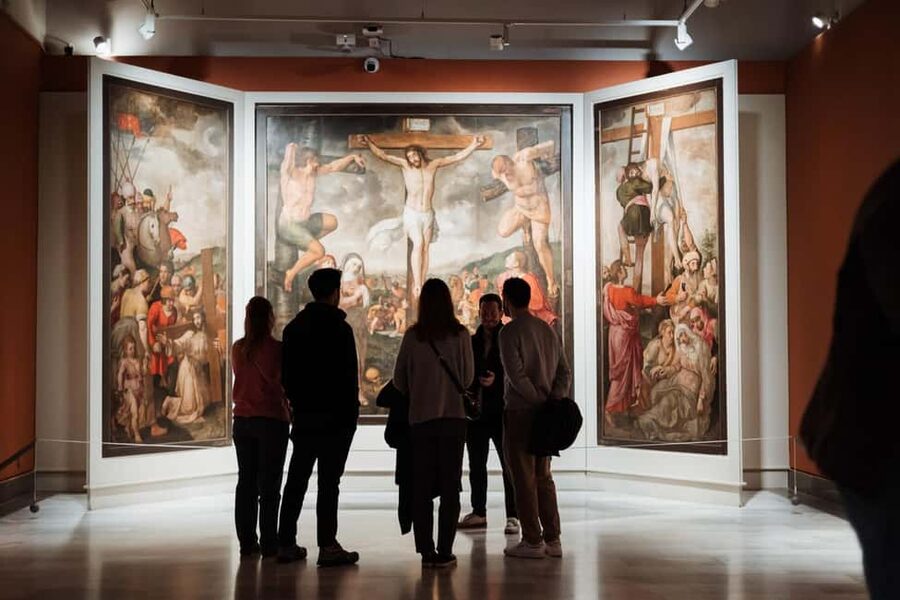
The room devoted to Bartolomé Esteban Murillo is likely to be the emotional center of the tour. Murillo is closely tied to Seville, and his paintings help explain the city’s Baroque character.
You can expect the guide to discuss selected Murillo works rather than give a complete account of every painting in the museum. That is a sensible use of limited time. A good museum tour needs to choose its examples, then make those examples memorable.
Murillo’s work is also a useful bridge between art and society. Religious paintings were not made simply for decoration. They shaped how people understood faith, compassion, charity, and the lives of saints. The guide helps you notice how expressions, gestures, colors, and arrangements direct your attention.
This is where historical context becomes practical. If you walk through the room alone, you may recognize a name or admire the surface details. With guidance, you can begin to understand why Murillo mattered in Seville and how his paintings communicated with the people who first saw them.
The museum also presents works by other important Sevillian artists. Their paintings allow you to compare different styles and purposes rather than treating Murillo as an isolated figure. You get a broader picture of the city’s artistic life.
A few other Seville outings to compare
- Seville: Cathedral, Giralda, and Royal Alcázar Guided Tour
★ 4.7 · 9,165 reviews - Seville: Cathedral, Giralda & Alcazar Entry With Guided Tour
★ 4.6 · 8,560 reviews - Seville: Alcázar and Cathedral Entry Ticket and Guided Tour
★ 4.6 · 5,056 reviews - Alcázar of Seville Skip-the-Line Tickets and Guided Tour
★ 4.6 · 3,941 reviews
Baroque drama and Sevillian Costumbrismo
After the Renaissance, the collection moves into the Baroque period, known for stronger movement, theatrical lighting, and heightened emotion. In Seville, these qualities often appear in religious paintings and sculpture.
The tour can help you read a Baroque image without getting lost in technical language. Look for the direction of light, the arrangement of figures, and the moment chosen by the artist. A guide may also explain religious symbols and the intended response of the original audience.
The museum’s scope reaches beyond church art. Sevillian Costumbrismo presents scenes connected to local life and customs. This gives you a different view of Seville, one based less on saints and biblical stories and more on everyday people, social settings, and regional identity.
That change of subject keeps the visit from becoming repetitive. You are not looking at one style for two hours. Instead, you see how artists in and around Seville represented devotion, power, beauty, hardship, and ordinary life across time.
The collection also includes Gothic works from Seville and other parts of Andalusia. Taken together, the displays show how regional art developed while still responding to wider European ideas. You can watch artists adopt new approaches without losing the local character of the city.
What the guide adds to your visit
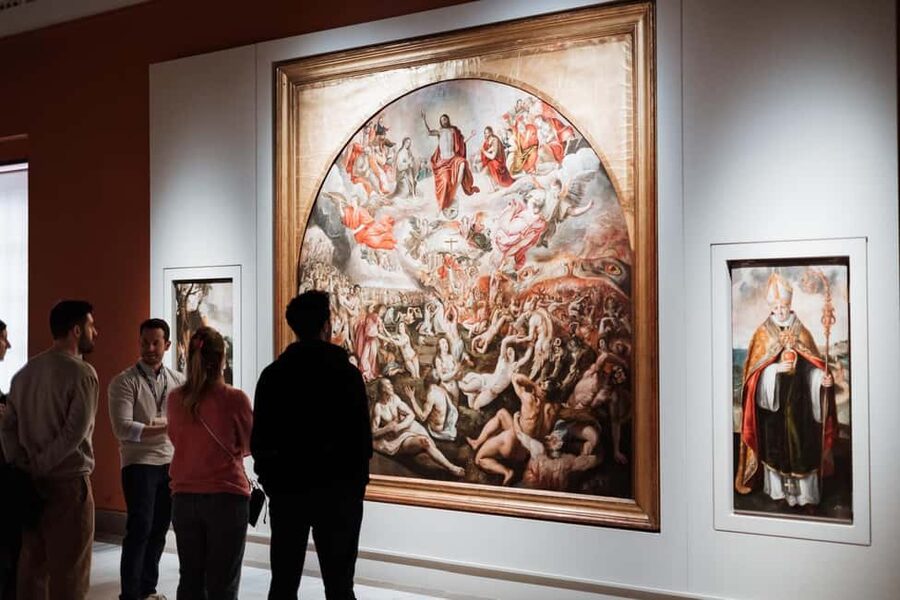
The clearest reason to book this experience is the guide. I would not choose a guided museum tour simply because the building has a ticket. I would choose it here because the collection contains works that need context.
Several practical strengths make the guiding particularly useful:
- You receive explanations of symbolism that may be hard to identify on your own.
- You learn about the period, style, artist, and location connected with each selected work.
- You can ask questions instead of relying only on short wall labels.
- The guide can adjust the level of detail to the group.
- You hear stories that make the paintings easier to remember.
Julio is often praised for handling both beginners and people with some art knowledge. That balance is important. A tour can fail by speaking too simply or by burying you in specialist terms. The best approach gives you enough information to see more, without turning the visit into a lecture.
His historical training is another advantage. Paintings make more sense when you know what was happening in Seville at the time. The guide can connect a picture to religion, society, local customs, or the artist’s working environment.
The small group helps here. With a maximum of eight people, you have a better chance to hear the explanation and ask a question. It also means the guide can notice if the group needs more time with a particular piece.
One limitation remains: the exact route and emphasis can vary. A two-hour visit cannot cover the whole museum in equal detail. You should expect a selected route, not a room-by-room survey.
The practical value of $23
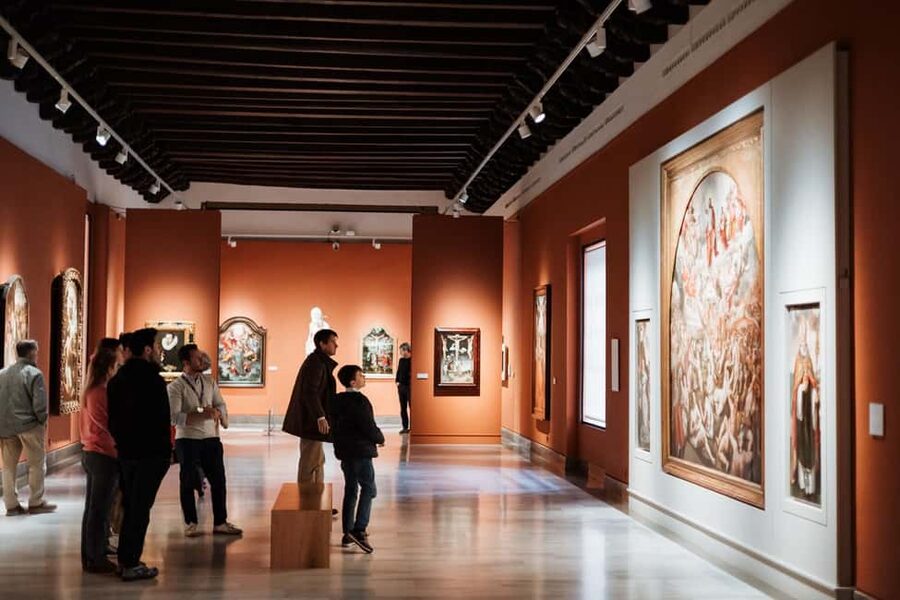
At $23, this is a reasonably priced cultural tour in Seville. The fee covers the museum entrance and a licensed guide in English or Spanish. You are paying for interpretation and structure, not transportation, food, or drinks.
The value depends on how you use the time. If you already know the artists and enjoy studying labels, you may prefer a self-guided visit. If you often leave art museums remembering only a few names, the guide is likely worth the added cost.
The small group improves the calculation. A large tour can make a museum feel crowded and impersonal. Here, the limit of eight makes the experience more like a conversation, provided the group is full.
You should also plan to keep extra time after the tour. The guided portion lasts about two hours, but you can remain in the museum afterward. This solves one of the main problems with a timed tour: you receive a clear introduction first, then have the freedom to revisit rooms or look longer at a favorite painting.
Meeting point, timing, and access
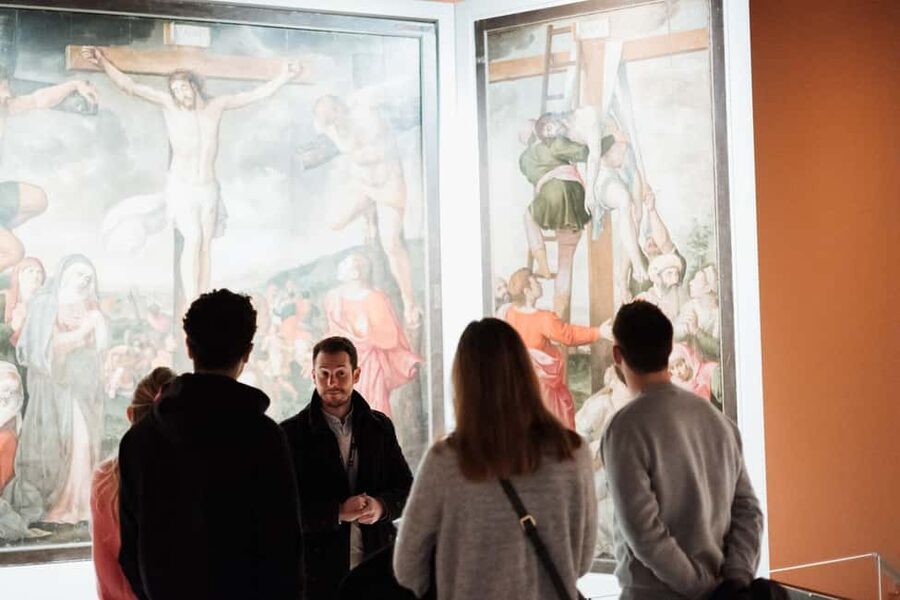
The tour begins and ends at the Asociación Amigos del Museo de Bellas Artes, at Plaza del Museo beside Murillo’s statue. The guide uses a blue umbrella or a Sevilla Guías & Tours name tag, so arrive with enough time to identify the meeting point without rushing.
Transportation to the square is not included. You will need to make your own way there. Food and drinks are also not part of the experience, though a two-hour museum visit does not require a meal break.
The tour is offered in English or Spanish. Check the starting time when booking because availability varies. Cancellation is free up to 24 hours before the activity for a full refund, and you can reserve now and pay later if you want to keep your plans flexible.
The museum tour is listed as wheelchair accessible. Pets are not allowed. If you use a wheelchair or have specific access needs, it is still sensible to confirm the details when arranging your visit, since historic buildings can have different spaces and surfaces.
Who will get the most from this tour?
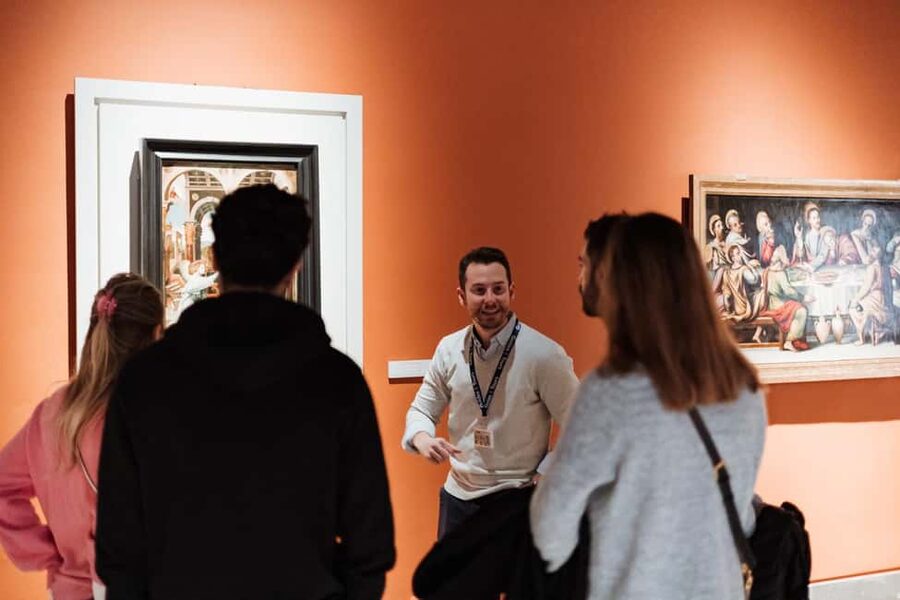
I would recommend it most strongly to first-time visitors to Seville who want an introduction to Spanish and Andalusian art without spending half a day in a lecture. It also suits people who enjoy history but do not normally feel confident in museums.
Families with older children may find the storytelling helpful, especially in the Murillo rooms and around the sculpture of Saint Jerome. The guide can give young visitors something to look for beyond simply deciding which painting they like best.
Art students and experienced museumgoers can also benefit, particularly if they want local context. Just keep in mind that the tour is designed as a focused overview, not an advanced study of every artist or movement.
You may want to skip the guided option if you strongly prefer silence, slow looking, or independent research. Even then, the museum itself is worth considering, and the tour fee is modest enough that the added explanation may be worthwhile for a single visit.
Should you book the Museum of Fine Arts guided tour?
Book it if you want the Museum of Fine Arts to make sense as a place, not just a collection of attractive images. The former Convent of La Merced, the Murillo room, Torrigiano’s Saint Jerome Penitent, and the Gothic and Baroque works provide plenty to see, but the guide ties them together.
At $23, the combination of entry, a two-hour tour, and a group capped at eight offers good value. Julio is an especially strong choice if your tour is led by him, with clear English, historical context, and explanations of symbolism. Lorraine has also provided an engaging visit, and the earpiece can make listening easier.
Allow more than two hours if you can. Take the guided route first, then stay to look again at the works that caught your attention. That simple plan gives you both structure and freedom, which is about the right balance for a museum visit in Seville.
FAQ
How long does the Museum of Fine Arts guided tour last?
The guided tour lasts two hours. Afterward, you may remain in the museum and continue viewing the collection.
What is included in the $23 price?
The price includes entrance to the Museum of Fine Arts of Seville and an expert licensed guide. Food, drinks, and transportation to the meeting point are not included.
What languages are available?
The live guide is available in English or Spanish.
Where does the tour meet?
The guide meets you at Plaza del Museo, next to the statue of Murillo, at the Asociación Amigos del Museo de Bellas Artes. Look for a blue umbrella or a name tag reading Sevilla Guías & Tours.
How large is the tour group?
The tour is limited to eight participants, allowing for a more personal visit and easier questions.
Is the tour wheelchair accessible?
Yes, the activity is listed as wheelchair accessible. Pets are not allowed.
Recently added in Seville
- Private Half Day Walking Tour of Seville★ 5.0 · 101 reviews
- Seville: 3–Hour Sightseeing Tour★ 4.4 · 101 reviews
- Gibraltar with Rock of Gibraltar & St. Michael Cave from Seville★ 4.5 · 102 reviews
- Alcazar, Cathedral and Giralda of Seville with entrance fee included★ 4.0 · 102 reviews
- Seville: Archive of the Indies Guided Tour★ 4.6 · 102 reviews
- Seville Jewish Quarter walking tour: Santa Cruz District★ 4.8 · 104 reviews
- Seville Former Jewish Quarter Walking Tour: Santa Cruz★ 5.0 · 105 reviews
- Seville: 3 Bars Pub Crawl + VIP Club Entrance & 3 Free Shots★ 4.3 · 108 reviews
Museums, compared.
Park Güell and Gaudí House Museum Entry Ticket
Read the review →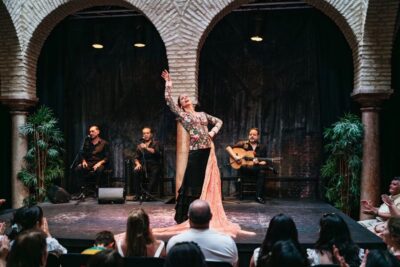
Puro Flamenco Show with Optional Museum Ticket
Read the review →
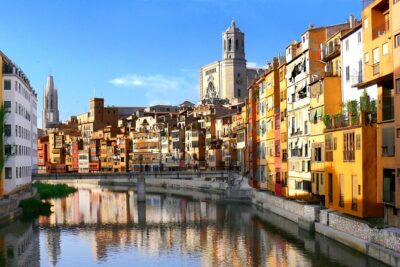
Girona & Dali Museum Small Group Tour with Pick-up from Barcelona
Read the review →
Oceanogràfic, Hemisfèric & Science Museum Combo
Read the review →
Small Group of Prado Museum Tour & Optional Tapas
Read the review →Browse the lists this tour appears in