
Reviewed · SEVILLE TOURS
Seville: 3–Hour Sightseeing Tour
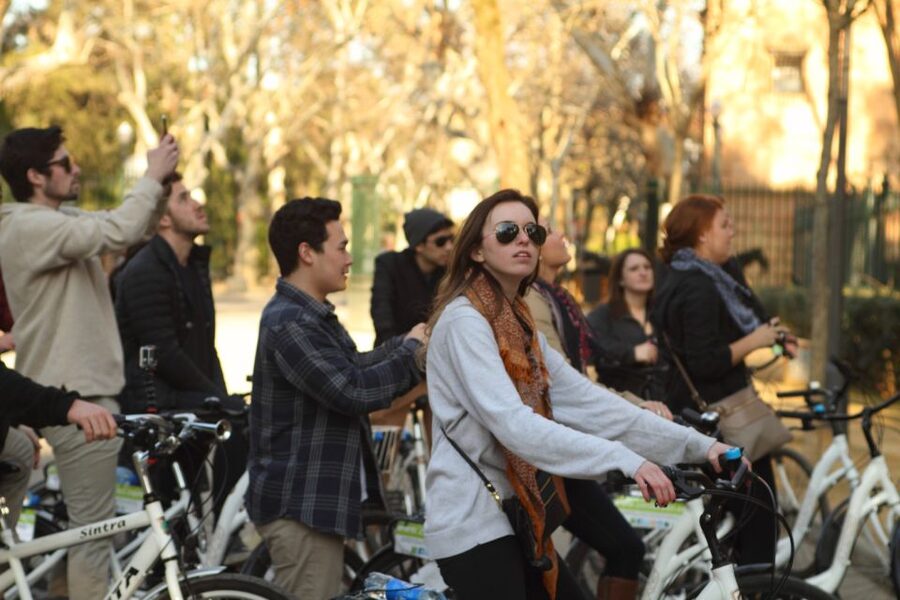
Seville reveals itself well by bike. In roughly two and a half hours, you move from a traditional Sevillian patio to grand plazas, the cathedral, the old tobacco factory, Plaza de España, the river, and the strange wooden Mushrooms of Plaza de la Encarnación. I like the wide sweep of the route and the way it connects famous sights that are scattered across the city.
I also like that the guide explains the story behind each stop instead of simply pointing at buildings. Guides such as Sebastian have drawn especially warm praise for adapting the route and explaining Seville clearly. The main concern is the bicycles: several recent bookings reported old or poorly maintained bikes, and one tour was canceled because two usable bicycles were not available.
Key points at a glance
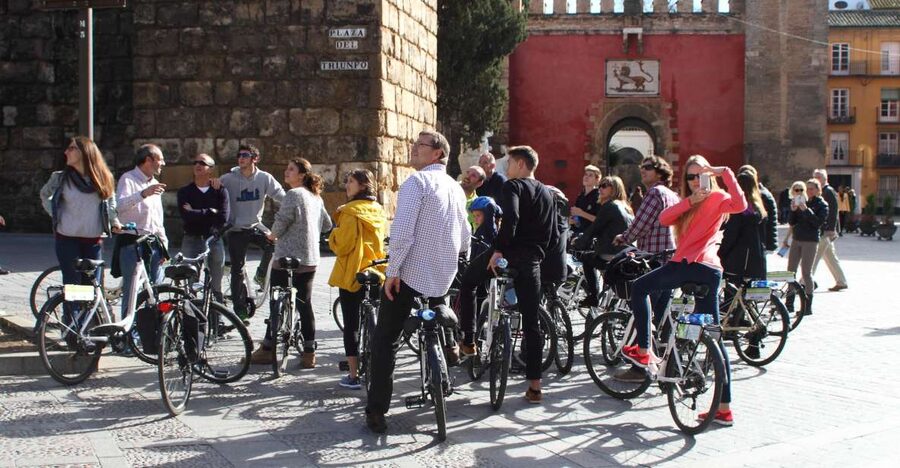
- A broad Seville route: Cover the cathedral, Giralda, Plaza de España, María Luisa Park, riverfront, bullring, Torre del Oro, and Metropol Parasol in one outing.
- A traditional starting point: Begin at a nineteenth-century house with a typical Sevillian patio before setting off.
- Good guide support: Live guiding is available in Spanish, English, French, Italian, and Dutch, with Sebastian and Alessandro among the named guides praised for their explanations.
- Useful extras included: Your bike, water bottle, map, and a child’s helmet are included.
- A practical equipment warning: Bike condition can vary, so inspect your bicycle and test the brakes before leaving.
- Best for active sightseeing: This is suited to people comfortable cycling and not to those with mobility impairments.
Starting in a Sevillian patio
The meeting point is Centerbici at C/ Espronceda, 5, in central Seville. The tour begins from a nineteenth-century house that can be viewed through the lens of a traditional Sevillian patio. That opening gives you a small taste of local domestic architecture before the route turns toward the city’s public squares and monuments.
I like this beginning because it avoids launching straight into a list of famous buildings. Seville’s patios are part of the city’s everyday character, and a patio-based start helps set up the contrast between private Seville and the monumental center you are about to see.
The activity is described as a three-hour tour, while the stated duration is two and a half hours. Plan your day around the shorter figure, but allow a little extra time for fitting the bike, gathering the group, and returning equipment. The route is guided and includes a bilingual guide, with several language choices available.
Bring your ID, as requested for the activity. Water and a map are supplied, and helmets are listed for children. The information does not state that adult helmets are included, so ask at the shop if you want one.
A few other Seville outings to compare
- Seville: Royal Alcázar Entry Ticket
★ 4.6 · 28,378 reviews - Seville: Cathedral and La Giralda Entry Ticket
★ 4.5 · 24,592 reviews - Seville: Live Flamenco Dancing Show Ticket at the Theater
★ 4.7 · 16,396 reviews
Plaza del Salvador and Seville’s civic heart
The first major section takes you through Plaza del Salvador, Plaza de San Francisco, and Plaza Nueva. These plazas give you three different views of central Seville: a lively church square, an important civic space, and the area around City Hall.
Plaza del Salvador is a useful first stop because it introduces the scale and texture of the old center. The Church of El Salvador is one of Seville’s important religious buildings, and the surrounding square is a natural place to pause and get your bearings. The tour does not list an interior visit, so expect an outdoor explanation rather than a church admission.
Plaza de San Francisco and Plaza Nueva shift the focus toward municipal Seville. From here, you head toward the City Hall and Avenida de la Constitución. This part of the route is valuable because you are not simply seeing isolated monuments. You are following the line between Seville’s historic core and its grand ceremonial avenue.
A bike makes these connections easier than walking them in the heat, though you still need to pay close attention in the old center. The tour is not designed for people with mobility impairments, and cycling comfort matters. If you have not ridden a bicycle for some time, this is worth considering before booking.
Avenida de la Constitución, the Cathedral, and the Giralda
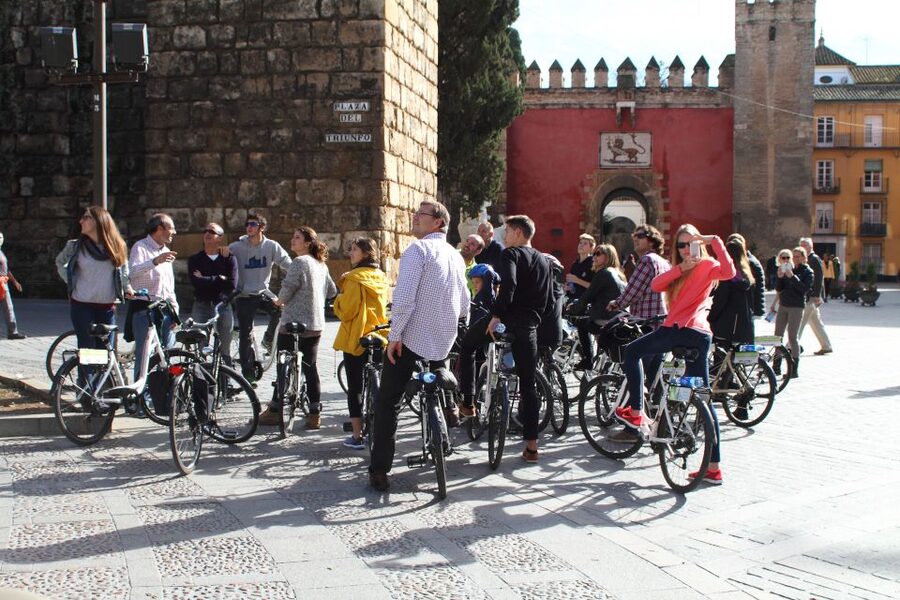
Avenida de la Constitución leads you toward Seville Cathedral and the Giralda, the city’s most recognizable pair of landmarks. The avenue provides a broad approach to the cathedral complex and helps you understand how the monument relates to the rest of central Seville.
The Giralda began as the minaret of a mosque and later became the bell tower of the cathedral. That layered past is one of the best reasons to have a guide here. A short explanation can turn a striking tower into a record of changing religious and political power.
You should expect to view the cathedral and Giralda from outside. The tour description does not include cathedral entry, a climb up the Giralda, or a dedicated interior visit. If those are priorities, set aside separate time and book admission independently.
The experience does advertise skip-the-ticket-line access, but the supplied information does not identify a specific monument entry included in the price. Treat this as a benefit related to the activity arrangements rather than a promise of admission to the cathedral or another paid site.
The old Tobacco Factory and a change in scale
The route continues to the old tobacco factory, one of Seville’s most striking historic buildings. It is associated with the city’s past as a major center of tobacco production and is now linked with the University of Seville.
This is an especially useful stop for understanding how Seville grew beyond churches and royal buildings. The structure is large, formal, and more fortress-like than you might expect from a factory. Its presence also changes the rhythm of the tour. After narrow streets and central plazas, you get a sense of institutional Seville and the scale of its older industries.
Again, expect an exterior explanation unless your guide tells you otherwise. The stated route does not include an interior tour. You will get more from this stop if you listen for the practical story behind the building: what it was built for, how it shaped the city, and how its use changed over time.
The guide is the real value here. The experience promises stories behind every monument, and the strongest comments about the named guides focus on clear explanations, friendliness, and the ability to adjust the outing to the group. Sebastian is particularly noted for listening to what people wanted to see and explaining Seville in an engaging way.
Same city, a completely different evening:
- Seville: Casa de la Memoria Flamenco Show
★ 4.8 · 12,964 reviews - Seville: 1-Hour Guadalquivir River Sightseeing Eco Cruise
★ 4.2 · 10,281 reviews - Seville: Cathedral, Giralda, and Royal Alcázar Guided Tour
★ 4.7 · 9,165 reviews - Seville: Setas de Sevilla Entry Ticket
★ 4.6 · 8,901 reviews
Prado de San Sebastián and Plaza de España
From the old tobacco factory, the route heads toward Prado de San Sebastián and Plaza de España. This is one of the tour’s most rewarding stretches because the city opens up and the monumental setting becomes more spacious.
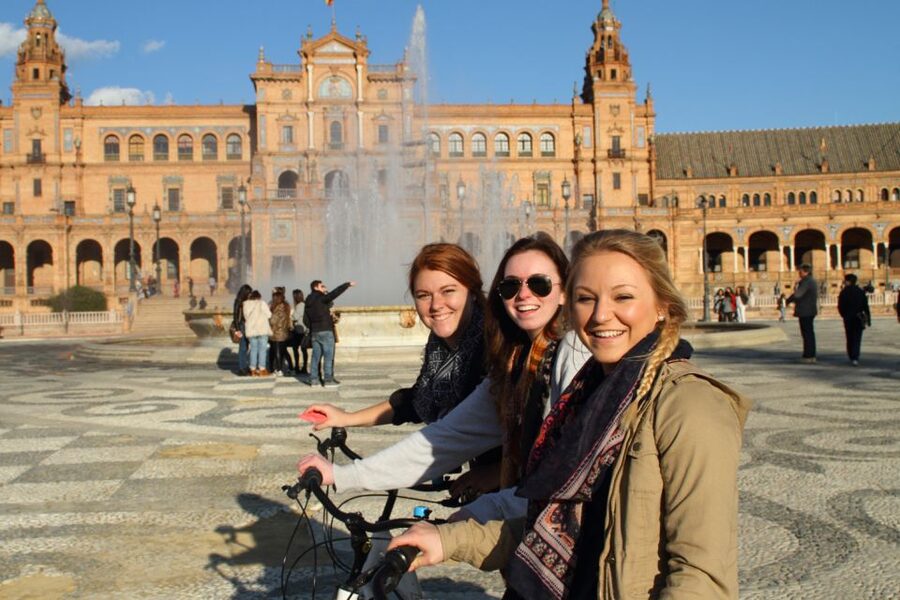
Plaza de España was built for the 1929 Ibero-American Exposition. Its curved form, towers, tiled alcoves, and canal make it instantly recognizable, but a guide can explain why it was created and how its design reflects Spain’s relationship with its former colonies. The tour lists a stop here, not a special event or interior visit, so plan on seeing the square and hearing its background from the bike route.
This is also one place where a bicycle gives you a practical advantage. You can reach Plaza de España, María Luisa Park, and the nearby Prado without using another form of transport. You are not spending the whole outing walking from one distant sight to another.
At the same time, expect the stop to feel busy at popular times. The provided information does not promise a quiet visit or a long photography break. If you want extensive time inside the square, you may need to return on your own.
María Luisa Park and the New York dock
María Luisa Park brings greenery and open space after the dense center. The tour includes the park and the New York dock, giving you a different view of Seville’s relationship with the Guadalquivir River and its wider commercial past.
The park is not presented as a separate walking tour. You will see it as part of the cycling route, with the guide supplying context along the way. That makes this a good introduction rather than a substitute for a slow visit. I would return later if you want to sit, study the tiled details, or explore at an unhurried pace.
The New York dock adds an unexpected modern-industrial note to the sightseeing. It helps connect Seville’s grand plazas with the river that supported its trade and development. These less obvious stops are where a guided route earns its keep. You can find the cathedral on any map, but a guide helps you understand why a dock belongs in the same story.
The bullring and Torre del Oro
The route then follows the riverfront toward the Real Maestranza bullring and Torre del Oro. These two landmarks represent very different parts of Seville’s public identity.
The Real Maestranza is one of Spain’s best-known bullrings. From outside, you can appreciate its rounded form and its place in Seville’s traditions. The activity does not include a bullring ticket or an interior visit, so the guide’s explanation is the main offering at this stop.
Torre del Oro is a defensive tower beside the Guadalquivir. Its position near the water makes sense once you hear about Seville’s river defenses and trade. The tower is compact but visually powerful, especially as part of a riverfront sequence that includes the bullring and the city skyline.
This section should appeal to you if you want more than the standard cathedral and plaza circuit. It gives the tour a clear geographic shape: old center, ceremonial south, park, river, and historic defense. The route feels broad rather than repetitive.
From old Seville to the Mushrooms
The final stop is the Mushrooms of Plaza de la Encarnación, officially known as Metropol Parasol. The giant timber structure is one of Seville’s most unusual modern landmarks, and it provides a sharp contrast with the cathedral, old squares, and defensive tower.
Ending here makes good sense. You have spent the route looking at layers of older Seville, then finish with a bold twenty-first-century project in the middle of the historic center. The contrast is the point. Seville is not only a preserved old town. It is also a city willing to make room for new architecture, even when that architecture provokes strong reactions.
The activity does not include access to the upper walkway or a ticket for the structure. You should expect to see Metropol Parasol from the plaza and hear its story. If you want the elevated view, arrange that separately.
By finishing at Plaza de la Encarnación, the route leaves you in a useful part of town for further exploring. You can continue on foot through the center, stop for food, or return to sights that deserved more time.
What the guide adds to the ride
The tour is only as good as the person leading it. The listed languages are Spanish, English, French, Italian, and Dutch, so you have a fair chance of finding a comfortable language option when booking.
The strongest guide feedback centers on Sebastian and Alessandro. Sebastian is described as friendly, attentive, well informed about the city, and willing to adjust the outing to the group. That flexibility matters on a sightseeing ride. Some people want architecture, some want local history, and others want a fast overview before exploring alone.
You should confirm your preferred language when reserving. A German-language booking was combined with another group and conducted in English because the group was small. That may not happen every time, but it shows that language arrangements can change when numbers are low.
The guide also controls the pace. The route contains many stops, so explanations are likely to be brief at some locations rather than long lectures. I see that as a strength for a bike tour, provided you want a city overview instead of a detailed monument study.
The bike question matters
At $35 per person, the tour is reasonably priced if you want a guided orientation and transport between distant sights. Bike rental alone is not the whole value. You are paying for a route, a guide, local context, water, and a map.
The bicycle condition is the weak point. Several recent bookings describe bikes as old, poorly cared for, or close to unsafe. One booking was canceled because the station did not have two intact bikes available. Other riders found that the bicycles worked despite looking tired, so the condition may vary from one day to the next.
Inspect your bike before setting off. Check the brakes, tires, chain, saddle, and steering. If anything feels wrong, tell the staff immediately and ask for another bicycle. This is not a minor comfort issue. A sightseeing route is much more enjoyable when you are listening to the guide instead of worrying about the machine.
The overall rating of 4.4 from 101 ratings suggests that the experience usually works well, but it does not erase the equipment concern. The guide quality receives much warmer attention than the bicycles. I would book this for the route and the human commentary, while keeping realistic expectations about the rental fleet.
Who should book this Seville bike tour?
I would recommend it to you if you have limited time in Seville and want a first look at many major sights. It is also a good fit if you enjoy learning the story behind a monument but do not want to spend a full day inside museums or churches.
The tour suits confident cyclists who can manage a city route. It is not suitable for people with mobility impairments, and the information does not suggest an adapted bicycle option.
Families may appreciate the included child helmet, though no other child equipment or age guidance is provided. Ask the operator directly if you need details about a child’s bicycle or seating arrangement.
You should choose another format if your main goal is long interior visits at the cathedral, Giralda, bullring, or Metropol Parasol. None of those admissions is clearly included. This is a sightseeing circuit with explanations, not a ticketed monument tour.
Cancellation is flexible up to 24 hours before the start for a full refund, and you can reserve now and pay later. Those terms make the booking less risky, especially if your Seville plans are still shifting.
Should you book it?
Book this tour if you want a fast, story-filled introduction to Seville and are comfortable checking the bike carefully before departure. The route covers an impressive amount of ground for $35, from historic plazas and the cathedral to Plaza de España, the riverfront, and the modern Mushrooms.
I would be cautious if dependable equipment is essential or if you need a specific language at all costs. Confirm the language, inspect the bicycle, and remember that the major monuments are sightseeing stops rather than included interior visits. With those limits understood, this is a useful way to get your bearings and decide where to spend more time later.
FAQ
Where does the tour meet?
The meeting point is Centerbici store at C/ Espronceda, 5, 41004 Sevilla.
How long does the activity last?
The activity information lists a duration of two and a half hours, while the tour is also described as a three-hour tour. Check the available starting time and allow extra time around the scheduled outing.
How much does the tour cost?
The listed price is $35 per person.
What is included in the price?
Bike rental, a bilingual guide, a water bottle, and a map are included. Helmet rental is listed for children.
Which languages are available?
Live guiding is available in Spanish, English, French, Italian, and Dutch.
Do I need to bring identification?
Yes. You are asked to bring your ID.
Is the tour suitable for people with mobility impairments?
No. The activity is listed as unsuitable for people with mobility impairments.
Does the route visit Plaza de España?
Yes. Plaza de España and María Luisa Park are included in the route.
Does the tour include cathedral or monument admission?
The supplied information does not clearly list admission to the cathedral, Giralda, bullring, or Metropol Parasol. Expect guided sightseeing at these locations rather than confirmed interior entry.
Can I cancel for a refund?
Yes. You can cancel up to 24 hours in advance for a full refund. You can also reserve now and pay later.
Recently added in Seville
- Private Half Day Walking Tour of Seville★ 5.0 · 101 reviews
- Gibraltar with Rock of Gibraltar & St. Michael Cave from Seville★ 4.5 · 102 reviews
- Alcazar, Cathedral and Giralda of Seville with entrance fee included★ 4.0 · 102 reviews
- Seville: Archive of the Indies Guided Tour★ 4.6 · 102 reviews
- Seville Jewish Quarter walking tour: Santa Cruz District★ 4.8 · 104 reviews
- Seville Former Jewish Quarter Walking Tour: Santa Cruz★ 5.0 · 105 reviews
- Seville: Museum of Fine Arts Guided Tour★ 4.8 · 107 reviews
- Seville: 3 Bars Pub Crawl + VIP Club Entrance & 3 Free Shots★ 4.3 · 108 reviews
Seville Tours, compared.
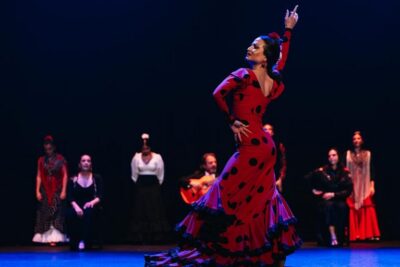
Live Flamenco Dancing Show Ticket at the Theater
Read the review →
1-Hour Guadalquivir River Sightseeing Eco Cruise
Read the review →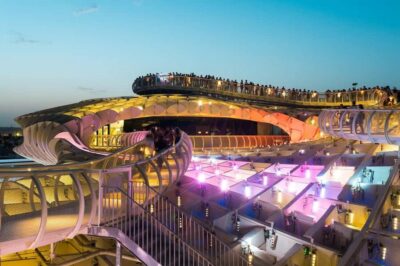
Cathedral, Giralda & Alcazar Entry With Guided Tour
Read the review →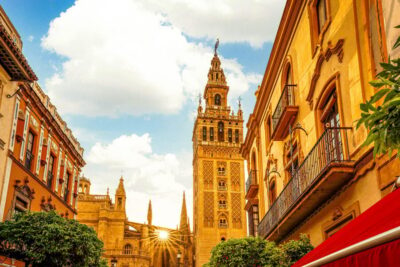
Priority Access Cathedral, Giralda & Alcázar Tour
Read the review →Browse the lists this tour appears in