
Reviewed · HISTORICAL TOURS
Barcelona: The Spanish Civil War Historical Walking Tour
Barcelona’s old town is full of grand façades, Gothic lanes, and busy squares. But beneath that familiar postcard view are streets shaped by street fighting, political violence, fascist bombing, dictatorship, and silence. This walking tour brings that less visible Barcelona into focus, using the city itself as the classroom.
I like the way the tour makes a tangled subject understandable, especially the competing forces of fascists, republicans, anarchists, labor groups, the Catholic Church, and foreign powers. I also like the use of photographs, which helps you connect present-day streets with the people and events that once filled them. The main drawback is that this is a serious, mostly standing tour, and the history can feel dense if you arrive with no background at all.
Key points to know before you book
- A history walk through the old town: Begin at Plaça de Catalunya and finish near Barcelona city hall in the Gothic Quarter after about two and a half hours.
- The city replaces a formal museum: You see streets, neighborhoods, battle sites, bombing scars, and locations linked with George Orwell’s Homage to Catalonia.
- Clear explanations of difficult politics: The guide sorts out the many factions and explains how their goals often clashed.
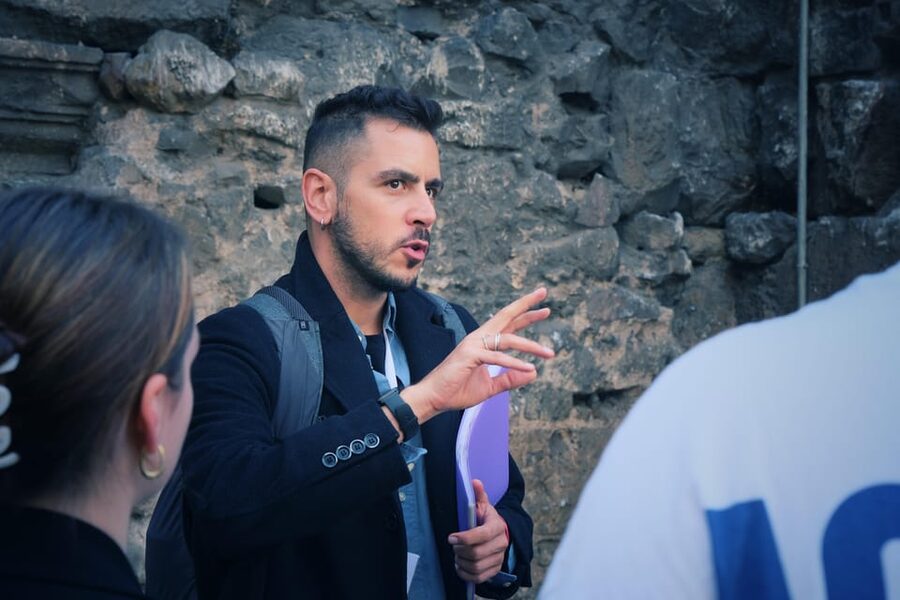
- Strong guide team: Javier, Chrisa, Yannis, Filipa, Henrieta, and Evan have all led tours, with a focus on clear storytelling and questions.
- More standing than walking: You stroll between sites, then stop while the guide explains the history. Comfortable shoes still help.
- A thoughtful modern connection: The tour discusses Franco’s legacy, Spain’s unresolved memories, and the place of this past in present-day democracy.
Why this Barcelona history tour matters
Many first visits to Barcelona focus on Gaudí, food, beaches, and medieval architecture. Those are good reasons to come, but they can leave you with a polished picture of the city. This tour asks you to look again at the same old town through the crisis that tore Spain apart in the 1930s.
The Spanish Civil War was not a simple contest between two tidy sides. Different political groups wanted very different futures for Spain, and some of those groups fought one another even while facing Franco’s forces. The walk explains this difficult mix in plain English, rather than assuming you already know the difference between republican, anarchist, socialist, communist, fascist, and nationalist aims.
That matters in Barcelona because Catalonia experienced the war in its own way. Local political identity, industrial growth, labor movements, class tension, and the power of anarchist organizations all shaped the city’s experience. You are not simply hearing a national story with Barcelona added as a footnote. The city is central to the explanation.
The tour also follows the war beyond 1939. Franco’s dictatorship lasted 36 years, and its effects did not vanish when the fighting ended. You learn how the Catholic Church fit into the period, how foreign governments responded, and why Spain still has difficult arguments about memory, monuments, graves, and public acknowledgment.
More Historical Tours in Barcelona
- Barcelona: Tapas Walking Tour with Food, Wine, and History
★ 4.8 · 4,261 reviews - Barcelona Tapas Walking Tour: Food, Wine & History
★ 4.5 · 1,928 reviews - Barcelona: 2.5-Hour Bike or E-Bike Historical Tour
★ 4.5 · 1,262 reviews
Starting under the white umbrella at Plaça de Catalunya
The meeting point is on the sidewalk in front of Foot Locker at Plaça de Catalunya. Your guide carries a white umbrella, which gives you a clear visual marker in one of Barcelona’s busiest central spaces.
Arrive ready to begin outdoors. The tour runs in rain or shine, so check the weather and dress for the conditions. A cold day can feel particularly sharp because you may wait at the meeting point and spend much of the tour outside. On wet days, a waterproof layer and shoes with a good grip are sensible.
The starting square is useful for setting the scene. From here, the guide can place Barcelona within the wider political and social changes that led to war. The opening section usually helps you understand what Spain was like before the conflict, including the pressures created by industrialization, social inequality, political division, and competing ideas about the country’s future.
This early context is important. Without it, the war can sound like a list of dates and military maneuvers. With it, the factions begin to feel like real political movements with different supporters, fears, and ambitions.
Following the fighting through Barcelona’s old town
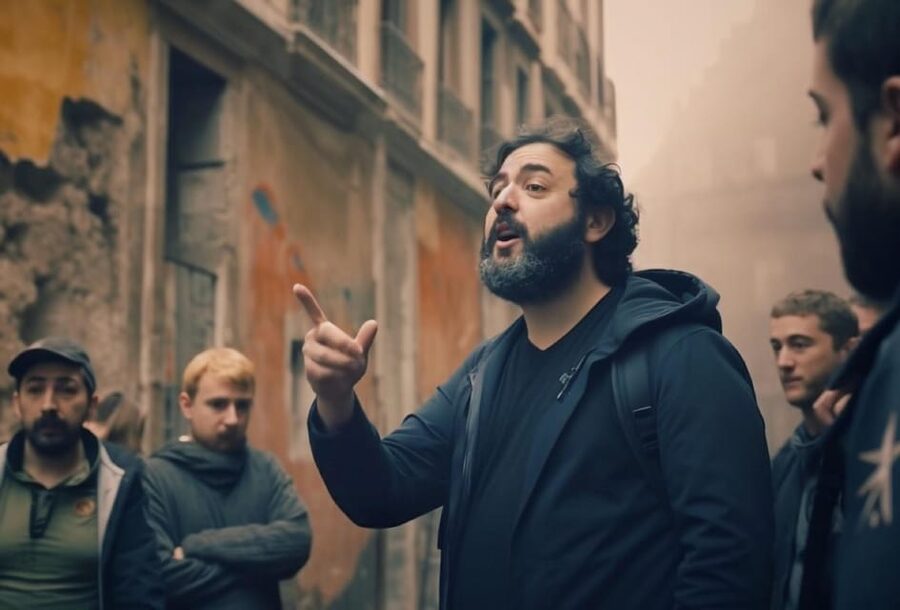
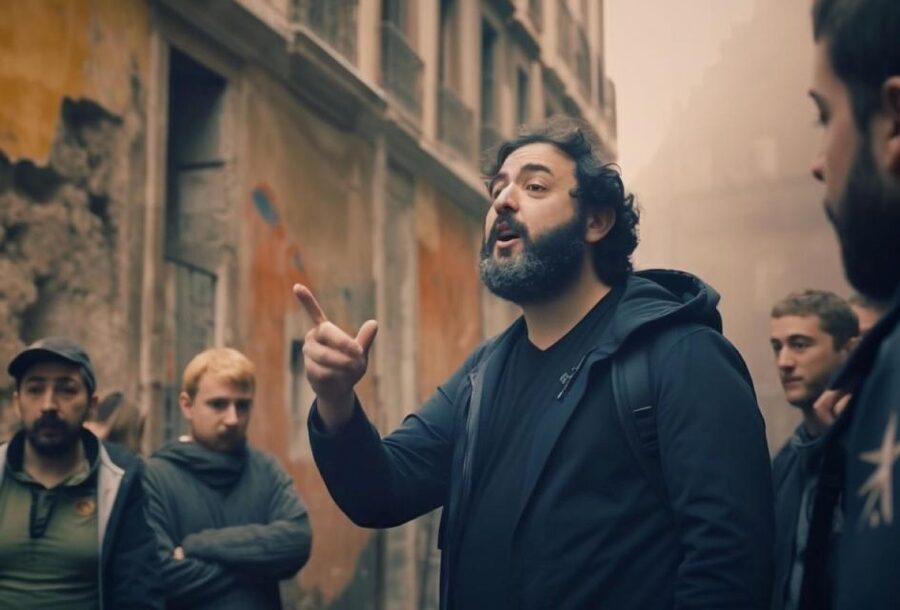
From Plaça de Catalunya, the group heads into the old town. The exact route can vary with the guide and conditions, but the focus is on streets and neighborhoods where political conflict and fighting affected daily life.
You should not expect a long-distance march. The pattern is usually a short walk, a stop for explanation, then another short walk. One visitor described it as more of a stroll than two and a half hours of continuous walking. That makes the pace manageable, but you will be standing for much of the time.
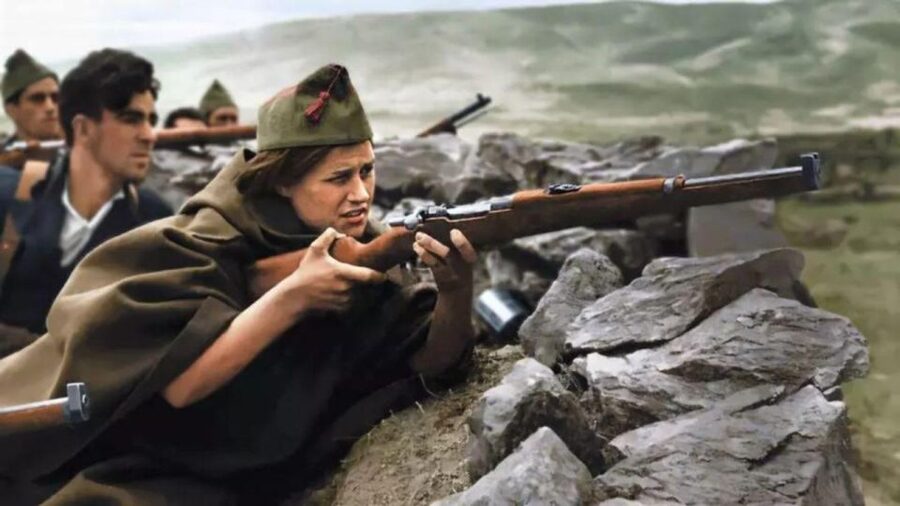
The physical setting gives the history weight. Narrow streets, public buildings, and old façades become evidence of a city under pressure. The guide points out visible scars and explains what happened in particular places, using photographs to show how the scene looked during the war.
The photographs are especially useful because Barcelona has few official museums or memorials devoted to this period. You will not always find a large plaque announcing what happened. Instead, the guide helps you notice the gap between the ordinary appearance of a street and the violence once connected with it.
That approach is one of the tour’s best features. It avoids turning the Civil War into an abstract lecture. You stand in the city where political loyalties, armed groups, and frightened civilians collided.
Making sense of fascists, loyalists, and anarchists
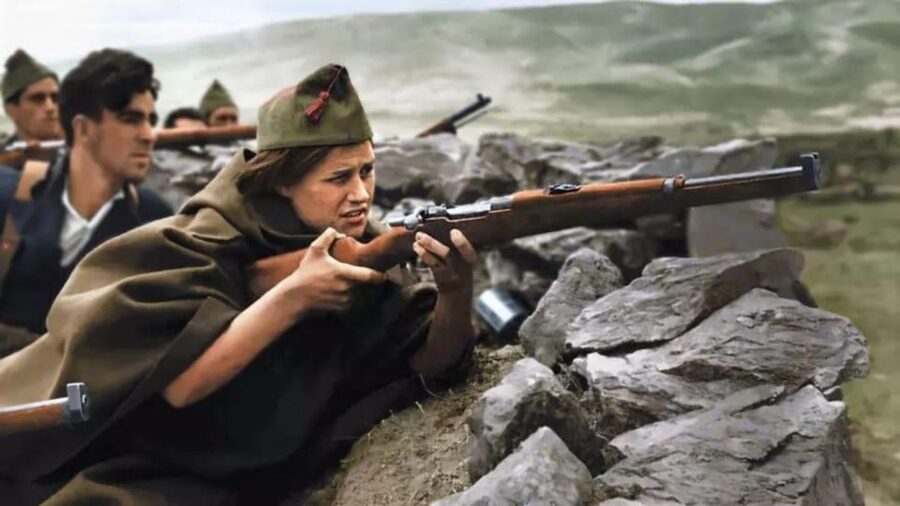
The central challenge of this subject is the factions. The tour takes time to explain who fought whom, which groups sometimes cooperated, and why alliances broke down.
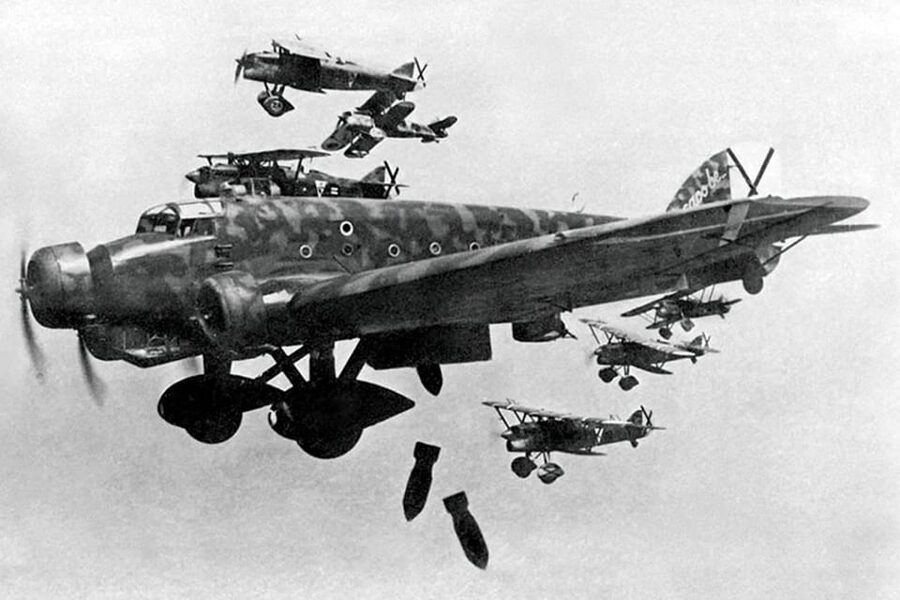
The guide covers Franco’s forces and the fascist side, including the roles played by Hitler and Mussolini. You also learn about the republican or loyalist forces, the International Brigades, anarchist movements, labor unions, and other political groups active in Barcelona.
The value here is not just memorizing names. You begin to see why the war became an international warning sign. Foreign intervention, non-intervention by Western democracies, and the arrival of volunteers from other countries all show how Spain became part of a much larger struggle over fascism, revolution, and political power.
The explanations are designed for people who may know little about the war, but the subject can still become advanced at points. If you have time, read a short introduction before arriving. You do not need to arrive as a specialist, but knowing the basic dates and the names Franco and Orwell will help you absorb more of the detail.
The strongest guides make space for questions. Javier has been praised for making a complex subject accessible while adding dry humor at suitable moments. Chrisa is noted for clear explanations, strong voice projection, and a thoughtful discussion of women in the Second Republic, the Civil War, and Mujeres Libres. Yannis brings detailed background on the revolution, industrial Barcelona, and the factions competing before and during the war.
Guide assignments can vary, so you cannot select a particular person when booking unless the operator confirms it. The guide team includes Javier, Chrisa, Yannis, Filipa, Henrieta, and Evan. Across the tour, the most important quality is the ability to explain rather than simply recite.
More Walking Tours in Barcelona
- Barcelona Tapas and Wine Experience Small-Group Walking Tour
★ 5.0 · 5,804 reviews - Barcelona: Tapas Food Crawl Walking Tour with Tastings
★ 4.9 · 1,798 reviews - Barcelona: Gothic Quarter Ghosts and Legends Walking Tour
★ 4.7 · 1,443 reviews - Barcelona Helicopter, Sailboat & Old Town Private Walking Tour
★ 5.0 · 1,395 reviews
George Orwell’s Barcelona
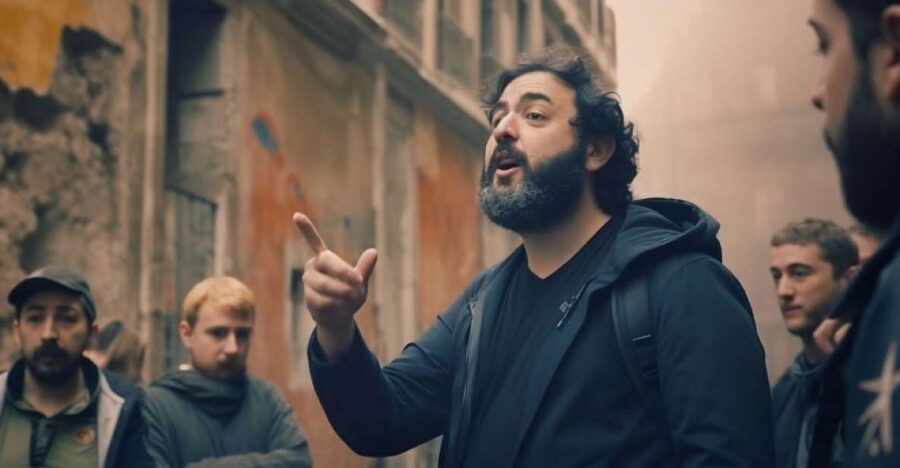
A special appeal for many readers is the connection with George Orwell’s Homage to Catalonia. Orwell came to Spain as a foreign volunteer and wrote about his experience in Barcelona, including the political tensions and street fighting that divided the republican side.
The tour visits places connected with scenes and events described in his book. That gives literary visitors a reason to look beyond the usual Orwell portrait. You see how his account fits into the wider conflict, and you can consider both the value and limits of one outsider’s view.
You do not need to have read the book. The guide uses the locations and photographs to explain what Orwell encountered, so the references work as historical signposts rather than a reading test. If you have read Homage to Catalonia, though, this part will add a strong sense of place.
The Orwell connection also helps show why Barcelona’s Civil War story is so complicated. The struggle was not only Franco against the republic. There were serious divisions inside the anti-Franco camp, and those internal conflicts shaped Orwell’s experience.
The role of ordinary people and women
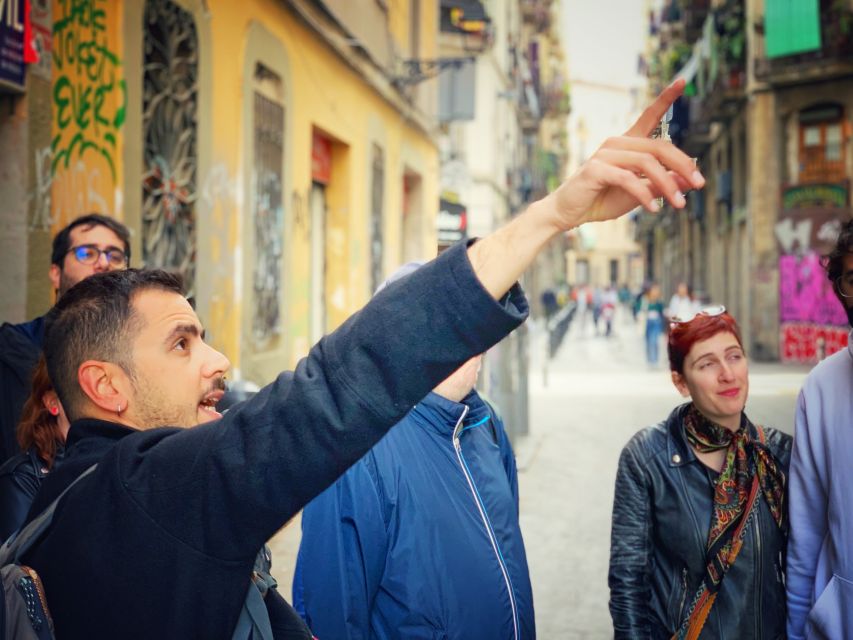
Military leaders and famous political figures receive attention, but the tour also looks at the lives of everyday people. That makes the story more human and helps you understand what war meant beyond battle lines.
You hear about the social forces behind the conflict, including workers, the poor, labor unions, and people who believed the old political order had to change. The city’s industrial past is part of this discussion, since economic and class tensions helped shape political loyalties.
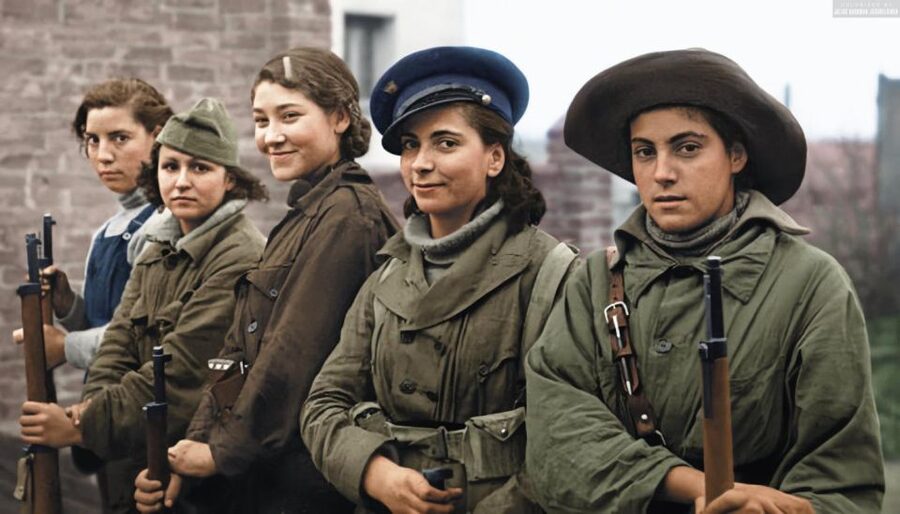
The role of women is another worthwhile part of the walk. The discussion of Mujeres Libres shows that women were not merely observers or victims. They organized, argued, worked, and took part in political projects during a period when traditional gender roles were under intense pressure.
This focus gives the tour more range than a military history walk. You still learn about the fighting, but you also get a clearer picture of the social hopes and fears that made the conflict so bitter.
Bombings, dictatorship, and the years after 1939
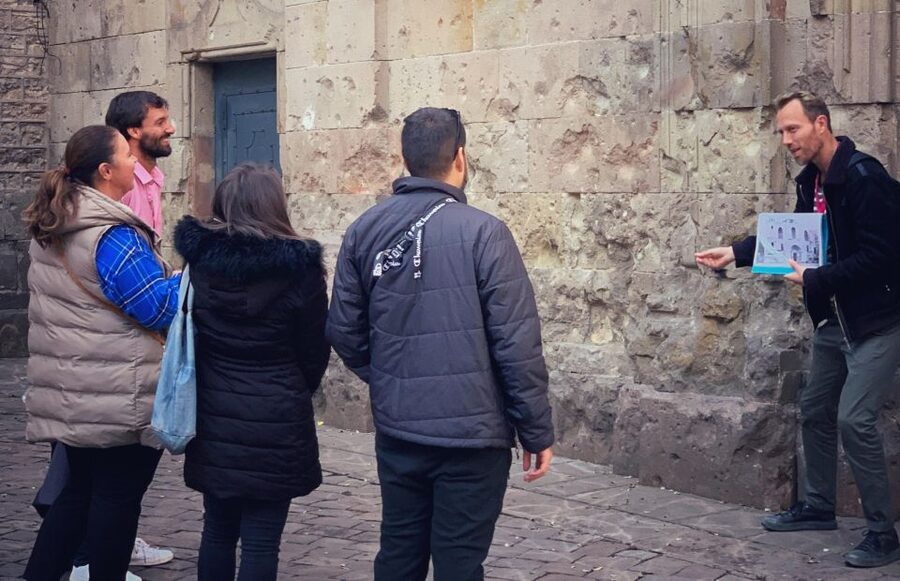
The walk does not stop when Franco wins. The guide explains the military dictatorship that followed, including the long period of repression and the role of institutions such as the Catholic Church.
You also examine the response of the Western Allies. The questions here are larger than Barcelona: Why did foreign governments respond as they did? How did the outcome in Spain connect with the rise of fascism in Europe? What did Franco’s survival mean after the Second World War?
The old town’s bombing damage and surviving scars help keep those questions local. You are not only discussing international diplomacy. You are looking at what those decisions meant for people living in Barcelona.
The final sections connect the past with Spain today. Guides discuss historical memory and the way the country deals with a period that still carries political and emotional weight. You may not leave with every debate settled, but you should have a better sense of why the subject remains present in Spanish public life.
This is also where the tour can feel most serious. It deals with war, dictatorship, repression, and political extremism. Children are allowed, but the experience is not advised for young children because of the subject matter.
The final stretch into the Gothic Quarter
The tour finishes in the middle of the Gothic Quarter, near Barcelona city hall. That is a useful ending point because you are left in a central area with plenty of options for food, further sightseeing, or a quiet walk to think over what you have heard.
The route’s finish also brings the story back to the living city. The Gothic Quarter is not a frozen monument. It is a place where residents work, eat, protest, shop, and move through streets that carry several layers of political history.
Plan your next activity with a little flexibility. Guides sometimes answer extra questions or offer suggestions for food and other activities after the formal tour. Do not schedule a timed attraction immediately afterward if you want time for questions.
Is $46 a fair price?
At $46 per person, this is not the cheapest way to spend a morning or afternoon in Barcelona. You are paying for a specialist subject, an English-speaking guide, photographs, and two and a half hours of interpretation rather than for entry to a major monument.
I think the price is fair if you want more than a casual walk through the old town. Barcelona offers many free streets and squares, but those places do not explain themselves. The value comes from understanding what you are seeing and why the city’s Civil War past is often difficult to find in official public displays.
The tour is also a good use of time early in your stay. It can change how you view the architecture and neighborhoods during the rest of your visit. Instead of seeing only medieval walls and attractive lanes, you start noticing the political layers beneath them.
An extra €1 may be charged at the beginning for the wireless guiding system, payable by card or cash. The system depends on the guide. It can help you hear clearly in a noisy city, but it is worth including this small cost in your budget.
Practical advice for a better experience
Wear comfortable shoes, but focus just as much on standing comfort as walking comfort. You will move between stops, then listen in place for several minutes at a time.
Bring water, since food and drinks are not included. The tour does not provide hotel pickup or drop-off, so you need to reach Plaça de Catalunya on your own.
The tour is offered in English, with a live guide and an optional English audio guide. A private group is available if you want a more personal format, though the standard experience is designed to work well for people who enjoy shared discussion.
Wheelchair access is listed as available. Because the walk takes place through city streets and includes outdoor stopping points, it is wise to confirm the practical route details when booking if you have specific mobility needs.
Free cancellation is available up to 24 hours in advance, and you can reserve now while paying later. That is useful if your Barcelona schedule is still shifting.
Who should book this walk?
I would choose this tour if you enjoy political history, modern European history, literature, or the stories behind ordinary city streets. It also suits anyone who has visited Barcelona before and wants something beyond the standard architecture circuit.
You do not need prior study. The best guides, including Javier, Chrisa, Yannis, Filipa, Henrieta, and Evan, explain the background step by step and leave time for questions. Still, a short preview of the Civil War will help you get more from the finer points.
This is less suitable if you want a light, entertaining sightseeing walk. The tone can be moving and politically serious, and the subject includes violence, dictatorship, and unresolved trauma. It is also not ideal for very young children, even though children may join.
Should you book the Barcelona Civil War walking tour?
Book it if you want to understand the Barcelona behind the façades. The tour’s greatest strength is its clear handling of a messy subject, supported by real streets, photographs, Orwell connections, and discussion of life under Franco.
Skip it if your priority is Gaudí, food, or a relaxed introduction to the Gothic Quarter. But if you have room for one thoughtful history experience, this is a strong choice. At $46, it offers context you are unlikely to find by wandering alone, and it may send you back to your hotel looking for a book about the Spanish Civil War.
FAQ
Where does the Spanish Civil War walking tour meet?
The tour meets on the sidewalk in front of Foot Locker at Plaça de Catalunya. Look for the guide carrying a white umbrella.
How long does the tour last?
The walking tour lasts about 2.5 hours and finishes near Barcelona city hall in the Gothic Quarter.
What language is the tour in?
The live tour guide speaks English. An optional English audio guide may also be available.
What places does the tour visit?
The route goes through Barcelona’s old town, including streets and neighborhoods connected with Civil War fighting and fascist bombing. It also includes places mentioned by George Orwell in Homage to Catalonia.
Is the tour mostly walking?
You walk between different stops, but you are not walking continuously for two and a half hours. Much of the experience involves standing while the guide explains the history.
Is the tour suitable for children?
Children are allowed to join, but the tour is not advised for children because it deals with politics, war, and dictatorship.
Does the tour run in bad weather?
Yes. The tour takes place rain or shine, so dress for the forecast and bring suitable protection on wet or cold days.
Is the tour wheelchair accessible?
The activity is listed as wheelchair accessible. If you have particular mobility requirements, confirm the route details before booking.
More Historic Sites in Barcelona
- Barcelona Erotic Museum – Explore Art, History & Fun
★ 4.4 · 450 reviews - Andorra Original History and Sightseeing Tour (Private, Pickup)
★ 5.0 · 350 reviews - Barcelona: Dark History Night Walking Tour
★ 4.8 · 344 reviews - Tarragona and Sitges Small Group Tour – Roman History & Culture
★ 4.5 · 339 reviews
Recently added in Barcelona
- Barcelona: Catamaran Cruise w/ Sailing, Wine, & Tapa★ 4.7 · 176 reviews
- Guided Gaudí Trencadís Mosaic Workshop in Barcelona 2 Hours★ 5.0 · 176 reviews
- Barcelona Cable Car Sky Views, Magic Fountain & Castle Visit★ 4.2 · 177 reviews
- Barcelona Private Sunset Sailing with Drinks★ 5.0 · 177 reviews
- Barcelona: Montserrat with Winery Visit and Farmhouse Lunch★ 4.7 · 178 reviews
- Barcelona: Nightmare Horror Museum Maze Entry Ticket★ 4.5 · 179 reviews
- Barcelona: City Sights Electric Quad Tour★ 4.8 · 178 reviews
- Barcelona: Professional Photoshoot Outside Sagrada Familia★ 4.8 · 179 reviews
Historical Tours, compared.
Madrid Essential: Historic Center, Plaza Mayor & Royal Palace
Read the review →
Tapas Walking Tour with Food, Wine, and History
Read the review →
Sevilla Food Tour: Tapas, Wine, History & Traditions
Read the review →
Valencia Old Town Tour with Wine & Tapas in 11th Century Historic Monument
Read the review →
Barcelona Tapas Walking Tour: Food, Wine & History
Read the review →
Ultimate Seville Tapas, Wine & History Small Group Tour
Read the review →
Skip-the-Line Great Mosque-Cathedral History Tour
Read the review →
Browse the lists this tour appears in