
Reviewed · HISTORICAL TOURS
Tarragona and Sitges Small Group Tour – Roman History & Culture
Tarragona gives you the day’s main surprise: a Roman city where ancient walls, a circus, forum, and amphitheater sit inside a living Catalan town. You can even walk across the 2,000-year-old Pont del Diable aqueduct, then finish beside the sea in Sitges.
I like the mix of serious Roman history and easy seaside time, and I like traveling by a small air-conditioned minivan rather than a large coach. Guides such as Sergio, Xavier, Rod, and Enrique are praised for clear explanations and friendly help. The main drawback is time: Tarragona has enough to fill a full day, so three hours in Sitges may feel like too much if Roman ruins are your main interest.
Key points to know before booking
- Walk across a Roman aqueduct: Pont del Diable is an impressive first stop, with free time to cross the top.
- See Tarragona’s Roman core: The route includes the old walls, forum, circus passageways, and amphitheater views.
- Enjoy two very different coastal stops: Roc de Sant Gaieta is brief and quiet, while Sitges offers beaches, food, cafes, and shops.
- Small-group transport saves effort: Air-conditioned minivan transport covers the long distances from Barcelona.
- Bring beach gear: You may have time for a swim in Sitges, so pack a swimsuit, towel, comfortable shoes, and sun protection.
- Check the group size details: The tour is described as a maximum of 15 people in one place and 8 in another, so confirm the expected size when booking.
Why Tarragona is the heart of this Barcelona day trip
Barcelona has plenty to keep you busy, but this outing takes you south into a different chapter of Catalonia. Tarragona was the Roman city of Tarraco, and its old center still holds the bones of that past. The appeal is not just a single ruin. It is the way Roman remains appear between cathedral walls, apartment buildings, squares, and ordinary city streets.
You leave central Barcelona at 8:30am from C/ Palau de la Música, beside the Palau de la Música Catalana. The guide gives you a short introduction to Barcelona as the minivan moves through the Eixample district, then you have roughly 90 minutes to sit back before reaching Tarragona.
This early departure matters. You get the Roman sites before a long afternoon in Sitges, and the return to Barcelona is planned for about 7:00 to 7:15pm. It is a long day, roughly 10 and a half hours, but the schedule gives the trip a clear shape rather than leaving you to piece together Tarragona and Sitges by public transport.
More Historical Tours in Barcelona
- Barcelona: Tapas Walking Tour with Food, Wine, and History
★ 4.8 · 4,261 reviews - Barcelona Tapas Walking Tour: Food, Wine & History
★ 4.5 · 1,928 reviews - Barcelona: 2.5-Hour Bike or E-Bike Historical Tour
★ 4.5 · 1,262 reviews
Walking the Pont del Diable at 10:00am
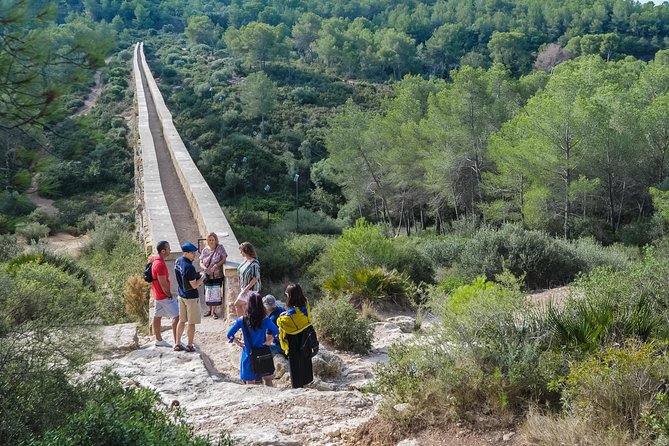
The first stop is outside Tarragona at the Les Ferreres Aqueduct, better known as Pont del Diable, or the Devil’s Bridge. Built in the first century BC, it once formed part of Tarraco’s water system. Much of the structure remains remarkably complete, and you can walk across the top from one side to the other.
That walk is the memorable part. You are not simply looking at a distant Roman wall through a fence. You get to stand on the ancient stonework and see the aqueduct as an engineering project, not just a photo stop. Allow about 40 minutes here.
The stop is free, but it is not a polished museum visit. Bring sturdy shoes and take care on the stone surface. The tour specifically encourages time off the minivan, so practical clothing matters more than dressing for a city lunch. Sun protection is also useful, especially during warmer months.
One useful expectation: the aqueduct stop is relatively short. A few people who especially loved Roman architecture wished they had more time there. If this is your top reason for booking, enjoy the full walk and take your photographs promptly.
Tarragona’s old quarter from 11:00am
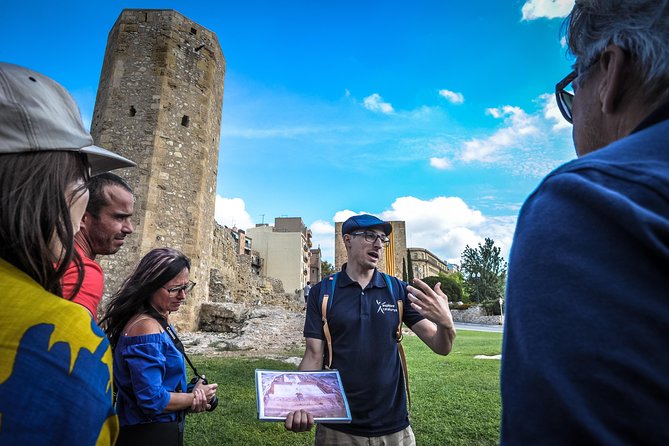
Back in Tarragona, you enter the old part of town through a narrow gateway in the ancient walls. This is where the tour earns its keep. A guide can point out how the modern city overlaps the Roman center, helping you understand why the ruins are scattered through the urban fabric rather than gathered in one isolated archaeological park.
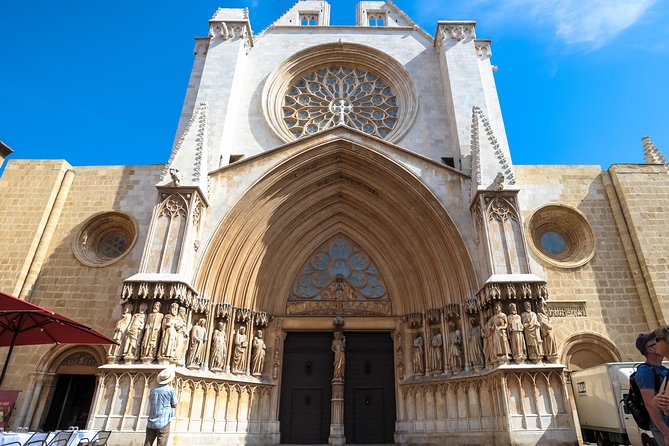
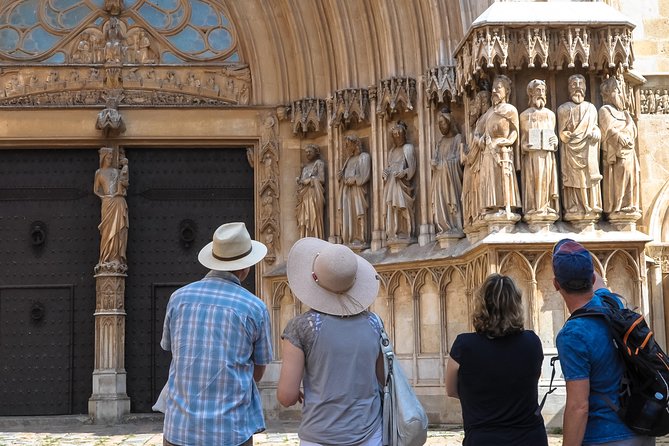
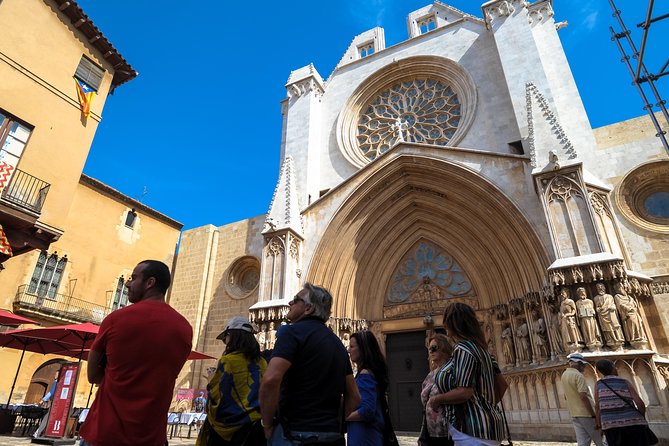
The walk begins along the Archaeological Walkway, beside surviving sections of the old walls. You continue through the historic quarter, passing the medieval hospital and reaching Tarragona Cathedral. The cathedral is an important visual shift from Roman imperial power to medieval Christian Tarragona. On Sunday mornings, the area may also have an antique market, adding a local layer to the stop.
From the cathedral, the route heads downhill through the old town toward the Roman Forum and Circus. The forum gives you a glimpse of civic life, while the circus shows how large public entertainment once fitted into the city. Parts of the circus are easy to miss because later buildings grew around and over them.
One of the more unusual moments comes in the underground passageways that once supported the circus seating. The route then reaches Plaça de la Font, a popular square located within the footprint of the old circus. Cafes and daily life now fill the space where chariots once raced. That contrast is exactly what makes Tarragona more interesting than a stand-alone ruin.
The amphitheater and the sea view
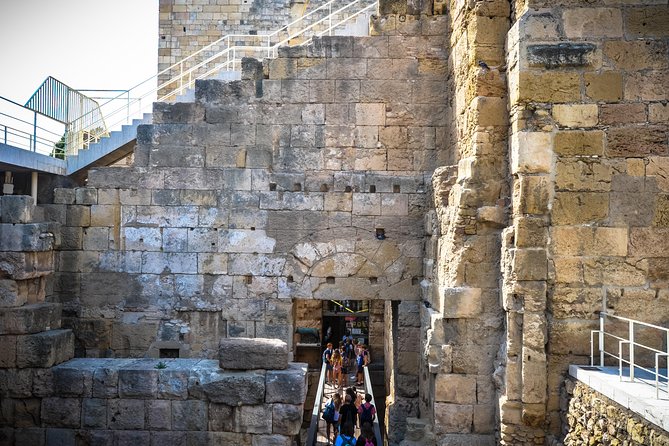
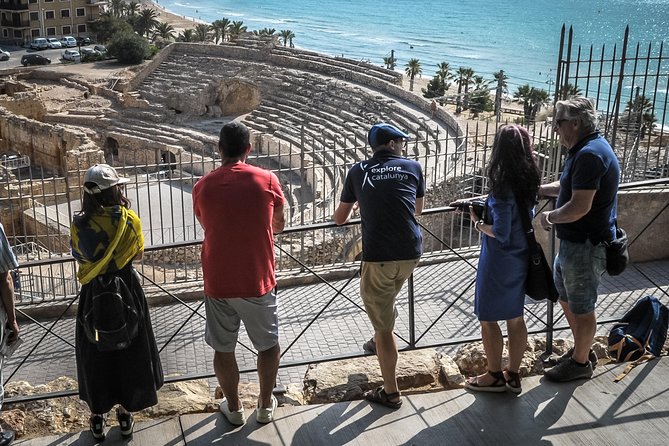
The final Roman sight in Tarragona is the amphitheater, set near the Mediterranean. From the viewpoint, you can look across the remains and picture the public spectacles once held there. The sea behind the stone gives the site a strong sense of place.
A particularly striking detail is the Christian church built in the middle of the arena, using blocks from the amphitheater itself. It is a compact lesson in how cities reuse old structures and how Tarragona’s Roman and Christian pasts overlap.
The Tarragona portion lasts about two hours, and it is guided on foot. You will see a lot in that time, but you should not expect long interior visits at every monument. Entrance fees to museums and monuments are not included, and the standard route focuses on outdoor remains, streets, views, and explanation. If entering the circus, amphitheater, or other paid sites is important to you, ask your guide what can fit during free time and budget for admission.
This is also the section where guide quality matters most. Sergio, Xavier, Rod, Enrique, Stephen, Steven, Jordi, and other guides are specifically praised for making Roman history understandable and for answering questions. The best guides do more than name dates. They help you see where the forum, circus, walls, and amphitheater fit together.
More historic sites in Barcelona:
- Barcelona Erotic Museum – Explore Art, History & Fun
★ 4.4 · 450 reviews - Andorra Original History and Sightseeing Tour (Private, Pickup)
★ 5.0 · 350 reviews - Barcelona: Dark History Night Walking Tour
★ 4.8 · 344 reviews - Historical and Modernist Bike Tour Barcelona
★ 5.0 · 262 reviews
A short pause at Roc de Sant Gaieta
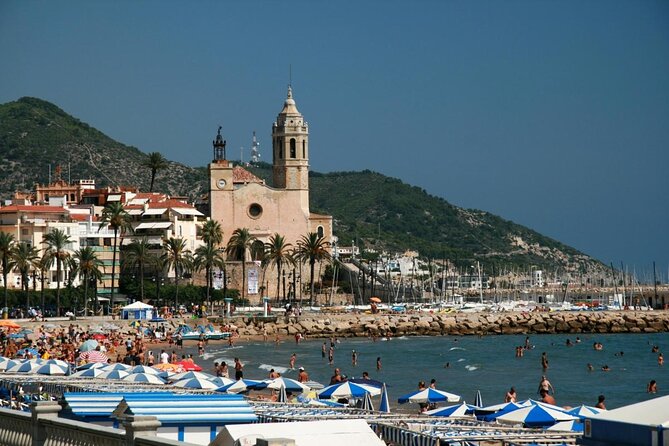
Around 1:30pm, you stop at Roc de Sant Gaieta on the way to Sitges. This is a small seaside community built along a rocky shore, with tiny white houses and a decorative style influenced by Mediterranean and Roman-Greek ideas.
The stop lasts about 20 minutes, so think of it as a breath of fresh air rather than a full visit. You can stroll, take in the waterfront, and enjoy a change of pace after Tarragona’s stone ruins. It also breaks up the drive before the final stop.
The short timing is both its strength and its limit. You get a quick look at a quiet coastal setting without sacrificing much time in Sitges. If you prefer long visits and detailed sightseeing at every stop, this may feel rushed. If you like variety, it is a pleasant interlude.
Three hours in Sitges for lunch and the beach
You reach Sitges around 2:30pm and have until approximately 5:30pm. Once a fishing village, Sitges developed into a fashionable seaside town from the 1890s onward. Its old streets, whitewashed houses, beaches, cafes, bars, and boutiques give the afternoon a very different mood from Tarragona.
I like having several hours here because Sitges works best at an unhurried pace. You can wander the side streets, walk along the seafront, choose a restaurant, browse shops, or sit with a drink and watch the town go by. The town has 17 beaches, and the schedule may allow a quick swim in the Mediterranean.
Food and drinks are not included, so lunch is your choice and your expense. Options suit different budgets, but a waterfront restaurant can take a large part of your available time. One useful caution is that Sitges can become very busy on Sundays, which may make finding a table slower and the beach areas more crowded.
If swimming appeals to you, bring a swimsuit and beach towel. Do not count on a long beach day, though. The stop is designed as a flexible three-hour visit, not a dedicated coastal bathing excursion. Walking shoes still matter because you will likely combine streets, waterfront paths, shops, and sand.
Sitges is also where the tour becomes less structured. After the Roman walking route, you have more freedom to choose your own afternoon. That suits couples, families, and independent-minded visitors who want guidance in Tarragona but do not want a guide leading every minute of the day.
What the small minivan changes
The tour uses an air-conditioned minivan, with a professional English-speaking guide and driver. That makes the day easier than arranging separate trains, buses, and local walks, especially because the aqueduct lies outside Tarragona and the route includes three separate destinations.
A small vehicle also helps the day feel more personal. Guides can answer questions and offer suggestions for your free time. Several guides are praised for being attentive, cheerful, and good drivers, with Sergio, Xavier, Rod, and Enrique receiving especially warm attention.
The published information gives two different group limits: one says a maximum of 15 people, while another says a maximum of 8. That is worth confirming before you pay. Either figure is smaller than a standard coach tour, but eight people would feel noticeably more intimate than fifteen.
Hotel pickup and drop-off are not included. You meet at C/ Palau de la Música, 1, near the concert hall, at 8:30am. The tour ends around Plaça de Catalunya, though depending on traffic and group size, the vehicle may return to the office or Arc de Triomf. From there, you can use the metro or take a taxi.
Is $119.48 a fair price?
At $119.48 per person, this is not the cheapest way to see Tarragona, but the comparison should include more than admission tickets. You are paying for a full day of transport, an English-speaking guide, the aqueduct transfer, the Tarragona route, the Roc de Sant Gaieta stop, and the ride back to Barcelona.
The value is strongest if you want to see both Tarragona and Sitges in one day without handling the connections yourself. The minivan also lets you reach the aqueduct efficiently, then continue down the coast. Since the main tour does not include food, drinks, or museum and monument admission, keep extra money available for lunch and any interiors you choose to visit.
The value is weaker if your priority is a slow archaeological visit. Tarragona’s Roman remains deserve more than two hours, and the schedule moves on to Sitges after lunch. You could enjoy this tour and still wish for a separate Tarragona day.
Who will enjoy this tour most?
I would choose this for a first or second visit to Barcelona when you want one day outside the city. It suits people who enjoy a guide’s historical context but also want free time for coffee, shopping, lunch, or swimming.
It is especially good for:
- Couples who want Roman sites followed by a seaside afternoon
- Families with older children who can manage several hours of walking
- History fans who want to see Tarragona’s aqueduct, circus, forum, and amphitheater
- Visitors who prefer a small vehicle to a large bus
- Anyone who wants a practical introduction to Sitges without arranging another trip
It is less suitable for children aged four and under, as the activity is not recommended for that age group. It is also a poor match if you dislike early starts, long days, walking on uneven surfaces, or changing from historical sightseeing to beach time.
The tour operates in English only. Most people can participate, but the supplied details do not promise step-free access or describe the exact walking conditions at every site. If mobility is a concern, ask the provider before booking.
My call: book it for variety, not for a deep archaeological study
I would book this tour if I wanted a well-rounded day: Roman engineering in the morning, old-town streets and sea views in Tarragona, a short coastal pause, then a relaxed afternoon in Sitges. The strongest part is Tarragona, especially the aqueduct walk and the way Roman remains appear within the modern city.
I would skip it if I wanted to spend a full day studying Roman ruins. In that case, the time in Sitges may feel like a tradeoff. For most visitors, though, that tradeoff is the point. You get history without spending ten hours among stones, and you get the chance to swim or eat beside the Mediterranean before returning to Barcelona.
Free cancellation is available up to 24 hours before the start time. Bring comfortable footwear, sun protection, and beach gear if you want the option of swimming.
FAQ
Where does the Tarragona and Sitges tour start?
You meet at C/ Palau de la Música, 1, in Barcelona’s Ciutat Vella, near the Palau de la Música Catalana. The start time is 8:30am.
Where does the tour finish?
The planned end point is around Plaça de Catalunya at approximately 7:00 to 7:15pm. Depending on traffic and group size, the vehicle may instead return to the tour office or Arc de Triomf.
Is hotel pickup included?
No. Hotel pickup and drop-off are not included. You must make your own way to the Barcelona meeting point and return from the finishing point.
Are meals and monument admission included?
No. Food and drinks are not included, and entrance fees for museums and monuments in Tarragona are also separate.
Can I swim in Sitges?
Yes, you may have an opportunity to swim in Sitges. Bring a swimming costume and beach towel if you want to use the beach during the three-hour stop.
What happens if I need to cancel?
You can receive a full refund if you cancel at least 24 hours before the experience start time. Changes or cancellations made less than 24 hours before the start are not accepted for a refund.
Recently added in Barcelona
- Barcelona: Catamaran Cruise w/ Sailing, Wine, & Tapa★ 4.7 · 176 reviews
- Guided Gaudí Trencadís Mosaic Workshop in Barcelona 2 Hours★ 5.0 · 176 reviews
- Barcelona Cable Car Sky Views, Magic Fountain & Castle Visit★ 4.2 · 177 reviews
- Barcelona Private Sunset Sailing with Drinks★ 5.0 · 177 reviews
- Barcelona: Montserrat with Winery Visit and Farmhouse Lunch★ 4.7 · 178 reviews
- Barcelona: Nightmare Horror Museum Maze Entry Ticket★ 4.5 · 179 reviews
- Barcelona: City Sights Electric Quad Tour★ 4.8 · 178 reviews
- Barcelona: Professional Photoshoot Outside Sagrada Familia★ 4.8 · 179 reviews
Historical Tours, compared.
Madrid Essential: Historic Center, Plaza Mayor & Royal Palace
Read the review →
Tapas Walking Tour with Food, Wine, and History
Read the review →
Sevilla Food Tour: Tapas, Wine, History & Traditions
Read the review →
Valencia Old Town Tour with Wine & Tapas in 11th Century Historic Monument
Read the review →
Barcelona Tapas Walking Tour: Food, Wine & History
Read the review →
Ultimate Seville Tapas, Wine & History Small Group Tour
Read the review →
Skip-the-Line Great Mosque-Cathedral History Tour
Read the review →
Browse the lists this tour appears in