
Reviewed · MUSEUMS
Santiago de Compostela Cathedral and Museum Guided Tour
Santiago de Compostela Cathedral is more than a grand church at the end of the Camino. It is the reputed burial place of Saint James the Great, a working place of worship, and a storehouse of art. This two-hour tour links the Cathedral Museum with the church itself, giving you the story before the stone, gold, and ritual begin to blur together.
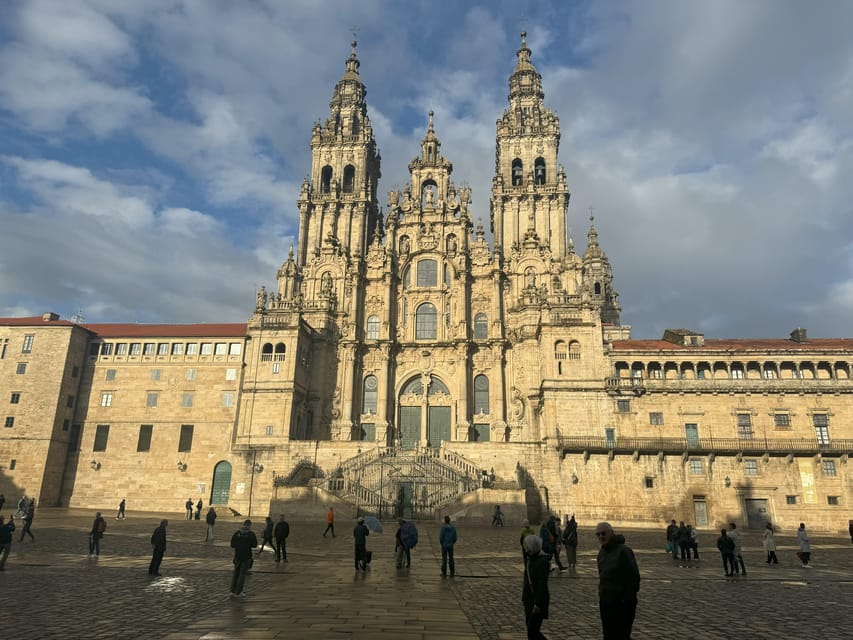
I like the clear museum-to-cathedral route, and I like the guides’ strong command of art, faith, and local history. Guides such as Carmen, Maria, Laura, Miriam, and Elena have earned especially warm praise for explaining difficult subjects in plain English and for making time for questions. The main caution is that the tour may not include a full walk around the exterior facades, and restoration or church activity can affect what you see.
Key points at a glance
- Start with the museum: Art, documents, and cathedral history make the church easier to understand.
- Visit Saint James’s tomb: See the crypt and the reputed burial site at the center of the pilgrimage.
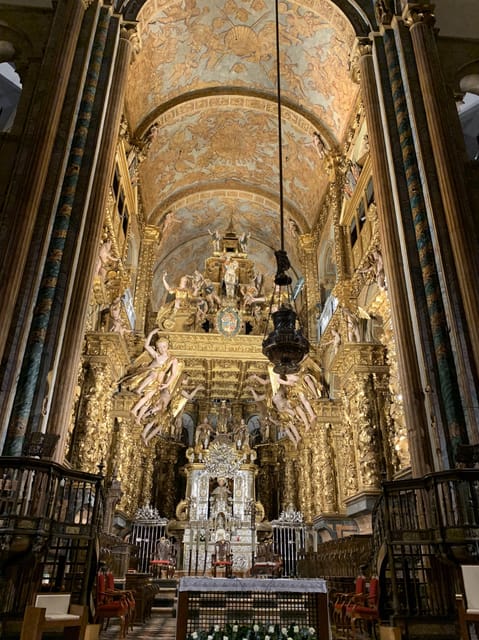
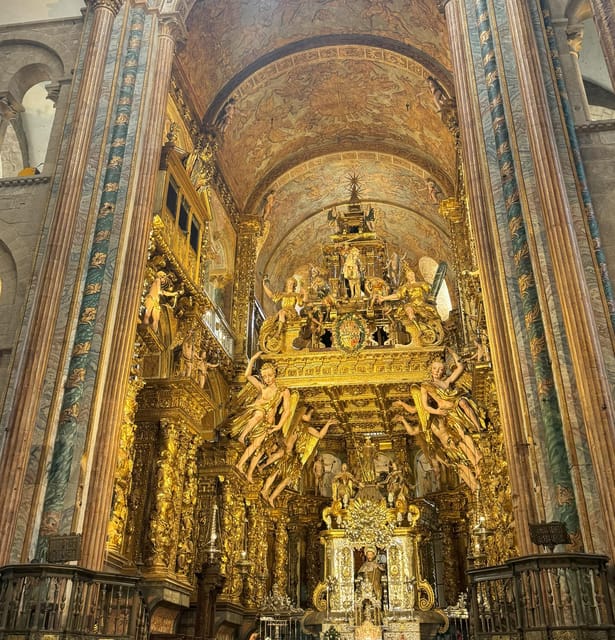
- Look beyond the main altar: The surrounding chapels hold much of the cathedral’s detail and devotional art.
- Expect a strong guide-led experience: Carmen, Maria, Laura, Miriam, and Elena are among the guides praised for clear explanations and warmth.
- Use the queue advantage: A separate entrance can save time, especially on a busy day.
- Pack light: Large backpacks are not allowed, and the tour is not suitable for wheelchair users.
Why a guided visit helps at Santiago Cathedral
You can enter a famous cathedral, admire the columns, and leave with a few good photographs. Santiago rewards more attention than that. Its symbols, chapels, relics, manuscripts, and pilgrimage customs make much more sense when someone points out how they fit together.
I find the museum-first format particularly sensible. You begin with objects and explanations that set up the cathedral’s story, then move into the building with a better idea of what you are seeing. Instead of treating the church as one enormous picture, your guide can give you a sequence: the Apostle, the pilgrims, the artworks, the chapels, and the continuing role of the cathedral.
The tour lasts two hours, long enough for a proper introduction without swallowing your entire day. That matters in Santiago, where you may also want time for the old town, a pilgrimage office visit, a meal, or simply a quiet hour in the square.
The advertised price is $29 per person. For that amount, you get the live guide and admission to the Cathedral Museum, along with cathedral access and a separate entrance for the tour. I consider that good value if you care about context, art, or the religious meaning of the site. If you mainly want a quick look inside and plan to read on your own, the price may feel less essential.
More museums in Santiago De Compostela:
- Santiago: Cathedral & Museum Tour + Pórtico of Glory Option
★ 4.7 · 2,116 reviews - Santiago de Compostela: Cathedral, Museum, and Old Town Tour
★ 4.8 · 382 reviews - Madrid: Prado Museum Entry Ticket
★ 4.6 · 17,509 reviews
The Cathedral Museum comes first
The museum is not just a holding room before the main event. It gives you a way to read the cathedral. Your guide introduces the building’s development, its major artworks, and the role it has played in Santiago and along the Camino de Santiago.
The collection includes sacred art and important documents. The advertised route also includes the famous Codex Calixtinus, a key work connected with the pilgrimage tradition. Its presence helps show that the Camino is not simply a modern walking route. It has a long cultural and religious record, with Santiago at its center.
This is where a good guide makes the biggest difference. Museum objects can be difficult to judge at a glance. A carved figure, ceremonial item, or manuscript may seem interesting but remote. Guides including Alberto, who was described as an art history student, have been praised for explaining both the artistic features and the religious role of the works.
I would ask questions here. One visitor who had already been to the cathedral twice still learned new details from a guide called Miriam. That is a useful warning against assuming you have seen everything simply because you have entered the building before.
Allow your guide to control the pace, but do not be shy about asking what a particular object meant, who used it, or how it connects to Saint James. The museum portion is where the tour can turn a visual visit into an informed one.
Entering the recently restored cathedral
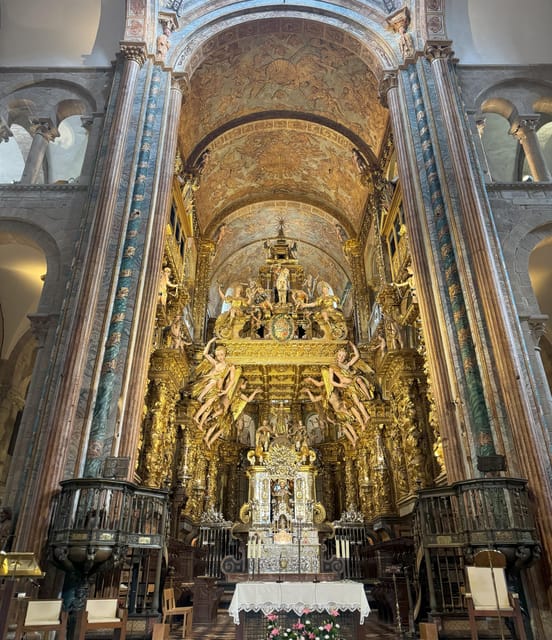
After the museum, the group enters the cathedral. The building has recently been restored, although the exact condition of individual areas can change with ongoing work or church use. Earlier work affected what some visitors could see, so you should treat the itinerary as a strong outline rather than a promise that every corner will look exactly as pictured.
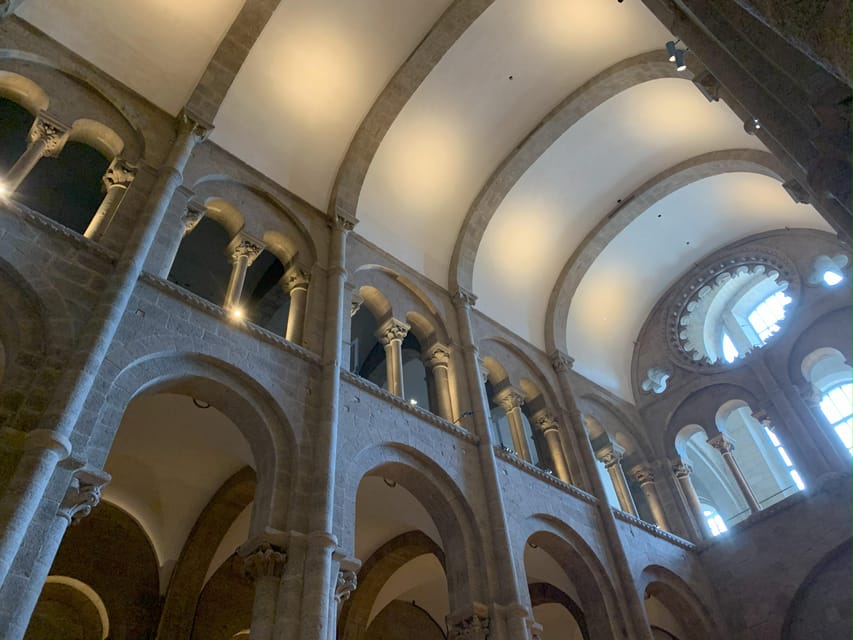
The cathedral’s scale is the first thing you notice. Your guide takes you through the naves and explains the building’s purpose as both a church and a destination for pilgrims. The point is not just to admire the architecture, but to understand why this particular place drew people across Europe for centuries.
The separate entrance is a practical advantage. Santiago can be busy, particularly when pilgrimage traffic is high, and time spent waiting outside is time lost in the city. Skip-the-line access does not mean the church will be empty or silent, but it can make the start of the visit less awkward.
Dress and behavior should match an active religious site. This is not only a museum. Services and devotional activity may shape the atmosphere, and visitors need to follow instructions from staff and the guide.
Saint James, the crypt, and the heart of the pilgrimage
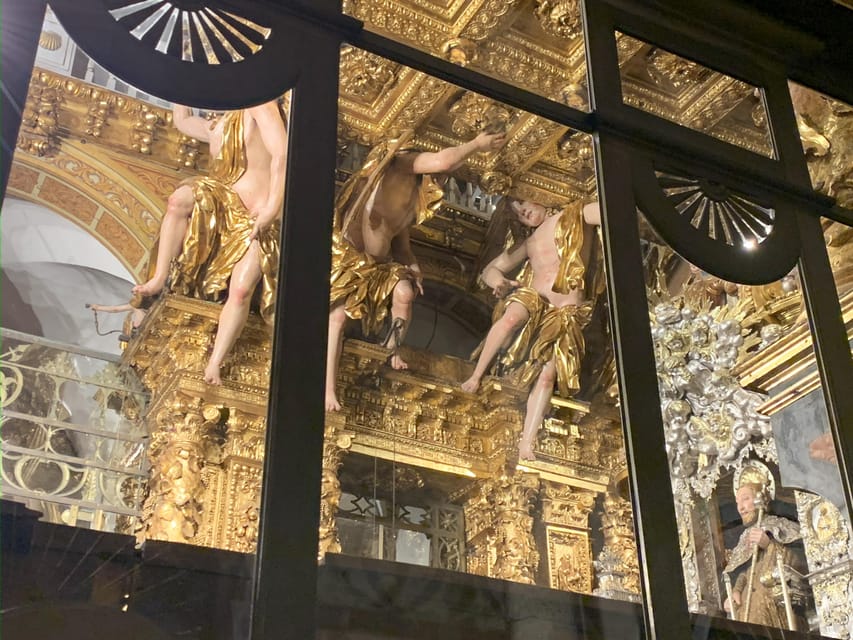
The reputed tomb of Saint James the Great is the focus of the cathedral. The tour includes a visit to the crypt and the burial site, helping you connect the pilgrimage story with a physical place below the church.
The experience also includes the chance to embrace the Apostle Santiago, a long-standing devotional custom associated with the cathedral. For a religious pilgrim, this can be deeply personal. For a visitor with a cultural or artistic interest, it still helps explain why the cathedral is more than a historic monument.
Your guide can place the tomb and the Camino in context, including the importance of Saint James to Spain and to pilgrims arriving from many countries. One guide, Elena, was herself a pilgrim, which added a direct connection to the road and its meaning. You may not get Elena specifically, but guides are offered in English, Spanish, Italian, Portuguese, and French.
The crypt is not a place to rush. The group may need to keep moving, especially during busy periods, but listen closely here. This is the point where the cathedral’s art, architecture, and living religious purpose come together.
A few other Santiago De Compostela outings to compare
- Barcelona: Sagrada Familia Entry Ticket with Audio Guide
★ 4.6 · 105,312 reviews - Barcelona: Park Guell Guided Tour with Skip The Line Entry
★ 4.7 · 17,563 reviews - Barcelona: La Pedrera-Casa Milà Ticket & Audio Guide Option
★ 4.7 · 15,099 reviews - Málaga: Caminito del Rey Guided Tour with Transportation
★ 4.8 · 12,183 reviews
The chapels around the main altar
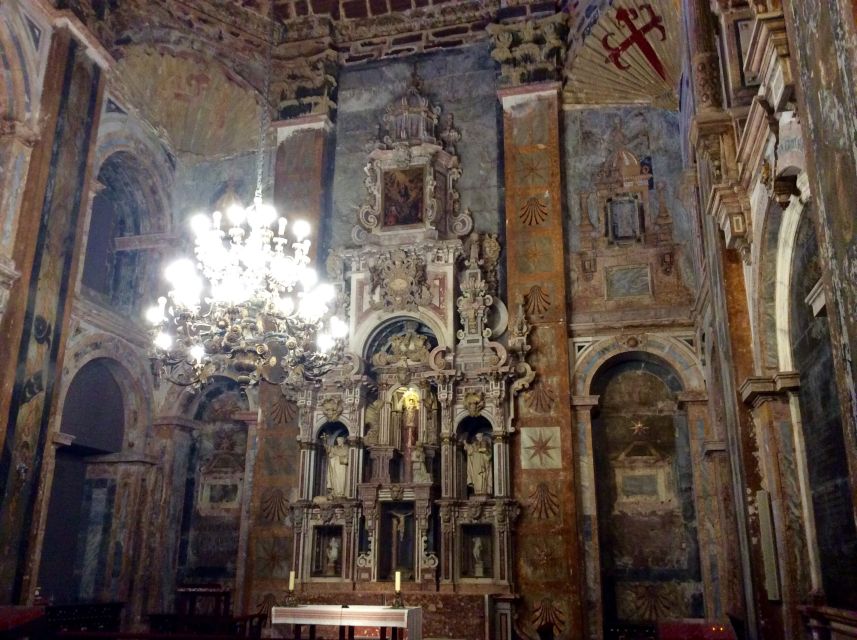
The main altar attracts the eye, but the surrounding chapels deserve your attention. They show how the cathedral developed as a place of worship, commemoration, and pilgrimage, with each space offering its own art and devotional focus.
A guide helps you notice details you might otherwise pass. Sacred art can communicate through posture, gestures, symbols, and placement. Without an explanation, it is easy to admire the gold and color while missing the reason a figure or scene appears where it does.
The tour is designed to cover the decorative chapels around the altar. Since this is an active cathedral, access and pacing can vary. You may not get unlimited time in each chapel, but the guide should point out the major works and explain their place in the church.
I especially value this part for visitors who do not usually visit churches. It gives you a basic reading method: look at the architecture, then the altar, then the side chapels, and finally the movement of worshippers through the space. You begin to see the cathedral as a functioning system rather than a collection of pretty rooms.
Codex Calixtinus, Treasury, and Chapter House
The tour also advertises access to the Treasury and Chapter House, along with the Codex Calixtinus. These stops add institutional and cultural depth to the visit.
The Treasury shows the material side of worship: precious objects, ceremonial art, and the resources gathered around an important cathedral. The Chapter House offers a look at the administrative and communal life behind the public ceremonies. These spaces help explain how a major pilgrimage church operated beyond its nave and altar.
The Codex Calixtinus is especially important for anyone interested in the Camino. Your guide can make a manuscript feel less like an old book behind glass and more like evidence of the routes, customs, and stories that shaped pilgrimage to Santiago.
The precise order can vary by option and by what is open on the day. Still, these additions are a major reason to choose a guided museum and cathedral visit over a quick, self-directed entry. You are not only looking at the building. You are seeing the documents and objects that support its place in European religious culture.
The Botafumeiro and views from the balconies
The famous Botafumeiro is another highlight of the advertised route. This enormous incense burner is one of the cathedral’s best-known symbols, and your guide explains its role and significance.
Do not assume it will be swinging during your visit. The tour promises a look at the Botafumeiro, not a scheduled ceremony or guaranteed demonstration. Even when it is still, learning why it exists and how it belongs to the cathedral’s pilgrimage tradition adds meaning to the object.
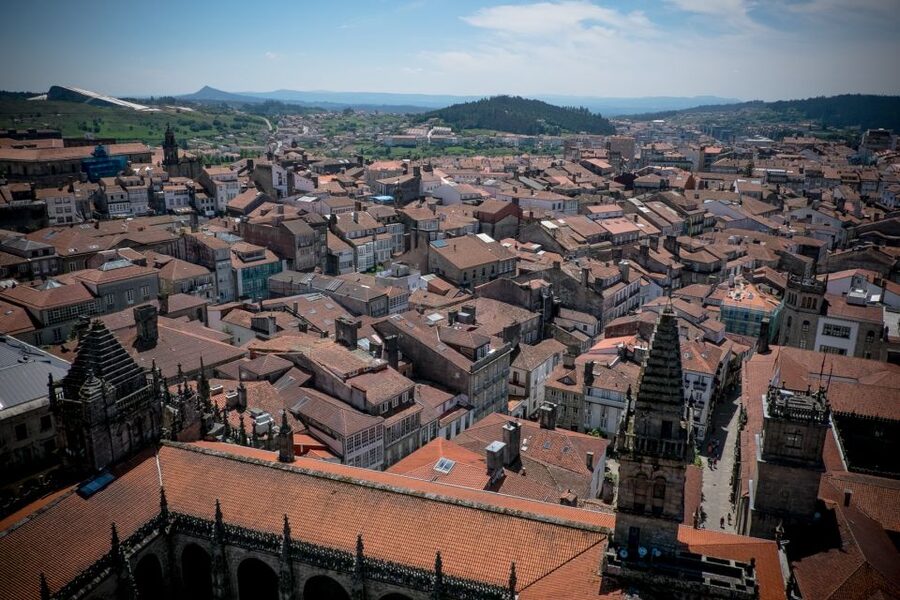
The itinerary also includes views from the balconies. From above, the building’s layout can become easier to grasp, and you may get a different perspective on the naves, chapels, and central spaces. These elevated areas are also a welcome change after spending much of the tour at floor level.
Access to balconies and other special areas can depend on the booked option or conditions on the day. Check the exact option when you reserve. The meeting point may also vary, so do not rely on a generic map pin without reading your booking details.
The cloister and the cathedral’s quieter side
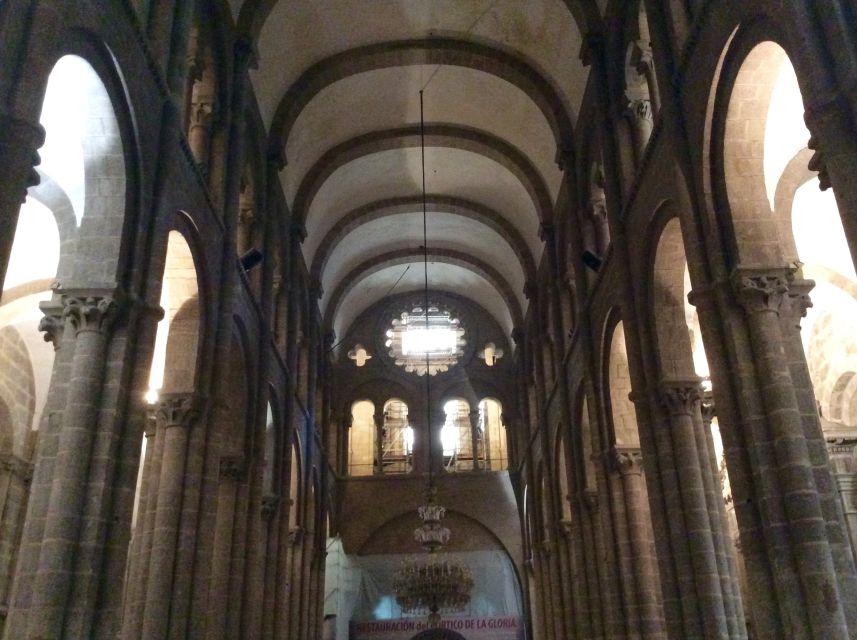
The cloister provides a change of mood from the grand interior. It offers a more contained space for looking at architectural details and reflecting on the cathedral’s religious life.
A guide can explain how the cloister relates to the rest of the complex and point out decorative features that are easy to overlook. It is the kind of place where a short explanation can make you stop and look instead of simply passing through.
The tour’s wide range of stops is useful, but it also creates a timing issue. Two hours is efficient rather than leisurely. If you want to study every object, take long photographs, or sit quietly in each space, you will need to return on your own if permitted.
That is not a flaw so much as a choice. This tour is a structured introduction. It gives you a map of the cathedral, then lets you decide where to spend extra time later.
The guides are the main strength
The strongest pattern in the feedback is the quality of the guides. Carmen is repeatedly praised for her command of Santiago and the cathedral, her friendly manner, and her ability to explain in both English and Spanish. Maria receives similar praise, including for speaking Portuguese well. Laura, Miriam, Elena, and Alberto are also singled out for clear, engaging explanations.
You should expect a guide-led visit rather than a recorded audio route. The listed languages are English, Spanish, Italian, Portuguese, and French. Small-group availability is useful because it makes it easier to hear, ask questions, and stay with the guide inside a large building.
Good guiding matters here because the subject is broad. The cathedral involves art, architecture, Catholic practice, Spanish identity, pilgrimage, local history, and the story of Saint James. The best guides keep those strands connected without turning the visit into a lecture.
The feedback also shows that guide quality can vary by individual. One minor booking complication occurred when additions to a tour were not passed clearly to the guide. It did not ruin the visit, but it is a reminder to check that your booking details and group arrangements are correct.
Practical details before you book
The price is $29 per person, with free cancellation up to 24 hours before the tour and a reserve-now, pay-later option. Those policies are useful if your Camino schedule or arrival time is still moving around.
The meeting point may vary according to the option booked. Read the final booking information carefully, especially since the tour begins at the Cathedral Museum and then moves into the church.
Large backpacks are not allowed. Carry a small bag and keep your belongings simple. The activity is not suitable for wheelchair users, so anyone with mobility needs should confirm the current access situation before booking.
The tour is available in several languages, and a small group may be offered. The exact guide cannot be guaranteed, but the repeated praise for Carmen, Maria, Laura, Miriam, and Elena gives you a sense of the standard to hope for.
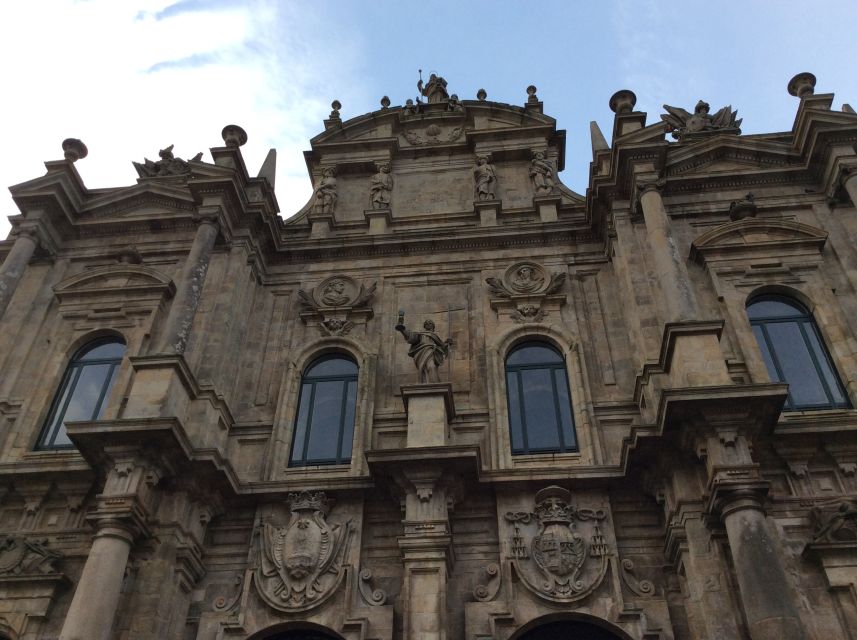
The tour does not appear to focus on a complete exterior tour of the cathedral facades. One visitor specifically noted that this was missing. If the sculpted entrances and outside symbolism are a priority, plan separate time around the building.
Who should book this cathedral tour?
I would book this tour if you are visiting Santiago for one day, finishing the Camino, or seeing the cathedral for the first time. It gives you the essential religious and artistic context in a manageable two-hour visit.
It also suits repeat visitors. A strong guide can reveal details you missed before, as Miriam did for someone who had already visited twice. Art lovers, history fans, and anyone curious about the Camino will get more from the museum and manuscript material than from a quick walk through the nave.
You may skip it if you prefer complete freedom, long quiet pauses, or a simple entrance without commentary. It is also not the right choice for wheelchair users, and visitors carrying large packs need to make other arrangements.
Should you book it?
Yes, if you want to understand why Santiago Cathedral matters, not just photograph it. The museum-first route, the tomb and crypt, the chapels, and the chance to see the Codex Calixtinus make this a well-rounded introduction for $29.
Book it with realistic expectations. The tour lasts two hours, access can change with restoration or church activity, and the exterior facades may need a separate visit. Bring a small bag, confirm the meeting point, choose your language, and ask questions. With a guide such as Carmen, Maria, Laura, Miriam, or Elena, the cathedral is far easier to read and remember.
FAQ
How long does the Santiago Cathedral and Museum Guided Tour last?
The tour lasts two hours.
What is included in the price?
The price includes a guided tour and an entrance ticket to the Cathedral Museum.
Does the tour enter Santiago de Compostela Cathedral?
Yes. The tour begins at the Cathedral Museum and then enters the cathedral.
Can I see Saint James’s tomb?
Yes. The itinerary includes the reputed tomb of Saint James the Great and a visit to the crypt.
Is the Botafumeiro included?
The tour includes a visit to the Botafumeiro. A ceremony or swinging demonstration is not specified.
What languages are available?
Live guides are available in English, Spanish, Italian, Portuguese, and French.
Are large backpacks allowed?
No. Large backpacks are not allowed.
Is the tour suitable for wheelchair users?
No. The activity is listed as not suitable for wheelchair users.
Recently added in Santiago De Compostela
- Tapas Tour of Santiago de Compostela★ 4.5 · 191 reviews
- From Santiago: Rías Baixas Galicia Seafood & Wine Day Tour★ 4.6 · 209 reviews
- Santiago de Compostela: Finisterre, Costa da Morte, Ézaro, Muros & Carnota★ 4.5 · 220 reviews
- Santiago de Compostela: Finisterre, Muxía & Costa da Morte★ 5.0 · 235 reviews
- Masaje del Peregrino★ 5.0 · 243 reviews
- Excursion to Rias Baixas with Winery – Optional mussel boat★ 5.0 · 276 reviews
- Santiago de Compostela: Cathedral, Museum, and Old Town Tour★ 4.8 · 382 reviews
- From Santiago: Tour to Rias Baixas with Boat Trip and Winery★ 4.7 · 400 reviews
Museums, compared.
Park Güell and Gaudí House Museum Entry Ticket
Read the review →
Puro Flamenco Show with Optional Museum Ticket
Read the review →
Girona & Dali Museum Small Group Tour with Pick-up from Barcelona
Read the review →
Oceanogràfic, Hemisfèric & Science Museum Combo
Read the review →
Small Group of Prado Museum Tour & Optional Tapas
Read the review →Browse the lists this tour appears in