
Reviewed · MADRID TOURS
Madrid: Royal Palace Guided Tour with Entry Ticket
The grandest part of this experience is not just the palace’s size. It is the detail at eye level: Gasparini’s ornate chinoiserie room, the dining room still used for state events, Stradivarius violins, and the throne room guarded by Velázquez’s lions. A guide helps turn a parade of lavish rooms into a story about Spain’s monarchy.
I like the small groups of up to eight, which make it easier to hear and ask questions. I also like the skip-the-ticket-line entry and free luggage storage, two very useful touches at a busy Madrid sight. The main consideration is timing: the tour is tightly focused on the palace, so you will not have much time for a slow, independent look at every room afterward.
Key points to know before booking

- See Charles III’s private rooms, including his dressing room, bedroom, and Gasparini’s remarkable rococo-style chamber.
- Walk through the royal dining room, one of the palace spaces still used for important events.
- View major royal collections, including Stradivarius violins, the crown and scepter, the throne room, and the royal armory.
- Start at Calle de la Independencia 2, then walk through Plaza de Ópera and Plaza de Oriente before entering the palace.
- Keep the group small, with no more than eight people and live guiding in English or Spanish.
- Leave large luggage behind, using the included storage service because large suitcases and backpacks are not permitted inside.
Why the Royal Palace deserves two focused hours
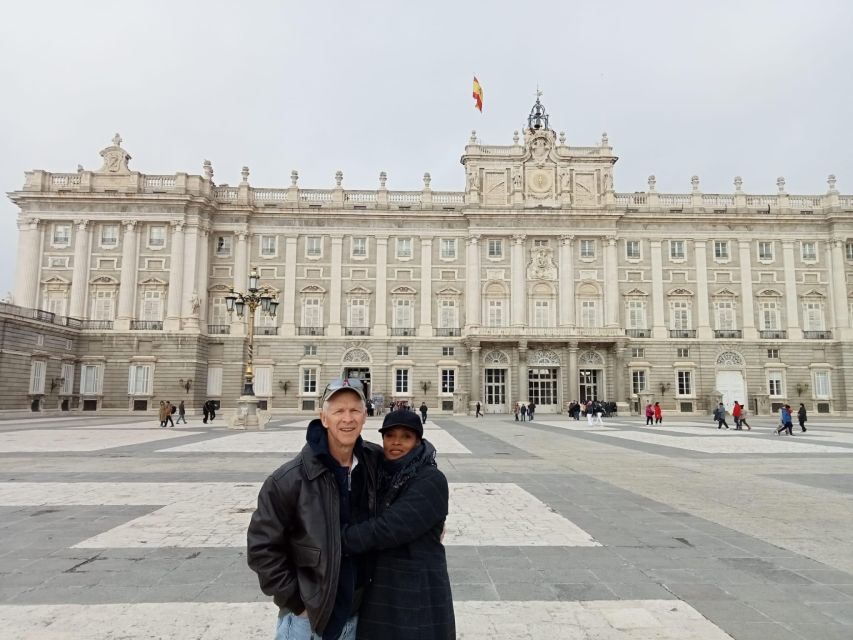
Madrid’s Royal Palace is the largest palace in Europe, and its scale can be hard to grasp from the outside. The guided route gives you a concentrated look at the building’s ceremonial rooms, private chambers, religious spaces, and collections without asking you to sort out the palace’s story on your own.
I find the palace most rewarding when you look past the gold and marble. The building is full of visual clues about royal life: rooms designed for public ceremony, rooms meant for private comfort, and spaces where food, worship, diplomacy, and military display all had their place.
The tour lasts about two hours. That is long enough to cover the main rooms but short enough to fit into a busy Madrid day. You should expect a walking tour inside a large historic building, with stops for explanation and sightseeing rather than a quick escorted entry.
The experience is priced at $38 per person. For that fee, you receive the admission ticket, a live guide, skip-the-ticket-line access, and luggage storage. I consider that fair value if you want context and a planned route, especially when palace lines are long. If you prefer to read at your own pace and linger over individual paintings, a guided visit gives you less freedom.
A few other Madrid outings to compare
- Madrid: Tour Bernabéu Entry Ticket
★ 4.5 · 21,573 reviews - Madrid: Prado Museum Entry Ticket
★ 4.6 · 17,509 reviews - Madrid: Royal Palace Fast-Access Admission Ticket
★ 4.6 · 13,856 reviews
Starting at Calle de la Independencia 2
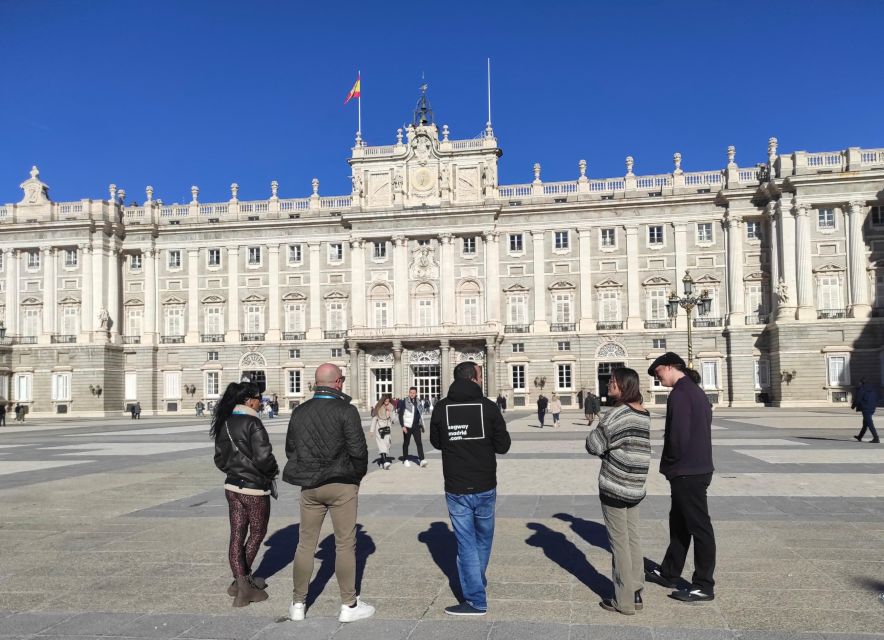
Your meeting point is the Segway Madrid shop at Calle de la Independencia 2. Despite the business name, this experience is a walking tour of the palace. The itinerary does not include a Segway ride.
Allow a little time to find the shop and check in. The route then heads toward Plaza de Ópera, where you pass through for about 10 minutes. This opening stretch helps place the palace within central Madrid, but it is not the main event. Think of it as the walk toward the monument rather than a separate sightseeing stop.
A small group makes this beginning easier. With a maximum of eight participants, the guide can usually keep the group together and answer questions without turning the introduction into a speech for a crowd. Several guides have received especially strong praise for clear English, good pacing, and a lively way of presenting palace history. Jesús and David are names to look for in the guide team, while Natalie and Louis have also led highly regarded tours.
Plaza de Oriente and the palace approach

The group pauses at Plaza de Oriente for about 15 minutes. This is a useful place to get your bearings before entering. You can take photographs and see the palace in relation to the surrounding royal district.
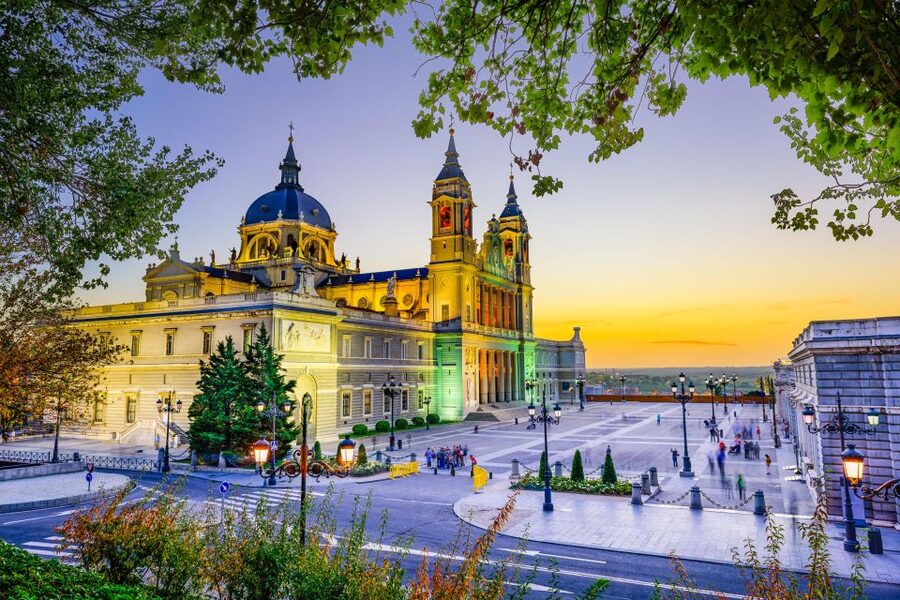
The palace entrance is reached through Plaza de la Armería. From this approach, you get views toward Almudena Cathedral, the Campo del Moro Gardens, and Casa de Campo. These views add helpful context: the palace is not an isolated showpiece but part of a larger royal setting.
I like this pause because it gives you a moment to see the building from outside before moving into its decorated interiors. Once inside, the rooms can arrive one after another in a blur of chandeliers, paintings, furniture, and patterned walls. The exterior stop gives you a visual reset.
The drawback is that this is still a short stop. If you want extended photography around the palace and cathedral, plan another visit on your own. The guided tour keeps moving toward the palace’s interior highlights.
The main staircase and entrance halls
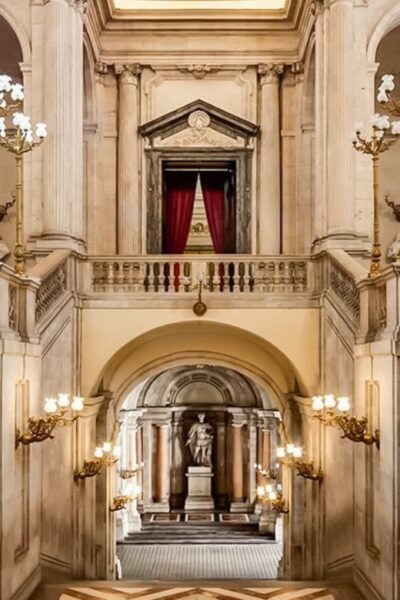
The palace visit begins with the entrance hall and main staircase. This is an appropriate opening because the staircase sets the tone for the entire building. It is built for arrival, ceremony, and display, not for quiet domestic life.
From here, the guide introduces the Spanish monarchy and the kings connected with the palace. That introduction matters. Without it, you may see a grand sequence of rooms but miss the reason each space was designed differently.
The route continues through two rooms once used for leisure and banqueting. Look up as well as around you. The painted vaults are among the details easiest to miss when a group is moving, while the paintings and tapestries help show how royal interiors were decorated before modern walls and lighting changed the way people displayed art.
Your guide’s pacing makes a real difference here. The strongest guides on this experience, including Jesús and David, are praised for being entertaining without rushing. That balance is important in a palace. You need enough explanation to understand what you are seeing, but also a few quiet seconds to take in the room itself.
Same city, a completely different evening:
- Madrid: “Emociones” Live Flamenco Performance
★ 4.8 · 12,866 reviews - Madrid: Panoramic Route City Tour
★ 4.1 · 12,259 reviews - Madrid: Live Flamenco Show with Food and Drinks Options
★ 4.5 · 9,901 reviews - Avila & Segovia Tour with Tickets to Monuments from Madrid
★ 5.0 · 9,762 reviews
Alabarderos Hall and the Hall of Columns
The route includes Alabarderos Hall and the Hall of Columns, two of the building’s principal public spaces. These rooms help explain the difference between a royal residence and an ordinary historic house.
The Hall of Columns is especially important for understanding the palace as a place of ceremony. Its scale and decoration were intended for formal gatherings, not everyday family life. The guide connects the rooms to the monarchy’s public role, so you can see how architecture supported rank and ritual.
The halls are also a good test of group size. In a large tour, it can be difficult to hear while standing in a big echoing room. A group capped at eight gives you a better chance of staying close to the guide. One practical note: a past participant wished for headphones, so if you have difficulty hearing in large spaces, stay near the guide and mention it at the start.
Charles III’s private rooms and Gasparini’s room

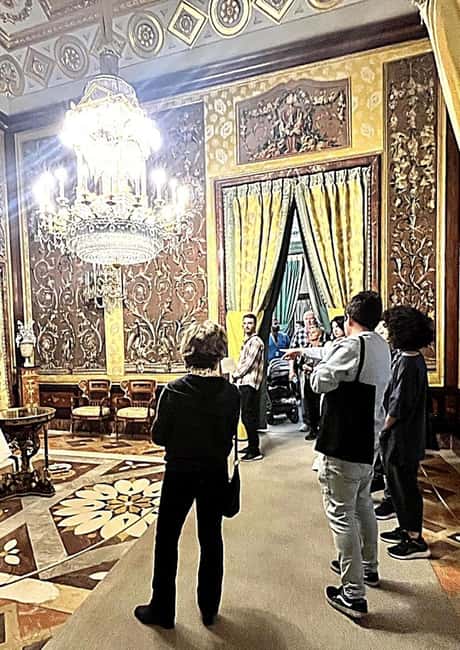
One of the most distinctive parts of the tour is the section devoted to Charles III’s private rooms. You stop near his main dressing room and enter Gasparini’s room, known for its chinoiserie style with rococo influences.
This is where the palace begins to feel less like a stage for public power and more like a personal royal environment. The decoration is highly detailed, with a style that can feel almost playful beside the more formal halls. Gasparini’s room rewards close attention, so do not simply look at the largest object in front of you. Study the surfaces, patterns, and repeated decorative details.
You then see Charles III’s main room. The guide places these chambers within the life of the king, which helps explain why the private rooms differ from the public halls. The contrast is one of the tour’s strongest features.
If your interest is architecture and interiors, this section alone adds real value to the admission ticket. If you mainly want broad palace views for photographs, the ceremonial rooms may make a quicker impression. The guided explanation is most useful here because the rooms are easy to admire but harder to interpret without context.
The royal dining room still used today
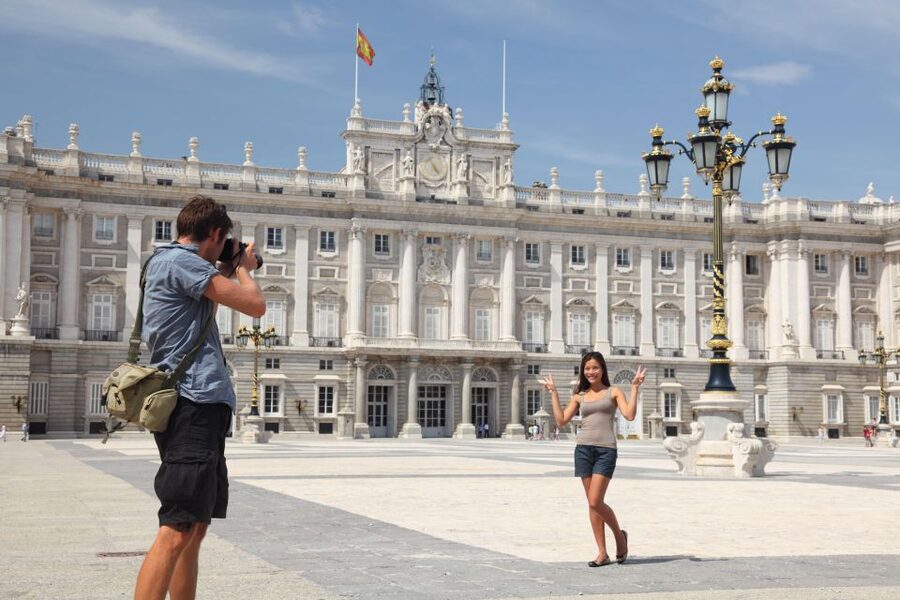
The triple royal dining room is one of the most memorable stops. Unlike many historic interiors, this space is not only preserved for display. It is still used for special events.
That continuing use gives the room a slightly different meaning. You are not looking at a dead period piece alone. You are seeing a formal setting that remains connected to the palace’s official role.
The dining room is also a good place to notice the practical side of royal ceremony. Its scale suggests that meals here were public occasions as much as private ones. The tableware, silver, layout, and decoration all work together to communicate status.
The tour also passes through the silver and porcelain rooms. These chambers contain collections of crockery and silverware. They may appeal most to people who enjoy decorative arts, but even if you normally hurry past table settings, the rooms show how much organization and display went into royal entertaining.
The Prince’s Courtyard, reliquary, and chapel
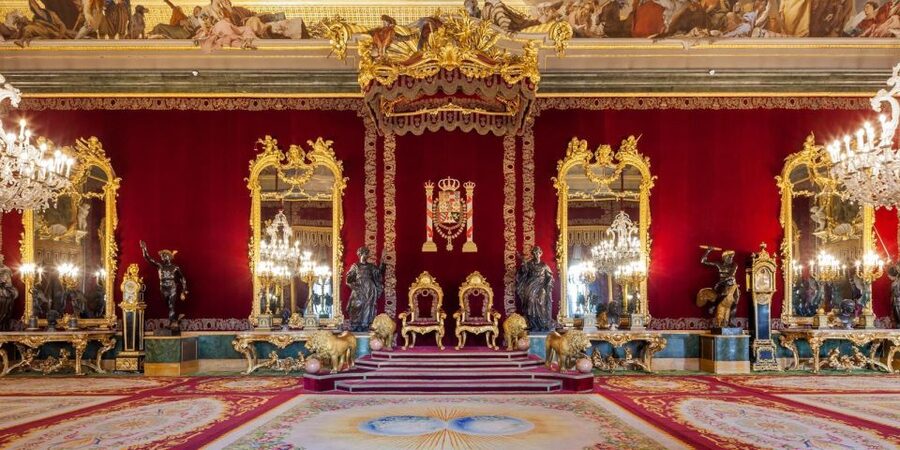
Next comes the Prince’s Courtyard and the palace chapel. The route includes a precious reliquary and the grand chapel, with the Catholic kings at its entrance.
This section changes the mood of the tour. The earlier rooms emphasize state events, court life, and royal comfort. The chapel brings in ceremony of another kind, linked to religious practice and the monarchy’s Catholic identity.
The Prince’s Courtyard provides another change of scale and atmosphere. After a succession of enclosed rooms, an open courtyard gives the eye room to rest. It also helps you understand how the palace is arranged as a working complex rather than just a chain of decorated galleries.
This is a place where a guide’s storytelling matters. The physical objects are impressive, but their purpose and setting are not always obvious. A clear explanation helps you connect the reliquary, chapel, courtyard, and royal household.
The final royal collections
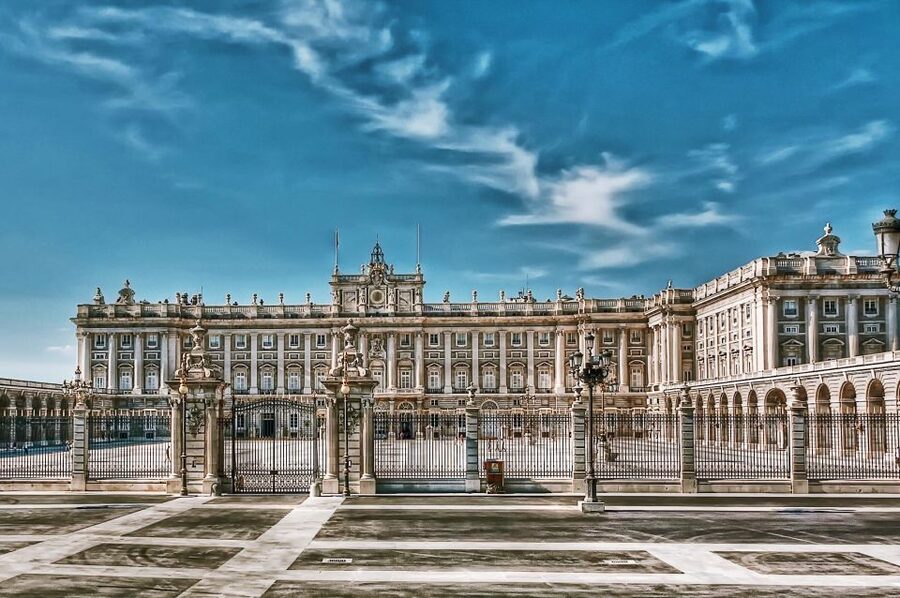
The last chambers hold some of the tour’s most recognizable objects. You see Stradivarius violins, the crown room, the scepter, the table of sphinxes, and the throne room.
The Stradivarius instruments are a particularly appealing stop because they bring a human and musical detail into an otherwise formal visit. They are not just symbols of royal wealth. They also point to the court’s interest in music and performance.
The crown room presents the crown and scepter with the table of sphinxes. These objects make royal authority visible in a direct way. You do not need a long explanation to see their importance, but the guide can help place them within the monarchy’s ceremonies.
The throne room is one of the palace’s headline rooms. Its 12 mirrors and armchairs create a strong sense of repetition and order, while Velázquez’s lions guard the throne. This is the sort of room that photographs well, but the real effect comes from standing inside it and seeing how the furniture, mirrors, and sculpture create a carefully controlled setting.
The route also includes the great royal armory. One particularly useful detail from this experience is that the armory may be included as part of the palace visit rather than treated as a separate add-on. If armor and royal military collections interest you, this adds significant value to the two-hour route.
What the guide adds to the palace
You can admire the palace on your own, but the guide gives the rooms a sequence and purpose. The best guides on this tour are praised for clear English, strong command of Spanish history, patience with questions, and an entertaining style.
Jesús is noted for an interactive approach and a good sense of humor. David is praised for his passion, clear explanations, and ability to give you time to enjoy the rooms without rushing. Natalie has also led a tour that connected palace details with the wider history of Madrid, while Louis is described as friendly and engaging.
That does not mean you can request a particular guide or expect a private visit. Names and group conditions can vary. It does tell you what kind of guiding this experience aims to provide: informative, personal, and conversational rather than a simple escort from room to room.
A few practical points are worth keeping in mind. Tours are offered in English and Spanish. The small group limit is eight people, although capacity changes at historic sites can affect arrangements. One scheduled tour was moved because of palace capacity restrictions, but an alternative time was provided. Keep some flexibility if your schedule allows.
Who will get the most from this tour
I would choose this tour if you are visiting Madrid for the first time, want the palace’s major rooms explained, or dislike spending holiday time in a ticket queue. It is also a good fit for families, since under-18 participants were reported as free on one booking, though you should confirm the current booking terms before paying.
The tour suits you if you enjoy interiors, royal collections, European history, and stories about how official spaces were used. It also works well for travelers who want a structured two-hour visit before moving on to the cathedral, central Madrid, or another museum.
You may prefer a self-guided visit if you want to spend a long time with individual objects, move at your own pace, or return to rooms after seeing the full route. The palace is large, and a guide-led itinerary naturally favors the major highlights over every possible corner.
The tour is wheelchair accessible. That is important in a building with a formal layout and many large rooms. A guide has also been praised for taking care with a wheelchair user, but it is still sensible to mention your needs at check-in.
Large suitcases and backpacks are not allowed inside. The included luggage storage service solves that problem for tour clients, but pack lightly and avoid bringing anything you would rather not leave in storage.
Is $38 a fair price?
At $38, you are paying more than admission alone, but you are buying convenience as well as interpretation. Skip-the-ticket-line entry can save time at one of Madrid’s most popular sights, and the guide helps you understand why the rooms matter instead of simply pointing out their decoration.
The value is strongest when the group is small and the guide is strong. With eight or fewer people, you have a better chance to hear the explanation and ask questions. The reported praise for Jesús, David, Natalie, and Louis suggests that the human side of the tour can make a substantial difference.
The price is less compelling if you already know the palace well or plan to read every label at leisure. In that case, the guided route may feel too fixed. For most first-time visitors, though, the combination of entry, queue savings, luggage storage, and two hours of focused guidance is reasonable.
Should you book the Royal Palace guided tour?
Book it if you want the major royal rooms in one well-organized visit, especially the Charles III chambers, Gasparini’s room, dining room, throne room, collections, and armory. The small group and strong guide focus make it more useful than simply entering and wandering.
I would be cautious only if you need a completely unhurried visit or have a rigid schedule that cannot absorb a possible time change. Otherwise, this is a practical way to see Madrid’s grandest interior without wasting part of your day in line. Arrive at Calle de la Independencia 2 with light luggage, stay close to the guide in the large halls, and save extra time later for independent photographs around Plaza de Oriente.
FAQ
Where does the Royal Palace tour start?
The tour starts at the Segway Madrid store at Calle de la Independencia 2.
How long does the experience last?
The experience lasts two hours. Starting times depend on availability when you book.
Which languages are available?
Live guiding is available in English and Spanish.
Is the Royal Palace ticket included?
Yes. The Royal Palace entry ticket and guided tour are included.
Can I bring a large suitcase or backpack?
No. Large suitcases and backpacks are not allowed inside the palace. Free luggage storage is provided for tour clients.
Is the tour wheelchair accessible?
Yes, the activity is listed as wheelchair accessible. It ends back at the original meeting point.
Recently added in Madrid
- Entrance to the Flamenco Temple Room in Madrid with Tapas Option★ 5.0 · 176 reviews
- Tapas & Paella Cooking Class in Madrid with a Professional Chef★ 5.0 · 177 reviews
- Madrid: Toledo Day Trip with Winery Visit and Wine Tasting★ 4.4 · 177 reviews
- VIP visit to the Las Ventas Bullring in Madrid★ 5.0 · 178 reviews
- VIP Entrance Ticket to Our Secret Alley in Madrid★ 5.0 · 179 reviews
- Madrid: Prado & Reina Sofía Museums Guided Tour★ 4.5 · 180 reviews
- Madrid: Royal Palace tour – semi private or private★ 4.9 · 182 reviews
- Atletico de Madrid Stadium & Interactive Museum Admission Ticket★ 4.5 · 183 reviews
Madrid Tours, compared.


Live Flamenco Show with Food and Drinks Options
Read the review →
Avila & Segovia Tour with Tickets to Monuments from Madrid
Read the review →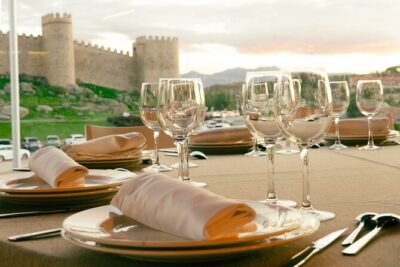
Three Cities in One Day: Segovia, Avila and Toledo from Madrid
Read the review →
Segovia and Toledo Tour, Alcazar, and Cathedral
Read the review →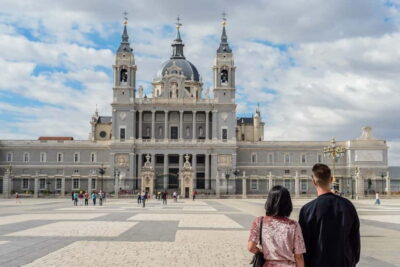
Royal Palace Expert Guided Tour with Skip-the-Line
Read the review →Browse the lists this tour appears in