Reviewed · BARCELONA TOURS
7-Day Tour of the French Way of Santiago from Sarria
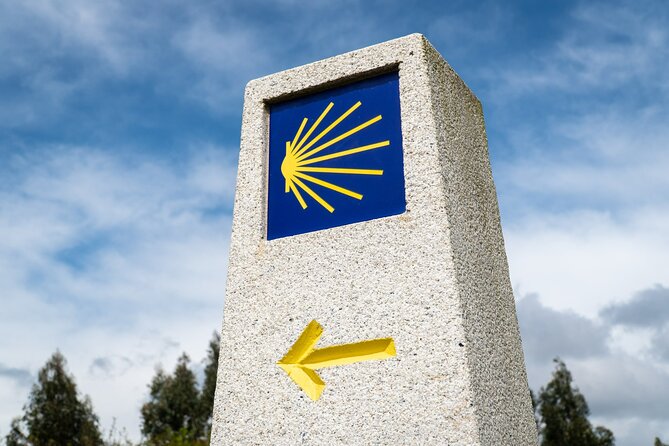
The best thing about this seven-day Camino is that it gives you the full pilgrim finish without asking you to carry your life on your back. You walk from Sarria through Galicia’s forests and villages to Santiago de Compostela, while your main luggage moves ahead to the next accommodation. I especially like the official credential, which lets you collect stamps along the way, and the chance to finish at the Plaza del Obradoiro after covering the final 100 kilometers on foot.
I also like the steady mix of nature and local life: the Belesar reservoir near Portomarín, the Romanesque church at Vilar de Donas, the octopus of Melide, and the Arzúa-Ulloa cheese all give the route character. The main caution is the mileage. The 29-kilometer stage from Palas de Rei to Arzúa is a real test, and accommodation quality can vary, so you should confirm the hotel category and support arrangements before paying.
Key points to know before you book
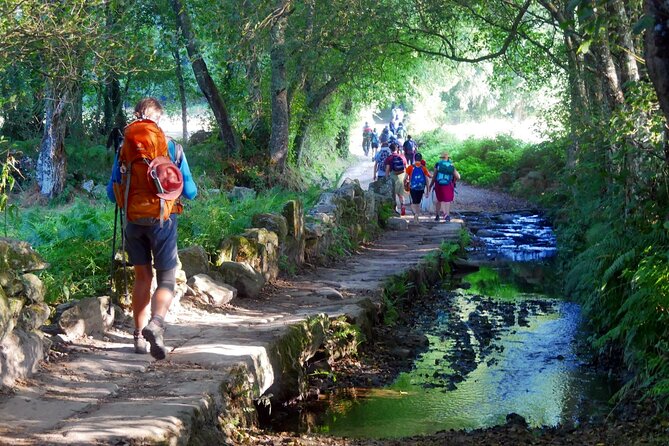
- The route covers Sarria to Santiago: You walk the final section of the French Way in Galicia over six walking days, with a final farewell day in Santiago.
- Luggage transfers are included: Your main bag travels between stages, leaving you with a lighter daypack.
- The longest day reaches 29 kilometers: The Palas de Rei to Arzúa stage deserves a slow pace and sensible preparation.
- Six breakfasts are provided: Lunches, dinners, flights, and other meals are your responsibility.
- You receive a pilgrim credential: Stamp it along the route and use it when collecting your Compostela in Santiago.
- The experience is private and self-guided: Your group travels on its own rather than joining a large shared walking party.
What this seven-day Camino package really gives you
At $1,143.30 per person, this is not simply a walking route with a map. It is a logistics package designed to remove the chores that can make a long-distance pilgrimage harder than it needs to be. Luggage transport, breakfast, travel insurance, and the pilgrim credential are included. The tour is offered in English, uses a mobile ticket, and begins in Sarria at 8:00 a.m.
The important detail is that flights are not included. You also need to check the accommodation terms carefully. The package information describes you arriving in Sarria and settling into accommodation, and the arrangements include hotel stays in practice, but it does not clearly state a hotel category in the core inclusions. Ask for the names or types of properties, room arrangements, and any supplements before booking.
This is a self-guided walk, not a daily escorted hike. That is good news if you want freedom and quiet time. You set your own pace, stop for coffee when you like, and can spend longer at a church or village. It also means you need to follow the route instructions, keep track of your belongings, and use the correct emergency contact if something goes wrong.
Support has been described as a strong part of the service, including help with injuries and luggage movement. Hugo and Momo are named as warm and supportive members of the wider trip team. Still, make sure you know which number to call during the walk. Regular office communication and the 24-hour emergency line are not necessarily the same thing.
What else fills a Barcelona itinerary:
- Barcelona: Sagrada Familia Entry Ticket with Audio Guide
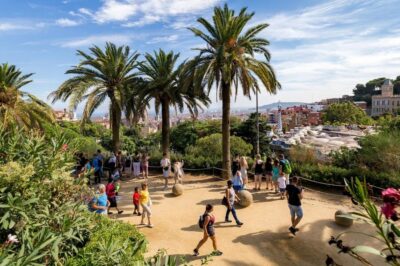
★ 4.6 · 105,312 reviews - Barcelona: Park Güell Admission Ticket
★ 4.4 · 76,534 reviews - Barcelona: Casa Batlló Entry with Self-Audioguide Tour
★ 4.7 · 25,359 reviews
Day 1 in Sarria: a useful pause before walking
You arrive in Sarria independently, so the first day is not a guided transfer or sightseeing day. After checking in, you can walk the old streets, explore the cobbled center, or sit beside the river along the Malecón promenade.
This quiet opening is valuable. A long walk goes better when you are not rushing from an airport or train straight onto the trail. Use the day to collect your credential, organize your daypack, check your walking shoes, and get mentally ready.
Sarria is also where the pilgrimage atmosphere becomes very real. You will see other walkers preparing for the same route, but you still have room to enjoy the town at your own speed. Since the day is largely free, budget for your own meals and any transport needed to reach Sarria.
Day 2: Sarria to Portomarín through Galicia’s green interior
The first walking stage leads toward Portomarín through woods, rivers, pastures, and small rural settlements. The route is described as comfortable, with relatively few steep sections, making it a sensible introduction to the week.
Along the way, you can stop at the churches of Ferreiros and Barbadelo. These are not detached museum pieces. They appear in the middle of the walking day, alongside farm roads and village life, which is part of the appeal of the Camino.
The Belesar reservoir comes into view before Portomarín. It gives you a clear sense that the day is nearing its end, though the final kilometers may still feel long if this is your first full day with a pack and walking shoes.
Portomarín has an unusual story. The old town was moved uphill when the Belesar reservoir flooded the original site beside the Miño River. In clear conditions, you may be able to see traces of the former town below the water. Once in the modern settlement, save time for a meal and an easy evening rather than trying to do too much sightseeing.
The listed walking time is about five hours, but breaks and your pace will determine the actual length of the day. Keep your daypack light. Your transferred luggage is one of the most useful parts of this arrangement.
Day 3: Portomarín to Palas de Rei, with Celtic and Romanesque stops
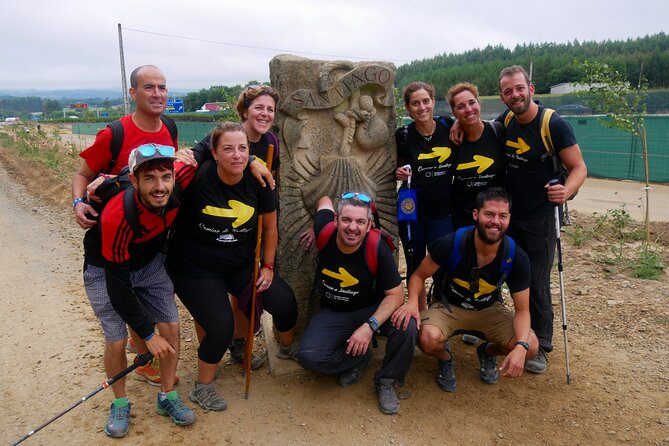
This 25-kilometer stage mixes road and mountain terrain. It is more demanding than the opening day because of several climbs, but it rewards you with cultural stops that make the walking feel purposeful.
A small detour leads to Castro de Castromaior, a Celtic settlement that points to Galicia’s pre-Roman past. If you enjoy archaeology, this is one of the route’s most interesting interruptions. If your feet are already sore, the detour may require a choice between seeing the site and preserving energy for the rest of the day.
The monastery and church of Vilar de Donas are another worthwhile stop. The church is a major local example of Romanesque architecture and was declared a National Monument in 1931. The route is not only about reaching Santiago. Places like this give you a reason to lift your eyes from the trail markers.
Palas de Rei has services for rest, food, and supplies. It also has archaeological remains associated with castreja culture, including mámoas, dolmens, and castros. You may not see every site during a single evening, but the town gives context to the older layers of Galicia.
Plan this day with care. The package description gives about five hours, yet 25 kilometers with climbs can take longer depending on stops and fitness. A relaxed pace matters more than arriving early.
A few other Barcelona outings to compare
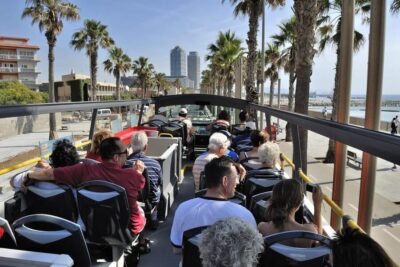
- Barcelona: 24 or 48-Hour Hop-On Hop-Off Bus Tour
★ 4.4 · 20,872 reviews - Barcelona: Park Guell Guided Tour with Skip The Line Entry
★ 4.7 · 17,563 reviews - Barcelona: La Pedrera-Casa Milà Ticket & Audio Guide Option
★ 4.7 · 15,099 reviews - Barcelona in 1 Day: Sagrada Familia, Park Guell,Old Town & Pickup
★ 5.0 · 13,541 reviews
Day 4: the long walk from Palas de Rei to Arzúa
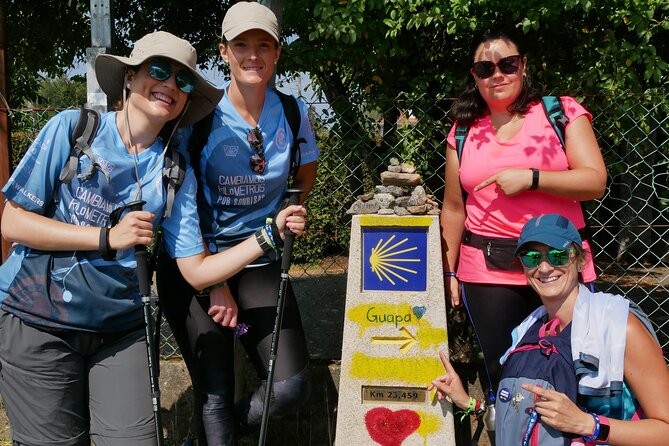
At 29 kilometers, this is the longest stage in Galicia on this version of the French Way. Treat it as the week’s main physical challenge, not as an ordinary walking day.
The route moves through dirt paths, thick woods, and medieval bridges as you continue toward Santiago. The scenery is considered among the most attractive on the route, but beautiful surroundings do not shorten the distance. Start with enough time, carry water, and plan regular pauses.
Melide is the essential food stop. It is known as the Galician capital of octopus, and tasting pulpo in one of its food shops is part of the local experience. This is a good place to restore your energy before the final kilometers.
Arzúa is known for its cheese, especially Arzúa-Ulloa, which has a protected designation of origin. Try it with other local products if you still have an appetite after the long walk.
The walking estimate is about six hours, but many people will need more time. If a 29-kilometer day worries you, ask in advance if the route can be divided. A previous arrangement was modified for a person with an injured knee, extending the walk over more days with 10 to 15 kilometers per day. That does not guarantee the same option here, but it is worth asking before you commit.
Day 5: Arzúa to O Pedrouzo and the value of an easier day
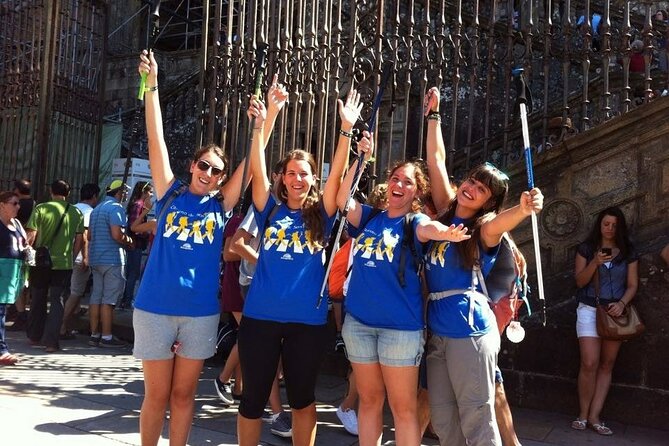
After the longest stage, the shorter walk to O Pedrouzo is welcome. The terrain is described as flat and comfortable, with plenty of bars, shops, and places to stop.
This is the kind of day when you can let the Camino breathe. You do not have to hurry from one landmark to the next. Walk steadily, take a proper break, and look after your feet before the final approach to Santiago.
The traditional plan is to arrive in O Pedrouzo, eat, and go to bed early. That makes sense. Santiago is close, and an early start helps you reach the city with enough time for the pilgrim mass and sightseeing.
The walking estimate is about six hours, though the route itself is shorter and less complex than the previous stage. Use the easier ground to recover rather than turning the day into a race.
Day 6: entering Santiago through Monte do Gozo
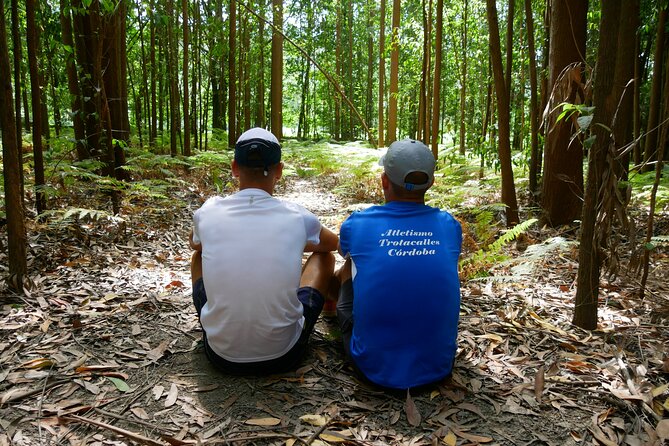
The final walking stage to Santiago is relatively short and not considered difficult. The emotional high point comes at Monte do Gozo, where the cathedral towers first come into view in the distance.
That first sight matters because the route changes from a rural walk into a city arrival. You descend toward Santiago, pass from quiet paths into streets, and eventually reach the Plaza del Obradoiro. This is the moment when the week’s blisters, tired legs, and early mornings suddenly feel worthwhile.
Get up early if you want to attend the pilgrim’s mass and still have time to explore. After reaching the city, you can stamp your credential and collect your Compostela. The official certificate is a practical reward for completing the required route, while the credential becomes a personal record of your walk.
Santiago deserves more than a quick photograph. Walk through the old center, stop for a beer and a tapa, and try a local liquor if that appeals to you. A foliada, with singing and dancing, is another part of the city’s Galician character. The old streets are especially atmospheric in the rain, when the stone takes on a dark shine.
Day 7: one more morning in Santiago
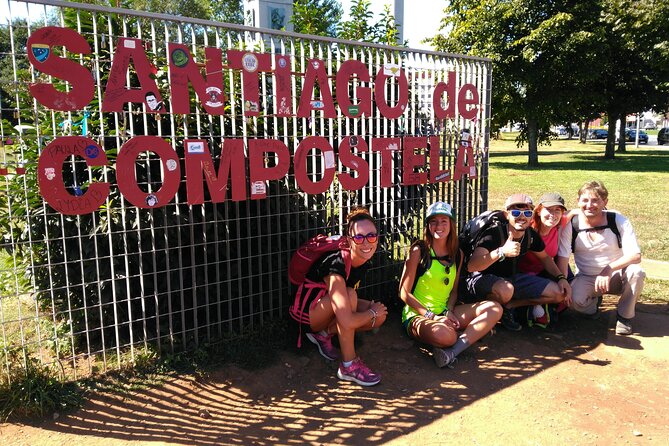
The final day is a farewell day rather than another walking stage. You have completed the French Way section from Sarria, and you can leave Santiago, spend an extra day in the city, or continue toward Finisterre.
That flexibility is useful when arranging flights. It also lets you decide how much time you want for the cathedral area, the old center, food, and rest. After six walking days, a slower morning may be exactly what you need.
The finish can feel larger than the distance itself. You arrive with a credential full of stamps, a Compostela in hand, and a week of small encounters and physical effort behind you. The tour gives you a framework, but what you take from the walk depends on how much space you leave for unplanned moments.
Luggage, lodging, meals, and support
Luggage transport is the clearest practical benefit. You walk with only what you need for the day, which makes the route more manageable and can be especially helpful if you have a knee problem, are older, or simply do not enjoy carrying a heavy pack.
Six breakfasts are included. You should plan separately for lunch, dinner, snacks, drinks, and any extra nights in Santiago. Galicia is a good place to eat, but food costs are not covered by the listed package price.
Accommodation is the area where you should ask the most questions. Properties can vary in quality in rural towns, even when the package is sold at a higher level. Some arrangements use pensions or small local properties, and one previous stay was reported as being about one kilometer outside a village because central hotel choices were limited. That is not necessarily a problem, but you should know where you will sleep before you book trains or flights.
The support record is mixed enough to warrant care. Pre-trip planning, route materials, luggage movement, and help after an injury have been handled well in some arrangements. At the same time, one account described unanswered messages, a nonworking emergency number, and accommodation with no hot water. The provider disputed that account and said the correct emergency line is staffed and separate from regular office communication.
The practical lesson is simple: save the emergency number from your travel documents, ask when office support is available, and confirm the accommodation standard in writing.
Is $1,143.30 good value?
The price can be fair if you value convenience more than finding the lowest possible cost. You are paying for organized stage-to-stage luggage movement, six breakfasts, travel insurance for foreign participants, a credential, and accommodation arrangements that would otherwise take time to manage yourself.
The price is less attractive if you are comfortable booking small inns on your own or carrying your luggage. Since flights and most meals are excluded, your final cost will be higher than the headline figure.
The package also gives you peace of mind during a busy season, when finding rooms in every town can be difficult. That benefit is real, especially for a first Camino or a trip involving older family members. But value depends heavily on the actual lodging. Ask for the property list, room type, distance from town centers, and rules for changing stages before you decide.
Who should choose this Camino?
This tour suits you if you want the meaning and atmosphere of the Camino without managing every reservation. It works well for solo walkers who like meeting people along the route but prefer private arrangements, and for families or friends who want their bags transported.
It can also suit older walkers, but only with an honest look at the distances. The 29-kilometer day may be too much for some people, and the route includes hills even when the overall terrain is manageable. A modified schedule may be possible, but you need to request it ahead of time.
I would not choose this package if you want a daily guide, a tightly planned sightseeing program, or luxury hotels guaranteed at every stop. You are buying an organized pilgrimage, not a polished resort holiday.
Should you book it?
Book this tour if you want to walk from Sarria to Santiago with the major practical tasks handled for you. The route has strong cultural stops, good food traditions, a moving finish, and useful luggage support. Its 4.8 rating and 97 percent recommendation rate suggest that the overall formula works well for most people.
Before booking, get the accommodation list and confirm the emergency contact procedure. If the 29-kilometer stage concerns you, ask about splitting it before committing. With those points settled, this is a sensible way to experience the final section of the French Way, especially for a first-time pilgrim who wants structure without a daily guide.
FAQ
Where does the tour begin?
The tour begins in Sarria, in Lugo province, Galicia, Spain. You make your own way there and settle into the accommodation.
Where does the tour end?
The walking tour ends in Santiago de Compostela, in A Coruña province. You can then go home, stay another day in Santiago, or continue toward Finisterre.
How long is the tour?
The experience lasts approximately seven days. There are six walking days from Sarria to Santiago, followed by a final day in Santiago.
Is luggage transportation included?
Yes. Luggage transportation between stages is included, so you can walk without carrying your main luggage.
Are meals included?
Six breakfasts are included. Flights, lunches, dinners, and other meals are not listed as included.
Do I receive a pilgrim credential?
Yes. The package includes an official pilgrim credential for collecting stamps at each stage.
Is this a private guided tour?
It is a private activity for your group, and no other group participates with you. The walking is self-guided rather than a daily escorted tour.
Recently added in Barcelona
- Barcelona: Catamaran Cruise w/ Sailing, Wine, & Tapa★ 4.7 · 176 reviews
- Guided Gaudí Trencadís Mosaic Workshop in Barcelona 2 Hours★ 5.0 · 176 reviews
- Barcelona Cable Car Sky Views, Magic Fountain & Castle Visit★ 4.2 · 177 reviews
- Barcelona Private Sunset Sailing with Drinks★ 5.0 · 177 reviews
- Barcelona: Montserrat with Winery Visit and Farmhouse Lunch★ 4.7 · 178 reviews
- Barcelona: Nightmare Horror Museum Maze Entry Ticket★ 4.5 · 179 reviews
- Barcelona: City Sights Electric Quad Tour★ 4.8 · 178 reviews
- Barcelona: Professional Photoshoot Outside Sagrada Familia★ 4.8 · 179 reviews
Barcelona Tours, compared.
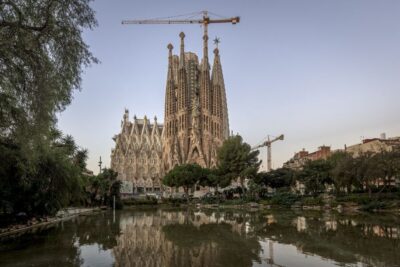
Sagrada Familia Entry Ticket with Audio Guide
Read the review →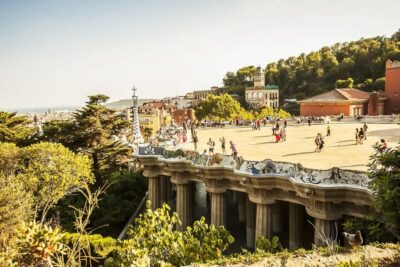
Park Guell Guided Tour with Skip The Line Entry
Read the review →La Pedrera-Casa Milà Ticket & Audio Guide Option
Read the review →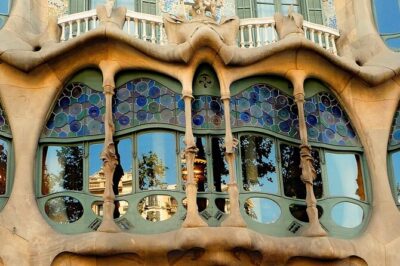
Barcelona in 1 Day: Sagrada Familia, Park Guell,Old Town & Pickup
Read the review →