
Reviewed · HISTORICAL TOURS
Tarragona: Roman Heritage Guided Walking Tour
Tarragona’s Roman past is not locked away in one grand ruin. It is woven into the modern city, with ancient walls beside daily streets, Circus vaults below the old center, and an amphitheater facing the Mediterranean. This two-hour walk gives you a clear route through that unusual mix.
I like the small price of $17, especially since the Circus entrance is included. I also like the city model and 3D display, which help you picture buildings that are now only partly visible. The main drawback is time: two hours can feel tight, especially when groups are large or the guide needs to speak to a mixed-language crowd.
Key points to know before you book
- The Roman walls begin the story: You learn why Tarragona’s hill was chosen as Rome’s gateway to the Iberian Peninsula.
- The Circus vaults bring ancient sports to life: The tour connects the surviving underground spaces with chariot racing.
- The modern city sits on top of Roman Tarragona: Streets, homes, and squares overlap the old city plan.
- The seaside Amphitheater is the visual finale: Its setting beside the Mediterranean gives the last stop real impact.
- Adrià is one guide you may encounter: His explanations are delivered in Catalan or Spanish, with a clear, warm style.
- Two hours moves quickly: Comfortable shoes matter, and large bags are not allowed.
Starting beside Tarragona’s oldest Roman walls
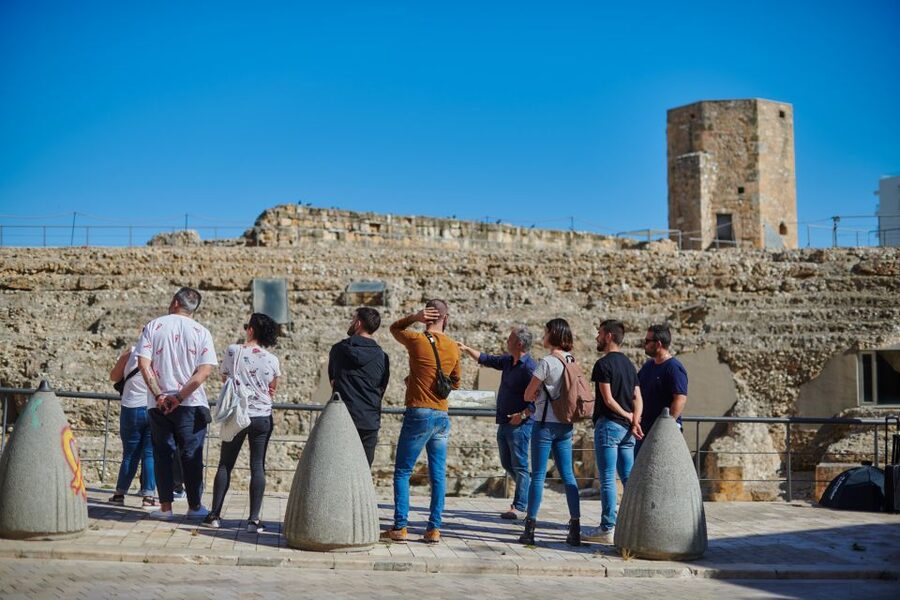
You meet at the Itinere office next to the Roman walls, arriving 10 minutes before the scheduled start. That location is useful. You begin beside one of the city’s most important Roman remains rather than spending half the tour walking to the first sight.
The walls were built when Rome established Tarraco as a major base on the Iberian Peninsula. The tour explains why this hill mattered: it sits beside the Mediterranean, giving Rome a practical gateway into the peninsula. You are not simply looking at old stone. You are seeing the first piece of a much larger military and political plan.
These are described as the oldest Roman walls outside Italy, a detail that gives the opening stop unusual weight. The walls also set up one of Tarragona’s main pleasures: the ancient city is not separated from modern life. You may be looking at Roman masonry while ordinary streets and houses continue behind it.
An official city guide leads the walk. The available guiding languages are Catalan and Spanish, so you should be comfortable following one of those languages. Adrià has led sessions with especially clear explanations, using both historical facts and local pride without turning the opening talk into a dry lecture.
More historic sites in Salou:
- Madrid Essential: Historic Center, Plaza Mayor & Royal Palace
★ 5.0 · 6,416 reviews - Barcelona: Tapas Walking Tour with Food, Wine, and History
★ 4.8 · 4,261 reviews - Sevilla Food Tour: Tapas, Wine, History & Traditions
★ 5.0 · 3,468 reviews
Reading Roman Tarragona through the city model
From the walls, the tour moves into Tarragona’s historic center. Here, the Roman remains are less likely to appear as one complete monument. Instead, they are folded into the city around you.
That can be harder to understand on your own. A fragment of wall, a buried structure, or a change in street level does not always tell you what stood there 2,000 years ago. The large city model solves that problem. Your guide uses it to show how Tarragona looked in Roman times and to explain the purpose of its main buildings.
I find this one of the most useful parts of the walk because it gives you a mental map. The Roman city becomes a working place rather than a collection of stones. You learn how its buildings related to each other and how the modern center has grown around them.
The model also helps explain why Tarragona requires a different approach from a single-site visit. In Rome, you can spend hours inside one famous ruin. In Tarragona, the story is spread across the city. The model pulls those pieces together before you see the next major remains.
The tradeoff is pace. With only two hours, the guide cannot linger at every corner or explain every visible fragment. If you enjoy stopping for close inspection, note the places you want to revisit later and return after the tour.
Descending into the Circus vaults
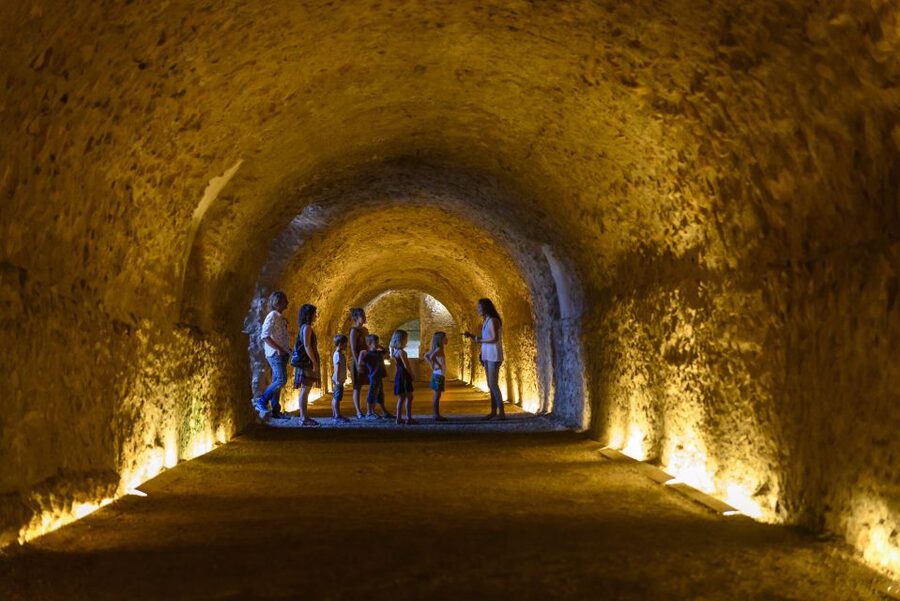
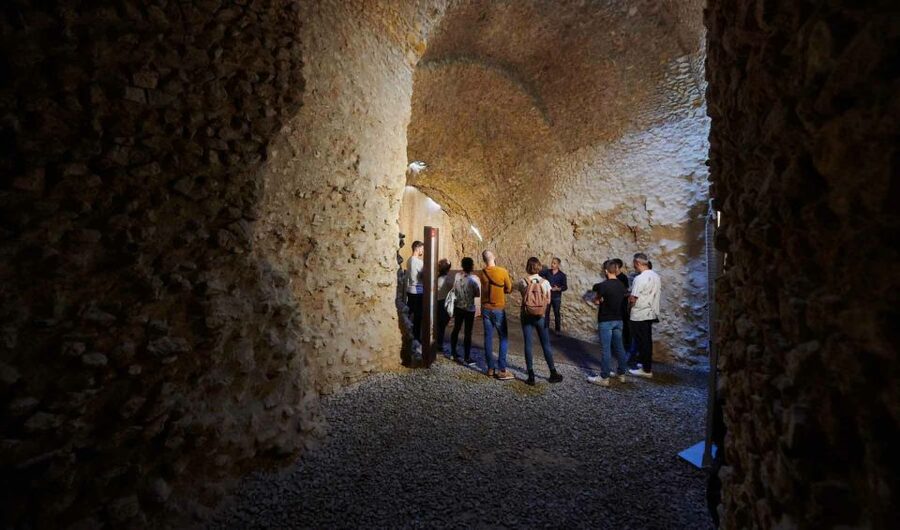
The Circus is where Tarragona’s Roman entertainment becomes especially tangible. The included entrance takes you into the Circus vaults, spaces connected with the stadium where chariot races took place.
The vaults matter because they reveal the support system beneath the public spectacle. Above them, crowds once watched racing. Below or within the structure, the architecture helped hold up the arena and shape movement through the complex. The tour uses these spaces to help you picture the excitement of chariot racing without relying only on a modern reconstruction.
This is not just a quick photo stop. The guide connects the surviving vaults with the function of the Circus, allowing you to understand why the building was so important to Roman city life. The focus is on the races and the way the stadium worked, rather than on a long list of dates.
You should wear comfortable shoes. The activity is a walking tour, and the route includes historic spaces as well as city streets. Large bags and luggage are not allowed, so leave your suitcase elsewhere before arriving. That rule is practical in a historic site, but it means this is not a convenient first activity immediately after arriving by train or before heading to another destination with all your bags.
The Circus stop is also where the tour offers good value. At $17 per person, an official guide plus entry to one major Roman site is a modest cost. If you want a long archaeological lecture or access to every Roman site in Tarragona, this is not that product. If you want a guided introduction with one included interior visit, the price is fair.
Using 3D images to rebuild the missing city
Before heading to the Amphitheater, you watch an audiovisual exhibit with 3D images. This is a smart bridge between the partial remains you see in the streets and the buildings that once filled the Roman city.
Ancient sites often leave you with a problem: you can see what survived, but not always what the complete structure looked like. The visual presentation gives you a stronger sense of scale, shape, and use. It is especially helpful after the city model, since you have already been introduced to Tarragona’s Roman plan.
The display also gives the tour a change of rhythm. Instead of walking and listening continuously, you get a visual explanation before the final outdoor monument. One recent German-language visitor singled out the Tarragona video as a favorite part of the experience, which makes sense for anyone who learns more easily from images than from spoken description.
Still, keep your expectations sensible. The provided information describes an audiovisual exhibit with 3D images, not a full virtual reality attraction. Think of it as a concise interpretive tool that helps you see the ancient city more clearly.
More walking tours in Salou:
- Barcelona Tapas and Wine Experience Small-Group Walking Tour
★ 5.0 · 5,804 reviews - Granada: Albaicín and Sacromonte Guided Sunset Walking Tour
★ 4.9 · 2,962 reviews - Toledo Tour & Vineyard Walk with Wine Tasting from Madrid
★ 5.0 · 2,546 reviews - Madrid Walking Tour from Puerta del Sol to Retiro Park
★ 5.0 · 2,285 reviews
Finishing at the Amphitheater beside the sea
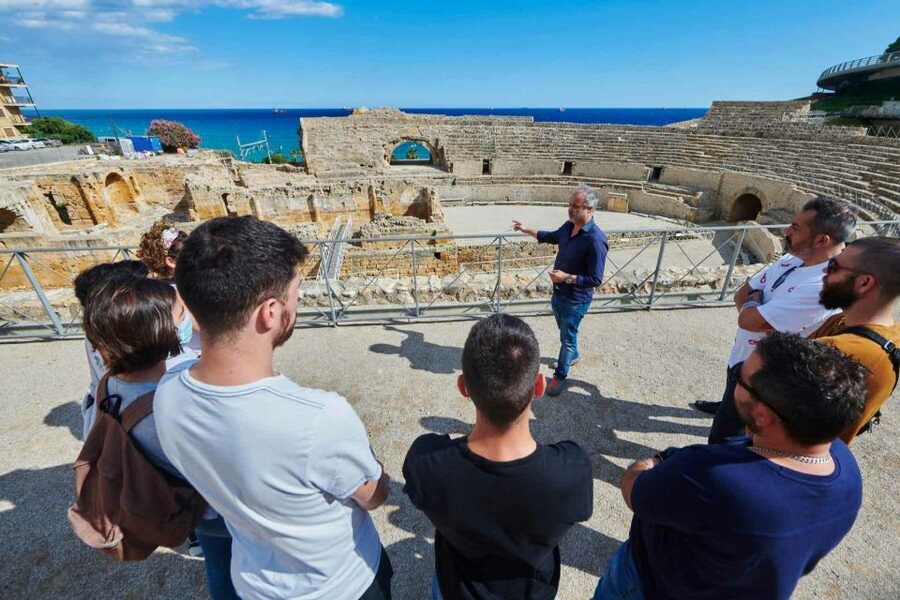
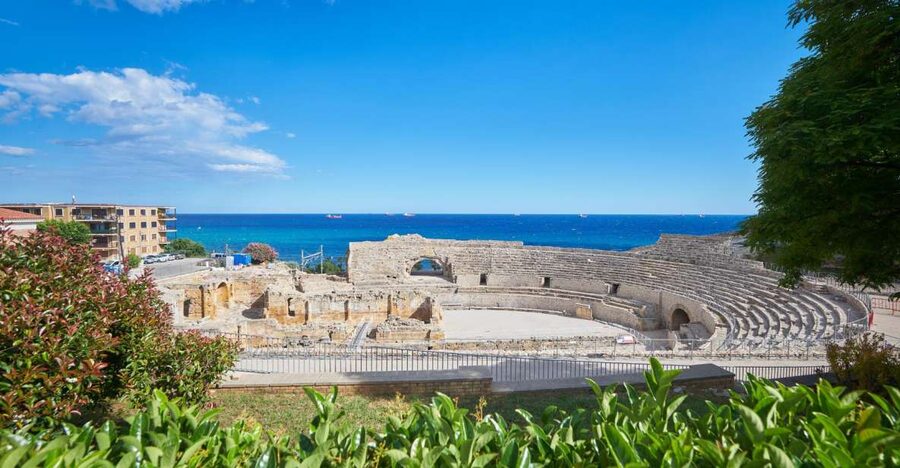
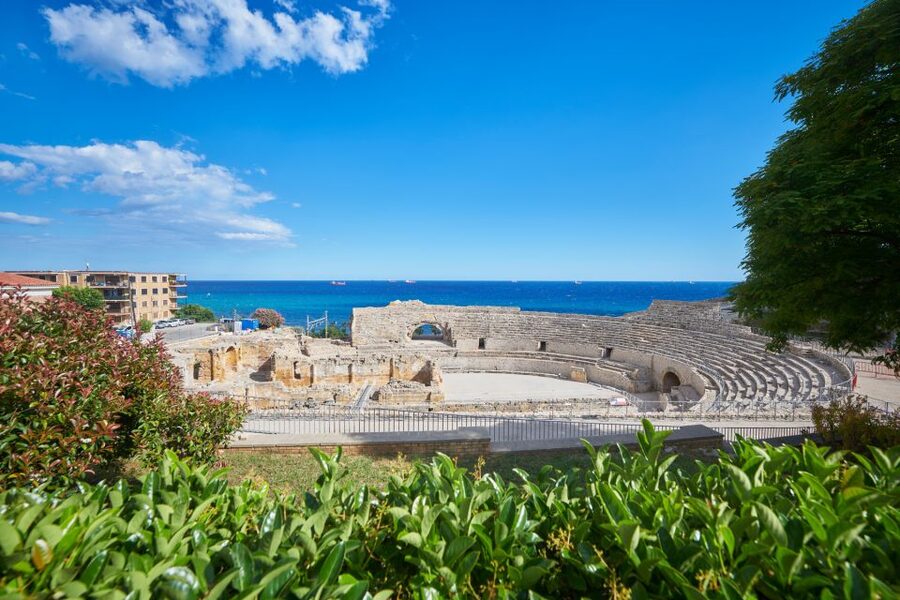
The Amphitheater is the natural finale. It sits by the Mediterranean, and the combination of ancient stone, open sky, and sea gives this stop a different feeling from the enclosed Circus vaults.
Your guide explains the gladiator fights and beast hunts held here in Roman times. Those events were public entertainment, but the building also tells you about Roman power. The arena was designed to hold a crowd and frame violent spectacle as an organized civic event.
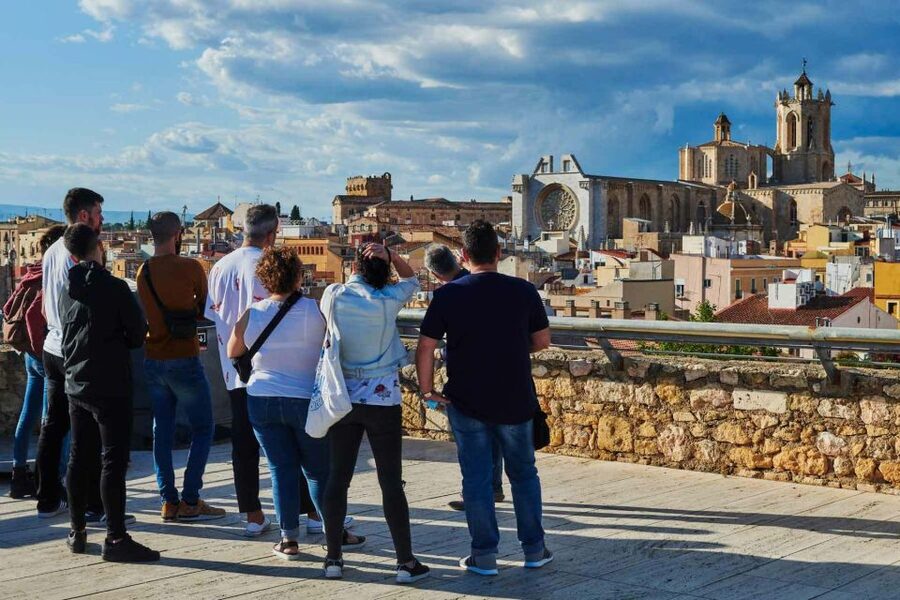
The view is one of the tour’s strongest rewards. You can look across the Amphitheater toward the sea, seeing why Tarragona’s location mattered from the beginning. The setting links the city’s Roman role as a Mediterranean gateway with the monument that served its public life.
The guide also reviews the Amphitheater’s story through to the present day. That wider timeline is important. The site is not treated as a frozen Roman relic, but as a place that has continued to shape Tarragona.
The Amphitheater may be the moment when the tour feels most memorable, yet it also shows why two hours can be short. You are covering walls, the historic center, the Circus, the visual exhibit, and the Amphitheater in one outing. If you want time for photographs, close study, and long pauses, you may wish to return independently after the walk.
How the guide affects the experience
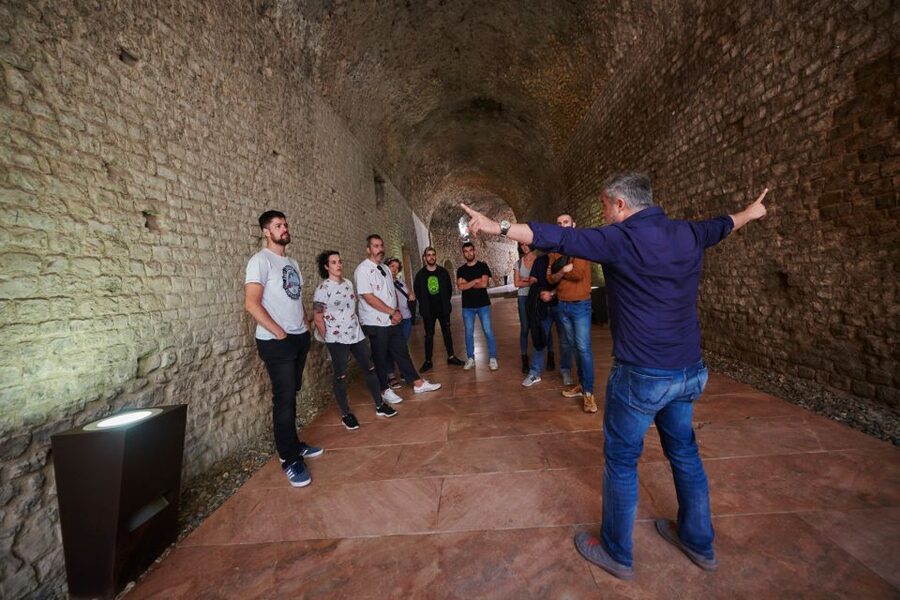
This tour depends heavily on the person leading it. Adrià has received particularly strong praise for explaining the city in an understandable way and for showing genuine affection for Tarragona and Catalonia. His style suits you if you prefer a guide who explains rather than simply recites.
The tour is available in Catalan and Spanish. That language choice is the biggest practical factor when deciding if it fits. If you do not follow either language comfortably, the monuments may still be interesting, but much of the value comes from the explanations linking them together.
Group size can also affect the day. A crowded start, background noise, or several groups leaving at the same time can make it harder to follow a detailed talk. This is not a reason to reject the tour, but it is a reason to arrive early, stay close to the guide, and ask for clarification when needed.
The recorded rating is 4.7 from 261 bookings, which points to a strong overall experience, but the range of scores matters. Some people found the two-hour schedule too short. One person had difficulty following the guide in a noisy, crowded setting. Another still found the tour worthwhile during heavy rain, though bad weather can clearly make any walking route less comfortable.
The real value of two hours and $17
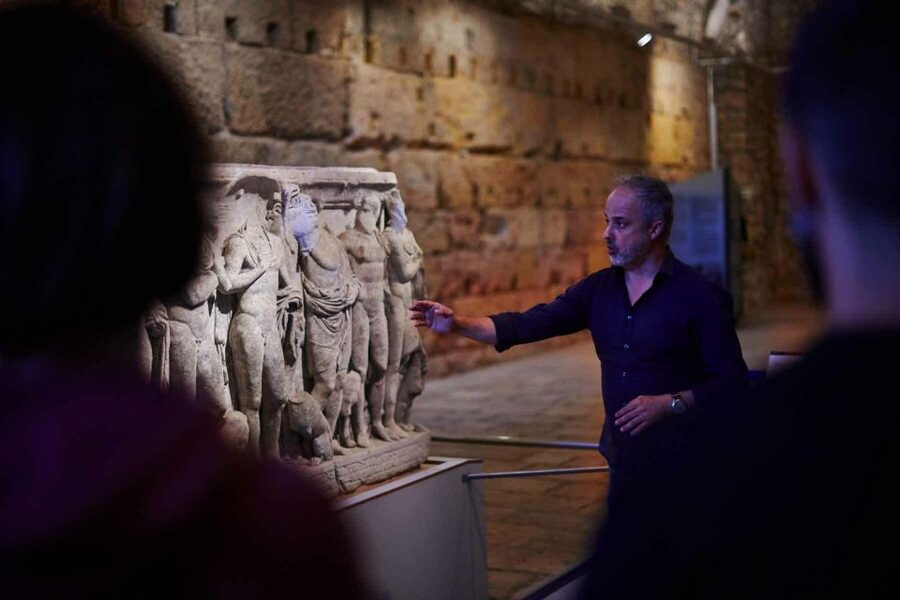
At $17, this is priced as an easy introduction rather than a full-day archaeological study. You receive a guided tour of Tarragona, entry to the Circus, the city model explanation, the audiovisual presentation, and the Amphitheater visit.
That package is good value if you are spending only a day in Tarragona or want an orientation before exploring on your own. The guide gives you the framework needed to understand why the Roman remains appear in separate places. Afterward, you can revisit the spots that caught your attention.
The price is less compelling if you already know Tarragona’s Roman sites well or plan to visit only one monument at your own pace. The tour keeps moving, and you may feel hurried if you want detailed architectural study.
The two-hour duration works best for:
- A first visit to Tarragona
- A short stop during a Catalonia trip
- Families or mixed-age groups that prefer a clear overview
- Visitors who want context before exploring independently
- Anyone interested in Roman military planning, public entertainment, and urban design
It may suit you less if you want a slow photography walk, a tour in a language other than Catalan or Spanish, or a very detailed study of every ruin.
Practical advice for a smoother walk
Arrive 10 minutes early at the Itinere office beside the Roman walls. This gives you time to locate the meeting point without rushing into the opening explanation.
Wear comfortable shoes. You will be walking through the historic center and Roman sites, and the tour does not work well with footwear chosen only for appearance.
Do not bring luggage or a large bag. The restriction is stated clearly, and you should plan around it rather than hope to store a suitcase during the activity.
The route is wheelchair accessible, a useful point for visitors who need step-free access. Since historic sites can have different surfaces and spatial limits, it is still sensible to confirm any personal access needs when booking.
The tour offers free cancellation up to 24 hours before the start, and you can reserve now and pay later. Those terms are useful if your Tarragona plans depend on weather or a changing Catalonia schedule.
Should you book the Roman Heritage Guided Walking Tour?
Book it if you want a low-cost, well-organized introduction to Tarragona’s Roman core, especially if you are comfortable with Catalan or Spanish. The walls, Circus vaults, city model, 3D presentation, and seaside Amphitheater create a sensible progression from military foundation to public spectacle.
The strongest reasons to go are the Roman remains woven through the modern center and the Amphitheater’s sea view. The main caution is pace. Two hours is enough for a useful overview, but not enough for a leisurely archaeological inspection.
For the best experience, arrive early, carry only what you need, wear good walking shoes, and treat the tour as your introduction to Tarragona rather than your final word on the city. If Adrià is leading, you can expect clear, engaged explanations. If your schedule allows only one Roman activity, this walk gives you the broadest picture for a modest price.
FAQ
How long is the Tarragona Roman Heritage Guided Walking Tour?
The tour lasts two hours.
What languages are available?
The live guide speaks Catalan or Spanish.
Where is the meeting point?
Meet at the Itinere office next to the Roman walls. Arrive 10 minutes before the activity begins.
Is entrance to the Circus included?
Yes. Entrance to the Circus is included in the activity.
Is the tour wheelchair accessible?
Yes, the activity is listed as wheelchair accessible.
Can I bring luggage or a large bag?
No. Luggage and large bags are not allowed. Comfortable shoes are recommended.
Recently added in Salou
- Half Day Cycling Tour from Salou★ 5.0 · 190 reviews
- Cambrils: Sunset Catamaran Cruise with Drinks★ 4.7 · 201 reviews
- Salou: Siurana Medieval Village Guided Tour w/ Hotel Pickup★ 4.5 · 213 reviews
- Salou: Scuba Diving for Beginners★ 4.8 · 227 reviews
- From Salou: Barcelona City Center Tour★ 4.4 · 247 reviews
- Costa Dorada: Aquopolis Entry Ticket★ 3.9 · 275 reviews
- Cambrils: Parc Samà Entry Ticket★ 4.4 · 295 reviews
- Cambrils: Costa Dorada Sunset Catamaran Cruise with Drinks★ 4.4 · 365 reviews
Historical Tours, compared.
Madrid Essential: Historic Center, Plaza Mayor & Royal Palace
Read the review →
Tapas Walking Tour with Food, Wine, and History
Read the review →
Sevilla Food Tour: Tapas, Wine, History & Traditions
Read the review →
Valencia Old Town Tour with Wine & Tapas in 11th Century Historic Monument
Read the review →
Barcelona Tapas Walking Tour: Food, Wine & History
Read the review →
Ultimate Seville Tapas, Wine & History Small Group Tour
Read the review →
Skip-the-Line Great Mosque-Cathedral History Tour
Read the review →
Browse the lists this tour appears in