
Reviewed · CITY TOURS
Shore Excursion: Barcelona City Tour Hop-On Hop-Off
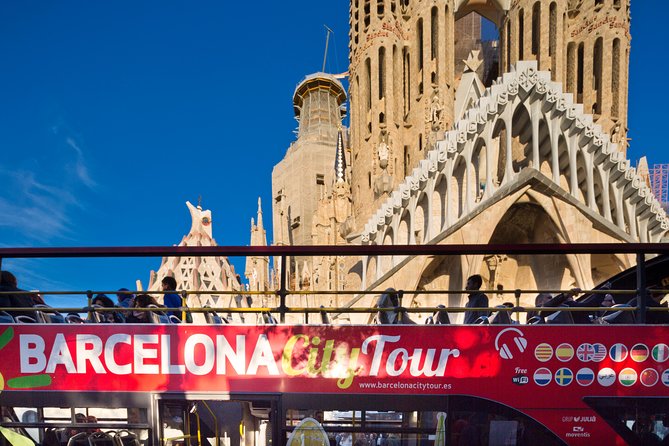
Barcelona’s hop-on hop-off bus gives you a useful first look at a large, spread-out city, from the waterfront and Gothic Quarter to Sagrada Família, Park Güell, Montjuïc, and Camp Nou. One ticket covers both routes, so you can build your day around the sights that matter most.
I like the regular bus service and the flexibility to ride, hop off, and continue later. I also like the sliding roof on the double-decker buses, a small but welcome feature when Barcelona’s weather turns wet. The multilingual audio system and discount booklet add practical value.
The main catch is time. Traffic, queues, and route changes can eat into a cruise day quickly. Some stops are crowded, some are hard to spot, and the Park Güell stop still leaves you with an uphill walk. You need a plan, not just a ticket.
Key points to know before you ride
- Two routes, one ticket: Cover the eastern sights and the western Montjuïc and Camp Nou area without buying separate transport.
- Best for a city overview: You can see Barcelona’s major districts before choosing where to spend more time.
- Park Güell requires walking: The bus cannot reach the park entrance, and the stop involves an uphill, stair-filled walk.
- Cruise timing needs care: Buses can stop around the early evening, and traffic may make the full circuit take much longer than expected.
- Open-top comfort with a backup: The sliding roof helps in rain, while air conditioning helps in warm weather.
- Audio is recorded: You get multilingual commentary, not a live guide, with special wireless looping seats for passengers with hearing disabilities.
A smart first ride through Barcelona
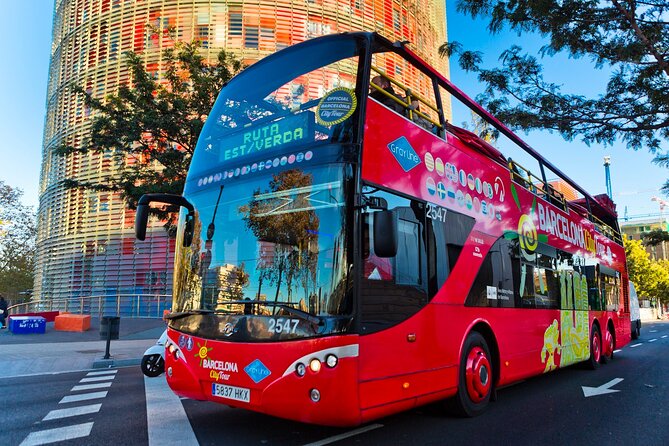
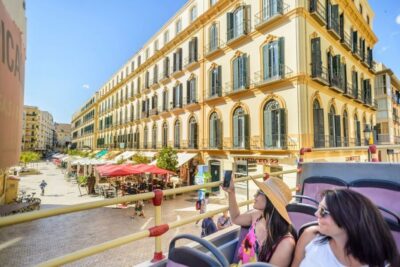
Barcelona City Tour works best as a moving map. You sit high above the streets, listen to recorded commentary, and connect districts that are too far apart for a comfortable walk.
The experience is especially useful if you have never visited Barcelona. You can pass the Gothic Quarter, beaches, Modernist architecture, Sagrada Família, Park Güell, Montjuïc, and the football stadium in one outing. You will not properly explore all those places in a single day, but you will see how the city fits together.
The advertised ride lasts about 2 hours and 20 minutes, though that figure should not be treated as a guaranteed cruise-day schedule. It takes longer if you hop off, wait for a full bus, change routes, or sit in traffic. Some riders have spent several hours using the system, while others found that lines and delays made it hard to complete even one full route.
At $39.65 per person, the price is fair if you use the bus for transportation and sightseeing. It is less attractive if you simply ride once around the city and then use taxis or local buses. The value improves when you make several stops, use both routes, and take advantage of the included attraction, shop, and restaurant discounts.
More City Tours in Barcelona
- Barcelona: City Sightseeing Hop-On Hop-Off Bus Tour
★ 4.4 · 10,061 reviews - City Sightseeing Barcelona Hop-On Hop-Off Bus Tour: 24 or 48-Hour
★ 4.0 · 5,250 reviews - Barcelona City Tour Hop-On Hop-Off with Optional Boat
★ 4.0 · 3,012 reviews
Starting at Pla de Palau and the waterfront
The eastern route begins at Pla de Palau, a handy place to start if you are near the old port or cruise area. From there, the bus heads toward Barceloneta Beach, where the city opens onto the Mediterranean.
Barceloneta is a good early stop if you want a short walk by the water, a look at the beach neighborhood, or a break from the dense central streets. Port Olímpic follows, with its modern waterfront setting and broad views. The next beach stops, Platja Bogatell and Platja de la Nova Mar Bella, show a more open stretch of Barcelona’s coastline.
These stops are pleasant for a quick look, but they are not ideal if your main goal is historic Barcelona. You can easily spend too much of a cruise day riding along the waterfront while the major architectural sights wait inland.
Forum Sport is farther northeast, followed by Glòries. Glòries is useful for reaching the modern district and nearby attractions, though you should check the exact stop position before getting off. Construction, city events, and public works can alter the route.
Sagrada Família, Sant Pau, and Park Güell
The eastern route becomes more valuable as it moves inland. Recinte Modernista de Sant Pau is one of the most rewarding stops for architecture fans. The former hospital complex displays the decorative curves, tilework, and colorful details associated with Barcelona’s Modernist period.
The Park Güell stop is one of the places where the bus is helpful but not perfect. It gets you into the right part of the city, but the bus cannot go directly to the park entrance. You should expect an uphill walk with stairs, and the route from the stop may not feel obvious on the ground.
If you have timed admission for Park Güell, allow extra time. Do not step off the bus assuming you are already at the gate. A taxi may be a better choice if mobility, heat, rain, or a tight ship schedule is a concern.
La Pedrera, also called Casa Milà, brings you back toward central Barcelona. Its unusual stone façade and rooftop forms make it one of Antoni Gaudí’s essential works. Casa Batlló follows on Passeig de Gràcia, where the architecture is striking even if you only view it from the street.
These stops are among the best places to hop off because they connect major sights with central neighborhoods. They are also among the busiest. A full bus may arrive, and you may need to wait for the next one, especially at popular stops.
Arc de Triomf and Ciutadella Park
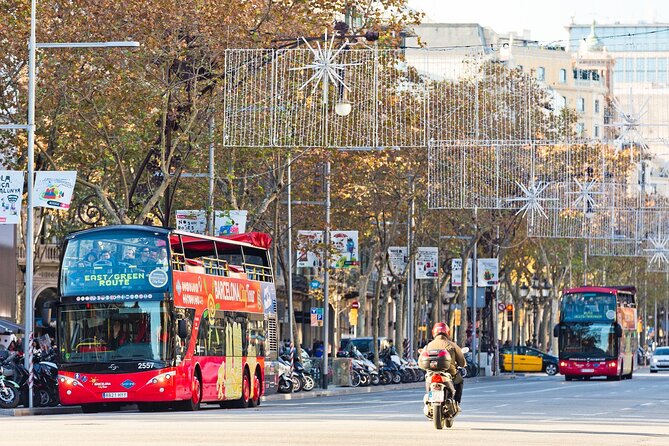
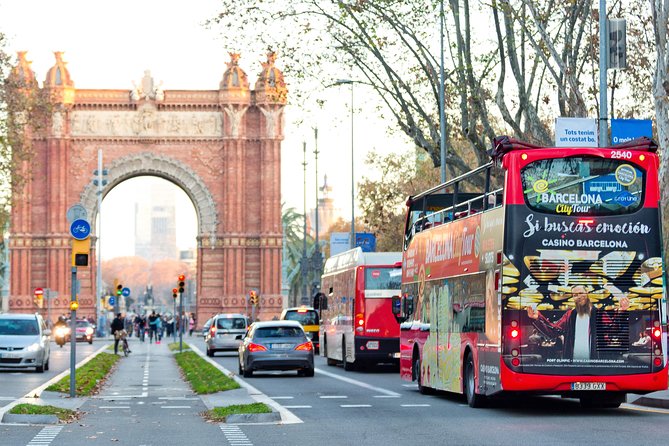
The eastern circuit continues to Arc de Triomf and Ciutadella Park. The red-brick arch is a strong photo stop and a useful gateway to the park, which offers open paths and a pause from city traffic.
This area works well for a short walk between bus rides. You can also use it to connect with the old city, though the bus itself only gives you an overview. For the Gothic Quarter, get off near the central stops rather than expecting the recorded commentary to guide you through every narrow lane.
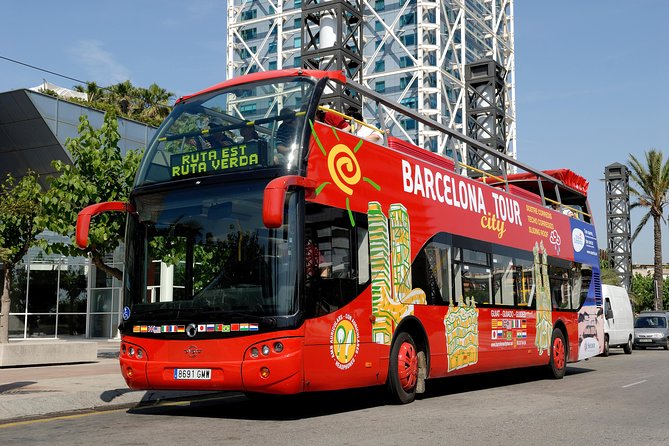
One practical weakness is stop identification. The official tall red markers are the signs to look for, but they can be easy to miss in a busy street. Printed maps, route information, and local directions do not always make the boarding point obvious. Before leaving a bus, note the stop name and the return direction.
A few other Barcelona outings to compare
- Fuerteventura: Corralejo Sand Dunes Guided Shore Excursion
★ 4.6 · 335 reviews
Pla de Palau and the old city
Pla de Palau appears again at the end of the eastern route. This is a useful return point for the port, Barceloneta, and the historic center.
The old city is best explored on foot. The bus can bring you close, but it cannot replace wandering through the Gothic Quarter’s lanes and small squares. Use the ride to get oriented, then spend your limited shore time walking in one compact area rather than trying to cover every stop.
World Trade Center and the Montjuïc route
The western route begins at WTC Barcelona Parking, near the port. This is a key detail for cruise passengers: the boarding point may not be as close or as simple to reach as you expect. Barcelona is a busy cruise port, and the area around the World Trade Center can feel confusing when several buses, taxis, and passengers are moving at once.
If you start here, confirm the bus company and route before boarding. Look for the tall red Barcelona City Tour markers rather than relying on a general bus stop. Confusion at the port can cost valuable time.
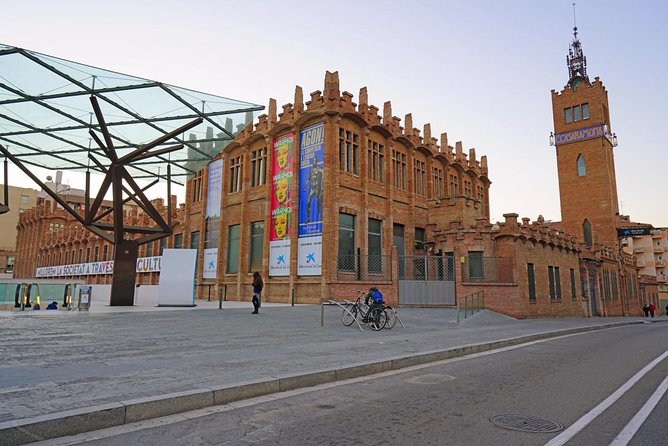
The route then climbs toward Avinguda Miramar, the Miramar Gardens, and the Olympic Ring. Montjuïc gives you some of the city’s broadest views and connects several cultural and Olympic sites.
Stops include the Museu Nacional d’Art de Catalunya, Poble Espanyol, CaixaForum Barcelona, and Plaça d’Espanya. You can treat this section as a scenic ride, or choose one cultural stop and explore it properly.
The Olympic Ring and Montjuïc stops are spread out, so check the route map before hopping off. The hill adds walking and elevation changes. It is a poor place to improvise if you need to be back at the ship at a fixed time.
Plaça d’Espanya, Camp Nou, and Diagonal
Plaça d’Espanya is one of Barcelona’s major transport and sightseeing points. It is a practical place to connect Montjuïc with the city’s central districts, though road traffic can slow the bus around here.
The route continues to Estació de Sants and Spotify Camp Nou, home of F.C. Barcelona. Camp Nou is a strong choice for football fans, but the stop is mainly useful for reaching the stadium area. You should not assume the bus ticket includes stadium admission or a visit inside.
From there, the bus travels along Avinguda Diagonal, stopping near numbers 635 and 571, then Plaça de Francesc Macià. The Francesc Macià stop is subject to cancellation because of works, with an alternative location used instead. This is one reason to check current signs and route information on the day.
La Pedrera appears again on the western route, followed by Sagrada Família. This overlap can be helpful if you change routes, but it can also cause confusion. Note the route color or direction, the stop name, and the next destination before boarding.
Sagrada Família and the final eastern connections
Sagrada Família is the star stop for many people. Even from outside, Gaudí’s unfinished basilica is hard to mistake, with its tall towers and dense sculptural detail.
The stop is popular, so buses can fill quickly here. Upper-deck seats may be limited, and the commentary may not function consistently on every bus. One practical approach is to visit Sagrada Família early, then board at a less crowded stop if you need a comfortable seat.
The route continues to Barcelona Nord Bus Station, Carrer de la Marina, Port Olímpic, Pla de Palau, and Roch Xarcuters i Formatgers. These stops are useful for connecting the central city, bus station, and waterfront, but they are not all essential sightseeing stops.
If you have only one day, choose your main targets before boarding. Sagrada Família, Park Güell, and Montjuïc can each consume far more time than their names suggest.
Audio, seating, and weather
The recorded audio guide is available in multiple languages, including English. It gives you context as you pass major buildings and districts, but it does not provide the personal touch of a live guide.
Audio quality can vary by bus. The 3.5 mm headphone jacks have caused crackling for some passengers, so bring patience and test the connection soon after boarding. The system also includes audio adapted for people with auditory disabilities. Designated seats use a wireless multilingual looping system, and passengers who need those seats receive priority.
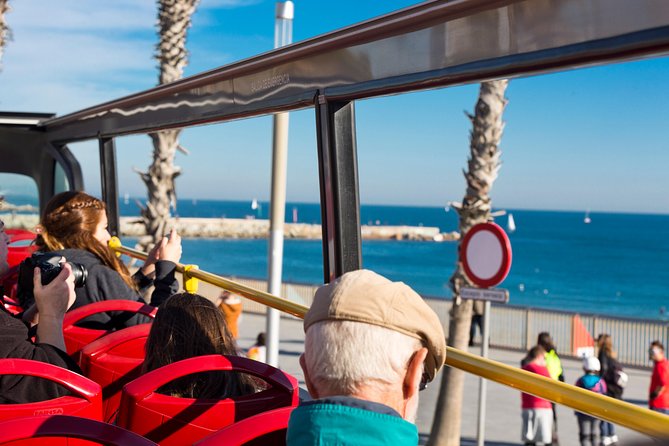
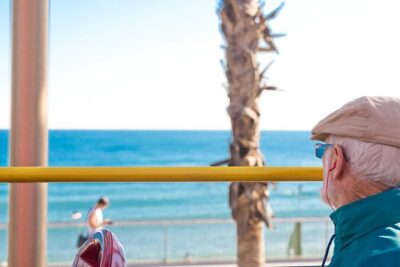
The buses are air-conditioned double-deckers with open upper decks and sliding roofs. The roof is useful in rain, but do not assume it makes the ride fully dry. Water has entered buses through windows, doors, and stair areas during heavy rain.
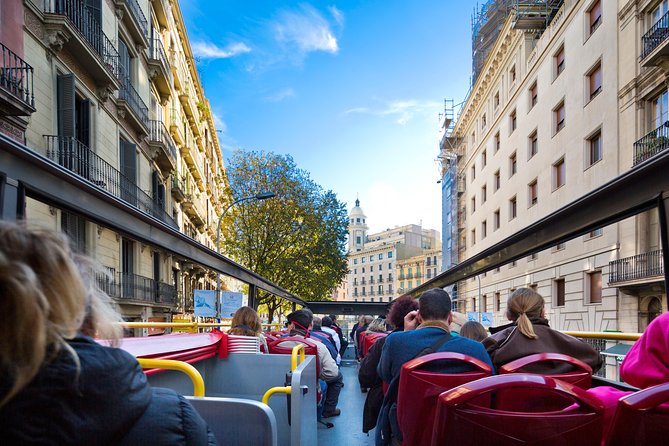
The upper deck can also be much colder than the street, particularly in spring. Pack a light jacket, and keep a hat or scarf within reach. In wet weather, the lower deck is more practical, though visibility is not as good.
Cruise-day timing and boarding advice
The biggest risk is not the sightseeing. It is losing track of time.
Buses may run only until around 7 p.m., and the final route can leave you far from the port. Traffic lights, road works, demonstrations, sporting events, official ceremonies, and cultural events can change the schedule or route. Several cruise ships in port can also place heavy demand on the service.
I would not use this as your only return plan if your ship has a strict all-aboard time. Set a personal cutoff well before departure, then switch to a taxi if needed. If you miss a bus, the wait may be manageable at one stop and much longer at another.
For the most efficient day:
- Start early, especially if you want Sagrada Família or Park Güell.
- Ride one route for an overview before choosing your stops.
- Pick one or two major attractions, not six.
- Check the last bus time before leaving the port area.
- Keep your ticket available throughout the ride.
- Photograph the stop marker when you get off.
- Avoid assuming the map shows the exact entrance to an attraction.
The mobile ticket is convenient for the initial redemption, but keep the issued ticket with its QR code available during the routes. A phone confirmation may not replace the onboard ticket if it is lost or unavailable.
Who gets the best value for $39.65?
I think this price works best for first-time visitors, families, older passengers who prefer not to navigate the metro, and anyone who wants a broad city view with little planning. The bus also avoids the worry of pickpockets that can come with crowded public transport, though you still need to watch your belongings.
It is less useful for visitors who already know Barcelona or who prefer walking. Barcelona’s central districts are rewarding on foot, and traffic can make the bus slower than expected.
The free discount booklet may help if you plan to pay for attractions, shops, or restaurants included in its offers. Do not buy the ticket based on the booklet alone. The main value is the ability to connect distant areas, not the discounts.
The service has an overall rating of 3.9 out of 5 from 280 ratings, which fits the experience: often convenient and well-covered, but uneven when crowds, weather, unclear stops, or ship schedules get involved.
Should you book Barcelona City Tour?
Book it if you want a quick first look at Barcelona and can accept a slower pace in traffic. The two routes cover an impressive spread of the city, and the single ticket lets you move between the waterfront, Modernist sights, Montjuïc, and Camp Nou.
I would book it for an early-arriving cruise day, then use the ride to choose where to return on foot or by taxi. I would not book it as a carefree, all-day guarantee that you will see every major attraction and return effortlessly to the ship.
For the best result, keep your plan simple: ride early, choose one major Gaudí sight, add either the waterfront or Montjuïc, and leave a generous buffer for the return. With that approach, $39.65 buys useful orientation and convenient transport. Without it, the same ticket can turn into a long wait beside a crowded road.
Free cancellation is available when you cancel at least 24 hours before the local start time. Cancellations or changes inside that period are not refunded.
FAQ
How long does the Barcelona City Tour last?
The stated duration is approximately 2 hours and 20 minutes. Your total day can take much longer if you hop off, change routes, wait for buses, or encounter traffic.
Does one ticket cover both Barcelona bus routes?
Yes. A single ticket covers all listed routes and stops, allowing you to use both the eastern and western routes.
Is the audio guide available in English?
Yes. The buses use a multilingual recorded audio guide system, including English.
Can the bus take me directly to the entrance of Park Güell?
No. The bus stops in the Park Güell area, but it cannot reach the park entrance. You should expect an uphill walk with stairs.
Does the bus operate in the rain?
The buses have a sliding roof intended to help keep passengers dry, but water may still enter during heavy rain. The lower deck is a better choice in poor weather.
Is the tour suitable for passengers with auditory disabilities?
Yes. The audio system includes a multilingual looping system adapted for people with auditory disabilities. Designated seats are marked, and passengers who need the system have priority.
Recently added in Barcelona
- Barcelona: Catamaran Cruise w/ Sailing, Wine, & Tapa★ 4.7 · 176 reviews
- Guided Gaudí Trencadís Mosaic Workshop in Barcelona 2 Hours★ 5.0 · 176 reviews
- Barcelona Cable Car Sky Views, Magic Fountain & Castle Visit★ 4.2 · 177 reviews
- Barcelona Private Sunset Sailing with Drinks★ 5.0 · 177 reviews
- Barcelona: Montserrat with Winery Visit and Farmhouse Lunch★ 4.7 · 178 reviews
- Barcelona: Nightmare Horror Museum Maze Entry Ticket★ 4.5 · 179 reviews
- Barcelona: City Sights Electric Quad Tour★ 4.8 · 178 reviews
- Barcelona: Professional Photoshoot Outside Sagrada Familia★ 4.8 · 179 reviews
City Tours, compared.

City Sightseeing Barcelona Hop-On Hop-Off Bus Tour: 24 or 48-Hour
Read the review →
Granada City Train 1 or 2-Day Hop-On Hop-Off Ticket
Read the review →
Barcelona City Tour Hop-On Hop-Off with Optional Boat
Read the review →
Browse the lists this tour appears in