
Reviewed · WALKING TOURS
Private walking tour in Palma de Mallorca with local guides.
Palma’s old town packs royal power, Gothic stone, Jewish heritage, Modernist flourishes, and everyday market life into a walkable center. This private tour gives you your own guide and group, so you can stop for questions instead of trying to hear a guide over a crowd.
I especially like the focus on Mallorca Cathedral and the Jewish quarter, two parts of Palma that can seem disconnected until someone explains the story. I also like the flexible end point, which makes it easy to finish near Plaça Major or another spot that suits your plans.
The main catch is time. Two hours is enough for a useful first look, but not for a slow, thorough visit to every stop, particularly if you enter the cathedral or another paid site.
Key points to know before booking
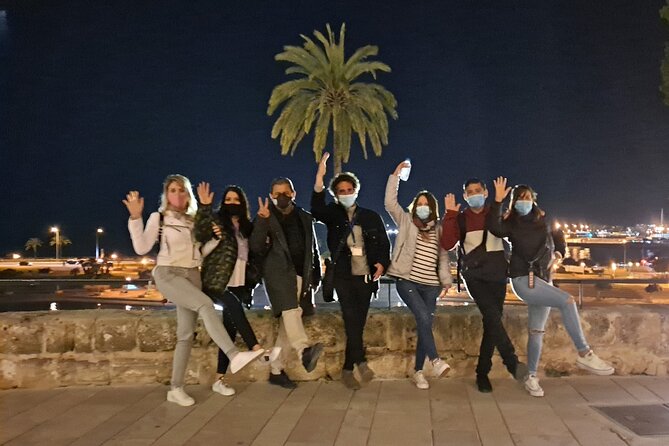
- A private group of up to six gets the guide’s full attention and can set a comfortable pace.
- Carlos and Maria have led this experience, with the tour built around clear historical context and questions.
- Mallorca Cathedral receives the most attention, including Gaudí, Catalan Modernism, light effects, and Miquel Barceló’s work.
- The Jewish quarter adds a less obvious side of Palma, including the Xueta community and an interpretation center when open.
- The route mixes grand sights with ordinary Palma, from royal buildings and patios to orange trees and the Olivar Market.
- The $266.16 group price works best for four to six people, but is expensive for one or two.
Palma’s old town in a private two-hour frame
This is a city orientation walk, not a full-day cultural program. You move through central Palma with a local guide, hear the stories behind its buildings, and finish with a better sense of where to return on your own.
For a group of six, the $266.16 price comes to about $44.36 per person. That is a fair deal if you value privacy and direct conversation. For two people, the same price becomes a much larger expense, so you should compare it with a small-group tour or a free walking tour if budget matters more than flexibility.
The private format is useful for families, couples, or friends who do not want to follow a fixed crowd. It is also helpful if your group includes children. Carlos, one of the guides associated with the experience, made a point of engaging younger visitors while still explaining Palma’s past. A private guide can also adjust the pace when the heat becomes tiring.
The tour is offered in English, uses a mobile ticket, and is near public transportation. Most people can participate, and service animals are allowed. Confirmation arrives within 48 hours, subject to availability, so it is sensible to book before your visit rather than waiting until the last minute. The experience is commonly reserved about eight days ahead.
More walking tours in Mallorca:
- Palma de Mallorca: City Walking Tour with The Cathedral
★ 4.0 · 657 reviews - Palma de Mallorca: Foodie Walking Tour of the Old Town
★ 4.6 · 372 reviews - Palma, Cathedral & Valldemossa: Guided walking Tour
★ 4.1 · 182 reviews
Sa Llotja and the waterfront gateway
The walk begins at Mallorca Free Tour on Carrer del Moll, 3, near the waterfront. The first major sight is Sa Llotja, one of Palma’s most graceful Gothic buildings.
Designed by Mallorcan architect Guillem Sagrera, Sa Llotja was tied to the city’s trading life. You receive about 15 minutes of explanation here, enough to notice its design and understand why this building mattered to merchants and sailors.
Admission is free, but the opening schedule matters. Sa Llotja is listed as open Tuesday through Sunday from 10:30 a.m. to 1:30 p.m. and from 5:30 p.m. to 11 p.m. It is closed Mondays. If you want to see inside, check that your tour time fits those hours.
This first stop sets the tone well. Palma is not simply a city of pretty façades. Its wealth came from trade, royal authority, religious institutions, and later tourism. Sa Llotja gives you that commercial starting point before the route moves toward the palace and cathedral.
Royal power at the Almudaina Palace
The Palau de l’Almudaina sits close to the cathedral, and the guide uses about 10 minutes to explain its history, architecture, and royal connections. You hear about the building’s role and the royal family rather than simply passing a photo stop.
Admission is not included. That is worth noting because the tour’s short format does not promise a full palace visit. You can appreciate the exterior and decide later if you want to return for an interior visit.
I like this approach for a first morning in Palma. The palace and cathedral are visually linked, but they represent different layers of power. The Almudaina brings royal and political history into the picture, while the cathedral points to the strength of the church and the city’s long religious tradition.
Mallorca Cathedral, first outside and then inside
The cathedral receives two parts of the route. First comes about 10 minutes outside, covering its history, curiosities, and recent changes. Then an additional 40 minutes is set aside for the interior, making it the longest single stop.
Mallorca Cathedral is also called La Catedral del mar. From the outside, your guide explains how the building developed and points out details that are easy to miss when you are focused only on its huge scale.
Inside, the guide covers the artistic styles of different chapels, the way light moves through the building, Catalan Modernism, Gaudí’s work, and contemporary art by Miquel Barceló. That range is one of the tour’s strongest features. You are not left with the simple idea that the cathedral is an old Gothic church. You get a quick guide to several artistic periods and to the changes that shaped the building over time.
The cathedral admission fee is not included, so plan for that separate cost. The 40-minute visit is also a reason to confirm the exact plan when you meet your guide. The published stop list gives a detailed cathedral visit, but the entire experience is about two hours and includes many other locations. You may need to decide how much time to give the cathedral compared with the Jewish quarter, patios, or market.
If you have only one short visit to Palma, this is the section that gives the best reason to book a guide. Light, chapel design, Gaudí, and Barceló are easier to appreciate when someone connects them for you.
A few other Mallorca outings to compare
- El Arenal: Private Mallorca Boat Rental (No License Needed)
★ 4.8 · 343 reviews - The Award-Winning PRIVATE Food Tour of Mallorca: The 10 Tastings
★ 4.5 · 317 reviews - Mallorca: Hot Air Balloon Flight with Private Options
★ 4.8 · 195 reviews - Montserrat Monastery Small Group or Private Tour Hotel pick-up
★ 5.0 · 5,144 reviews
Patios, narrow lanes, and Palma’s Jewish quarter
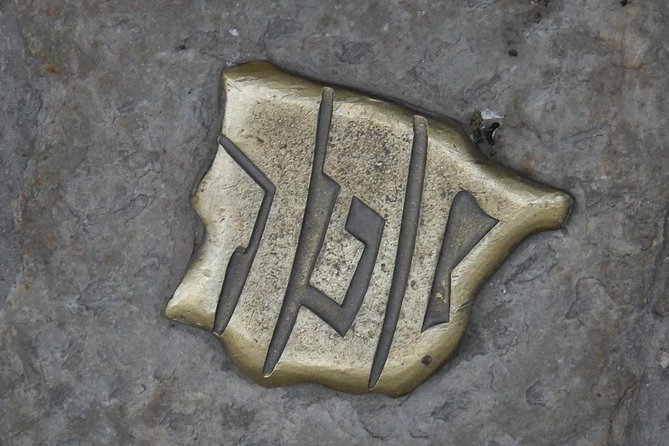
After the main monuments, the route turns to smaller details. At Ca’n Oms, you spend about seven minutes looking at a Mallorcan patio and hearing about the building inside and out. These patios are part of Palma’s old residential fabric, and they offer a quieter counterpoint to the cathedral square.
Can Bordils gets about 20 minutes. Here, the guide explains another Mallorcan patio and takes you to the interpretation center of Palma’s Jewish quarters when it is open. The center is available only during the week and in the mornings, so this part depends on your tour time.
This is also where you learn about Mallorca’s Jewish community and the Xuetas. That term refers to a group in Mallorca with Jewish ancestry and a distinctive place in the island’s social history. The interpretation center gives the subject a physical setting instead of treating it as a passing footnote.
For me, this is an important part of the route because it widens your view of Palma. The royal palace and cathedral dominate the usual first impression, but the old town also contains the traces of communities, family homes, and changing identities. If the Jewish interpretation center is a priority, book a morning weekday tour and confirm that it can be included.
Santa Eulalia and Can Corbella’s unusual face
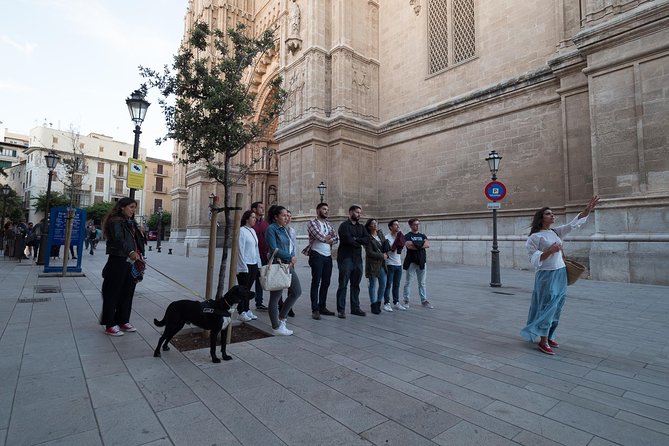
The parish church of Santa Eulalia receives about 10 minutes. The guide explains the church and local expressions, adding a more everyday religious and cultural layer to the walk.
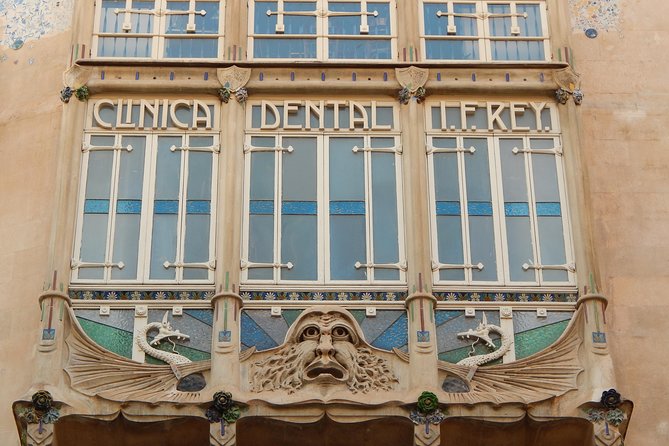
Next comes Can Corbella, a Modernist building and another piece of Palma’s Jewish quarter. You get about 15 minutes here, and admission is not included. The stop helps show how Palma’s architectural story continues beyond medieval Gothic design.
Can Forteza Rey gets a shorter five-minute look. The focus is Catalan Modernism and a face on the building. That small detail is exactly the sort of thing you might miss if you walked past alone. Palma rewards you for looking up, and a local guide can point out decorative touches that do not appear on a basic sightseeing checklist.
These stops are not long enough for an architectural course. They are quick visual clues, giving you reasons to notice the old town’s mix of periods and influences as you continue walking.
Palma’s civic center at Ajuntament and Plaça Major
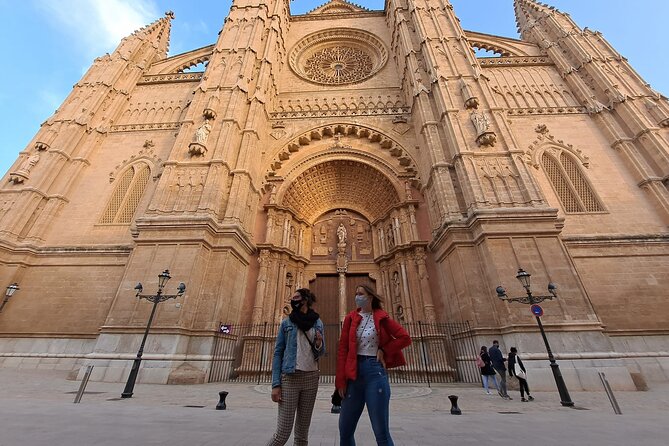
At Ajuntament de Palma, the guide spends about 15 minutes on the town hall, the main square, and the Banc de sino fos. The town hall is a useful place to discuss how the city functions as well as how it looks.
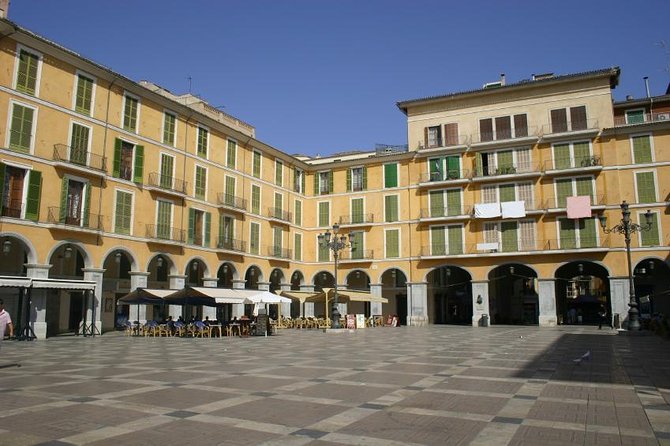
The route then reaches Plaça Major, where you hear about the surroundings, the square’s past, and recent changes. This is the planned end point, at Pl. Major, 15, though the provider says the finish can be adapted to your needs.
That flexibility has real value. You may want to end near a restaurant, a hotel, a transport connection, or a second sight. Ask the guide early if you have a particular destination in mind.
The route is not simply a march from famous building to famous building. It moves from trade and royal authority to religious life, private courtyards, civic government, and public squares. In two hours, that structure gives you a useful mental map of central Palma.
Orange trees, olive oil, and the Olivar Market
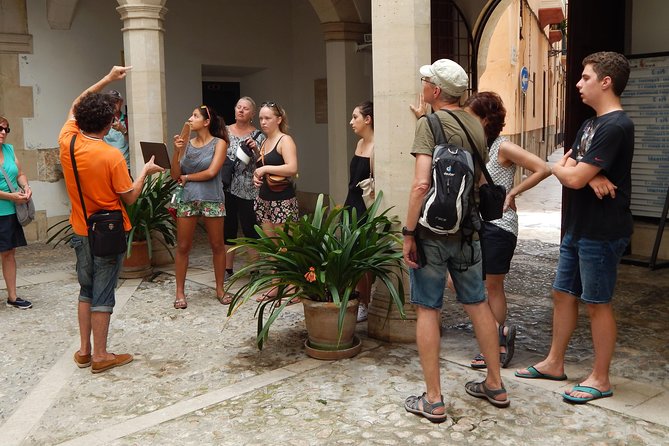
Near the Banc de s’Oli Oleoteca, the guide explains local anecdotes about the surroundings and the orange trees. It is a short five-minute stop, but it adds a sensory, street-level detail to the route.
The final listed stop is Mercat de S’Olivar, Palma’s main municipal and local market. It is open Monday through Saturday from 7:30 a.m. to 2:30 p.m., and admission is free. You get about 10 minutes here.
The market is a good place to end if you want to see Palma as a working city rather than only a historic center. Ten minutes is enough to get your bearings, but not enough for a relaxed food stop. If you want to shop or eat, return afterward with more time.
The market also makes the route practical. Once the guide has explained the old town, you can use the market as a place to continue on your own. Just remember that it is closed Sundays, and the morning hours do not fit every departure.
Timing, tickets, and the route’s practical limits
The listed stops add up to more than two hours if you treat every time estimate as a full visit. That tells you something important: the guide will need to manage the route, and some stops may be brief exterior explanations while others receive more attention.
Paid admission is not included for the Almudaina Palace, Mallorca Cathedral, or Can Corbella. Sa Llotja, Ca’n Oms, Can Bordils, Santa Eulalia, Ajuntament de Palma, Plaça Major, the Banc de s’Oli area, and the Olivar Market are listed with free admission, though opening hours still affect what you can see inside.
You should wear comfortable shoes and be ready to walk through the old town, but the supplied information does not give a precise distance or accessibility rating. Most people can participate, and the tour is near public transportation.
Free cancellation is available until 24 hours before the start time for a full refund. Changes or cancellations inside that 24-hour window are not accepted for a refund, and all cut-off times use local Mallorca time.
Who gets the most from this Palma walk
I would choose this tour if you want a clear first look at Palma and prefer asking questions to following a large group. It suits a family that needs a flexible pace, a small group of friends splitting the cost, or a couple who values privacy enough to pay for it.
It is also a good choice for an arrival day. The route covers enough of the old town to help you decide where to spend the rest of your time. Maria, another guide associated with the experience, has led tours that give visitors historical context first and time afterward to explore alone.
I would hesitate if you want long interior visits, a food-focused walk, or detailed time at every monument. The tour touches many places, but its purpose is orientation and explanation. You will still need a separate visit for a slower look at the cathedral, palace, market, or other sites.
The 4.8 rating from 182 ratings and 97 percent recommendation figure suggest a dependable experience, but the real strength is more specific: friendly guides, solid historical background, and a route that covers the main old-town sights without forcing you into a large group.
Should you book this private Palma tour?
Book it if you are a group of four to six, have only a short time in Palma, and want a local guide to connect the cathedral, palace, Jewish quarter, Modernist buildings, and market. The group price becomes sensible when shared, and the flexible finish is handy.
For one or two people on a tight budget, the price is harder to justify. For families, first-time visitors, or anyone who wants Carlos, Maria, or another local guide to adjust the pace and answer questions, it offers a strong two-hour introduction.
Choose a weekday morning if the Jewish interpretation center matters. Choose a time that fits Sa Llotja or the Olivar Market if you want to see those interiors. Most of all, treat this as your Palma orientation, then return to the places that deserve more time.
FAQ
How long is the private Palma walking tour?
The tour lasts approximately two hours.
How many people can join the private tour?
The price covers one private group of up to six people.
What language is the tour offered in?
The tour is offered in English.
Where does the tour start?
It starts at Mallorca Free Tour, Carrer del Moll, 3, 07012 Palma, Illes Balears, Spain.
Where does the tour finish?
The listed ending point is Plaça Major, 15, Centre, 07002 Palma, though the ending location can be adapted to suit your group.
Are entrance tickets included?
Admission is not included for the Palau de l’Almudaina, Mallorca Cathedral, or Can Corbella. Several other stops are listed as free admission.
When can I visit the Jewish quarters interpretation center?
The interpretation center at Can Bordils is available only during the week and in the mornings.
Can I cancel for a full refund?
Yes. You can cancel at least 24 hours before the start time for a full refund. Cancellations or changes made less than 24 hours before the start time are not accepted for a refund.
Recently added in Mallorca
- From Andratx: Formula Sunset Driving Tour★ 4.8 · 176 reviews
- Mallorca Sailing Adventure with Snorkeling, Snacks & Drinks★ 5.0 · 176 reviews
- Playa de Palma: Banana Boat Ride★ 4.3 · 177 reviews
- Palma, Cathedral & Valldemossa: Guided walking Tour★ 4.1 · 182 reviews
- Discover Son Serra de Marina offroad e-scooters 100%FUN adventure★ 5.0 · 182 reviews
- From Palma: Afternoon Dolphin-Watching Boat Tour★ 3.9 · 183 reviews
- Scooter and Motorbike Rental to Explore Mallorca★ 4.5 · 186 reviews
- Mallorca : Miró Foundation Entrance Ticket★ 4.1 · 187 reviews
Walking Tours, compared.
Barcelona Tapas and Wine Experience Small-Group Walking Tour
Read the review →
Tapas Walking Tour with Food, Wine, and History
Read the review →
Albaicín and Sacromonte Guided Sunset Walking Tour
Read the review →
Toledo Tour & Vineyard Walk with Wine Tasting from Madrid
Read the review →
Barcelona Tapas Walking Tour: Food, Wine & History
Read the review →
Madrid Old Town & Royal Palace Walking Tour Skip the Line Ticket
Read the review →
Browse the lists this tour appears in