

Reviewed · HISTORICAL TOURS
Jerez: Historic Center Guided Tour
Jerez’s old town is best understood as a meeting point of cultures, and this walking tour makes that story easy to follow. You begin in Plaza del Arenal, then move through San Miguel, Moorish and Christian quarters, palace-lined squares, and the walls of the Alcázar. I like the way the route links architecture to the people who shaped it, from the Tartessians and Phoenicians to the Romans, Visigoths, and Moors. I also like the optional finish with two Jerez wines, which gives the city’s famous sherry trade a proper taste.
The main thing to consider is that this is an exterior walking tour. Entry tickets and inside visits to the Alcázar and cathedral are not included, and one four-star rating noted that the route leaned heavily toward religious buildings. At $26 per person for two hours, it is good value for orientation and local context, especially if you are new to Jerez, but it is not a full monument tour.
Key points at a glance
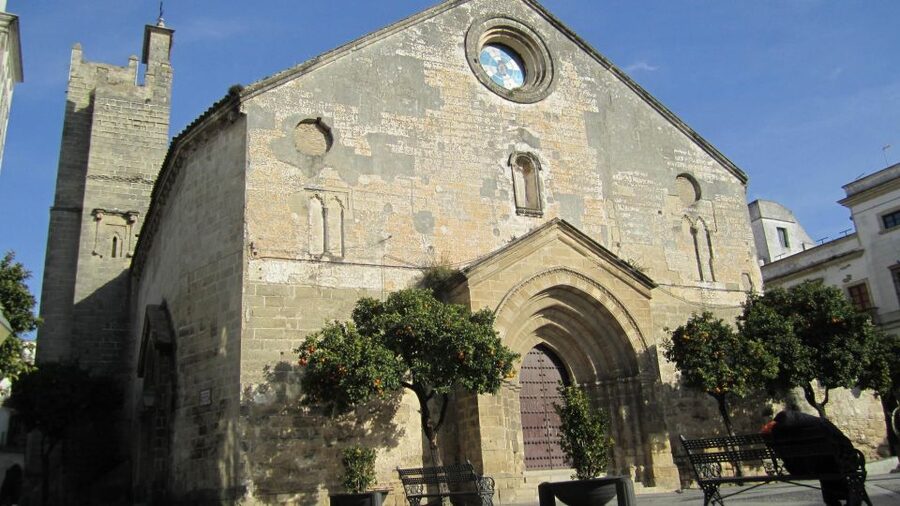
- San Miguel sets the tone: Explore one of Jerez’s most characteristic areas and see its striking Gothic church.
- Several eras in one walk: Follow the story from the Tartessians through Phoenician, Roman, Visigoth, Moorish, and Christian rule.
- The Alcázar is viewed from outside: You see its defensive wall, but admission and an interior visit cost extra.
- San Dionisio is a special stop: This is described as the only Mudejar church in Jerez.
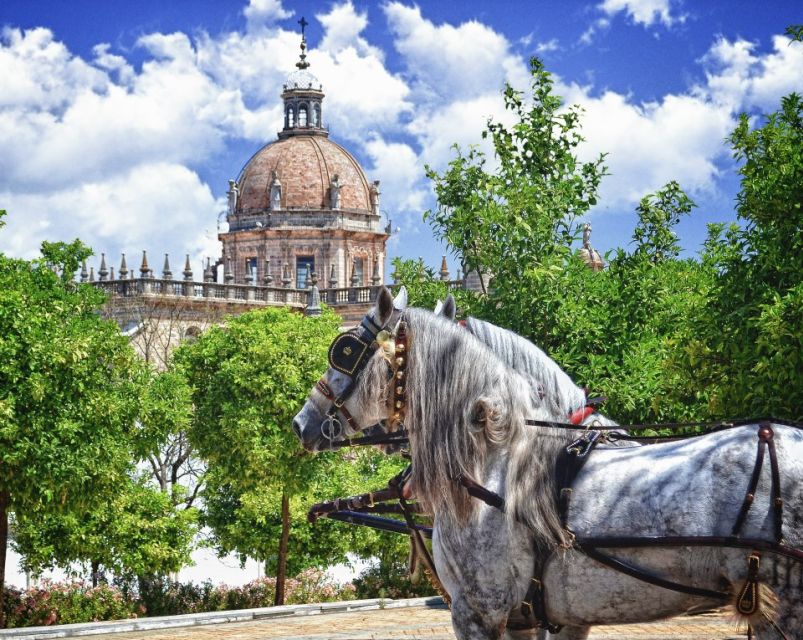
- The cathedral gives you three styles at once: Look for Gothic, Baroque, and Neoclassical details on its exterior.
- The wine option adds local flavor: You can choose a tasting of two Jerez wines, sometimes with a lively tabanco atmosphere at the end.
Why this two-hour walk works in Jerez
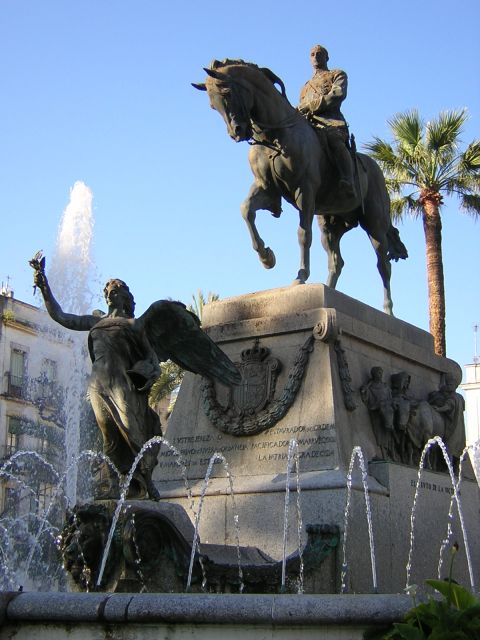
Jerez is often treated as a quick stop between Cádiz and the sherry bodegas. That is a mistake. The old center has a layered past, and its buildings make more sense once you know how Muslim and Christian districts grew around one another.
This tour gives you that framework without asking for a full day. Two hours is long enough to cover the major historic areas, yet short enough to fit before a bodega visit, lunch, or a train onward. I see it as a way to get your bearings fast, then return to the places that catch your eye.
The guide is central to the experience. The tour runs in English, Spanish, or French, and guides named Rose, Rosa, Lucia, Marta, Charo, Maria, Martina, Rosalba, Angel, Rocio, and Inma have led different departures. The strongest feedback centers on lively storytelling, clear English, local anecdotes, and the ability to answer unexpected questions.
Guide quality can vary on any scheduled walk, but the pattern here is unusually consistent. Lucia is praised for her interest in art and architecture, Rose for her storytelling and English, and Marta for her warm, personal approach. That matters in Jerez, where a plain church façade or a quiet square can seem modest until someone points out what you are looking at.
More historic sites in Spain:
- Madrid Essential: Historic Center, Plaza Mayor & Royal Palace
★ 5.0 · 6,416 reviews - Barcelona: Tapas Walking Tour with Food, Wine, and History
★ 4.8 · 4,261 reviews - Sevilla Food Tour: Tapas, Wine, History & Traditions
★ 5.0 · 3,468 reviews
Starting at Plaza del Arenal
The meeting point is in Plaza del Arenal, a useful place to begin because it puts you close to the historic core. Check your booking carefully, since the exact meeting point can vary with the option you choose.
From here, the guide introduces Jerez as the leading city of Cádiz province and a major center of sherry production. The point is not simply to list dates. You begin to see how trade, religion, defense, and local families shaped the city’s streets and buildings.
This opening is also a good chance to ask for practical advice. Several guides have offered suggestions for tapas bars, cafés, cake shops, and places worth returning to later. I would ask early about the best place for a sherry, a casual meal, or another monument you want to visit.
Bring comfortable shoes. The route is a walking tour through the old center, and a reusable bottle of water is recommended. Even a two-hour stroll can feel long if you arrive in hard shoes or on a hot day.
San Miguel and the Christian quarter
The walk continues through San Miguel, one of the areas that gives Jerez its strong local character. The Gothic church here is a major visual stop, and the surrounding streets show the typical architecture of the old town.
This part of the route helps explain the Christian side of Jerez without reducing the city to churches alone. The guide may point out details on façades, private homes, and older buildings that are easy to pass without a second look. One past guide even arranged access to shops and buildings so the group could see less obvious corners, though that should not be treated as guaranteed on every departure.
I particularly like this section for first-time visitors. You are not only seeing a famous church. You are learning how to read the district around it, including the relationship between religious buildings, private houses, and public squares.
The possible drawback is focus. If your main interest is sherry, horses, flamenco, or everyday food, the religious architecture may take up more of the walk than you expect. One four-star rating made exactly that point, describing the tour as useful but not very extensive and focused heavily on the religious side of the city.
The Alcázar walls and Jerez’s Muslim past
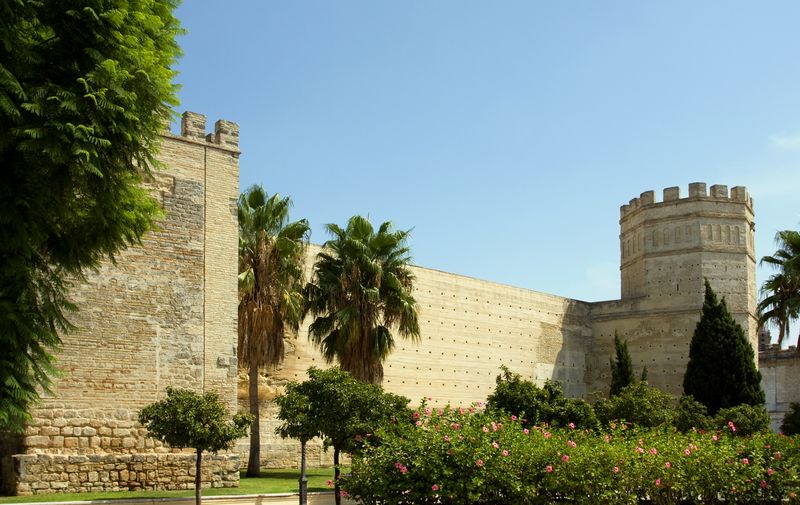
Near the Alcázar, the tour brings together Muslim and Christian monuments. You see the defensive wall from outside and hear how the fortified area fitted into Jerez’s wider story.
The Alcázar is one of the most important sights on the route, but admission is not included. That distinction matters. This tour helps you understand the site and see its exterior, yet it does not replace an inside visit if you want to explore the monument itself.
Ask the guide how much time you should allow for the Alcázar later. The tour is designed as an overview, so the group keeps moving rather than spending a long stretch at one building. That is useful if your schedule is tight, but less satisfying if you prefer slow architectural study.
The Moorish period is not presented as an isolated chapter. The route shows how Islamic and Christian parts of the city sit close together, often in ways that are more visible in the street plan and building forms than in a single grand monument. That connection is one of the tour’s best features.
A few other Spain outings to compare
- Barcelona: Sagrada Familia Entry Ticket with Audio Guide
★ 4.6 · 105,312 reviews - Barcelona: Park Guell Guided Tour with Skip The Line Entry
★ 4.7 · 17,563 reviews - Barcelona: La Pedrera-Casa Milà Ticket & Audio Guide Option
★ 4.7 · 15,099 reviews - Málaga: Caminito del Rey Guided Tour with Transportation
★ 4.8 · 12,183 reviews
From the Tartessians to the Moors
The historical story begins before the better-known Roman and Moorish periods. The guide introduces the mysterious Tartessians, traditionally linked with the earliest settlement of the area, then moves through the Phoenicians, Romans, Visigoths, and Moors.
You should not expect a full archaeology lecture. Instead, the guide uses the walk to show how each period left a cultural mark on Jerez. This broad sweep gives you a useful mental map, especially if Andalusia is part of a longer trip.
The Roman and Visigothic chapters help prevent the usual travel mistake of treating every old Andalusian building as simply Moorish or Spanish. Jerez changed hands and character over many centuries. The guide’s job is to connect those periods to what you can actually see.
Several guides have been praised for making this material entertaining rather than classroom-like. Angel is described as turning historical information into a fun walk, while Maria and Marta are credited with using anecdotes and humor to keep the past connected to the present.
That storytelling style is important here. Without it, the early history can feel distant. With a good guide, it becomes a way to understand why Jerez has such a mixed architectural and cultural identity.
San Dionisio, the Mudejar highlight

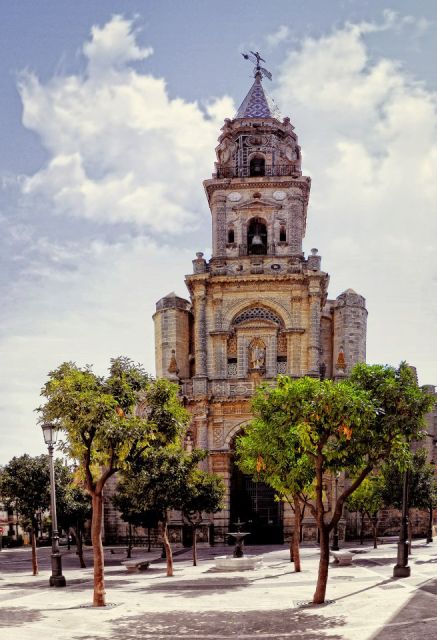
The Church of San Dionisio is one of the tour’s clearest architectural highlights. It is described as the only Mudejar church in Jerez, making it a particularly useful stop for understanding the blend of Islamic and Christian design.
Mudejar architecture is associated with Christian buildings shaped by Islamic artistic traditions. San Dionisio therefore helps explain the city’s cultural overlap in a direct, visible way. You are not just hearing that different communities influenced one another. You are looking at a building where that influence is part of the design.
The stop also gives the guide a chance to explain how to examine a church façade. One guide with a strong interest in ecclesiastical architecture encouraged visitors to look more closely at church fronts, rather than treating them as background scenery.
As with the Alcázar, clarify what you will see from outside. The published experience does not include tickets or an interior visit to the church, Alcázar, or cathedral. The value is in the explanation and the surrounding streets, not in a series of paid admissions.
Cathedral façades in three styles
Jerez’s cathedral is another major stop, and its exterior brings together Gothic, Baroque, and Neoclassical façades. That mixture gives the guide plenty to discuss and gives you a quick lesson in how buildings change over time.
Look at the cathedral as a record of additions and changing taste. Gothic, Baroque, and Neoclassical work does not tell one single story. It shows how a major religious building can be altered as money, fashion, and religious priorities shift.
The stop is especially useful if you are not confident identifying architectural styles. The guide can point out what separates one period from another, so you leave with skills you can use at other churches in Andalusia.
Still, this is an exterior visit only. If cathedral interiors are high on your list, plan a separate visit and budget for admission. The tour gives you context, but it does not provide the full monument experience.
Squares, palaces, and the old Town Hall
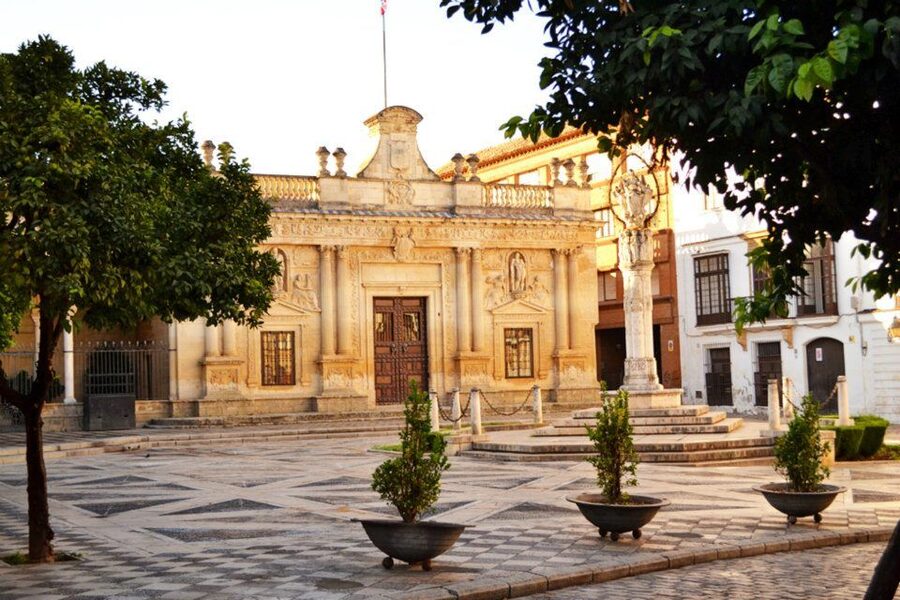
The route also passes decorative squares and palaces, including the site of the old Town Hall. These stops broaden the walk beyond the major churches and fortifications.
Palaces offer a look at the families and civic powers that shaped Jerez, while the old Town Hall site adds a public dimension to the story. The guide can help you notice the difference between religious authority, private wealth, and civic life in the old center.
This is where local details often make the walk feel personal. Guides have discussed subjects such as Jerez’s orange trees, the flamenco performer Lola Flores, private houses, local customs, and the difference between sour and sweet oranges. Those small stories give you more than a list of buildings.
The route is also useful for choosing where to return. A two-hour overview cannot show every palace, square, and side street in detail. It can, however, help you mark places for a later wander, meal, or photo stop.
The optional two-sherry finish
You can add a tasting of two Jerez wines, and this is the option I would seriously consider. Jerez’s identity is closely tied to sherry, so tasting the wine after seeing the city’s historic core makes the subject more concrete.
The tasting is not described as a full bodega tour. That is an important difference. You are paying for two wines as an addition to the walking experience, not for a detailed cellar visit or a broad tasting flight.
The final stop may be a tabanco, a traditional local wine bar. Some departures have ended in a tabanco with an unexpected flamenco performance. That is not guaranteed, but it shows how the tasting can connect the planned route with Jerez’s living social culture.
I would choose the tasting if you have not yet visited a sherry producer. It gives you an introduction before you decide if you want a longer bodega experience. If you do not drink wine, the basic walking option may be the better buy, since the monuments and historical explanation are the core of the tour.
Price, timing, and group fit
At $26 per person, the tour offers solid value for a two-hour guided introduction. You are paying for a live guide, the route, and the background that helps you understand several major areas. All fees and taxes for the activity are included, but monument tickets are not.
The value is strongest for first-time visitors, short stays, and anyone arriving without a clear plan for Jerez. It is less compelling for repeat visitors who already know the old center and mainly want inside access to the Alcázar or cathedral.
A private group option is available. That can make the experience more flexible and personal, though the supplied information does not state a separate private-group price. The regular tour requires at least two adults, and a booking with one adult and one child is not allowed.
The tour lasts two hours, though one past departure was described as about an hour and a half. Allow the full two hours in your schedule, and do not book a tight train connection immediately afterward.
The tour is wheelchair accessible. Language options are English, Spanish, and French, but a departure may sometimes be conducted in two languages at once, such as English and Spanish. If precise language delivery matters to you, confirm the option at booking.
Cancellation is flexible up to 24 hours before the start for a full refund, and you can reserve now and pay later. Those terms are useful when your Andalusia route is still shifting.
Who will enjoy this Jerez walk
I would choose this tour for:
- First-time visitors who want a clear introduction to the old center.
- People interested in architecture, local history, and cultural crossings.
- Visitors with only a morning or afternoon in Jerez.
- Anyone who wants a guide before choosing a bodega or tapas spot.
- Couples and small groups who value conversation and local recommendations.
- Visitors who prefer a short walk rather than a full-day historical program.
It may not suit you if you want extensive monument interiors, a dedicated sherry education, or a broad tour of every major attraction in town. The route is an overview, not a substitute for separate Alcázar, cathedral, or bodega visits.
The strongest guides appear to make the difference. Rose is praised for packing the two hours with detail and humor, Lucia for her architectural eye and clear English, Charo for a relaxed, friendly style, and Marta for warmth and local stories. You cannot guarantee a particular guide unless the booking option says so, but the repeated praise for individual guides is a good sign.
Should you book the Historic Center Guided Tour?
Book it if you want Jerez to make sense quickly. The route covers San Miguel, the Alcázar wall, San Dionisio, the cathedral exterior, palace areas, civic sites, and the city’s long sequence of cultures. The optional two-sherry tasting makes the experience feel more tied to Jerez than a standard church-and-square walk.
Skip it if your priority is going inside monuments or spending hours learning about sherry production. In that case, put the $26 toward admission and a dedicated bodega experience.
For most first-time visitors, I would book the walk, wear comfortable shoes, bring water, and select the tasting if it fits your interests. It gives you a useful map of Jerez, plenty of local context, and a better sense of where to spend the rest of your day.
FAQ
How long does the Jerez Historic Center Guided Tour last?
The scheduled duration is two hours. Check the available starting times when booking, and allow the full two hours even though one past departure lasted about an hour and a half.
What languages are available?
The tour is offered in English, Spanish, and French. Some visits may be conducted in two languages at the same time, including English and Spanish.
Does the tour enter the Alcázar?
No. The experience includes seeing the Alcázar’s defensive wall, but tickets and an inside visit to the Alcázar are not included.
Does the tour enter the cathedral?
No. The route includes the cathedral’s Gothic, Baroque, and Neoclassical façades. Cathedral admission and an interior visit are not included.
Is a sherry tasting included?
You can choose an option that includes a tasting of two Jerez wines. The standard details list the tasting as an option rather than part of every booking.
Where does the tour begin?
The stated meeting point is Plaza del Arenal. The exact meeting point may vary depending on the option booked, so check your reservation details.
Is the tour wheelchair accessible?
Yes, the activity is listed as wheelchair accessible.
Can one adult book with one child?
No. The tour requires a minimum reservation of two adults, and a booking with one adult and one child is not allowed.
Recently added in Spain
- From Andratx: Formula Sunset Driving Tour★ 4.8 · 176 reviews
- Barcelona: Catamaran Cruise w/ Sailing, Wine, & Tapa★ 4.7 · 176 reviews
- Entrance to the Flamenco Temple Room in Madrid with Tapas Option★ 5.0 · 176 reviews
- Fuerteventura: Round-Trip or 1-Way Ferry Ticket to Lanzarote★ 4.7 · 176 reviews
- Mallorca Sailing Adventure with Snorkeling, Snacks & Drinks★ 5.0 · 176 reviews
- Valencia Private Walking Tour with Official Valencian Guide★ 5.0 · 176 reviews
- Benahavís: Canyoning Guided Tour at Guadalmina River★ 5.0 · 177 reviews
- Guided Gaudí Trencadís Mosaic Workshop in Barcelona 2 Hours★ 5.0 · 176 reviews
Historical Tours, compared.
Madrid Essential: Historic Center, Plaza Mayor & Royal Palace
Read the review →
Tapas Walking Tour with Food, Wine, and History
Read the review →
Sevilla Food Tour: Tapas, Wine, History & Traditions
Read the review →
Valencia Old Town Tour with Wine & Tapas in 11th Century Historic Monument
Read the review →
Barcelona Tapas Walking Tour: Food, Wine & History
Read the review →
Ultimate Seville Tapas, Wine & History Small Group Tour
Read the review →
Skip-the-Line Great Mosque-Cathedral History Tour
Read the review →
Browse the lists this tour appears in