
Reviewed · WINE TASTINGS
Jerez: Bodegas Álvaro Domecq Guided Tour with Wine Tasting
The most fascinating part of this Jerez winery tour is seeing how old barrels, local grapes, and the solera and criaderas system turn time into flavor. You move through Álvaro Domecq’s cellars, learn why Fino, Oloroso, Cream, and Pedro Ximénez taste so different, then sit down to sample the results.
I like the friendly, personal guiding, especially from Cristina and Laura, and I like that the tour covers more than sherry. Brandy, vermouth, and vinegar all get their turn. The $26 price is fair for 90 minutes and several tastings, though larger bilingual groups can make the English explanations harder to follow.
- Taste several styles of Jerez wine: Expect representative Álvaro Domecq wines, with some tasting options offering four or five sherries.
- See an 18th-century winery: The cellars connect modern production with the Domecq family’s long association with Jerez.
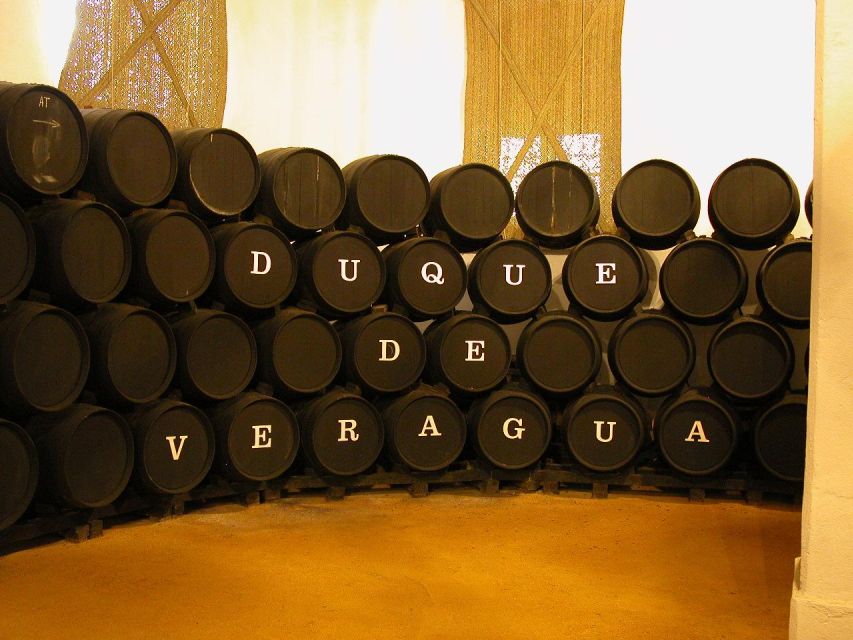
- Learn the solera system: The barrel-aging method is explained in the Duque de Veragua Cellar.
- Sample more than sherry: Brandy, vermouth, and Jerez vinegar are part of the wider story.
- Add Iberian food if wanted: A separate food option provides a dish of Iberian products for about two to four people.
- Plan the meeting point carefully: Meet in the alley on Calle Madre de Dios, beside the Puro Arte flamenco tablao, and ring the bell.
Why This Central Jerez Bodega Is Worth Your Time
Jerez de la Frontera is the home of sherry, but the drink can seem confusing until you see how it is made. This tour gives you a useful framework: grape variety, barrel aging, oxidation, blending, and the role of the local climate all help explain what reaches your glass.
Álvaro Domecq offers that lesson in a historic setting rather than a generic tasting room. The winery traces its roots to the 18th century and presents the work of a prominent Jerez family. You also hear about Álvaro Domecq himself, including his fame as a horseback bullfighter, so the visit is about local identity as well as alcohol production.
The experience lasts about an hour and a half. That is long enough to visit several cellars and enjoy a proper tasting, but short enough to fit neatly into a day of sightseeing in Jerez.
At $26 per person, I see this as a good-value introduction to the region’s signature wines. You are paying for a guided cellar visit, the explanation of the production process, and tastings. The price does not include the optional Iberian food, and the amount or exact range of wine can vary by tasting option, so check the selection when booking.
Finding Calle San Luis and the Puro Arte Meeting Point
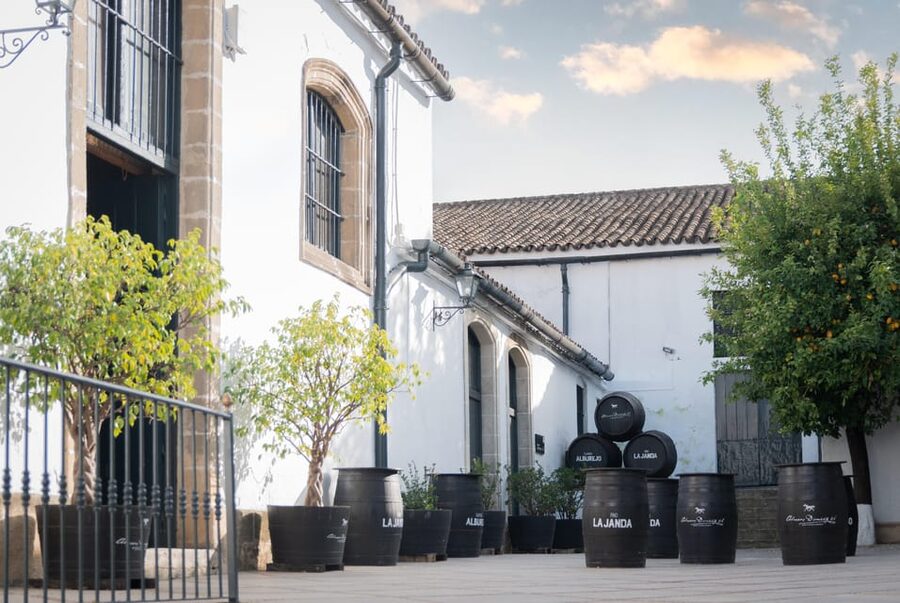
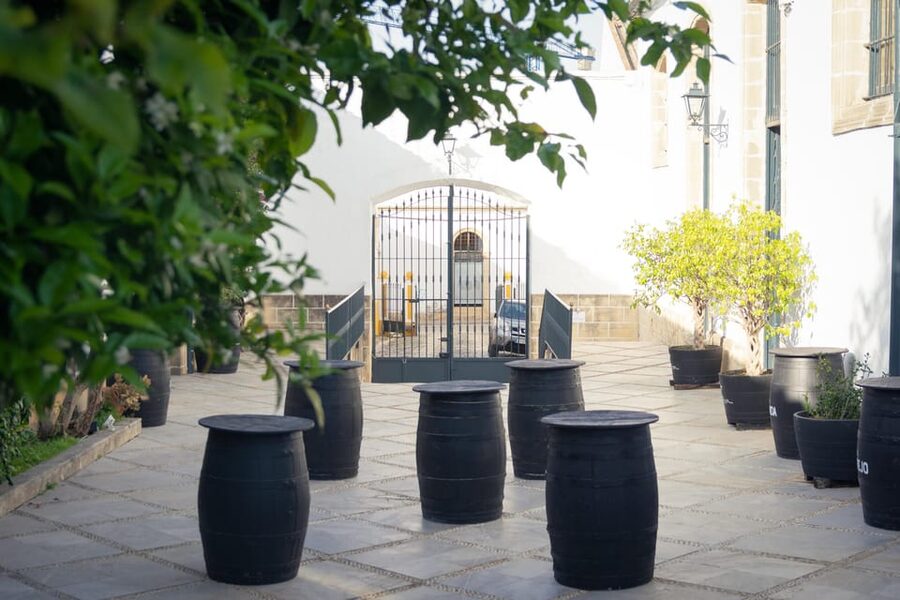
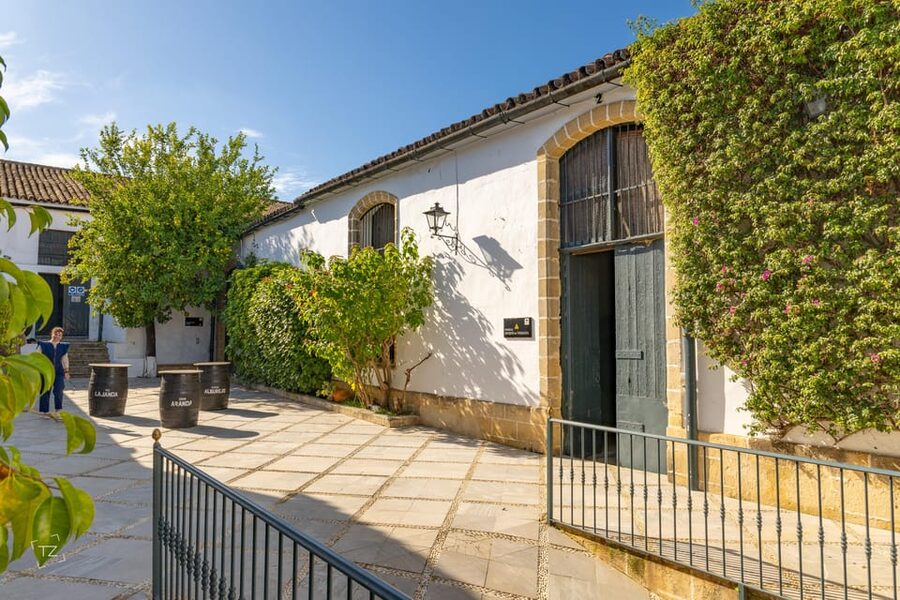
The tour is in the center of Jerez, making it practical if you are already exploring on foot. The published route begins and ends near Calle San Luis, while the detailed meeting instructions direct you to an alley on Calle Madre de Dios, next to the Puro Arte flamenco tablao.
That location detail matters. You are told to ring the bell, so do not simply wait outside or assume the main winery entrance is the meeting place. Give yourself a few extra minutes to locate the alley and the correct door.
The winery is described as easy to reach from the railway station, which makes the visit convenient for a day trip or for a first activity after arriving in town. Since the tour returns to the same central area, you do not need to arrange separate transport for the experience.
One practical point: a recent guide was willing to admit a late-arriving couple, but you should not count on that. Arrive on time, especially because the tour moves between several areas and may begin with a group explanation.
More wine tastings in Spain:
- Montserrat & Cogwheel Train, Gourmet Wine Tasting & Tapas/Lunch
★ 5.0 · 6,290 reviews - Montserrat with Black Madonna & Medieval Winery with Tapas/Lunch
★ 5.0 · 5,209 reviews - Barcelona: Montserrat and Winery Tour with Tapas or Lunch
★ 4.8 · 4,695 reviews
Entering the 18th-Century Álvaro Domecq Cellars
The visit starts with the bodega’s setting and family story. The winery’s age gives the tour a sense of place, while the Domecq name connects the cellars to one of Jerez’s established wine families.
I find this introduction useful because it places the wines in their local setting. You are not just tasting a sweet or dry drink. You are learning how Jerez built a major culture around fortified wine, aging cellars, horses, family business, and careful blending.
The guide then takes you through different areas of the bodega. The tour can include the Brandy Cellar, the Oloroso Cellar, the Duque de Veragua Cellar, the Fino Wines Cellar, and the Vinegar Cellar.
Some sections use audiovisual material. One presentation in the Oloroso area helps explain the products and the winery’s story. If you are watching the video in English, sit near the front because the English translation is subtitled, and the print may be difficult to read from farther back.
Seeing How Solera and Criaderas Aging Works
For many people, the solera and criaderas system is the main reason to take a winery tour. The method can sound complicated when explained at a bar, but the barrels make more sense when you see how the layers work.
Older wine rests in the lowest row of barrels, while younger wine is held in rows above it. A portion of wine moves gradually from the upper rows toward the oldest level, and finished wine is drawn from the bottom. Fresh wine is added at the top to keep the system moving.
This does not mean a bottle comes from one single vintage. Instead, it reflects a continuing blend of ages. The process helps create a consistent house character while allowing the wine to develop over many years.
The Duque de Veragua Cellar focuses on this method and on long-aged wines. Álvaro Domecq presents V.O.R.S. wines aged for more than 30 years, including Amontillado 1730, Palo Cortado 1730, and Oloroso 1730.
These older wines may be offered as an extra tasting option rather than part of the basic visit. If you already enjoy sherry, the V.O.R.S. tasting can be worth the added cost. If you are new to the category, start with the standard tasting so you can first understand the basic styles.
From Fino to Pedro Ximénez
The Fino Wines Cellar explains the local land and grape varieties behind Jerez wines. This is where the tasting starts to become easier to follow, since each style can be connected to a different method of aging and flavor.
Fino La Janda gives you the dry, delicate end of the range. Oloroso Alburejo offers a fuller style. Aranda Cream shows how a sweeter blend fits into the family of sherry wines, while Pedro Ximénez Viña 98 brings a darker, sweeter profile.
The order of tasting matters. Moving from lighter and drier wines toward fuller and sweeter examples helps your palate notice the differences. You may find that a wine you would never have ordered by name becomes your favorite after trying it beside another style.
Some standard tastings include four sherries, while another option includes five. The tasting is generally described as leisurely, with enough time to consider the wines rather than simply swallow and move on.
Guides have also included vermouth and brandy in the tasting. The vermouth is worth asking about if it is not already offered. The Solera Gran Reserva Duque de Veragua and Solera Reserva Veragua brandies show how the bodega applies aging skills beyond sherry.
A few other Spain outings to compare
- Madrid: Live Flamenco Show with Food and Drinks Options
★ 4.5 · 9,901 reviews - Ibiza Beach Hopping Cruise with Paddleboards, Drinks and Food 6h
★ 5.0 · 5,588 reviews - Barcelona: Tapas Walking Tour with Food, Wine, and History
★ 4.8 · 4,261 reviews - Sevilla Food Tour: Tapas, Wine, History & Traditions
★ 5.0 · 3,468 reviews
The Vinegar Cellar and Jerez’s Less Famous Products
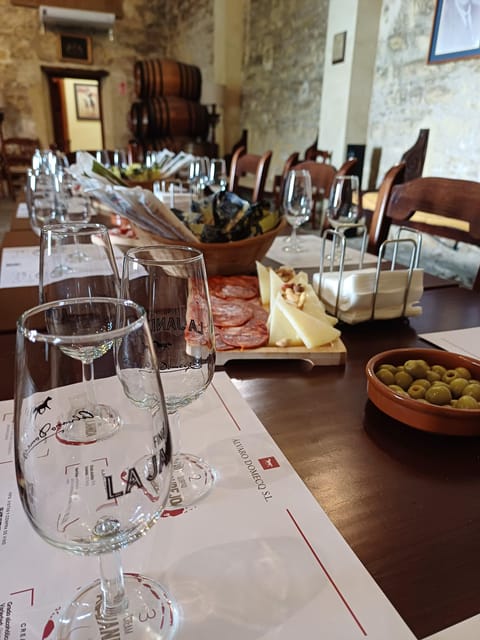
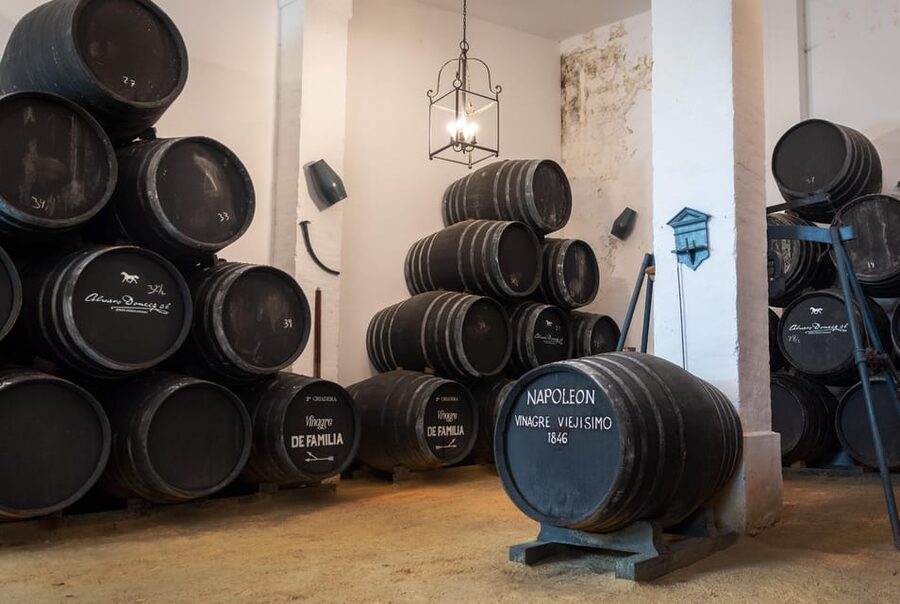
The vinegar stop adds welcome variety. Álvaro Domecq produces Jerez vinegars, including Vinagre Reserva de Familia and Vinagre Gran Reserva 1730.
The winery describes its vinegar as having the world’s only Designation of Origin for vinegar. That gives this part of the tour real interest, particularly if you cook or enjoy food history. Vinegar is not treated as a leftover product here. It has its own aging and storage story.
You also learn about brandy production, and the wider visit can touch on vermouth. This broad approach is one of the tour’s strengths. Even if sherry is not your usual drink, you still have several products to compare.
The tour does not promise that you will see every stage of bottling or distillation in operation. One visit did not include those areas. Think of the experience as a guided explanation of the winery and its aging cellars, not a working factory tour that guarantees every production step will be visible.
Sitting Down for the Sherry Tasting
The final tasting takes place in a comfortable area and focuses on representative Álvaro Domecq wines. Expect the guide to explain what is in the glass, how it was made, and what to notice.
I like this format because it puts the information to work right away. After seeing barrels and hearing about the aging process, you can taste the difference between Fino, Oloroso, Cream, and Pedro Ximénez rather than treating the names as a list.
The tasting may include three, four, or five sherries depending on the option selected. Some sessions also include vermouth or brandy. The pours have been described as generous, and the pace is relaxed enough to savor the wine.
If you are new to sherry, do not feel you need to arrive with a trained palate. The strongest part of the guiding is the clear explanation, and guides such as Cristina, Laura, Lucia, and Miriam have led tours in a friendly manner. English and Spanish are available, but the balance between the two languages depends on the group.
A bilingual tour can work well when the guide switches between languages carefully. On a large mixed group, though, English explanations may receive less time or become harder to hear. If language is important to you, confirm the available language and ask the guide questions during the tasting.
Group Size, Guides, and the Personal Feel
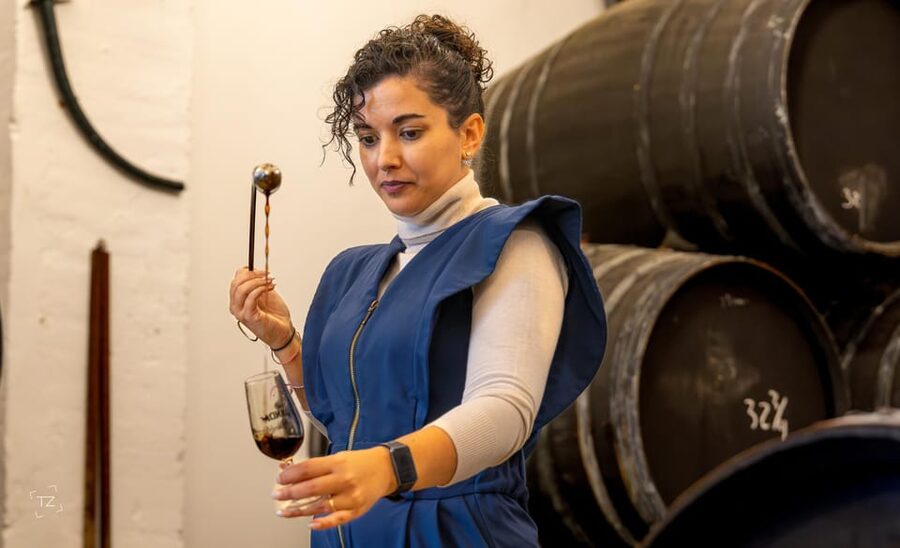
The experience can feel quite personal when numbers are low. One English-speaking pair received much of the tour with a guide of their own, and another booking had only two people. That makes it easier to ask about a favorite style, the family, or the barrels.
The tone also depends on the guide. Cristina is often praised for her warm presentation and ability to explain the subject in both English and Spanish. Laura brings clear English and strong enthusiasm, while Lucia has led friendly tours for English-speaking visitors.
This is not a scripted tasting where you simply stand beside a row of barrels. The guide is central to the experience. A good guide turns technical details into something you can remember when you order sherry later.
The main weakness is group size. One larger session made it harder for English speakers to get enough time with the guide, even though the guide worked hard to help. If you prefer quiet, detailed conversation, a smaller group will make a noticeable difference.
Optional Iberian Food and Flamenco Nearby
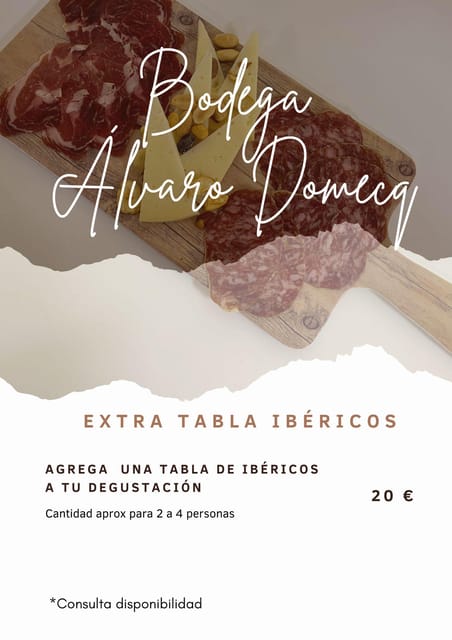
The basic price covers the cellar tour and wine tastings, but not food. You can add a serving of Iberian products intended for roughly two to four people.
That option makes sense if you want to turn the tasting into a light meal, especially because salty cured meats pair naturally with sherry. It is not included automatically, so check that you have selected it if you want food.
The bodega is beside a flamenco venue, and some visits have been paired with lunch and a flamenco performance afterward. That performance is not listed as part of the standard 90-minute cellar tour, so treat it as a separate plan rather than a guaranteed feature.
Still, the location makes it easy to build a fuller Jerez afternoon around the visit. You can arrange food or flamenco nearby and keep the winery tour as the central activity.
Who Will Get the Most from This Tour?
I would choose this tour if you want a clear introduction to sherry without giving up most of your day. It suits curious first-time drinkers, food-minded visitors, and anyone who wants to understand why Jerez is tied so closely to fortified wine.
It also works for people who already know sherry. The older V.O.R.S. wines, brandies, vermouth, and vinegars add enough range to make the visit more than a basic Fino tasting.
You do not need to be a sherry enthusiast. The tour explains the basics before the tasting, and the range of styles lets you compare rather than commit to one kind of drink.
I would be more cautious if your main goal is to watch bottling, distillation, or every stage of active production. Those details are not guaranteed. I would also confirm the language arrangement if you need a fully English-led experience, since mixed Spanish and English groups can affect the balance.
Free cancellation up to 24 hours before the start gives you useful flexibility, and you can reserve without paying immediately. Starting times vary, so check the available slot when planning your day.
Should You Book the Álvaro Domecq Visit?
Book it if you want an approachable, central Jerez bodega tour with a strong guide, several wine styles, and a look at the solera system. The combination of sherry, brandy, vermouth, and vinegar gives the 90 minutes more range than a simple drink tasting.
At $26, the value is strongest for first-time visitors who want context as well as samples. Add the Iberian food if you want a fuller stop, and consider the V.O.R.S. option if you already appreciate aged sherry.
Skip it only if you dislike cellar tours, need a guaranteed small group, or expect to see every industrial production stage in action. For most visitors interested in Jerez’s signature drink and local traditions, this is a sensible, well-paced introduction.
FAQ
Where does the Álvaro Domecq tour meet?
The meeting point is in the alley on Calle Madre de Dios, beside the Puro Arte flamenco tablao. Ring the bell when you arrive.
How long does the tour last?
The guided visit and tasting last about 1.5 hours.
What is included in the $26 price?
The price includes the winery tour in central Jerez and wine tastings.
Is food included?
No. You can select an additional food option featuring Iberian products, with an amount intended for about two to four people.
Which languages are available?
The tour is offered in English and Spanish.
Which wines can I taste?
The winery presents wines such as Fino La Janda, Oloroso Alburejo, Aranda Cream, and Pedro Ximénez Viña 98. The exact tasting may include three, four, or five sherries depending on the selected option.
Can I taste older wines?
An additional V.O.R.S. tasting can include wines aged for more than 30 years, such as Amontillado 1730, Palo Cortado 1730, and Oloroso 1730.
Are brandy, vermouth, and vinegar part of the visit?
Yes. The tour explains brandy and vinegar production and may include brandy or vermouth in the tasting. The winery also produces Jerez vinegars.
Can I cancel the booking?
Yes. You can cancel up to 24 hours in advance for a full refund, and the activity offers a reserve-now, pay-later option.
Recently added in Spain
- From Andratx: Formula Sunset Driving Tour★ 4.8 · 176 reviews
- Barcelona: Catamaran Cruise w/ Sailing, Wine, & Tapa★ 4.7 · 176 reviews
- Entrance to the Flamenco Temple Room in Madrid with Tapas Option★ 5.0 · 176 reviews
- Fuerteventura: Round-Trip or 1-Way Ferry Ticket to Lanzarote★ 4.7 · 176 reviews
- Mallorca Sailing Adventure with Snorkeling, Snacks & Drinks★ 5.0 · 176 reviews
- Valencia Private Walking Tour with Official Valencian Guide★ 5.0 · 176 reviews
- Benahavís: Canyoning Guided Tour at Guadalmina River★ 5.0 · 177 reviews
- Guided Gaudí Trencadís Mosaic Workshop in Barcelona 2 Hours★ 5.0 · 176 reviews
Wine Tastings, compared.

Montserrat & Cogwheel Train, Gourmet Wine Tasting & Tapas/Lunch
Read the review →
Montserrat with Black Madonna & Medieval Winery with Tapas/Lunch
Read the review →
Montserrat and Winery Tour with Tapas or Lunch
Read the review →
Ronda+Setenil de las Bodegas with Little Train
Read the review →

Toledo Tour & Vineyard Walk with Wine Tasting from Madrid
Read the review →
Málaga & Costa del Sol: Ronda and Setenil de las Bodegas
Read the review →
Browse the lists this tour appears in