
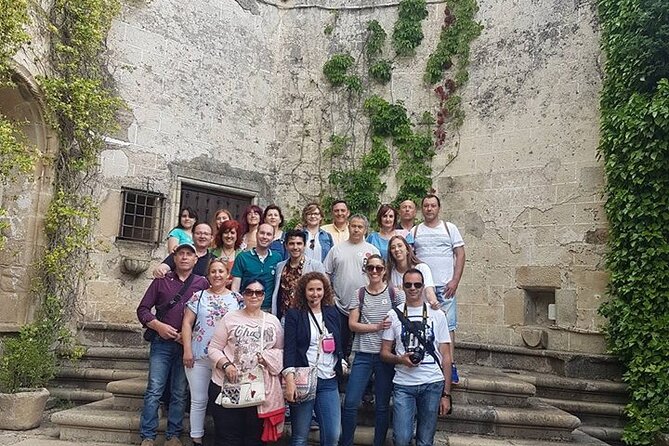
Reviewed · HISTORICAL TOURS
Guided Tour of Historic and Monumental Trujillo
Trujillo’s appeal comes into focus quickly: from Plaza Mayor, you walk into a stone-built medieval town filled with palaces, churches, towers, and fortified houses. Guide Ana leads a lively route through the old center, reaching the castle, Muslim Alcazaba, city gates, and grand homes linked to Spain’s age of exploration.
I like the way this tour connects buildings to people, from Francisco Pizarro and the conquest of Peru to María de Escobar and the crops she took to Peru. I also like the practical guidance on good photo corners, since Trujillo rewards you for looking up, back, and through its gates.
The main consideration is pace. Two hours is enough for an informative introduction, but not enough for long visits inside every monument. If you want to climb every tower or study each altarpiece at leisure, you will need extra time before or after the walk.
Key things to know before you book
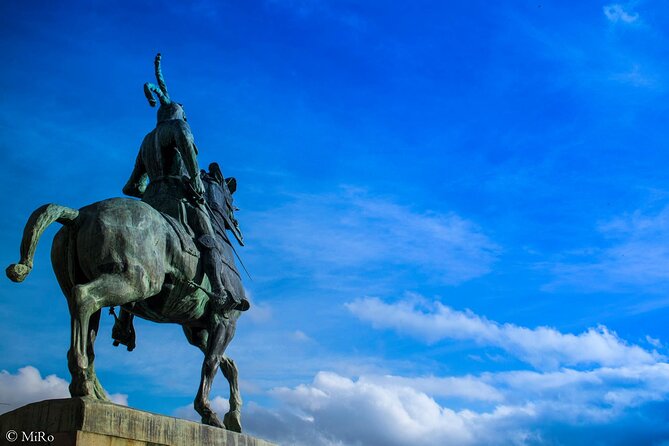
- Plaza Mayor is the natural starting point: Begin among Renaissance façades and Pizarro’s famous equestrian statue.
- The castle gives the walk its strongest sense of place: The Muslim Alcazaba, walls, and cistern date from the 10th to 12th centuries.
- Guide Ana adds local color: Her route includes many comments about the old town rather than simply naming buildings.
- The tour links Trujillo with major Spanish themes: Look for connections to Isabel la Católica, Carlos V, the Discoverers, and film locations.
- You get a broad historic survey for $13.90: The price is especially useful if you are visiting Trujillo for only a short time.
- The walk returns to its starting point: Meet at Plaza Mayor, 20, and finish back at the same location.
Why Plaza Mayor makes such a strong beginning
Plaza Mayor is not just a meeting point. It is the clearest introduction to Trujillo’s wealth and ambition, with Renaissance palaces arranged around the open square and the equestrian monument to Francisco Pizarro at its center.
Allow about 20 minutes for this opening section. Your guide points out the square’s architecture and explains how Trujillo’s fortunes grew through its connections with the Americas. The statue gives the square a powerful focal point, though it also raises the complicated story of conquest, wealth, and empire. A good guide helps you see both the public glory and the larger historical setting.
The plaza itself was developed in the 16th century, with construction beginning in 1562 by order of Hernando Pizarro. That date helps explain the change in mood as you leave the square. Trujillo is medieval at its core, but much of the grand architecture you see reflects the money and status that arrived later.
This is also the best place to orient yourself. Take a moment to look around before the walking portion begins. The square gives you an easy mental map of the town, and the return here at the end makes the tour simple to combine with lunch, shopping, or a second look at the buildings you passed quickly.
More historic sites in Spain:
- Madrid Essential: Historic Center, Plaza Mayor & Royal Palace
★ 5.0 · 6,416 reviews - Barcelona: Tapas Walking Tour with Food, Wine, and History
★ 4.8 · 4,261 reviews - Sevilla Food Tour: Tapas, Wine, History & Traditions
★ 5.0 · 3,468 reviews
Palace façades and the Pizarro connection
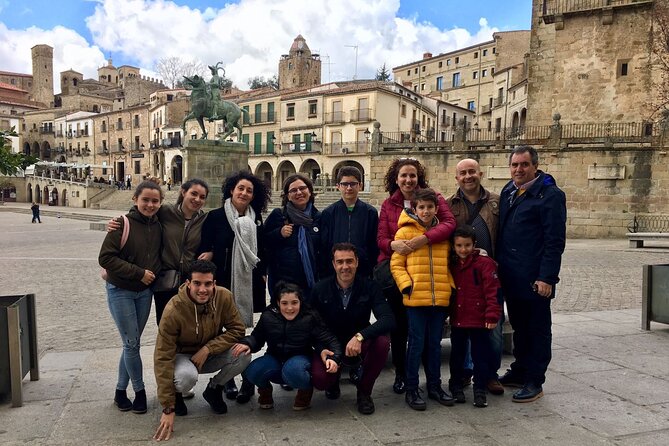
The Palacio de San Carlos, also called the Palacio de los Vargas-Carvajal, is one of the early architectural highlights. It is a Plateresque building, a Spanish style known for carefully worked ornament on its façades.
The stop lasts only a few minutes, so expect an exterior explanation rather than a full palace visit. The building keeps its original Plateresque façade, along with another façade opening toward Domingo Street. That detail matters because Trujillo’s palaces are not flat backdrops. Their side walls, entrances, and changes in level often reward a slower look.
The nearby equestrian statue of Francisco Pizarro gets its own brief stop. Two minutes is enough for the guide to place the monument in the square and point out its importance, but not enough for a long discussion. If Pizarro’s role interests you, save a little time to return to the statue afterward.
I find this part useful because it sets up one of the tour’s recurring ideas: Trujillo’s built environment is tied to the people who left Extremadura and gained power overseas. The route does not treat the city as a collection of pretty stones. It shows how family names, military service, royal politics, and exploration shaped the town.
Entering the medieval center
The walk then moves into Trujillo’s historic center, where the streets become tighter and the architecture more defensive. The route includes Muslim walls, the Alcazaba, strong houses, manor houses, palaces, convents, and churches.
The listed historic-center portion is given up to two hours, while the full activity is described as approximately two hours. Treat the timings as rough guideposts rather than a promise that every stop receives a separate, full-length visit. The route is designed to give you the story of the town as a whole, with short pauses at important buildings and a longer flow through the old streets.
That approach suits you if you want context quickly. You will see more than you could comfortably cover alone in the same period, and the guide helps you notice why a plain-looking wall or doorway mattered. It is less suited to anyone hoping to enter and study every church, palace, or tower.
The old center also gives the tour its most authentic feel. Instead of moving from one isolated sight to another, you follow the way the town is actually built. Fortified homes sit near religious buildings, gates control movement through the walls, and the castle rises above the town. The result is a strong sense of how defense, faith, and family power overlapped.
Strong houses and royal connections
Casa-Fuerte de Luis de Chaves El Viejo is an especially good stop for understanding Trujillo’s military character. This strong house dates from the 13th and 14th centuries, and the Catholic Monarchs stayed here during the Wars of Succession.
The point is not simply that the building is old. It shows how a private residence could also function as a fortified base. In a town where powerful families competed for influence, thick walls and a defensible position were practical tools.
The Palacio Viejo, or Palacio de la Cadena, brings a different story. Near it is a 13th-century church founded by the Military Order of Santiago. The brief stop helps connect Trujillo with the military-religious orders that played a major part in medieval Spain.
These short explanations are where the tour earns its modest price. Without a guide, you might photograph an imposing doorway and move on. With the historical links, you get a clearer idea of why the building exists and what sort of people used it.
A few other Spain outings to compare
- Barcelona: Sagrada Familia Entry Ticket with Audio Guide
★ 4.6 · 105,312 reviews - Barcelona: Park Guell Guided Tour with Skip The Line Entry
★ 4.7 · 17,563 reviews - Barcelona: La Pedrera-Casa Milà Ticket & Audio Guide Option
★ 4.7 · 15,099 reviews - Málaga: Caminito del Rey Guided Tour with Transportation
★ 4.8 · 12,183 reviews
The castle, Alcazaba, and the best views
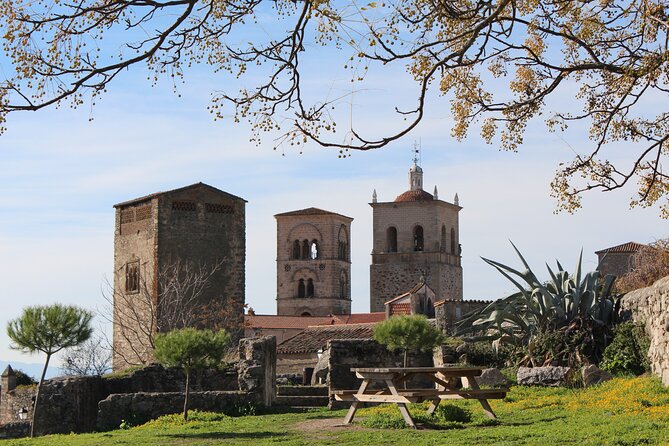
Castillo de Trujillo is the route’s major high point, both historically and physically. The site includes a Muslim Alcazaba and an aljibe, or water cistern, dating from the 10th to 12th centuries.
The castle is the place to focus your attention if you have limited energy or time. Its walls and elevated position make the town’s defensive purpose easy to understand. You can also expect the guide to point out good angles for photographs, a useful touch in a town where the view changes with every arch and rise in the street.
The stop is listed at about 10 minutes, so do not expect an extended castle visit as part of this walk. The tour gives you the setting and key facts. If the Alcazaba is your main reason for coming to Trujillo, consider returning after the tour to spend more time there, subject to opening arrangements and any applicable admission rules.
The aljibe is an important detail. A fortress needs water, and the cistern shows the practical side of medieval power. It is easy to focus on walls and battlements, but water storage often decided how long a fortified site could hold out.
Pizarro House and Santa María la Mayor
Pizarro House Museum is a 15th-century hidalgo manor house. The word hidalgo points to the lower level of the Spanish nobility, and the building helps you picture the social world behind Trujillo’s famous family names.
The visit is scheduled for around 10 minutes. As with the other stops, the value lies in the setting and explanation rather than an extended museum session. You get a sense of the kind of home associated with a powerful local family and a clearer link between Trujillo’s streets and its overseas story.
I would give extra attention to Iglesia de Santa María la Mayor. It is described as a Gothic church declared a National Monument, with earlier Romanesque remains including Torre Julia. The church also contains a Spanish-Flemish altarpiece by Fernando Gallego.
This is one of the stops where a few minutes can feel too short. The architectural layers alone deserve attention, and the altarpiece gives the church a major artistic feature to look for. Admission is listed as free, but the tour schedule does not promise a long interior visit. If the church is open and you care about medieval art, plan to return independently.
Torre Julia is another reminder that Trujillo was built in layers. Romanesque remains, Gothic construction, Renaissance palaces, and Muslim defenses all occupy the same compact town. You do not need specialist knowledge to enjoy this. Just notice how often one period appears inside another.
María de Escobar and the Escobar strong house
Casa Fuerte de los Escobar is a 15th-century military building with an unusually memorable personal connection. María de Escobar lived here, and she is associated with bringing wheat and barley seeds to Peru.
That story broadens the usual Pizarro narrative. The age of exploration was not only about soldiers and conquerors. It also involved plants, food, farming, and the transfer of everyday resources across oceans. A stop at this strong house gives you a more human and practical angle on the links between Extremadura and the Americas.
The building itself reinforces the town’s defensive pattern. It was not merely a grand family residence. Its military form shows that status and security were closely joined in medieval Trujillo.
This is the sort of detail I appreciate on a guided walk. It is specific enough to remember, and it gives you a reason to look twice at a building that might otherwise blur into the next fortified house.
Gates, walls, and the final stretch
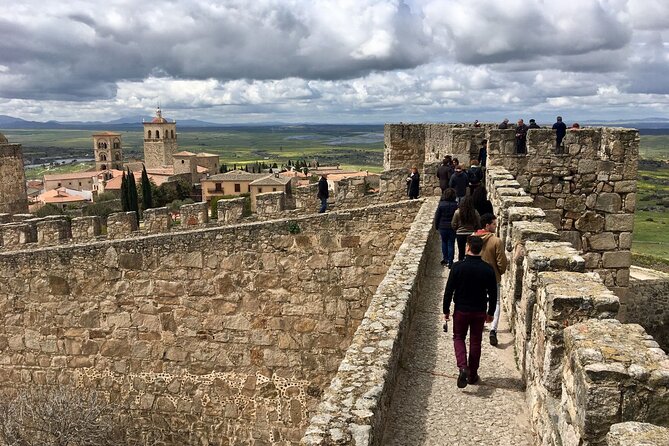
The Triumph Gate and Bejarano Redoubt make sense as a pair. The gate controlled passage through the town walls, while the 13th-century Bejarano strong house defended it.
The redoubt is a reminder that medieval defense depended on more than one impressive castle. Smaller strong points protected vulnerable entrances and helped control movement. These structures can look modest beside the Alcazaba, but their position tells you why they mattered.
The route finishes at Puerta de San Andres, one of the seven gates in Trujillo’s wall. It stands next to the Church of San Andrés, bringing together the military and religious sides of the old town once again.
You may find this final section especially useful for photography. Gates frame the streets and make it easy to see the transition between the open modern town and the more enclosed medieval center. Since the activity ends back at Plaza Mayor, you can return there without arranging another transfer.
A good value for a short visit
At $13.90 per person, this is a low-cost way to put Trujillo in order. The tour covers a large number of important sites, includes a guide, accepts a mobile ticket, and takes about two hours. You are paying less for formal monument entry than for a well-organized explanation of the town.
That distinction matters. The supplied stop information lists admission as free, but the activity should not be treated as a package of long interior visits. Its value is the route, the historical connections, and the ability to see the main structure of Trujillo without spending time guessing where to go.
A maximum group size of 30 keeps the price down, though it can feel less personal than a private walk. Ana’s lively delivery is a plus if you enjoy commentary as you walk. If you prefer silence, photography, and long pauses, a self-guided visit may suit you better.
The tour is often booked about eight days ahead, so reserve earlier if your schedule is fixed. Confirmation arrives at booking, and free cancellation is available up to 24 hours before the start time. Service animals are allowed, public transportation is nearby, and the activity states that most people can participate.
Who should take this Trujillo walk?
I would choose this tour if you are visiting Trujillo for the first time, have only part of a day, or want the main story before exploring alone. It also works well for anyone interested in the Discoverers, Isabel la Católica, Carlos V, or film locations connected with the town.
History fans will appreciate the range of subjects. You move from Muslim defenses to Gothic worship, Renaissance wealth, royal politics, military orders, and the American connection. Families may also find the changing subjects easier to follow than a long lecture focused on one period.
You should think twice if you need guaranteed access to every interior. The schedule gives Santa María la Mayor, the castle, the Pizarro house, and other buildings limited time. Use the walk as an orientation, then choose one or two favorites for a separate visit.
The tour has a 5 out of 5 rating based on 933 ratings, with 100 percent recommending it. The most useful praise is specific: Ana’s route is described as lively and full of comments about the historic center. That matches the tour’s main strength, which is not luxury or exclusive access. It is a clear, energetic introduction to a remarkably concentrated old town.
Should you book the guided tour?
Book it if you want maximum historical context for a small price and prefer a guide to connect the castle, palaces, churches, and gates. The two-hour route gives you a strong first look at Trujillo and points you toward the places worth revisiting.
Skip it only if you already know the town well or want to spend the entire visit inside monuments at your own pace. For most first-time visitors, the low cost, central meeting point, mobile ticket, and return to Plaza Mayor make this a practical choice.
FAQ
How long does the guided tour of Trujillo last?
The experience lasts approximately two hours.
Where does the tour start?
It starts at TurismoTrujillo.es Actividades Turísticas, Plaza Mayor, 20, 10200 Trujillo, Cáceres, Spain.
Where does the tour finish?
The activity ends back at the meeting point in Plaza Mayor.
How much does the tour cost?
The listed price is $13.90 per person.
Is the tour available with a mobile ticket?
Yes. The experience includes a mobile ticket.
How many people can join the tour?
The maximum group size is 30 people.
Can I cancel for a full refund?
Yes, if you cancel at least 24 hours before the experience start time. Cancellations or changes made less than 24 hours before the start are not accepted for a refund.
Recently added in Spain
- From Andratx: Formula Sunset Driving Tour★ 4.8 · 176 reviews
- Barcelona: Catamaran Cruise w/ Sailing, Wine, & Tapa★ 4.7 · 176 reviews
- Entrance to the Flamenco Temple Room in Madrid with Tapas Option★ 5.0 · 176 reviews
- Valencia Private Walking Tour with Official Valencian Guide★ 5.0 · 176 reviews
- Fuerteventura: Round-Trip or 1-Way Ferry Ticket to Lanzarote★ 4.7 · 176 reviews
- Mallorca Sailing Adventure with Snorkeling, Snacks & Drinks★ 5.0 · 176 reviews
- Benahavís: Canyoning Guided Tour at Guadalmina River★ 5.0 · 177 reviews
- Guided Gaudí Trencadís Mosaic Workshop in Barcelona 2 Hours★ 5.0 · 176 reviews
Historical Tours, compared.
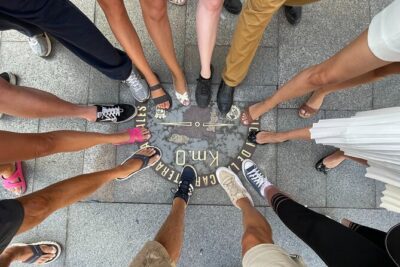
Madrid Essential: Historic Center, Plaza Mayor & Royal Palace
Read the review →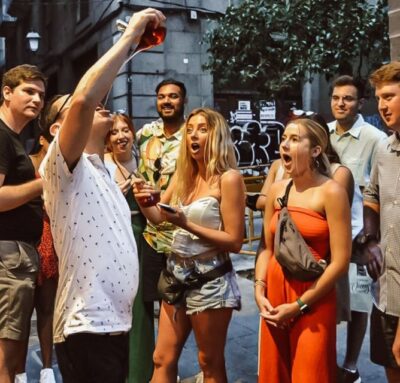
Tapas Walking Tour with Food, Wine, and History
Read the review →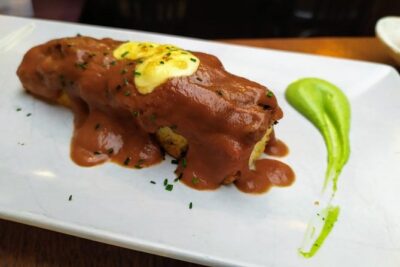
Sevilla Food Tour: Tapas, Wine, History & Traditions
Read the review →
Valencia Old Town Tour with Wine & Tapas in 11th Century Historic Monument
Read the review →
Barcelona Tapas Walking Tour: Food, Wine & History
Read the review →
Ultimate Seville Tapas, Wine & History Small Group Tour
Read the review →
Skip-the-Line Great Mosque-Cathedral History Tour
Read the review →
Browse the lists this tour appears in